Welding art at KPI: joining steel, sculpture

When Ukrainian sculptor Serhii Minakov set out to create ‘Into the Future’ – a towering steel artwork featuring a young man and woman inside a globe – he encountered a problem familiar to anyone who has tried to weld complex sculptures: how to make a strong, clean joint when access is possible from only one side.


Traditional arc welding works like a charm when a joint can be reached from both sides and any excess metal ground away. Yet for the non-standard junctions typical of sculptural steelwork, that approach is impossible. Conventional brazing – using a lower-melting-point filler metal to bond parts without fully melting them – requires a precise, narrow gap between surfaces, something almost impossible to guarantee across the many angles found in artwork.


At present, Dr Yevgenia Chvertko of the Department of Welding Technology at Igor Sikorsky Kyiv Polytechnic Institute (KPI) and her colleagues of the National Academy of Sciences of Ukraine have developed a technique that blends welding and brazing – with results striking both aesthetically and mechanically.


The team’s method uses a tungsten inert gas arc to heat the steel rod ends until small pools of molten metal form. A copper-silicon filler wire is then introduced into those pools. The liquid solder mixes with the molten steel, flows into the gap, and crystallises into a joint that is mechanically robust and visually neat, requiring minimal finishing.


Tests showed that joints made using the new technique withstood tensile forces of up to 34.3 kilonewtons – around 23% stronger than those produced by applying conventional methods. The mixing of liquid steel and bronze solder creates a composite structure reinforced by steel fibres, accounting for much of the strength gain.


The technology has already proven itself in practice. Minakov’s completed sculpture was produced entirely using the new method and selected for the International Institute of Welding’s 2023 Digital Collection Welded Art Photographic Exhibition. For Yevgenia Chvertko and her colleagues, art and engineering have seldom been so seamlessly joined.


Watch a two-minute video here:

https://www.youtube.com/watch?v=CKJrS57weLY&t=137s

KhPI Wins Green Oscar

EcoSKILL, an innovative educational retraining program for internally displaced persons in the field of solar energy, implemented at the National Technical University «Kharkiv Polytechnic Institute,» has received the «Green Oscar» from Global 100 RE Ukraine. The initiative combines theoretical training with hands-on practice using modern equipment, and also provides for the subsequent employment of participants and support in starting their own businesses. The program brought together over a hundred participants and was recognized as the «Best Training Project for the Energy Transition». It is implemented by the public organization «Association of Young Scientists of NTU «KhPI» with financial support from Razom for Ukraine.

The EcoSKILL project, developed by the public organization «Association of Young Scientists of NTU «KhPI» with the support of Razom for Ukraine, was named one of the winners of the 100 gREen AWARD-2025. The awards ceremony took place in Kyiv with the participation of leading representatives from the government, business, and the energy sector. The event was opened by Oleksandr Dombrovskyi, Chairman of the Board of Global 100 RE Ukraine; Iryna Tykhomirova, President of the International Institute of Management; Artem Rybchenko, Deputy Minister of Community and Territorial Development of Ukraine; Hanna Zamazeyeva, Head of the State Agency for Energy Efficiency and Energy Saving of Ukraine; and Hennadiy Chyzhykov, President of the Ukrainian Chamber of Commerce and Industry. A particularly emotional highlight of the evening was the participation of Ruslana—global ambassador for renewable energy, Ukrainian singer, and winner of Eurovision 2004.

According to Global 100 RE Ukraine, the award is given to the best completed projects in the field of green transformation in Ukraine. EcoSKILL was among the 18 laureates in its category. The program at NTU «Kharkiv Polytechnic Institute» was recognized for its practical focus and for creating a real «bridge» to employment. This is evidenced by the involvement of a wide range of partners: «Kharkiv Volunteers Union Charitable Foundation», local employment centers, employers, and representatives of the renewable energy market. Over 100 internally displaced persons have joined the project since its launch.

Global 100 RE Ukraine emphasizes: «EcoSKILL is not just a pilot project, but a scalable model that can be adapted in other regions of Ukraine.» The organization also highlights that this case study demonstrates an important aspect of the green transition: it is not just about building new generating capacity or purchasing equipment, but also about developing human capital—reskilling, new career opportunities, and building the workforce needed for the energy transition. EcoSKILL’s strength lies in the combination of university expertise, international support, business demand, and a clear social mission.

Note: 

A presentation of the new EcoSKILL course for TDPs in the field of solar energy was held at the National Technical University «Kharkiv Polytechnic Institute» in February 2025. A Roundtable discussion was held, bringing together more than two dozen representatives from various sectors: faculty and instructors from Kharkiv Polytechnic Institute, businesspeople in the solar energy sector, including the «Ukrainian Solar Energy Association,» the Kharkiv Volunteer Union, the Kharkiv Employment Center, and other interested stakeholders.

The EcoSKILL project was launched at the National Technical University «Kharkiv Polytechnic Institute» in March 2025. The program lasts 2.5 months and includes courses on the installation and maintenance of solar power plants, hands-on training, workshops on running your own business, psychological support, and assistance with job placement through job fairs. In addition, participants will receive a separate training program focused on launching their own business in the solar energy sector.

Global 100 RE Ukraine is a non-governmental organization dedicated to the development of renewable energy in Ukraine. This organization works to accelerate the country’s energy transition and achieve energy independence based on clean and sustainable energy.

KPI hosts IEEE Kyiv Polytechnic Week

Held at the Igor Sikorsky Kyiv Polytechnic Institute (KPI) in late April, IEEE Kyiv Polytechnic Week brought together more than 400 participants from 23 countries. The format of this event included two international technical conferences: the Conference on Electronics and Nanotechnology (ELNANO), and the Conference on Smart Technologies in Power Engineering and Electronics (STEE).


The Kyiv Polytechnic’s Faculty of Electronics organised the major scientific event, supported by the Institute of Electrical and Electronics Engineers (IEEE) — the global community for technology professionals.


IEEE Kyiv Polytechnic Week in facts and figures:

·        Of 238 papers submitted, 143 were selected for the programme of both conferences, each paper being subject to three independent peer reviews.

·        Participants presented their own research in nanotechnology, biomedical engineering, microwave technology, and electronics.

·        Research outcomes will be included in the IEEE Xplore Digital Library, indexed by the Scopus citation database.


The event was sponsored by LEM Ukraine, a company with many years experience in supplying and servicing equipment designed for thermal analysis, molecular and atomic spectroscopy.


Watch a two-minute video from the event here:

https://www.youtube.com/watch?v=J3qq6hs5xzI

KPI deepens partnership with Romania

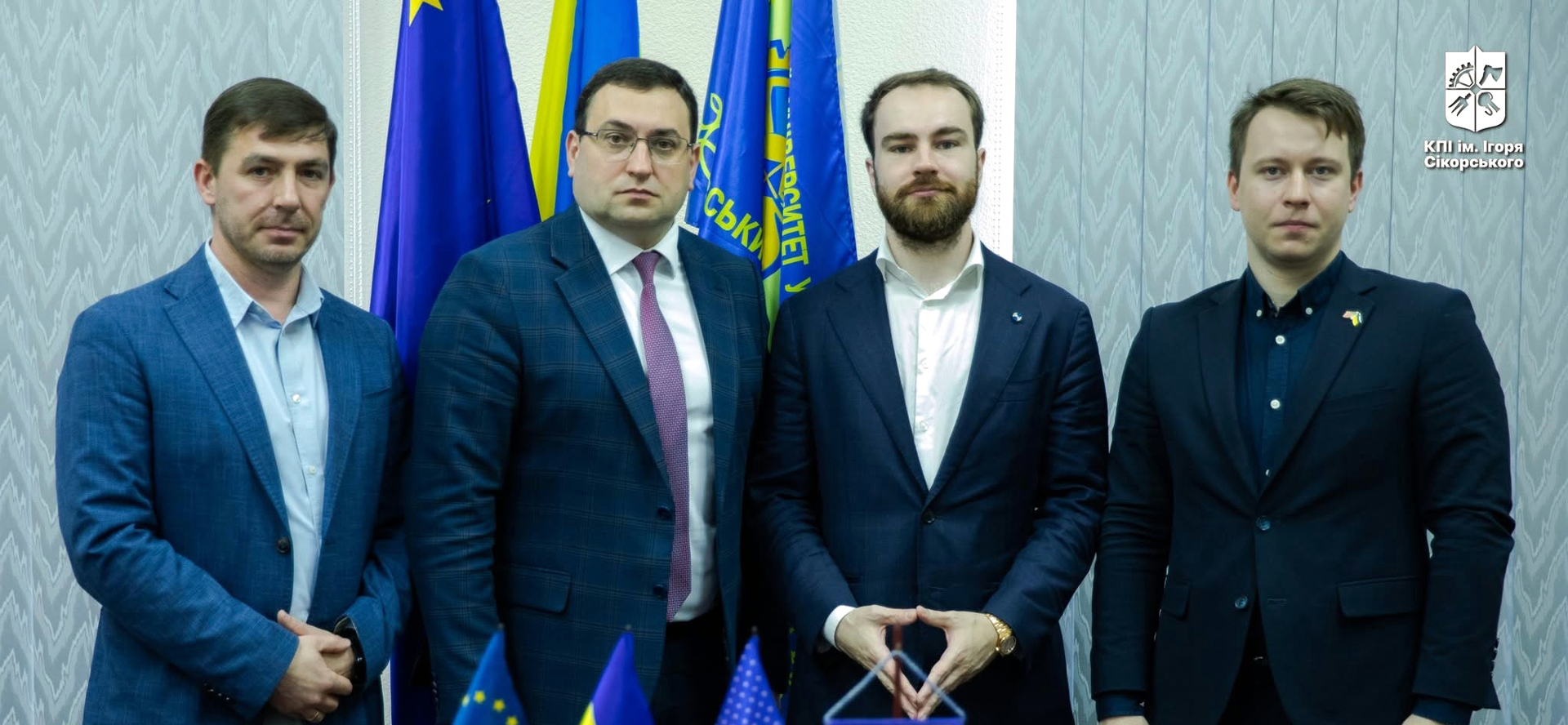
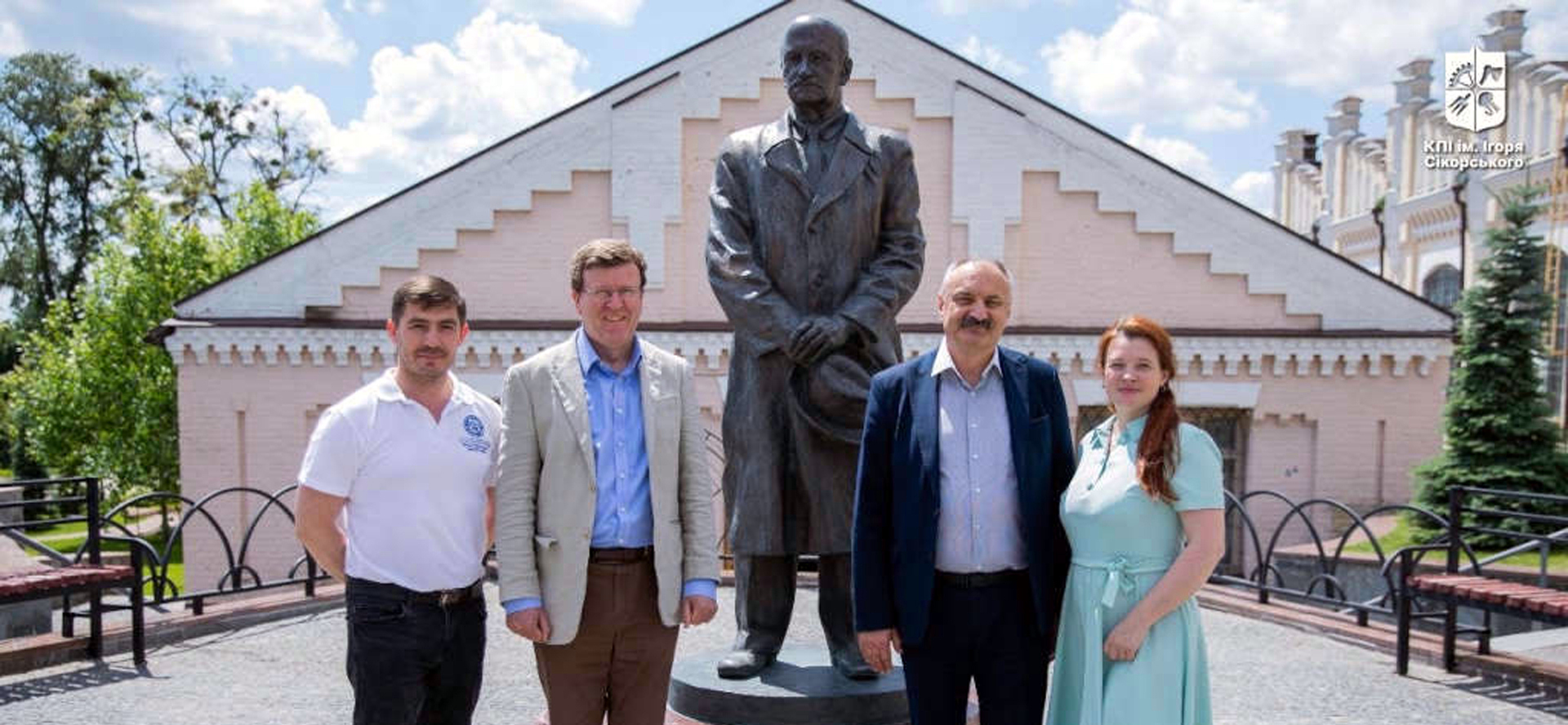
A Romanian delegation led by Ambrozie-Irineu Darău(pictured right), Minister of Economy, Digitalisation, Entrepreneurship and Tourism; Alexandru Victor Micula, Ambassador Extraordinary and Plenipotentiary of Romania to Ukraine; and Bogdan Păcurari, Head of the Political Section at the Embassy of Romania in Ukraine, visited the Igor Sikorsky Kyiv Polytechnic Institute (KPI) to enter upon a new phase of collaboration.


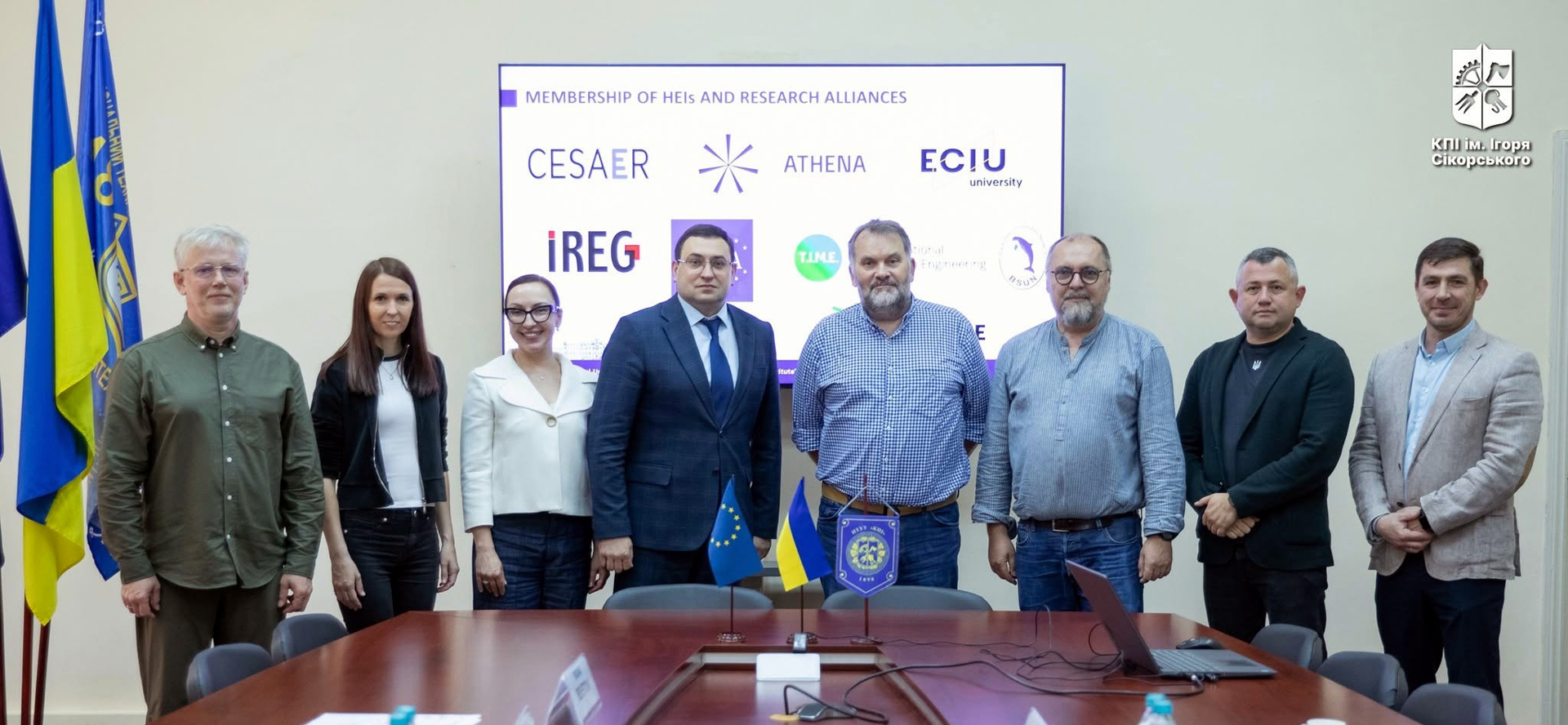
Kyiv Polytechnic has already formed six institutional partnerships with Romanian universities and is involved in joint research projects. This visit marks the beginning of the next phase of cooperation, joining efforts in the new areas of education, research, and technology.


It was agreed that double degree programmes would be launched with Romania’s leading universities; Kyiv Polytechnic and its Romanian partners would be working in concert to build joint R&D laboratories; and that researchers, students, and representatives of the business community would join efforts to carry out projects on security, digitalisation, and industrial innovation.


In this context, it is important to note that Igor Sikorsky Kyiv Polytechnic Institute continues to drive talent pipelines and develop leading research in a wide range of disciplines.


Watch a video for more information about the new phase of international cooperation here:

https://youtu.be/LwOj13_TGxc

NTU “KhPI” Student Global Recognition

Artem Kovalskyi, a student at the National Technical University «KhPI,» became the first Ukrainian representative in history to attend the 4th International Scientific Symposium on Student Research in Mathematics and Statistics in the United States. In his presentation, he presented the results of a study dedicated to current issues in mathematical statistics and computational methods that have broad practical applications in modeling complex processes. The young researcher from Kharkiv Polytechnic actively participates in scientific and practical conferences, has publications, and is the winner of three all-Ukrainian student research competitions. The event brought together over 270 scientists and specialists from 45 countries, during which more than 70 presentations were delivered.

Artem Kovalskyi is a student at the Educational and Scientific Institute of Mechanical Engineering and Transport at the National Technical University «Kharkiv Polytechnic Institute» (NTU «KhPI»). In his presentation at the 4th International Scientific Symposium on Student Research in Mathematics and Statistics (4th International Mathematics and Statistics Student Research Symposium – IMSSRS) he presented a research paper on «Modeling Highly Flexible Adaptive Sigmoid Functions.» As a result of his presentation, the student from Kharkiv Polytechnic received an international certificate, and the abstract of his report was included in the official conference proceedings. The program of the international symposium in the United States included more than 70 presentations selected by an international organizing committee, which included leading researchers from U.S. universities (Grand Valley State University, UNC Wilmington, University of Louisiana at Lafayette, University of Guam, Virginia Commonwealth University). Information about the symposium was published in the official calendar of the Mathematical Association of America (MAA), confirming its high scientific status and international recognition. The conference was held with the support of leading mathematics departments at U.S. universities—Grand Valley State University, Virginia Commonwealth University – and the African Mathematical Union (AMU).

Participation in events of this caliber gives young Ukrainian scientists the opportunity not only to present their own research to the global community but also to strengthen the reputation of the domestic engineering and mathematics schools on the international stage.

As a reminder, in 2025 Artem Kovalskyi became a participant in the prestigious international program Study Tours to Poland. He is actively engaged in research work at the Department of Higher Mathematics at NTU «KhPI,» has published scientific papers, participates in scientific and practical conferences, and is the winner of three All-Ukrainian competitions for student research papers.

Note:

International Mathematics and Statistics Student Research Symposium (IMSSRS) is a global scientific initiative that has been running since 2023 and brings together researchers from every continent. In 2026, representatives from 45 countries and territories joined the symposium, including the United States, Canada, Western European countries, Asia, and Africa. The participation of a representative from Ukraine— a student from NTU «KhPI»—marked an important step in expanding the geographical reach of the symposium’s scientific community to the Eastern European region. The 4th International Scientific Symposium on Student Research in Mathematics and Statistics took place on April 11, 2026, in the United States.

KPI hosts conference on Chornobyl disaster

The Igor Sikorsky Kyiv Polytechnic Institute (KPI) hosted the All-Ukrainian scientific conference “The Chornobyl Disaster: Medical, Environmental and Social Consequences, 40 Years On” — one of the major events co-organised by the university in commemoration of the 40th anniversary of this accident.


Specifically, Kyiv Polytechnic served as a highly effective platform for meaningful engagement, bringing together nuclear scientists, medical professionals, ecologists, demographers, historians, sociologists, Chornobyl cleanup workers, policymakers, and representatives of the academic community in a globally inclusive, interdisciplinary dialogue. Among those taking part were Oleksandr Korniienko, First Deputy Speaker of the Verkhovna Rada (Ukraine’s parliament) and Chairman of the Kyiv Polytechnic’s Supervisory Board; Denys Kurbatov, Deputy Minister of Education and Science of Ukraine; Viacheslav Bohdanov, First Vice-President of the National Academy of Sciences of Ukraine; Halyna Tretiakova, Head of the Verkhovna Rada Committee on Social Policy and Veterans’ Rights Protection; and other high-ranking officials.


Rafael Mariano Grossi, Director General of the International Atomic Energy Agency, and Yurii Vitrenko, Permanent Representative of Ukraine to the International Organisations in Vienna, delivered video messages. The participants focused on reflections on the consequences of the tragic accident at Chornobyl nuclear-power plant, seeking, through shared insights, effective solutions to prevent similar future disasters.


Flowers were laid at the monument to Oleksander Lelechenko, a heroic Chornobyl cleanup worker, within the framework of the conference. A graduate of Kyiv Polytechnic, he is a symbol of astonishing courage and professionalism. Serving as deputy chief of the electrical workshop at Chornobyl nuclear-power plant, he prevented a further explosion on the night of the accident, thereby averting an even more tragic end. Oleksander Lelechenko was posthumously conferred with the title Hero of Ukraine.


Kyiv Polytechnic played a vital role in dealing with the aftermath of the disaster. In the very first days after the accident, specialists of the Faculty of Chemical Technology developed the mobile technology for cleaning up contaminated water under the guidance of Prof Oleksander Shutko, which enabled its rapid and substantial decontamination.


Special thanks are due to the organisers of this well-run and thoughtful event — the Ministry of Education and Science of Ukraine, the National Academy of Sciences of Ukraine, and Igor Sikorsky Kyiv Polytechnic Institute — for drawing scientific community’s attention to the theme of great national importance.


https://iaea.wistia.com/medias/npu19xjr6k

CESAER’s event hosted at European Parliament

On 20 April 2026, a representative of the International Collaboration Department at Igor Sikorsky Kyiv Polytechnic Institute joined online CESAER’s high-level policy event, “R&I in the next EU budget: investing in Europe’s prosperity and competitiveness,” hosted at the European Parliament.


This event placed research and innovation at the centre of the discussion on Europe’s future priorities and investments. It moved beyond a narrow budgetary debate and instead addressed a strategic question: what must Europe invest if it is serious about delivering on its ambitions?


In this context, the event examined the case for approximately €220 billion for FP10 as a credible and politically coherent baseline for a European Union seeking to strengthen its competitiveness, prosperity and resilience, as reflected in the draft reports on FP10 by the European Parliament.


The discussion explored how research and innovation should be understood not as policy silos, but as a foundational capability underpinning progress across Europe’s key priorities.


Participants were also discussing cross-border excellence as a means to pull talent at the European level. They underlined the importance of FP10 capable of functioning as a magnet for talent, including through association with third countries, from a geopolitical perspective.


A strong FP10 would therefore be about far more than research policy alone. It would speak to Europe’s capacity to drive economic strength, industrial renewal, security, preparedness, sustainability, public health, digital leadership and societal well-being.


According to Manuel Heitor, Professor at Portugal’s Instituto Superior Técnico and Chair of European Commission expert group on the future of the Horizon Europe key funding programme for research and innovation, experts have clearly calculated €220 billion for FP10 to accelerate research and innovation. By comparison, the United States spends some €300 billion more annually for R&D than Europe.


“While we debate €175 versus €200 billion at EU level, the real comparison towards global leaders is measured in trillions,” Mattias Björnmalm, Secretary General of the CESAER association (Conference of European Schools for Advanced Engineering Education and Research), wrote on LinkedIn. “At times, it feels like we are arguing about how big or small our puddle should be, while a waterfall is roaring just around the corner.”


Bertrand Bouchet, CEA (Commissariat à l’énergie atomique) Representative in Brussels, acknowledged Europe’s relatively low capacity to transform research results into commercial innovation as the weakness.


Panellists highlighted a transfer to innovation through support for startups under Pillar Three – Innovative Europe. In essence, Europe needs competitiveness based on innovation, increasing productivity, and the high-quality products that could be sold worldwide. In addition, it was pointed out that really guaranteeing the green transition in the digital era can only be feasible with more research and innovation. A more ambitious, integrated approach would boost an increase of 2.6% of GDP by 2035.


René Repasi, Member of European Parliament, compared Horizon Europe to one of the shining stars in the world in terms of innovation, thanks to the European Research Council in particular.


In conclusion, MEP Hélder Sousa Silva emphasised the need to ensure predictable and sufficient resources for Horizon Europe in consideration of a long-term nature of financing projects.


https://www.linkedin.com/posts/mattiasbjornmalm_while-we-debate-175-versus-200-billion-ugcPost-7451995544849166336-Zf4B/?utm_source=social_share_send&utm_medium=android_app&rcm=ACoAAAT4658Bx0WxESHlPYprckRFB0DFXBXwuxg&utm_campaign=share_via


https://research-matters.eu/wp-content/uploads/2026/04/mheitor-FINAL-text-EP-20april2026.pdf

KPI expands cooperation in cybersecurity

A delegation of the Nihon Cyber Defence company (NCD), led by CEO Cartan Joseph McLaughlin, visited the Igor Sikorsky Kyiv Polytechnic Institute (KPI). NCD takes a keen interest in collaborating with Kyiv Polytechnic, which flaunts its solid scientific schools in the domains of cyber security, artificial intelligence and IT in general, the more so as university’s student teams have achieved striking results in international Capture the Flag competitions.


The university administration and representatives of the Institute of Physics and Technology (https://t.me/dekanat_fti) participated in the meeting with the NCD delegation to discuss potential areas of cooperation. Among them were cybersecurity and the defence of critical infrastructure; support for projects on the recovery and reconstruction of critical infrastructure; and joint efforts to counter information threats including information manipulation and interference by foreign actors.


In addition, they considered other potential points for collaboration, including R&D projects with Japanese universities; as well as scholarship programmes for Ukrainian students.


The next step is to finalise the relevant agreements and to define the concrete formats of cooperation.


Headquartered in Tokyo, NCD is a global cyber security company protecting and supporting critical national infrastructure, governments, large organisations and small, medium enterprises from the increasing impact of debilitating cyber-attacks, which continue to increase in frequency and complexity.

KPI students attend workshop on AI in robotics

The Igor Sikorsky Kyiv Polytechnic Institute (KPI) held a workshop under the theme “AI in Robotic Systems for Defence Applications,” organised in collaboration with the International Committee of the Red Cross (ICRC).


In particular, 32 students from the Institute for Applied System Analysis, the Faculty of Informatics and Computer Engineering, and the Faculty of Sociology and Law (FSL), together with ICRC experts, worked on software solutions that comply with the rules of international humanitarian law (IHL).


Following introductory lectures, student teams developed concepts of robotic systems and presented them to the experts.


Among the key issues the participants explored were whether an algorithm may make decisions in place of a human, and when this becomes unacceptable; how to retain human control over AI systems; how cyber operations fall under the purview of IHL; and where the line should be drawn in relation to developer’s liability for the consequences of an algorithm’s operation.


To see how the students of Igor Sikorsky Kyiv Polytechnic Institute learned to harmonise cutting-edge technologies with the IHL rules, watch a two-minute video from the workshop here

https://www.youtube.com/watch?v=lQhVS2rrp68

British Scientists Delivered Lecture

«NTU» Kharkiv Polytechnic Institute (KhPI) organized a unique public lecture featuring leading scientists from the Great Britain. The speakers at the event, which took place at NTU «Kharkiv Polytechnic Institute», were Anastasia Vasylchenkova, editor of the renowned international scientific journal Nature Photonics, and Mindaugas Jarmolovičius examined practical examples of preparing scientific articles for top-level Q1 journals and learned about current trends in building ultra-fast intelligent optical networks. The meeting, held in both offline and online formats, brought together young scientists, students, and the leadership of the National Technical University «KhPI».

An open lecture featuring researchers from the United Kingdom, organized by the Department of Micro- and Nanoelectronics at the National Technical University «Kharkiv Polytechnic Institute» (NTU «KhPI»), was held on the university’s campus. The event took place in a safe shelter and was simultaneously streamed online. The speakers at the event were: Mindaugas Jarmolovičius, a researcher with the Optical Networks Group at University College London (UCL) Mindaugas Jarmolovičius and Anastasia Vasylchenkova, PhD in fiber optics and editor of the journal Nature Photonics.

In the first part of the event, participants were immersed in the world of modern telecommunications. Mindaugas Jarmolovičius delivered a presentation titled «Optical networks and fiber-optic сommunication». He explained how intelligent fiber-optic networks work, enabling the transmission of massive amounts of data and effectively forming the «nervous system» of the digital society. He paid particular attention to the prospects for the development of technologies that are already shaping the future of the internet and global communications. The second part of the lecture was devoted to world-class scientific publications. Anastasia Vasylchenkova presented a report titled «Publishing in Nature Portfolio». The researcher explained how the editorial system of Nature Portfolio journals works, the criteria used to select articles, and what distinguishes Q1-level research. She also shared practical advice for researchers: how to properly structure a manuscript, present results, and avoid common mistakes that could hinder publication.

As noted by the organizer of the event, Kseniia Minakova, a professor in the Department of Micro- and Nanoelectronics at NTU «Kharkiv Polytechnic Institute» (NTU «KhPI»), the collaboration with British colleagues has a history dating back to the 2022 International Physics Tournament. At that time, the scientist from Kharkiv Polytechnic came to Columbia as the head of the Ukrainian National Student Physics Team, while Anastasia Vasylchenkova served as the competition’s president. The event also had a symbolic meaning. The research group in which Mindaugas Jarmolovičius works is led by Professor Polina Bayvel, whose father (Leopold Bayvel) worked at the NTU «Kharkiv Polytechnic Institute» in the Department of Physics in the 1960s–1980s. During the meeting, the scientist’s research works were presented (including a 1972 article), demonstrating the deep historical roots of cooperation between the universities.

The lecture was attended by Acting Rector Professor Yevgen Sokol; Vice Rector for International Relations at NTU «KhPI», Professor Gennadiy Khrypunov; Director of the Educational and Scientific Institute of Computer Modeling, Applied Physics, and Mathematics Oleksiy Larin, as well as scientists, researchers, and students from Kharkiv Polytechnic Institute. The meeting with the British researchers took place at the NTU «KhPI» campus on 9 of April, 2026.

Note:

University College London (UCL), founded in 1826, ranks among the TOP ten universities in the world and has over 51.000 students (more than half of whom are international students from over 150 countries). Students and researchers conduct cutting-edge research across 11 faculties, covering medicine, architecture, engineering, artificial intelligence, as well as the humanities and social sciences. The university is renowned for its interdisciplinary approach to global challenges, and its alumni and faculty include 33 Nobel laureates. The Optical Networks Group (ONG) is a leading international research group that is a structural unit of University College London (UCL), specifically within the Faculty of Engineering.

«Nature Photonics» is a peer-reviewed scientific journal published by Nature Publishing Group. The journal covers research related to optoelectronics, laser science, imaging, communications, and other aspects of photonics, and was founded in 2007. «Nature Photonics» publishes review articles, research papers, news, and reviews, as well as major studies summarizing the latest scientific discoveries in optoelectronics. This is complemented by a selection of articles dedicated to the business side of the industry, covering areas such as technology commercialization and market analysis. Articles published in this journal have received international recognition for upholding high standards of research. The journal is considered one of the leading publications in the field of photonics.

The National Technical University «Kharkiv Polytechnic Institute» is one of Ukraine’s leading and largest technical universities, founded in 1885. Today, NTU «KhPI» comprises 11 academic and research institutes and 103 departments, with over 15.000 students enrolled. Kharkiv Polytechnic ranks among the TOP-5 universities in Ukraine and holds leading positions among domestic higher education institutions in prestigious international rankings. In 2010, NTU «KhPI» attained the status of a national research university. In 2022, the unique IT specialist training program Innovation Campus at NTU Kharkiv Polytechnic was awarded a global «silver» in the field of education. According to the results of the state accreditation by the Ministry of Education and Science of Ukraine in 2025, NTU «KhPI» ranked first among 78 domestic higher education institutions in the engineering and technology field, receiving an «A» rating, and entered the TOP-5 Ukrainian universities in the natural sciences and mathematics category.