European SAWA space mission

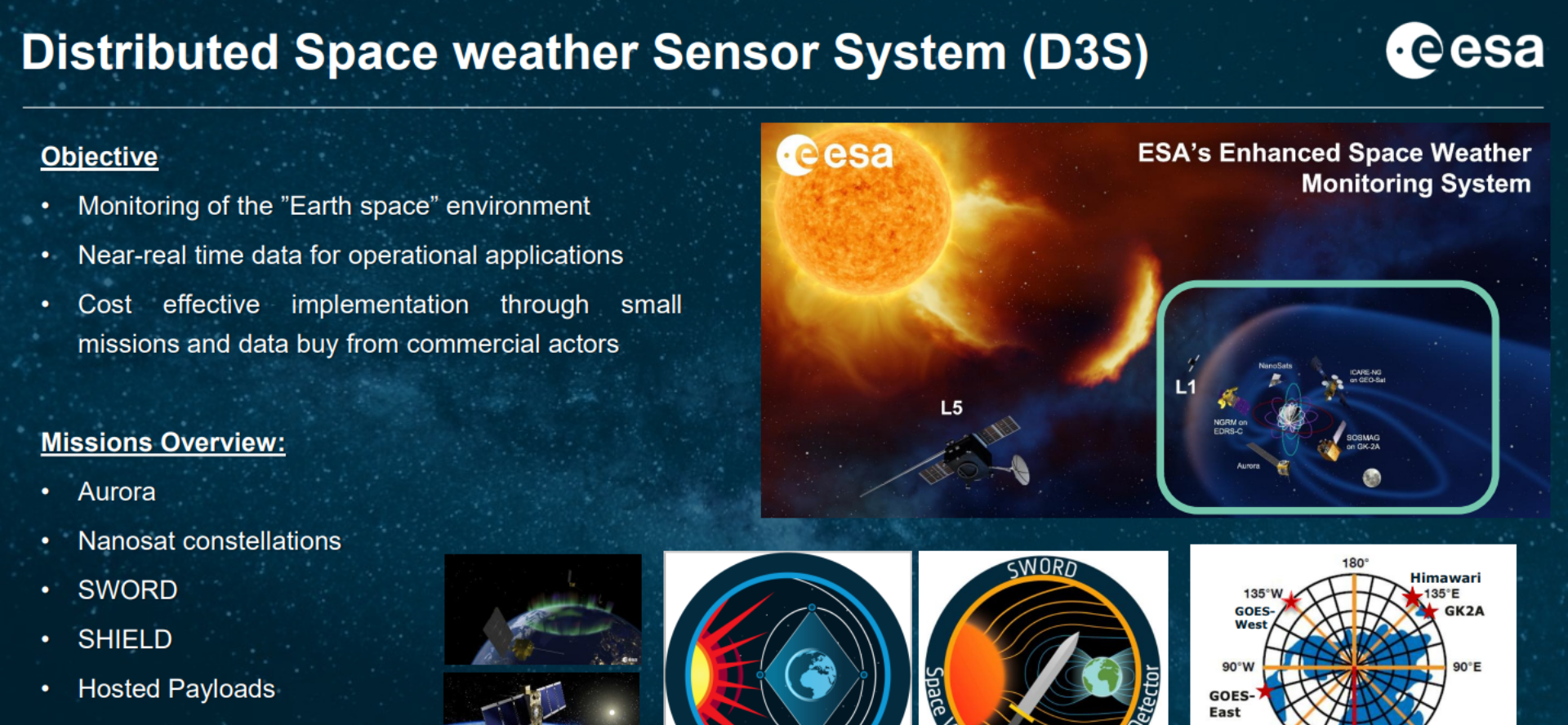
Scientists from the Institute of Ionosphere at the National Technical University «Kharkiv Polytechnic Institute» have joined the team for the SAWA research mission, which is valued at approximately 12 million euros. SAWA will study space weather in low Earth orbit—the region where most modern satellites operate, including those that provide communications, navigation, and the Earth observation. The mission will be a key component of the future European space weather monitoring system, which is being developed as part of the European Space Agency’s Space Safety Program. The program’s main objective is to better understand the interactions between the magnetosphere, the ionosphere, and the upper layers of the Earth’s atmosphere. This will help improve the accuracy of forecasts for space phenomena that can affect the operation of satellite systems and critical ground-based infrastructure.

As part of the international space project SAWA (Small Mission for Space Weather Investigations of Magnetosphere–Ionosphere–Thermosphere Coupling), specialists from the Ionosphere Research Institute at the National Technical University «Kharkiv Polytechnic Institute» provided expert recommendations on current challenges in the study of near-Earth space and the forecasting of atmospheric parameters. Their findings helped justify the inclusion in the SAWA equipment of an instrument for measuring the concentration of atomic oxygen—one of the key components of the upper atmosphere that significantly affects the operation of spacecraft in low Earth orbits. The scientific results of the international SAWA team, led by the Space Research Center of the Polish Academy of Sciences, were recently published in the leading international journal «Acta Astronautica»—the official publication of the International Academy of Astronautics.

Scientists at the Institute of the Ionosphere at NTU «KhPI» explain that the state of near-Earth space and its variability—which is linked to solar activity (space weather)—directly affect the safety of critical space systems, in particular by causing satellites to decelerate. «Most people are used to thinking that there is «no air» in space,» says Dmytro Kotov, director of the Institute of Ionosphere at NTU «KhPI.» «And in a layman’s terms, that’s actually true. For example, at an altitude of 500 km, the number of atmospheric particles is hundreds of billions of times smaller than in the air we breathe. Intuitively, it seems that the deceleration of a satellite moving through such an extremely rarefied atmosphere should be very slight. But it all comes down to distance. It’s like gliding across an icy surface: you can pick up speed and travel quite a distance because friction is low, but you’ll still come to a stop. The same thing happens to spacecraft in the atmosphere. Just imagine the enormous distances they travel over the course of their space-faring lives. For example, a satellite in a circular orbit at an altitude of about 500 km (such as the Starlink satellites) completes 15 orbits around Earth in a day. The length of a single orbit is approximately 42,000 kilometers. That adds up to over half a million kilometers in a day! And in a month? And in a year? That’s why satellites experience significant deceleration and need to be periodically “raised” in orbit. And to do that, a satellite needs a fuel supply.»

The conclusion from this story is simple: a satellite’s lifespan depends on the rate of atmospheric drag, and the rate of atmospheric drag depends on the density of the atmosphere. «So, if we want to predict a satellite’s lifespan or calculate the fuel reserves it needs to operate for a certain period in a given orbit, we must have a long-term forecast of atmospheric density,» summarizes Dmytro Kotov. «But scientists have not yet been able to make accurate predictions.» Earlier, we reported on a stunning incident in which 38 Starlink satellites simultaneously fell out of orbit. Our research showed that at that time, the international standard atmospheric model provided an incorrect forecast even during calm space weather. And during solar storms, the situation is particularly complex.»

Researchers at the NTU «Kharkiv Polytechnic Institute» note that the safety of satellites in space today is one of the main challenges facing modern technology. «Without confidence in the security of satellites in space, there is no guarantee that space communications and navigation will function as intended when needed. No one needs to be told what this means in today’s world. Any country that seeks to ensure its own security and wants to protect itself from aggressive neighbors must stay one step ahead in space. That is precisely why key global players continue to actively invest in space weather research,» emphasizes Dmytro Kotov, director of the Institute of Ionosphere at NTU «KhPI.» According to him, one such large-scale, long-term initiative was the creation of the European Space Agency’s Space Safety Programme. Its goal is to establish a distributed sensor network for continuous monitoring of space weather. An important part of this European system will be the SAWA (Small Mission for Space Weather Investigations of Magnetosphere–Ionosphere–Thermosphere Coupling) satellite project. The nanosatellite, costing about 12 million euros, is scheduled to be launched into a circular Earth orbit at an altitude of approximately 550 km in early 2029.

SAWA will study the complex physical processes of interaction between the Earth’s magnetosphere, ionosphere, and thermosphere. The data obtained will help scientists better understand how near-Earth space is changing, improve space weather models, and enhance the reliability of satellite systems. «Colleagues from the Space Research Center of the Polish Academy of Sciences, the SAWA project coordinator, approached us for expert advice on current challenges in thermosphere research and forecasting,» says Dmytro Kotov. «We helped justify the inclusion of an atomic oxygen concentration meter—nicknamed ANDREW—in the SAWA research equipment. Atomic oxygen is the main component of the atmosphere at altitudes around 500 km, and thus the primary «brake» on satellites flying at these altitudes. But oxygen’s impact on space weather and satellite systems doesn’t stop there. We’re eagerly awaiting the SAWA data because we have ideas on how to derive something fundamentally new from it.»

Researchers at the Institute of the Ionosphere are open about their excitement at working with the SAWA team. «It is an honor for us to contribute to the development of European infrastructure for space weather monitoring,» notes Dmytro Kotov. «It is no less an honor to be co-authors of the SAWA team’s publication in the legendary journal «Acta Astronautica», the official publication of the International Academy of Astronautics, which was founded by Theodor von Kármán, the father of modern aerodynamics.» Acta Astronautica publishes approximately 600 scientific articles each year, of which only one or two are prepared with the participation of Ukrainian researchers. But that’s not the most important thing. Scientists like to say that their scientific findings deepen our understanding of the world we live in. And that’s true. But the results of the SAWA mission will do much more—they will help protect the world. The world of Ukraine. The world of our partners. The world of the future.».

Note:

SAWA (Small Mission for Space Weather Investigations of Magnetosphere–Ionosphere–Thermosphere Coupling) is a future satellite mission of the European Space Agency aimed at studying space weather and investigating magnetosphere–ionosphere–thermosphere interactions. The launch is scheduled for early 2029. The Space Research Center of the Polish Academy of Sciences is leading the SAWA project.

Acta Astronautica is the official journal of the International Academy of Astronautics, which publishes original works in the fields of fundamental engineering, biology, and social sciences, as well as technologies related to peaceful space research, its use for the benefit of humanity and the advancement of science, and the concepts, design, development, and operation of space-based and ground-based systems. It was founded even before the start of the space age (in 1955).

The International Academy of Astronautics is an international non-governmental organization that brings together leading scientists and engineers in the field of space research. It was founded in 1960 on the initiative of Theodore von Kármán.

The article was published: https://www.sciencedirect.com/science/article/pii/S0094576526003693

MicroCAD-2026

The National Technical University «Kharkiv Polytechnic Institute» hosted the 34th International Scientific and Practical Conference «Information Technologies: Science, Engineering, Technology, Education, Health» (MicroCAD-2026). The highlight of the first day of the forum was a plenary session featuring Deputy Minister of Education and Science of Ukraine Denys Kurbatov and speakers from the United Kingdom and Spain. Participants discussed the transformation of the science and innovation sector, the development of core funding for science, global university rankings, and global academic visibility. Special attention was given to the development of international academic cooperation and the interaction of Ukrainian scientists with the Lindau Nobel Laureate Meetings in Lindau, Germany. The conference brought together scientists, educators, and young researchers from Ukraine and other countries around the world. The forum was held online with the support of the Ministry of Education and Science of Ukraine.

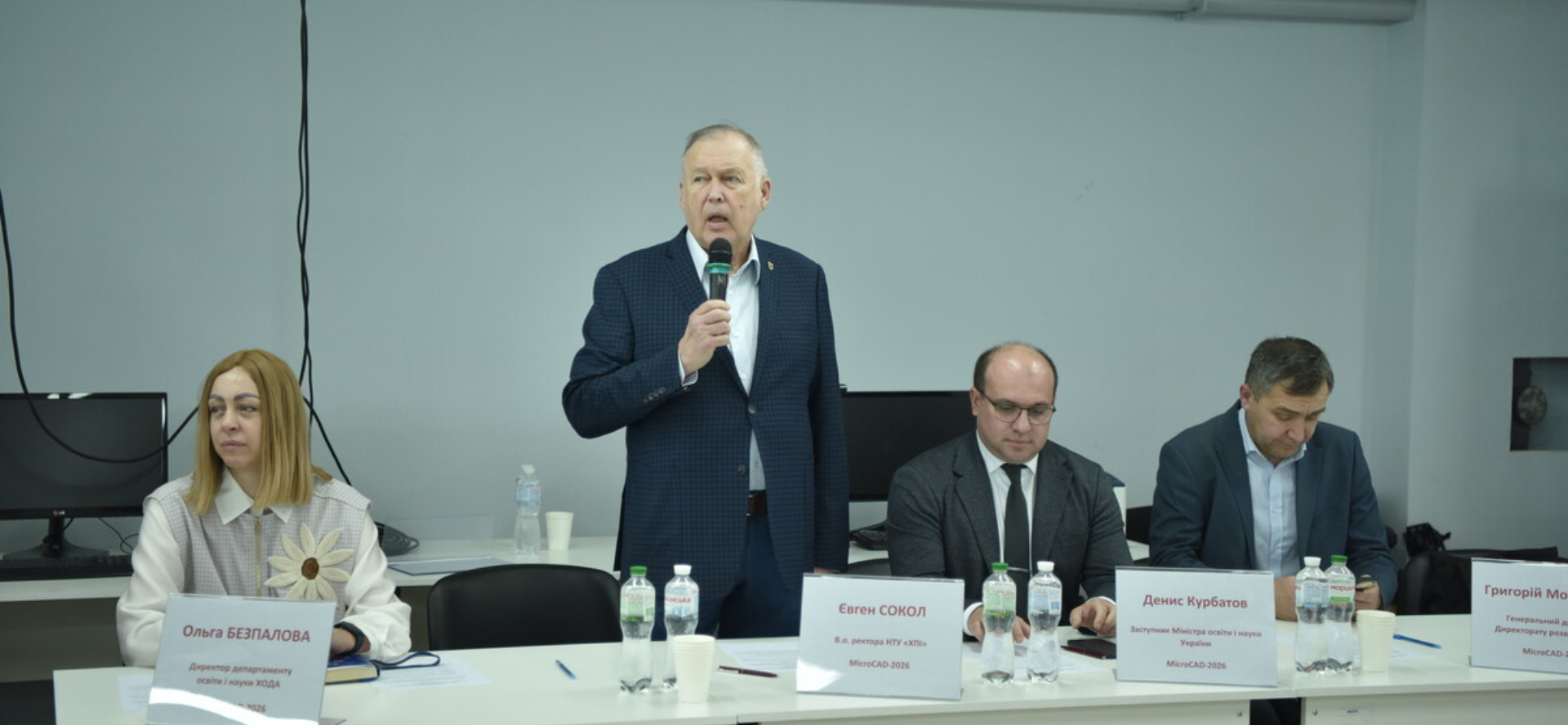
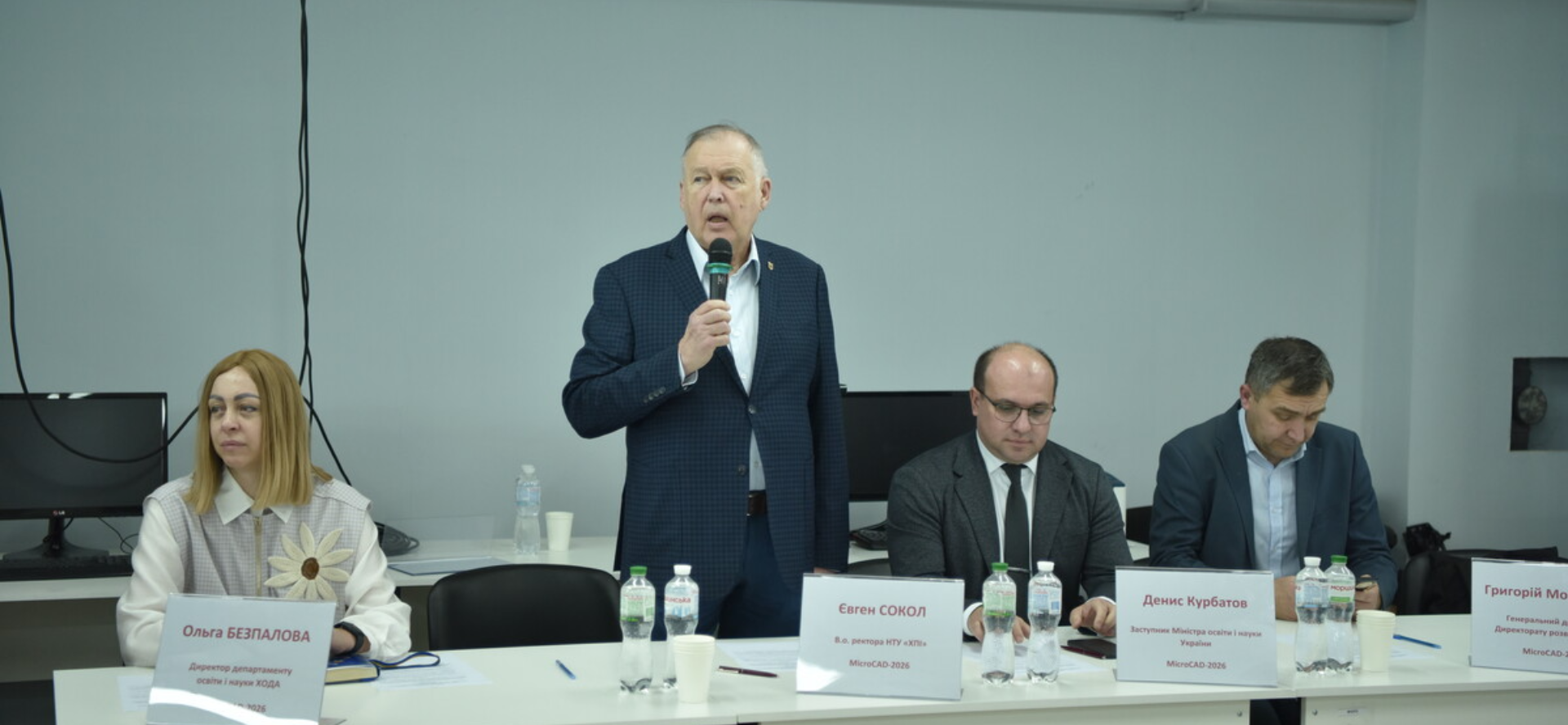
The plenary session was opened by Yevgen Sokol, Acting Rector of the National Technical University «Kharkiv Polytechnic Institute» and Corresponding Member of the National Academy of Sciences of Ukraine. In his remarks, he emphasized that even under the conditions of war,the Hero City of Kharkiv remains one of the key educational and scientific centers in Ukraine, and Kharkiv Polytechnic continues to conduct research, develop international partnerships, and support young scientists. The central event of the forum was a report by Deputy Minister of Education and Science of Ukraine and member of the Scientific and Technical Council of the National Academy of Sciences of Ukraine Denys Kurbatov titled «Transformation of the Science and Innovation Sector. Introduction of Core Funding for Research Institutions and Higher Education Institutions.» He examined key directions for reforming Ukraine’s scientific sector, particularly the development of a system for core funding of university research and the updating of approaches to state-funded research. The Deputy Minister devoted significant attention to supporting research infrastructure and strengthening the role of applied and defense-related research. Participants discussed aspects of modernizing the training of young scientists through the introduction of project-based graduate programs and new approaches to obtaining a PhD. Speakers from the United Kingdom and Spain provided a distinct international dimension to the plenary session.

Sam Duke, a representative of QS Quacquarelli Symonds, gave a presentation titled «Overview of the 2026 rankings cycle: Results of Ukrainian institutions.» It focused on an overview of Ukrainian universities’ positions in global rankings and current approaches to evaluating the performance of higher education institutions. The topic of developing international academic cooperation and the participation of young Ukrainian scientists in global scientific networks sparked keen interest among the audience. The participants paid particular attention to the presentation by Aswin Gopakumar, a senior researcher at the Institute of Chemical Research of Catalonia (ICIQ, Spain), titled «Clean Energy, Scaled: Innovations in Heterogeneous Photo- and Electrocatalysis.» He spoke about research in the fields of clean energy, photocatalysis, and electrocatalysis. The Ukrainian scientific community was represented by Oleksii Larin, Director of the Educational and Scientific Institute of Computer Modeling, Applied Physics, and Mathematics at the National Technical University «Kharkiv Polytechnic Institute» and Corresponding Member of the National Academy of Sciences of Ukraine. The topic of his presentation was «Probabilistic Computational Modeling of the Residual Strength of Vulnerable Atherosclerotic Plaques in Human Blood Vasculature.»

The conference featured 12 scientific sessions covering a wide range of fields—from energy, electronics, mechanical engineering, computer science, and materials science to medical, social sciences, humanities, and security research. Participants discussed issues related to the development of modern information and medical technologies, space research, national security, and innovative approaches in education. For over 30 years, the MicroCAD conference has been one of the main international scientific platforms of the National Technical University «Kharkiv Polytechnic Institute.» Over the years, Nobel Prize laureates in physics Duncan Haldane, William Phillips, and Takaaki Kajita have spoken at the forum’s plenary sessions. Speakers and presenters have included leading global scientists, ministers, university presidents, and representatives of international organizations.

Note:

The 34th International Scientific and Practical Conference MicroCAD-2026 was held at the NTU «Kharkiv Polytechnic Institute» (NTU «KhPI») from May 13 to 16, 2026. The forum’s co-founders are universities and research institutions from Hungary, Poland, Germany, Romania, Bulgaria, and Malaysia. The plenary session took place on May 13, and the sectional sessions were held from May 14 to 16.

DSG2 double degree program

A unique joint project between NTU «Kharkiv Polytechnic Institute» ( NTU «KhPI») and Otto von Guericke University Magdeburg (Germany)—the DSG2 dual-degree program for Ukrainian refugees in Germany—has been in operation since 2022. It offers the opportunity to combine engineering training at NTU «KhPI» with studies in Germany. This format allows students to experience different educational approaches, better understand the European academic system, and prepare for an international career. Currently, 113 students of NTU «KhPI» are already studying at both universities, and another 141 are preparing for admission. Program participants Anton Kresan and Volodymyr Drovnikov share their journey—from language challenges to their first professional steps.

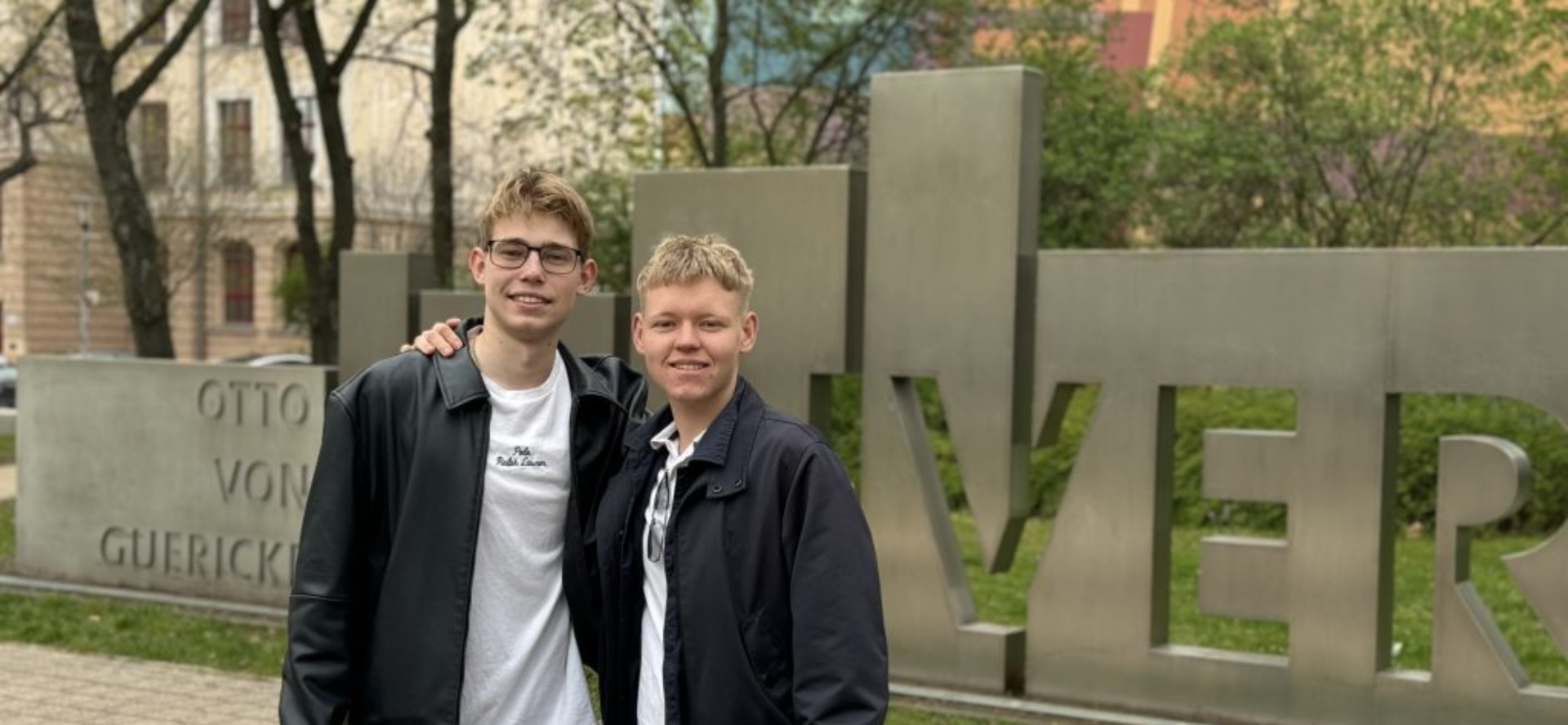
Anton Kresan (IKM-723в) and Volodymyr Drovnikov (E-123a), students at the National Technical University «Kharkiv Polytechnic Institute,» are enrolled in the DSG2 dual-degree program at Otto von Guericke University in Magdeburg, Germany. Here, they are not only receiving a European education but also gradually building their own professional paths, combining Ukrainian engineering training with the practices of a German technical school. The first year was a period of intense immersion in a new academic reality for them—with a fast pace, different approaches to learning, and a constant sense of challenge. «This stage was a mix of emotions: difficult, unfamiliar, but at the same time very interesting,» recalls Anton. Volodymyr adds: «My impressions are very positive. I’m really glad I enrolled in this program and got into my major.» One of the most memorable moments for him was the project to build a LEGO robot—from the initial idea to the final presentation: «It was a kind of mini-model of my future professional work.» It is precisely these kinds of tasks that help students experience how theory translates into practice and forms engineering thinking.

Language became the most serious barrier: even at the B1–B2 level, lectures are difficult to follow at first due to the terminology and the pace of instruction. «It’s difficult at first with both B1 and B2. It all depends on how quickly you adapt and whether you keep learning the language,» notes Anton. Eventually, adds Volodymyr, confidence sets in: lectures become clearer, and everyday communication becomes more natural. The most important thing is not to be afraid to speak: «I haven’t encountered any negative reactions because of my language—on the contrary, people are supportive.»

The structure of the learning process became a revelation in itself: more freedom means more responsibility. There is no constant supervision here, but there is a clear understanding that the outcome depends on the student themselves. «It’s not about coercion, but about the fact that you yourself determine how far you want to go,» explains Anton. This approach teaches students to manage their time, work systematically throughout the semester, and independently organize not only their studies but also their daily lives. At the same time, this experience isn’t limited to the classroom: students at Kharkiv Polytechnic are already working within the university environment. Volodymyr Drovnikov teaches math in a preparatory course for German freshmen and joins to the M2 module: «I prepare materials, conduct classes, and record students’ results.»

Anton Kresan works as a research assistant at the Institute of Engineering and Automation at Otto von Guericke University. In a lab that collaborates with ODVA, he tests technical solutions. For him, this is an opportunity to simultaneously pursue his degree in Electrical Engineering and Information Technology at NTU «Kharkiv Polytechnic Institute» and in Magdeburg. Combining study and work, they say, is entirely feasible provided one is self-organized. «I have 35 hours a month, and I choose when to work,» says Anton. Volodymyr emphasizes that such a workload does not interfere but, on the contrary, complements his studies with practical experience. The main motivation for both remains a sense of personal growth: «I’m motivated by the fact that I’m doing something truly useful and growing as a person,» says Volodymyr, while Anton adds: «When you see that you didn’t understand something yesterday, but today you can already explain it to someone else—that’s really energizing.»

Speaking from their own experience, students at NTU «Kharkiv Polytechnic Institute» advise future program participants not to be afraid of a new environment, to communicate more, and not to view the language barrier as insurmountable. «Don’t shy away from meeting new people—the language barrier is temporary,» Anton emphasizes. At the same time, it’s important to maintain a balance between studies and life—spending time with friends, relaxing, and pursuing hobbies, adds Volodymyr, who describes his experience in Magdeburg as «an interesting, useful, and exciting journey». Summing it up, Anton puts it succinctly: «It’s tough, but definitely worth it!» It is precisely in these words, as emphasized by the DSG2 program coordinator and head of the German Education Center at NTU «KhPI,» Professor Denys Meshkov, that its essence is most accurately conveyed: it is a demanding path that requires independence, discipline, and perseverance, but at the same time opens up new academic, professional, and personal opportunities.

«We are truly proud of our students: they represent NTU «KhPI» with dignity in Germany and prove that Ukrainian engineering education has strong potential and a bright future,» notes Denys Meshkov.


Note:

The DSG2 dual-degree program is a comprehensive educational initiative designed to support Ukrainian high school graduates who are currently in Germany or other EU countries due to the war. Given the specificities of the European education system, graduates of Ukrainian high schools are typically unable to enroll directly in German universities. Under the DSG2: neo program, they first enroll at NTU «KhPI» and begin their studies remotely. After completing their first year, students are admitted to Otto von Guericke University in Magdeburg, where they continue their studies as full-fledged students of the German university. The program involves moving to Magdeburg and living in a student dormitory. The DSG2: neo project is being implemented by NTU «KhPI» in collaboration with Otto von Guericke University Magdeburg and has been active since June 2022. It is aimed at Ukrainian applicants currently in Germany and covers priority fields of study such as electrical engineering, mechanical engineering, and chemical technology. The updated agreement on the implementation of the DSG2neo dual-degree program between NTU «KhPI» and Otto von Guericke University was signed in Magdeburg (Germany) on April 13, 2026.

Otto von Guericke University Magdeburg (OVGU) is one of the country’s leading technical universities, located in the city of Magdeburg. Founded in 1993 through the merger of several educational and research institutions, it is named after the German scientist and inventor Otto von Guericke. The university has a distinct focus on engineering, technology, and the natural sciences. Its main fields of study include electrical engineering, mechanical engineering, computer science, energy, chemistry, and medical engineering. Significant attention is paid to research activities and collaboration with industry. OVGU actively participates in international educational programs and academic mobility projects, maintaining partnerships with universities in various countries, including Ukraine. The partnership between Otto von Guericke University and the National Technical University «KhPI» has a long history.

NTU «KhPI» joins European dialogue

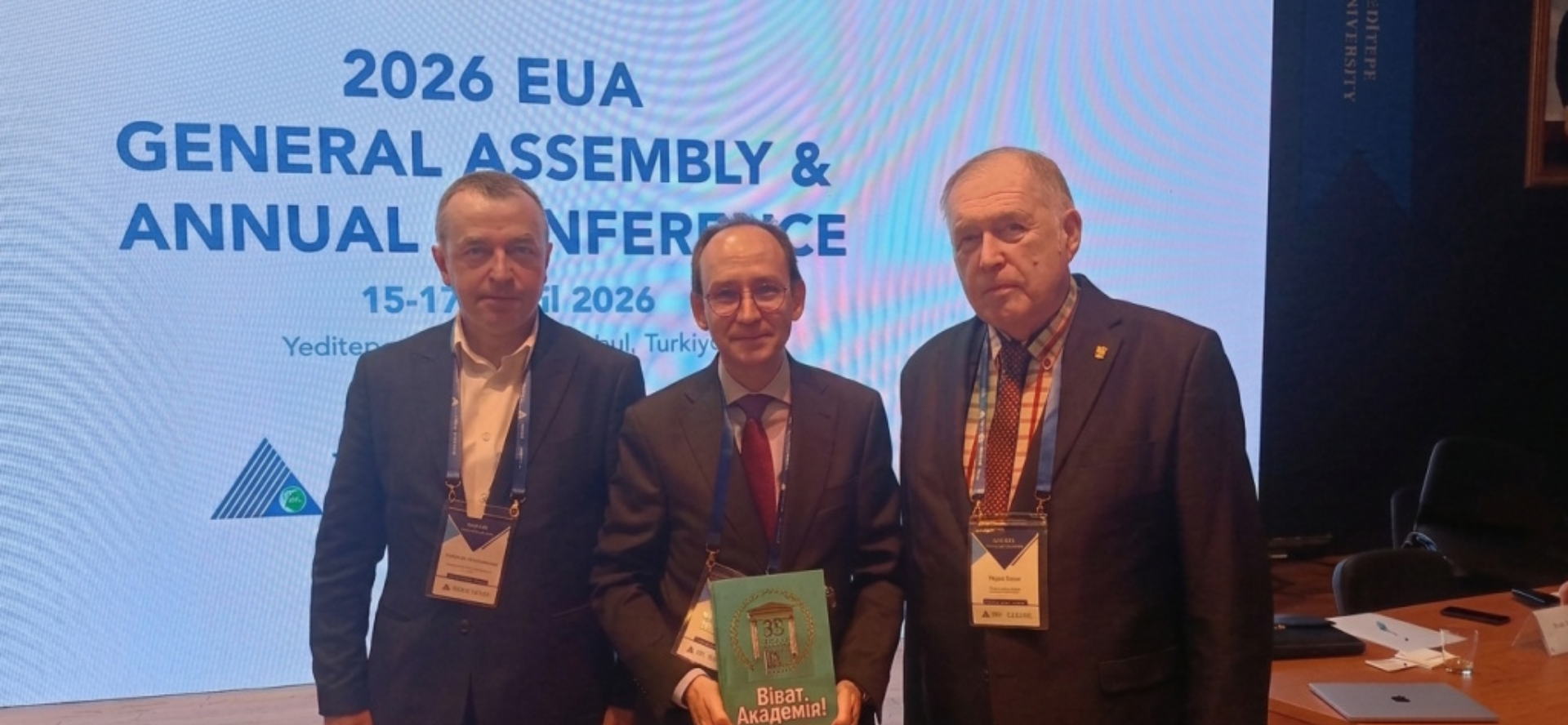
Professor Yevgen Sokol, Rector of the National Technical University «Kharkiv Polytechnic Institute,» participated in the 2026 EUA Annual Conference, organized by the European University Association (EUA). One of the leading annual forums for leaders of European higher education institutions took place at Yeditepe University in Istanbul. The theme of this year’s event was «University cooperation in changing contexts.» The EUA Annual Conference brought together university administrators, experts, and partners from various European countries. The event’s goal was to discuss the strategic development of higher education, international cooperation, research, and innovation. The Association represents universities and rectors’ conferences from 48 countries and plays a key role in shaping European education policy and the development of the Bologna Process.

This year’s European University Association conference focused on the transformation of university collaboration in the context of geopolitical shifts, technological advancements, sustainable development, and economic challenges. Participants discussed how universities can build effective partnerships with one another, with the public sector, industry, and international organizations—at the local, national, and international levels. For NTU «KhPI,» participation in such an event holds special significance. Amid the war, the massive challenges facing Ukrainian education, and the need for further integration into the European educational and scientific space, the university continues to develop international partnerships, academic mobility programs, dual degree programs, and joint educational and scientific initiatives. «For Kharkiv Polytechnic Institute, participation in the European University Association conference is not only an opportunity to be part of a pan-European dialogue but also an important step toward strengthening the position of Ukrainian technical education in Europe. Today, universities must do more than just cooperate—they must jointly respond to the challenges of our time,» noted Professor Yevgen Sokol, Rector of NTU «KhPI.»

During the conference, particular attention was paid to the role of universities in maintaining academic resilience, fostering innovation, and developing new models of international partnership. These issues are extremely relevant for Ukrainian universities, as they concern not only educational integration but also the support of scientific potential, student mobility, and the country’s long-term recovery. «Ukrainian universities are currently operating under extraordinary conditions, yet they demonstrate a strong capacity for development, adaptation, and international collaboration. NTU «KhPI» is consistently moving toward deepening cooperation with European partners, and it is precisely platforms such as the EUA Annual Conference that open up new opportunities for dialogue and joint projects,» emphasized Yevgen Sokol.

Participation in the 2026 EUA Annual Conference was the confirmation of the active international role of the National Technical University «Kharkiv Polytechnic Institute» (NTU «KhPI») and its commitment to being a full-fledged participant in the European higher education area. The university will continue to work on expanding partnerships, developing modern educational programs, and enhancing academic mobility. «The future of universities lies in openness, trust, and cooperation. It is through partnership that we can create new opportunities for students, faculty, researchers, and the entire Ukrainian higher education system,» emphasized the rector of NTU «KhPI.»

The involvement of representatives from NTU «Kharkiv Polytechnic Institute» in events of this caliber helps strengthen the university’s international standing, expand its presence in European educational networks, and create new prospects for the development of engineering education in Ukraine.

Participation in the 2026 EUA Annual Conference reaffirmed the active international role of the NTU «Kharkiv Polytechnic Institute» (NTU «KhPI») and its commitment to being a full-fledged participant in the European higher education area. The university will continue to work on expanding partnerships, developing modern educational programs, and enhancing academic mobility. «The future of universities lies in openness, trust, and cooperation. It is through partnership that we can create new opportunities for students, faculty, researchers, and the entire Ukrainian higher education system,» emphasized the rector of NTU «KhPI.»

The involvement of representatives from Kharkiv Polytechnic Institute in events of this caliber helps strengthen the university’s international standing, expand its presence in European educational networks, and create new prospects for the development of engineering education in Ukraine.

Note:

Yeditepe University is a private institution of higher education located in Istanbul, Turkey. It is a modern university offering programs taught in English, founded in 1996. Yeditepe University is a member of the European University Association (EUA). The independent THE university ranking places this institution of higher education at 1.501st in the world.

The National Technical University «Kharkiv Polytechnic Institute» is one of Ukraine’s leading and largest technical universities, founded in 1885. Today, NTU «KhPI» comprises 11 academic and research institutes and 103 departments, with over 15,000 students enrolled. Kharkiv Polytechnic is among the top 5 universities in Ukraine and ranks highly among domestic higher education institutions in prestigious international rankings. In 2010, NTU «KhPI» acquired the status of a national research university. In 2022, the unique IT specialist training program Innovation Campus at NTU «Kharkiv Polytechnic Institute» was awarded a global «silver» in the field of education. According to the results of the state accreditation by the Ministry of Education and Science of Ukraine in 2025, NTU «KhPI» ranked first among 78 domestic higher education institutions in the engineering and technology field, receiving an «A» rating, and entered the top 5 Ukrainian universities in the natural sciences and mathematics category.

The European University Association – 2026 EUA Annual Conference took place in Istanbul on April 16–17, 2026.

Black Sea Science Competition

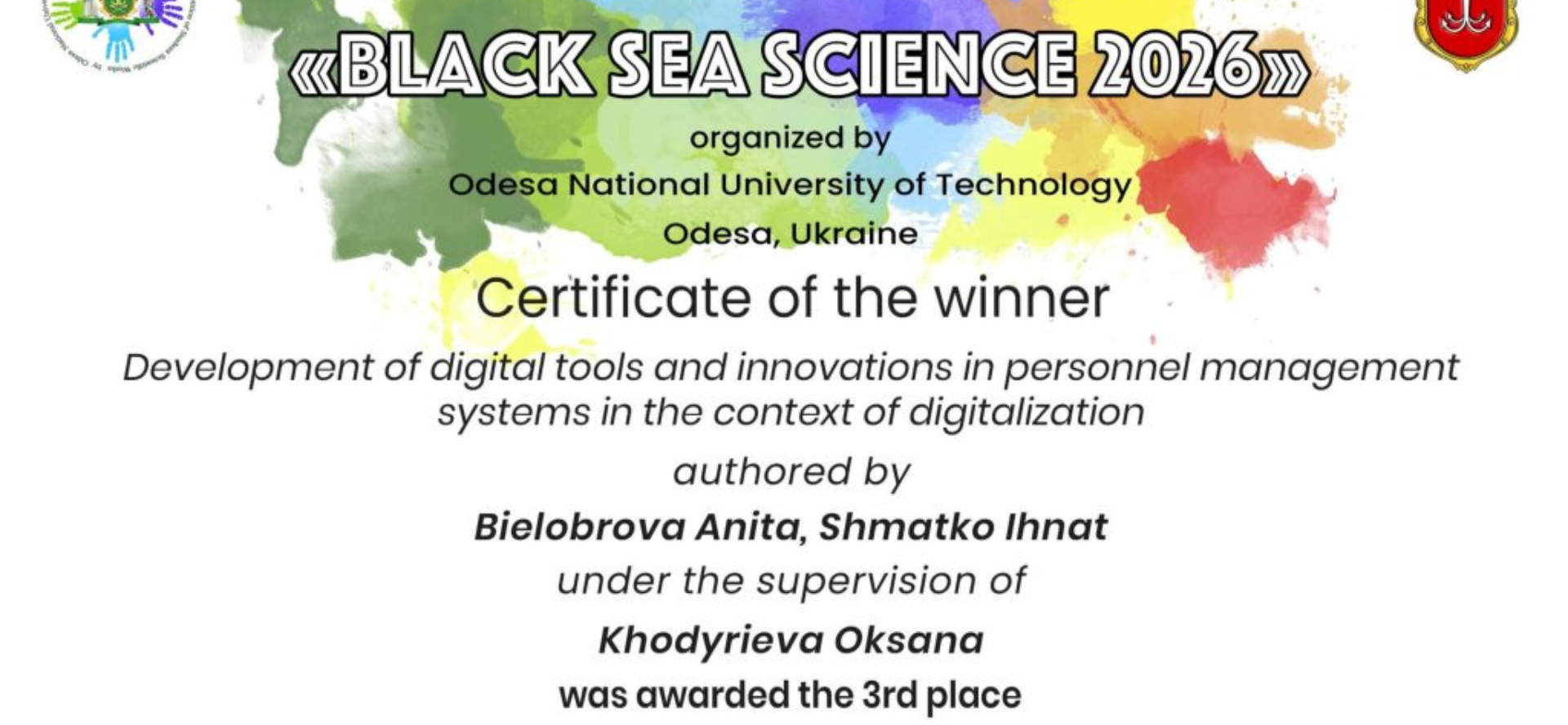
Students from the National Technical University «Kharkiv Polytechnic Institute» have won an award at the international level. Ihnat Shmatko and Anita Bielobrova emerged as winners of the «Black Sea Science» online competition for student research projects. The event brought together over 100 participants from various countries. The Polytechnic students’ project focused on the digitalization of human resources management. The research was conducted under the guidance of Associate Professor Oksana Khodyrieva. Based on the selection results, the team took third place among 73 projects.

Students from NTU «KhPI» Ihnat Shmatko (Department of Computer Modeling of Processes and Systems, Educational and Scientific Institute of Computer Modeling, Applied Physics, and Mathematics), as well as Anita Bielobrova (Department of Management, Educational and Scientific Institute of Economics, Management, and International Business) won the International Research Competition «Black Sea Science.» Under the guidance of Oksana Khodyrieva, Associate Professor of the Department of Management, they prepared a study on the interdisciplinary topic «Development of Digital Tools and Innovations in Personnel Management Systems in the Context of Digitalization.» The authors analyzed the use of modern technologies and software solutions to improve HR processes, particularly the automation of employee recruitment, evaluation, and development.

Following the results of the competitive selection process, the project took third place among 73 submitted research projects. We sincerely congratulate the participants and their research advisor on this significant achievement and wish them continued success!

We would like to remind you that students from the Kharkiv Polytechnic Institute have repeatedly been named laureates and winners of the «Black Sea Science» competition.

Note:

The «Black Sea Science» International Student Research Competition is held annually at Odessa National Technological University under the auspices of the Ministry of Education and Science of Ukraine and the Black Sea Universities Network. The goal of the event is to expand international ties and engage students in scientific research in the fields of food science, economics, information technology, energy, and ecology. Participants go through several selection stages, and the best papers are chosen based on criteria of relevance, scientific novelty, and practical significance.

Supervisory Board meeting

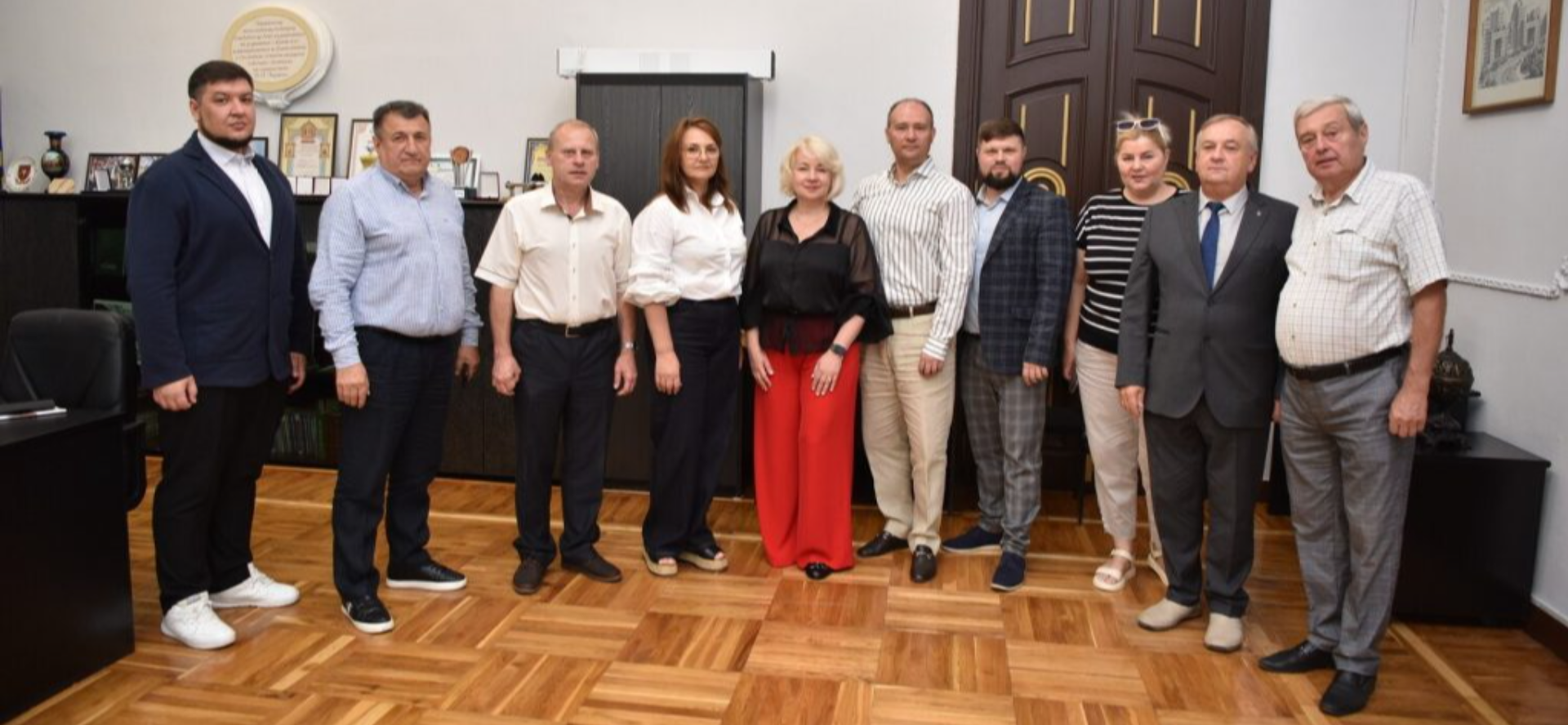
On May 6, 2026, a meeting of the Supervisory Board was held at the National Technical University «KhPI». The rector of NTU «KhPI», Professor Yevgen Sokol, presented a report on the results of 2025 and outlined the goals and objectives for the coming year.

The participants were shown the NTU «KhPI’s» results for this period, as well as the university’s plans and prospects for development. Issues related to improving the educational process, the transformation of engineering education, research, attracting prospective students, and other topics were discussed. Rector Yevgen Sokol highlighted the university’s high rankings in Ukraine and globally, as well as its international projects, and spoke about the unique dual-degree program with German universities, specifically DSG2.

The following individuals attended the Supervisory Board meeting: Vasyl Khmelnytskyi, First Vice President of the Ukrainian Union of Industrialists and Entrepreneurs and Chairman of the Supervisory Board; Ihor Lurin, Vice President of the National Academy of Medical Sciences of Ukraine and Deputy Chairman of the Supervisory Board; Alla Pyvovar, Director of the Kharkiv Regional Directorate of JSC «Ukrgasbank» and Secretary of the Supervisory Board; Viktoria Kinzburska, Member of the Ukrainian Parliament; Viktor Kovtun, People’s Artist of Ukraine; Eduard Naboka, Executive Director of the Kharkiv Branch of the Ukrainian Union of Industrialists and Entrepreneurs; Oleg Kuprigin, Chairman of the Supervisory Board of the public joint-stock company «Turbogaz.» On behalf of NTU «KhPI,» representatives of the Rector’s Office and the University’s Research Department participated in the meeting.

Note:

The Supervisory Board of the NTU «Kharkiv Polytechnic Institute» (NTU «KhPI») was established in July 2017 to create the conditions necessary for addressing the university’s current and future development goals, with the aim of advancing the development of domestic education and integrating it into the global educational system. The Supervisory Board of NTU «KhPI» includes. prominent representatives of government organizations, as well as figures from industry, business, education, and science who are not employees of the university and have significant professional achievements in the fields of education and science, and who enjoy considerable trust within their educational, scientific, professional, and creative communities, as well as in public organizations. The Supervisory Board of NTU «KhPI» is headed by Vasyl Khmelnytskyi, First Vice President of the Ukrainian Union of Industrialists and Entrepreneurs and founder of K.Fund.

MicroCAD-2026

The National Technical University «Kharkiv Polytechnic Institute» hosted the 34th International Scientific and Practical Conference «Information Technologies: Science, Engineering, Technology, Education, Health» (MicroCAD-2026). The highlight of the first day of the forum was a plenary session featuring Deputy Minister of Education and Science of Ukraine Denys Kurbatov and speakers from the United Kingdom and Spain. Participants discussed the transformation of the science and innovation sector, the development of core funding for science, global university rankings, and global academic visibility. Special attention was given to the development of international academic cooperation and the interaction of Ukrainian scientists with the Lindau Nobel Laureate Meetings in Lindau, Germany. The conference brought together scientists, educators, and young researchers from Ukraine and other countries around the world. The forum was held online with the support of the Ministry of Education and Science of Ukraine.

The plenary session was opened by Yevgen Sokol, Acting Rector of the National Technical University «Kharkiv Polytechnic Institute» and Corresponding Member of the National Academy of Sciences of Ukraine. In his remarks, he emphasized that even under the conditions of war,the Hero City of Kharkiv remains one of the key educational and scientific centers in Ukraine, and Kharkiv Polytechnic continues to conduct research, develop international partnerships, and support young scientists. The central event of the forum was a report by Deputy Minister of Education and Science of Ukraine and member of the Scientific and Technical Council of the National Academy of Sciences of Ukraine Denys Kurbatov titled «Transformation of the Science and Innovation Sector. Introduction of Core Funding for Research Institutions and Higher Education Institutions.» He examined key directions for reforming Ukraine’s scientific sector, particularly the development of a system for core funding of university research and the updating of approaches to state-funded research. The Deputy Minister devoted significant attention to supporting research infrastructure and strengthening the role of applied and defense-related research. Participants discussed aspects of modernizing the training of young scientists through the introduction of project-based graduate programs and new approaches to obtaining a PhD. Speakers from the United Kingdom and Spain provided a distinct international dimension to the plenary session.

Sam Duke, a representative of QS Quacquarelli Symonds, gave a presentation titled «Overview of the 2026 rankings cycle: Results of Ukrainian institutions.» It focused on an overview of Ukrainian universities’ positions in global rankings and current approaches to evaluating the performance of higher education institutions. The topic of developing international academic cooperation and the participation of young Ukrainian scientists in global scientific networks sparked keen interest among the audience. The participants paid particular attention to the presentation by Aswin Gopakumar, a senior researcher at the Institute of Chemical Research of Catalonia (ICIQ, Spain), titled «Clean Energy, Scaled: Innovations in Heterogeneous Photo- and Electrocatalysis.» He spoke about research in the fields of clean energy, photocatalysis, and electrocatalysis. The Ukrainian scientific community was represented by Oleksii Larin, Director of the Educational and Scientific Institute of Computer Modeling, Applied Physics, and Mathematics at the National Technical University «Kharkiv Polytechnic Institute» and Corresponding Member of the National Academy of Sciences of Ukraine. The topic of his presentation was «Probabilistic Computational Modeling of the Residual Strength of Vulnerable Atherosclerotic Plaques in Human Blood Vasculature.»

The conference featured 12 scientific sessions covering a wide range of fields—from energy, electronics, mechanical engineering, computer science, and materials science to medical, social sciences, humanities, and security research. Participants discussed issues related to the development of modern information and medical technologies, space research, national security, and innovative approaches in education. For over 30 years, the MicroCAD conference has been one of the main international scientific platforms of the National Technical University «Kharkiv Polytechnic Institute.» Over the years, Nobel Prize laureates in physics Duncan Haldane, William Phillips, and Takaaki Kajita have spoken at the forum’s plenary sessions. Speakers and presenters have included leading global scientists, ministers, university presidents, and representatives of international organizations.

Note:

The 34th International Scientific and Practical Conference MicroCAD-2026 was held at the NTU «Kharkiv Polytechnic Institute» (NTU «KhPI») from May 13 to 16, 2026. The forum’s co-founders are universities and research institutions from Hungary, Poland, Germany, Romania, Bulgaria, and Malaysia. The plenary session took place on May 13, and the sectional sessions were held from May 14 to 16.

Dual Degree Program

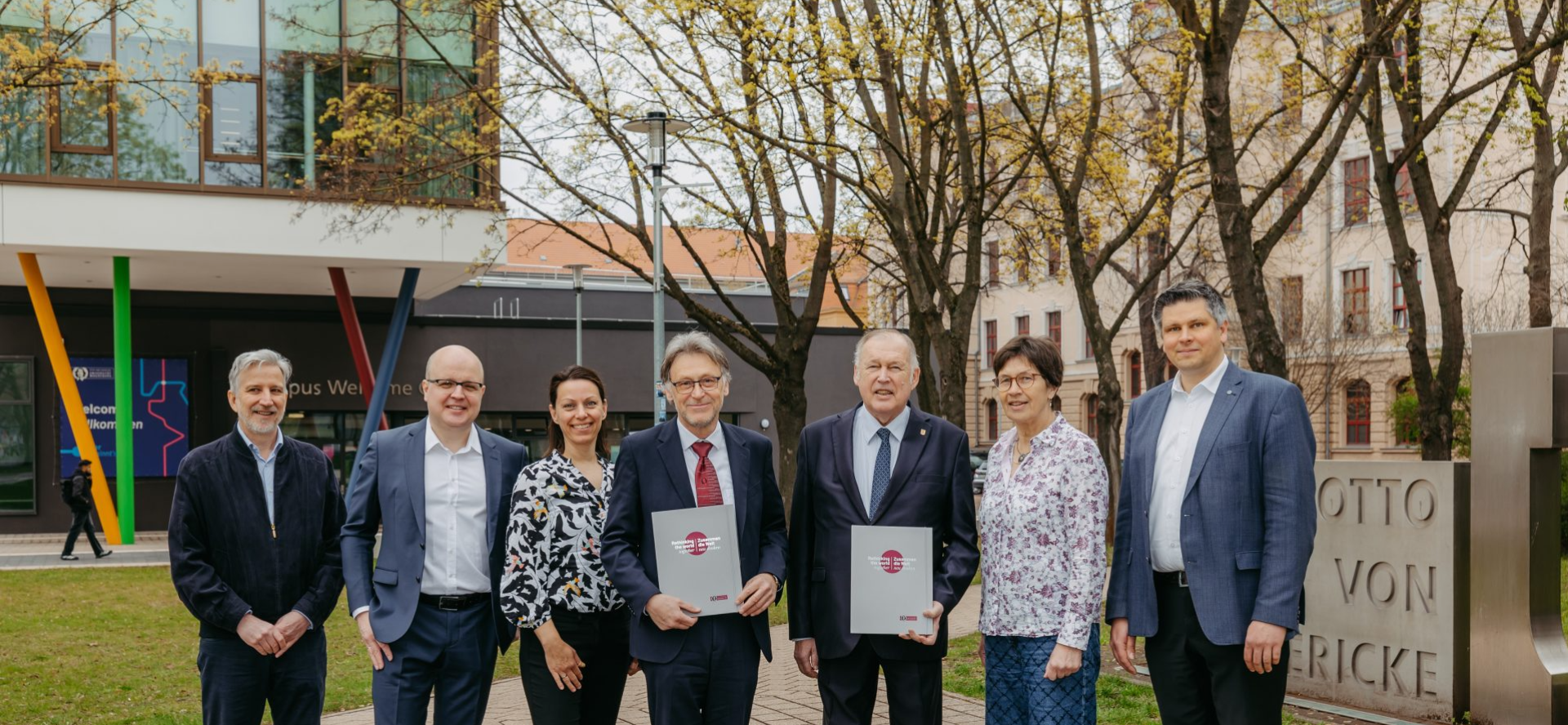
A ceremonial signing of the updated agreement on the implementation of the DSG2neo dual-degree program took place in Magdeburg. This joint educational project between the National Technical University «Kharkiv Polytechnic Institute» (NTU «KhPI») and Otto von Guericke University (OVGU) was launched in 2022. The program is aimed at Ukrainian applicants currently residing in Germany. In addition, the heads of the Ukrainian and German universities approved a new framework agreement on further academic cooperation between the higher education institutions. The updated documents detail the list of agreed-upon educational programs through which students can earn a dual degree, and also define the model of academic mobility, the number of ECTS credits, the procedure for mutual recognition of courses and grades, the conditions for continuing studies at OVGU, and the procedures for preparing and defending bachelor’s theses at both universities.

The partnership between the National Technical University «KhPI» and Otto von Guericke University Magdeburg (OVGU) has a long history, and the DSG2/DSG2neo project is one of the key areas of this collaboration. The updated framework agreement establishes a wide range of joint activities between the universities: academic exchanges of students at various levels of study, cooperation among academic, research, and administrative staff, the implementation of joint research projects and programs, participation in conferences and seminars, as well as the exchange of academic information, materials, and institutional experience. The signing of the updated DSG2neo agreement is of particular significance, as it elevates the dual-degree program to a new level of institutional certainty.

«While the previous cooperation framework laid the groundwork for academic mobility, the new agreement regulates all key mechanisms for implementing the program in much greater detail: the structure of the program, the procedure for transferring to a partner university, the academic recognition of results, selection procedures, coordinators’ responsibilities, quality control mechanisms, and the legal and organizational aspects of the program’s operation,» explains Denis Meshkov, the DSG2neo project coordinator on behalf of NTU «KhPI» and head of the «German Technical Faculty» educational center.

Among the most important features of the updated agreement is a clear definition of the coordinated educational programs at both universities through which the dual degree is offered. This means that the collaboration is shifting from a general model to a precisely structured system with defined study paths for specific majors. In addition, the agreement details the academic mobility model, the number of required ECTS credits, the conditions for continuing studies at OVGU, the procedure for mutual recognition of modules and grades, as well as the mechanism for preparing and supervising the bachelor’s thesis at both universities. Another important innovation is that the agreement sets out in much greater detail the quality assurance procedures, regular evaluation of the program’s effectiveness, the role of local academic coordinators, as well as issues related to personal data protection, the responsibilities of the parties, intellectual property rights, dispute resolution, and the procedure for extending or terminating the agreement. All of this makes the DSG2neo program significantly more transparent, sustainable, and understandable for students and both universities.

It should be noted that the updated DSG2neo program is implemented with the support of the DAAD. Program participants are eligible to apply for DAAD scholarship support, which is awarded to students on a competitive basis, provided they successfully meet academic requirements and demonstrate a strong motivation to study in a German university environment. For students, this is not only recognition of their potential but also a practical means of financial support during their studies and stay in Germany.

«The signing of two updated documents in Magdeburg was a significant moment for NTU «KhPI». It confirmed the high level of trust between the universities, demonstrated the stability of the Ukrainian-German academic partnership, and marked the beginning of a new phase in the development of joint educational initiatives. For Kharkiv Polytechnic Institute, this is another important step toward strengthening its international presence, expanding opportunities for students, and further integration into the European educational space,» noted NTU «KhPI» Rector Professor Yevgen Sokol.

Note:

The approval of the updated agreement on the implementation of the DSG2neo dual-degree program between NTU «KhPI» and OVGU took place in Magdeburg (Germany) on April 13, 2026. The documents were signed by NTU «KhPI» Rector Professor Yevhgen Sokol and Rector of OVGU Prof. Dr.-Ing. Jens Strackeljan). The event was attended by: the DSG2neo project coordinator from NTU «KhPI,» Head of the Educational Center «German Technical Faculty» Denis Meshkov; the DSG2neo project coordinator from Otto von Guericke University Magdeburg, Martin Wolter; and other representatives of OVGU.

The DSG2: Dual Degree Program neo is a comprehensive educational support program for Ukrainian refugees who were forced to leave Ukraine and are currently residing in Germany or other European Union countries. Given the specificities of the European education system, in most cases Ukrainian refugees who have graduated from high school are unable to enroll directly in universities immediately after completing their Ukrainian high school education. To participate in the DSG:2 program and gain admission to a German university, a high school graduate must enroll in the first year at NTU «KhPI» and begin studying remotely. After completing the first year, program participants are admitted to the first year at a German university and begin their studies in Germany as full-fledged German students. The program includes relocation to Magdeburg and accommodation in a dormitory.

The DSG:2 dual-degree program, implemented by the National Technical University «KhPI» and Otto von Guericke University Magdeburg, launched in June 2022. It is aimed at Ukrainian applicants currently residing in Germany. Priority fields of study include electrical engineering, mechanical engineering, and the chemical industry.

KhPI Wins Green Oscar

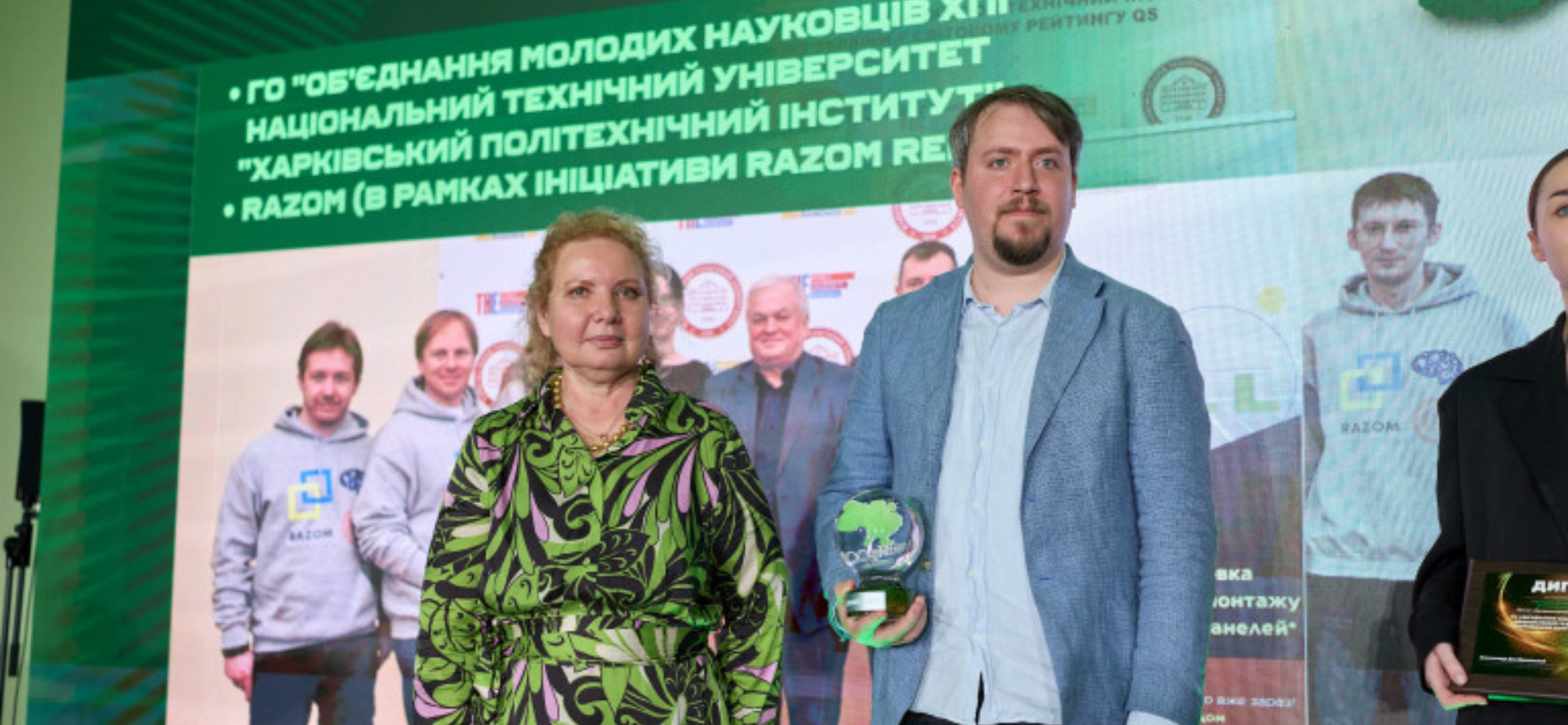
EcoSKILL, an innovative educational retraining program for internally displaced persons in the field of solar energy, implemented at the National Technical University «Kharkiv Polytechnic Institute,» has received the «Green Oscar» from Global 100 RE Ukraine. The initiative combines theoretical training with hands-on practice using modern equipment, and also provides for the subsequent employment of participants and support in starting their own businesses. The program brought together over a hundred participants and was recognized as the «Best Training Project for the Energy Transition». It is implemented by the public organization «Association of Young Scientists of NTU «KhPI» with financial support from Razom for Ukraine.

The EcoSKILL project, developed by the public organization «Association of Young Scientists of NTU «KhPI» with the support of Razom for Ukraine, was named one of the winners of the 100 gREen AWARD-2025. The awards ceremony took place in Kyiv with the participation of leading representatives from the government, business, and the energy sector. The event was opened by Oleksandr Dombrovskyi, Chairman of the Board of Global 100 RE Ukraine; Iryna Tykhomirova, President of the International Institute of Management; Artem Rybchenko, Deputy Minister of Community and Territorial Development of Ukraine; Hanna Zamazeyeva, Head of the State Agency for Energy Efficiency and Energy Saving of Ukraine; and Hennadiy Chyzhykov, President of the Ukrainian Chamber of Commerce and Industry. A particularly emotional highlight of the evening was the participation of Ruslana—global ambassador for renewable energy, Ukrainian singer, and winner of Eurovision 2004.

According to Global 100 RE Ukraine, the award is given to the best completed projects in the field of green transformation in Ukraine. EcoSKILL was among the 18 laureates in its category. The program at NTU «Kharkiv Polytechnic Institute» was recognized for its practical focus and for creating a real «bridge» to employment. This is evidenced by the involvement of a wide range of partners: «Kharkiv Volunteers Union Charitable Foundation», local employment centers, employers, and representatives of the renewable energy market. Over 100 internally displaced persons have joined the project since its launch.

Global 100 RE Ukraine emphasizes: «EcoSKILL is not just a pilot project, but a scalable model that can be adapted in other regions of Ukraine.» The organization also highlights that this case study demonstrates an important aspect of the green transition: it is not just about building new generating capacity or purchasing equipment, but also about developing human capital—reskilling, new career opportunities, and building the workforce needed for the energy transition. EcoSKILL’s strength lies in the combination of university expertise, international support, business demand, and a clear social mission.

Note: 

A presentation of the new EcoSKILL course for TDPs in the field of solar energy was held at the National Technical University «Kharkiv Polytechnic Institute» in February 2025. A Roundtable discussion was held, bringing together more than two dozen representatives from various sectors: faculty and instructors from Kharkiv Polytechnic Institute, businesspeople in the solar energy sector, including the «Ukrainian Solar Energy Association,» the Kharkiv Volunteer Union, the Kharkiv Employment Center, and other interested stakeholders.

The EcoSKILL project was launched at the National Technical University «Kharkiv Polytechnic Institute» in March 2025. The program lasts 2.5 months and includes courses on the installation and maintenance of solar power plants, hands-on training, workshops on running your own business, psychological support, and assistance with job placement through job fairs. In addition, participants will receive a separate training program focused on launching their own business in the solar energy sector.

Global 100 RE Ukraine is a non-governmental organization dedicated to the development of renewable energy in Ukraine. This organization works to accelerate the country’s energy transition and achieve energy independence based on clean and sustainable energy.

NTU “KhPI” Student Global Recognition

Artem Kovalskyi, a student at the National Technical University «KhPI,» became the first Ukrainian representative in history to attend the 4th International Scientific Symposium on Student Research in Mathematics and Statistics in the United States. In his presentation, he presented the results of a study dedicated to current issues in mathematical statistics and computational methods that have broad practical applications in modeling complex processes. The young researcher from Kharkiv Polytechnic actively participates in scientific and practical conferences, has publications, and is the winner of three all-Ukrainian student research competitions. The event brought together over 270 scientists and specialists from 45 countries, during which more than 70 presentations were delivered.

Artem Kovalskyi is a student at the Educational and Scientific Institute of Mechanical Engineering and Transport at the National Technical University «Kharkiv Polytechnic Institute» (NTU «KhPI»). In his presentation at the 4th International Scientific Symposium on Student Research in Mathematics and Statistics (4th International Mathematics and Statistics Student Research Symposium – IMSSRS) he presented a research paper on «Modeling Highly Flexible Adaptive Sigmoid Functions.» As a result of his presentation, the student from Kharkiv Polytechnic received an international certificate, and the abstract of his report was included in the official conference proceedings. The program of the international symposium in the United States included more than 70 presentations selected by an international organizing committee, which included leading researchers from U.S. universities (Grand Valley State University, UNC Wilmington, University of Louisiana at Lafayette, University of Guam, Virginia Commonwealth University). Information about the symposium was published in the official calendar of the Mathematical Association of America (MAA), confirming its high scientific status and international recognition. The conference was held with the support of leading mathematics departments at U.S. universities—Grand Valley State University, Virginia Commonwealth University – and the African Mathematical Union (AMU).

Participation in events of this caliber gives young Ukrainian scientists the opportunity not only to present their own research to the global community but also to strengthen the reputation of the domestic engineering and mathematics schools on the international stage.

As a reminder, in 2025 Artem Kovalskyi became a participant in the prestigious international program Study Tours to Poland. He is actively engaged in research work at the Department of Higher Mathematics at NTU «KhPI,» has published scientific papers, participates in scientific and practical conferences, and is the winner of three All-Ukrainian competitions for student research papers.

Note:

International Mathematics and Statistics Student Research Symposium (IMSSRS) is a global scientific initiative that has been running since 2023 and brings together researchers from every continent. In 2026, representatives from 45 countries and territories joined the symposium, including the United States, Canada, Western European countries, Asia, and Africa. The participation of a representative from Ukraine— a student from NTU «KhPI»—marked an important step in expanding the geographical reach of the symposium’s scientific community to the Eastern European region. The 4th International Scientific Symposium on Student Research in Mathematics and Statistics took place on April 11, 2026, in the United States.