Thammasat Hosts 11th SUN Conference

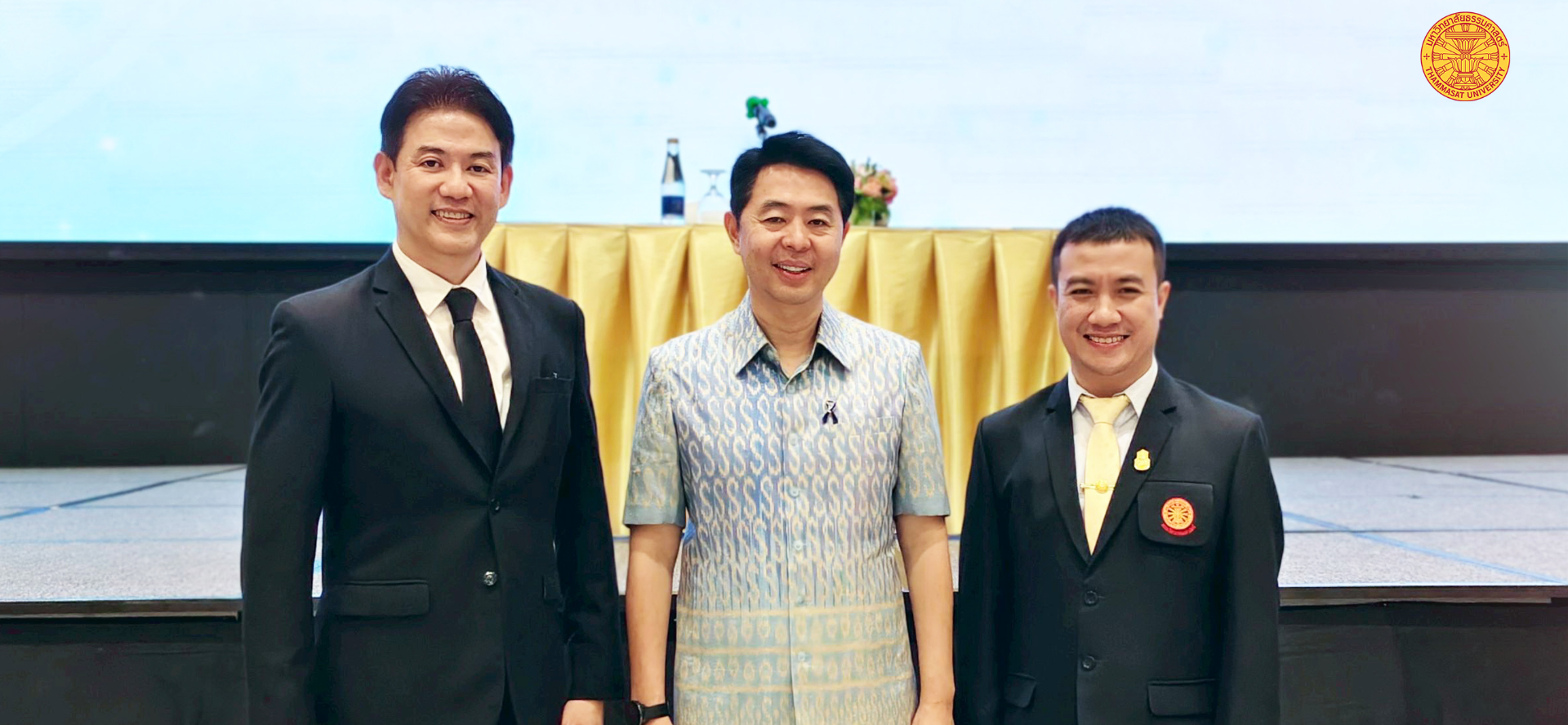
On February 2, 2026, at the Phra Kiao Pavilion, Chulalongkorn University, Assoc. Prof. Chol Bunnag, along with the working committee, represented Thammasat University in taking over the role of host for the 11th conference of the Sustainable University Network of Thailand (SUN Thailand). The event marks a significant milestone in demonstrating Thammasat University’s commitment to being a leader in sustainable development.

Asst. Prof. Chol Bunnag, Assistant to Rector for Quality Development and Sustainability at Thammasat University, stated that by hosting the 11th event, Thammasat aims to foster learning and innovation, enabling member universities to find solutions to global crises through teaching, research, and campus management, aligning with its “sustainability for the future” vision. The university emphasizes becoming a “mechanism for real change” locally by applying research for community and commercial development, integrating diverse knowledge for tangible progress. This establishes a responsive learning cycle relevant to Thai society for true sustainability.

The Sustainable University Network of Thailand (SUN Thailand) currently comprises over 65 higher education institutions across the country. Its primary mission is to facilitate knowledge exchange and collaboratively drive initiatives in alignment with the United Nations Sustainable Development Goals (SDGs). Furthermore, SUN Thailand serves as a crucial component at the regional level, being a member of the Asian Sustainable Campus Network (ASCN), alongside leading university networks from Japan, China, and South Korea, to collaboratively establish a foundation for environmentally friendly and socially responsible university management on an international scale.

Chula–WEF Global Risks Report 2026

Professor Dr. Wilert Puriwat, President of Chulalongkorn University, presented key findings from The Global Risks Report 2026, for which Chulalongkorn University serves as the sole partner institution in Thailand collaborating with the World Economic Forum. He was joined by Associate Professor Dr. Kanyarat Sanoran, Assistant to the President for Research with International Organizations and Institutional Partnerships, as co-presenter, while Assistant Professor Dr. Nhabhat Chaimongkol, Assistant to the President for Administration and Deputy Spokesperson, served as the moderator.

The report presents assessments of various risks faced by countries worldwide, including Thailand, over the short, medium, and long term. The analysis is based on surveys of 1,300 experts from academia, business, government, the international community, and civil society, as well as 11,000 business leaders from 116 countries and 160 subject-matter experts across the World Economic Forum’s platforms and diverse global networks.

The report identifies critical threats that must be addressed to navigate global volatility and competition, spanning five dimensions of risk: economic, environmental, geopolitical, societal, and technological. It highlights clear differences in risk perceptions at the global, regional, and national (Thailand) levels. Globally, the findings point to concerns over geoeconomic confrontation, state-based armed conflict, extreme weather events, societal polarization, and misinformation and disinformation. In contrast, Thailand faces a distinct set of economic challenges that differ markedly from those of its Southeast Asian neighbors and the global context.

Key Research Findings for Thailand

Thailand’s top five risks in 2026 clearly underscore economic concerns. Ranked first is debt (encompassing public debt, corporate debt, and household debt), which stands at only 17th globally. This is followed by economic downturn, lack of economic opportunity or unemployment, adverse outcomes of artificial intelligence technologies, and inequality (encompassing wealth and income). These concerns differ significantly from global and Southeast Asian risk profiles, which do not prioritize debt and inequality to the same extent. The findings indicate that Thailand’s risks are deeply rooted in economic security, highlighting urgent issues that require focused attention and accelerated policy action.

Long-Term Risks

At the global level, the 10-year outlook (to 2036) shifts decisively toward environmental threats. Extreme weather events, biodiversity loss and ecosystem collapse, and critical change to Earth systems rank among the most severe long-term risks. Misinformation and disinformation (currently a major short-term concern) remain significant in the long run, alongside adverse outcomes of artificial intelligence technologies.

Risk Mitigation Approaches

The report outlines key strategies for addressing these risks, including national and local regulations, financial instruments, public awareness and education, research and development, corporate strategies, development assistance, multi-stakeholder engagement, minilateral treaties and agreements, and global treaties and agreements. For Thailand, adopting these approaches can enhance resilience to economic instability and emerging environmental threats, in alignment with global best practices.

Professor Dr. Wilert Puriwat emphasized that The Global Risks Report 2026 highlights Thailand’s unique position amid economic and environmental challenges, which differ from global and regional priorities. Thailand must strike a balance between immediate economic recovery and long-term sustainability to ensure a stable future. The report serves as a call to action for policymakers, businesses, and communities to respond with urgency.

Read more at: https://www.chula.ac.th/en/news/290089/

Chula Hosts ISA Cultural Fest 2026

The International Student Affairs (ISA) Division of the Chulalongkorn University Student Council recently organized the ISA Cultural Fest 2026 on January 27, 2026, at Sala Phra Kieo, Chulalongkorn University, to promote understanding of cultural diversity and create a shared learning space for students from various countries. Associate Professor Dr. Sukanya Sompiboon, Vice President of Chulalongkorn University, presided over the opening ceremony. 

For Assoc. Prof. Dr. Sukanya, Chulalongkorn University is not only an institution that fosters academic excellence but also one that strives to cultivate students with empathy, respect for differences, and the readiness to stand together in a multicultural society. 

“This event creates a space where everyone can be seen and feel that they belong here. Some may have crossed oceans to study here, while others may have simply crossed the street. But today, we have all stepped into the same space—a space where no one is ‘foreign’ anymore. At Chula, we do not divide between ‘them’ and ‘us’; we unite as one strong ‘we.’” 

The festival featured cultural booths from international students representing more than 15 countries, showcasing national cuisines, traditional attire, arts and culture, and stage performances. The event fostered a lively atmosphere of friendship and cross-cultural exchange. 

The university was also honored by the presence of representatives from several embassies, including the Embassy of the Islamic Republic of Pakistan, the Embassy of the Federal Republic of Nigeria, and the Embassy of the Republic of Indonesia. Their participation reflected the role of education in strengthening international cooperation and mutual understanding. 

ISA Cultural Fest 2026 is considered another significant activity supporting the Sustainable Development Goals (SDGs), particularly SDG 4 (Quality Education), promoting lifelong learning and the acceptance of cultural diversity; SDG 10 (Reduced Inequalities), fostering an inclusive society and reducing cultural gaps; and SDG 17 (Partnerships for the Goals), encouraging collaboration between educational institutions and embassies to build international understanding. The event reaffirmed Chulalongkorn University’s role as a leading university that is open and respectful of global diversity. 

In closing, the Vice President expressed her appreciation to the ISA team and all students who dedicated their hearts to organizing the event, proving that “diversity is not something to fear, but the strength of the Chula community.” 

Read more at: https://www.chula.ac.th/en/news/288250/

Thammasat Welcomes Israeli Ambassador

On 28 January 2026, Professor Dr. Supasawad Chardchawarn, Rector of Thammasat University, received a courtesy call from H.E. Ms. Alona Fisher-Kamm, Ambassador of the State of Israel to Thailand, on the occasion of her assumption of duty and introductory visit. The Ambassador was accompanied by senior officials from the Israeli Embassy. The welcoming meeting was also attended by Thammasat University’s Vice Rector and the Assistant to the Rector for International Affairs.

The visit aimed to explore potential avenues for academic cooperation between Thammasat and academic institutions in Israel, with particular emphasis on joint seminars, collaborative research, short-term academic programs and other cooperative initiatives.

During the discussion, the Rector highlighted the importance of internship opportunities at the undergraduate level across all disciplines to enhance students’ practical experience and career readiness. He also emphasized Thammasat University’s interest in strengthening knowledge and research capacity in the fields of agriculture and medical technology, areas that align closely with Israel’s recognized expertise.

The Assistant to the Rector further noted Thammasat’s strong commitment to the United Nations Sustainable Development Goals (SDGs) and expressed the University’s readiness to collaborate on SDG-related activities.

This visit represented a significant step in strengthening educational and academic ties between Thammasat and institutions in Israel.

Thammasat Graduates Achieve 92% Employment Rate, Highlighting ‘Strong Soft Skills’

Thammasat University has
revealed the results of a survey on the employment status of its bachelor
’s degree graduates, indicating an employment rate of
92.62%, which shows a continuous increase from previous cohorts. This reflects
the strength of the curriculum and the readiness of graduates to enter the
labor market. The majority of graduates, accounting for 64.77%, are employed in
the private sector, followed by 15.83% in government positions and 12.45% in
independent businesses. This success is attributed to the essential special
skills that the university consistently provides to students throughout the
program, such as the integration of practical professional skills, internships
with leading organizations both domestically and internationally, and a
cooperative education and career development center that effectively assists in
career path planning.


Professor Dr. Supasawad Chardchawarn, Rector of Thammasat
University
,
commented on a survey of 6,366 graduates, revealing that those in the health
sciences group had the highest employment rate at 95.67%, followed by social
sciences and humanities at 92.46%, and science and technology at 91.32%. This
reflects the continued high demand for labor in the health sector in the
post-COVID-19 era, as well as the potential for curriculum development and
effective support from the university. Additionally, the average monthly income
of graduates has increased by approximately 2.78% compared to the previous
graduating class.


Mook – Arthitayaphorn Palasoon, a graduate of
the Faculty of Nursing at Thammasat University
, stated
that the curriculum at Thammasat University is robust and fully aligned with
the higher education qualification standards. It effectively integrates real
professional skills, allowing students to gain work experience and build
confidence as they prepare to enter the job market. These elements are crucial
in making Thammasat graduates highly sought after in the labor market, as they
are well-equipped with both professional skills and the ability to adapt to a
rapidly changing work environment. Furthermore, Thammasat graduates possess
outstanding soft skills, enabling them to collaborate effectively with others,
adapt well, think critically, speak boldly, take action, and exhibit
creativity.


Additionally, graduates
from faculties, colleges, and institutions in the social sciences and
humanities fields have been found to have equally high employment rates,
exceeding 90%. For instance, the Faculty of Learning Sciences and Education has
an employment rate of 98.33%, the Faculty of Commerce and Accountancy 96.56%,
the Faculty of Sociology and Anthropology 94.64%, the Faculty of Journalism and
Mass Communication 93.36%, the Faculty of Law 92.04%, the Faculty of Liberal
Arts 91.39%, and the Faculty of Fine Arts 91.18%, among others.


The aforementioned
statistics result from the systematic implementation of curriculum development
that aligns with the demands of the labor market at Thammasat University. In
terms of knowledge and essential skills that influence employability, critical
thinking, proficiency in foreign languages, and communication are significant
factors that enhance job-seeking opportunities. Therefore, in addition to
academic knowledge, soft skills are equally important in creating
differentiation in the labor market.


Thammasat University
continues to uphold its position as a
“Leading
Comprehensive University for Future Societies”
by focusing on producing
graduates with the knowledge and adaptability needed for a rapidly changing
work environment. The university is committed to developing curricula that
align with labor market demands, fostering a learning-friendly environment, and
supporting employment opportunities through internship programs, career
guidance, and essential skill development, enabling graduates to adapt and
compete confidently in the job market.


Sasin to Launch “Innovation Turbo” Program

The Sasin School of Management, Chulalongkorn University, is preparing to launch a short executive program titled “Sasin Innovation Turbo: Winning the Future – Leading with Innovation in the Age of Disruptions.” This new program combines online learning with intensive on-site workshops, aiming to equip participants to cope with major global changes and to build innovation-driven, sustainable strategies for Southeast Asia. 

In an era of rapid change, Sasin Innovation Turbo helps executives and organizational leaders understand and anticipate “signals of the future” across multiple dimensions—technology, demographics, the environment, and geopolitics—using knowledge and strategic thinking frameworks specifically designed for leadership in times of uncertainty. 

The program is taught by two leading innovation experts: Dr. Robert C. Wolcott, a faculty member at the Kellogg School of Management and Booth School of Business and an expert in innovation and future studies; and Associate Professor Dr. Piyachart Phiromswad, Associate Director for Learning Solutions and full-time faculty member at Sasin. Dr. Piyachart is the creator and instructor of the “Age of Disruptions” course and is one of the Southeast Asian speakers selected to represent the region at the TED Idea Search stage.  

Sasin Innovation Turbo integrates face-to-face and online learning, consisting of the following components: 

  • Pre-Turbo: Participants engage in self-paced online learning along with 2–3 live Zoom sessions (2 hours each), held on Saturday or Sunday evenings. 
  • Turbo Week: A full week of face-to-face classes at Sasin in the afternoons (with at least 80% attendance required). This intensive learning experience includes workshops, case study analyses, special Sasin Turbo Talk sessions featuring industry experts who share real-world experiences, and site visits to leading organizations. 
  • Post-Turbo: The program concludes with a group project and collective reflection, delivered through 1–2 live Zoom sessions (2 hours each). 

This program is designed for executives and organizational leaders who seek maximum value in a short time frame. Sasin Innovation Turbo offers deep, hands-on learning through practical application, case analysis, and future-oriented strategy design—strengthening leadership capabilities to both anticipate and shape organizational direction in an age of uncertainty. 

Program dates: March 2 – May 3, 2026 

Application deadline: February 16, 2026 

Apply at: https://tinyurl.com/ycx39ue4 

For more information: [email protected] 

Tel.: +66 94-671-5797 

About Sasin 

The Sasin School of Management, Chulalongkorn University, is Thailand’s first international business school. It was founded through a collaboration between Chulalongkorn University, the Kellogg School of Management, and The Wharton School. Sasin’s vision is to be a world-class management institution for the future, with a mission to inspire, connect, and transform in order to create a better, smarter, and more sustainable world. Sasin aims to develop leaders who make a positive global impact by leading for the future. 

Read more at: https://www.chula.ac.th/en/news/285691/

Thammasat University Partners with CP to Develop Entrepreneurs for the 5.0 Era

On April 3, 2025, at True Tower Ratchada, Thammasat University, Rangsit campus, a collaboration discussion with Charoen Pokphand Group (CP) was held through the exchange of visions to prepare for the transition into the 5.0 era. The common goal is “to develop curricula and learning models that meet the demands of the new world,” aiming to produce graduates with comprehensive skills in AI technology, creativity, and practical business understanding. The meeting was led by Professor Dr. Supasawad Chardchawarn, the Rector of Thammasat University, along with the executive teams of Thammasat and Charoen Pokphand Group (CP). Thammasat University and Charoen Pokphand Group have collaborated for over 20 years. The partnership began with student exchange programs with Shanghai International Studies University (SISU), and has expanded to internships for Thammasat students with CP Group.

Professor Dr. Supasawad Chardchawarn affirmed the strong partnership between CP and Thammasat University. CP’s 104 years of growth and adaptability, along with its focus on essential consumer goods, position it for continued success. The collaboration aims to develop a workforce that meets business needs and contributes to sustainable national development. One of the key projects that has been further discussed is the “Entrepreneur Project,” providing opportunities for students to learn the process of becoming an entrepreneur, from the initial concept to practical implementation. This initiative aims to prepare them for the new business world and to inspire young entrepreneurs.

Mr. Soopakij Chearavanont, Chairman of the CP Group, stated that they are in a significant transitional era. CP must adapt swiftly, not merely to keep pace with the world but to lead by cultivating talented individuals who are proficient in utilizing technology.

Mr. Thanakorn Seriburi, Vice Chairman of CP Group, as a pioneer in the relationship between CP and Thammasat University, revealed that the collaboration between CP and Thammasat University is a valuable relationship because it is not merely an exchange of knowledge; they create real experiences for Thai students on the international stage. The partnership with SISU University, which started from a small group, has now expanded to several faculties and is evolving into new projects, such as the “Tao Kae” or the Entrepreneurs project, reflecting that human development is the most powerful long-term investment.

Dr. Teerapol Tanomsakyut, Chief of Data Strategy and Organizational Communication and Chief of Sustainability and Strategic Development, further stated that today, human development needs to go beyond traditional learning to create real-world experiences. The “Tao Kae” project with Thammasat University will provide a space for students to become entrepreneurs, learning from idea to business operation. This model combines creativity, technology, and entrepreneurship.

In addition to project-based collaboration, CP also has executives who play a continuous role in providing academic support, such as Mr. Prasertsak Ongwattanakul, Senior Consultant of the Automotive and Industrial Business Group in China. He continues to serve as a guest lecturer in various faculties at Thammasat University, sharing real-world business experiences in the classroom to prepare students to face challenges in the actual working world.

CP and Thammasat University firmly believe that the deep integration of the power of educational institutions and the private sector is the key to building a strong human capital to propel Thailand forward in a rapidly changing world.


Chula Students Win at Accounting Challenge

Chulalongkorn University congratulates students from the Department of Accounting, Chulalongkorn Business School, on winning first prize and runner-up in the 12th Thailand Accounting Challenge 2026, organized by the Thailand Federation of Accounting Professions under the Royal Patronage of His Majesty the King (TFAC). The competition, held on January 24, 2026, at the Professor Kesree Narongdej seminar and training center, 6th floor, TFAC Building, aimed to provide a platform for students to demonstrate their knowledge, abilities, and experience in the accounting profession on a national stage. Universities from across the country took part in the competition. 

  • First prize winner: T082 from Chulalongkorn University 

Members include Jakkawan Booncharoen, Jirapat Rachtanabhandu, and Chindanai Soontornpaesat. 

Advisor: Dr. Siripan Kuenkaikaew 

  • First runner-up: T010 from Chulalongkorn University 

Members include Kalyanee Buakom, Nattanicha Panrat, and Yada Mano. 

Advisor: Dr. Nipat Puangjampa 

  • Second runner-up: T079 from Kasetsart University 
  • Third runner-up: T010 from Srinakharinwirot University 
  • Fourth runner-up: T021 from Thammasat University 

Read more at: https://www.chula.ac.th/en/news/285694/

“DeepGI” Shortlisted for THE Awards Asia 2026

The project “DeepGI: Real-Time AI-Assisted Endoscopy for Colorectal Cancer Prevention,” a medical artificial intelligence innovation developed through a collaboration between the Faculty of Engineering and the Faculty of Medicine, Chulalongkorn University, has been shortlisted for the international THE Awards Asia 2026 in the category Research Project of the Year: STEM. The shortlist was announced on January 20, 2026. 

The winner will be announced at the THE Asia Universities Summit 2026, scheduled to take place on April 22, 2026, at the Hong Kong University of Science and Technology, Hong Kong Special Administrative Region of the People’s Republic of China. 

DeepGI is an AI innovation designed to assist physicians during colonoscopy and gastrointestinal endoscopy procedures. It can detect and classify abnormal tissue in real time with an accuracy exceeding 90%, enhancing the efficiency of screening and prevention of colorectal cancer, which is one of the leading causes of death worldwide. 

Being shortlisted for this award attests to the strength of Chulalongkorn University’s integrated research between engineering and medical sciences. The project demonstrates the ability to translate academic knowledge into practical applications and to create positive impacts on public health systems and society at the international level. 

THE Awards Asia, organized by Times Higher Education (THE), recognize higher education institutions across Asia for excellence in academic achievement, management, and contributions to communities and society. Each year, awards are presented across 10 categories. 

More details about DeepGI and the shortlisted projects for THE Awards Asia 2026 can be found at: https://theawardsasia.com/2026/en/page/shortlist 

Read more at: https://www.chula.ac.th/en/news/284584/

Chula Hosts 12th Int’l Uni Football Cup

Chulalongkorn University, through the Chulalongkorn University International Club, is organizing the 12th International University Football Cup, an international-level football tournament held from January 19 to February 6, 2026, at the Chulalongkorn University Sports Complex. The event aims to strengthen friendship and positive relationships among students enrolled in international programs from various universities. The opening ceremony took place on January 19, 2026. 

The 12th International University Football Cup is organized to promote unity and sportsmanship among students from international programs across different universities, using football as a medium. The tournament also provides opportunities for students to showcase their potential, develop teamwork skills, and build collaborative networks among higher education institutions. 

This year’s competition features students from 10 institutions representing 9 leading universities in Thailand, namely, Chulalongkorn University, Thammasat University, Kasetsart University, Mahidol University, Khon Kaen University, Assumption University, Bangkok University, Rangsit University, and King Mongkut’s Institute of Technology Ladkrabang. The atmosphere at Chulalongkorn University’s sports fields throughout every match has been lively and energetic, accompanied by enthusiastic cheers from supporters of each institution. 

The 12th International University Football Cup serves as an important platform that uses sport as a bridge to connect cultural diversity, foster unity, and reaffirm Chulalongkorn University’s role in promoting the holistic development of students—particularly in sports and international engagement. 

The public is invited to watch the International University Cup (12th edition), featuring international students, at Chulalongkorn University Sports Complex. Match schedules and recorded matches can be followed on Facebook: International University Club TH

Read more at: https://www.chula.ac.th/en/news/284587/