
BlueSalt+: Up to 50% Less Sodium

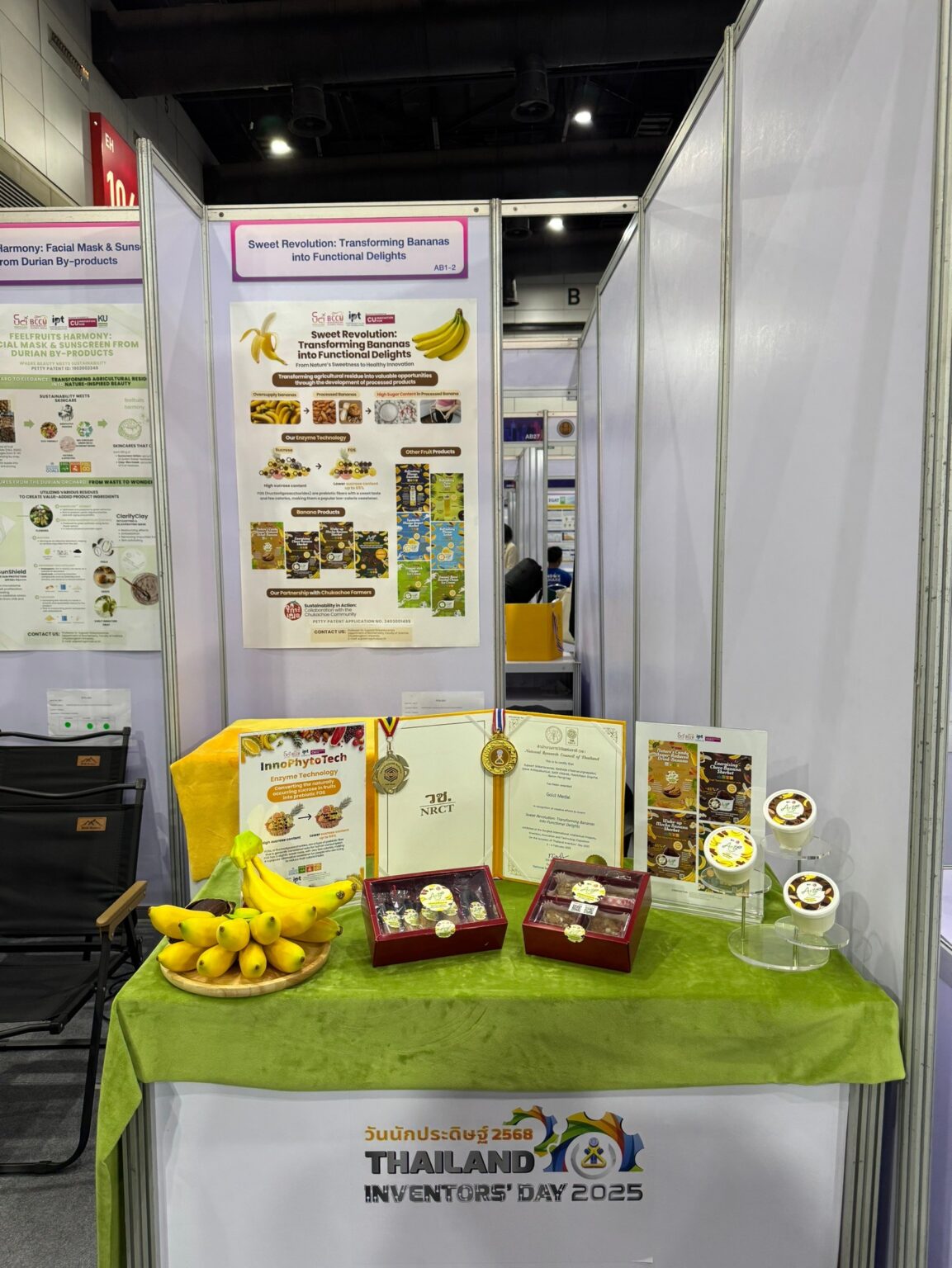
Mr. Paul Patsapong Chomchey, an alumnus of the Executive MBA program and a PhD student in the Doctor of Philosophy Program in Technology and Entrepreneurial Innovation Management (interdisciplinary), or CUTIP, has brought international recognition to Chulalongkorn University at the global innovation stage with “BlueSalt+,” a next-generation low-sodium innovation, at the 51st International Exhibition of Inventions Geneva, held in Geneva, Switzerland, from March 11–15, 2026.

His innovation, “BlueSalt+,” competed in Class Q (Paramedical, Health, Nutrition, and Personal Care) and won two major awards:

·       Gold Medal with the Congratulations of the Jury, unanimously awarded by the international panel of judges.

·       NRCT Honorable Mention Award from the National Research Council of Thailand

Mr. Patsapong explained that the origin of this innovation builds upon the success of “SmartSalt”—a low-sodium seasoning for shabu soup—which previously won a gold medal and special awards at a Silicon Valley competition last year. The project focuses on addressing the global health crisis caused by excessive sodium consumption. However, deeper market analysis revealed a key barrier preventing the food industry from successfully reducing sodium: the “taste trade-off,” or loss of flavor.

“We were completely reframed from the problem. Instead of seeking salt substitutes that often leave a bitter aftertaste, we chose to integrate deep technology with neurosensory science to directly modify how the human brain perceives taste,” he said.

The key innovation behind BlueSalt+, a next-generation hybrid salt crystal, lies in combining precision nano-engineering with bio-based materials to design a new type of low-sodium hybrid salt crystal. This technology works directly with the sensory nervous system through a proprietary targeted flavor delivery mechanism, effectively stimulating saltiness and umami receptors on the tongue.

As a result, consumers can still experience rich, well-balanced flavors—even with the sodium level reduced by up to 40–50%.

This innovation addresses both B2B business needs and global sustainability goals. BlueSalt+ is designed for industrial scalability and can replace regular salt at a 1:1 ratio without requiring recipe reformulation. It is suitable for:

·       Clean-label products

·       Elderly nutrition

·       Diets for patients with non-communicable diseases (NCDs)

Additionally, its use of bio-based materials helps reduce dependence on resource-intensive inputs and supports the United Nations Sustainable Development Goals (SDGs).

This global achievement represents a collaboration across science, business, and culinary arts, made possible through strong support from Chulalongkorn University faculty and experts, including:

·       Prof. Dr. Sanong Ekgasit, project advisor guiding deep-tech research development

·       Prof. Dr. Wilert Puriwat, who strengthened the business strategy and model

·       Asst. Prof. Dr. Kavin Asawanant, from CUTIP, helped shape innovation management vision

Support also came from InnoSolTech International Co., Ltd., which provided professional intellectual property management—an essential mechanism for protecting the technology and enabling safe and sustainable global commercialization.

The innovation is further enhanced by culinary expertise, with support from Chef Daniel Dusit Potiprasit, a French cuisine chef from Le Cordon Bleu Dusit and restaurateur of VINE HAPPEN. He contributed to designing and testing flavor dimensions, ensuring that BlueSalt+ delivers not only strong laboratory results but also a fine dining–level taste experience.

Mr. Patsapong concluded, “Our ultimate goal in joining this global competition was not merely to win a gold medal but to challenge and push beyond our own limits in order to perfect our product prototype. I believe that great innovation is not measured only in the laboratory—it must enhance people’s quality of life and serve as a sustainable solution to real societal problems. I would like to thank the CUTIP and MBA programs at Chulalongkorn University for being a powerful driving force in shaping both my innovation vision and business strategy, enabling BlueSalt+ to evolve from a research concept into a truly market-ready global innovation.”

Read more at: https://www.chula.ac.th/en/news/296116/

Chula’s 109th Anniversary

On March 26, 2026, at 7:00 a.m., Her Royal Highness Princess Maha Chakri Sirindhorn presided over the ceremony marking the 109th anniversary of the founding of Chulalongkorn University.

Upon arrival at Chulalongkorn University, she presented a floral tribute and lit incense and candles in royal homage before the statues of King Chulalongkorn (Rama V) and King Vajiravudh (Rama VI). She then proceeded to the area in front of the university auditorium, where she offered alms to 10 monks together with university executives, faculty members, staff, alumni, and current students.

Her Royal Highness then proceeded to the front portico of the auditorium, where she graciously received university council members, led by Prof. Dr. Surakiart Sathirathai, Chairman of the Chulalongkorn University Council, and Prof. Dr. Wilert Puriwat, President of Chulalongkorn University, along with representatives of faculty, staff, alumni, and students, to present their greetings and well-wishes on the occasion of her 71st birthday. On this occasion, she addressed the Chulalongkorn community, after which attendees sang the university anthem “Maha Chulalongkorn.”

Afterward, she proceeded to the reception room in the auditorium, where she permitted university executives and representatives from various sectors of the university community to present donations in support of royal charitable causes at her discretion. She also presented commemorative tokens to the benefactors of the university.

The Princess then attended a performance at the auditorium celebrating the university’s 109th anniversary. The program included traditional Thai music (Pi Phat ensemble), featuring the overture “Maha Chulalongkorn” performed by the university’s Thai music youth orchestra; a poetic recitation by students from the Faculty of Arts; vocal and instrumental performances of “O Lao” (Sam Chan) and the “Nopparat Dance”; and a special musical tribute titled “Phra Phu Hai” (“The Giver”), honoring Her Majesty Queen Sirikit, the Queen Mother. The performance included royal compositions and featured ensembles such as the Sai Yai Chamchuri band, the university’s student orchestra, and a northern Thai folk music group, accompanied by dance performances from the Faculty of Fine and Applied Arts. On this occasion, Her Royal Highness herself sang the lead in “Phra Phu Hai,” played the traditional saw duang fiddle, and sang “Love’s Old Sweet Song.”

Her Royal Highness then proceeded to the Maha Chulalongkorn Building, where she laid a garland in homage before the portraits of King Chulalongkorn and King Vajiravudh. She also performed ceremonial anointing and blessing rites for the signs of the Faculty of Integrated Agriculture, the College of Extension and Lifelong Learning for the People, and the College of Interdisciplinary and Integrative Studies.

Before departing, she took commemorative photographs with the university’s executives.

Read more at: https://www.chula.ac.th/en/news/296677/

Siam Dialogue Debuts at Chula

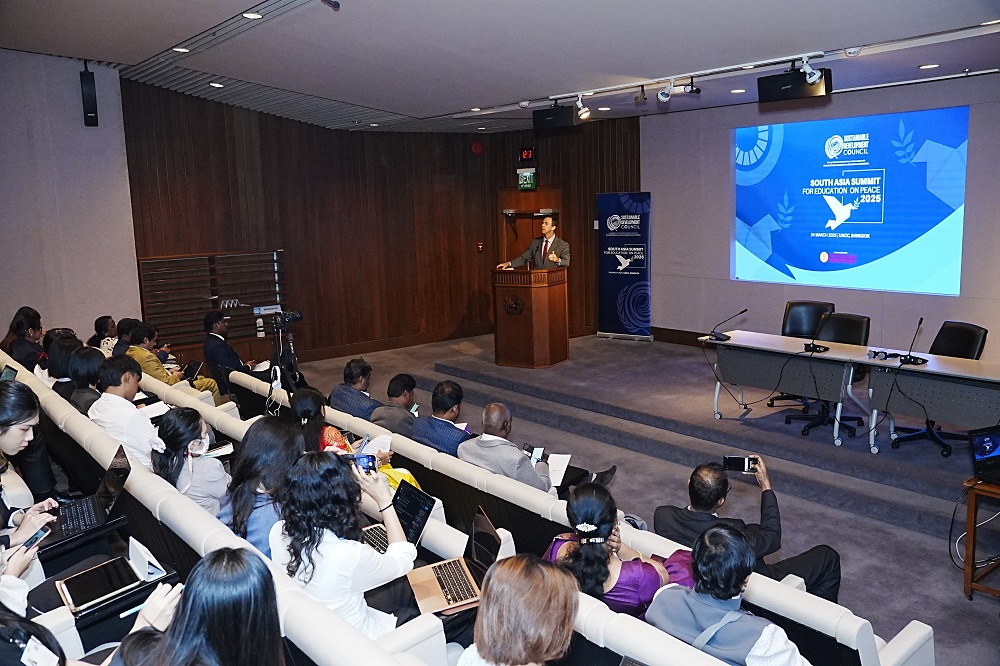
The Institute of Asian Studies at Chulalongkorn University organized Siam Dialogue @ IAS CU – Emerging Conversations on Asia and the World, a policy dialogue forum, on March 31, 2026, at Ruean Chula Narumit. The event was opened by Prof. Dr. Wilert Puriwat, President of Chulalongkorn University, with Assoc. Prof. Dr. Pavika Sriratanaban, Director of the Institute of Asian Studies, delivering the report. This was followed by a keynote lecture titled “OECD and Benefits of Thailand’s Accession” by Ms. Gita Kothari, Director for Legal Affairs and OECD Accession Coordinator, moderated by Assoc. Prof. Surachart Horachaikul of the Institute of Asian Studies.

Siam Dialogue @ IAS CU – Emerging Conversations on Asia and the World is a new policy dialogue platform that connects academics, diplomats, policymakers, and emerging thinkers to exchange perspectives on Asia’s role and international cooperation. It aims to foster in-depth discussions on geopolitics, economics, technology, and sustainability from Asian perspectives while positioning Thailand as a hub for intellectual exchange and international policy dialogue.

Assoc. Prof. Dr. Pavika Sriratanaban stated that Thailand is in the process of applying for membership in the Organization for Economic Co-operation and Development (OECD), which currently has 38 member countries worldwide. These countries are recognized for promoting economic and social development and meeting standards in areas such as inequality and anti-corruption, reflecting a strong commitment to economic and social advancement and recovery.

This inaugural Siam Dialogue @ IAS CU is a collaboration between the Institute of Asian Studies and the Department of International Economic Affairs, Ministry of Foreign Affairs. The event featured Ms. Gita Kothari as a keynote speaker and marked an important starting point for demonstrating the role of academia—led by Chulalongkorn University—in helping Thailand benefit from OECD membership. It represents a high-level social impact that complements the university’s recognition in global rankings (World University Rankings). This forum also highlights another dimension of Chulalongkorn University’s global academic reputation.

Assoc. Prof. Dr. Pavika added that many Chulalongkorn students were attending the event, reflecting the university’s readiness and the potential of its new generation to engage with future challenges. Participants also included stakeholders actively involved in Thailand’s OECD accession process, such as representatives from labor unions and the Department of International Economic Affairs, Ministry of Foreign Affairs.

She further explained that Siam Dialogue differs from the ongoing Asia Forward Series hosted by the Institute. While Asia Forward takes a broader view of global-Asia connections, Siam Dialogue focuses on specific, high-impact issues for in-depth discussion.

“In terms of strategy, the Institute of Asian Studies is increasingly operating in an international context, expanding the role of knowledge within its collaborative networks. Hosting policy dialogue forums under the name of Chulalongkorn University serves as a bridge—not simply a venue but a platform with strong potential and a highly challenging new mission for the institute,” the Director concluded.

Read more at: https://www.chula.ac.th/en/news/297109/

Chula – Embassy of Greece Collaborates

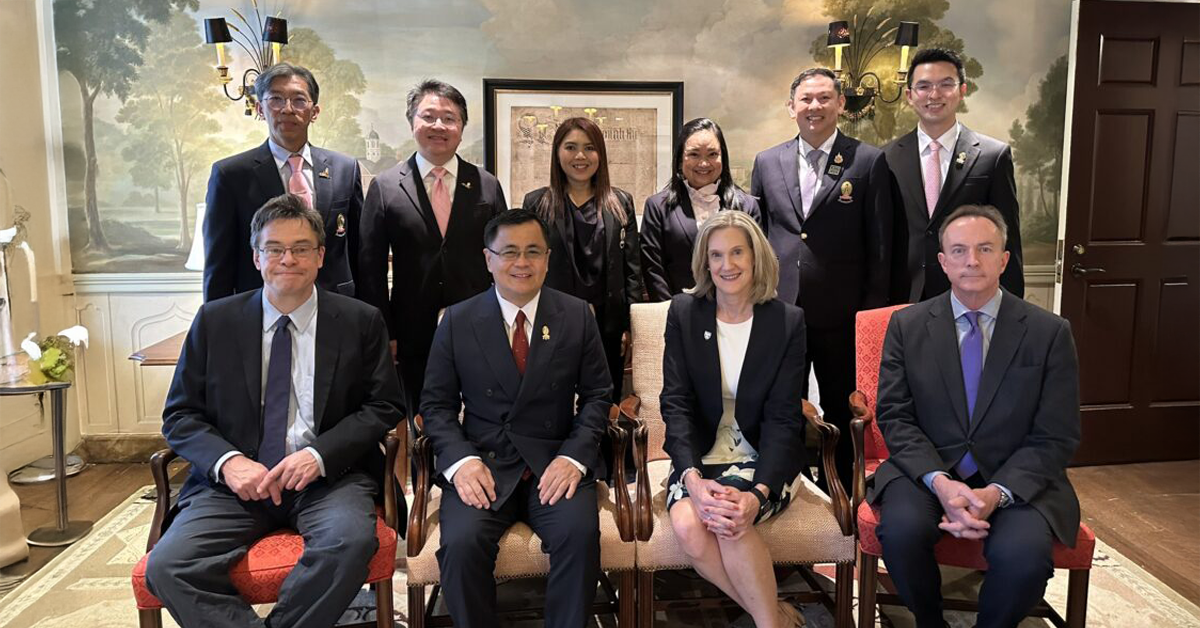
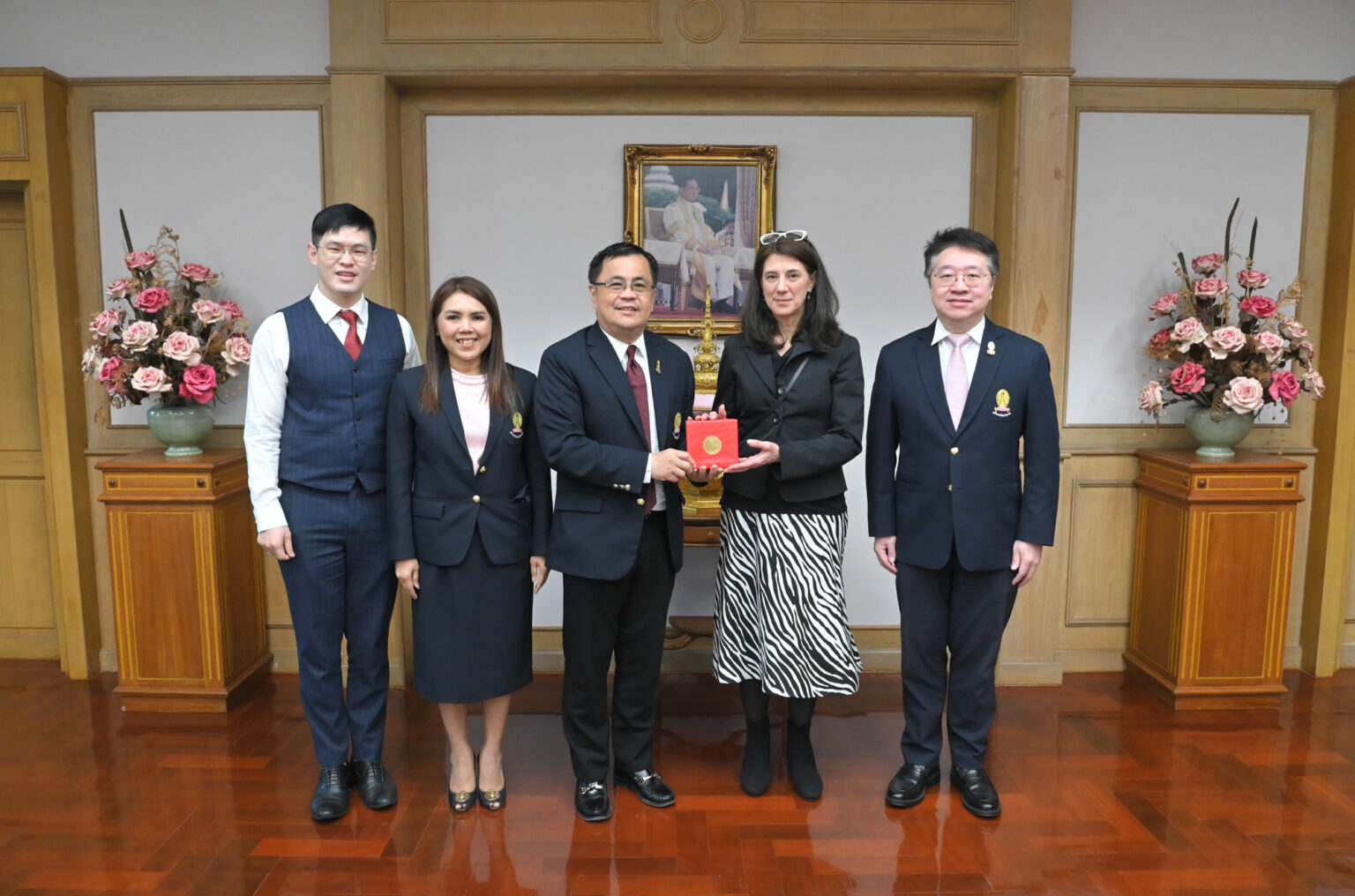
Prof. Dr. Wilert Puriwat, President of Chulalongkorn University, together with Assoc. Prof. Dr. Palanee Ammaranond, Vice President for International Affairs and Global Network, welcomed H.E. Mrs. Magdalini Nicolaou, Ambassador of Greece to Thailand, along with Ms. Saranya Jehnoh, Personal Assistant to the Ambassador. The visit took place at Chulalongkorn University on March 30, 2026, at the reception room on the 2nd floor of the Chamchuri 4 Building. 

The Ambassador of Greece to Thailand and her delegation paid a courtesy visit to strengthen relations and discuss potential academic cooperation between Chulalongkorn University and higher education institutions in Greece.

The Ambassador also expressed her intention to initiate in-depth discussions on the possibility of developing collaboration between Greek educational institutions and Chulalongkorn University. The meeting included exchanges of ideas on various dimensions of academic cooperation, such as educational development, student and staff exchange programs, and other collaborative activities that support the shared goals of both parties.

The discussion was conducted in a constructive and friendly atmosphere, marking an important step in strengthening the relationship between Chulalongkorn University and the Embassy of Greece. It also reflects a shared commitment to promoting international collaboration and expanding academic opportunities between Thailand and the Hellenic Republic (Greece) in the future.

Read more at: https://www.chula.ac.th/en/news/297103/

Thammasat Prepares for Global Careers 2026

Thammasat Business School, with Sirindhorn International Institute of Technology and the Faculties of Engineering and Science and Technology, organized “Empowering Global Careers 2026: Global Opportunities & Future Readiness.” The event aimed to prepare students for global careers and enhance their skills for the new working world. Assoc. Prof. Dr. Surat Teerakapibal, Dean of Thammasat Business School, reported on the event, which was officially opened by Assoc. Prof. Dr. Dumrong Adunyarittigun, Vice Rector for Academic Affairs, on March 17, 2026, at the Social Science Learning Building 3 (SC3), Thammasat University, Rangsit Center.

Empowering Global Careers 2026: “Global Opportunities & Future Readiness” is an event that encompasses a comprehensive range of activities aimed at developing future skills. This includes job recruitment booths and consultations from over 100 leading companies across various industries, as well as discussion forums that provide insights into global employment trends and preparation for international career paths. Notable sessions include THE GLOBAL TALENT FRONTIER, which discusses the overall landscape and adaptation necessary to become the workforce that the world demands by 2026; Global Career Launchpad: Secure Your Future with International Firms, which focuses on strategies for preparing to work with foreign companies; Global Job Opportunity by International & MNCs Firms, featuring representatives from human resources of organizations offering positions abroad; and Global Smart Consumer & Scammer Protection, presented by relevant government agencies.

Additionally, there are workshops aimed at enhancing essential skills for future employment, such as “Bridging the Gap – Generational Insight & Mock Interview” and “AI-Powered Resume,” allowing students to learn how to create standout resumes using the power of AI and to prepare for job applications in a competitive international context.

This event not only serves as a platform that connects students with leading organizations and international career opportunities but also reflects Thammasat University’s role in driving interdisciplinary collaboration to develop students with the knowledge, skills, and readiness for the rapidly changing world of work.

Chula Students Win Top Prize

Two Chulalongkorn University students, in collaboration with students from the Princess Galyani Vadhana Institute of Music, won first prize at the PGVIM International Guitar Ensemble Competition 2026.

The winning team included Tonnam Kraisrisawad, a third-year student, and Pachara Seehanern, a fourth-year student in the Western Music program at the Faculty of Fine and Applied Arts, Chulalongkorn University, along with Natthawat Jitmuad and Porachate Phophuak from the Princess Galyani Vadhana Institute of Music. The competition was held on March 28, 2026, in the open-age international category, with the team receiving a cash prize of 30,000 baht.

The collaboration highlights growing academic and musical partnerships in Thailand’s classical music community. Organized by the Princess Galyani Vadhana Institute of Music, the competition has been held annually since 2021 and focuses on developing young classical guitarists for the international stage.

The International Classical Guitar Ensemble Competition aims to promote classical guitar performance and encourage ensemble collaboration, providing musicians with more opportunities to perform together. The ensemble format also promotes teamwork and helps participants develop both musical and collaborative skills. The competition is divided into two categories: classical guitar ensemble and classical guitar with other instruments.

This achievement highlights the students’ talent and dedication, as well as the strength of the Western Music program at Chulalongkorn University’s Faculty of Fine and Applied Arts, which prepares students for performance and competition at the international level.

Read more at: https://www.chula.ac.th/en/news/297112/

Chula Hospital Launches New Radiotherapy

King Chulalongkorn Memorial Hospital, Thai Red Cross Society, has announced a breakthrough in implementing Surface-Guided Radiotherapy (SGRT) technology, which uses skin surface imaging to determine radiation positioning in breast cancer patients—without the need to draw ink marks on the skin. This marks the first use of such technology in Thailand. The system utilizes real-time 3D imaging for high precision, helping reduce patients’ concerns about appearance during treatment and allowing them to maintain a normal lifestyle throughout the therapy period.

Assoc. Prof. Dr. Jiruth Sriratanaban, Director of King Chulalongkorn Memorial Hospital, Thai Red Cross Society, and Dean of the Faculty of Medicine, Chulalongkorn University, affirmed that: “The adoption of SGRT technology to guide radiation treatment without skin markings reflects the hospital’s mission to elevate treatment standards while also caring for patients’ quality of life in every dimension—both physically and mentally. This success is the result of collaboration among multidisciplinary teams at Chulalongkorn Hospital, who not only treat disease but truly understand patients’ lives.”

Assoc. Prof. Dr. Chonlakiet Khorprasert, Head of the Department of Radiology at King Chulalongkorn Memorial Hospital, added, “Breast cancer is a major health issue for Thai women and worldwide. The number of patients continues to rise, making it essential for radiation therapy to advance in precision and reduce impacts on surrounding organs. The goal is not only to treat the disease but also to restore a good quality of life for patients.”

Ms. Pantiva Unhsiri, Senior Radiological Technologist specializing in medical physics, and Assoc. Prof. Dr. Kitwadee Saksornchai, a specialist in breast cancer radiotherapy at the Division of Radiation Oncology, explained that traditional radiation therapy requires permanent ink markings on the skin to identify treatment positions. This can affect both mental well-being and daily life, as many patients worry about their appearance, fear the marks fading, avoid normal bathing, or experience allergic reactions to the ink.

The medical team studied practices abroad and collaborated with medical physicists, radiological technologists, and nurses to develop the SGRT system using real-time 3D cameras instead of skin markings. This system can accurately identify and verify radiation positioning throughout the treatment. Patients can apply skincare products from the first day, significantly reducing skin irritation and burns.

A patient who underwent treatment with SGRT shared that initially they were concerned about radiation therapy, particularly pain and the skin markings they had heard about from others. However, with SGRT, they found they could shower, apply lotion, dress normally, and exercise throughout the full one-month treatment period without any limitations related to their appearance or daily life.

Read more at: https://www.chula.ac.th/en/news/297106/

Chula’s Center for Social Engagement

Chulalongkorn University continues to strengthen its role in driving social engagement and development. The university has renamed the “Center of Learning Network for the Region” to the Center for Social Engagement, Chulalongkorn University,” reflecting a more proactive approach that emphasizes collaboration and partnership with government agencies, private sector organizations, and communities. The goal is to co-create knowledge while generating measurable social impact in a concrete and meaningful way. 

This change is not merely a renaming of the unit but represents a shift in the working concept—from “learning together” to “driving society forward through university knowledge” systematically and sustainably. The infrastructure, personnel, and ongoing operations in Bangkok, Nan, and Saraburi remain unchanged. What has been added is a clearer goal: to create value and meaningful change for society. 

Follow updates from the Center for Social Engagement at: 

Website: https://clnr.chula.ac.th/ 

Facebook: https://www.facebook.com/csechula 

Read more at: https://www.chula.ac.th/en/news/296122/

Mental Health Support in Tough Settings

Chronic stress from high competition leads to pressure and exhaustion in the pursuit of dreams. The current atmosphere is defined as The Burnout Society or the era of burnout. External pressures, such as the threat of war and rapid technological change, exacerbate existing feelings of life’s burdens, despite a feeling of internal lightness, and severely impact employment. This stress extends to higher education institutions and schools, with many students experiencing emotional distress. A 2022 survey by TUN-HPN of 9,050 students found that around 40% experience frequent stress. Additionally, almost one in three reported sadness, 12% had self-harmed, 4% contemplated suicide, and 4.3% were diagnosed with psychiatric disorders.

Asst. Prof. Burachai Asawathaweeboon, Assistant to the Rector for Student Affairs and a faculty member in the Department of Psychology at the Faculty of Arts, Thammasat University (TU), analyzes three main factors that affect the mental health of students within the university environment: 1. The adjustment from being a student to becoming a university student, which entails increased responsibilities. 2. Relationships with various individuals, including family, friends, and professors. 3. Expectations regarding academic performance and employment opportunities after graduation. Many students enter university already managing pre-existing emotional disorders and anxiety, requiring extra support for adaptation. Others display psychiatric symptoms, such as those related to schizophrenia, which can emerge in this life stage, further complicating adjustment. Mental health issues vary widely, from manageable concerns to severe crises involving self-harm and suicidal attempts.

Thammasat University Counseling Center (TU Well-Being: Counseling Center) notes that student stress peaks during exams, but first-year students need extra attention due to adaptation challenges like academics, increased responsibilities, relocation, new peers, and finances, which heighten stress and anxiety. Recognizing the need for a mental health care system in education, Thammasat University, under Rector Prof. Dr. Supasawad Chardchawarn, has made this an urgent priority (Quick Big Win) for 2025-2026. The Thammasat University Mental Health Care System operates with the Thammasat Well Being Center at its core, functioning in both reactive and proactive capacities. This includes providing individual counseling, counseling through a Call Center, services by psychiatrists, treatment via telemedicine, medication management in collaboration with the Faculty of Pharmacy’s pharmacy and the Thammasat Chalermphrakiat Hospital, the development of the TU Wellness application linked to TU GREATS for self-assessing preliminary mental health issues and responding to mental health emergencies.

Mental health service requests take a half-day to two days, excluding optional convenient appointments. Necessary medication is available at the pharmacy or via Thammasat University Hospital for non-standard drugs. Staff includes four groups: Thammasat personnel, former student interns, current interns, and external contractors. Staffing across centers: Rangsit has one psychologist, two counselors, and three part-time psychiatrists; Tha Phra Chan has two psychologists; Lampang has two full-time and one part-time (Saturdays) psychologist; and Pattaya has one part-time psychologist (visiting every other Wednesday). As for the students who are interning and those who have already completed internships at the hospital, there are currently more than 50 individuals, making Thammasat University likely the institution with the most personnel available to provide mental health services in the country. 

“Some students are reluctant to utilize the university’s system due to concerns about privacy. The university has coordinated with several hospitals to provide students with special discounts for accessing services. Students can avail themselves of services from the university’s faculties, partner organizations, or agencies that the university has arranged according to their needs. This is part of the university’s commitment to prioritizing the well-being of students,” stated Asst. Prof. Burachai. 

Prof. Dr. Supasawad stated that a significant barrier preventing students from accessing mental health services is the prevailing belief that seeking mental health assessment and services is abnormal. Thammasat University is striving to communicate and instill in students the understanding that just as the body can become ill, it is entirely natural for the mind to also experience distress. Therefore, in addition to developing and preparing to provide these services, we place great importance on creating an environment that encourages students facing issues to seek help, regardless of the form it may take. With approximately 43,000 students, Thammasat sees over 6,000 annual student requests for mental health services, a number expected to grow. This rise indicates increased student awareness and easier access to services, rather than an increase in mental health issues.

“We strive to normalize the access to these services and to ensure that all students are aware that the university offers these resources for them to utilize when facing difficulties. Information about the Thammasat Well Being Center will be provided to students from the moment they enter Thammasat University during the orientation program and will continue to be disseminated across all faculties. Additionally, during the first two weeks after the semester begins, faculty members will be asked to encourage students to assess their mental health through the TU GREATS app.” stated TU Rector.

Thammasat Pioneers Robotic Heart Surgery

Thammasat University Hospital, in honor of His Majesty the King, announces the successful launch of the innovation ‘Heart Surgery’ utilizing robotic-assisted surgery technology (Da Vinci XI), marking the ‘first time in Thailand’ that robotic-assisted surgery has been employed for patients with heart disease. This reinforces its position as a leader in Digital Hospital and a center of excellence in the region.

         Assoc. Prof. Dr. Dilok Piyayotai, M.D., Director of Thammasat University Hospital, stated that the hospital’s main mission is to bring world-class innovations to transform the future of treatment. The introduction of the robotic surgical system (Da Vinci XI) for heart surgeries not only enhances the capabilities of medical personnel but also emphasizes patient-centered care, ensuring that patients receive safe, precise treatment and an improved quality of life after surgery.

         Asst. Prof. Dr. Boonlawat Homvises, M.D., a medical doctor and surgeon specializing in cardiac and thoracic surgery, commented on the advantages of robotic-assisted heart surgery (Da Vinci XI). He stated that this technology features robotic arms that can rotate freely beyond the limitations of human wrists and provides high-definition 3D imaging. This capability allows surgeons to perform intricate procedures on the heart with precision and detail, resulting in significantly smaller surgical incisions, reduced blood loss, and facilitating a noticeably faster recovery for patients compared to traditional open-heart surgery.

         This achievement marks another significant step for the hospital in enhancing its medical treatment capabilities by incorporating robotic surgical technology (Da Vinci XI) in heart surgeries. This reflects the hospital’s readiness in terms of modern medical technology, a highly skilled medical team, and safety standards in patient care.