Chula Unveils Strategies for Crisis Era

The Marketing Association of Thailand, in collaboration with the Department of Marketing, Faculty of Commerce and Accountancy, Chulalongkorn University, held a press conference to mark the association’s 60th anniversary, along with a forum titled “Marketing in a World of Crisis.” The event took place on Thursday, March 5, 2026, at CBS Cinema, 3rd Floor, Chaiyossombat 1 Building, Faculty of Commerce and Accountancy, Chulalongkorn University. The opening remarks were delivered by Associate Professor Dr. Tartat Mokkhamakkul, Dean of the Faculty of Commerce and Accountancy. 

On this occasion, Dr. Buranin Rattanasombat, President of the Marketing Association of Thailand, and Assistant Professor Dr. Ake Pattaratanakun, Head of the Department of Marketing at Chulalongkorn Business School, announced the upcoming 60th anniversary celebration of the Marketing Association of Thailand and participated in a forum discussion. 

As part of the anniversary celebration, the association will honor outstanding marketers who have made significant contributions to the country by inducting them into the “Thailand Marketing Hall of Fame,” an honor bestowed every 10 years. This year will also see the presentation of the “Most Inspiring Marketers Award,” recognizing influential marketers who have inspired others and contributed to driving Thailand’s economy and society forward. 

Dr. Buranin Rattanasombat noted that over the past six decades, the association has served as a hub for developing marketing knowledge, building professional networks, and advancing Thailand’s marketing profession. On the occasion of its 60th anniversary, the association aims to elevate the role of marketing as a key strategy for driving Thailand’s economy and society toward sustainability. 

To elevate the selection process, the association has established a strategic partnership with the Department of Marketing at Chulalongkorn Business School. The collaboration integrates academic knowledge, research insights, and empirical data into the evaluation process to ensure that the selection is comprehensive, transparent, and internationally recognized, reinforcing the awards as the highest honor in Thailand’s marketing profession. 

“Marketing cannot exist without marketers. On our 60th anniversary, we want to highlight that Thai marketers are vital gears that help drive organizations, businesses, and the nation forward,” he said. 

Assistant Professor Dr. Ake Pattaratanakun added that, thanks to the collaboration with academic experts from the Department of Marketing, this year’s selection process has become more rigorous and systematic. The process incorporates over 10 years of collected statistical data from more than 100,000 nationwide samples, combined with nominations from a respected Expert Panel of leading figures in Thailand’s marketing industry. 

By applying research methodologies, statistical data analysis, and expert evaluation based on criteria covering achievements, industry impact, and contributions to society, the organizers aim to ensure that those honored truly represent exemplary figures in the marketing profession. 

The “Thailand Marketing Hall of Fame” and “Most Inspiring Marketeers Award” ceremonies aim to recognize individuals with outstanding achievements and significant influence on the development of Thailand’s marketing sector, while also inspiring both current and future generations of marketers. 

The event also featured a forum titled “Marketing in a World of Crisis,” where the speakers discussed the role of marketing in navigating today’s economic and business challenges. 

Dr. Buranin explained that although ASEAN is not directly at the center of conflicts in the Middle East, the region has been heavily affected by global supply chain disruptions, particularly in the energy sector. These disruptions have contributed to high inflation and persistent interest rates, signaling a shift in globalization toward a more fragmented global landscape. 

To cope with short-term impacts, businesses must remain calm, gather deep marketing insights by directly engaging customers, and build business alliances to share burdens and improve efficiency. Companies should also focus on local products and regional development to reduce future supply chain risks. 

For the long term, he recommended four guiding principles:

  • Redefining marketing, 
  • Building mental resilience, 
  • Reforming and adapting to the new world, and 
  • Redesigning systems with technology integration. 

Dr. Ake Pattaratanakun added that high levels of uncertainty often lead consumers to delay or reduce spending. According to a survey by the Marketing Association of Thailand, this is the first year that marketing budgets have been significantly reduced, with even deeper cuts occurring during periods of regional conflict. 

He proposed four marketing strategies that businesses should apply together to encourage consumer spending:

1. Less is More 

In times of uncertainty, consumers become cautious about spending. Businesses can reduce product size or commitment levels to make purchasing decisions easier—encouraging customers to buy smaller quantities but more frequently. 

2. Niche but Wide 

Focus on a highly specific target group that, despite its niche nature, has a sufficiently large customer base and purchasing power—often with minimal competition. 

3. Quiet but Loud 

Reduce broad advertising methods such as large billboards and instead use technology-driven targeted marketing. Ads may not be visible to the general public but can be extremely powerful for the intended audience. 

4. Cheap & Good 

Design marketing campaigns with low costs but high impact, helping organizations protect their budgets during periods of marketing budget cuts. 

Dr. Ake emphasized that businesses must apply all four strategies together. For instance, it would not be effective to adopt a “Less is More” product strategy while simultaneously investing heavily in expensive advertising campaigns that contradict the “Cheap & Good” principle. 

For small and medium-sized enterprises (SMEs) in particular, he suggested avoiding price wars with large corporations, which possess stronger financial resources. Instead, SMEs should focus on deeply understanding niche customer segments and tailoring strategies to serve those markets effectively.

Read more at: https://www.chula.ac.th/en/news/291622/

CICA Addresses 7th Asia Forward Series

The Institute of Asian Studies, Chulalongkorn University, in collaboration with the Program Management Unit on Area-Based Development (PMU A), organized a special lecture on future paradigms for Asia under the 7th Asia Forward Series, titled “From Corridors to Confidence: Central Asia, the Middle Corridor, and Asia’s New Connectivity Architecture” on Thursday, February 26, 2026, at Room 105, Maha Chulalongkorn Building, Chulalongkorn University.

Prof. Dr. Wilert Puriwat, President of Chulalongkorn University, delivered the welcoming remarks. The keynote lecture was presented by Ambassador Kairat Sarybay, Secretary General of the Conference on Interaction and Confidence Building Measures in Asia (CICA). The session was moderated by Associate Prof. Surat Horachaikul from the Institute of Asian Studies, Chulalongkorn University. This was followed by a panel discussion on “Peacebuilding and Cooperation in a Fragile World,” featuring distinguished experts. The event attracted strong interest from faculty members, diplomats, and members of the public.

Assoc. Prof. Pavika Sriratanaban, Director of the Institute of Asian Studies, Chulalongkorn University, noted that the Asia Forward Series has been held continuously for over a year. The initiative aims to serve as a bridge to society by raising awareness and encouraging open dialogue. Over the past year, the Institute has taken pride in successfully linking policy-level engagement to concrete area-based implementation.

She emphasized that the 7th Asia Forward Series is particularly significant amid shifting global geopolitics, which present new challenges and demand fresh approaches for positioning Thailand on the global stage. This edition highlighted Central Asia and the Middle Corridor—key strategic regions in the transformation of global geography. Although historically regarded as landlocked, Central Asia has now become a vital hub of air and land connectivity stretching from Russia and China to Europe, with notable strengths in energy, green technology, and infrastructure.

The event was honored by the presence of Ambassador Kairat Sarybay, Secretary General of CICA, who delivered the keynote address titled “From Connectivity to Confidence.” His participation reaffirmed the role of the Institute of Asian Studies, Chulalongkorn University, as a “think tank” entrusted by Thailand’s Ministry of Foreign Affairs to strengthen engagement with Central Asia. CICA is a multilateral intergovernmental forum comprising 28 member states, including Thailand, dedicated to building confidence for peace and security across Asia.

Read more at: https://www.chula.ac.th/en/news/290767/

Thammasat Celebrates WorldNexGen 2026

Prof. Dr. Supasawad Chardchawarn, Thammasat University Rector, along with Assoc. Prof. Dr. Supreedee Rittironk, Vice President for International Affairs, and Asst. Prof. Dr. Orapan Yolrabil, from Department of Accounting, Faculty of Commerce and Accountancy, participated in the closing ceremony of WorldNexGen 2026 project on February 5, 2026, at the Convention Hall (SNU Faculty Club) of Seoul National University (SNU), Republic of Korea.

Certificates were awarded to 20 students who completed the WorldNexGen 2026 program by Prof. Dr. Supasawad and Prof. Park San Gook, from Department of Science and Technology Policy at Seoul National University.

Thammasat and KH Academy, a network of educational partners, have developed the WorldNexGen project in collaboration with SNU, the top university in the Republic of Korea. The project facilitates academic exchange in economics, industry, trade, investment, and socio-cultural aspects across the ASEAN region. Students will participate in active learning to develop future international leaders.

Prof. Dr. Supasawad described WorldNexGen not just as an academic exchange, but a “platform for collaborative learning” uniting institutions from Bangkok to Seoul. This initiative aims to cultivate future leaders with intellectual strength, cultural understanding, and a global vision, essential for the region and the world. He also offered three key insights to Thammasat students: 1) Use the knowledge and innovations from Seoul to improve Thai society. 2) Maintain this network, as future challenges like digitalization and sustainable development require collaboration. 3) Be an empathetic leader who listens as much as they lead.

Among many, Mr. Tanee Sangrat, Thai Ambassador to South Korea, H.E. Chung Sye-kyun, former Prime Minister of the Republic of Korea, Prof. Dr. Juhan Kim, Vice President for Research at Seoul National University, Mr. Ahn Duk Geun, former Minister of Trade, Industry, and Energy, Mr. Park Won Joo, former Senior Economic Policy Secretary to the President, Mr. Kim Kang Hak, Chairman of Myungwoon Industry Development, Mr. Peeradech Patthanachanj, Chief Executive Officer of Renewable Energy Development Business at B.Grimm Power Public Company Limited, Mr. Chanchai Sanguanwong, Director of the Business News Newspaper, and Mr. Burapha Sanguanwong, Founder of KH Academy also participated at the ceremony.

Chula and Tsinghua University Sign MOU

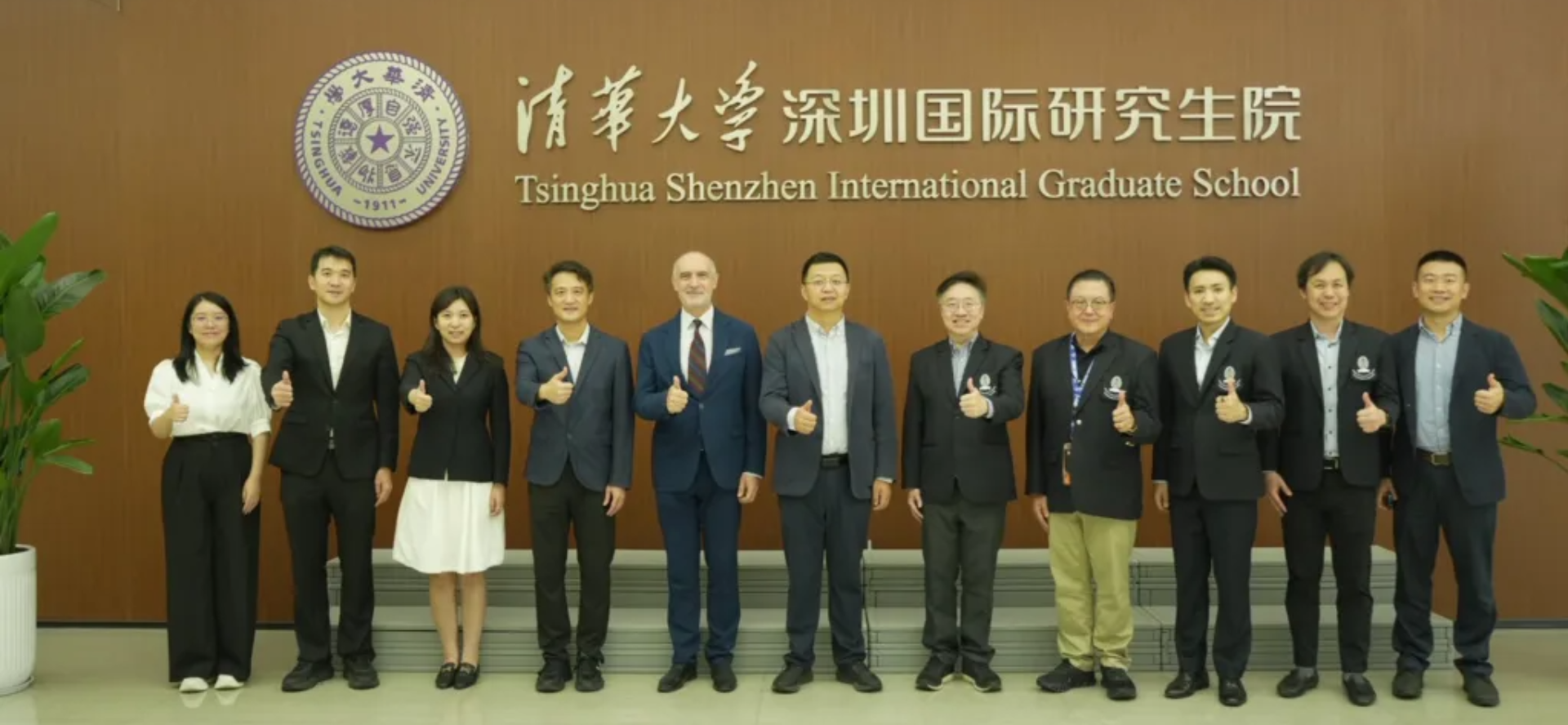
On February 27, 2026, at Meeting Room 702 of the Office of Academic Resources, Chulalongkorn University, and the reception room of the Chulalongkorn University Auditorium, Professor Dr. Wilert Puriwat, President of Chulalongkorn University, welcomed a delegation from Tsinghua University led by Prof. Guo Yong, Vice Chancellor of the Tsinghua University Council, along with Prof. Liu Jian of the Asian Universities Alliance (AUA) and colleagues. The delegation attended the signing ceremony of a Memorandum of Understanding (MOU) between the two universities.

The agreement aims to develop personnel capacity, strengthen knowledge infrastructure, and foster innovation in academic information systems—expanding beyond existing academic and research collaborations. It also seeks to promote the role of the “modern library” as a key university infrastructure supporting teaching, research, and innovation at the international level.

The MOU was formally signed by Associate Professor Dr. Amorn Petsom, Director of the Office of Academic Resources at Chulalongkorn University, and Prof. Jianbin Jin, Director of the Tsinghua University Library. The agreement establishes a results-oriented and action-driven framework focusing on human resource development, knowledge infrastructure enhancement, and joint innovation.

Professor Dr. Wilert Puriwat emphasized the importance of borderless education, stating that in an increasingly interconnected world, collaboration among leading higher education institutions extends beyond academic exchange to building a borderless knowledge ecosystem. While countries may have borders, education should not. This partnership reflects both universities’ commitment to sharing resources, strengthening academic excellence, and creating positive regional and global impact.

Prof. Guo Yong noted that this MOU lays a strong foundation for long-term cooperation between the two institutions, which have maintained close relations through ongoing exchanges of executives and staff. The collaboration will open opportunities for academic exchanges, digital resource integration, innovative research, and the responsible application of AI. He also invited Chulalongkorn representatives to visit Tsinghua University in the near future.

Prof. Jianbin Jin highlighted that this agreement marks an important milestone in library collaboration, which began in 2018 through the Asian Universities Alliance network. Both institutions bring complementary strengths and can share knowledge resources to enhance mutual capabilities. In the era of the Digital Revolution, libraries must serve both as guardians of knowledge and as drivers of digital transformation, leveraging AI to support management and research. A joint academic conference is also planned under the AUA Library Practice Dialogue in November.

Assoc. Prof. Dr. Amorn Petsom added that modern university libraries function as academic ecosystems supporting research and stewarding institutional knowledge. This MOU represents a shared mission to pursue practical collaboration through three main approaches: personnel capacity development, joint innovation initiatives, and knowledge resource exchange. It also promotes AI-driven services, open data management, and digital preservation within relevant legal frameworks.

This collaboration will advance joint efforts in key areas of modern library and academic infrastructure development, including:

  • Personnel development and knowledge exchange through study visits, staff exchanges, fellowship programs, seminars, training sessions, and knowledge-sharing activities.
  • Joint academic activities and innovation development, leading to shared scholarly outputs such as conferences, co-authored academic papers, collaborative research, and innovation projects—such as AI development to enhance service efficiency and complex support functions, research data management, and digital preservation for the long-term stewardship of digital information resources.
  • Information and resource sharing to support teaching and research, conducted in compliance with copyright laws and each institution’s data usage policies.

Read more at: https://www.chula.ac.th/en/news/290788/

Thammasat Debuts ‘New Gen Executive’

Thammasat University’s Faculty of Social Administration, in collaboration with the Foundation of Thai Gerontology Research and Development Institute (TGRI) and five local administrative organizations (LAOs), launched the “New Age Management Executives for the Elderly” program. This initiative, part of the “Developing the Potential of New Age Management Executives for the Elderly through Co-Creation in the Community” project, aims to transform LAOs from “service providers” into “new age management executives” to prepare for a Super Aged Society. The launch event took place on January 28, 2026, at Centara Life Bangkok Hotel, attended by representatives from relevant agencies, LAO executives, and public health volunteers.

LAOs participating in the project include Bueng Yitho Municipality in Pathum Thani Province, Hua Hin Municipality in Prachuap Khiri Khan Province, Tap Ma Subdistrict Municipality in Rayong Province, Na Sarn Municipality in Surat Thani Province, and Thepharak Subdistrict Municipality in Samut Prakan Province.

Asst. Prof. Dr. Natthapachara Sarobol, from Department of Social Policy, Social Development, and Community Development, specializing in Elderly Welfare at the Faculty of Social Work, Thammasat University, and the leader of the curriculum implementation team, has revealed that the situation of the elderly in Thailand is becoming increasingly complex. By the year 2025, Thailand is expected to have approximately 13 million elderly individuals, accounting for 21.6% of the total population, with projections indicating an increase to 31.4% by the year 2042. The country’s care system faces major challenges due to over 340,000 dependent elderly individuals, limited caregivers, and a rise in elders living alone. The crucial solution is developing non-monetary welfare (In-kind Services) as a national priority, such as elderly daycare, quality of life centers, and schools, primarily managed by Local Administrative Organizations (LAOs). However, LAOs are constrained by a lack of specialized personnel, skills for complex problem management, and poor work integration.

Dr. Somsak Chunharas, TGRI Chairman and a research scholarship supporter, stressed that qualitative development in an aging society requires strong local communities. He proposed the government shift from a direct service provider to a service purchaser. Instead of building hospitals, communities should manage resources to procure quality services from networks or the private sector, creating a care “ecosystem.” He argued that cash assistance like pensions is inadequate; investment in public services is necessary to ensure the elderly can live independently and with dignity in their communities.

Assoc. Prof. Dr. M.L. Phinitbhand Paribatra, Vice President for Research and Innovation at Thammasat University, emphasized the university’s focus on developing an elderly care system in Thailand, crucial due to limited national budgets and the rapid transition to an aging society without being a leading industrial nation. Thammasat, in collaboration with faculties like Social Administration and Engineering, promotes and disseminates research, policy, and innovation to local communities and administrative organizations. This collaboration is crucial for creating learning spaces and enhancing the elderly’s quality of life. Since the government cannot efficiently manage all sectors, especially the elderly, networks with local administrative bodies are vital for progress. The challenge requires cooperation across all sectors to develop social and economic systems, making the current training program for local administrative executives a positive step.

Key policy proposals discussed included: shifting elderly healthcare to a co-payment system for sustainability; streamlining regulations and budget processes for faster, locally-responsive disbursement; and restructuring policies to empower local administrative organizations (LAOs) for comprehensive, regionally-adapted elderly care with adequate budget, personnel, and morale support, ensuring a robust local system.

Thammasat Reinvents to Tackle Aging Society

Thammasat University, in collaboration with its Faculty of Public Health, has partnered with the global organization Leave a Nest from Singapore and a network of innovation affiliates to launch the international academic conference, Hyper Interdisciplinary Conference (HIC) Thailand 2026, on January 31, 2026, at Puey Ungphakorn Centenary Learning Park, Thammasat University, Rangsit Center. The conference committed to “Universities Reimagined,” transforming universities into Innovation Catalysts to address the national agenda for a sustainable transition to a Super-Aged Society. This platform unites professors, researchers, students, entrepreneurs, and partners, both domestic and international, to exchange knowledge, build networks, and promote applicable research and innovation through lectures, discussions, and exhibitions.

The HIC Thailand 2026 event this year is held under the theme “Re-imagining Connections: From Education to Ecosystem,” which represents a significant reform in the structure of collaboration. It is not limited to academic exchanges but aims to connect “social structures, communities, the environment, and the industrial sector” together. Crucially, it seeks to transform visionary ideas into tangible innovations to enhance competitiveness on a global scale and to keep pace with the challenges of the digital age.

Assoc. Prof. Dr. M.L. Phinitbhand Paribatra, Vice President for Research and Innovation revealed that in 2025, Thammasat University, through the Faculty of Public Health, received support under the Reinventing University project on the topic of Creating Supportive Environments and Strengthening Health Behaviors for Quality Aging. This initiative aims to leverage science and innovation to address the national agenda concerning an aging society. The collaboration with Leave a Nest thus serves as a crucial mechanism in transforming the university into a future-oriented institution that focuses on providing solutions for society and developing the potential for elderly health on an international level.

Prof. Dr. Takeo Ogawa discussed “Innovation in Aging Society,” emphasizing that innovation includes social restructuring and leveraging age diversity, not just technology, to turn “burden” into “strength.” The platform allows researchers, startups, and experts to pitch ideas to judges and partners, receive feedback, compete for prizes, and gain commercial development opportunities. This fosters academia-business collaboration for comprehensive elderly care innovations, showcases Thai research and personnel readiness, and includes discussions to inform public policy. An exhibition will feature diverse health innovations (Health Tech) for the aging society, reflecting the innovation ecosystem promoted by Thammasat University.

Asst. Prof. Dr. Soisuda Kesornthong, Dean of Faculty of Public Health, added towards the end of the exchange that today’s interdisciplinary collaboration underscores that innovation and cross-border cooperation are essential in addressing the challenges of an aging society. The knowledge gained will be leveraged to create an environment and health behaviors conducive to sustainable quality of life, marking a significant step in Thailand’s innovation ecosystem. This is a crucial step that reaffirms that “Thammasat University and the Faculty of Public Health” are not merely providers of knowledge but are Future Shapers ready to drive Thailand towards becoming a regional hub for health innovation.

Chula Collaborates with the CUHK

Prof. Dr. Wilert Puriwat, President of Chulalongkorn University, together with a university delegation, attended a meeting with Prof. Dennis Lo, Vice-Chancellor and President of The Chinese University of Hong Kong (CUHK), and the university’s executive team on February 25, 2026, at the CUHK Administration Building to discuss directions for collaboration between the two institutions.

Also participating in the discussions were Vice Presidents Prof. Dr. Parichart Sthapitanonda and Prof. Dr. Pornanong Aramwit; along with assistant presidents, deans, directors, and representatives from various academic disciplines. The meeting provided an opportunity to exchange views on teaching and learning management, research initiatives, and the development of long-term institutional partnerships.

On this occasion, parallel meetings were organized between representatives from faculties, colleges, offices, and institutes of Chulalongkorn University and their counterparts at CUHK. These discussions focused on faculty-level collaboration, aiming to promote academic engagement and interdisciplinary research.

Following the meeting, the Chulalongkorn University delegation visited the CUHK Medical Centre. They also toured the Sports Medicine and Rehabilitation Center, the Endoscopy Center, and the Multi-scale Medical Robotics Center to observe the university’s medical advancements and research infrastructure. These facilities represent significant foundations for expanding future academic and research collaboration between the two institutions.

Read more at: https://www.chula.ac.th/en/news/290785/

Chula’s Marine Waste Recycling Innovation

Chulalongkorn University has developed recycling technology to turn fishing nets into 3D-printing filament—reducing marine waste, contributing to a circular economy, and increasing income for fishing communities.  

Highlights

Every time he takes a walk along the beach, beyond the beauty of the sea and the salty breeze that brings a sense of freshness, one thing that Dr. Nuttapol Risangud, a lecturer at the Petroleum and Petrochemical College, Chulalongkorn University, cannot overlook is the plastic waste scattered along the shoreline—water bottles, fragments of plastic bags, scraps of fabric, and pieces of everyday household items. Most concerning of all are the discarded fishing nets that drift ashore, commonly known as “ghost nets,” a form of waste that silently inflicts severe damage on marine ecosystems. 

Dr. Nuttapol’s primary research focuses on developing materials for 3D printing in medical and other applications, ranging from hydrogel materials for tissue engineering to flexible materials for medical devices. However, his love for the ocean and concern for seafood safety would not allow him to ignore the ghost nets drifting freely at sea or scattered along beaches without taking action. As a polymer chemistry expert, he initiated the project titled “Development of a Prototype Innovation for Recycling Nylon from Fishing Nets in 3D Printing Technology.” The research is supported by the Center of Excellence on Petrochemical and Materials Technology (PETROMAT) and has received recycled nylon pellets sourced from fishing nets, as well as research collaboration from UBE Technical Center (Asia) Co., Ltd. The project aspires to be a small but meaningful step toward advancing the future of the 3D printing industry while contributing to sustainable solutions for marine waste. 

“In Thailand, some recycling of fishing nets already takes place, with local fishermen selling old nets to traders for recycling. However, nylon plastic from these nets has not yet been utilized in advanced technologies such as 3D printing,” Dr. Nuttapol explained, highlighting the opportunity for innovation. 

Ghost Nets: Deadly Threat to the Ocean  

Dr. Nuttapol stated that “Ghost nets” are abandoned fishing nets that drift aimlessly through the ocean like ghosts. Wherever they float, they create harm for marine life in that area. In reality, the impact of ghost nets on marine ecosystems is far more severe than many people realize. 

“When fishing nets are discarded or accidentally lost at sea, they continue trapping marine animals just as they did when they were in use. The difference is that this time, no fishermen come to retrieve the catch. As a result, the animals ensnared in the nets often cannot survive. We may be familiar with images in the media of sea turtles or fish tangled in nets, but in truth, those scenes represent only a small fraction of the problem occurring beneath the ocean’s surface.”  

Another major issue caused by ghost nets is “microplastics,” which pose risks to the health of marine organisms and humans, Dr. Nuttapol added.   

“When these nets are degraded over time by sunlight, waves, and the marine environment, the plastic fibers gradually break apart into microplastics, which can disperse and accumulate in seawater and be ingested by small organisms such as plankton or young aquatic animals. These microplastics are then passed along and progressively accumulate up the food chain to large marine animals, and may ultimately return to humans through the consumption of seafood.” 

Innovation for a Sustainable System Where Everyone Benefits​​​​​​​​​​​​​​​​  

The project “Development of a Prototype Innovation for Recycling Nylon from Fishing Nets in 3D Printing Technology” began operations in June 2025, supported by research funding from the Center of Excellence for Petrochemical and Materials Technology (PETROMAT), along with recycled nylon plastic pellets from fishing nets and research collaboration from Ube Technical Center (Asia) Co., Ltd. Dr. Nuttapol outlined three objectives of the research project: 

  • Academic: Developing new materials from recycled plastic for practical use in 3D printing technology is a challenge requiring deep knowledge in polymer chemistry, as recycled plastics often have properties that differ from virgin plastics. Researchers must therefore adjust formulations and add various additives to produce filaments of quality comparable to conventional products. 
  • Environmental: Opening new channels for the use of recycled plastic from fishing nets will increase the value and demand for old nets, thereby boosting recycling activity and helping reduce the volume of waste in the ocean.​​​​​​​​​​​​​​​​ 
  • Community: This project aims to help increase income-generating opportunities for fishing communities. Currently, old nets are typically sent to the recycling process, but if communities receive knowledge of basic processing, such as washing, drying, or preliminary grinding, fishermen will be able to add value to the materials they already have and sell them in a higher-quality form. 

“Although some recycling of fishing nets is currently in practice, their applications remain quite limited. Opening a new channel through 3D printing technology will create a larger market for recycled plastic from nets. When there is a reliable market, more old nets will be collected, purchase prices will improve, fishermen will benefit more, and, more importantly, our seas will become cleaner. This is the true goal of the project — not merely to create a new product, but to build a sustainable system where all parties benefit together: the environment, the community, and the industry,” said Dr. Nuttapol.​​​​​​​​​​​​​​​​ 

Processing: From Waste to Innovation 

Transforming discarded fishing nets into quality filament for 3D printers is not an instantaneous process. It requires multiple systematic processing stages, from retrieving ghost nets from the sea to producing ready-to-use filament. 

  • Step 1 – Sorting and Cleaning: Once the nets are collected, the first task is to remove unwanted components such as lead, buoys, foam, ropes, and debris, including soil, sand, rocks, and shells that cling to the nets. They are then thoroughly washed. This step is a critical “pain point” because it requires large amounts of water and considerable space. For real-world implementation at a community level, careful planning around water systems and washing facilities is essential. 
  • Step 2 – Shredding and Sizing: Once the nets are dry and clean, they are fed into a shredder or grinder to reduce them into smaller pieces, then sorted to obtain plastic flakes of the appropriate size for melting in the next stage. 
  • Step 3 – Melt Compounding: The finely ground nets are melted and blended with various additives to improve their properties, then formed into recycled plastic pellets. 
  • Step 4 – Filament Extrusion: The recycled pellets are melted again and extruded through a die into long strands, then drawn through a puller to produce filament with a consistent diameter of approximately 1.75 mm, which is the standard for Fused Deposition Modeling (FDM) 3D printers. 

Dr. Nuttapol explained why the nets aren’t extruded directly into filament from the start, but must first be converted into pellets: “Each batch of nets we receive has an unknown origin, so we can’t know the exact properties. Pelletizing first allows us to much better control the quality and consistency of the final product.” 

Filaments and 3D Printing: Opportunities for the Future 

Filament is a plastic strand used as raw material for FDM 3D printers. The machine melts the plastic filament and deposits it layer by layer according to a computer-aided designed (CAD) model, gradually forming a complete three-dimensional object.  

Dr. Nuttapol explained that the applications of 3D printing technology are highly diverse, ranging from producing toys and souvenirs to industrial applications. Today, many industries employ 3D printing to streamline production processes, reduce costs, and shorten product development time. For example, it is used to create prototype models for testing designs, produce molds for various manufacturing processes, or fabricate specialized components that previously required lengthy manufacturing..   

For this research project, Dr. Nuttapol plans to use recycled materials from discarded fishing nets to develop prototype components for the automotive sector, such as motorcycle parts, which is a niche market that requires materials with high strength and light weight. 

In addition, the resulting materials can be further developed into accessories or various other components for cars and motorcycles, tailored to the specific needs of each industry.   

Outstanding Features of Filament from Recycled Fishing Nets  

Dr. Nuttapol outlined two key advantages that distinguish filament made from recycled fishing nets from other types of filament:  

  • Environmental Advantage: This product is environmentally friendly because it is made from waste discarded in Thai seas. Expanding applications for recycled plastics increases demand for recycled raw materials, which in turn encourages greater collection and recycling of old fishing nets. Ultimately, this creates benefits that flow back to fishing communities, the original source of the raw materials.  
  • Technical Advantage: The research team can tailor the filament’s properties to suit specific applications. Although recycled plastics have different characteristics compared to virgin plastics, appropriate additives and formulation adjustments can bring their properties close to those of new-material filaments—particularly in terms of mechanical strength and printability in 3D printing processes. 

Overcoming Challenges  

Innovation is never a smooth or easy path. On the contrary, Dr. Nuttapol identified three major challenges that must be addressed:  

  • Quality Control: This is a key issue in the research. Dr. Nuttapol explained that fishing nets collected from different areas vary in age, degree of degradation, and contamination by dirt or heavy metals. As a result, the raw materials have inconsistent properties and are difficult to use directly for engineering applications. Converting the nets into recycled plastic pellets is therefore a crucial step, as it allows for better quality control and ensures that the material properties are sufficiently consistent for developing prototype components. 
  • Cleaning Process: Washing the nets requires a large amount of water and substantial space, which may conflict with environmental sustainability principles. In the future, the process must be improved to become more efficient and use fewer resources. 
  • Building Market Confidence: Even if the product meets high-quality standards, being made from recycled materials may make some customers feel uncertain. Addressing this issue requires real-world user testing and formal quality certification. 

Despite numerous challenges, the project has continued to move forward steadily. Dr. Nuttapol noted that part of its success stems from collaboration among multiple sectors. These include research funding from the Center of Excellence for Petrochemical and Materials Technology (PETROMAT), recycled nylon pellets from fishing nets, and technical knowledge in plastics technology provided by Ube Technical Center (Asia) Co., Ltd., as well as joint researchers from the National Science and Technology Development Agency (NSTDA) who have collaborated in developing and refining the production process. 

“The process of developing innovation requires multiple rounds of experimentation and refinement—from adjusting the parameters for producing filament to modifying additives so that the material can be successfully extruded into filament. It is also essential to carefully analyze the appropriate types and amounts of additives to use,” Dr. Nuttapol described the challenges in the research. “Creating sustainable innovation requires knowledge and skills from multiple disciplines, ranging from polymer chemistry and materials engineering to product design and marketing.” 

A New Future for Recycled Ghost Nets  

  • Phase 1 involves developing the production process and formulation, which will take approximately 6–10 months. The goal is to build know-how in producing plastic pellets and extruding them into functional filament suitable for real-world use, while also establishing collaborative networks with private sector partners and research institutions. 
  • Phase 2 focuses on scaling up production and market testing. A complete supply chain will be established, potentially with private companies supplying recycled plastic pellets. The research team will then blend additives based on the developed formulation and pass the material on to an OEM company specializing in filament extrusion. Finally, the product will be packaged and introduced for market testing. This phase is expected to take an additional 4–5 months, aiming to produce a prototype ready for customer trials and feedback for further improvement. 
  • Phase 3 focuses on returning value to communities and building a fully realized circular economy. Once the product receives a positive market response, the project will be extended directly to fishing communities by transferring knowledge and basic processing techniques to them. This will enable communities to add value to old fishing nets before selling them. 
  • Dr. Nuttapol stated that this innovation is a clear example of the Circular Economy concept, one that not only reduces waste and pollution but also creates added value at every stage of the cycle. 

“This project is an opportunity to create real impact that is not just in the laboratory, but reaches out to communities and the environment.” 

Dr. Nuttapol hopes the product will attract the interest of customers, deliver tangible benefits, and ultimately generate a positive impact on the environment. 

“In the initial phase, we plan to develop the domestic market first, as this presents an immediate opportunity for growth and helps build confidence in Thailand’s industry. If the product demonstrates strong potential and gains local acceptance, we will consider expanding into international markets. Exporting will require carbon footprint calculations and supporting documentation to provide concrete verification of the product’s environmental friendliness.” 

Beyond filament production, Dr. Nuttapol also envisions developing other products from recycled plastic pellets derived from discarded fishing nets. “Once we have high-quality raw materials and a well-established supply chain, we can expand into many other products—not limited to filament for 3D printing,” he explained. 

At present, filament made from ghost nets is at the early stages of its journey to market. However, if everything goes according to plan, we may see various products printed from this filament used all around us in the near future. Most importantly, Thailand’s seas could become cleaner, free from ghost nets that claim the lives of marine animals and contribute additional microplastics to the food chain we rely on. 

For those interested in the innovation of recycling nylon from fishing nets for 3D printing technology, please contact Dr. Nuttapol Risangud at the Petroleum and Petrochemical College, Chulalongkorn University, or reach out through the Center of Excellence on Petrochemical and Materials Technology (PETROMAT). 

Website: http://www.petromat.org/ 

 E-mail: [email protected] and [email protected]

Read more at: https://www.chula.ac.th/en/highlight/291271/

Chula Attends APAIE 2026 Conference in HK

A delegation from Chulalongkorn University, led by Prof. Dr. Wilert Puriwat, President of Chulalongkorn University, attended the “Asia-Pacific Association for International Education” APAIE) 2026 Conference and Exhibition at the Hong Kong Convention and Exhibition Centre in the Hong Kong Special Administrative Region of the People’s Republic of China on February 24, 2026. 

APAIE 2026 was held from February 23 to 27, 2026, under the theme “Asia-Pacific Partnerships for the Global Good.” The conference brought together leaders of higher education institutions, faculty members, administrators, policymakers, and industry representatives from across the Asia-Pacific region and around the world. Participants exchanged perspectives and best practices while strengthening international education cooperation, enhancing the quality of higher education, and promoting global citizenship.

On this occasion, Prof. Dr. Wilert Puriwat participated in the President’s Dialogue hosted by The Chinese University of Hong Kong, the host university of APAIE 2026. The closed-door session, attended by presidents, vice presidents, and senior executives from various universities, provided a platform for exchanging views, fostering collaboration, and jointly shaping the future direction of international higher education. 

In addition, APAIE 2026 offered the Chulalongkorn University delegation opportunities to meet and hold discussions with existing partner universities as well as new institutional partners to further expand international academic and research collaborations. 

Read more at: https://www.chula.ac.th/en/news/290056/

Thammasat–UDC: 10 Disability Proposals

Universal Design Center, Faculty of Architecture and Urban Planning, Thammasat University (Thammasat UDC), is a partner in organizing a public forum on disability policy in society.

Thammasat University, through the Universal Design Center (Thammasat-UDC), Faculty of Architecture and Planning, is a network partner organizing the forum “Scanning Political Party Policies Regarding Persons with Disabilities… A Promise or Just a Deception for Votes?” on February 4, 2026, at Room 208, 2nd Floor, Lecture Building 1, Thammasat University, Rangsit Campus. The forum provides a platform for discussing disability policies, including proposals from disability representatives to political parties and presentations of parties’ disability policies. It aims to showcase policy progress, promote political participation among persons with disabilities and relevant sectors, and ensure persons with disabilities are informed about party policies for the upcoming 2026 elections, aiding their decision-making.

The collaborating organizations for this event include the Disabilities Thailand Association (DTH), Thammasat-UDC, Redemptorist Foundation for People with Disabilities (Mahatai), Independent Living Foundation for Persons with Disabilities, Thailand Council for Independent Living, Thai Health Promotion Foundation (ThaiHealth), Thailand Association of the Blind, National Association of the Deaf in Thailand (NADT), Association of the Physically Handicapped of Thailand (APHT), Association for the Mentally Ill of Thailand, Association for Parents of Person with Intellectual Disability of Thailand (APID), and Association of Parent for Thai Persons with Autism.

DTH, in collaboration with partner networks, has developed “Policy Proposals for the Promotion and Development of the Quality of Life of Persons with Disabilities” in accordance with the resolutions of the National Assembly of Persons with Disabilities and the Annual General Meeting of 2024, addressing 10 urgent key issues as follows:

DTH, with partner networks, created policy proposals based on resolutions from the National Assembly of Persons with Disabilities and the 2024 Annual General Meeting, addressing 10 urgent key issues.

1. The acceleration of the improvement and enforcement of the Disability Quality of Life Promotion and Development Act, B.E. 2550 (2007) 

2. The promotion and support of services for persons with disabilities in localities and communities 

3. A disability allowance of 3,000 baht in full 

4. The enhancement of the fund for the promotion and development of the quality of life of persons with disabilities 

5. The promotion of employment opportunities for persons with disabilities and the support of social enterprises for persons with disabilities

6. Inclusive education management 

7. Creating an accessible Environment for all 

8. Disability inclusive disaster risk reduction 

9. Promoting disability initiatives in collaboration with Local Administrative Organizations for practical implementation at the local and community levels 

10. Tax measures for civil society organizations receiving government funding