Chulalongkorn University
Published on 14 May 2026




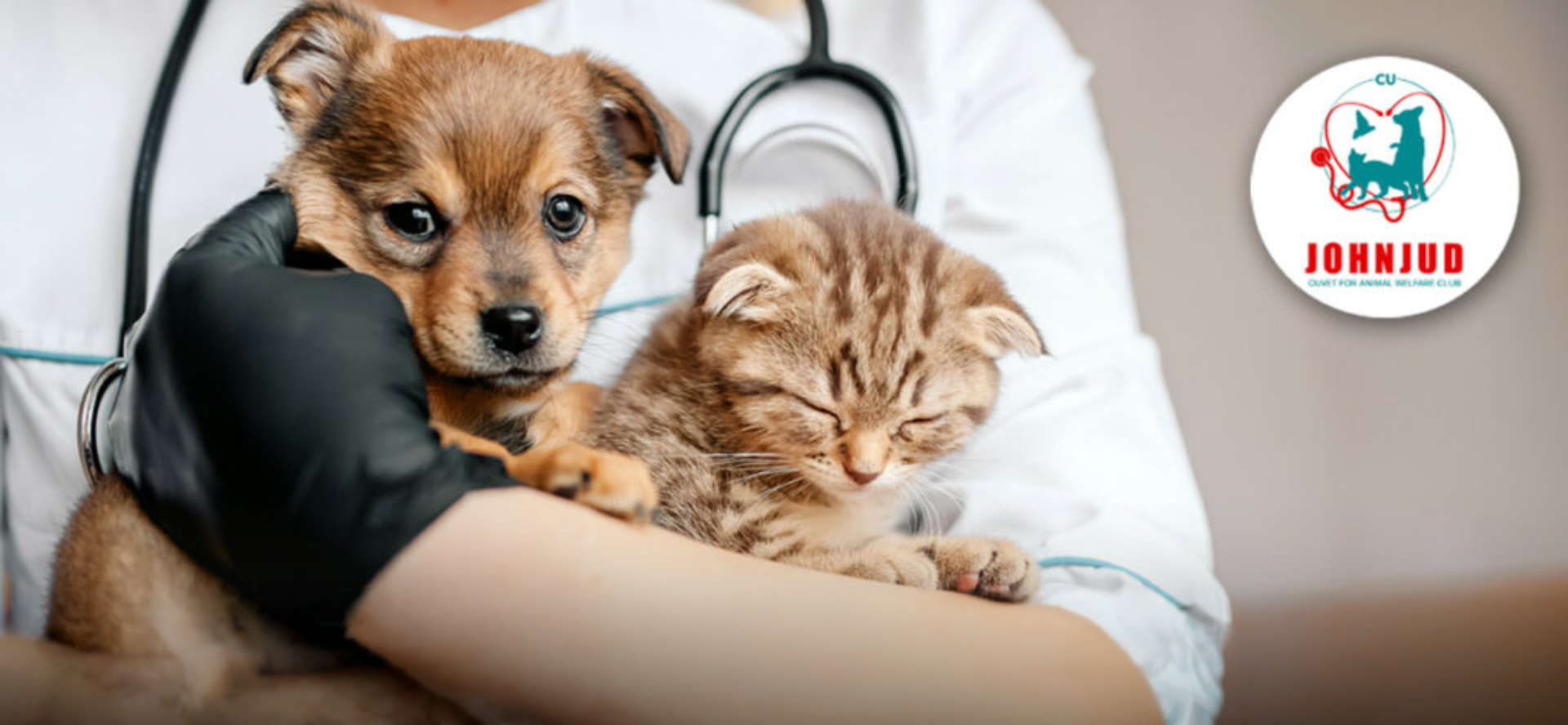
Chulalongkorn University veterinary students have established the JohnJud (Stray) club, volunteering to care for the welfare of stray cats and dogs within the university and its surrounding areas. They provide services like sterilization, vaccination, adoption, and community education on controlling animal populations and caring for the health of stray animals. This is another example of a sustainable community-based approach to animal welfare and solving the stray animal problem in urban areas.
Highlights
· Caring for Strays & Community Well-being-for the Community, by the Community
· "Catch, Sterilize, Release" Reduces the Number of Stray Animal Births
· The Mission to Find New Homes for Our Four-Legged Friends
· "JohnJud Map" – A Map of Stray Animals Around Chulalongkorn University
· Working Together – Volunteering Efforts for the Welfare of Stray Animals
· Volunteering Fosters a Veterinary Spirit
If you walk around the various faculties within Chulalongkorn University, Samyan Market, or Siam Square and happen to encounter a “stray four-legged friend,” you might feel affection, worry, or fear, along with questions in your mind: “Is this dog aggressive? Will it bite if I get too close?” “Has this cat been vaccinated? Can I pet its belly?”
These questions have answers. Simply click on “JohnJud Map,” an online map created by the “Chulalongkorn University Veterinary Student Club for Animal Welfare,” which provides information about “Stray Animal Friends” that includes information such as the locations of the four-legged resident animals, pictures, names, vaccination history, temperament, and important information about dogs and cats that you should know. For example:
“Makhwid,” a celebrity tomcat, neutered, vaccinated (including for rabies), friendly, pettable, and likes to wait for humans to visit – often spotted in the university dorm area.
“Makham,” a tomcat, neutered, vaccinated, “timid, impossible to catch – only the security guard can handle him.” This brown and white cat roams around the Faculty of Education, the Faculty of Communication Arts, and the Faculty of Law.
“Si Mok,” a female cat with gray and black fur, spayed, “timid but fierce.” This serious-looking cat lives near Samyan Market.
Knowing this information might make you feel more at ease…
“We want Chulalongkorn University students, staff, and everyone passing through Chulalongkorn University to get to know the four-legged resident animals, help care for them, and interact with them properly so that we can all live together as safely as possible,” stated Assistant Professor, Veterinary Surgeon, Dr. Chutamas Benjanirat, Department of Physiology, the Faculty of Veterinary Science, Chulalongkorn University, and Advisor of the Chulalongkorn University Veterinary Student Club for Animal Welfare.
The JohnJud Map is one of the club’s efforts to care for the welfare of stray animals in the communities surrounding Chulalongkorn University. Currently, the map alone contains the names of more than 200 stray animals.
Caring for Strays & Community Well-being—for the Community, by the Community
The Chulalongkorn University Veterinary Student Club for Animal Welfare was established nine years ago by veterinary students to help stray dogs and cats around the Faculty of Veterinary Science, and later expanded to include stray dogs and cats in other faculties within the university. Currently, the club’s activities extend to communities surrounding the University, including Siam Square, Samyan Market, and Suan Luang Park, connecting with animal lovers in each area.
JohnJud (Stray) Chulalongkorn University Veterinary Student Club for Animal Welfare
“Our club is a volunteer community comprised of students, Chulalongkorn University staff, and a network of animal lovers who come together to care for stray dogs and cats. This is community-based animal care, by the community, aligning with the current Bangkok Governor’s policy of addressing the stray animal problem, and encouraging community involvement in animal welfare,” said Asst. Prof. Dr. Chuthamas.
Animal welfare is crucial to the well-being of both humans and society. Assistant Professor Dr. Chuthamas, DVM, “Animal welfare is a shared responsibility for everyone who wants to see a warmer, more compassionate, and responsible society. This connects to the One Health principle of public health, which views the health of all life as interconnected – the health of humans, animals, and the environment are all interdependent. When animals are healthy and in a suitable environment, it contributes to a balanced ecosystem, ultimately reflecting on human well-being.”
Therefore, the club’s approach focuses on educating people about animal welfare and proper animal care to improve community health.
“Raising pets isn’t just about feeding them or taking them to the vet when they’re sick; it’s about caring for their ‘welfare,’ which is about giving them a life of physical and mental happiness and freedom.” Just as humans need it,”
Asst. Prof. Dr. Chuthamas explained that animal welfare should encompass five key elements:
1. Providing sufficient clean food and water.
2. Providing a suitable and safe environment.
3. Regular health care and disease prevention.
4. Allowing animals to express their natural species behaviors.
5. Promoting good mental health to ensure animals are happy and stress-free.
All five elements are interconnected and influence each other. The absence of any one element will negatively impact the animal’s overall quality of life. Importantly, animal welfare is not limited to owned pets but also includes stray animals, for which the community should participate in providing care to support the health and well-being of the community.
“Catch, Sterilize, Release” Reduces the Number of Stray Animal Births
Asst. Prof. Dr. Chuthamas explained that the club’s main activities are sterilization, vaccination, disease treatment programs, collecting health records, and finding new homes for tame animals ready to live with new families. This follows the international principle of TNR (Trap-Neuter-Return): Catch, Sterilize, and Release. “Each animal has its own territory.” Releasing animals back into their natural habitat after sterilization helps control the population sustainably.”
Asst. Prof. Dr. Chuthamas further explained that the reason for releasing sterilized stray animals (if they cannot be rehomed) back into their original territory is to allow them to “control their own territory.”
“When the resident stray animals return to their original area, no unsterilized stray animals will enter, and the number of stray animals in that area will gradually decrease. However, if we remove all the sterilized stray animals from their original area, other unsterilized stray dogs or cats will come in, and the number of stray animals in that area will increase again.” “The problem will just keep repeating itself in a never-ending cycle.”
Currently, animals that have been rehomed are microchipped for easy registration as pets, while animals still living in shelters are marked on their ears so that they can be clearly observed and tracked to ensure they have been spayed or neutered. But even catching stray animals and sending them to shelters isn’t a good solution, warns Asst. Prof. Dr. Chuthamas.
“Shelters in Thailand have limited space and resources, resulting in overcrowding. Furthermore, most don’t meet standards due to financial constraints in caring for a large number of animals. Animal care is expensive, so bringing stray animals into such shelters may result in worse welfare and living conditions than in their original habitats.”
Over the years, the club has collaborated with the university’s physical infrastructure department, the Property Management Office of Chulalongkorn University (PMCU), and several private organizations to catch stray dogs and cats in accessible areas for spaying and neutering. Over 500 stray dogs and cats have been sterilized both within and around the Chulalongkorn University campus.
“Managing stray cat populations is more challenging than managing dogs. We cannot fully control their numbers, as new cats continue to enter the area—both at ground level and via rooftops. However, the situation is gradually improving,” said Asst. Prof. Dr. Chuthamas.
The Mission to Find New Homes for Our Four-Legged Friends
While the club’s policy is to catch stray dogs and cats, spay/neuter them, and return them to their original habitats, for some, especially stray puppies and kittens, finding new homes is the best option for a better life.
Miss Thanchanok Ekkaphim (Bam), the current president of the club, explains that when they are notified of a new dog or cat, the club takes them in, checks for diseases, treats them, vaccinates them, and spays/neuters them. Then, they announce the search for homes. The club’s PR team creates cute photos with captions in both Thai and English, telling the stories of the dogs and cats, and posts them on the club’s social media platforms, including Instagram and Facebook.
“Finding a home isn’t just about passing an animal on to someone; it’s about finding someone who understands and is truly ready to care for them. Before handing an animal over to a prospective adopter, the club has a detailed screening form and follows up every three months after adoption to ensure that every animal goes to a truly good home.
However, if an animal is adopted and then cannot or are unable to care for it, we ask that they be returned to the club.” “Because they are our friends,” Thanyachanok said, telling us that the club has already found new homes for approximately 200-300 stray animals.
While waiting to find new homes, the stray dogs and cats stay at the club – a small room where club members take turns caring for them, feeding them, and playing with the animals. For sick animals recovering, the club requests the use of the advisor’s private room to provide shelter and care for those requiring medication and special attention.
“Bai Khao” was once a stray around AmPark and survived a car accident that required emergency surgery. Although she has recovered well, one kidney had to be removed due to health complications, so she now needs a loving home where her diet and health can be carefully looked after.
“JohnJud Map” — A Map of Stray Animals Around Chulalongkorn University
The online map, “JohnJud Map,” is another project that the veterinary club is proud to present to students, Chulalongkorn University staff, and those passing by the university area. It has been made available for use for the past three years. The club regularly updates information on stray dogs and cats within Chulalongkorn University, including their names, photos, behavior, characteristics and sterilization or vaccination status.
Mr. Theerapat Wongsubthavee (Euro), Vice President of the club and a fourth-year veterinary student, stated that the online map was designed and created by veterinary students in the club, focusing on ease of understanding. It uses colored icons (green, yellow, red, gray) to clearly communicate the personality and behavior of each animal, such as whether they are friendly, approachable, or require caution, so that those who encounter them can interact with these animals correctly and safely.
“Our goal in creating this ‘stray’ map is not just to track the location of stray animals within the university grounds. We also want to create knowledge, understanding, and promote the participation of the Chulalongkorn University community in properly caring for our four-legged friends around the university,” Mr. Theerapat said. Here are the coordinates for 9 zones on the map:
· Faculty of Veterinary Medicine Zone: Faculty of Veterinary Medicine, Faculty of Pharmacy, Faculty of Dentistry, Institute Building, Witthayakitti Building
· Dormitory Zone: Dormitories, Central Dormitory, Sport Complex, Chulanivas, 100th Anniversary Park, I’m Park
· Faculty of Psychology Zone: Faculty of Psychology, Faculty of Sports Science, Faculty of Allied Health Sciences, Chulaphat Building, Sasin Graduate Institute, Supachalasai Stadium, Thephatsadin Stadium, Tourist Police Station
· Faculty of Architecture Zone: Faculty of Architecture, Faculty of Arts, Faculty of Fine Arts, Museum, Triam Udom Suksa School, Satit Pathumwan School
· Faculty of Education Zone: Faculty of Education, Faculty of Communication Arts, Faculty of Law, Chamchuri 9, Satit Chulalongkorn School, U-Center Dormitory
· Faculty of Medicine Zone: Faculty of Medicine
· Faculty of Engineering Zone: Faculty of Engineering, Faculty of Science, Faculty of Commerce and Accountancy Faculty of Economics, Faculty of Political Science, Phra Kiao Pavilion
· Samyan Market Zone: Samyan Market, PTT Gas Station, Suan Luang Park
· Siam Zone: Siam Square, pedestrian bridge, True Coffee
1. Green = I’m super friendly! Come play and pet my belly! The JohnJud team confirms!
2. Yellow = I’m a little shy. If you want to befriend me, please keep your distance so I can be comfortable.
3. Red = I’m a total loner. Just watch me from afar. Don’t be too quick to touch me!
4. Gray = I’m a new member. My information is still mysterious. If you have any clues, please tell the JohnJud team!
You don’t need to be a club member. Everyone can help take care of the welfare of stray dogs and cats in the Chulalongkorn University community and surrounding areas. Mr. Theerapat has given the following advice:
What We Can Do to Help with Using JohnJud Map:
Dos
· You can view information about animals in your area on the map.
· If you find an animal not yet listed on the map, you can send a photo and location to the page.
· If you see an animal that is sick, injured, or exhibiting abnormalities, you can inform the club to coordinate assistance.
· You can help observe the behavior or update information about animals in your area.
Don’ts
· Do not chase or approach animals immediately, especially in areas marked as high-risk or animals may be wary.
· Do not feed animals inappropriate food.
· Do not disturb animals while they are resting.
· If you find a stray dog or cat in an area not yet listed on JohnJud Map, you can send a photo, location, and brief information to the page. The club will then survey the area and plan for their care, such as vaccinations and sterilization, to help improve animal welfare in the area sustainably.
Working Together – Volunteering Efforts for the Welfare of Stray Animals
Although the club is run primarily by students, they are not yet veterinarians. Therefore, they are not yet able to treat or spay/neuter stray dogs and cats. Lecturers are needed to supervise and accompany the students on fieldwork for vaccinations and medication administration. For treatments requiring specialized equipment and spaying/neutering, the club takes the animals to external clinics that it has coordinated with. All expenses for treatment, spaying/neutering, and project operations are covered by donations collected through the club’s publicity channels, which the students help manage.
The club’s president, Ms. Thanchanok, described the work they do: “We divide the work into teams: a coordination team, a public relations (PR) team, and a team that finds homes for stray animals. We proactively conduct fieldwork, dividing areas to care for stray animals throughout Chulalongkorn University. We have a clear schedule for caring for cats that come for treatment and those waiting for homes in the club’s small shelter. Students rotate shifts according to their availability. Although there are challenging times when no one is available, eventually someone will volunteer to help.”
The club is not limited to veterinary students; it also welcomes members from other faculties and community members who love animals and are willing to volunteer for the club’s various activities.
Mr. Theerapat, the club’s vice president, added: “We have both Thai and international students from various faculties interested in volunteering. For example, students from the Faculty of Arts help translate English captions, create promotional materials for finding homes, and volunteer students help transport animals to clinics or play with them to reduce stress or taking the dogs for a walk.”
Currently, the club has about 50 veterinary student staff members and approximately 400 members who are students from the Faculty of Veterinary Science and other faculties within the university.
“Although the club is not a foundation, clinic, or animal hospital, all the help comes from ‘volunteer spirit’ and donations from those who wish to give small lives a chance to start anew. When we receive thanks from the Feeder network members we help care for, or when we see the animals we helped having a better life, that’s a great source of encouragement for us to continue our work.”
The Feeder network consists of people who feed stray dogs and cats in each zone and act as eyes and ears to care for them, explains Mr. Theerapat.
“Feeders are essential assistants for our club. Students need to get to know them and educate them on how to care for animals so that they can help care for and coordinate, notifying us when animals are sick, bringing them for vaccinations, sterilization, or when new dogs and cats arrive in the area. The club uses donations to cover the vaccination costs.” “They provide medication and sterilization,”
Ms. Thanchanok explained an example of how students in the club work together with the feeder team: “When a new cat comes into the area, the feeder team notifies the club students who are in charge of that zone via LINE. Our club has LINE groups divided by area to provide advice and answer questions when feeders report sick or injured animals. If it’s an adult cat and the feeder team catches it, they take it to a clinic that the club has coordinated for sterilization.”
“When we receive donations of pet food, we give it to the feeder team so they can help care for stray dogs and cats, including giving them medication and food.”
Volunteering Fosters a Veterinary Spirit
According to Asst. Prof. Dr. Chuthamas, in addition to promoting animal welfare in the area and improving community health, the club also supports the professional skills learning of veterinary students.
“Working in the club doesn’t just teach students professional veterinary skills; they also learn communication and coordination skills through teamwork. This helps them grow into compassionate individuals with a helpful spirit and an understanding of animal welfare through hands-on experience.”
Ms. Thanchanok shared her experience volunteering to care for stray animals: “During my first year as a student and when I first joined the club, it was the first time I had the opportunity to closely help a stray cat. This included caring for its health, monitoring its condition, and witnessing its continuous improvement. Eventually, the animal was adopted and found a home. It was a wonderful feeling to see that what we did had meaning and could truly change a life for the better.”
Mr. Theerapat added, “Every time I see stray dogs and cats recover from their illness, witnessing the clear progress before and after treatment, and seeing the day they are adopted and grow up safely in their new homes and receive love, it’s truly heartwarming.” All of this brings immense satisfaction to the volunteer team. Seeing them recover, become stronger, and find loving families is the greatest reward in animal welfare work.
Solving the stray animal problem cannot be the responsibility of any single agency, organization, or individual. Rather, the community and society as a whole can work together to address this issue, ensuring a safe community where people and animals can coexist happily. JohnJud’s approach, from the Chulalongkorn University Veterinary Student Club, is another example of a sustainable community-based solution for stray animals, prioritizing the health of all living beings.
Follow our positive activities or join us in making a small difference for the lives of stray animals and the communities around Chulalongkorn University. You can volunteer with the club, adopt an animal, or donate to our medical care and sterilization program (which is also tax-deductible).
Contact us through any of these channels.
· Facebook: https://www.facebook.com/CUVETforAnimalWelfareClub
· Instagram: https://www.instagram.com/johnjud_cu/ (our main IG)
· and https://www.instagram.com/johnjud_care/ (follow up IG on visits to the vet)
· X: https://x.com/johnjud_cu and
· TikTok: https://www.tiktok.com/@johnjud_cu
Read more at: https://www.chula.ac.th/en/highlight/303151/