CNU & Amkor: New Semiconductor Packaging Hub

CNU and Amkor Technology Launch Joint Research Center to Advance Semiconductor Packaging Innovation

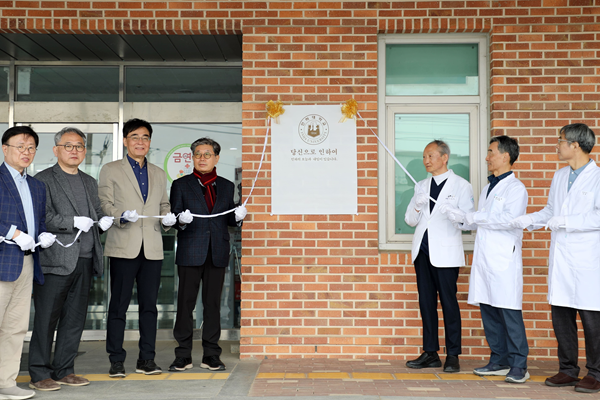
GWANGJU, South Korea – Chonnam National University (CNU), led by President Lee Keun-bae, and Amkor Technology Korea, headed by President & CEO Jin-an Lee, have officially inaugurated the CNU-Amkor Semiconductor Packaging Technology Joint Research Center. The opening ceremony, held on January 12 at CNU’s Advanced Campus in Buk-gu, Gwangju, marks a significant milestone in university-industry collaboration aimed at mastering critical back-end semiconductor processes.

The event was attended by high-profile dignitaries, including CNU President Lee Keun-bae, Amkor Technology Korea CEO Jin-an Lee (Honorary Doctorate in Engineering from CNU), National Assembly Member Min Hyung-bae, and Gwangju City Vice Mayor for Culture and Economy Kim Young-moon.

A Hub for Practical Innovation and Talent Cultivation

The new research center is designed as a strategic hub for empirical research and talent development in semiconductor packaging—a field increasingly recognized as a cornerstone of the high-performance, high-density semiconductor era. By integrating CNU’s academic excellence with Amkor’s global industrial expertise, the center ensures that research outcomes are directly applicable to the production floor.

The facility is equipped with state-of-the-art semiconductor packaging machinery, allowing students and researchers to work in an environment identical to actual industrial sites. Key research initiatives will focus on national strategic fields, including:

Advanced Packaging for Automotive and AI Semiconductors

AI-driven Intelligent Process Optimization

Fostering Regional Ecosystems and National Competitiveness

This partnership serves as a benchmark for South Korea’s balanced national development policy, demonstrating how regional flagship universities and global enterprises can collaborate to nurture strategic industries. It is expected to enhance the local talent pool, strengthen the regional industrial ecosystem, and ultimately bolster South Korea’s global standing in the semiconductor sector.

President Lee Keun-bae emphasized his commitment to student career paths, stating: “Since my inauguration last February, I have focused on creating practical opportunities for our students. Recognizing Amkor’s global presence in Gwangju, I personally reached out to CEO Jin-an Lee to establish this partnership, believing that industry-linked, empirical education is the key to enhancing our students’ competitiveness.”

CEO Jin-an Lee highlighted the synergistic nature of the center: “This center represents the convergence of Amkor’s global experience and CNU’s research capabilities. As advanced packaging becomes the heart of the semiconductor industry’s reorganization due to rising demand for AI and high-performance computing, we expect this facility to be a ‘win-win cradle’—a living classroom for students and an innovation engine for the company.”

Honoring Leadership and Vision

Following the opening ceremony, CNU conferred an Honorary Doctorate in Engineering upon CEO Jin-an Lee in recognition of his contributions to the industry and academia. Dr. Lee then delivered a special lecture titled “The AI Era: Evolution of Semiconductor Packaging Technology,” sharing insights on future industry trends and the vital role of university-industry synergy.

Sogang Explores Humanity in the Age of AI

Sogang University has released Season 3 of its SOGANG101 lecture series on its official YouTube channel, under the theme “Reconsidering Humanity in the Age of AI.” The new season explores how rapid advances in artificial intelligence are reshaping human roles, values, and responsibilities across society.

Unlike previous seasons, which focused on in-depth lectures by individual professors, Season 3 adopts an interactive format in which students pose questions and multiple faculty members respond from diverse academic perspectives. Each episode features two to three professors, creating a cross-disciplinary dialogue that integrates insights from philosophy, science, engineering, social sciences, and the humanities.

Comprising eight episodes, the series addresses key issues such as ethical responsibility in AI decision-making, human-centred technological development, the transformation of work and knowledge production, and the enduring significance of creativity, moral judgement, and critical thinking. Through these discussions, SOGANG101 moves beyond technical explanations to examine how humans can coexist with and meaningfully engage with advanced technologies.

The series reflects Sogang University’s commitment to interdisciplinary education and critical inquiry in the AI era. By connecting technological innovation with humanistic perspectives, it seeks to foster deeper understanding of the social and ethical implications of artificial intelligence and to encourage broader reflection on the meaning of humanity in a rapidly evolving technological environment. In particular, the programme underscores the importance of ethical responsibility and sustainable thinking in shaping the relationship between humans and intelligent technologies.

The full series is available on Sogang University’s official YouTube channel. The series is supported by YouTube’s automatic subtitle translation, allowing global audiences to engage with the content in multiple languages.

Strategies for Improving EUV Photoresists

A joint research team led by Dr. Gu Ye-jin of the Natural Circulation Electronic Materials Research Institute at Inha University and the Polymer Engineering and Materials Synthesis Laboratory has recently attracted significant academic attention by consecutively proposing strategies to overcome the reliability issues and performance limitations of photoresist materials used in EUV lithography-based ultra-high-density semiconductor manufacturing processes.

EUV lithography is a technology that uses extremely short-wavelength light to draw ultra-fine semiconductor circuits at the nanometer scale. The material that actually forms the shapes of transistors and metal interconnects within integrated circuits is the photoresist, which undergoes chemical changes upon exposure to light to create the circuit pattern. As such, photoresists are considered a core patterning material essential for accurately fabricating semiconductor circuits.

Recently, tin nanocluster-based photoresists, which enable more precise circuit patterning than conventional organic photoresists, have emerged as promising next-generation materials. However, these materials suffer from limitations in that their properties change upon exposure to air during processing, leading to degraded pattern quality and reduced process stability.

Dr. Gu Ye-jin focused on the fact that this instability originates from a specific chemical property of tin—Lewis acidity. Because tin readily reacts with moisture in the air, she proposed a strategy to mitigate this issue by incorporating fluorine atoms. Through material synthesis and lithography experiments, she demonstrated that this approach significantly enhances the stability and process reliability of photoresists.

The fluorine-incorporated tin oxide photoresist synthesized by the joint research team exhibited excellent process stability, showing outstanding patterning resolution at the 10-nanometer (nm) scale without reliability degradation caused by atmospheric exposure. Furthermore, by leveraging the material properties enabled by fluorine incorporation, the team implemented a bilayer photoresist structure. As a result, circuits could be formed using lower EUV exposure doses, significantly improving overall process efficiency.

This research was conducted in collaboration with the Samsung Electronics Semiconductor Research Center under the support of the Samsung Future Technology Incubation Center. The results were recently published in Advanced Functional Materials, a highly influential international journal in materials science, under the title:

Tin-Oxo Nanocluster Extreme UV Photoresists Equipped with Chemical Features for Atmospheric Stability and High EUV Sensitivity.”

In addition to this work, Dr. Gu also conducted research on chemically amplified resists (CARs), proposing a new approach to improve the productivity of EUV lithography processes. EUV lithography operates using light with a wavelength of 13.5 nm, and insufficient photon delivery during exposure can lead to degraded pattern quality.

Rather than increasing the exposure dose, Dr. Gu proposed incorporating high light-absorption elements into the photoresist. This strategy reduces photon loss during exposure, thereby enhancing pattern quality while maintaining process efficiency.

Experimental results confirmed that iodine is an effective element for improving the operational efficiency of chemically amplified photoresists. Based on these findings, the team synthesized a CT contrast agent–based radiation sensitizer containing a high concentration of iodine and applied it to commercial EUV photoresists. This approach successfully demonstrated simultaneous improvements in EUV sensitivity and pattern quality.

This research was carried out in collaboration with the Electronic Materials Division of Dongjin Semichem and was recently published in ACS Applied Materials & Interfaces under the title: “Positive Role of Iodine Atoms in Chemically Amplified Photoresists for Extreme Ultraviolet Lithography.”

Dr. Gu Ye-jin of the Natural Circulation Electronic Materials Research Institute at Inha University stated, “It was meaningful to propose solutions to advanced semiconductor technology challenges through close collaboration with industry. I will continue pursuing research that contributes to strengthening the competitiveness of Korea’s semiconductor technology.”

불소화 리간드를 주석산화물에 도입함으로써 주석과 대기 중 분자 간 반응성이 감소하고, 화학적 직교성 확보에 따라 적층 박막 구조 구현이 가능해져 레지스트 감도가 향상되는 두 가지 핵심 특성.

▲ Two key characteristics: By introducing fluorinated ligands into tin oxide, reactivity between tin and atmospheric molecules is reduced, chemical orthogonality is secured, and multilayer thin-film structures become feasible—resulting in enhanced resist sensitivity.

아이오딘이 화학 증폭형 포토레지스트의 작동 효율을 향상시키는 고흡광 원소임을 확인하고, 이를 다량 포함한 CT 조영제 기반 방사선 증감제를 상용 EUV 포토레지스트에 적용하여 감도와 패턴 품질이 동시에 향상됨을 입증

▲ Iodine was identified as a high-absorption element that improves the efficiency of chemically amplified photoresists. By applying a CT contrast agent–based radiation sensitizer containing a high concentration of iodine to commercial EUV photoresists, simultaneous improvements in sensitivity and pattern quality were demonstrated.

▲Dr. Gu Ye-jin of the Natural Circulation Electronic Materials Research Institute

Original Article

Speaker Woo Receives CNU Honorary PhD

GWANGJU, South Korea – On January 16, Chonnam National University (President Lee Keun-bae) conferred an Honorary Doctorate in Philosophy upon Woo Won-shik, Speaker of the National Assembly, at Yongbong Hall. The degree recognizes Speaker Woo’s lifelong commitment to upholding the constitutional order, advancing democracy, and his practical political leadership for the underprivileged.

The ceremony was attended by distinguished guests, including National Assembly members, local government leaders, and CNU alumni representatives. Following a formal reception by CNU staff, President Lee Keun-bae and Graduate School Dean Joo Jeong-min jointly presented the degree.

Leadership Rooted in the “Gwangju Spirit”

In his congratulatory remarks, President Lee Keun-bae drew a parallel between the historical struggle of CNU students against the 1980 military regime and the recent defense of the constitutional order led by the National Assembly. “As a member of the CNU community, I am proud to confer this degree on Speaker Woo, who protected our democracy with unwavering decisiveness and responsibility during a time of national crisis,” President Lee stated.

Accepting the honor, Speaker Woo Won-shik attributed his political resolve to the legacy of the 1980 Gwangju Uprising. “The path opened by Gwangju has strengthened both myself and our community,” said Speaker Woo. “Receiving this degree from CNU—a symbol of democratic history—is a profound honor. I will continue to realize and expand the values of democracy.”

A Model of Philosophical Leadership

CNU cited Speaker Woo’s leadership as a prime example of “philosophical leadership,” extending beyond politics into the realms of public interest, justice, and humanistic reflection. This conferral highlights CNU’s role in honoring leaders who translate intellectual values into social action.

Sogang ESG Course Partners with POSCO

Sogang University’s Character-Development Center participated in the POSCO Sustainable Alumni Day as part of the Fall 2025 course “Sustainable Development and ESG Practices,” a project-based programme designed to connect academic learning with real-world sustainability challenges.

Now in its third cycle, the course adopts a co-work model that brings universities and corporations together to address social and environmental issues. Through collaboration with corporate partners and diverse stakeholders, students develop a practical understanding of ESG concepts while exploring solutions aligned with sustainable development goals and social responsibility.

In 2025, the programme was conducted in partnership with POSCO International. Student teams developed company-linked projects focused on community co-prosperity initiatives and responses to the climate crisis. Supported by mentoring from industry professionals, the projects combined case-based learning with hands-on problem-solving, aiming to generate social value through ESG-driven approaches.

The programme also included special lectures by POSCO Group experts and corporate site visits to facilities such as the LNG terminal in Gwangyang and POSCO International’s Songdo office. These activities enabled students to gain insight into industrial contexts, corporate sustainability strategies, and career pathways, strengthening the practical dimension of project-based learning.

On 23 December, students from nine universities and POSCO Group mentors gathered at POSCO Sustainable Alumni Day to share project outcomes and experiences. Sogang University was recognised for its project achievements, with five teams selected as Best Presentation Teams. One highlighted project proposed a mangrove ecosystem restoration model in Indonesia using seed balls and palm by-products, demonstrating an integrated approach to environmental protection and local community engagement.

The course reflects Sogang University’s broader commitment to sustainability-oriented education and industry collaboration. By integrating ESG principles with interdisciplinary learning and real-world practice, the programme illustrates how universities can cultivate ethical awareness, sustainable thinking, and problem-solving capacity in future leaders. The initiative also aligns with Sogang’s educational vision of nurturing socially responsible individuals who contribute to sustainable communities and global society.

3rd Jisan-Hak Education–Industry Forum

▲Participants pose for a commemorative photo at the 3rd Jisan-Hak Performance Forum.

Inha University held the 3rd Jisan-Hak Performance Forum on the 23rd to share the achievements and outcomes of collaborative initiatives jointly developed by regional education, industry, and the university.

The forum was organized to review the outcomes and progress of local industry university (Jisan-Hak) cooperation, aimed at strengthening region-based talent development and industrial linkages, while exploring directions for future advancement.

The event brought together a diverse range of stakeholders, including industry professionals, university faculty members, researchers from government-funded research institutes, and students. Participants shared field-oriented experiences and practical outcomes derived from Jisan-Hak collaboration.

Outstanding students were recognized for their accomplishments in Jisan-Hak collaborative curricula. Presentations were also delivered on exemplary educational operation models, supporter program cases, and best practices in linking student career development with employment. In particular, cases demonstrating the organic integration of school education, university expertise, and industry demand drew strong interest from attendees.

Key sessions highlighted how students are accumulating hands-on problem-solving experience beyond theory-based learning through various extracurricular activities, such as secondary battery competitions and global projects. These experiences were shown to broaden students’ career exploration and expand their options for major selection.

Industry representatives noted that incorporating real-world contexts into learning from the educational stage has significantly enhanced the quality of talent development.

A senior-to-junior scholarship presentation ceremony for the secondary battery major was also held. Alumni Ahn Chi-wan (Class of 2019, Department of Chemical Engineering), CEO of WorkX and a second-cohort graduate of the secondary battery major, donated a scholarship fund to support junior students, expressing his strong commitment to the academic community. Ahn recently received the 2025 Korea Talent Award.

Ahn stated, “My learning experience in the secondary battery major and the Jisan-Hak collaborative education program became an important foundation for my entrepreneurial journey,” adding, “I made this scholarship donation in hopes that my juniors can continue to challenge themselves and grow in a more stable environment.”

The university expects that this scholarship donation will further invigorate education and research in the secondary battery major, while strengthening the cooperative network between alumni and current students. The institution plans to continue building a sustainable, major-based talent development system.

To enhance employment competencies in the secondary battery industry, experts from academia, research institutes, and industry also participated as speakers in special lectures for students, receiving positive feedback.

Choi Jin-seop, Head of the Secondary Battery Project Group, said, “This 3rd Jisan-Hak Performance Forum provided an opportunity to confirm the outstanding result of our educational incubating efforts, while sharing a vision for an educational ecosystem aligned with Incheon’s advanced talent development strategies.” He added, “We will continue to expand models that support student growth and promote mutual development with regional industries through Jisan-Hak collaboration.”

Original Article

Thammasat and Cheongju Universities Sign MOU

On 20 January 2026, Professor Dr. Supasawad Chardchawarn, Rector of Thammasat University, welcomed Dr. Kim Yoon-Bae, President of Cheongju University of the Republic of Korea, for an official meeting at Thammasat’s Rangsit campus.

Joining the Rector in the discussions were the Assistant to the Rector for International Affairs, along with executives from the Faculties of Science and Technology, Allied Health Sciences and Pharmacy. The Korean delegation included the former Korean Ambassador to Portugal, a First Secretary from the Embassy of the Republic of Korea in Thailand, and administrative staff from the Office of International Affairs at Cheongju University.

During the meeting, the two universities explored prospective avenues for cooperation within a bilateral academic framework. Key areas of discussion included student and faculty exchanges, internship opportunities, and joint academic initiatives. In particular, the Faculty of Science and Technology has expressed strong interest in developing collaborative academic activities in Food Science, with a focus on kimchi studies, food innovation, and fermentation technology.

Following the meeting, Thammasat and Cheongju Universities marked a significant milestone by formally signing a Memorandum of Understanding (MOU), co-signed by the Rector of Thammasat University and the President of Cheongju University. The agreement reflects the shared commitment of both institutions to strengthening academic collaboration across key disciplines.

Through this MOU, students and faculty from both institutions will benefit from expanded opportunities for international engagement, academic collaboration and cross-cultural exchange. 

Mayor Kang Shares Gwangju’s Growth Strategy

GWANGJU, South Korea – On September 16, Chonnam National University (President Lee Keun-bae) successfully hosted the 2nd Yongbong Forum under the theme, “Transforming Democratic Values into Opportunities for Growth.”

Gwangju Mayor Kang Gi-jung, a CNU alumnus, served as the keynote speaker, outlining a future strategy for Gwangju rooted in its democratic spirit. Mayor Kang identified three historical periods of “isolation” for the city:

The May 18th Democratization Movement in 1980

The three-party merger in 1991

The current “employment isolation” caused by a changing industrial landscape.

“The same DNA that allowed Gwangju to overcome the challenges of May 1980 will empower us to break through today’s job isolation,” Mayor Kang stated. He emphasized that Gwangju is already overcoming its third isolation by spearheading new industries, particularly Artificial Intelligence (AI).

AI, Mobility, and Energy: The Pillars of Growth

Citing 2024 Nobel Laureate James A. Robinson, Mayor Kang noted that “democratic societies lead in economic development.” He presented AI, Mobility, and Energy as the three core opportunities for Gwangju’s growth.

Reflecting on his tenure as Senior Secretary for Political Affairs under the Moon Jae-in administration, he highlighted his role in securing the AI Phase 1 preliminary feasibility study exemption. As Mayor, he continues to push for:

Exemption for AI Phase 2 (scheduled for 2025)

Hosting the National AI Computing Center

The “Golden Triangle” Innovation Hub: Connecting the AX Verification Valley (Chumdan District), AI Mobility City (Future Auto Industrial Complex), and “Y-Park” (former military airport site).

Interactive Dialogue with the Community

The forum drew over 300 participants, including students and local residents. The event featured an interactive Q&A session where Mayor Kang addressed community concerns, ranging from solving power shortages in new AI cities to mitigating inconveniences from Subway Line 2 construction.

Cho Jin-hyung, Vice President of External Cooperation at CNU, remarked: “The Yongbong Forum is an open platform for sharing the university’s intellectual assets and communicating with regional leaders. We will continue to invite experts from various fields to explore ways for the university and the region to grow together.”

2025 Corporate & Social Projects

기업사회문제해결 프로젝트 성과발표회에 참여한 학생들과 관계자들이 기념촬영을 하고 있다.Students and industry representatives pose for a commemorative photo at the Corporate & Social Problem-Solving Project Final Presentation.

The Engineering Education Innovation Center recently hosted the 2025 Corporate & Social Problem-Solving Project Final Presentation.

The event featured a total of five teams, consisting of four competition-track teams and one advanced-track team. A panel of judges composed of industry experts, patent attorneys, and faculty members evaluated the teams’ presentations and prototypes.

Over a two-month period, students carried out a practice-oriented industry–academia cooperative capstone project that involved problem definition, design, prototype development, and feedback. The projects were based on real-world industrial challenges presented by Hyperdrive Korea Co., Ltd. and Hydrofast Co., Ltd.

The proposed project topics combined technological innovation with social value. They included the development of a non-powered ground reaction force ankle assist device for socially vulnerable individuals experiencing muscle loss, as well as smart agriculture technology utilizing four-wheel steering and driving systems.

Following the evaluation, the Grand Prize in the competition track was awarded to Team “Mu-Yaho.” The team developed a lightweight, custom-made walking assist device using a GFRP plate spring. The project demonstrated a high level of completeness through appropriate material selection (GFRP utilization), creative and precise design, and verification based on electromyography (EMG) measurements.

In particular, the team’s link structure design, which reflected joint motion mechanisms, and the systematic application of engineering elements were highly praised for achieving a technical level comparable to professional research standards.

The Excellence Award was presented to Team Balpyeonhan Sesang, while the Advanced Track Outstanding Technology Award was awarded to Team ALM.

Choi Soo-sung, CEO of Hydrofast Co., Ltd., stated, “Watching the students’ problem-solving processes was highly inspiring for the industry as well. I hope this project becomes a valuable asset in your future careers.”

Pyeon Seok-jun, Director of the Inha Engineering Education Innovation Center, commented, “This industry-collaborative project was a meaningful opportunity that provided students with real-world experience and growth. We will continue to expand industry-linked education models in the future.”

Original Article


SAIX Peers Forum on Human–AI Collaboration

Sogang University held its January brown-bag meeting of SAIX Peers (Sogang AIX Peers), an interdisciplinary research forum connecting scholars across artificial intelligence, humanities, and social sciences. The session featured Professor Yoonseok Heo from the Division of English, who presented research on human–AI collaboration in creative writing.

Professor Huh examined how humans and artificial intelligence can interact through staged collaborative processes in literary creation. By comparing the narrative arcs of AI-generated fiction with human-authored works, he analysed the current limitations of AI in storytelling, including difficulties in constructing tension and complex narrative structures.

Building on these findings, he proposed directions for developing AI models specialised in creative writing through interdisciplinary collaboration. He emphasised that computer science research could focus on algorithmic modelling of narrative structures, while humanities scholars could contribute by constructing high-quality literary datasets essential for improving model performance. He also introduced the concept of “LLM-as-a-Judge,” highlighting the need for AI-based evaluation frameworks capable of assessing creativity and narrative coherence beyond surface-level linguistic patterns.

During the discussion session, participants shared broader challenges in AI-driven creative research, including copyright constraints on training data and the resulting limitations in model performance. The dialogue further expanded to potential educational applications of AI-based evaluation systems.

SAIX Peers was launched in November 2025 as part of Sogang University’s “AI Driven University” vision. Through regular forums and interdisciplinary exchanges, the initiative aims to foster collaborative research and deepen academic understanding of the ethical, cultural, and technological implications of artificial intelligence.