SKKU Language Institute Opens New Chapter

The Sungkyun Language Institute (Director: Professor Minhyo Cho) has taken a meaningful first step toward expanding its global education infrastructure.

On June 15, the institute held a successful inauguration ceremony for the newly established SKKU Daehak-ro Building in Seoul’s Daehak-ro district.

The new facility was established in the heart of Daehak-ro to further strengthen the institute’s expertise in Korean language education and global talent development.

As the fourth and fifth floors of the building are dedicated to the Korean Language Institute’s state-of-the-art classrooms and educational facilities, the inauguration ceremony was held in conjunction with the unveiling of the Korean Language Institute signboard, making the occasion even more meaningful.

President Ji-Beom Yoo, Executive Director Youngsoo Joo, Corporate Director Donghwan Lee, Vice President for Planning and Coordination Piljin Yoo, Vice President for Academic Affairs Sang Hoon Bae, Vice President for International Affairs Minhyo Cho, and approximately 50 distinguished guests and university officials attended the event to celebrate this new beginning.

Participants expressed their warm congratulations and support for the institute’s new milestone and the future growth of its Korean Language Institute.

The ceremony began with the unveiling of the signboard at the front entrance of the SKKU Daehak-ro Building.

Amid the congratulations of the attendees, the newly revealed Korean Language Institute signboard symbolized SKKU’s vision for global education and its commitment to reaching the world from Daehak-ro, where tradition and modernity coexist. The unveiling was met with enthusiastic applause.

Following the ceremony, guests toured the Korean Language Institute facilities on the fourth and fifth floors of the building. The modern educational infrastructure—including advanced classrooms designed to provide international students with a comfortable and effective learning environment, faculty offices, instructors’ rooms, student lounges, and an administrative office offering one-stop support services for international students—drew admiration from attendees.

After the tour, guests gathered for refreshments and informal discussions in a warm and welcoming atmosphere. During the reception, participants shared the view that the SKKU Daehak-ro Building would serve as a key hub for K-education, attracting students from around the world, while exchanging ideas on the sustainable growth and global competitiveness of the Sungkyun Language Institute.

In his congratulatory remarks, President Ji-Beom Yoo stated, “I am delighted that SKKU has secured a dedicated space for global education on Daehak-ro, the cultural and artistic center of Seoul. Through the opening of the SKKU Daehak-ro Building, we will provide world-class Korean language education services and further strengthen SKKU’s standing as a leading global university.”

The newly opened SKKU Daehak-ro Building is expected to become a vibrant hub where talented individuals from around the world can learn the Korean language and culture, connect with one another, and help shape the future of global education.

SKKU Language Institute Opens New Chapter

The Sungkyun Language Institute (Director: Professor Minhyo Cho) has taken a meaningful first step toward expanding its global education infrastructure.

On June 15, the institute held a successful inauguration ceremony for the newly established SKKU Daehak-ro Building in Seoul’s Daehak-ro district.

The new facility was established in the heart of Daehak-ro to further strengthen the institute’s expertise in Korean language education and global talent development.

As the fourth and fifth floors of the building are dedicated to the Korean Language Institute’s state-of-the-art classrooms and educational facilities, the inauguration ceremony was held in conjunction with the unveiling of the Korean Language Institute signboard, making the occasion even more meaningful.

President Ji-Beom Yoo, Executive Director Youngsoo Joo, Corporate Director Donghwan Lee, Vice President for Planning and Coordination Piljin Yoo, Vice President for Academic Affairs Sang Hoon Bae, Vice President for International Affairs Minhyo Cho, and approximately 50 distinguished guests and university officials attended the event to celebrate this new beginning.

Participants expressed their warm congratulations and support for the institute’s new milestone and the future growth of its Korean Language Institute.

The ceremony began with the unveiling of the signboard at the front entrance of the SKKU Daehak-ro Building.

Amid the congratulations of the attendees, the newly revealed Korean Language Institute signboard symbolized SKKU’s vision for global education and its commitment to reaching the world from Daehak-ro, where tradition and modernity coexist. The unveiling was met with enthusiastic applause.

Following the ceremony, guests toured the Korean Language Institute facilities on the fourth and fifth floors of the building. The modern educational infrastructure—including advanced classrooms designed to provide international students with a comfortable and effective learning environment, faculty offices, instructors’ rooms, student lounges, and an administrative office offering one-stop support services for international students—drew admiration from attendees.

After the tour, guests gathered for refreshments and informal discussions in a warm and welcoming atmosphere. During the reception, participants shared the view that the SKKU Daehak-ro Building would serve as a key hub for K-education, attracting students from around the world, while exchanging ideas on the sustainable growth and global competitiveness of the Sungkyun Language Institute.

In his congratulatory remarks, President Ji-Beom Yoo stated, “I am delighted that SKKU has secured a dedicated space for global education on Daehak-ro, the cultural and artistic center of Seoul. Through the opening of the SKKU Daehak-ro Building, we will provide world-class Korean language education services and further strengthen SKKU’s standing as a leading global university.”

The newly opened SKKU Daehak-ro Building is expected to become a vibrant hub where talented individuals from around the world can learn the Korean language and culture, connect with one another, and help shape the future of global education.

SKKU Successfully Hosts NGPT 2026

SKKU successfully hosted the 8th International Conference on Nanogenerators and Piezotronics (NGPT 2026) from June 9 to 12 at its Humanities and Social Sciences Campus in Seoul.

NGPT is one of the world’s leading international conferences in the fields of nanogenerators, piezotronics, self-powered sensors, and energy harvesting. The conference serves as a premier platform where researchers share the latest scientific advances and discuss future technological directions.

Having previously hosted NGPT in 2018, SKKU welcomed the conference for the second time this year. More than 500 researchers, students, and industry representatives from 21 countries, including the United States, China, Germany, the United Kingdom, Canada, and Singapore, participated in the event.

The conference featured presentations on a wide range of cutting-edge topics, including self-powered sensors, wearable electronics, AI-integrated sensing technologies, bioelectronics, energy harvesting, and sustainable energy technologies. Participants actively exchanged ideas through keynote lectures, tutorial sessions, invited talks, oral presentations, and poster sessions.

Among the distinguished speakers were Professor Zhong Lin Wang of Georgia Institute of Technology, the pioneer of nanogenerators and piezotronics; Professor Mark Hersam of Northwestern University, a world-renowned expert in nanomaterials and electronic devices; and Professor Orlando J. Rojas of The University of British Columbia, a leading scholar in sustainable biomaterials. Together with other internationally recognized researchers, they discussed the future directions of next-generation energy and sensor technologies.

Editors from top-tier journals, including Nano Energy, Advanced Materials, and Joule, also attended the conference, sharing insights on emerging research trends and academic publishing strategies. In addition, a special issue featuring outstanding research presented at NGPT 2026 is planned, which is expected to further disseminate the conference’s scientific contributions and foster follow-up studies and international collaborations.

A particularly significant milestone of NGPT 2026 was the official launch of the Nanogenerators and Piezotronics Society (NPS), an international academic organization established to promote global collaboration and scholarly advancement in the field. Researchers from around the world gathered for the inaugural ceremony to share the society’s vision and discuss future directions for international research cooperation and academic exchange.

Professor Jung Min Baik of the Department of Materials Science and Engineering, Chair of the Organizing Committee, stated, “It is especially meaningful for SKKU to host NGPT once again following the 2018 conference. We hope this conference not only provides an opportunity for researchers worldwide to share their latest findings and discuss future technological visions, but also serves as a catalyst for strengthening global research collaboration through the launch of the Nanogenerators and Piezotronics Society.

Korea’s AI Policy: A Global Media Visit to SKKU

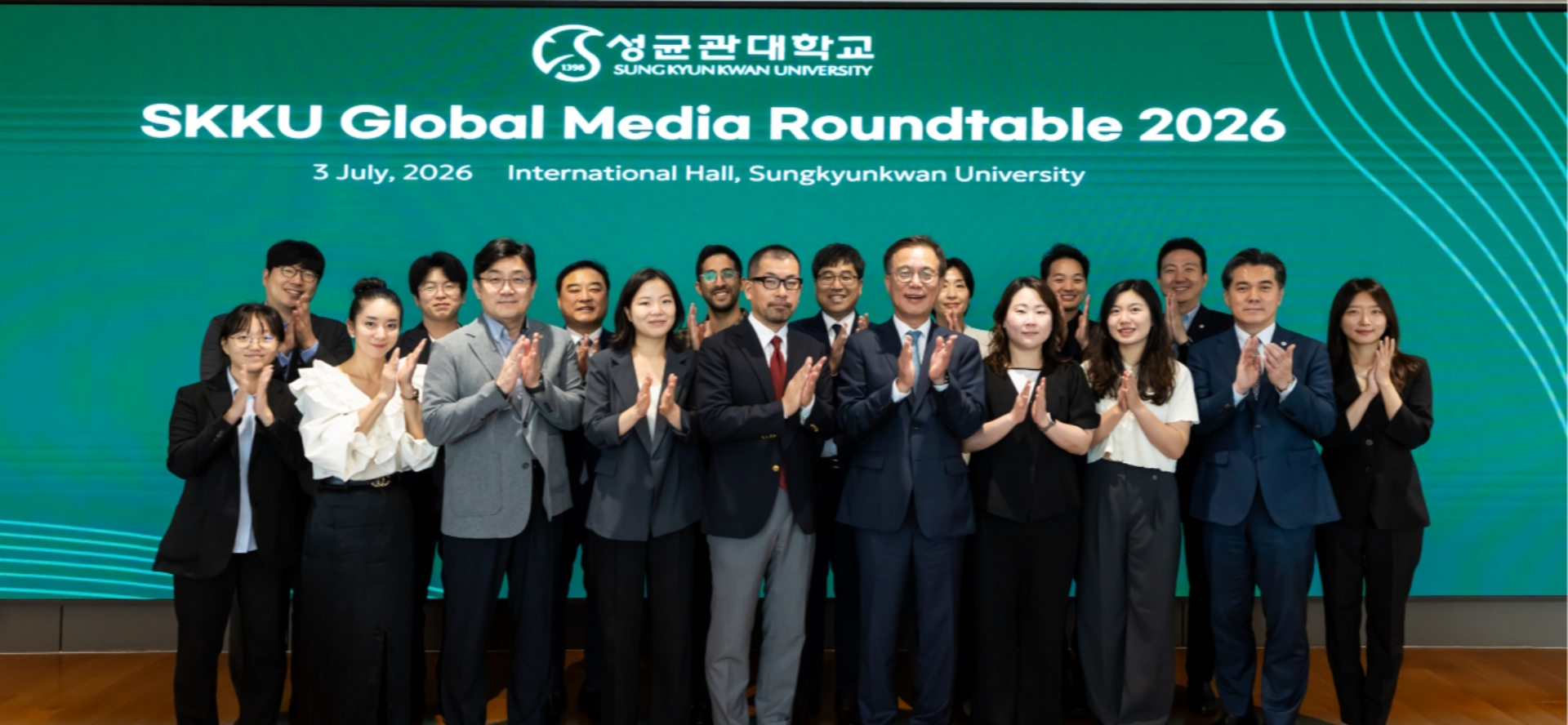
A delegation of journalists from seven countries visited SKKU on June 4. The delegation included reporters from major media outlets in Hungary, Brazil, Mexico, the Philippines, the Czech Republic, the United Arab Emirates (UAE), and Vietnam, who visited the university to learn about Korea’s AI policies, educational initiatives, and talent development practices. The visit was part of their Korea program conducted from May 31 to June 6.

The delegation attended a meeting with President Ji Beom Yoo, during which they were introduced to SKKU’s educational vision and the current status of its education and research initiatives in the field of artificial intelligence. During the subsequent Q&A session, participants exchanged views on the university’s AI education system and its approach to nurturing future talent.

The delegation then visited the Convergence and Open Sharing System for AI (AICOSS) Project Group, where they received an overview of the project’s operations and key educational programs. They also toured AI learning facilities to observe students’ learning environments and educational activities firsthand.

This visit served as an opportunity to showcase SKKU’s strengths in AI education and research to an international audience and to further expand its global collaboration network.

Kenyan Foreign Minister Visits SKKU

The Department of Political Science and Diplomacy, the Graduate School of Strategic Studies, and the Center for Good Democracy of SKKU hosted a special lecture by Wycliffe Musalia Mudavadi, Kenya’s Cabinet Secretary for Foreign and Diaspora Affairs, on June 2 (Tuesday) at Sohyang Hall on the 6th floor of the 600th Anniversary Hall.

Prior to the lecture, Minister Mudavadi and Emmy Jerono Kipsoi, Ambassador of Kenya to Korea, met with President Ji Beom Yoo. During the meeting, they introduced the Kenyan government’s policy to expand the ICT sector and requested SKKU’s interest and cooperation. President Yoo expressed his commitment to promoting exchanges and expanding collaboration between SKKU and Kenyan universities.

Under the title “Korea–Kenya Partnership for Future Cooperation,” Minister Mudavadi delivered a one-hour lecture to SKKU students. He noted that the international community is currently facing serious geopolitical crises and economic instability, including the resurgence of unilateralism, the increasing transactional nature of diplomacy, conflicts involving the United States, Israel, and Iran, and the ongoing Russia–Ukraine war. In response to these challenges, he emphasized that Africa is strengthening regional economic integration through the African Continental Free Trade Area (AfCFTA) and building diversified global partnerships, thereby moving beyond aid dependency and promoting mutually beneficial development.

He further explained that Kenya and the Republic of Korea have developed a close partnership centered on ICT technologies, highlighting Kenya’s smart city project, Konza Technopolis, in which the Korean government is participating. He also introduced the two countries’ expanding cooperation in healthcare and medicine, including efforts related to attracting a branch of the International Vaccine Institute (IVI), as well as in sustainable green economy sectors such as climate change response and renewable energy.

Minister Mudavadi was elected to the Kenyan National Assembly at the age of 29 and has pursued a political career for 35 years. His major public service positions include Vice President (2002–2003) and Deputy Prime Minister (2008–2013). He currently also serves as Prime Cabinet Secretary, a position comparable to the Prime Minister-level role in Korea. In response to students’ questions about career development, he shared his own experiences and advised them that, regardless of their aspirations, they should cultivate the self-discipline necessary to maintain control over themselves.

Following the lecture, Minister Mudavadi toured Bicheondang and Myeongnyundang, where he learned firsthand about the origins of SKKU’s 600-year history. Observing that the main shrine of the Confucian shrine, lecture halls, and student residences were all located within the same area, he remarked that he could understand why Korea places such a strong emphasis on education.

SKKU Hosts Oxford Mindfulness Talk

SKKU’s International Affairs Division and the Department of Social Welfare held the “Mindfulness for Life” talk concert on March 18, inviting Professor Willem Kuyken, a clinical psychologist at the University of Oxford in the United Kingdom. The event was organized to offer students who are experiencing psychological difficulties amid various concerns such as academics, career paths, and interpersonal relationships a new perspective and practical support through mindfulness.

Professor Kuyken is a world-renowned authority in the field of mindfulness-based cognitive therapy (MBCT) research and has been actively conducting studies on the prevention of depression and anxiety and the promotion of mental health. In his lecture that day, he explained how mindfulness helps people recognize and accept present experiences as they are and introduced practical ways to ease recurring cycles of negative thoughts and emotions.

In the session that followed, in-depth discussions were conducted around three cases based on students’ concerns collected through a pre-event survey. In particular, Professor Sungmin Yoon of the Department of Social Welfare participated in this session together with Professor Kuyken, enabling a more extensive discussion. The first case presented a perspective that viewed “rest” not as failure but as part of sustainable growth through the experience of a student who repeatedly set excessive goals and experienced burnout. The second case focused on how to understand one’s identity and values separately amid achievement-centered self-perception and career-related anxiety. Finally, through a case involving loneliness and disappointment in interpersonal relationships, the importance of mindfulness in finding balance in relationships with others and caring for oneself was emphasized.

For each case, Professor Kuyken and Professor Sungmin Yoon presented ways for students to view their emotions and thoughts more flexibly from the perspective of mindfulness, and attendees took time to reflect on and empathize with their own experiences.

During the Q&A session that followed, students continued to participate actively, raising questions on a wide range of topics, including mindfulness-based cognitive therapy (MBCT), career concerns, and methods of emotional regulation. The speaker drew a strong response by empathizing with each student’s situation and offering practical advice.

The International Affairs Division and the Department of Social Welfare, which co-hosted the event, expressed their hope that the program served as an opportunity for students to view the anxiety and concerns they had felt only vaguely from a new perspective. They also stated that they plan to continue organizing a variety of programs that can support students’ growth in the future.

AI Technology for Recognizing Actions

A research team led by Jae-Pil Heo, Professor in the Department of Software at Sungkyunkwan University (SKKU), has developed an Artificial Intelligence (AI) technology that can accurately recognize new actions from only a small number of example videos.

Typically, AI requires massive amounts of training data to understand complex human actions. However, in real-world scenarios, it is often difficult to secure sufficient video data for specific actions. To address this limitation, the research team focused on few-shot action recognition, which enables AI to learn and distinguish the characteristics of new actions from only a few examples.

The research team’s core idea is to compare videos by efficiently summarizing only their key movements, rather than relying on conventional complex computations that compare entire videos frame by frame in temporal order. To achieve this, the team extracts and organizes key movement patterns from each video based on several criteria, enabling the AI to compare actions more effectively and identify similarities and differences more accurately.

A key strength of this technology is its robustness to variations in action speed and duration. Even when the same action is performed at different speeds or over different durations due to individual habits or filming conditions, the algorithm can reliably capture the essence of the action and recognize it effectively despite such temporal variations.

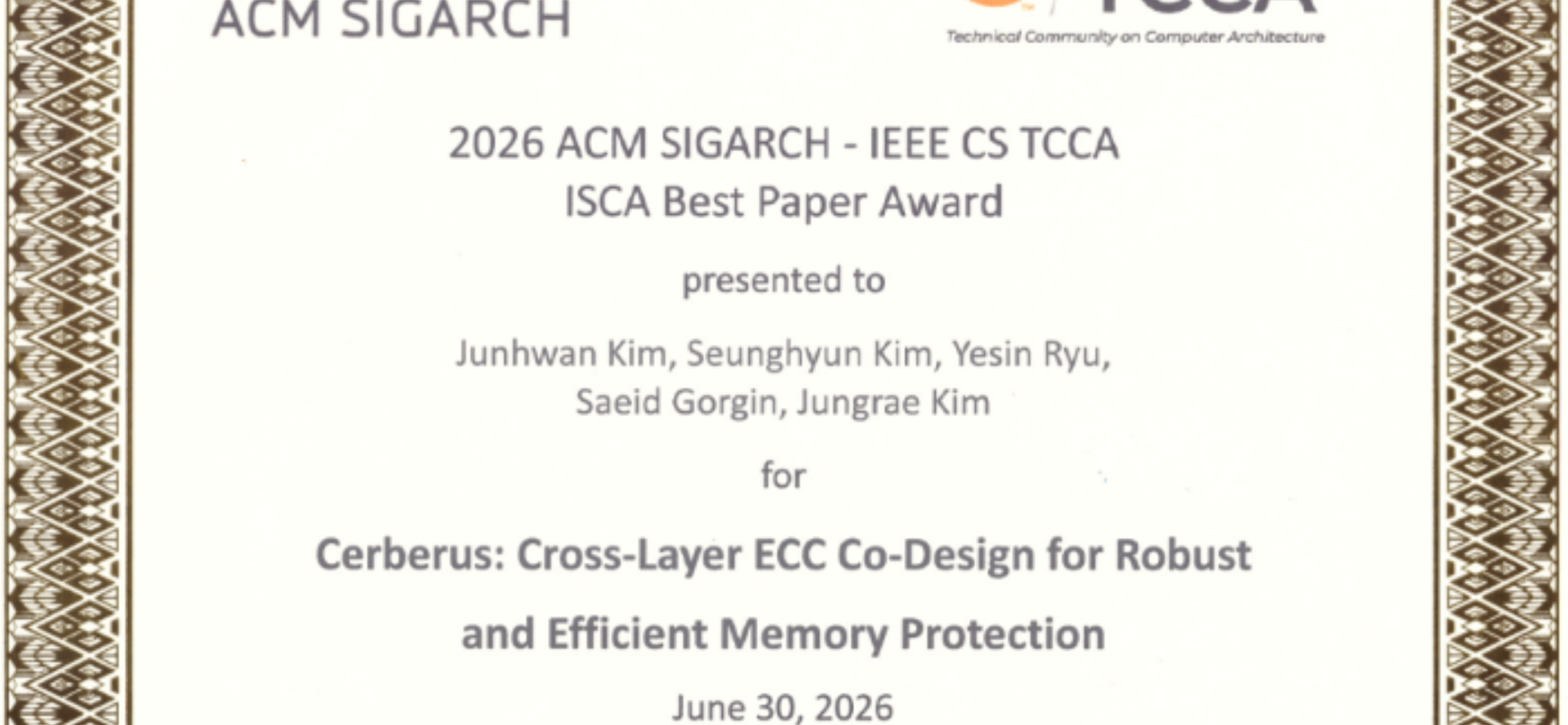
This achievement has been internationally recognized for its academic significance and technical excellence. The paper was selected for an Oral Presentation at CVPR 2025, one of the most prestigious conferences in computer vision and artificial intelligence.

This technology is expected to play an important role in a wide range of applications that require advanced video understanding, including sports motion analysis, intelligent security systems for detecting dangerous situations, and autonomous behavior learning for robots.

※Title: Temporal Alignment-Free Video Matching for Few-shot Action Recognition

※Conference: IEEE/CVF Conference on Computer Vision and Pattern Recognition (CVPR) 2025

※Presentation Type: Oral Presentation

※DOI: 10.1109/CVPR52734.2025.00509

※Author: SuBeen Lee, WonJun Moon, Hyun Seok Seong, Jae-Pil Heo

※PURE: https://pure.skku.edu/en/persons/jae-pil-heo/

Electrochemical Lignin Conversion

A research team led by Professor Jaehoon Kim at Sungkyunkwan University and Dr. Dong Ki Lee at the Korea Institute of Science and Technology (KIST) has developed a highly efficient catalytic process that electrochemically converts lignin, a key component of woody biomass, into value-added aromatic compounds and cyclohexene-based compounds. This study demonstrates that the recalcitrant ether bonds in lignin can be selectively cleaved under relatively mild conditions without the use of external hydrogen gas, while simultaneously upgrading lignin into useful chemical precursors. The research results were published in Applied Catalysis B: Environment and Energy (IF 21.1, top 2% in JCR) in February 2026.

As interest in carbon neutrality and sustainable chemical industries continues to grow, active efforts are being made to replace fossil resource-based aromatic chemicals with biomass-derived materials. Among them, lignin is regarded as a promising source of a wide range of aromatic compounds because it is the most carbon-rich component in woody biomass. However, its selective conversion is extremely difficult due to its complex polymeric structure and strong C–O and C–C bonds. In particular, 4–O–5 and α–O–4 diaryl ether bonds have previously been targeted for cleavage under high-temperature and high-pressure hydrogen atmospheres, but such approaches have been limited by high energy consumption and low selectivity. In addition, previous electrochemical lignin depolymerization studies have also suffered from low monomer yields and insufficient direct identification of actual lignin-derived products.

To overcome these limitations, the research team proposed an electroreductive lignin conversion strategy using a 5 wt% Pd/C catalyst. This process operates by utilizing reactive hydrogen formed on the catalyst surface during water electrolysis to cleave ether bonds in lignin. In other words, it enables simultaneous lignin depolymerization and subsequent hydrogenation using only electrical energy, without any external hydrogen supply, while allowing precise control over the amount of surface-adsorbed hydrogen through current density regulation. The team validated the performance of this approach using both model compounds representing 4–O–5 and α–O–4 bonds and real birch-derived lignin solvolysate.

As a result, the 4–O–5 bond model compounds diphenyl ether (DPE) and phenyl tolyl ether (PTE) were completely converted within 90 minutes at 70°C and 50 mA cm⁻², while the α–O–4 bond model compound benzyl phenyl ether (BPE) was also fully converted at the lower temperature of 30°C. High selectivity was also confirmed in terms of product formation. DPE produced cyclohexanol at 99.8% and cyclohexane at 85.2%; PTE produced 4-methyl cyclohexanol at 99.5% and methyl cyclohexane at 95.6%; and BPE yielded cyclohexanol at 99.2%, toluene at 51.8%, and methyl cyclohexane at 46.3%. These results show that, following ether bond cleavage in lignin, the resulting aromatic intermediates can be selectively hydrogenated into useful upgraded products.

The research team also identified the optimal conditions for improving reaction efficiency. When isopropanol (IPA) was introduced as a co-solvent, both substrate solubility and hydrogen transfer characteristics were enhanced simultaneously. In particular, at 30 wt% IPA, DPE conversion reached 100% and the Faradaic efficiency reached 70.2%. In addition, the best performance was observed at a current density of 50 mA cm⁻², whereas at higher current densities the competing hydrogen evolution reaction increased, which in turn reduced the efficiency of the target reaction. These results experimentally demonstrate that precise control of co-solvent composition and electrochemical conditions is critical for lignin electrochemical conversion.

Important findings were also obtained regarding the catalyst operating mechanism. The research team proposed a bifunctional mechanism in which PdO and metallic Pd in the Pd/C catalyst play different roles. PdO drives the cleavage of C–O bonds in lignin, while the subsequently generated Pd⁰ is responsible for hydrogenating intermediates such as phenol and benzene into cyclohexanol and cyclohexane. In fact, when only Pd foil was used, DPE conversion was limited to 19.3%, and when only PdO was used, it reached only 57.4%; by contrast, Pd/C exhibited the highest activity and selectivity. In addition, Pd/C showed better conversion performance than Pt/C, Ru/C, Ag/C, and Ni/C, together with the highest TOF of 468.0 h⁻¹, and maintained 95.0% DPE conversion even after five cycles, confirming its excellent durability.

The team further demonstrated the scalability of this technology by applying it to real birch biomass. Methanol solvolysis first achieved a delignification yield of 81 wt%, but the yield of lignin-derived phenolic monomers at this stage was only 5.0 C%. When the Pd/C-based electrochemical process was subsequently applied, efficiency was limited under strongly acidic conditions due to rapid repolymerization. However, when the system was switched to a milder 0.5 M acetate buffer (pH ≈ 5), the monomer yield increased to 13.6 C% after 1 hour and 19.6 C% after 4 hours. In particular, a high selectivity of 41.6% was obtained for 4-n-propanol syringol, and GC×GC–TOF/MS analysis confirmed the formation of various monomer products, including 4-n-propyl syringol, 4-n-propyl guaiacol, 4-n-propanol guaiacol, and syringylacetone.

This study is significant in that it presents a new biorefinery platform capable of selectively breaking recalcitrant lignin bonds and simultaneously converting them into value-added chemicals using electricity alone, unlike conventional high-temperature and high-pressure hydrogenation-based lignin upgrading processes. In particular, the study demonstrates mild processing conditions without external hydrogen, applicability to real woody biomass, and the functional division mechanism of PdO/Pd⁰, suggesting strong potential as a key technology for the future production of sustainable chemical materials and biofuel precursors.

※Title: Highly efficient electro-reductive conversion of lignin into aromatics and cyclohexenes

※Jounral: Applied Catalysis B: Environment and Energy

※DOI: https://doi.org/10.1016/j.apcatb.2025.125851

※Authors: First author Neha Karanwal; co-authors Seoyeon Kim and Yasora Liyanage; corresponding authors Dong Ki Lee and Jaehoon Kim

※PURE: https://pure.skku.edu/en/persons/jaehoon-kim/

A New Strategy for Talent Recruitment

Sang Won Han, an Assistant Professor of Sociology at Sungkyunkwan University (co-first author), in collaboration with Shinjae Won, an Associate Professor of Management and Strategy at Ewha Womans University, has published a study in the Strategic Management Journal, a leading journal in the field of management. The paper, titled “Hiring at the Tip of the Funnel: Externalizing the Work of Integrating and Coordinating Diverse Human Capital,” introduces a new perspective on how firms can resolve a core challenge in talent recruitment.

When firms hire from outside, they face a fundamental trade-off: recruiting from diverse sources brings valuable knowledge and experience, but also increases the costs of integrating employees with different backgrounds. This study moves beyond traditional approaches by examining talent mobility as a network of inter-firm connections, showing that firm performance depends on where a company is positioned within that network.

The study introduces the concept of the “Tip of the Funnel,” a strategy in which firms recruit directly from a small number of carefully selected companies that themselves draw talent from diverse sources. This structure allows firms to access a broad range of knowledge indirectly, while reducing the internal burden of coordination and integration.

Empirical evidence supports this idea. In 2016, Nvidia adopted such a strategy by concentrating hiring on a few firms like Cisco and Intel, which themselves recruited broadly (see Figure attached). Positioned at the “end” of this funnel, Nvidia achieved strong innovation performance, suggesting that this network structure can enhance organizational outcomes.

The study also finds that these benefits are especially strong in firms with cohesive organizational cultures, which help integrate new employees more effectively. Overall, the research highlights that successful recruitment is not simply about hiring broadly or selectively, but about strategically positioning the firm within a broader talent mobility network.

Professor Han noted, “Firms can improve performance by selectively hiring from organizations that have already integrated diverse talent. This study shows that talent mobility networks can serve as a new source of competitive advantage.”

This study contributes to ongoing discussions in strategic management by reframing talent acquisition as a problem of network positioning, offering a new lens for understanding how firms can simultaneously achieve innovation and organizational efficiency.

※ Title: Hiring at the Tip of the Funnel: Externalizing the Work of Integrating and Coordinating Diverse Human Capital.

※ Journal: Strategic Management Journal

※ DOI: https://doi.org/10.1002/smj.70076

SKKU Hosts 2026 Spring Job Fair

Sungkyunkwan University (SKKU) successfully concluded its 2026 First-Half Job Fair, a four-day event held at the beginning of the Spring 2026 semester to help students explore career opportunities and connect with potential employers.

The annual Job Fair serves as a key platform for bringing students and recruiters together. This year, 47 organizations participated, including global corporations, leading domestic and international companies, public institutions, and fast-growing technology firms. The event allowed companies to introduce their organizations, promote recruitment opportunities, and engage with talented students at an early stage.

Approximately 2,900 students attended recruitment consultation sessions and company briefing sessions during the event. Through direct conversations with company representatives, participants gained practical insights into specific job roles, hiring processes, and the current job market.

“The Job Fair is one of our representative career support programs, allowing students to access recruitment and job information from a wide range of companies in one place,” said an official from SKKU’s Office of Career Development. “We will continue to develop it as a practical platform that connects students and companies and supports students’ employment opportunities.”

Beyond the Job Fair, SKKU provides a wide range of career development services to help students prepare for employment. The university offers career exploration programs that reflect current recruitment trends, as well as step-by-step preparation programs covering document screening, written tests, and interviews. Additional support includes alumni mentoring and special lectures designed to help students navigate the job market.

These efforts have contributed to SKKU’s strong employment outcomes. According to the 2025 university information disclosure, the university ranked first among comprehensive universities in employment rate for 10 consecutive years (among institutions with more than 3,000 graduates).

Th