Inha Univ. Opens “I-RISE Open Campus”

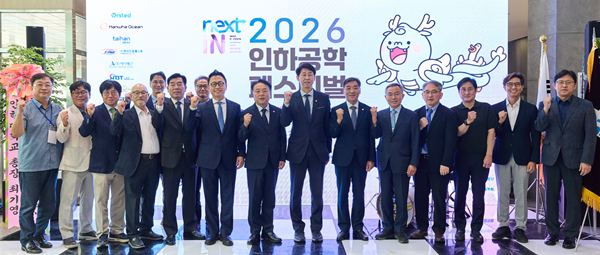
▲President Cho Myeong-Woo and other participants in the Open Campus opening ceremony are taking a commemorative photo.

Inha University recently held an opening ceremony for the Open Campus at “I-RISE Open Campus Baengnyeon Ieum No. 2,” located in Jung-gu, Incheon.

The event was organized to celebrate the launch of a future education cooperation hub in the old downtown area, jointly established by six universities in Incheon: Inha University, JEI University, Incheon National University, Inha Technical College, Kyung-in Women’s University, and Yonsei University. The occasion was particularly meaningful because it marked the beginning of an open innovation platform in which local communities, as well as educational, industrial, and administrative institutions, participate together beyond inter-university cooperation.

“Baengnyeon Ieum” is an open educational platform that connects universities with local communities, industries, and citizens. It has been established as a key hub for implementing a sustainable regional innovation model by integrating the historical significance of Incheon’s old downtown area with future-oriented educational resources. Based on this foundation, it will be operated as a comprehensive innovation space linked to Incheon’s Jemulpo Renaissance Project, encompassing youth talent development, regional industrial innovation, and lifelong education for citizens.

The event was attended by representatives from major administrative, educational, and public institutions in Incheon, including the Incheon Metropolitan Government, the Incheon Metropolitan Office of Education, Incheon Housing & City Development Corporation, Incheon Tourism Organization, and the Incheon RISE Center, who reaffirmed their commitment to building a regional innovation ecosystem.

The program proceeded in the following order: ▲tape-cutting ceremony ▲introduction to the Baengnyeon Ieum Campus and presentation of the I-RISE Campus CI and BI ▲opening commemorative ceremony ▲special lecture at the I-RISE Leaders Forum.

During the commemorative ceremony, participants declared a shared vision for the future through a performance completing the word “Jemulpo,” a symbolic name associated with Incheon’s old downtown area. This was followed by a special lecture by Kim Woo-Seung, President of the Accreditation Board for Engineering Education of Korea, who presented recommendations on the vision of the Regional Innovation System and Education (RISE) initiative and the role of universities, while sharing regional innovation strategies with attendees.

President Cho Myeong-Woo stated, “Baengnyeon Ieum is an innovation hub where the entire region can learn and grow together beyond the boundaries of the university. Based on a cooperative model involving Incheon City, the Office of Education, public institutions, and local universities, we will create new future value for Incheon’s old downtown area.”

▲ An exterior view of Baengnyeon Ieum No. 2

Original Article


Inha Hosts Incheon Biohealth Synergy Seminar

▲Inha University recently held the “Incheon Biohealth Industry–Academia–Research–Hospital Seminar.

Inha University recently successfully hosted the “Incheon Biohealth Industry–Academia–Research–Hospital Seminar.”

The seminar, organized by the I-RISE Project Group and the College of Nursing, was designed to strengthen cooperation between regional biohealth companies and the university while supporting domestic companies in expanding into overseas markets.

The event was attended by Ahn Young-mi, Dean of the College of Nursing, faculty members from the College of Nursing, representatives and officials from five major biohealth companies in Incheon, and officials from Inha University Hospital’s Open Lab.

The seminar featured a variety of programs designed to connect the university’s research capabilities with industry needs. It consisted of ▲introductions of participating companies and discussions on technical cooperation with nursing faculty ▲sharing strategies for global market expansion by biohealth companies ▲one-on-one on-site consultations tailored to each company’s specific characteristics.

In particular, Hyun Ji-hoon, Vice Director of the Industry-Academic Cooperation Foundation at the University of Utah Asia Campus, attended the seminar and provided a practical strategy briefing for entering the U.S. market, along with customized consulting for individual companies. This offered concrete support measures for regional companies preparing for global expansion.

Dean Ahn Young-mi said, “This seminar will serve as an important foundation for realizing the shared-growth model between the local community and the university envisioned by the I-RISE project. We will continue working to strengthen the global competitiveness of regional companies in the bio and healthcare sectors and advance the system for training future talent.”

Original Article

Inha Univ. Job Fair Draws 1,500 Young Talent

▲The 2026 first-half job fair was held at the 60th Anniversary Memorial Hall.

Inha University’s University Job Plus Center recently held the “2026 First-Half Job Fair” with great success.

This fair was organized to provide students with practical direction regarding career paths and employment through direct communication with working professionals. Since its inception in 2017, the event has been expanded to twice a year in response to high student demand.

This year’s fair was held under the theme, “My Job Story: Hearing Directly from Alumni.”

A total of 39 professionals participated as mentors, representing fields such as management support, sales/marketing, logistics, production/R&D, semiconductor processes, and AI engineering. These mentors, employed at 30 companies including major domestic and multinational firms, provided practical advice at each booth based on their actual job responsibilities and field experience.

Around 1,500 participants, including enrolled students, graduates, and local youth, attended the event. Through Q&A sessions with alumni, participants improved their understanding of various roles and resolved questions about the recruitment process. The program received high satisfaction ratings for offering concrete insights into actual workplace duties.

Interest was especially strong in semiconductor and artificial intelligence (AI) roles, reflecting recent industrial growth. The “IPP Zone,” featuring companies from the IPP-type work-and-learn program, was also crowded with students. Additionally, organizations such as the Central Regional Employment and Labor Office and the Incheon Metropolitan Government’s Youth Policy Division provided information on government employment services and policies.

President Cho Myeong-woo said, “The job fair is a key opportunity to turn vague career concerns into a concrete understanding of specific roles,” adding, “Communication with professionals will help students understand the industry and design their own career paths.” He continued, “We will continue to expand field-oriented employment support programs for both our students and local youth.”

▲President Cho Myeong-Woo is talking with graduates participating in the first-half job fair.

▲President Cho Myeong-Woo and distinguished guests are taking a commemorative photo with graduates participating in the first-half job fair.

Original Article

Sogang Expands Arts Reach into Mapo Community

Sogang University and the Mapo Foundation for Arts and Culture signed a memorandum of understanding on March 31 at Mapo Art Center, formalizing a partnership aimed at expanding cultural arts access and developing joint programming for students, international scholars, and the broader Mapo community.

The agreement covers five areas of collaboration: industry-academia partnerships linking cultural content with human resources; expanded participation opportunities for both domestic and international students; ongoing joint program development; co-marketing initiatives; and shared infrastructure to strengthen the regional cultural arts ecosystem.

The partnership reflects Sogang’s long-standing engagement with the performing arts. The university’s Merry Hall, which opened in 1970, is the oldest university performance venue in Korea — predating the National Theater by three years — and continues to host over 70 productions annually, including the Seoul World Dance Festival and Seoul International Performing Arts Festival. Uniquely among university theaters in Korea, Mary Hall operates resident companies and functions as an active creative space for students and emerging artists. Its influence on Korean cultural life extends well beyond campus.

The MOU with the Mapo Foundation for Arts and Culture extends this institutional commitment into a formal community partnership. President Shim Jong-hyeok expressed his expectation that the agreement would establish a new model of collaboration linking education, the arts, and local society. Mapo Foundation CEO Ko Young-geun emphasized the joint commitment to creating an environment in which all residents can experience and engage with the arts.

The two institutions plan to pursue ongoing joint projects in support of regional cultural development.

Sogang Joins Ulsan Regeneration Project

Sogang University’s Character Development Center signed a multi-sector partnership agreement on February 26 at Ulsan Dong-gu District Office, joining POSCO E&C and Korea Habitat in a civil-government-academia initiative to advance sustainable urban development in the Namok neighborhood of Ulsan.

Under the framework, POSCO E&C and Korea Habitat represent the civic sector, Ulsan Dong-gu District the government, and Sogang the academic partner. The initiative centers on Namok’s ongoing urban regeneration project, with a shared goal of improving quality of life for local residents and restoring community cohesion.

The partnership is directly tied to a redesigned course, “Sustainable Development and ESG Practice,” launched in the first semester of 2026 as an inter-university credit-exchange class. A total of 36 students from Sogang, Ewha Womans University, Yonsei University, Sungkyunkwan University, Korea University, and Hongik University are enrolled.

From March 27 to 29, students completed a two-night field program at the Namok Urban Regeneration Field Support Center, visiting POSCO E&C construction sites and the Namok village area, conducting interviews with residents and experts, and developing team project proposals addressing local ESG challenges. The four team projects cover: creating community spaces from vacant properties; designing communication programs between foreign residents and local residents; exploring ways to activate the Namok social cooperative and shared commercial district; and developing resident capacity-building programs.

On April 10, POSCO E&C professional Shin Jun-young delivered a guest lecture on corporate ESG practice and social contribution. Students will continue through online and in-person sessions, team projects, and a final presentation.

Sogang’s Character Development Center has run civil-government-academia-linked coursework since 2024, and aims to expand this project-based learning model to help students develop practical ESG competencies through direct community engagement.

Inha Opens Remote Health Hub in Baengnyeong

▲At the “College of Medicine Educational Cooperation Hospital Plaque Unveiling Ceremony” held at Baengnyeong Hospital on the 23rd, key participants including Sung Yong-Rak, Chairman of Jeongseok Inha Academy (first from the left), President Cho Myeong-Woo (second from the left), and Lee Du-Ik, Director of Baengnyeong Hospital (first from the right), are preparing for the unveiling ceremony

Inha University medical center is advancing its cooperation system for public healthcare and medical education specialization based in the island regions of Incheon.

On the 23rd, the medical center held the “Inha University College of Medicine Educational Cooperation Hospital Plaque Unveiling Ceremony” at Baengnyeong Hospital.

The event was attended by major figures from related institutions, including Sung Yong-Rak, Chairman of Jeongseok Inha Academy; President Cho Myeong-Woo; Lee Taek, Director of the Medical Center; Lee Du-Ik, Director of Baengnyeong Hospital; and Park Hye-Ryeon, Head of the Ongjin County Public Health Center.

Earlier this January, the university’s College of Medicine and Baengnyeong Hospital of the Incheon Medical Center signed an educational cooperation agreement. Considering Baengnyeong Island’s location at the northernmost point of the West Sea and the frequent cancellation of ferry services, both sides planned and carried out the plaque unveiling ceremony, medical staff meetings, and public health physician training in April to ensure smooth progress without disruption.

This event was organized to directly examine the cooperative relationship with Baengnyeong Hospital, the only secondary medical institution in the Five West Sea Islands, and to explore ways to further develop an integrated public healthcare model that connects education and medical treatment.

The plaque unveiling ceremony goes beyond the signing of an agreement, officially designating Baengnyeong Hospital as an educational cooperation hospital of the College of Medicine and declaring an ongoing partnership in education and clinical care.

Under the agreement, the College of Medicine will move forward with ▲regular clinical practice programs ▲joint development of community-based medical education courses ▲medical staff training and academic exchanges, establishing a field-oriented public healthcare education system.

Inha College of Medicine expects to use Baengnyeong Hospital as a regular clinical training site, allowing students to directly experience the medical environment of island regions, deepen their understanding of public healthcare, and contribute to fostering future talent that will lead regional healthcare.

In addition, the university plans to actively fulfill its social responsibility in healthcare in a way that aligns with Incheon’s geographical characteristics, including island regions, while promoting innovation in community-based medical education.

Inha university has already been actively operating specialized community-based medical education programs, including hospital ship training on the Geongang Ongjinho, clinical training at the Incheon Medical Center, and the “Silent Mentor” anatomy training program at Tzu Chi University, the first such program implemented by a medical school in Korea.

At the event, a demonstration of the “Smart Remote Video Consultation System” between Inha University Hospital and Baengnyeong Hospital was also conducted. Since February 2023, Inha University Hospital has established and operated a digital-based remote consultation system with Baengnyeong Hospital, supporting emergency and severe disease treatment for island residents.

After the event, Professor Mo Hui-Jeong of the Department of Neurology conducted training sessions for medical staff at Baengnyeong Hospital on strengthening stroke response capabilities and using the video consultation system. In addition, clinical support nurses visited Bukpo Elementary School to provide cardiopulmonary resuscitation training for faculty and staff.

Sung Yong-Rak, Chairman of Jeongseok Inha Academy, stated, “This designation of an educational cooperation hospital will become an important milestone in expanding the social values and spirit of regional coexistence pursued by our foundation to Baengnyeong Island, the northernmost point of the West Sea,” adding, “We will continue to pay close attention so that it can become an innovation hub presenting a new standard for public healthcare.”

President Cho Myeong-Woo stated, “We aim to lead innovation in community-based medical education, where students go beyond the classroom to directly experience and learn from the unique characteristics of real-world medical settings,” adding, “We hope this will become a valuable learning environment where students can deeply understand the value of public healthcare and grow into future healthcare leaders equipped with both humanity and professional expertise.”

Lee Taek, Director of the Medical Center, stated, “Cooperation with Baengnyeong Hospital represents an integrated public healthcare model that combines the smart remote consultation system with field-oriented education,” adding, “We will continue to advance medical systems that overcome geographical limitations, build a strong healthcare safety net, and complete a community-based public healthcare model.”

▲After the “College of Medicine Educational Cooperation Hospital Plaque Unveiling Ceremony” held at Baengnyeong Hospital on the 23rd, key participants are holding hands and taking a commemorative photo.

▲After the “College of Medicine Educational Cooperation Hospital Plaque Unveiling Ceremony” held at Baengnyeong Hospital on the 23rd, key participants are observing a demonstration of the “Smart Remote Video Consultation System,” which enables real-time communication between Inha University Hospital and Baengnyeong Hospital.

Original Article


A New Lens on AI Behavior

Sogang University’s AI convergence forum SAIXPeers held its April brown bag seminar under the theme “Understanding AI Behavior in Context: A Social Science Perspective,” drawing faculty from across disciplines for an extended discussion on how AI behavior should be studied as a field in its own right.

The session was led by Professor Young June Sah of the Department of Media and Entertainment, who is spearheading the launch of Sogang’s new Interdisciplinary AI Behavioral Studies program. His presentation proposed a paradigm shift: rather than analyzing AI purely through technical architecture, researchers should examine AI behavior through non-technical, social scientific frameworks — studying how AI systems act, learn, and evolve within human social environments.

Professor Sah introduced Tinbergen’s four questions — originally developed in ethology — as an analytical framework adaptable to AI: Mechanism (why does an AI behave as it does?), Development (how does training data shape its behavior?), Function (what role does AI behavior serve in society?), and Evolution (how does AI change through interaction with technology and society?). He argued this framework enables both micro-level analysis of individual AI systems and a macro-level view of the AI ecosystem as a whole.

The seminar also examined AI’s “black box” problem from a behavioral perspective. Drawing on parallels with explainable AI (XAI) research — which compares how AI weights visual inputs against human perceptual processing — Professor Sah suggested that social scientific inquiry into human behavior can generate hypotheses applicable to AI decision-making. One-shot learning, which mirrors how children rapidly acquire concepts from a single exposure, was cited by attendees as an example of human learning principles already informing AI model design.

On the question of harmful outputs, Professor Sah analyzed “toxic degeneration” — AI-generated antisocial or hateful content — through the behavioral lens: as a product of the system’s next-token prediction mechanism combined with biased training data drawn from environments such as Reddit. The framework, he argued, allows researchers to identify and address the social and developmental origins of such behavior, not only its technical causes.

The discussion extended to broader questions of social value. Professor Sah raised the possibility that AI’s displacement of knowledge-based labor could accelerate the decline of credential-driven hierarchies, and questioned whether evolutionary rationales for social institutions such as marriage remain meaningful in an AI-mediated society. Faculty from multiple disciplines engaged with these questions, affirming the value of continued interdisciplinary exchange.

The seminar coincided with the formal announcement of Sogang’s Interdisciplinary AI Behavioral Studies program, to be offered through the Graduate School beginning in the fall 2026 semester. The program integrates psychology, education, media and communication, and technology management, with the aim of training researchers and practitioners equipped to address human-centered challenges in the age of AI. Applications for fall 2026 admission are open from April 30 to May 7; further details are available at https://aibeh.sogang.ac.kr/.

Sogang’s Culture of Disability Inclusion

On April 8, Sogang University marked Disability Awareness Day with a gathering in the lobby of Ignatius Hall. Co-hosted by the Campus Ministry Affairs, the Institute for Global Engagement & Sustainability, and the Support Center for Students with Disabilities, the event brought together around twenty participants — students, intern staff, support workers, and administrators — for a shared meal, open conversation, and a closing song performed together. Participants exchanged accounts of everyday challenges on campus, and the occasion was held under the slogan: “Everyday life, accessible to all.”

The event reflected something broader than a single annual observance. Sogang has spent decades building what it describes as a comprehensive support system for students with disabilities — known on campus as Dasoni students — covering academic accommodation, campus mobility, assistive technology, financial support, and career preparation. The University’s Support Center for Students with Disabilities coordinates these services across the full student lifecycle, from pre-admission orientation through graduation and employment transition.

That commitment has drawn national recognition. Sogang has been rated top university five consecutive times in the Korean government’s evaluation of educational welfare support for students with disabilities through 2020 — a distinction that reflects sustained institutional investment rather than isolated effort.

In practice, support takes several forms. Students with disabilities receive priority classroom allocation, extended exam time, individual testing spaces, and note-taking assistance through a structured peer support personnel programme. Faculty are formally notified of required accommodations through official letters issued under the President’s name. For students with mobility needs, campus facilities include accessible parking, ramps, elevators, and automatic doors, with classroom relocation arranged where necessary. Assistive devices — ranging from electric wheelchairs and portable lifts to Braille tools, FM hearing systems, and OCR software — are available for loan through the Center.

The library operates its own access scheme, offering flexible borrowing and return options including on-campus delivery, extended loan periods, designated seating, and reading enlargement stations for students with visual impairments.

Financial support is also structured into the system. The Xavier Scholarship for Students with Disabilities covers between one-third and two-thirds of tuition fees, supplemented by alumni-based scholarships and living support schemes. Dormitory priority and partial fee support are available for students with significant accessibility needs.

The human dimension of this system was visible this March, when Han Joo-sung and Yu Min-woo — students in the Department of Media and Entertainment — received the grand prize at the inaugural Lotte Foundation Social Contribution Video Contest. Their 60-second film, produced under the team name Albatros, documented a student-led effort to place Braille stickers at key locations across campus. Competing against 197 other teams, the pair were recognized for turning a practical act of care into a story with wider resonance. “Our small gestures of consideration,” Han said, “can become the starting point for positive change across the entire campus.”

That instinct — that access is a shared responsibility rather than a special accommodation — traces back further still. When the late Professor Young-hee Chang, herself a wheelchair user, lobbied the University to install an elevator in Ignatius Hall, the result was a tower-shaped lift clad in the building’s own red brick, used by everyone on campus. It remains one of the more enduring illustrations of what disability access, done well, can look like: not a workaround, but part of the fabric of the place.

Inha: Camera-Free Gaze Tracking via AI

A research team led by Professor Kang Ji-hoon from the Department of Electrical and Electronic Engineering at Inha University has developed a neuromorphic semiconductor-based interface technology capable of reading gaze intention in real time without optical devices.

Professor Kang Ji-hoon’s team achieved this outcome through international collaborative research with Jeonju University, the Korea Institute of Science and Technology (KIST), Washington University in St. Louis, and the University of Virginia.

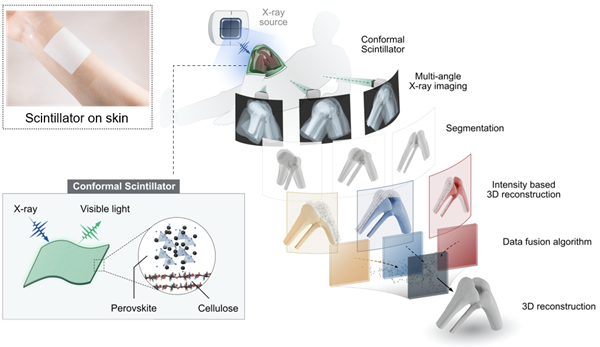
Gaze tracking is a key technology for extended reality (XR) and mobile healthcare. However, existing technologies face limits in wearable environments due to bulky optical devices and high power consumption. To address these issues, the team utilized a thin sensor attached to the skin that detects subtle electrical signals from eye movements, which AI then analyzes in real time.

By applying neuromorphic semiconductors that mimic the human brain, the team increased processing speed while significantly reducing power consumption. The system also performs computations directly on the device, enhancing personal data protection. This camera-free technology reduces the wearing burden and is expected to be applied in XR devices, assistive devices for people with disabilities, and mobile healthcare.

This research was supported by the National Research Foundation of Korea (NRF) and the Ministry of Trade, Industry and Energy (MOTIE). The joint study, involving teams from Jeonju University, KIST, Washington University in St. Louis, and the University of Virginia, was published in the latest online issue of ACS Nano, a prestigious journal published by the American Chemical Society (ACS).

Professor Kang Ji-hoon stated, “This research presents new possibilities for wearable AI interfaces and will serve as an important foundation for the advancement of human–computer interaction.”

▲Low-power, real-time interface technology based on neuromorphic computing

Original Article

Bridging Lab and Market: Sogang’s TRL Jump-Up

On March 25, Sogang University’s Research & Business Development Foundation hosted an information session at Hotel Naru for small and mid-sized enterprises interested in the Public-Private Joint Technology Commercialization R&D program, known as TRL Jump-Up. Over 100 company representatives and researchers attended — a strong turnout for a first session — reflecting broad industry interest in the initiative.

The TRL Jump-Up program is a public-private joint R&D scheme designed to raise the Technology Readiness Level of high-complexity, early-stage technologies in national strategic sectors and carry them through to commercialization. In December 2025, the Ministry of SMEs and Startups selected Sogang University and KAIST as the two operational support institutions for the program, with approximately 2.9 billion KRW allocated per institution. Sogang began operations in January 2026.

Under the program, Sogang supports two stages: Phase 1 project planning and Phase 2 commercialization R&D. The Foundation is building a full-cycle support structure covering technology development, commercialization, and post-project performance management.

At the session, the Ministry of SMEs and Startups and TIPA (Korea Technology and Information Promotion Agency for SMEs) outlined the program’s objectives and application requirements. Sogang then presented Request for Proposal (RFP) documents selected for their technological differentiation and commercialization potential, followed by an in-depth Q&A on proposal writing.

Professor Hongseok Kim, head of the TRL Jump-Up initiative and Vice President of the Research & Business Development Foundation, described the program’s aim as ensuring that promising laboratory technologies are not abandoned before reaching the market: “We will commit fully to full-cycle support so that high-potential technologies can find their place in actual industrial settings.”

Sogang has indicated it will continue working closely with the Ministry and TIPA to lower participation barriers for companies and strengthen the support infrastructure for technology-driven commercialization.