AI and Robotics: From Lab to Industry

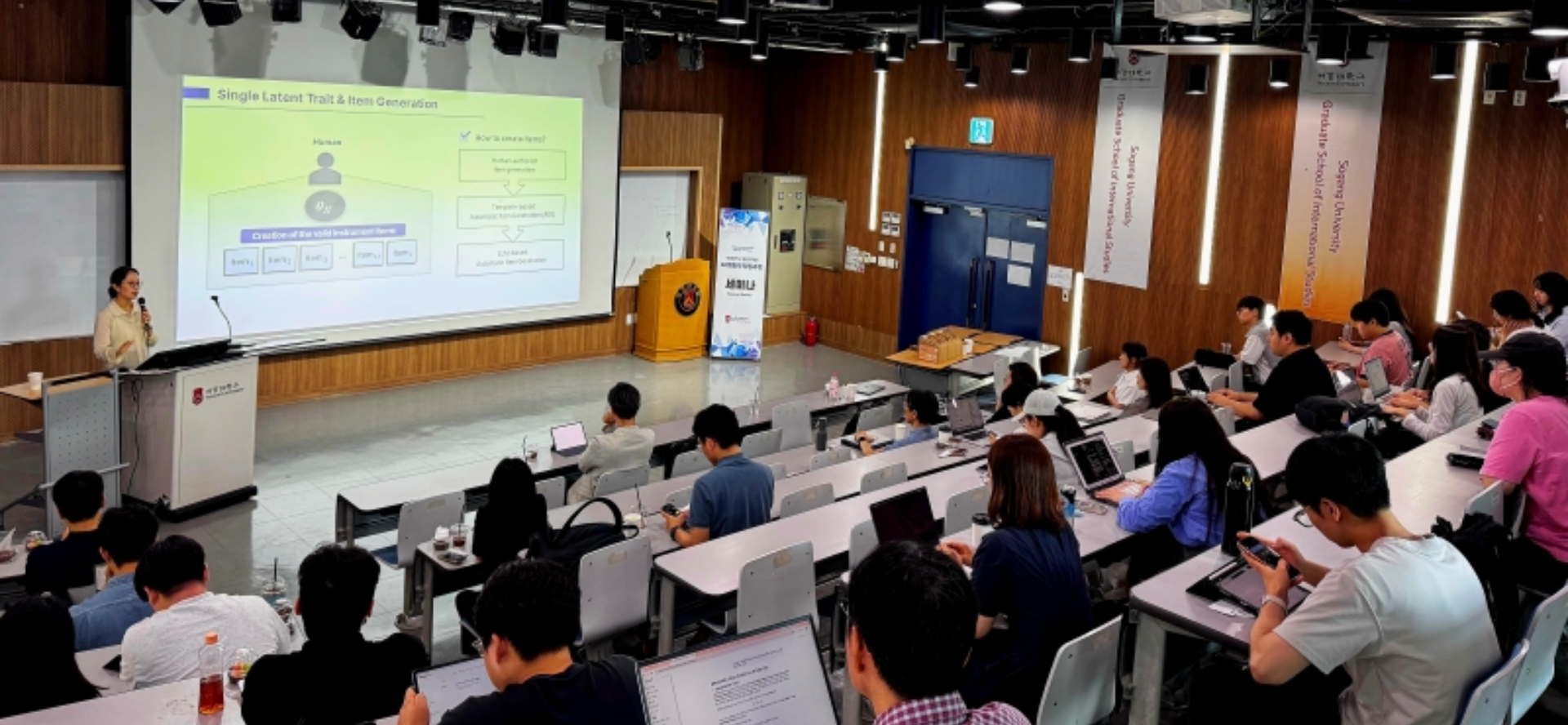
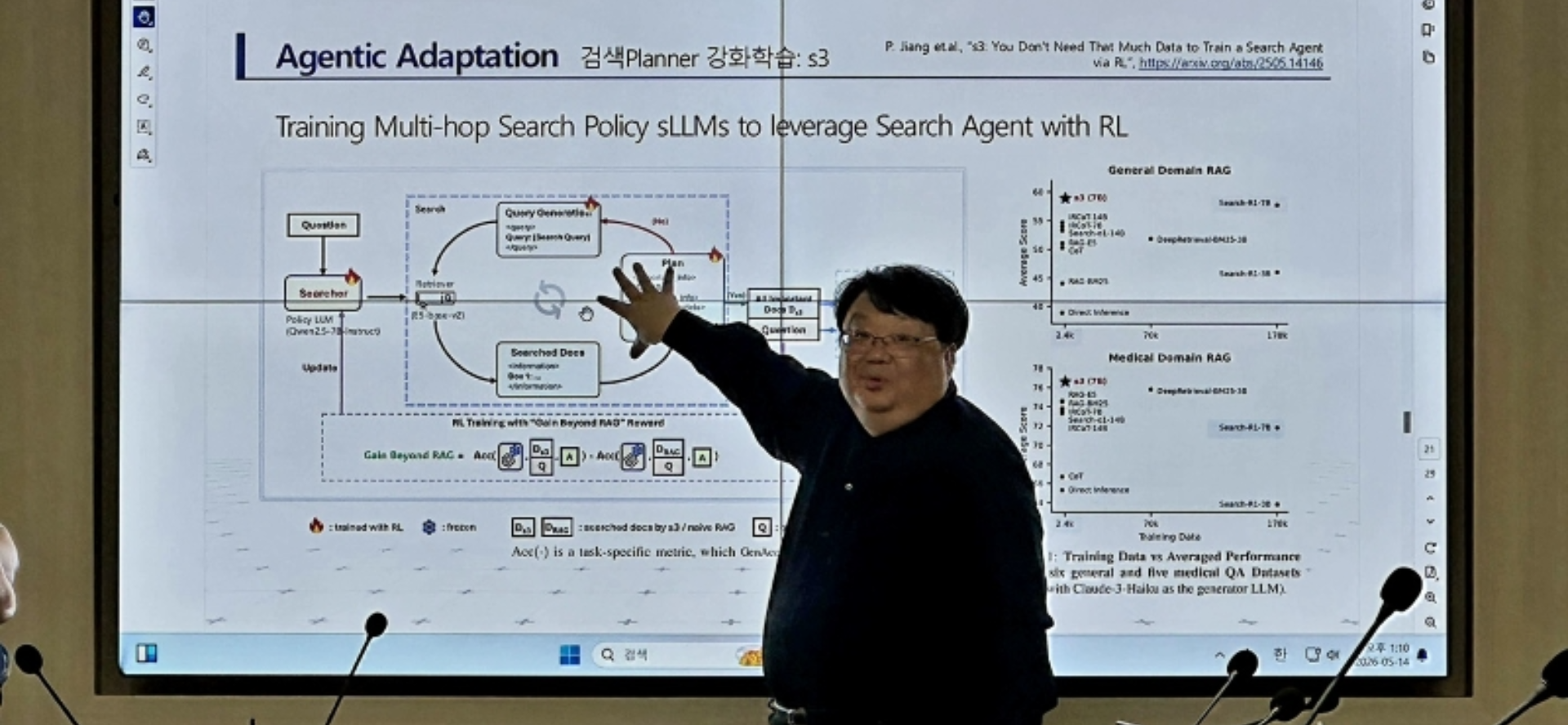
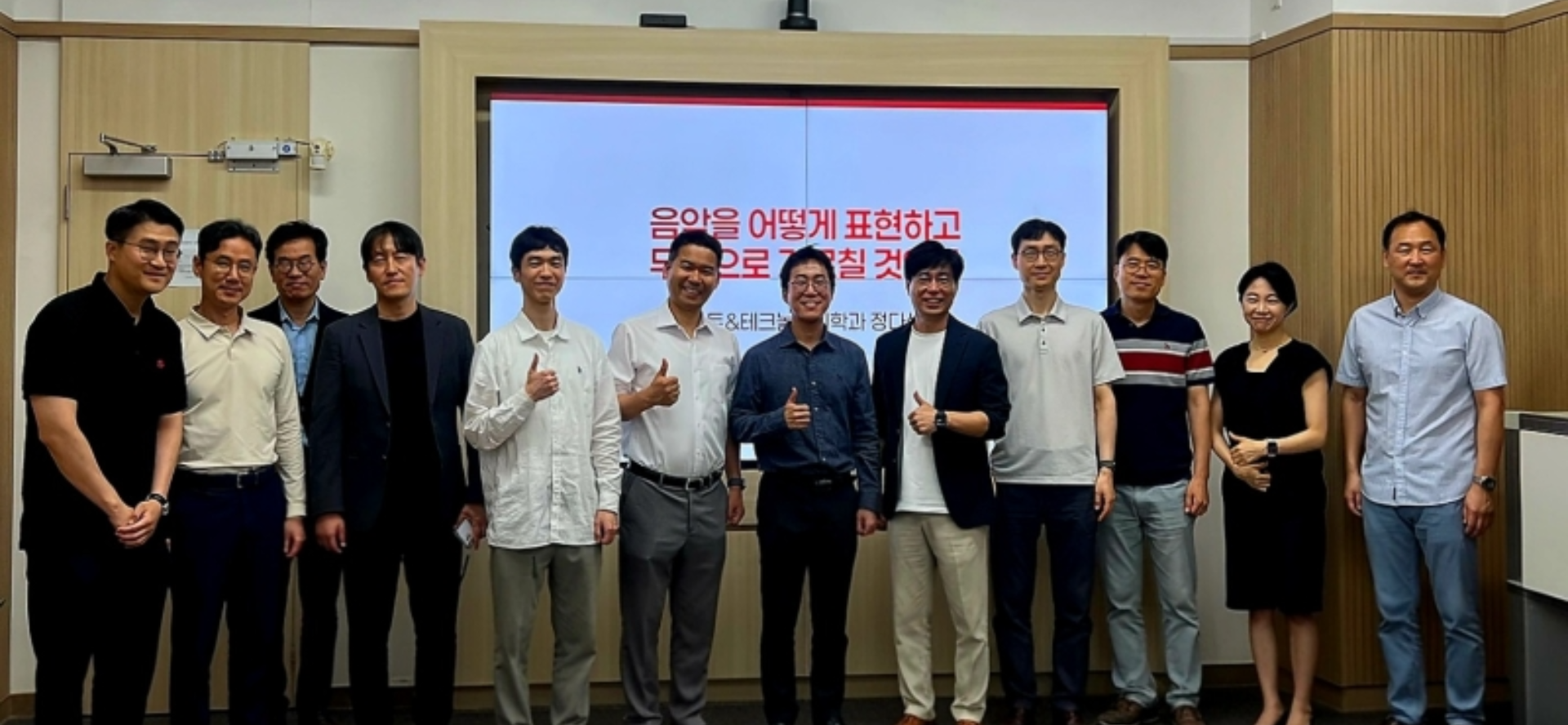
Sogang University held its March brown-bag seminar under SAIX Peers, focusing on the current state and industrial trajectory of robot AI. The session featured Professor Changjoo Nam from the Department of Electronic Engineering and founder of Vertical Labs, a university-affiliated startup developing data collection platforms for robot learning, who presented on manipulation, humanoid robotics, and the shift toward action-generating AI systems.

Professor Nam opened with a framing observation: as AI moves beyond large language models into systems capable of physical action, the central question in robotics is no longer perception or language understanding alone, but how a model translates situational awareness into movement. He described the growing adoption of end-to-end learning architectures, in which a single model learns directly from sensor input to motor output, replacing earlier modular pipelines. At the core of this shift are Vision-Language-Action (VLA) models, which integrate visual encoders and language models to interpret context and map generated tokens onto joint values for physical execution.

The seminar also addressed world models — systems that predict how an environment will change in response to a given action, enabling simulation-based verification before physical execution. Professor Nam noted that the physical cost of trial-and-error in real environments makes such predictive modelling increasingly important: “The model that generates actions and the world model that verifies them in advance are developing together.”

Discussion turned to the question of what learning paradigms are most effective for robot AI. Professor Nam acknowledged that while foundation models are expanding in scope, direct application to real-world settings remains difficult, and that additional data-driven fine-tuning is typically required on the ground. On reinforcement learning, he highlighted the exploration-exploitation tradeoff: broad exploration is theoretically valuable but practically constrained in physical environments, where repeated attempts risk damaging objects or requiring continuous environmental reset. Simulation-based training therefore remains the dominant approach for exploration-heavy tasks. For specific industrial processes, imitation learning — training robots on recorded human demonstrations — offers a more data-efficient path to reliable performance.

On application domains, Professor Nam drew a contrast between entertainment and manufacturing. Humanoid robots in entertainment operate in contexts where failure is tolerable; manufacturing and logistics demand precision, but involve a more bounded set of tasks, making them more immediately suited to deployment. Drawing on his experience at Vertical Labs, he argued that the real answers lie in the field: “You have to go to the site, collect the data directly, and build from there.” He added that small and mid-sized manufacturers are not looking for general-purpose systems but for process-level automation — and that AI enables faster deployment than traditional systems integration approaches.

The session illustrated how robot AI is moving from a research-stage technology into active industrial application, with Professor Nam’s dual role as researcher and founder offering a grounded perspective on both the technical possibilities and the practical constraints of current systems.

Sogang Honored at the 5th World ESG Forum

X205 — a student startup team from Sogang University’s Department of Art & Technology — received an excellence award at the 5th World ESG Forum University Startup Competition, organized by the Korean ESG Association. The four-member team, comprising Jong-ho Park, Yoon-seo Choi, Ji-yoon Kim, and Dong-jun Lim, shared the honor with one other team and was recognized for an entry that combined educational technology with local economic engagement.

Their concept, “Heoripizza,” is an AI-assisted local board game designed to develop spatial reasoning in children and adolescents while incorporating content drawn from local businesses and communities. The premise — that a game can simultaneously serve as a learning tool and a platform for regional collaboration — drew positive attention from judges for its potential as both an edtech product and a model for community-linked content development.

The team’s background reflects Sogang’s broader approach to interdisciplinary education. The Department of Art & Technology sits at the intersection of creative practice and technological application, and the X205 project illustrates how that combination can translate into socially oriented entrepreneurship. The team credited Sogang’s entrepreneurship support infrastructure — including mentoring and development resources provided through the University’s startup programs — as a foundation for turning their concept into a competition-ready venture.

That infrastructure is part of a wider institutional commitment. Through initiatives such as the Campus Town Project and Open Innovation Center 2.0, Sogang has built a startup ecosystem that connects student ideas with commercialization pathways, industry collaboration, and community engagement. The University’s approach to entrepreneurship explicitly prioritizes social and environmental value alongside economic outcomes — an alignment that made the ESG competition a natural fit.

Kwanwoo Shin, Director of the Startup Support Division, noted that the award reflects growing student capacity to develop creativity-driven, ESG-aligned ventures: “We will continue linking campus innovation programs to ensure strong support for youth entrepreneurship and practice-centered education.”

The team has indicated plans to expand beyond a single game product toward a broader platform for bringing participatory play culture to underserved communities.

Seoul RISE Shares First-Year Outcomes

Universities participating in Seoul’s Regional Innovation System & Education (RISE) initiative convened to share first-year achievements in attracting international talent for advanced and future industries. The outcomes forum, hosted by Sogang University, brought together six major institutions to review progress and strengthen collaboration for building a sustainable global talent ecosystem.

Held in February in Seoul, the event gathered project teams from Korea University, Seoul National University, a Yonsei University–Seoul National University of Science and Technology consortium, Hanyang University, and Sogang University, which serves as the lead institution for the unit project. Participants presented institutional strategies, implementation results, and emerging best practices related to global talent recruitment, academic cooperation, and student settlement support.

The programme included keynote remarks, a special lecture by the Seoul Global Center introducing upcoming initiatives, presentations on first-year achievements, and a networking session aimed at expanding inter-university cooperation. Discussions highlighted practical approaches such as overseas graduate admissions interviews, strategic partnership development, and tailored support services for international students entering high-tech sectors.

A key focus of the forum was strengthening collaboration with municipal agencies to enhance the settlement environment for global talent in Seoul. Representatives from the Seoul Metropolitan Government and the Seoul Global Center emphasised the importance of coordinated policies and institutional partnerships in ensuring that international students and professionals can successfully integrate into local communities and labour markets.

By sharing operational experience and reinforcing cooperation frameworks, participating universities reaffirmed their collective commitment to positioning Seoul as a competitive hub for global talent in advanced industries. The forum is expected to become an annual platform for monitoring progress and generating joint strategies under the broader RISE initiative, which aims to promote regional innovation through university-led collaboration.

Sogang Drives Global Engagement at CES 2026

Sogang University’s RISE Division successfully implemented its global industry–academia co-growth programs at CES 2026 in Las Vegas, participating in the Seoul Pavilion in collaboration with the Seoul Metropolitan Government and the Seoul Business Agency (SBA). Through the dual-track initiatives Sogang RISE-Up (startup support) and Sogang RISE-On (student supporters), the university strengthened its global innovation ecosystem linking students, startups, and industry partners.

At CES 2026, startups from the Seoul Pavilion achieved 17 Innovation Awards (including one Best of Innovation), conducted 1,759 global business meetings, and signed 30 technology cooperation MOUs—demonstrating substantial qualitative growth compared with the previous year. Within this platform, Sogang selected two affiliated startups for overseas market expansion support, facilitating global buyer consultations, market validation, and partnership development.

Meanwhile, 10 undergraduate students—selected through a highly competitive process—were matched with participating companies to provide on-site business assistance after completing intensive pre-training in global business communication and product analysis. The program enabled students to gain first-hand experience in international technology markets while directly contributing to startup commercialization efforts.

By positioning CES not merely as a promotional venue but as an experiential education platform, Sogang continues to integrate talent development, startup acceleration, and global partnership building. The university plans to provide sustained follow-up support to participating startups and further expand commercialization and scale-up programs through its Pangyo Digital Innovation Campus, reinforcing its commitment to a sustainable global industry–academia collaboration ecosystem.

AI in Antibody Drug Development

Sogang University held its February brown-bag seminar under SAIX Peers (Sogang AIX Peers), focusing on the convergence of artificial intelligence and biotechnology in next-generation drug development. The session featured Professor Seong-Ryong Kim from the Department of Life Science and CEO of the university-affiliated venture PhytoMab, who delivered a lecture titled “Universality of Biomolecules and the Evolution of Antibody Therapeutics: AI Design and Plant Cell-Based Production.”

Professor Kim outlined key biological foundations underlying AI-driven drug discovery, explaining how amino acid sequences generate vast structural diversity through protein folding. He emphasized that this molecular complexity creates an expansive design space in which AI technologies can significantly accelerate therapeutic innovation.

The seminar highlighted two central themes. First, AI-assisted antibody design enables rapid generation and screening of candidate sequences, addressing one of the most time-intensive stages of pharmaceutical development. Recent advances in protein structure prediction, supported by large experimental datasets, have significantly improved computational accuracy and expanded the scope of AI-designed proteins. Second, Professor Kim introduced PhytoRice, a plant cell–based antibody production platform developed by his team. By applying glycoengineering technologies to rice cells, the platform offers a safer and more cost-effective alternative to conventional CHO (Chinese Hamster Ovary) cell systems, which require expensive culture media and stringent viral safety controls.

As a case study, he presented “Hugreen,” a plant-derived antibody candidate corresponding to the breast cancer therapy trastuzumab, developed in collaboration with domestic and international research partners. While highlighting AI’s potential to reduce the cost and timeline of drug development, Professor Kim underscored that laboratory validation, purification, and clinical evaluation remain indispensable steps in translating computational designs into viable therapeutics.

The session prompted active interdisciplinary discussion on how AI can address key bottlenecks in pharmaceutical innovation, reinforcing Sogang’s commitment to advancing meaningful AI convergence across scientific disciplines.

Sogang Launches Institute for Sustainable Management

Sogang University held the official inauguration ceremony of the Institute for Sustainable Management Innovation on 28th at the Matthew Hall campus venue, marking the beginning of its full-scale operations. Established under the Sogang Business School, the institute serves as a new research hub dedicated to generating and disseminating innovative knowledge in management.

A distinctive feature of the institute is its platform-based structure. Unlike traditional research institutes that focus primarily on academic output, this institute functions as an incubator supporting doctoral-level scholars who seek to create and expand innovative management knowledge. It is primarily led by graduates and current candidates of Sogang’s Executive Ph.D. (E-Ph.D.) in Management programme, the first practice-oriented doctoral programme of its kind introduced in Korea. The institute aims to foster collaboration among academically trained practitioners and research-oriented professionals.

The institute is organised into three divisions: Education, Research, and Advisory. The Education Division introduces several differentiated programmes. In collaboration with Southern Connecticut State University in the United States, which holds STEM accreditation, the institute offers a Post-Doctoral certification programme that provides joint certification from both Korean and U.S. institutions. In response to the increasing demand for gender diversity in corporate governance, the institute has also developed a specialised programme to prepare female independent (outside) directors. Participants may be recommended to corporate boards through an affiliated nomination committee. Furthermore, the “Sogang Venture Academy” provides lifecycle-based coaching for venture entrepreneurs, supporting business development from early-stage start-up to IPO preparation. This model is designed on the premise that the E-Ph.D. network includes key actors across the entrepreneurial ecosystem.

The Research Division supports doctoral-level researchers through various mechanisms, including research professorships and the establishment of dedicated research centres depending on project scale. Current thematic areas include AI-driven manufacturing innovation, sustainability diagnostic tools for platform enterprises, and AI-based healthcare and elderly-care business development. These projects seek to address emerging societal challenges through sustainable and innovation-oriented business solutions.

The Advisory Division offers management consulting and potential investment opportunities for domestic firms, drawing upon high-performing scholars within the E-Ph.D. programme. The institute plans to expand its advisory scope in collaboration with the forthcoming Sogang–Pangyo Digital Innovation Campus, thereby enhancing its societal contribution.

Coinciding with its launch, the institute also released Sogang University’s sustainability report. Notably, the report was produced through a student-led process, with undergraduate students independently conducting data collection, interviews, report writing, and design. ESG specialists have noted that the student-driven approach strengthens the authenticity and distinctiveness of the report, marking a meaningful development in university sustainability reporting practices. The full Korean version of the report is available online. (Read the Full Report)

Sogang Recognised for Sustainable Green Tech

A research team led by Professor Jeong Kwang-hwan in the Department of Life Science at Sogang University has received a Ministerial Commendation from the Ministry of Trade, Industry and Energy (MOTIE) in the category of New Technology Commercialisation Promotion at the 2025 New Technology Commercialisation Promotion Contest, held on 11 December 2025.

The award recognises Green Mineral, a technology-based venture founded on lithium-recovery technology developed by Professor Jeong’s team, for its contribution to advancing sustainable resource-recovery technologies and promoting technology commercialisation.

Organised by the Korean Agency for Technology and Standards under MOTIE and co-hosted by the Korea Testing Laboratory and the Korea Industrial Technology Association, the contest aims to encourage innovation and accelerate the adoption of proven technologies in industry and the public sector. The ministerial commendation is presented annually to individuals and organisations that have demonstrated outstanding contributions to industrial technology development and market creation.

Green Mineral was established in June 2021 based on the research outcomes of Professor Jeong’s team, with Professor Lee Ho-seok later joining as Chief Operating Officer. The company integrates fundamental scientific research with practical commercialisation capabilities, creating a model for translating academic innovation into industrial applications.

At the core of the recognised technology is a genetically engineered chlorella strain designed to maximise metal-extraction efficiency. The strain exhibits a unique bio-recycling mechanism, absorbing lithium into cells and releasing it in the form of high value-added lithium carbonate. This breakthrough marks a significant advancement in microorganism-based resource-recovery technology.

The technology also enables the extraction of residual lithium from wastewater remaining after primary recovery from waste batteries. Through process optimisation, it reduces energy consumption and carbon emissions across the recovery cycle, securing both economic feasibility and environmental sustainability.

The recognition highlights Sogang University’s contribution to environmentally responsible innovation and its growing role in advancing sustainable industrial technologies. Green Mineral plans to expand industrial applications of its technology through full-scale commercialisation, supported by the planned expansion of its Gwangyang branch.

Professor Jeong commented, “It is meaningful that the microalgae-based eco-friendly metal-recycling technology developed at Sogang University is moving closer to the vision of a sustainable resource-recycling ecosystem through both technological development and commercialisation.” He added, “We will continue to play a leading academic and technological role in advancing resource-recycling technologies and supporting Korea’s green growth.”

Sogang Tops Graduate Employment in Seoul

Sogang University has ranked first among four-year comprehensive universities in Seoul in both graduate employment rate and job retention, according to the latest national university disclosure data released by the Ministry of Education and the Korean Educational Development Institute on 9 January 2026.

The university recorded an employment rate of 73.1 per cent, securing first place among Seoul-based universities. Its fourth-round job retention rate reached 91 per cent, marking three consecutive years at the top position. These results indicate that Sogang has achieved strong outcomes in both the quantity and quality of graduate employment.

Amid intensifying youth unemployment and a hiring trend increasingly focused on science and engineering graduates, Sogang’s performance is particularly notable. Despite having a high proportion of students in humanities and social sciences and no contribution from contract-based programmes, the university achieved the highest employment rate among its peers. Sogang also outperformed the second-ranked university by a margin of 1.8 percentage points.

The results are attributed to Sogang’s integrated approach to career development, which combines discipline-specific education, personalised career guidance, and a wide range of curricular and co-curricular programmes. The university has also strengthened its educational framework in response to the AI-driven transformation of industry, aligning academic training with evolving labour-market demands.

Job retention rate, which measures whether graduates remain employed after a certain period, is widely regarded as an indicator of employment quality. Sogang’s sustained top ranking in this indicator highlights the effectiveness of its long-term career support system.

Sogang University provides comprehensive career support through personalised mentoring by professional staff, alumni-led mentoring programmes, and specialised career courses. By offering diverse opportunities for career exploration beyond immediate employment outcomes, the university enables students to develop a broad understanding of their future paths and make informed decisions about their professional and personal trajectories.

Sogang Explores Humanity in the Age of AI

Sogang University has released Season 3 of its SOGANG101 lecture series on its official YouTube channel, under the theme “Reconsidering Humanity in the Age of AI.” The new season explores how rapid advances in artificial intelligence are reshaping human roles, values, and responsibilities across society.

Unlike previous seasons, which focused on in-depth lectures by individual professors, Season 3 adopts an interactive format in which students pose questions and multiple faculty members respond from diverse academic perspectives. Each episode features two to three professors, creating a cross-disciplinary dialogue that integrates insights from philosophy, science, engineering, social sciences, and the humanities.

Comprising eight episodes, the series addresses key issues such as ethical responsibility in AI decision-making, human-centred technological development, the transformation of work and knowledge production, and the enduring significance of creativity, moral judgement, and critical thinking. Through these discussions, SOGANG101 moves beyond technical explanations to examine how humans can coexist with and meaningfully engage with advanced technologies.

The series reflects Sogang University’s commitment to interdisciplinary education and critical inquiry in the AI era. By connecting technological innovation with humanistic perspectives, it seeks to foster deeper understanding of the social and ethical implications of artificial intelligence and to encourage broader reflection on the meaning of humanity in a rapidly evolving technological environment. In particular, the programme underscores the importance of ethical responsibility and sustainable thinking in shaping the relationship between humans and intelligent technologies.

The full series is available on Sogang University’s official YouTube channel. The series is supported by YouTube’s automatic subtitle translation, allowing global audiences to engage with the content in multiple languages.

Sogang ESG Course Partners with POSCO

Sogang University’s Character-Development Center participated in the POSCO Sustainable Alumni Day as part of the Fall 2025 course “Sustainable Development and ESG Practices,” a project-based programme designed to connect academic learning with real-world sustainability challenges.

Now in its third cycle, the course adopts a co-work model that brings universities and corporations together to address social and environmental issues. Through collaboration with corporate partners and diverse stakeholders, students develop a practical understanding of ESG concepts while exploring solutions aligned with sustainable development goals and social responsibility.

In 2025, the programme was conducted in partnership with POSCO International. Student teams developed company-linked projects focused on community co-prosperity initiatives and responses to the climate crisis. Supported by mentoring from industry professionals, the projects combined case-based learning with hands-on problem-solving, aiming to generate social value through ESG-driven approaches.

The programme also included special lectures by POSCO Group experts and corporate site visits to facilities such as the LNG terminal in Gwangyang and POSCO International’s Songdo office. These activities enabled students to gain insight into industrial contexts, corporate sustainability strategies, and career pathways, strengthening the practical dimension of project-based learning.

On 23 December, students from nine universities and POSCO Group mentors gathered at POSCO Sustainable Alumni Day to share project outcomes and experiences. Sogang University was recognised for its project achievements, with five teams selected as Best Presentation Teams. One highlighted project proposed a mangrove ecosystem restoration model in Indonesia using seed balls and palm by-products, demonstrating an integrated approach to environmental protection and local community engagement.

The course reflects Sogang University’s broader commitment to sustainability-oriented education and industry collaboration. By integrating ESG principles with interdisciplinary learning and real-world practice, the programme illustrates how universities can cultivate ethical awareness, sustainable thinking, and problem-solving capacity in future leaders. The initiative also aligns with Sogang’s educational vision of nurturing socially responsible individuals who contribute to sustainable communities and global society.