Chula’s Center for Social Engagement

Chulalongkorn University continues to strengthen its role in driving social engagement and development. The university has renamed the “Center of Learning Network for the Region” to the Center for Social Engagement, Chulalongkorn University,” reflecting a more proactive approach that emphasizes collaboration and partnership with government agencies, private sector organizations, and communities. The goal is to co-create knowledge while generating measurable social impact in a concrete and meaningful way. 

This change is not merely a renaming of the unit but represents a shift in the working concept—from “learning together” to “driving society forward through university knowledge” systematically and sustainably. The infrastructure, personnel, and ongoing operations in Bangkok, Nan, and Saraburi remain unchanged. What has been added is a clearer goal: to create value and meaningful change for society. 

Follow updates from the Center for Social Engagement at: 

Website: https://clnr.chula.ac.th/ 

Facebook: https://www.facebook.com/csechula 

Read more at: https://www.chula.ac.th/en/news/296122/

Mental Health Support in Tough Settings

Chronic stress from high competition leads to pressure and exhaustion in the pursuit of dreams. The current atmosphere is defined as The Burnout Society or the era of burnout. External pressures, such as the threat of war and rapid technological change, exacerbate existing feelings of life’s burdens, despite a feeling of internal lightness, and severely impact employment. This stress extends to higher education institutions and schools, with many students experiencing emotional distress. A 2022 survey by TUN-HPN of 9,050 students found that around 40% experience frequent stress. Additionally, almost one in three reported sadness, 12% had self-harmed, 4% contemplated suicide, and 4.3% were diagnosed with psychiatric disorders.

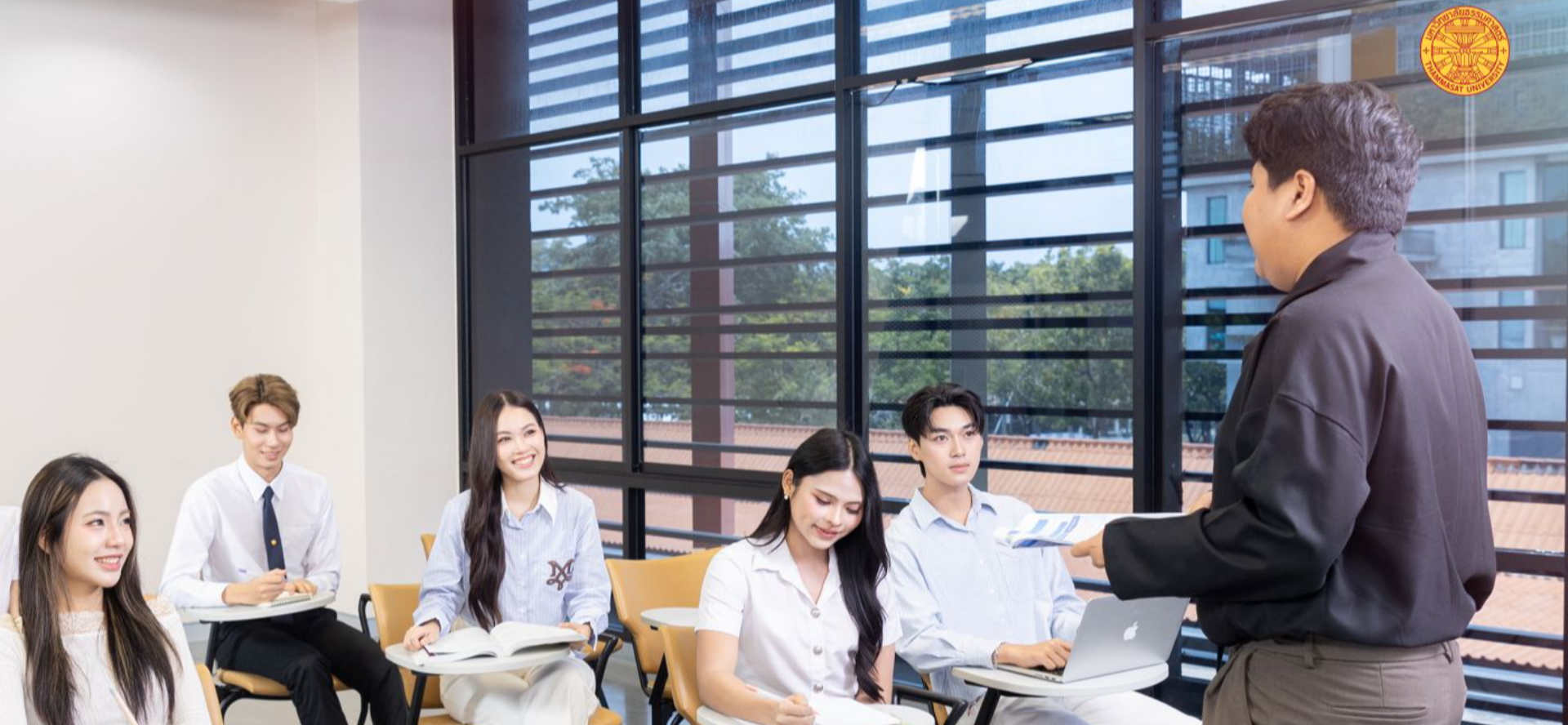
Asst. Prof. Burachai Asawathaweeboon, Assistant to the Rector for Student Affairs and a faculty member in the Department of Psychology at the Faculty of Arts, Thammasat University (TU), analyzes three main factors that affect the mental health of students within the university environment: 1. The adjustment from being a student to becoming a university student, which entails increased responsibilities. 2. Relationships with various individuals, including family, friends, and professors. 3. Expectations regarding academic performance and employment opportunities after graduation. Many students enter university already managing pre-existing emotional disorders and anxiety, requiring extra support for adaptation. Others display psychiatric symptoms, such as those related to schizophrenia, which can emerge in this life stage, further complicating adjustment. Mental health issues vary widely, from manageable concerns to severe crises involving self-harm and suicidal attempts.

Thammasat University Counseling Center (TU Well-Being: Counseling Center) notes that student stress peaks during exams, but first-year students need extra attention due to adaptation challenges like academics, increased responsibilities, relocation, new peers, and finances, which heighten stress and anxiety. Recognizing the need for a mental health care system in education, Thammasat University, under Rector Prof. Dr. Supasawad Chardchawarn, has made this an urgent priority (Quick Big Win) for 2025-2026. The Thammasat University Mental Health Care System operates with the Thammasat Well Being Center at its core, functioning in both reactive and proactive capacities. This includes providing individual counseling, counseling through a Call Center, services by psychiatrists, treatment via telemedicine, medication management in collaboration with the Faculty of Pharmacy’s pharmacy and the Thammasat Chalermphrakiat Hospital, the development of the TU Wellness application linked to TU GREATS for self-assessing preliminary mental health issues and responding to mental health emergencies.

Mental health service requests take a half-day to two days, excluding optional convenient appointments. Necessary medication is available at the pharmacy or via Thammasat University Hospital for non-standard drugs. Staff includes four groups: Thammasat personnel, former student interns, current interns, and external contractors. Staffing across centers: Rangsit has one psychologist, two counselors, and three part-time psychiatrists; Tha Phra Chan has two psychologists; Lampang has two full-time and one part-time (Saturdays) psychologist; and Pattaya has one part-time psychologist (visiting every other Wednesday). As for the students who are interning and those who have already completed internships at the hospital, there are currently more than 50 individuals, making Thammasat University likely the institution with the most personnel available to provide mental health services in the country. 

“Some students are reluctant to utilize the university’s system due to concerns about privacy. The university has coordinated with several hospitals to provide students with special discounts for accessing services. Students can avail themselves of services from the university’s faculties, partner organizations, or agencies that the university has arranged according to their needs. This is part of the university’s commitment to prioritizing the well-being of students,” stated Asst. Prof. Burachai. 

Prof. Dr. Supasawad stated that a significant barrier preventing students from accessing mental health services is the prevailing belief that seeking mental health assessment and services is abnormal. Thammasat University is striving to communicate and instill in students the understanding that just as the body can become ill, it is entirely natural for the mind to also experience distress. Therefore, in addition to developing and preparing to provide these services, we place great importance on creating an environment that encourages students facing issues to seek help, regardless of the form it may take. With approximately 43,000 students, Thammasat sees over 6,000 annual student requests for mental health services, a number expected to grow. This rise indicates increased student awareness and easier access to services, rather than an increase in mental health issues.

“We strive to normalize the access to these services and to ensure that all students are aware that the university offers these resources for them to utilize when facing difficulties. Information about the Thammasat Well Being Center will be provided to students from the moment they enter Thammasat University during the orientation program and will continue to be disseminated across all faculties. Additionally, during the first two weeks after the semester begins, faculty members will be asked to encourage students to assess their mental health through the TU GREATS app.” stated TU Rector.

Thammasat Pioneers Robotic Heart Surgery

Thammasat University Hospital, in honor of His Majesty the King, announces the successful launch of the innovation ‘Heart Surgery’ utilizing robotic-assisted surgery technology (Da Vinci XI), marking the ‘first time in Thailand’ that robotic-assisted surgery has been employed for patients with heart disease. This reinforces its position as a leader in Digital Hospital and a center of excellence in the region.

         Assoc. Prof. Dr. Dilok Piyayotai, M.D., Director of Thammasat University Hospital, stated that the hospital’s main mission is to bring world-class innovations to transform the future of treatment. The introduction of the robotic surgical system (Da Vinci XI) for heart surgeries not only enhances the capabilities of medical personnel but also emphasizes patient-centered care, ensuring that patients receive safe, precise treatment and an improved quality of life after surgery.

         Asst. Prof. Dr. Boonlawat Homvises, M.D., a medical doctor and surgeon specializing in cardiac and thoracic surgery, commented on the advantages of robotic-assisted heart surgery (Da Vinci XI). He stated that this technology features robotic arms that can rotate freely beyond the limitations of human wrists and provides high-definition 3D imaging. This capability allows surgeons to perform intricate procedures on the heart with precision and detail, resulting in significantly smaller surgical incisions, reduced blood loss, and facilitating a noticeably faster recovery for patients compared to traditional open-heart surgery.

         This achievement marks another significant step for the hospital in enhancing its medical treatment capabilities by incorporating robotic surgical technology (Da Vinci XI) in heart surgeries. This reflects the hospital’s readiness in terms of modern medical technology, a highly skilled medical team, and safety standards in patient care.

Chula Day Care for Happy Retirement Continues

The Center for Health and Well-Being Promotion for Older People (CHWPOP), Faculty of Nursing, Chulalongkorn University, together with the Human Resources Management Office, held the opening ceremony of the “Chula Day Care: Caring for Seniors for a Happy Retirement” project for its second year under the Chula Preventive Health Care initiative. The event took place on March 11, 2026, at the Center for Health and Well-being Promotion for Older People, 10th Floor, Borommaratchachonnani Srisataphat Building, Faculty of Nursing, Chulalongkorn University. 

Prof. Dr. Kanaphon Chanhom, Vice President of the University, presided over the opening ceremony. Mr. Pokai Sriratanobhas, Assistant to the President, along with Chulalongkorn faculty members and staff, also attended. 

The event included a panel discussion titled “The Value of Day Care from the Perspective of Family Caregivers of the Elderly.” The discussion provided a platform to exchange experiences and perspectives on the role of day care services for older adults, which is an important approach for supporting elderly care and easing the burden on family caregivers. 

The Chula Day Care: Caring for Seniors for a Happy Retirement project focuses on providing daytime care services for elderly family members of Chulalongkorn personnel. The program follows the concept of person-centered care. Activities include promoting self-care skills, cognitive stimulation, muscle-strengthening exercises, and providing holistic health consultations for seniors and their families. 

In addition, the Center for Health and Well-being Promotion for Older People also serves as a learning and training hub for elderly caregivers, helping them develop appropriate knowledge and caregiving skills. This initiative aims to enhance the quality of life for older adults and their families, enabling them to live happy and meaningful lives in an aging society.

Read more at: https://www.chula.ac.th/en/news/294052/

Chula and IMF Host Town Hall

The International Monetary Fund (IMF) and Chulalongkorn University jointly hosted a University Town Hall event under the theme “Shaping Tomorrow: Opportunities and Challenges for Future Generations.” The forum provided an opportunity for students to learn about and exchange their perspectives on the global economy with Ms. Kristalina Georgieva, Managing Director of the IMF. Her visit to Thailand was part of her participation in the Asia in 2050 Conference and to follow up on Thailand’s preparations for hosting the 2026 IMF–World Bank Group Annual Meetings. 

The event was opened by Prof. Dr. Wilert Puriwat, President of Chulalongkorn University. Closing remarks were delivered by Assoc. Prof. Dr. Tartat Mokkhamakkul, Dean of the Faculty of Commerce and Accountancy. Prof. Dr. Thitinan Pongsudhirak from the Department of International Relations, Faculty of Political Science, also joined the on-stage discussion. The event took place on March 5, 2026, at Room 212, Mahitaladhibesra Building, Chulalongkorn University. 

This discussion is a reflection of Thailand’s commitment to creating space for younger generations to engage in the global economic arena under the concept “Thailand’s New Horizons: Empowering People, Building Resilience.” The initiative focuses on empowering citizens—especially the youth—to become a key force in driving a strong and sustainable economy in the future. 

During the event, Chulalongkorn students actively exchanged their views on important topics such as the role of younger generations in the global economy, the future of Asia, and youth perspectives on driving a dynamic and resilient economy toward 2050. The atmosphere was filled with creative energy and active participation from students across various faculties at Chulalongkorn University. 

Read more at: https://www.chula.ac.th/en/news/292717/

Thammasat, UN Thailand Launch SDG Platform

Rector of Thammasat University, Prof. Dr. Supasawad Chardchawarn, welcomed Ms. Michaela Friberg-Storey, United Nations Resident Coordinator in Thailand, along with a working group from various United Nations agencies, to discuss strategic cooperation in advancing the Sustainable Development Goals (SDGs) on February 12, 2026, at Thammasat University, Rangsit Campus.

With the participation of Asst. Prof. Chol Bunnag, Assistant to the Rector for Quality Development and Sustainability, Assoc. Prof. Dr. Dumrong Adunyarittigun, Vice Rector for Academic Affairs, Assoc. Prof. Dr. Supranee Lisawadi, Assistant to the Rector for Research and Innovation, and Assoc. Prof. Dr. Kedkun Srakawee, Dean of Puey Ungphakorn School of Development Studies.

Prof. Dr. Supasawad stated that Thammasat was established as a “University for the People” based on the principles of equality, democracy, and the creation of educational opportunities. The university’s identity and mission strongly align with promoting the Sustainable Development Goals (SDGs). He also shared updates on the Bachelor of Science program in Sustainable Management, developed with the Global Compact Network. This program integrates knowledge from five faculties, Engineering, Science and Technology, Interdisciplinary College, Development Administration, and Social Work, to equip graduates for sustainable management roles in business and global organizations.

Ms. Friberg-Storey stated that Thammasat excels in translating knowledge into tangible outcomes for local communities, commending the university as a leading higher education institution that is progressive and forward-leaning, with the Sustainable Development Goals (SDGs) at the core of its operations, amidst a global context where the values of sustainability are facing challenges.

Asst. Prof. Chol presented the “ONE TU” vision, which aims to integrate work among faculties and reduce fragmented operations. This vision also reflects progress in advancing the Sustainable Development Goals (SDGs), including the move towards a Carbon Neutral Campus, the promotion of gender equality and diversity, as well as serving as a neutral space for peaceful political expression. This commitment has resulted in Thammasat University being ranked first in Thailand and fourth in the world for SDG 16 (Peace, Justice, and Strong Institutions) in the THE Impact Rankings 2025.

In the area of research and innovation, Assoc. Prof. Dr. Supranee discussed the support provided to researchers in creating tangible outcomes that address the Sustainable Development Goals (SDGs), particularly in the areas of health (SDG 3), innovation (SDG 9), and sustainable cities (SDG 11).

In the dimension of student development, Assoc. Prof. Dr. Dumrong presented the IMPACT model (Interpersonal, Mindful, Progressive, Agility, Competence, Thriving) to develop graduates into global citizens ready to embrace change, alongside efforts to reduce educational disparities through scholarship systems. Meanwhile, Assoc. Prof. Dr. Kedkunpresented initiatives to elevate “volunteer work” into a discipline through the development of courses and knowledge frameworks to support teaching and learning.

Thammasat University proposed two main collaborations with the UN: a decennial Post-2030 Agenda progress review integrating science, policy, and society (Science-Policy-Society Interface) for scenario planning and defining Thailand’s global strategies; and “Volunteerism for SDG Acceleration,” creating a National Volunteer Learning Platform and integrating volunteer work into ministry policies for structural change. The parties also discussed economic care, women in STEM, student volunteer opportunities, and inviting UN experts. This partnership makes Thammasat a national and regional UN Strategic Partner, boosting Thai higher education’s role in sustainable development and shaping the post-2030 global agenda.

Chula Unveils Strategies for Crisis Era

The Marketing Association of Thailand, in collaboration with the Department of Marketing, Faculty of Commerce and Accountancy, Chulalongkorn University, held a press conference to mark the association’s 60th anniversary, along with a forum titled “Marketing in a World of Crisis.” The event took place on Thursday, March 5, 2026, at CBS Cinema, 3rd Floor, Chaiyossombat 1 Building, Faculty of Commerce and Accountancy, Chulalongkorn University. The opening remarks were delivered by Associate Professor Dr. Tartat Mokkhamakkul, Dean of the Faculty of Commerce and Accountancy. 

On this occasion, Dr. Buranin Rattanasombat, President of the Marketing Association of Thailand, and Assistant Professor Dr. Ake Pattaratanakun, Head of the Department of Marketing at Chulalongkorn Business School, announced the upcoming 60th anniversary celebration of the Marketing Association of Thailand and participated in a forum discussion. 

As part of the anniversary celebration, the association will honor outstanding marketers who have made significant contributions to the country by inducting them into the “Thailand Marketing Hall of Fame,” an honor bestowed every 10 years. This year will also see the presentation of the “Most Inspiring Marketers Award,” recognizing influential marketers who have inspired others and contributed to driving Thailand’s economy and society forward. 

Dr. Buranin Rattanasombat noted that over the past six decades, the association has served as a hub for developing marketing knowledge, building professional networks, and advancing Thailand’s marketing profession. On the occasion of its 60th anniversary, the association aims to elevate the role of marketing as a key strategy for driving Thailand’s economy and society toward sustainability. 

To elevate the selection process, the association has established a strategic partnership with the Department of Marketing at Chulalongkorn Business School. The collaboration integrates academic knowledge, research insights, and empirical data into the evaluation process to ensure that the selection is comprehensive, transparent, and internationally recognized, reinforcing the awards as the highest honor in Thailand’s marketing profession. 

“Marketing cannot exist without marketers. On our 60th anniversary, we want to highlight that Thai marketers are vital gears that help drive organizations, businesses, and the nation forward,” he said. 

Assistant Professor Dr. Ake Pattaratanakun added that, thanks to the collaboration with academic experts from the Department of Marketing, this year’s selection process has become more rigorous and systematic. The process incorporates over 10 years of collected statistical data from more than 100,000 nationwide samples, combined with nominations from a respected Expert Panel of leading figures in Thailand’s marketing industry. 

By applying research methodologies, statistical data analysis, and expert evaluation based on criteria covering achievements, industry impact, and contributions to society, the organizers aim to ensure that those honored truly represent exemplary figures in the marketing profession. 

The “Thailand Marketing Hall of Fame” and “Most Inspiring Marketeers Award” ceremonies aim to recognize individuals with outstanding achievements and significant influence on the development of Thailand’s marketing sector, while also inspiring both current and future generations of marketers. 

The event also featured a forum titled “Marketing in a World of Crisis,” where the speakers discussed the role of marketing in navigating today’s economic and business challenges. 

Dr. Buranin explained that although ASEAN is not directly at the center of conflicts in the Middle East, the region has been heavily affected by global supply chain disruptions, particularly in the energy sector. These disruptions have contributed to high inflation and persistent interest rates, signaling a shift in globalization toward a more fragmented global landscape. 

To cope with short-term impacts, businesses must remain calm, gather deep marketing insights by directly engaging customers, and build business alliances to share burdens and improve efficiency. Companies should also focus on local products and regional development to reduce future supply chain risks. 

For the long term, he recommended four guiding principles:

  • Redefining marketing, 
  • Building mental resilience, 
  • Reforming and adapting to the new world, and 
  • Redesigning systems with technology integration. 

Dr. Ake Pattaratanakun added that high levels of uncertainty often lead consumers to delay or reduce spending. According to a survey by the Marketing Association of Thailand, this is the first year that marketing budgets have been significantly reduced, with even deeper cuts occurring during periods of regional conflict. 

He proposed four marketing strategies that businesses should apply together to encourage consumer spending:

1. Less is More 

In times of uncertainty, consumers become cautious about spending. Businesses can reduce product size or commitment levels to make purchasing decisions easier—encouraging customers to buy smaller quantities but more frequently. 

2. Niche but Wide 

Focus on a highly specific target group that, despite its niche nature, has a sufficiently large customer base and purchasing power—often with minimal competition. 

3. Quiet but Loud 

Reduce broad advertising methods such as large billboards and instead use technology-driven targeted marketing. Ads may not be visible to the general public but can be extremely powerful for the intended audience. 

4. Cheap & Good 

Design marketing campaigns with low costs but high impact, helping organizations protect their budgets during periods of marketing budget cuts. 

Dr. Ake emphasized that businesses must apply all four strategies together. For instance, it would not be effective to adopt a “Less is More” product strategy while simultaneously investing heavily in expensive advertising campaigns that contradict the “Cheap & Good” principle. 

For small and medium-sized enterprises (SMEs) in particular, he suggested avoiding price wars with large corporations, which possess stronger financial resources. Instead, SMEs should focus on deeply understanding niche customer segments and tailoring strategies to serve those markets effectively.

Read more at: https://www.chula.ac.th/en/news/291622/

CICA Addresses 7th Asia Forward Series

The Institute of Asian Studies, Chulalongkorn University, in collaboration with the Program Management Unit on Area-Based Development (PMU A), organized a special lecture on future paradigms for Asia under the 7th Asia Forward Series, titled “From Corridors to Confidence: Central Asia, the Middle Corridor, and Asia’s New Connectivity Architecture” on Thursday, February 26, 2026, at Room 105, Maha Chulalongkorn Building, Chulalongkorn University.

Prof. Dr. Wilert Puriwat, President of Chulalongkorn University, delivered the welcoming remarks. The keynote lecture was presented by Ambassador Kairat Sarybay, Secretary General of the Conference on Interaction and Confidence Building Measures in Asia (CICA). The session was moderated by Associate Prof. Surat Horachaikul from the Institute of Asian Studies, Chulalongkorn University. This was followed by a panel discussion on “Peacebuilding and Cooperation in a Fragile World,” featuring distinguished experts. The event attracted strong interest from faculty members, diplomats, and members of the public.

Assoc. Prof. Pavika Sriratanaban, Director of the Institute of Asian Studies, Chulalongkorn University, noted that the Asia Forward Series has been held continuously for over a year. The initiative aims to serve as a bridge to society by raising awareness and encouraging open dialogue. Over the past year, the Institute has taken pride in successfully linking policy-level engagement to concrete area-based implementation.

She emphasized that the 7th Asia Forward Series is particularly significant amid shifting global geopolitics, which present new challenges and demand fresh approaches for positioning Thailand on the global stage. This edition highlighted Central Asia and the Middle Corridor—key strategic regions in the transformation of global geography. Although historically regarded as landlocked, Central Asia has now become a vital hub of air and land connectivity stretching from Russia and China to Europe, with notable strengths in energy, green technology, and infrastructure.

The event was honored by the presence of Ambassador Kairat Sarybay, Secretary General of CICA, who delivered the keynote address titled “From Connectivity to Confidence.” His participation reaffirmed the role of the Institute of Asian Studies, Chulalongkorn University, as a “think tank” entrusted by Thailand’s Ministry of Foreign Affairs to strengthen engagement with Central Asia. CICA is a multilateral intergovernmental forum comprising 28 member states, including Thailand, dedicated to building confidence for peace and security across Asia.

Read more at: https://www.chula.ac.th/en/news/290767/

Thammasat Celebrates WorldNexGen 2026

Prof. Dr. Supasawad Chardchawarn, Thammasat University Rector, along with Assoc. Prof. Dr. Supreedee Rittironk, Vice President for International Affairs, and Asst. Prof. Dr. Orapan Yolrabil, from Department of Accounting, Faculty of Commerce and Accountancy, participated in the closing ceremony of WorldNexGen 2026 project on February 5, 2026, at the Convention Hall (SNU Faculty Club) of Seoul National University (SNU), Republic of Korea.

Certificates were awarded to 20 students who completed the WorldNexGen 2026 program by Prof. Dr. Supasawad and Prof. Park San Gook, from Department of Science and Technology Policy at Seoul National University.

Thammasat and KH Academy, a network of educational partners, have developed the WorldNexGen project in collaboration with SNU, the top university in the Republic of Korea. The project facilitates academic exchange in economics, industry, trade, investment, and socio-cultural aspects across the ASEAN region. Students will participate in active learning to develop future international leaders.

Prof. Dr. Supasawad described WorldNexGen not just as an academic exchange, but a “platform for collaborative learning” uniting institutions from Bangkok to Seoul. This initiative aims to cultivate future leaders with intellectual strength, cultural understanding, and a global vision, essential for the region and the world. He also offered three key insights to Thammasat students: 1) Use the knowledge and innovations from Seoul to improve Thai society. 2) Maintain this network, as future challenges like digitalization and sustainable development require collaboration. 3) Be an empathetic leader who listens as much as they lead.

Among many, Mr. Tanee Sangrat, Thai Ambassador to South Korea, H.E. Chung Sye-kyun, former Prime Minister of the Republic of Korea, Prof. Dr. Juhan Kim, Vice President for Research at Seoul National University, Mr. Ahn Duk Geun, former Minister of Trade, Industry, and Energy, Mr. Park Won Joo, former Senior Economic Policy Secretary to the President, Mr. Kim Kang Hak, Chairman of Myungwoon Industry Development, Mr. Peeradech Patthanachanj, Chief Executive Officer of Renewable Energy Development Business at B.Grimm Power Public Company Limited, Mr. Chanchai Sanguanwong, Director of the Business News Newspaper, and Mr. Burapha Sanguanwong, Founder of KH Academy also participated at the ceremony.

Chula and Tsinghua University Sign MOU

On February 27, 2026, at Meeting Room 702 of the Office of Academic Resources, Chulalongkorn University, and the reception room of the Chulalongkorn University Auditorium, Professor Dr. Wilert Puriwat, President of Chulalongkorn University, welcomed a delegation from Tsinghua University led by Prof. Guo Yong, Vice Chancellor of the Tsinghua University Council, along with Prof. Liu Jian of the Asian Universities Alliance (AUA) and colleagues. The delegation attended the signing ceremony of a Memorandum of Understanding (MOU) between the two universities.

The agreement aims to develop personnel capacity, strengthen knowledge infrastructure, and foster innovation in academic information systems—expanding beyond existing academic and research collaborations. It also seeks to promote the role of the “modern library” as a key university infrastructure supporting teaching, research, and innovation at the international level.

The MOU was formally signed by Associate Professor Dr. Amorn Petsom, Director of the Office of Academic Resources at Chulalongkorn University, and Prof. Jianbin Jin, Director of the Tsinghua University Library. The agreement establishes a results-oriented and action-driven framework focusing on human resource development, knowledge infrastructure enhancement, and joint innovation.

Professor Dr. Wilert Puriwat emphasized the importance of borderless education, stating that in an increasingly interconnected world, collaboration among leading higher education institutions extends beyond academic exchange to building a borderless knowledge ecosystem. While countries may have borders, education should not. This partnership reflects both universities’ commitment to sharing resources, strengthening academic excellence, and creating positive regional and global impact.

Prof. Guo Yong noted that this MOU lays a strong foundation for long-term cooperation between the two institutions, which have maintained close relations through ongoing exchanges of executives and staff. The collaboration will open opportunities for academic exchanges, digital resource integration, innovative research, and the responsible application of AI. He also invited Chulalongkorn representatives to visit Tsinghua University in the near future.

Prof. Jianbin Jin highlighted that this agreement marks an important milestone in library collaboration, which began in 2018 through the Asian Universities Alliance network. Both institutions bring complementary strengths and can share knowledge resources to enhance mutual capabilities. In the era of the Digital Revolution, libraries must serve both as guardians of knowledge and as drivers of digital transformation, leveraging AI to support management and research. A joint academic conference is also planned under the AUA Library Practice Dialogue in November.

Assoc. Prof. Dr. Amorn Petsom added that modern university libraries function as academic ecosystems supporting research and stewarding institutional knowledge. This MOU represents a shared mission to pursue practical collaboration through three main approaches: personnel capacity development, joint innovation initiatives, and knowledge resource exchange. It also promotes AI-driven services, open data management, and digital preservation within relevant legal frameworks.

This collaboration will advance joint efforts in key areas of modern library and academic infrastructure development, including:

  • Personnel development and knowledge exchange through study visits, staff exchanges, fellowship programs, seminars, training sessions, and knowledge-sharing activities.
  • Joint academic activities and innovation development, leading to shared scholarly outputs such as conferences, co-authored academic papers, collaborative research, and innovation projects—such as AI development to enhance service efficiency and complex support functions, research data management, and digital preservation for the long-term stewardship of digital information resources.
  • Information and resource sharing to support teaching and research, conducted in compliance with copyright laws and each institution’s data usage policies.

Read more at: https://www.chula.ac.th/en/news/290788/