SKKU Selected for NRL2.0 Program

SKKU announced that its “SKKU National Research Laboratory for Intelligent Energy Solutions” has been selected for the National Research Laboratory (NRL2.0) Program jointly promoted by the Ministry of Science and ICT and the Ministry of Education.

The National Research Laboratory (NRL2.0) Program is Korea’s flagship research initiative designed to foster university-affiliated research institutes capable of leading world-first, world-class basic research. Selected institutes receive approximately KRW 10 billion annually, with total funding of up to KRW 95 billion over a ten-year period.

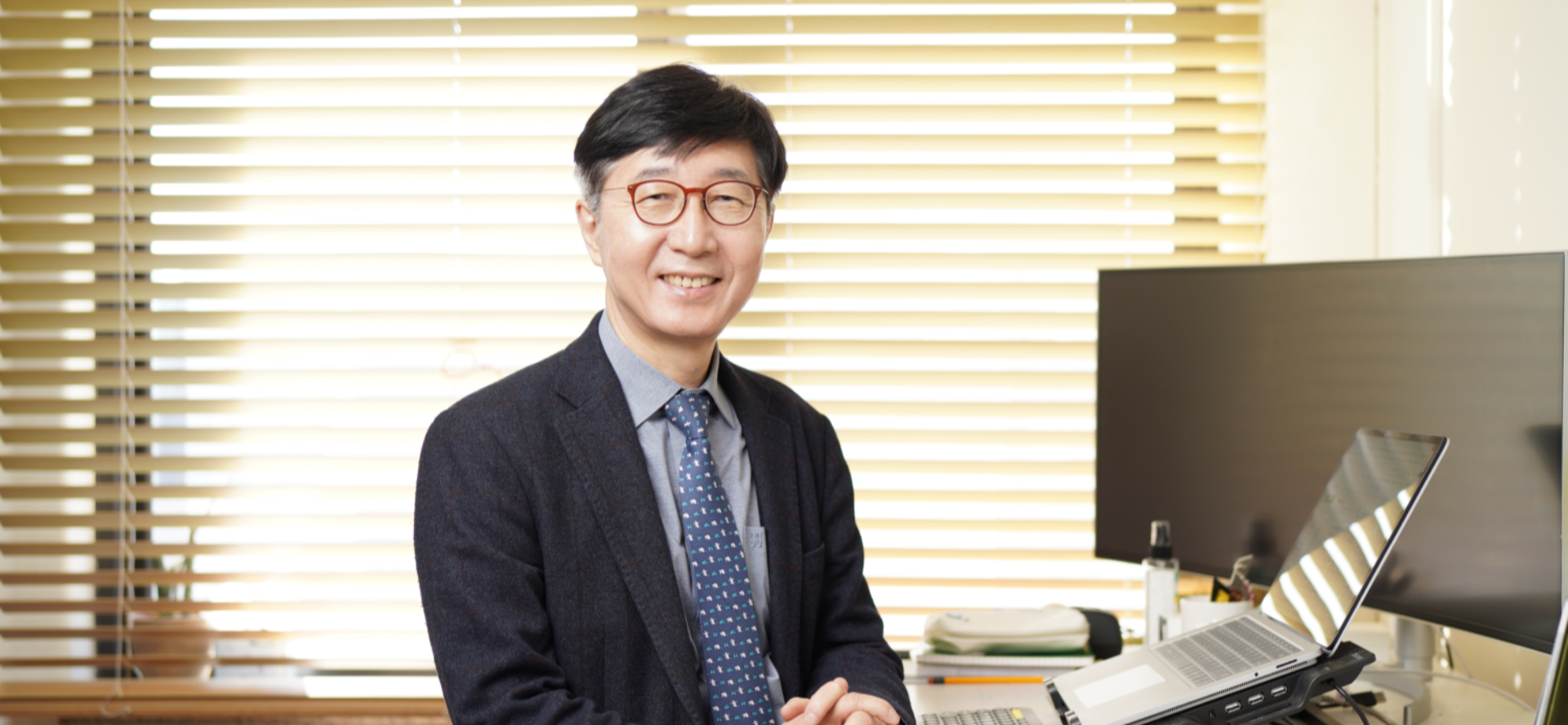
The newly selected SKKU National Research Laboratory for Intelligent Energy Solutions will be directed by Professor Nam-Gyu Park and aims to establish a next-generation intelligent energy platform that integrates energy generation, storage, and utilization technologies with artificial intelligence (AI) and digital twin technologies.

The laboratory plans to develop industry-tailored intelligent energy solutions capable of providing stable large-scale energy supplies while responding to highly fluctuating loads such as AI Data Centers (AIDCs). To achieve this, it will organically combine high-efficiency solar cells, next-generation Energy Storage Systems (ESS), industrial electrification technologies, and AI-powered digital twin technologies.

In particular, the laboratory seeks to secure core technologies for “Sovereign Energy,” enabling not only energy independence and carbon neutrality but also strengthening national energy security and future industrial competitiveness. Through these efforts, the institute is expected to present a new paradigm for future energy systems and further enhance Korea’s global competitiveness in energy technologies.

The laboratory will bring together 122 researchers from across SKKU, including 40 faculty-level co-investigators and 82 research personnel representing the fields of energy, semiconductors, AI, power systems, and engineering systems. Through interdisciplinary collaboration, the initiative is expected to contribute significantly to cultivating future energy talent, expanding global research and industry partnerships, and accelerating technology commercialization.

Professor Nam-Gyu Park, Director of the laboratory, stated, “Building on the innovation of fundamental research and the strengths of interdisciplinary collaboration, we will develop this institute into a national flagship research center that elevates Korea’s energy technologies to a world-leading level. By advancing sovereign energy technologies that integrate AI and energy, we aim to contribute simultaneously to national energy security and industrial competitiveness.”

With its selection for the National Research Laboratory Program, SKKU plans to further strengthen its position as a global research hub in energy–AI convergence, while accelerating efforts to secure future strategic technologies and foster a sustainable innovation ecosystem.

Selected for Brain Pool+ Recruitment Program

Sungkyunkwan University (SKKU) has been selected for the 2026 Brain Pool+ Institutional Recruitment Program, funded by the Ministry of Science and ICT and administered by the National Research Foundation of Korea. Through this initiative, SKKU will receive a total of KRW 13.5 billion in government funding over the next five years.

The Brain Pool+ Institutional Recruitment Program enables universities to identify and recruit outstanding international scientists aligned with their long-term research strategies while providing comprehensive support for their successful settlement and research activities in Korea. The funding can be used flexibly to cover researchers’ salaries and living expenses, as well as to establish advanced research equipment and infrastructure.

Notably, the project will be led directly by President Yoo Ji-Beom, reflecting a university-wide strategic commitment to strengthening global research competitiveness. Through this initiative, SKKU aims to build a sustainable platform for attracting world-renowned scholars in Korea’s key strategic technology areas, including next-generation energy, biomedicine, nanoscience, and quantum materials.

To maximize the impact of the program, five major institutes will collaborate under a unified framework: three leading research institutes—Biomedical Institute for Convergence at SKKU (BICS), Sungkyun Advanced Institute of Nano Technology (SAINT), and the Institute for Next Generation Energy Materials (NEM)—along with two global collaboration hubs, the Sungkyun Global Research Center (SGRC) and the Precision Biology Research Center (PBRC).

The program will operate under a presidential leadership structure. President Yoo will serve as Principal Investigator, while Professor Jeon Il (Vice Dean of International Affairs, Director of SGRC, and faculty member of SAINT) will oversee planning and operations. The leadership team also includes Vice President for Planning and Coordination Piljin Yoo, Director of Industry–Academic Cooperation Jachoon Koo, Vice Director of Industry–Academic Cooperation In Su Kim, BICS Director Kyung Kyu Kim, NEM Director Hoseok Park, PBRC Director Donghwan Kim, Professors Jae Cheol Lee and Jung Kyu Kim, as well as the Office of Research Planning Team of the Research & Business Foundation.

Through this initiative, SKKU plans to recruit not only globally recognized scholars but also outstanding mid-career researchers and promising early-career scientists. Moving beyond conventional short-term collaborations, the university aims to create an environment where international researchers can conduct long-term, stable research in Korea. By doing so, SKKU expects to enhance its global research competitiveness and contribute to a virtuous cycle in which top international talent is increasingly drawn to Korea.

“This selection for the Brain Pool+ Institutional Recruitment Program will serve as a critical foundation for SKKU’s advancement as a world-class research university,” said President Yoo Ji-Beom. “Together with leading scholars from around the world, we will pursue groundbreaking research that helps shape the future of humanity.”

SKKU 「Distinguished Lecture & Nexus Forum」

The Biomedical Institute for Convergence at SKKU (BICS) hosted the BICS Distinguished Lecture & Nexus Forum on May 21 at the Auditorium of the Samsung Library. The event was organized to share global research trends and firsthand experiences from the research community through a distinguished lecture by an internationally renowned scholar and networking opportunities for students and researchers.

Professor Peter Park of Harvard University, who also serves as a Distinguished Chair Professor at SKKU School of Medicine, delivered the keynote lecture. He introduced the latest developments in bioinformatics and interdisciplinary research, while sharing insights from his experience in the global research community. The lecture attracted strong interest from a diverse audience, including undergraduate and graduate students, researchers, and faculty members.

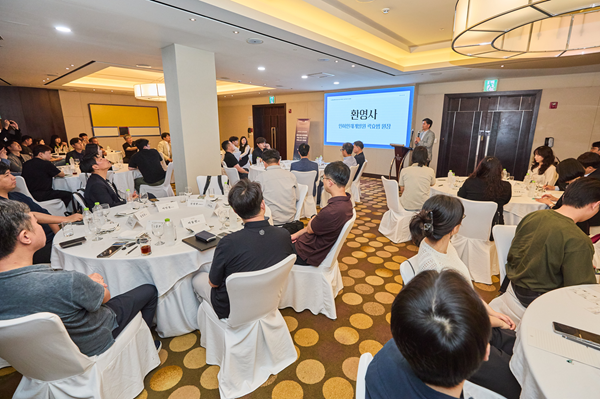
The subsequent BICS Nexus Forum featured an interactive discussion and networking session where students and researchers freely exchanged ideas. Participants engaged in lively conversations on research experiences, career development, and the potential of interdisciplinary research.

Through this event, BICS expanded opportunities for global academic exchange and strengthened its international research network, while providing students and researchers with a valuable opportunity to interact directly with a world-leading scholar. BICS plans to continue offering a variety of international academic programs and exchange activities to promote interdisciplinary research in the biomedical sciences and foster the next generation of research leaders.

Inha Jumps 88 Spots to 555th in QS Rankings

▲ Inha University Campus

Inha University has been ranked 555th globally in the QS World University Rankings 2027, announced by the global higher education evaluation organization QS (Quacquarelli Symonds).

This marks an impressive rise of 88 places from last year’s ranking of 643rd, representing the second-largest increase among universities in Korea.

The evaluation was conducted among 8,808 universities worldwide, with rankings published for 1,504 institutions. Based on the total number of universities evaluated, Inha University has secured a position within the top 7% globally, demonstrating its growing competitiveness in education, research, and international reputation.

The university recorded improvements across major indicators, including Employer Reputation, Academic Reputation, and Citations per Faculty. In particular, its Employer Reputation ranking showed the most significant improvement, rising 156 places from the previous year to 503rd in the world. This result suggests that perceptions of Inha University graduates among employers and industry leaders have become increasingly positive.

The university’s Academic Reputation ranking also improved by 57 places, reaching 642nd globally, while its Citations per Faculty indicator rose by 33 places to 628th worldwide, reflecting stronger research competitiveness and greater international research impact.

Inha University also achieved notable progress in internationalization indicators. The proportion of international students increased significantly, with the university rising 198 places to 452nd in the world. In addition, its ranking in the Sustainability category improved by 48 places, reaching 357th globally.

In recent years, the university has actively expanded global educational partnerships, operated international collaborative education programs, diversified the recruitment of international students, and strengthened its research capabilities. It has also continued to support world-class research and enhance educational infrastructure in line with global standards, thereby reinforcing its overall institutional capacity.

The latest ranking results are regarded as the outcome of the continuous efforts made by all members of the university community to improve the quality of education and research in response to global higher education trends.

President Cho Myung-woo stated, “This rise in the QS World University Rankings is the result of the collective efforts of our faculty, staff, and students in the areas of education, research, and internationalization. We will continue to invest in and support initiatives that strengthen our world-class research capabilities and educational innovation, enabling Inha University to advance as a globally recognized leading university.”

Meanwhile, the QS World University Rankings are widely regarded as one of the most authoritative global university ranking systems, evaluating institutions based on various indicators such as academic reputation, employer reputation, research impact, internationalization, and sustainability.

Original Article

SKKU Language Institute Opens New Chapter

The Sungkyun Language Institute (Director: Professor Minhyo Cho) has taken a meaningful first step toward expanding its global education infrastructure.

On June 15, the institute held a successful inauguration ceremony for the newly established SKKU Daehak-ro Building in Seoul’s Daehak-ro district.

The new facility was established in the heart of Daehak-ro to further strengthen the institute’s expertise in Korean language education and global talent development.

As the fourth and fifth floors of the building are dedicated to the Korean Language Institute’s state-of-the-art classrooms and educational facilities, the inauguration ceremony was held in conjunction with the unveiling of the Korean Language Institute signboard, making the occasion even more meaningful.

President Ji-Beom Yoo, Executive Director Youngsoo Joo, Corporate Director Donghwan Lee, Vice President for Planning and Coordination Piljin Yoo, Vice President for Academic Affairs Sang Hoon Bae, Vice President for International Affairs Minhyo Cho, and approximately 50 distinguished guests and university officials attended the event to celebrate this new beginning.

Participants expressed their warm congratulations and support for the institute’s new milestone and the future growth of its Korean Language Institute.

The ceremony began with the unveiling of the signboard at the front entrance of the SKKU Daehak-ro Building.

Amid the congratulations of the attendees, the newly revealed Korean Language Institute signboard symbolized SKKU’s vision for global education and its commitment to reaching the world from Daehak-ro, where tradition and modernity coexist. The unveiling was met with enthusiastic applause.

Following the ceremony, guests toured the Korean Language Institute facilities on the fourth and fifth floors of the building. The modern educational infrastructure—including advanced classrooms designed to provide international students with a comfortable and effective learning environment, faculty offices, instructors’ rooms, student lounges, and an administrative office offering one-stop support services for international students—drew admiration from attendees.

After the tour, guests gathered for refreshments and informal discussions in a warm and welcoming atmosphere. During the reception, participants shared the view that the SKKU Daehak-ro Building would serve as a key hub for K-education, attracting students from around the world, while exchanging ideas on the sustainable growth and global competitiveness of the Sungkyun Language Institute.

In his congratulatory remarks, President Ji-Beom Yoo stated, “I am delighted that SKKU has secured a dedicated space for global education on Daehak-ro, the cultural and artistic center of Seoul. Through the opening of the SKKU Daehak-ro Building, we will provide world-class Korean language education services and further strengthen SKKU’s standing as a leading global university.”

The newly opened SKKU Daehak-ro Building is expected to become a vibrant hub where talented individuals from around the world can learn the Korean language and culture, connect with one another, and help shape the future of global education.

Sogang Leads in AI Edu for Professionals

Sogang University has been designated an AI·Digital (AI·D) Lead University under the Ministry of Education and National Institute for Lifelong Education’s initiative to expand online lifelong learning through universities. The designation recognizes the University’s capacity to deliver AI and digital upskilling programs tailored to the needs of working professionals navigating industry-wide digital transformation.

The recognition follows Sogang’s work in 2025, when it developed and delivered a set of AI·D courses specifically for professionals in the finance and insurance sectors. The three-course package was designed around practical application rather than theoretical instruction. The first course introduced machine learning and deep learning concepts through hands-on Colab sessions. The second addressed how generative AI tools can be applied directly within financial and insurance workflows. The third guided participants through building a personalized AI assistant — including a financial advisor and insurance agent model — using Retrieval-Augmented Generation (RAG) technology. All three courses were taught by faculty from the Department of Mathematics.

Beyond course content, the program introduced a digital badge certification system to formally recognize learning progress and encourage sustained engagement. This combination of applied curriculum and structured credentialing produced a replicable model for AI and digital reskilling that is grounded in actual industry demand.

Sogang has indicated it will continue expanding its AI·D programs for working professionals in 2026, with the aim of strengthening practical AI competency across industries facing accelerating digital transformation.

Inha Develops Eco-Friendly LFP Battery

▲The research team led by Professor Choi Jin-seop of the Department of Battery Convergence Engineering.

A research team led by Professor Choi Jin-seop from Inha University’s Department of Battery Convergence Engineering has recently synthesized lithium iron phosphate (LFP) cathode materials using waste stainless steel resources, presenting the possibility of utilizing them as recycled battery materials.

As the electric vehicle (EV) and energy storage system (ESS) markets grow rapidly, the importance of resource circulation and recycling technologies for battery materials is increasing. However, in actual recycling processes, various metal components are mixed together, leaving impurities such as nickel and chromium in iron-based precursors. Until now, complex high-purity refining processes have been applied to remove these impurities, but high costs and energy consumption have posed an industrial burden.

Through experimental analysis and density functional theory (DFT) calculations, the research team confirmed that nickel and chromium impurities play different roles within the lithium iron phosphate structure.

The study found that small amounts of nickel are stably incorporated into the lithium iron phosphate crystal structure, promoting charge transfer and lithium-ion movement while showing excellent high-rate performance. In contrast, chromium is unable to be stably incorporated into the structure and instead separates into an inactive oxide phase, interfering with lithium-ion movement and reducing electrochemical performance.

In particular, the research team confirmed that the best performance balance appears at a nickel content of approximately 1 mol%. They also identified that performance decreases beyond a certain level due to increased structural distortion and defects.

This study is meaningful because it moves beyond the conventional view that impurities must always be removed, presenting a new direction in which impurities can be managed and utilized depending on their type and concentration.

In addition, the study was conducted based on impurity conditions that may occur in actual recycling environments, comprehensively analyzing the structural, electronic, and electrochemical effects of impurities in recycled iron precursors. It also proposed realistic design directions and impurity tolerance standards for recycled lithium iron phosphate cathode materials.

The research results were published in the international academic journal Advanced Science (Impact Factor 14.1 based on 2024 JCR). The study was carried out as part of the Ministry of Trade, Industry and Energy’s project, “Development of New Smelting and Extraction Process Technologies for Extracting and Materializing Nickel and Chromium from Waste Scraps Containing Nickel and Chromium.”

Professor Choi Jin-seop, the corresponding author, said, “This study is meaningful in that it systematically presents which impurities can be tolerated and up to what level.” He added, “In the future, material design strategies that focus on understanding and managing impurity behavior, rather than completely removing impurities, are expected to become increasingly important.”

Original Article

Vertical AI and Workflow Innovation

Sogang University held its May brown-bag seminar under SAIX Peers, focusing on the emerging landscape of vertical AI and its implications for industry transformation and national AI competitiveness. The session featured Professor Du-Seong Chang from the Department of Artificial Intelligence, who framed vertical AI not as a narrowly trained language model, but as a fundamentally different approach to redesigning how industries operate.

Professor Chang’s central argument was that the competitive edge in AI no longer lies in the underlying model itself, but in how an organization restructures its core workflows around AI capabilities — what he described as Vertical AI Transformation. Across sectors including finance, healthcare, law, manufacturing, and energy, the meaningful question is not which model a company uses, but whether it has rebuilt its operational processes in a form that AI can actually execute.

Three elements, he argued, are essential to building effective vertical AI: a high-performance reasoning model, agent-based workflows that reflect real operational logic, and proprietary domain knowledge. A simple chatbot interface is insufficient; genuine industrial application requires AI systems capable of planning, retrieval, tool use, verification, and execution across complex, multi-step processes.

The legal AI company Harvey was presented as a leading example. Built on OpenAI’s models, Harvey’s competitive value derives not from the foundation model itself but from tens of thousands of custom workflows encoding the practical knowledge of working lawyers. The case illustrated a broader point: in the vertical AI era, platform value comes from how deeply a company has mapped and automated the knowledge structures of a specific industry.

The seminar also addressed recent developments in AI agent architecture. Professor Chang described growing interest in a separate policy LLM — trained through reinforcement learning to control tool use, planning, and retrieval independently of the response-generation model. Building simulation environments that replicate real operational contexts, and generating synthetic training data through repeated experimentation within those environments, was identified as an increasingly important direction for agent development.

A significant portion of the discussion turned to AI sovereignty. Professor Chang noted that leading global frontier models are becoming increasingly closed, concentrated among a small number of companies and treated as strategic assets. Over-reliance on foreign models carries long-term risks of technological dependency — a concern that is compounded for Korean-language services, where lower token efficiency relative to English means higher operational costs for equivalent tasks. He argued that developing a fully controllable, high-performance Korean foundation model is not merely a technical goal but a matter of national industrial competitiveness.

Participants broadly agreed that vertical AI-driven transformation across energy, manufacturing, healthcare, and law is likely to accelerate in the near term, and that closer collaboration between industry and academia will be essential to building a competitive domestic AI ecosystem.

SKKU Language Institute Opens New Chapter

The Sungkyun Language Institute (Director: Professor Minhyo Cho) has taken a meaningful first step toward expanding its global education infrastructure.

On June 15, the institute held a successful inauguration ceremony for the newly established SKKU Daehak-ro Building in Seoul’s Daehak-ro district.

The new facility was established in the heart of Daehak-ro to further strengthen the institute’s expertise in Korean language education and global talent development.

As the fourth and fifth floors of the building are dedicated to the Korean Language Institute’s state-of-the-art classrooms and educational facilities, the inauguration ceremony was held in conjunction with the unveiling of the Korean Language Institute signboard, making the occasion even more meaningful.

President Ji-Beom Yoo, Executive Director Youngsoo Joo, Corporate Director Donghwan Lee, Vice President for Planning and Coordination Piljin Yoo, Vice President for Academic Affairs Sang Hoon Bae, Vice President for International Affairs Minhyo Cho, and approximately 50 distinguished guests and university officials attended the event to celebrate this new beginning.

Participants expressed their warm congratulations and support for the institute’s new milestone and the future growth of its Korean Language Institute.

The ceremony began with the unveiling of the signboard at the front entrance of the SKKU Daehak-ro Building.

Amid the congratulations of the attendees, the newly revealed Korean Language Institute signboard symbolized SKKU’s vision for global education and its commitment to reaching the world from Daehak-ro, where tradition and modernity coexist. The unveiling was met with enthusiastic applause.

Following the ceremony, guests toured the Korean Language Institute facilities on the fourth and fifth floors of the building. The modern educational infrastructure—including advanced classrooms designed to provide international students with a comfortable and effective learning environment, faculty offices, instructors’ rooms, student lounges, and an administrative office offering one-stop support services for international students—drew admiration from attendees.

After the tour, guests gathered for refreshments and informal discussions in a warm and welcoming atmosphere. During the reception, participants shared the view that the SKKU Daehak-ro Building would serve as a key hub for K-education, attracting students from around the world, while exchanging ideas on the sustainable growth and global competitiveness of the Sungkyun Language Institute.

In his congratulatory remarks, President Ji-Beom Yoo stated, “I am delighted that SKKU has secured a dedicated space for global education on Daehak-ro, the cultural and artistic center of Seoul. Through the opening of the SKKU Daehak-ro Building, we will provide world-class Korean language education services and further strengthen SKKU’s standing as a leading global university.”

The newly opened SKKU Daehak-ro Building is expected to become a vibrant hub where talented individuals from around the world can learn the Korean language and culture, connect with one another, and help shape the future of global education.

SKKU Successfully Hosts NGPT 2026

SKKU successfully hosted the 8th International Conference on Nanogenerators and Piezotronics (NGPT 2026) from June 9 to 12 at its Humanities and Social Sciences Campus in Seoul.

NGPT is one of the world’s leading international conferences in the fields of nanogenerators, piezotronics, self-powered sensors, and energy harvesting. The conference serves as a premier platform where researchers share the latest scientific advances and discuss future technological directions.

Having previously hosted NGPT in 2018, SKKU welcomed the conference for the second time this year. More than 500 researchers, students, and industry representatives from 21 countries, including the United States, China, Germany, the United Kingdom, Canada, and Singapore, participated in the event.

The conference featured presentations on a wide range of cutting-edge topics, including self-powered sensors, wearable electronics, AI-integrated sensing technologies, bioelectronics, energy harvesting, and sustainable energy technologies. Participants actively exchanged ideas through keynote lectures, tutorial sessions, invited talks, oral presentations, and poster sessions.

Among the distinguished speakers were Professor Zhong Lin Wang of Georgia Institute of Technology, the pioneer of nanogenerators and piezotronics; Professor Mark Hersam of Northwestern University, a world-renowned expert in nanomaterials and electronic devices; and Professor Orlando J. Rojas of The University of British Columbia, a leading scholar in sustainable biomaterials. Together with other internationally recognized researchers, they discussed the future directions of next-generation energy and sensor technologies.

Editors from top-tier journals, including Nano Energy, Advanced Materials, and Joule, also attended the conference, sharing insights on emerging research trends and academic publishing strategies. In addition, a special issue featuring outstanding research presented at NGPT 2026 is planned, which is expected to further disseminate the conference’s scientific contributions and foster follow-up studies and international collaborations.

A particularly significant milestone of NGPT 2026 was the official launch of the Nanogenerators and Piezotronics Society (NPS), an international academic organization established to promote global collaboration and scholarly advancement in the field. Researchers from around the world gathered for the inaugural ceremony to share the society’s vision and discuss future directions for international research cooperation and academic exchange.

Professor Jung Min Baik of the Department of Materials Science and Engineering, Chair of the Organizing Committee, stated, “It is especially meaningful for SKKU to host NGPT once again following the 2018 conference. We hope this conference not only provides an opportunity for researchers worldwide to share their latest findings and discuss future technological visions, but also serves as a catalyst for strengthening global research collaboration through the launch of the Nanogenerators and Piezotronics Society.