Inha Med Students Honor ‘Silent Mentors’

Students from INHA College of Medicine became the first from a Korean medical school to participate in the ‘Silent Mentor’ program at Tzu Chi University College of Medicine in Hualien, Taiwan.

The training delegation, consisting of Vice Dean Choi Jeong-seok, Department Chair of Pre-medicine Kim Geun-ho, Professor Kim Il-doo, and four senior medical students, visited Tzu Chi University—world-renowned for its unique anatomy curriculum—for a six-day session from the 15th to the 20th.

The ‘Silent Mentor’ program is characterized by treating the cadaver not as a mere anatomical object, but as a ‘mentor,’ fostering deep reflection on respect for life and human dignity. Students engaged in a humanities-based educational process that included studying the donor’s life in advance, meeting with bereaved families, performing gratitude rituals, and attending memorial ceremonies to honor the donor’s legacy.

Notably, this practice utilized fresh(unembalmed) cadavers, which allow students to experience tissue textures similar to actual clinical settings without chemical preservation treatments. Students enhanced their practical capabilities by performing basic clinical skills, such as skin incision and suturing, vascular access, and arthrocentesis. Beyond technical acquisition, the experience provided an integrated education in empathy, ethics, and professionalism.

Tzu Chi University College of Medicine has practiced education that respects cadavers as ‘Silent Mentors’ since 1996 and has been operating this program in earnest since 2002. These efforts have spread bioethical awareness throughout Taiwanese society, resulting in approximately 43,000 organ and cadaver donation pledges to date, making it a global model for anatomical education.

This training is also part of the ‘Community-Based Medical Education’ program currently being promoted by the College of Medicine. Since last year, it has been adopted as specialized education under the ‘Regional Innovation Strategy and Capacity Building (RISE)’ project, conducted by the Ministry of Education and 17 metropolitan governments, including Incheon Metropolitan City, to strengthen educational capabilities.

Based on the achievements of this training, the College of Medicine plans to strengthen its clinical surgical anatomy curriculum—integrating medical humanities, basic anatomy, and clinical medicine—and systematize mutual cooperation with Tzu Chi University to transform into a medical school that fulfills its social responsibilities.

Lee Hoon-jae, Dean of the College of Medicine, stated, “This training at Tzu Chi University served as an important opportunity to confirm the direction of the community-based and integrated medical curriculum that Inha University College of Medicine pursues.” He added, “Based on the ‘Silent Mentor’ program model, we plan to fully implement a surgical anatomy curriculum in connection with our newly developed educational and practice facilities.”

▲ Medical students pay their respects while viewing photos and descriptions of the ‘Silent Mentor’s’ life displayed on a monitor before the practice session.

▲ Participating students honor the ‘Silent Mentors’ by singing a memorial song during a gratitude ceremony.

Original Article

New AI Boosts Image Restoration Efficiency

A research team led by Professor Lim Hongki of the Department of Electrical and Computer Engineering at INHA University has recently developed ‘FAST-DIPS,’ a new artificial intelligence technology for image restoration based on diffusion models.

Professor Lim’s research team proposed a method to more quickly and stably solve ‘inverse problems,’ which involve reconstructing original images from degraded or partially observed data.

Image inverse problems are core challenges in computer vision and image processing, including super-resolution, inpainting, deblurring, phase retrieval, and HDR restoration. However, existing diffusion model-based restoration techniques have limitations: as problem types become more complex, they require repetitive gradient calculations or internal optimization processes, leading to high computational costs. In some cases, adjoint operators or pseudo-inverse matrices for each operator must be designed separately.

The core of the FAST-DIPS method proposed by the research team is to achieve fast and stable restoration with minimal computation at each step by combining constraints that strictly maintain consistency with measured values with analytically calculated optimal step sizes. This adjoint-free approach allows for flexible application to various linear and non-linear restoration problems without separate retraining. Furthermore, its implementation based on automatic differentiation offers the advantage not having to manually design complex adjoint-free analytic steps or pseudo-inverse matrices.

Additionally, the research team proposed a hybrid approach that combines pixel space and latent space. In the initial stages, reconstruction is performed in pixel space for fast computation, and it then transitions to latent space to better utilize the representative power of generative models, simultaneously enhancing both restoration quality and computational efficiency.

This study is significant for simultaneously increasing computational efficiency and application flexibility in diffusion model-based image restoration. The developed technology is expected to be widely utilized in various computer vision and scientific application fields that require high-speed, high-quality image reconstruction.

These research results were published in the paper titled ‘FAST-DIPS: Adjoint-Free Analytic Steps and Hard-Constrained Likelihood Correction for Diffusion-Prior Inverse Problems,’ with doctoral student Kim Min-woo and MS-PhD integrated student Shin Seung-hyeok participating as joint first authors under the guidance of Professor Lim Hongki.

The paper was recently accepted for ICLR 2026, an international academic conference in the field of artificial intelligence. ICLR is considered the world’s most prestigious international conference in the field of deep learning.

The research team is scheduled to present their findings at ICLR 2026 in Rio de Janeiro, Brazil, this coming April.

▲Image restoration results and comparisons developed by Professor Lim Hongki’s research team using FAST-DIPS

Original Article

‘Inha Coffee Night’ for Education Innovation

INHA university announced on the 30th that the Graduate School of Education recently held a meeting program for communication with students titled ‘Evening with Coffee’.

This event was organized to further develop the curriculum and support system by actively reflecting the experiences and opinions of graduate students, who are the practical subjects of education.

The Graduate School of Education held the event in the lobby on the 1st floor of the 60th Anniversary Memorial Hall, where President Cho Myeong-woo, key university officials, and graduate students participated in a time of communication in a free-flowing atmosphere. In particular, President Cho Myeong-woo and Executive Vice President for Academic Affairs Baek Seong-hyeon encouraged the students by personally sharing coffee and refreshments.

Participants shared their experiences in their studies and research processes in a relaxed setting and presented various opinions regarding curriculum operation, learning support, and improvements to facility environments.

Specifically, this event was prepared as a venue to sophisticatedly refine the curriculum and support systems based on student feedback and to carry forward the achievements of the Teacher Training Institution Competency Assessment. It functioned as a communication channel to reflect voices from the field into policy, going beyond mere listening.

Previously, the university achieved significant results in the 6th Cycle of the Teacher Training Institution Competency Assessment, receiving the highest grade for the College of Education and an excellent grade for the Graduate School of Education. This event was promoted as an extension of these achievements to further refine educational quality and continuously develop a teacher training system that reflects field opinions.

The Graduate School of Education has continued to innovate in response to the changing educational environment, such as establishing an IB(International Baccalaureate)-based teacher training system and strengthening AI convergence and STEAM education. With this event as a turning point, the school plans to further strengthen the student participation-based feedback system and increase the execution power for improving educational quality.

President Cho Myeong-woo stated, “The experiences and opinions of our students are the most important starting point for improving the quality of education. By actively reflecting voices from the field, we will solidify the achievements we have made in the competency assessment and leap forward as a teacher training institution that leads future education.”

Meanwhile, the Graduate School of Education plans to continue developing curriculum specialization and student support systems through ongoing communication with students, and to steadily expand education innovation models linked with the local community.

▲President Cho Myeong-woo hands coffee to a graduate student during the ‘Evening with Coffee’ event.

Original Article

Incheon Forum: Reviving the Local Economy

▲The 2nd public forum of the Inha–Incheon Future Design Forum was held at Room 112 of the 60th Anniversary Hall (INHA Creative Space) on the March 11th.

Inha university successfully concluded the 2nd public forum of the Inha–Incheon Future Design Forum, which seeks sustainable future strategies for Incheon.

At this second forum, under the theme ‘How to Overcome the Crisis of the Local economy,’ participants diagnosed key issues in Incheon’s local economy—such as the crisis facing local self-employed businesses and small merchants, shrinking consumption, and financial debt—and explored practical policy alternatives.

Professor Kang Byeong-gu of the Department of Economics served as the moderator, and both field perspectives and academic solutions were discussed in depth.

Professor Han Jae-jun of the Department of Finance and Management participated as a presenter, analyzing the decline in regional consumption and the deterioration of the business environment for the self-employed amid high interest rates and high inflation, and proposed the need for region-tailored financial support and structural transition policies.

Lee Seong-won, Secretary General of the Korea Federation of Micro Enterprises and Self-Employed, highlighted structural difficulties—such as the debt burden of small business owners and issues related to rent and platform fees—based on field cases, and proposed measures for institutional improvement and strengthening the social safety net.

Following this, Park Jeong-man, former Director of the Seoul Financial Welfare Counseling Center; Kim Ha-un, Chairman of the NGO Together Incheon People; Byeon Dong-hun, CEO of Kona I; and Oh Seung-seop, Chairman of the Incheon Association of Small Manufacturers, participated in the discussion, presenting various alternatives including the role of local currency policies, financial welfare support systems, strengthening the competitiveness of small manufacturers, and building public-private cooperation models.

Participants agreed that the crisis of the local economy should be approached not only as a short-term economic response but as a comprehensive strategy linking industrial, financial, and welfare policies. In particular, they emphasized that local governments should organically design policies such as local currency, public procurement, and revitalization of neighborhood commercial districts so that they lead to a recovery in the perceived economic situation.

The 3rd Policy Public Forum, which will continue on the 18th, will be held under the theme ‘Sustainable Doughnut City Model and Policy Tasks for Incheon.’

Professor Kim Chang-gyun of the Department of Environmental Engineering will serve as moderator, and Professor Woo Seung-beom of the Department of Oceanography and Kim Byeong-kwon, Director of the Green Transition Institute, will present.

The presentations will examine environmental, marine, and energy policy tasks for Incheon from the perspective of ‘Doughnut Economics,’ which considers both the ecological limits of cities and their social foundations in the era of climate crisis.

Former Director Cho Gyeong-du of the Incheon Carbon Neutrality Research Support Center; Professor Lee Jun-beom of the Law School; Kim Chung-gi, Representative of the Incheon Urban Agriculture Network; and Jang Si-jeong, Steering Committee Member of the Incheon Citizen Power Cooperative Network, will participate in the discussion, addressing issues such as carbon neutrality, urban agriculture, citizen-participatory energy transition, and institutional foundations.

An official from the Regional Cooperation Center stated, “The second forum reaffirmed that the recovery of the local economy is the most urgent task for the local community,” adding, “In the upcoming third forum, we hope to gather wisdom together with citizens on a sustainable model for Incheon that can simultaneously address the climate crisis and inequality.”

지난 11일 60주년 기념관 112호(INHA Creative Space)에서 열린 인하인천미래디자인포럼 2회 공론장에서 참석자들이 기념사진을 촬영하고 있다.

▲Participants are taking a commemorative photo at the 2nd public forum of the Inha–Incheon Future Design Forum held on the 11th at Room 112 of the 60th Anniversary Hall (INHA Creative Space).

Original Article

Inha Med: Bridging Regional Healthcare

The College of Medicine at Inha University is accelerating ‘Community-Based Medical Education,’ which expands the educational scope beyond the confines of classrooms and university hospitals into the community.

The College of Medicine is conducting specialized training for 3-week clinical clerkships this month and in coming June at a hospital ship (Geongang Ongjin-ho) and Baekryeong Hospital for 4th-year medical students.

From March 4 to 6, students boarded the Ongjin-gun hospital ship to conduct their first clinical clerkship under the guidance of public health doctors and personnel, and a second clinical clerkship is also scheduled for June. Additionally, they are conducting a clinical clerkship at Baekryeong Hospital on Baekryeong Island for nine days from March 9 to 17.

Students will experience the specificity and importance of public healthcare through regional status lectures and seminars, participation in island tour medical treatments, and involvement in Doctor-Heli patient evacuations.

The College of Medicine has been preparing community-based medical education since 2022 to cultivate medical personnel suited for the local community. Since last year, as the Ministry of Education implemented the ‘Regional Innovation Strategy and Education (RISE)’ project, which considers the regional characteristics and strengths/specializations of local universities in 17 cities and provinces nationwide, this program was adopted as specialized education, leading the innovation of medical education.

To this end, the College of Medicine signed agreements with Ongjin-gun, Baekryeong Hospital, and Incheon Medical Center, and plans to sign agreements with a total of 100 community public and private medical institutions within the year.

Seo Han Yong, a 4th-year medical student who participated in the Baekryeong Hospital clinical clerkship, said, “It taught me much more than university hospital training and made me properly realize the reality of community patients we must look after,” and added, “It was a precious opportunity to think about what to aim for through the dedication shown by our senior doctors on the island.”

The College of Medicine plans to establish a practical community-centered medical education system. In particular, project-based classes will be conducted to analyze the epidemiology of major diseases among residents of specific regions and propose health policies or health promotion programs suitable for those regions. Furthermore, the college plans to significantly expand education on social responsibility to protect the health of the community by strengthening the ability to analyze and solve regional health problems and learning deeply about the roles and responsibilities of public hospitals.

Inha University Hospital, an affiliated university hospital under the university’s medical center, is also positioning itself as a community-based medical institution that meets the specificities of the Incheon region, which is expected to serve as a turning point for regional medical development as a hospital-academia cooperation model.

Inha University Hospital has continued medical support for island areas for 28 years, starting with Baekryeong Island in 1998. It has evolved from simple medical volunteering in the early days to medical service agreements for Ongjin-gun residents, installation of remote consultation systems, and expansion of prevention-oriented public health, gradually developing into a systematic and effective medical system. Notably, through the ‘1 Island 1 Primary Care Hospital’ project, it has been designated in charge of Daecheong-myeon and Baekryeong-myeon, and has achieved results such as specialists participating in real-time intensive care through the establishment of a smart remote video consultation system with Baekryeong Hospital.

Lee Taek, President of Inha University Medical Center, stated, “We plan to further expand our role as a responsible medical and educational institution so that customized talent can be cultivated through regional specialized education from the educational stage to work for the region.”

▲Director Lee Du Ik of Baekryeong Hospital providing emergency room patient education to 4th-year medical students from Inha University College of Medicine.

▲The Dean of the College of Medicine at Inha University, students, and medical staff of Baekryeong Hospital taking a commemorative photo.

Original Article

Aerogel-Grown Catalyst for CO2 Conversion

(사진 왼쪽부터) 논문 제1저자인 민경훈 화학·화학공학융합학과 석·박사 통합과정 연구원과 지도교수인 심상은 화학공학과 교수.

▲ (From left) Min Kyung-Hoon, first author and integrated master’s/doctoral researcher in the Department of Chemistry and Chemical Engineering, and Professor Shim Sang-Eun(Advisor) of the Department of Chemical Engineering.

Professor Shim Sang-Eun’s research team in the Department of Chemical Engineering recently developed a next-generation catalyst technology capable of capturing carbon dioxide and converting it into useful compounds simultaneously.


This technology is a new method of directly growing Metal-Organic Frameworks (MOF) inside silica-based aerogels.


Professor Shim’s research team designed the aerogel—which has a lightweight and highly porous structure—to act as a confined reaction space, ensuring the catalytic material forms uniformly inside. Through this, they reduced particle aggregation, a common issue in conventional catalysts, and enabled more effective utilization of the active sites required for the reaction.


In particular, they developed a new aerogel support by combining silicon-based polymers with hydrophilic polymers and succeeded in evenly dispersing MOF, which is effective for carbon dioxide adsorption and conversion reactions, inside. This structure possesses both a high surface area and a rigid framework, offering the advantage of maintaining its shape even under demanding synthesis conditions.


Additionally, they further enhanced reaction efficiency by introducing an ionic liquid that serves to effectively capture carbon dioxide on the catalyst surface. As a result, it showed excellent carbon dioxide adsorption performance even at room temperature, and in catalytic reaction experiments, achieved near-perfect reaction efficiency with only a very small amount of catalyst.


This catalyst showed almost no performance degradation even after more than 10 repeated uses and operated stably even in environments where moisture was present. It is evaluated that the hydrophobic characteristics of the siloxane-based structure increased the possibility of application to actual industrial processes. Min Kyung-Hoon, an integrated master’s/doctoral researcher in the Department of Chemistry and Chemical Engineering Fusion, participated as the first author of this study.


Professor Shim Sang-Eun said, “By employing a strategy of growing the catalyst directly inside the aerogel, we effectively overcame the limitations of existing metal-organic framework catalysts,” adding, “This technology will serve as a practical alternative that contributes to reducing carbon dioxide and utilizing it as a resource.”

▲Schematic diagram of the research on improving carbon dioxide conversion performance through catalyst growth inside aerogel.

Original Article

Meanwhile, the results of this study were published in the international academic journal Advanced Composites and Hybrid Materials (Impact factor: 21.8).

Alumni Boost $1 Breakfast with Rice Donation

▲President Cho Myung-woo and Alumni Association President Kim Jong-woo participate in the “1,000-Won Breakfast” meal service volunteer activity to celebrate the new semester.

Inha University recently held a “1,000-Won Breakfast” volunteer meal service in collaboration with the Inha University Alumni Association to welcome the new semester.

The event was organized following the inauguration of Alumni Association President Kim Jong-woo in January, who donated 25 sacks of rice (10kg each), totaling 250kg, to commemorate his appointment.

University officials, including President Cho Myung-woo, and Alumni Association representatives, including President Kim, attended the event and personally served breakfast to students, delivering messages of encouragement for the new semester.

The “1,000-Won Breakfast” program provides university students with breakfast meals at a cost of 1,000 won. For each meal, the university receives a total of 3,000 won in support from the government and Incheon Metropolitan City, supplemented by university funding to offer the service. In response to strong student demand this year, the number of meals provided daily has been increased from 100 to 130 students. The Alumni Association has continued its annual tradition of donating rice to support junior students.

Kim Jong-woo, President of the Alumni Association, said, “Upon assuming the role of Alumni Association President, I wanted to practice meaningful sharing with my alma mater and junior students,” adding, “The Alumni Association will continue to provide steady support to serve as a reliable support system for our junior students.”

President Cho Myung-woo remarked, “The warm interest and support from the Alumni Association are a great source of strength for our students,” adding, “The university will also expand various welfare programs so that students can focus on their studies as they begin the new semester.”

조명우 총장과 김종우 총동창회장이 새 학기를 맞이해 ‘천원의 아침밥’ 배식 봉사를 마치고 학생들과 식사를 하고 있다.▲President Cho Myung-woo and Alumni Association President Kim Jong-woo share a meal with students after completing the “1,000-Won Breakfast” volunteer service.

Original Article

MOU Signed for AI Security Training

Inha University recently signed a Memorandum of Understanding (MOU) with IGLOO Corporation, an AI-based security solutions company, to cultivate specialized talent in AI-based security and enhance industry–academia cooperation.

Under this agreement, Inha University and IGLOO Corporation will collaborate on ▲ developing customized curricula and educational content to nurture outstanding AI talent ▲ jointly identifying and conducting industry–academia R&D projects in the field of AI-based security ▲ strengthening students’ practical competencies through company-linked internship programs ▲ discovering outstanding talent in AI-based security and supporting their employment pathways.

Inha University expects this MOU to serve as a meaningful opportunity to foster specialized professionals through educational and research collaboration in the AI-based security field, while further reinforcing the foundation for industry-linked education and research cooperation.

Kim Eun-jung, Vice President of IGLOO Corporation, stated, “As AI technologies continue to advance, cultivating specialized talent in the security sector is becoming increasingly important. Through this agreement, we will establish a comprehensive talent development system that integrates academia, practice, and research, and continue to support the discovery and growth of professionals who will lead the AI-based security industry.”

Baek Sung-hyun, Vice President for Academic Affairs, said, “We will build a cooperative model in which industry, education, and research are organically connected in the field of AI-based security. Through close industry–academia collaboration, we will actively support our students in developing into AI security professionals equipped with strong, field-oriented practical capabilities.”

▲ Officials from the University and IGLOO Corporation pose for a commemorative photo at the MOU signing ceremony for fostering AI-based security talent and strengthening industry–academia cooperation.

Original Article Link

Inha Univ. Team Earns IEEE IV 2026 Recognition

머신러닝 모델과 컴퓨터 비전이라는 두 가지 입력 데이터가 베이지안 필터를 통해 융합되는 전체적인 처리 흐름 모식도.

▲Schematic diagram illustrating the overall processing flow in which two input data sources—machine learning models and computer vision—are fused through a Bayesian filter.

Graduate students Lee Dong-min and Lee Seung-yong, master’s candidates in the Department of Mechanical Engineering at Inha University, have received international recognition for their research on improving road surface condition classification performance for autonomous vehicles.

Through their paper titled “Multimodal Bayesian Filtering for Enhanced Road Surface Condition Classification in Intelligent Vehicles Safety Systems,” the researchers proposed a novel algorithm for road surface condition classification.

The core contribution of the study lies in significantly improving classification accuracy by fusing data-driven machine learning models with computer vision–based road surface classification results using a real-time Bayesian filtering approach.

This research has been accepted for publication at the IEEE Intelligent Vehicles Symposium (IV) 2026 International Conference, scheduled to be held this June in Detroit, USA. IEEE IV is one of the most prestigious international conferences in the fields of autonomous driving and intelligent vehicles, known for its rigorous review process and strong emphasis on academic originality and impact.

Professor Kiwoo Kim of the Department of Mechanical Engineering at Inha University commented, “I hope this achievement serves as an opportunity for master’s students in mechanical engineering to gain confidence that they, too, can present research at leading conferences in the electrical and electronics engineering field, and that it will support their future career development.”

Meanwhile, this research was conducted with support from a national R&D project funded by the Ministry of Trade, Industry and Energy, titled “Development of an Embedded AI Controller for Road Surface Condition Recognition” (lead company: HL Mando), under the supervision of Professor Kiwoo Kim as principal investigator. Follow-up studies are planned.

Original Article

Inha 2026-1 Commencement Ceremony Held

▲ President Cho Myung-woo delivers a congratulatory address at the February 2026 Commencement Ceremony held on the 20th in the Main Auditorium of the University’s main building.

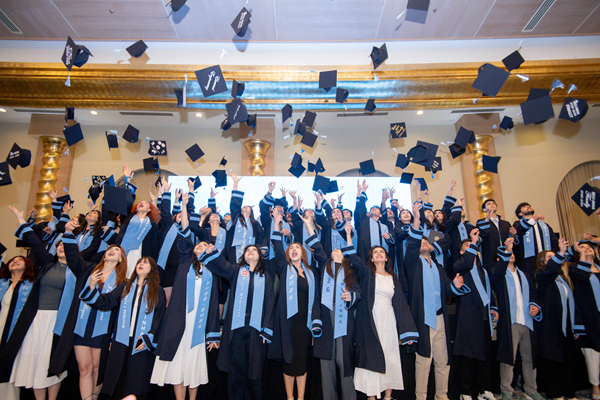
Inha University held its February 2026 Commencement Ceremony on the 20th in the Main Auditorium of the University’s main building.

A total of 3,601 students received degrees at the ceremony, including 2,551 undergraduates, 910 master’s students, and 140 doctoral candidates.

The ceremony was attended by President Cho Myung-woo, Kim Yoon-hwi, Executive Director of the Board of Trustees of Jeongsuk Inha School Foundation, Kim Jong-woo, President of the Inha University Alumni Association, as well as graduates’ families and friends.

Dr. Seo Dong-woo from the Department of Mechanical Engineering and Dr. Maung Nyunt from the Smart Governance Policy program received the President’s Award. Lee Jung-hyun, a student from the Department of Social Welfare, received the Alumni Association President’s Award.

Lee Si-eun, a representative graduate from the Department of International Trade, said, “At Inha, I learned how to take on challenges and endure failure, and above all, I learned to believe in myself. I will strive to make the name ‘Inha’ a source of pride by following in the footsteps of the many alumni who are shining in their respective fields.”

Kim Yoon-hwi, Executive Director of the Board of Trustees of Jeongsuk Inha School Foundation, remarked, “I hope you become confident Inha graduates who value direction over speed and choose values over mere achievements. I wholeheartedly support your bold first steps as you stand on the runway of a new chapter in life.”

In his congratulatory address, President Cho Myung-woo stated, “As you begin your flight into society, you may at times need to adjust your speed and reset your direction under ever-changing skies. However, the time you spent at Inha and the moments when you refused to give up will illuminate your path once again. No matter which sky you fly in or which path you choose, Inha will always be the place of your first takeoff and a warm airport you can return to whenever you need to pause and catch your breath.”

▲ The February 2026 Commencement Ceremony is being held in the Main Auditorium on the 20th.

▲ Kim Yoon-hwi, Executive Director of the Board of Trustees of Jeongsuk Inha School Foundation, delivers a congratulatory address at the ceremony.

▲ Kim Jong-woo, President of the Inha University Alumni Association, delivers a congratulatory address at the ceremony.

▲ Graduates pose for commemorative photos to celebrate their graduation.

Original Article