Phase 1 pre-clinical trial of UNAIR-led Merah Putih Vaccine shows promising result

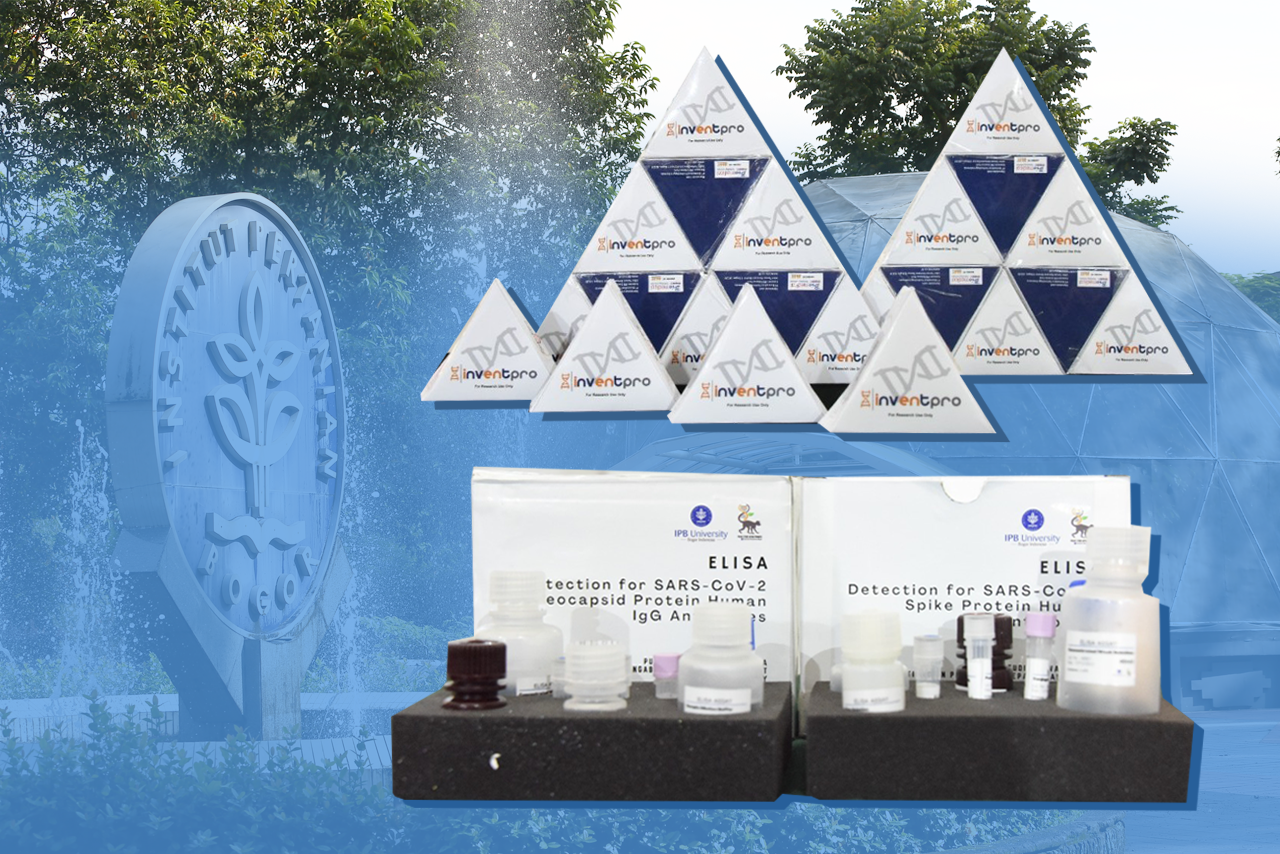
The Coordinating Ministry for Economic Affairs and the Cabinet Secretary of the Republic of Indonesia supports the realization of the Merah Putih Vaccine led by Universitas Airlangga, which has undergone phase 1 of the pre-clinical trial.

The tremendous support is shown from a meeting discussing the development of Merah Putih Vaccine particularly undertaken with the platform used by UNAIR.

The meeting was held online and offline at the Balairua Room Management Office Campus C UNAIR, Friday afternoon, May 28, 2021. Several officials attended the meeting, including Prof. Dr. Ni Nyoman Tri Puspaningsih, M.Si., UNAIR Covid-19 Research Coordinator as well as UNAIR Vice-Rector for Research, Innovation and Community Development; Dida Gardera, ST., M.Sc, Assistant Deputy for Agro, Pharmacy, and Tourism of the Coordinating Ministry for Economic Affairs; and Sudirman, Director of PT Biotis Prima Agrisindo.

Several related officials from the Cabinet Secretary of the Republic of Indonesia, the Ministry of State-Owned Enterprises, the Ministry of Health, Drug and Food Monitoring Agency were also present.

In the meeting, the Head of the UNAIR Merah Putih Vaccine research team Prof. Dr. Fedik Abdul Rantam drh, revealed the development of the UNAIR Merah Putih vaccine has entered phase 1 of the preclinical trial and has shown good results.

“Regarding the antibody titer, the trend is very good, PA is also good, and the examination is still ongoing including immunotyping, kidney, haematology, toxicity, and total blood tests. The examination results will be used as the basis for conducting the phase 2 preclinical trial, “said Prof. Fedik.

For this reason, his team is currently preparing a phase 2 preclinical trial.

Previously, Universitas Airlangga (UNAIR) have conducted vaccine research on several platforms, such as the inactivated virus platform, the viral vector with adenovirus platform, and the peptide platform.

The three platforms are still ongoing and construction of the inactivated virus platform has been completed early to advance to preclinical trials and clinical trials.

“We hope in December it will be complete, however, it may be February or March before it included in the industrial scheme, ” he explained.

Furthermore, Prof. Fedik hoped that this research is in line with the expectations of the government and the Indonesian people, the independent development of vaccines so that the government can deal with the Covid-19 virus independently as well.

“For academics, we are optimistic that we can develop the technology to make our own vaccines. Of course, this is a start, “he said.

Urban Partnership Melting Pot: UPJ and Humboldt Kolleg partner to solve urban problems

Universitas Pembangunan Jaya (UPJ) wants to continue the tradition of excellence in the field of Urban Studies through an activity entitled Urban Partnership Melting Pot. This activity will take place virtually from January 17-22, 2022.

The Urban Partnership Melting Pot is part of UPJ’s collaboration with Humboldt Kolleg, which aims to strengthen regional professional cooperation networks among alumni (Humboldtians). This melting pot will also introduce and increase the interest and enthusiasm of young researchers towards the Alexander von Humboldt Foundation (AvH) program. This foundation puts forward the vision of collaboration between countries with Germany as a research location.

Humboldt Kolleg activities are initiated by alumni (Humboldtians) or their associations. AvH supported the Humboldtians financially. Humboldt Kolleg has been held in various countries outside of Germany (United States, France, Italy, Poland, Nigeria, Kenya, South Africa, China, India, and others).

The participants are alumni of the AvH program and young researchers who have made fundamental contributions to the development of science. Thus, Humboldt Kolleg has become an essential instrument in gathering the best young researchers, a generation of potential leaders in science and technology, and other fields in Germany and even around the world.

It is appropriate that UPJ’s activities in collaboration with Humboldtians are called “melting pots,” not only from researchers, speakers, and participants from various countries; the theme of Urban Studies is also a broad theme that spreads from different fields of science. This is in line with UPJ’s efforts to mainstream Urban Studies.

UPJ has a Center for Urban Studies (CUS), which seeks to answer the challenges of urban planning needs and the comprehensive problems of urban residents. The five main fields that become the derivative clusters of Urban Studies at CUS UPJ are Urban Growth, Urban Culture, Urban Development, Urban and the Future, and Urban Society.

In 2017, Humboldt Kolleg at UPJ took the theme “The Rise of ASEAN and Strategic Partnership in Understanding the Complexity and Collective Phenomena in Emergent Societies.” The activity in 2017 was also a collaboration between UPJ and the Indonesian Ministry of Higher Education.

City planning, Architecture and infrastructure, Urban Health and Society, Environmental risks in Urban and Regional Development, and Strategic partnership in Urban Research were the five main topics at the meeting.

With this track record of activities, UPJ has again become the facilitator of this meeting related to Urban Studies and has shown its total commitment to developing urban studies in Indonesia.

Through the Urban Partnership Melting Pot, the university invites researchers, writers, and the media to be able to join in contributing thoughts and creative ideas through the focus of the theme: Urban Growth Pattern, transformation, and resilience; Urban Mobility and Internet of Things; and Social, health, education, environment, and economic development.

President University is ready to implement hybrid learning

In April 2020, President University (PresUniv) issued Rector’s Regulation Number 6 of 2021 about President University New Normal Offline Learning and Online Learning. Based on Article 1, Paragraph 1, it is stated that lecture activity for the undergraduate and postgraduate programs will be carried out with offline learning new normal and online learning, since May 24, 2021.

During the offline learning new normal, strict health protocol will be applied. Everyone, without exception, must wear a mask in the campus area, at least a medical mask and not buff or scuba, with always physical distancing. Before entering the campus building, it is compulsory to wash hands, measure body temperature, and sterilized in the disinfection chamber.

Then during the teaching and learning process, all students and lecturers are required to use a face shield. The maximum capacity in one class is only 15 students and a lecturer. Classrooms are guaranteed sterile because disinfection will be carried out in all areas in the building regularly. Moreover, PresUniv also provides a doctor who will always standby at Campus Building B if someone needs a checkup.

In addition, lecturers will be a priority for getting the Covid-19 vaccine. Random swab tests will also be conducted for students who take the offline learning. Prof. Dr. Jony Oktavian Haryanto, Rector of PresUniv, said that this offline-online blended lecture scheme is being implemented because PresUniv is optimistic that all can carry out activities properly in the new normal era, while still applying health protocols in a disciplined manner.

“This is also a learning process for us. And, it is not difficult. In the future, we are sure that the new normal will become something normal. It becomes something ordinary. That is the reason we implement the offline and online blended lecture scheme,” he concluded.

Japanese Consulate meets ITS to strengthen cooperation,

Institut Teknologi Sepuluh Nopember (ITS) welcomed a virtual visit from the Consulate General of Japan in Surabaya on Wednesday (7/7). The visit was attended by the newly elected Japanese Consulate General, Mr Takeyama Kenichi and his staff. From ITS, the visit was attended by ITS Rector, Prof. Dr Ir. Mochamad Ashari M.Eng., along with other members of ITS Executive Board and staff.

Through this visit, Mr Takeyama intended to strengthen cooperation with ITS and to develop more projects with ITS and Indonesia. Prof. Ashari, in his remarks, stated that ITS
partnerships with Japan, especially with some of the best universities in Japan, have been going very well for a long time.

Considering the major development of Japanese technology and innovation, Prof. Ashari wished to initiate more collaborations with Japan because it is about time that universities become educational centres and enhance entrepreneurship activities. Regarding the opportunities, ITS Vice-Rector for Research, Innovation, Cooperation, and Alumni, Bambang Pramujati, PhD explained that ITS has 10 productive
research centres and is expected to cooperate further with universities in Japan.


Two parties hoped that this meeting would mark the new chapter of relations between ITS and Japan.

ITS students design an eco-friendly electric car

Institut Teknologi Sepuluh Nopember (ITS) students have designed an eco-friendly electric car called i-Deora. This innovation recently won 2nd place in the Car Design category at 2021 PLN Innovation & Competition in Electricity (ICE) event.

The students behind this innovation are the member of SACH-MOLINA ITS team. Muhammad Haekal Shafi, Ian Reyhan Junior, Fahreza Aji Taruna, Fikriyubi Fertomo, Rhema Agi Magiza, Muhammad Rumi Latif, Fahri Humaidi, Tengku Rafly Rizqulloh, Riqy Rizqyandra, and Athaariq Ardhiansyah are part of this team.

The leader of the team, Muhammad Haekal Shafi, explained that the development of i-Deora has prioritized not only the engine system but also the exterior and interior design itself, so that the car can become an everyday urban vehicle. Moreover, i-Deora has been designed using V-shape diagram rules.

The first stage was reviewing the existing literature, market needs, and potential ideas. After the first stage, the team continued with planning research on design, models, and engine specifications. Furthermore, i-Deora is expected to be produced for commercial purposes.

President University and University of Indonesia discuss joint activities

To sustain the collaboration that has existed since 2019, President University (PresUniv) and University of Indonesia (UI) again held a group discussion. This time the discussion took place online via the Zoom platform on Monday (7/6). This discussion was held to discuss the activities between PresUniv and UI that will be carried out soon.

This discussion resulted in various activities agreed upon by both universities, including are joint webinars, joint research, student or lecturer exchange, and inter-campus visit. The event details, such as the implementation date and the series of activities, will be discussed further to adjust to the current conditions.

In this discussion,the Vice-Rector for Human Resources and Assets, Prof. Dr. Ir. nDedi Priadi, DEA, and Head of Sub-Directorate for Academic and Government Cooperation, Eko Sakapurnama, represented UI. Meanwhile, from PresUniv, the Vice-Rector I for Academic and Student Affairs, Handa S. Abidin, and Vice-Rector II for Resources, Dr. Dra. Fennieka Kristianto, were present.

In addition, there were also deans, heads of study programs, and representatives from various bureaus in PresUniv. Among them, Academic Bureau, Dean of the Faculty of Business, Partnership Bureau, Head of the Law Study Program, Internship and Career Center (ICC) Bureau, to Dean of the Faculty of Engineering.

UNAIR Pharmacy lecturer develops injection-based bone substitute

Bhagalen, an injectable bone substitute is developed by Dr Aniek Setiya Budiatin, Apt., M.Si., lecturer and researcher at the Faculty of Pharmacy, Universitas Airlangg UNAIR. Bhagalen is an innovation in the form of injectable bone fillers for bone fractures and osteoporosis that oral drugs cannot handle.

This innovative product has received funding from the Ministry of Research and Technology / National Agency for Research and Innovation, Indonesia.

Aniek revealed that the product is in the form of a powder and a solvent. This powder is mixed and then injected into the cavities, both fractures and osteoporotic bones.

Bhagalen consists of bovine hydroxyapatite, gelatin, and alendronate. Bovin hydroxyapatite is a powder obtained from cow bones. The cow bones are produced in-house in UNAIR’s Teaching Industry to reduce imports of materials.

Aniek explained that the composition of Bhagalen consists of 80 percent hydroxyapatite which is part of the components of bone so that it is easily recognized by the bones and can fuse well.

Aniek also explained that bone has two components besides cells and water, organic and inorganic. The organic component used in Bhagalen is gelatin, and the inorganic is hydroxyapatite.

Interestingly, with this Bhagalen, all the damage to the bones can be treated. Bones that are damaged due to fractures or holes continued Aniek; to recover quickly, injections can be made to form new bones to prevent deformities.

“It should be faster with the injection due to the wider surface shape so that it will take about a month,” she explained.

She also said that this injection model is still rare in Indonesia because of its high price. For this reason, Aniek hoped that Bhagalen would be used widely at a more affordable price.

Aniek hoped that her innovation could be widely recognized and used so people in need can be helped and avoid bone defects.

President University and City of Glasgow College discuss about education system

President University (PresUniv) and City of Glasgow College (CoGC) held a webinar as a form of implementation of its partnership.

The webinar’s topic was about the education system in Scotland and how CoGC was able to maintain the quality of education amid the Covid-19 pandemic. This topic was brought up by Joe Mulholland, Associate Dean of CoGC.

Currently, Mulholland is in charge of teams covering Electrical Engineering, Electronic Machinery, Automation, Cyber Security, and Software Development.

For 15 years, he was a recognized electrical contractor and led many of Glasgow’s renowned electrical installations before entering the world of education. Thanks to his experience, Joe could share his knowledge and experiences with students of the Faculty of Engineering, PresUniv.

Joe discussed the different ages in the Scottish education system, what students do after completing their education, what students and society expect from lecturers or teachers, and many more.

Hopefully, with this webinar, the cooperation between PresUniv and CoGC can be increased into other activities, such as student exchanges or faculty members.

President University and Ubhara Jaya partner to deliver course on Database System

President University (PresUniv) and Universitas Bhayangkara Jakarta Raya (Ubhara Jaya) have collaborated since the end of 2020. As the form of implementation of the collaboration,  both universities have partnered to deliver a joint course on the Database System. This class is open to all PresUniv and Ubhara Jaya students.

The first joint class started on 3 March and was followed for more than eight weeks. The learning system is held online and can be accessed through the PresUniv eCampus and Spada Dikti’s Learning Management System (LMS), because the implementation of this joint online lecture has also been supported by the Directorate General of Higher Education, Ministry of Education and Culture. T

Ronny Juwono, Head of Information System Study Program, PresUniv, hopes that the cooperation will not stop in the current semester. “Hopefully it can continue in the next semesters with more courses being offered,” he said.

French government honours ITS Lecturer with prestigious award

French Government recently honoured one of the ITS Lecturers, Professor Dr Ir. Ria Asih Aryani M.Eng., with the Chevalier dans L’Ordre des Palmes Académiques Award
for her contribution in helping at least 20 Indonesian students to pursue their Master and Doctoral degree in France. Professor Ria received this award on March 24, 2021, at the French Consulate Office in Surabaya, Indonesia.

L’Ordre des Palmes Academiques is a world prestigious award conferred by the French Government to academics from all over the world who have made a major contribution to cooperation between France and a related country in the fields of education and culture. It would take at least 10 years of service or extraordinary achievements for someone to be honoured with this award.

Professor Ria who has also won Prix ​​Mahar Schützenberger often invites French professors to conduct guest lectures in Indonesia and has been actively involved in research collaboration with French researchers since 1994.

With this award, she will continue to help more Indonesian students to study in France and invite more French professors to conduct guest lectures in Indonesia.