UNAIR holds ceremony for KNB recipients

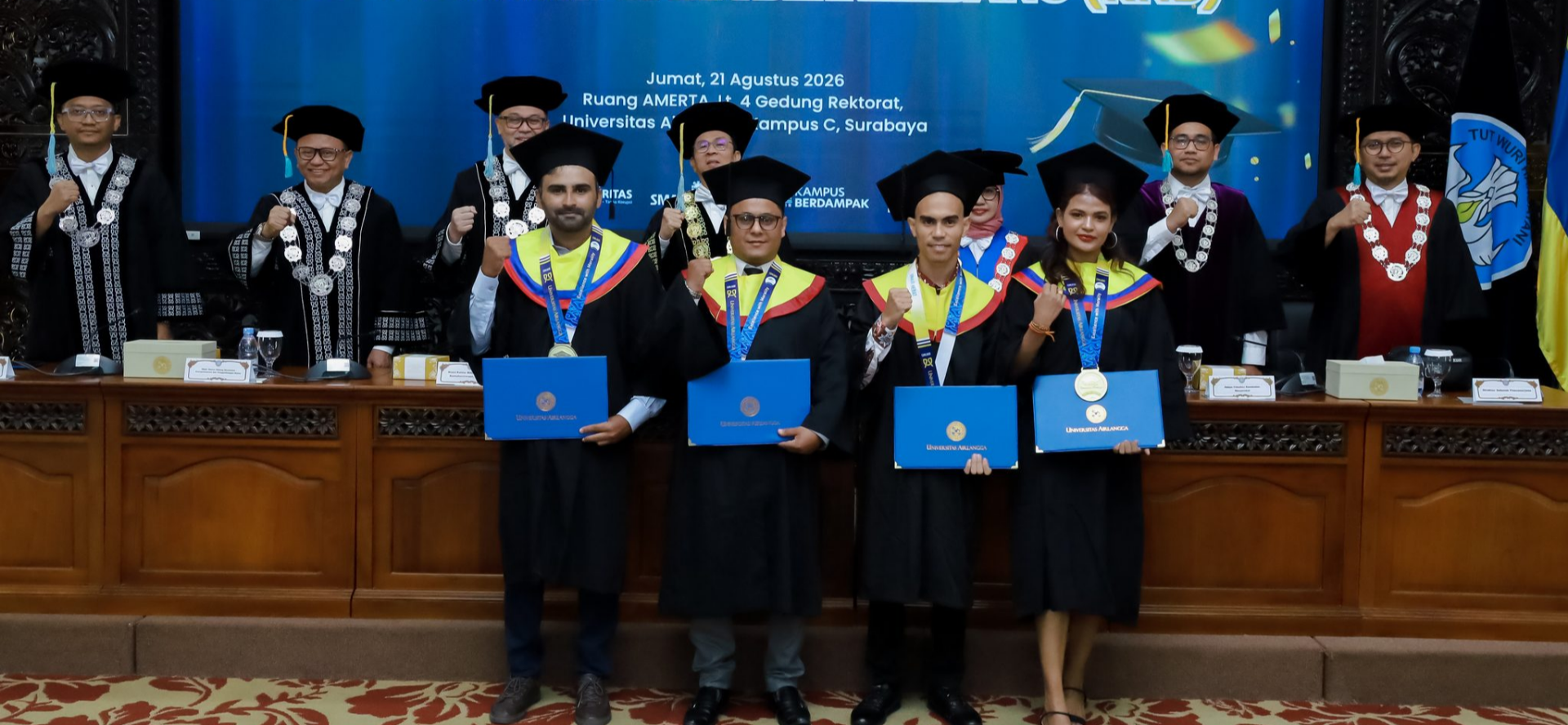
Universitas Airlangga (UNAIR) officially graduated four international students under the Developing Countries Partnership (KNB) Scholarship . The ceremony was held on Friday (August 21, 2026) in the Amerta Room, Rectorate Building, MERR-C Campus. Among this year’s graduates were four international students: Luxshika Tharmarajah from Sri Lanka, Fernando Sico Elo from East Timor, Mojeeb Abdo Abdullah Qasem from Yemen, and Faisal Aftab from Pakistan.

In his remarks, UNAIR Rector Prof Dr Muhammad Madyan MFin praised the students for their hard work, dedication, and every effort they had put into completing their studies. He noted that the KNB program was more than an academic scholarship, it also served as a bridge for strengthening friendship, cooperation, and understanding between nations.

“During your time here, you not only gained knowledge, but also became part of the larger Universitas Airlangga family, while helping maintain strong relations between Indonesia and your home countries,” he said.

Prof Madyan added that he hoped the knowledge, experience, and networks the graduates had built during their studies at UNAIR would equip them to make a tangible impact, both in Indonesia and around the world. He also thanked the KNB program, the graduate school, and everyone who had supported the graduates throughout their academic journey. “Congratulations as you begin your service in your respective fields as part of your life’s journey, and take pride in being part of the UNAIR family,” he said.

Faisal Aftab, one of the graduates, described his time at UNAIR as comfortable and rewarding. Beyond his coursework, he said, the experience allowed him to learn a new language and culture while getting to know Indonesia more closely. “At first, it was difficult because of the differences in language and culture. But once I started studying, I came to love how amazing Indonesian culture is,” he explained.

Aftab said UNAIR had helped turn his dream into reality, offering facilities and opportunities he had never had access to before. “I’m truly grateful for the chance to learn from such outstanding professors. I’ve been here for three years, but it still feels like I arrived only yesterday. Given another opportunity, I would come back to Indonesia, this country has given me so much hope and knowledge,” he added.

UNAIR student learns robotic surgery in Italy

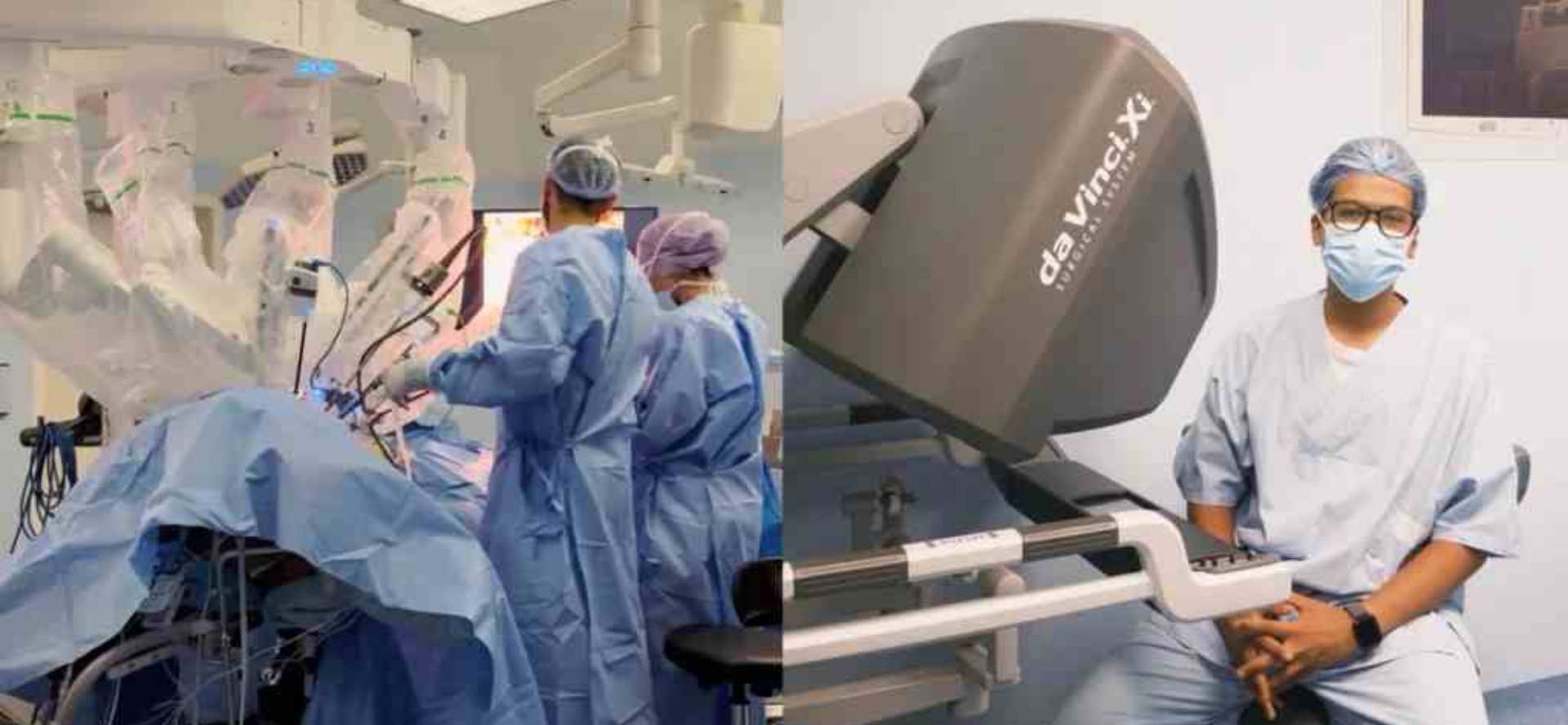
Medical student from Universitas Airlangga (UNAIR), Rizal Rachbini Mahlevi, had the opportunity to deepen his knowledge of robotic surgical technology in the Department of Urology at Ospedale Borgo Trento, Verona, Italy. The activity took place from July 27–31, 2026, as part of the student outbound program under the KKN Penyetaraan program through the Università degli Studi di Verona. The activity focused on learning about robot-assisted nephrectomy using the Da Vinci Xi robotic system. Through the program, Mahlevi gained experience observing the application of minimally invasive surgery in urological procedures, including kidney transplantation.

Mahlevi explained that his interest in urology was one of the reasons he chose to deepen his knowledge of robotic surgical technology. He noted that minimally invasive approaches have the potential to support faster patient recovery. “As technology continues to advance, surgical procedures are increasingly moving toward safer and minimally invasive approaches. These approaches benefit both patients and doctors by reducing surgical trauma and accelerating the recovery process,” he explained.

During the activity, Mahlevi joined patient visits to observe assessments and postoperative patient management, while also learning about robot-assisted surgery in kidney transplantation. He also had the opportunity to study laparoscopic mapping, the robot-assisted nephrectomy procedure, and the use of indocyanine green to assess renal tissue perfusion after transplantation.

According to Mahlevi, one of the key differences he observed while studying urology in Italy was the broader use of robotic technology. This provided healthcare professionals with more opportunities to develop their competencies in modern surgical technology. He hopes access to modern surgical technology in Indonesia can continue to be developed so that its benefits can reach more patients.

“I hope that the field of minimally invasive surgery in Indonesia can be further developed, both through enhancing the competence of medical personnel and expanding access to modern surgical technology,” he stated. As a closing statement, Mahlevi encouraged students who wish to join similar programs not to limit their learning to established systems. “Keep your curiosity alive, be willing to ask questions, engage in discussions, and seek new experiences. Make the most of every opportunity to build connections and broaden your knowledge as much as possible,” he concluded.

UNAIR students learn bird conservation

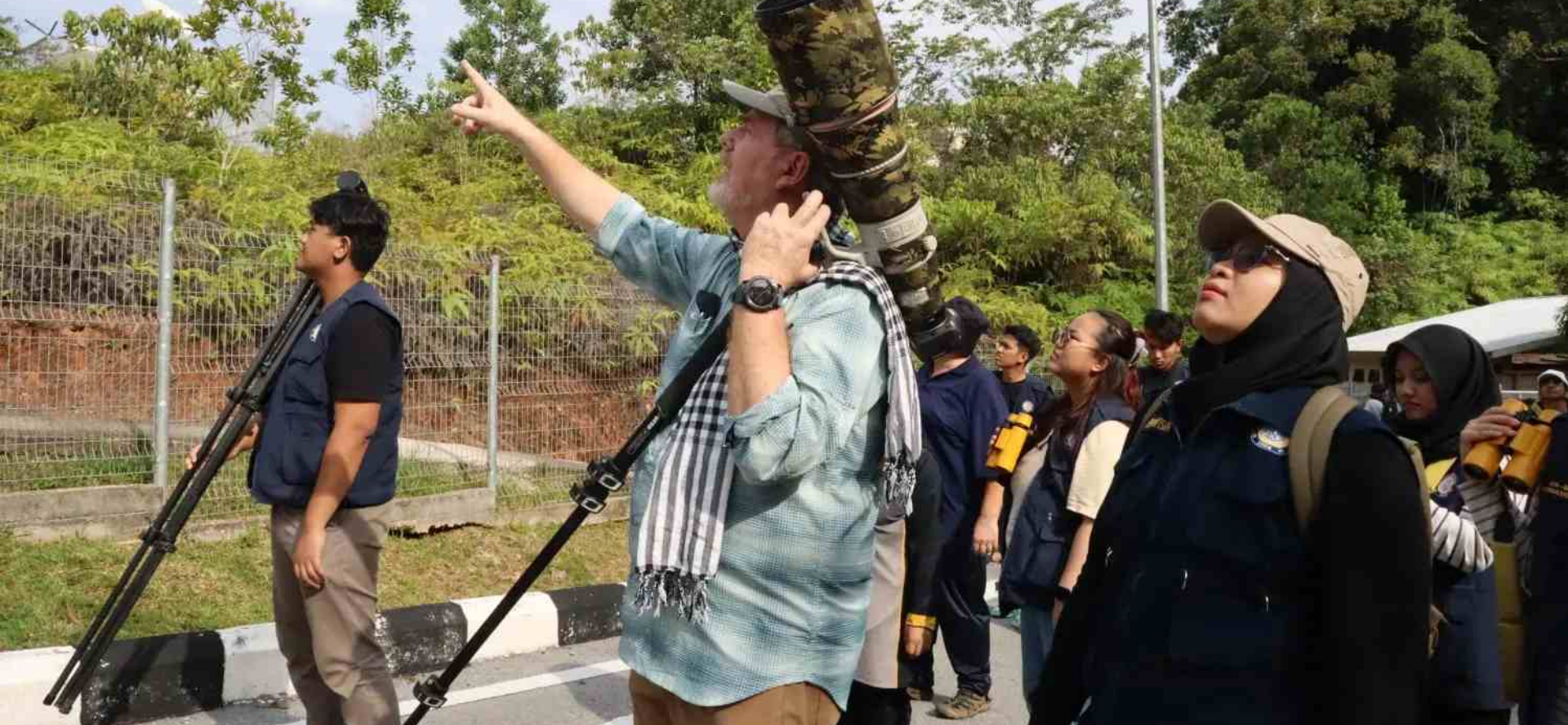
Twelve Universitas Airlangga (UNAIR) students participating in the International Belajar Bersama Komunitas (BBK) Program in Kuala Terengganu gained hands-on experience in birdwatching and citizen science at the SPAK Research Station, Universiti Malaysia Terengganu (UMT), on Tuesday (28/7/2026). The activity introduced a biodiversity conservation approach that involves active community participation in collecting scientific data.

One of the participants, Kamila Mahfudza A P from the Faculty of Public Health (FKM) UNAIR, said the activity provided a new perspective on the connection between environmental conservation and public health. She added that hands-on learning in the field helped students better understand the importance of protecting biodiversity. “This activity broadened our understanding that conservation is not limited to researchers. Communities can also contribute through simple observations that support scientific research while raising environmental awareness,” Mahfudza said.

The activity was led by Anuar McAfee, who explained birdwatching as an activity that supports scientific research and ecotourism development while also providing physical and mental health benefits. Participants were also introduced to the eBird platform, which allows the public to record bird observations and contribute to biodiversity databases. “Seeing various species firsthand in their natural habitats was a truly memorable experience. We learned that simple data collected by the community can make a significant contribution to conservation efforts,” Mahfudza added.

Through the activity, students not only gained knowledge about citizen science-based conservation but also learned the importance of collaboration between universities and communities in protecting biodiversity.

International BBK Program provides a platform for students to learn best practices that can be adapted in Indonesia, including the development of community-based conservation and ecotourism through simple and participatory scientific approaches. “We hope this experience can inspire the development of community-based conservation activities in Indonesia while strengthening international collaboration in education and environmental conservation,” Mahfudza concluded.

RSKKA sails to Sumenep Islands

For nearly a decade, Australia and Indonesia have maintained a strong and sustainable diplomatic partnership. Their development cooperation spans various sectors, including education, infrastructure, climate resilience, governance, and social inclusion. Since 2024, Australia and Indonesia have collaborated under the Australia–Indonesia Development Partnership Plan 2024–2028. The partnership focuses on promoting equitable and sustainable economic transformation, strengthening climate-resilient communities, and enhancing institutional capacity.

Direct aid program

In East Java and Central Java, the Australian Consulate General in Surabaya supports local communities through the Direct Aid Program in collaboration with the Ksatria Airlangga Hospital Ship (RSKKA). This partnership aims to improve equitable access to healthcare services for island communities. The Australian Consulate General recognizes that health promotion, disease prevention, and early detection play a crucial role in reducing the impact of life-threatening illnesses. However, access to these essential healthcare services remains limited for many people living in remote and island communities. The collaboration between RSKKA and the Australian Consulate General therefore provides renewed hope for these underserved populations.

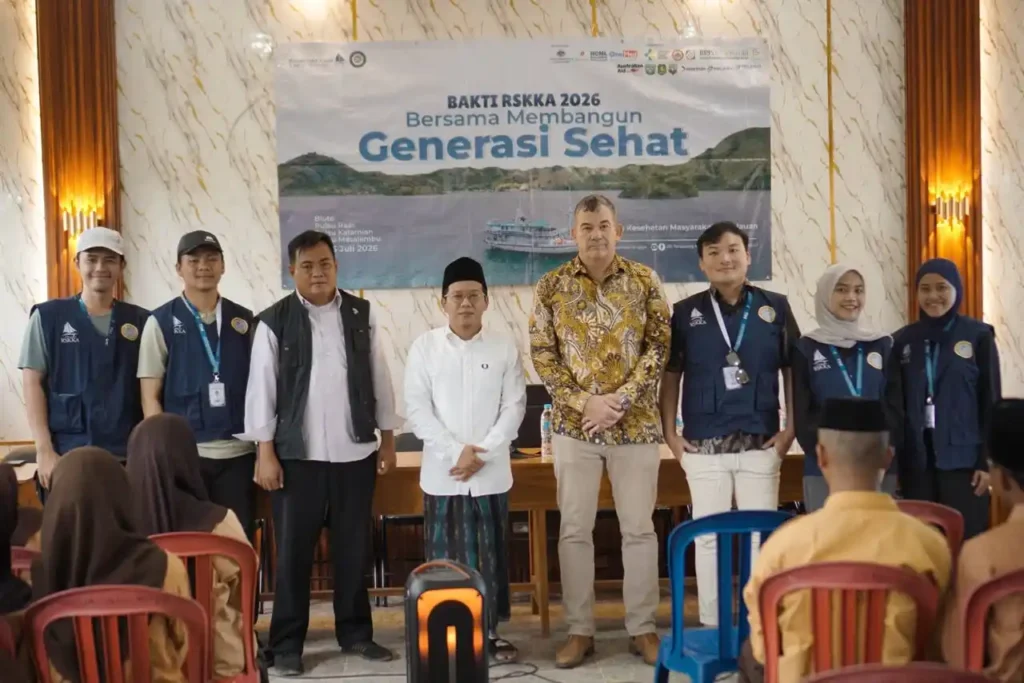
The RSKKA UNAIR team, the Australian Consulate General, local government representatives, and community leaders pose together during the opening ceremony of Bakti RSKKA 2026. (Photo: RSKKA Media Team)

As part of its support for the collaboration, the Deputy Consul General of the Australian Consulate General in Surabaya attended the ceremonial departure of RSKKA at Kalimas Port, Surabaya, on Sunday (July 12, 2026). The hospital ship will deliver health education and medical services directly to residents in remote island communities, particularly in addressing serious diseases. By reaching people in their own communities, the initiative is expected to improve public health outcomes and strengthen community well-being. Furthermore, Glen Askew, representing the Australian Consulate General in Surabaya, also visited healthcare activities on Raas Island. He attended the opening of a health education seminar on sexual health and early marriage for students of MA Sirajul Akhyar on Raas Island.

Sustainable partnership

“Australia and Indonesia have a long history of working together to address the health challenges facing our shared region,” said Australia’s Minister for International Development, Small Business, and Multicultural Affairs, the Hon. Dr. Anne Aly MP, during her visit to Indonesia.

The partnership continues through the Australia–Indonesia Partnership for Health Transformation (KITA SEHAT). The eight-year initiative aims to promote the well-being and resilience of families and communities across Indonesia. It is designed to strengthen Indonesia’s capacity to prevent, detect, and respond to infectious diseases affecting both humans and animals, as well as public health emergencies. The program also focuses on building a resilient healthcare system capable of delivering equitable and inclusive primary healthcare services.

In addition to the Australian Consulate General, Bakti RSKKA 2026 also received support from various partners, including HCML SKK Migas and OneMed as sponsors. The Indonesian Ministry of Health, the Indonesian Medical Association (IDI), BPJS Kesehatan, Dr. Soetomo Regional General Hospital, Aperindo, Pelindo, and the Sumenep Regency Government, and Faculty of Medicine Universitas Airlangga also contributed to the implementation of the community service program. “Hopefully, through this collaboration, more partnership programs will be established with the Ksatria Airlangga Hospital Ship to further improve the quality of healthcare services, especially for island communities,” said dr. Agus Harianto, Sp.B., Director of RSKKA. (*)

INUCost strengthens research collaboration

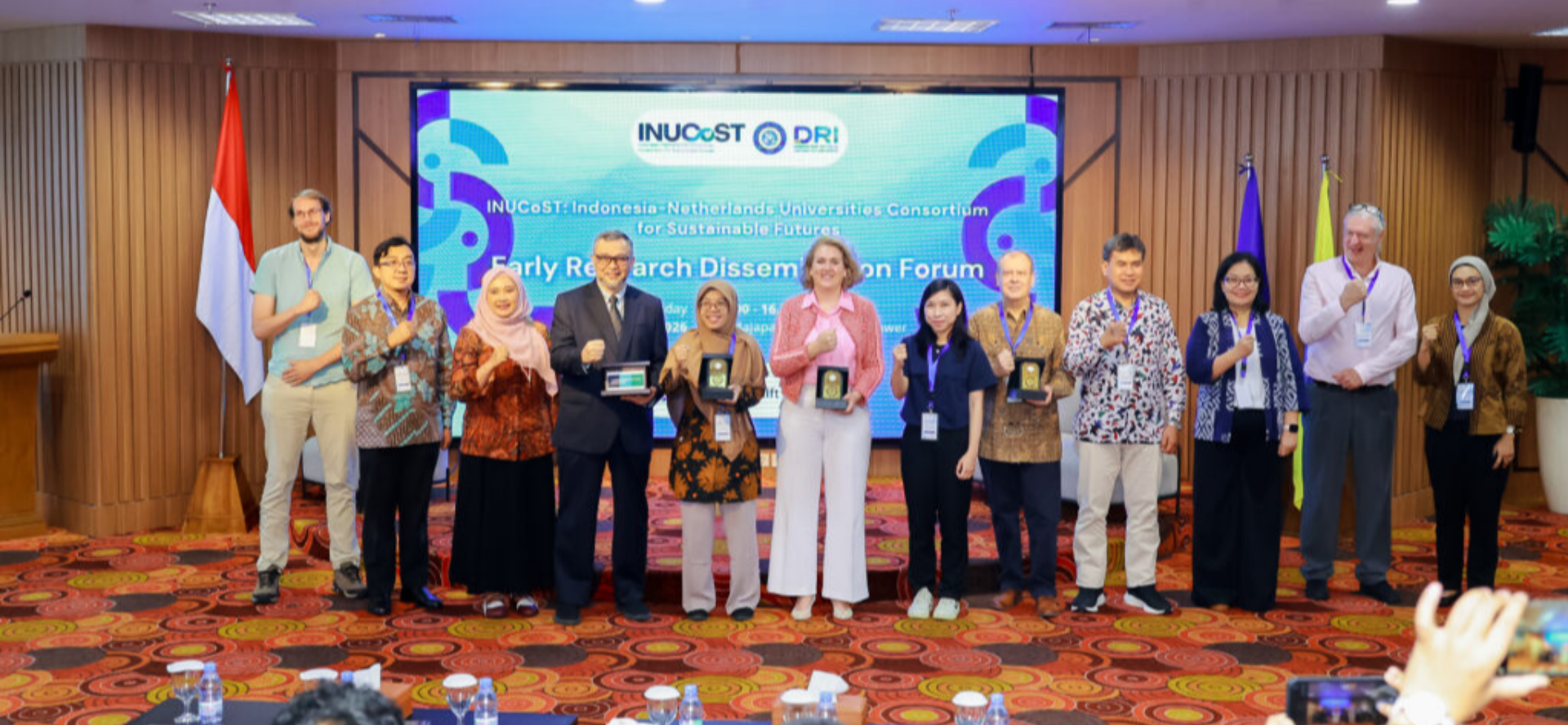
International research collaboration serves as a vital key to delivering solutions for various global challenges. Universitas Airlangga (UNAIR) reaffirmed this commitment through its Directorate of Research and Innovation by hosting the Early Research Dissemination Forum for the Indonesian-Netherlands Universities Consortium on Sustainable Futures (INUCoST). The event took place on Monday, June 29, 2026, at the Majapahit Room, ASEEC Tower, Dharmawangsa-B Campus, UNAIR. This forum served as a platform to monitor the progress of eight collaborative research projects funded by the 2024–2026 INUCoST grant while simultaneously strengthening the synergy between Indonesian higher education institutions and the Leiden-Delft-Erasmus (LDE) Universities to build a sustainable future.

The Vice Rector for Academic, Student, and Alumni Affairs, Prof Ir Mochammad Amin Alamsjah MSi PhD, stated that this forum was far more than a mere agenda for presenting preliminary research findings. According to him, the event provided a reflective space for researchers to evaluate their milestones. Furthermore, it offered an arena to exchange cross-disciplinary ideas while reinforcing the foundation of the Indonesian-Dutch research partnership. “This forum is not just a formality to present initial research findings. It is also an opportunity to reflect on progress, exchange ideas across disciplines, and strengthen partnerships. This is what will shape the next stage of our collaborative research,” he noted.

Prof Alamsjah added that the research themes in INUCoST, ranging from biodiversity, artificial intelligence, and smart cities to energy transition hold immense relevance to global challenges while supporting Indonesia’s sustainable development agenda. He emphasized that transnational collaboration is a critical factor in producing research that is not only academically excellent but also impactful for society. “At Universitas Airlangga, we believe that impactful research is born from collaboration that transcends institutional and national boundaries. Excellent research does not merely generate high-quality publications, but also provides tangible benefits to society. Ultimately, it also supports the achievement of the Sustainable Development Goals (SDGs),” he stated.

The Education and Science Attache of the Embassy of the Netherlands in Indonesia, Yvonne Klers, commended the close academic relationship between Indonesia and the Netherlands, which has continued to flourish over recent years. Throughout her service of more than three years in Indonesia, she has witnessed an equally profound enthusiasm from both nations to foster collaboration in higher education and research. “Universities in Indonesia and the Netherlands are truly well-connected and share the same passion for collaboration. It is this mutual enthusiasm from both parties that keeps this cooperation growing,” she expressed.

Furthermore, Yvonne Klers evaluated INUCoST as an exemplary model of international collaboration capable of addressing shared challenges through multidisciplinary research. In her view, the eight research projects possess great potential to generate local solutions that can be applied on a global scale. “INUCoST is a prime example of how a consortium can collaborate on a multi-year project to bring local solutions to global challenges. This program holds vast potential to create positive impact and transformation for communities in Indonesia, the Netherlands, and the world,” she stated.

Commitment toward the program’s sustainability also came from various stakeholders. The Head of the Research Grant Division at LPDP, Adisty Dwi Lestari, revealed that LPDP, alongside the Ministry of Higher Education, Science, and Technology, has optimally funded the eight INUCoST research projects. “Moving forward, we will strengthen research collaboration while integrating it with scholarship programs. This ensures that the development of research and human resources progresses cohesively in accordance with national priorities,” she explained.

In alignment with this sentiment, the Head of the Research Division at the Ministry of Higher Education, Science, and Technology, Erlin Puspaputri SSi MSc, praised UNAIR for serving as the inaugural host of INUCoST. She expressed hope that this forum would generate high-quality scientific outputs while solidifying the academic partnership between Indonesia and the Netherlands. “We hope the INUCoST projects produce meaningful scientific outputs. Additionally, we hope it strengthens the academic partnership between the two countries, and most importantly, delivers a tangible impact for the community,” she concluded.

Through this forum, UNAIR has once again reaffirmed its active commitment to building international research collaborations. The meeting served not only as a space to disseminate preliminary research outcomes, but also as a strategic forum for both nations. It provided an opportunity to design future innovations and continuous cooperation between Indonesia and the Netherlands in realizing a more sustainable future through impactful research.


UNAIR – OIC COMSTECH expand collaboration

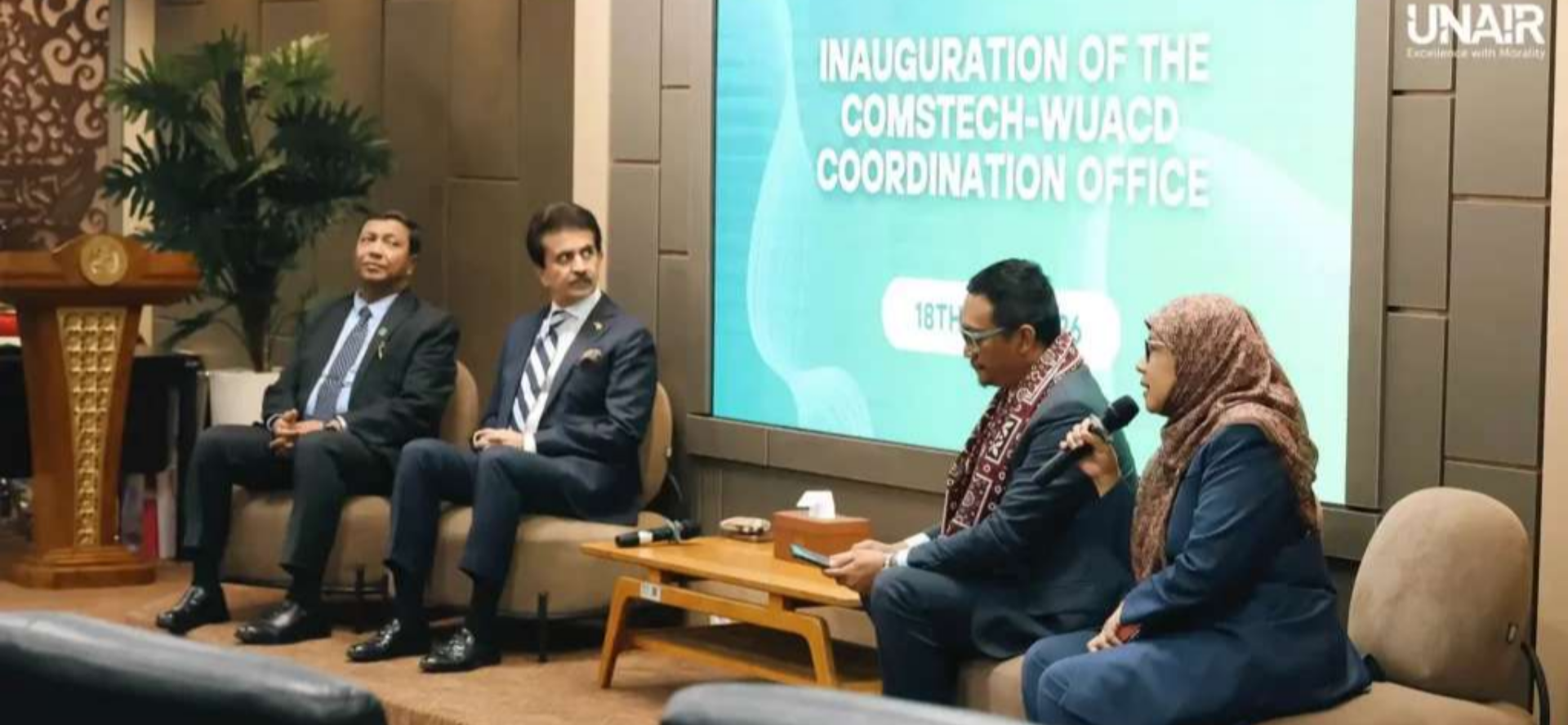
Collaboration between Universitas Airlangga (UNAIR) and OIC-COMSTECH (Organization of Islamic Cooperation-Standing Committee for Scientific and Technological Cooperation) grows stronger. One form of this collaboration is marked by the inauguration of the OIC-COMSTECH office at WUACD Secretariat, ASEEC Tower, Dharmawangsa-B Campus UNAIR. Not only about office inauguration. Cooperation between UNAIR and OIC-COMSTECH, which is based in Pakistan, also brings various benefits for both parties, particularly in the field of diplomacy. This cooperation also received support from the Government of Pakistan.

Ambassador of Pakistan to Indonesia, HE Zahid Hafeez Chaudhri explained that Pakistan opens great opportunities for Indonesian citizens, especially UNAIR, to conduct international research. This is marked by signing of Memorandum of Understanding (MoU) in educational and medical fields. This cooperation will also open doors wide for joint research, faculty exchange, and student mobility for UNAIR. “We are open to faculty exchange, joint research, and student mobility. In the health sector, Pakistani doctors will come to Indonesia to help with services. Likewise, the same goes for medical students of Universitas Airlangga,” Ambassador Chaudhri explained.

Not only educational diplomacy, both Indonesia and Pakistan, represented in this matter by UNAIR and OIC-COMSTECH, also open cooperation to face geopolitical issues. Both Indonesia and Pakistan are countries with large Muslim populations. Ambassador Chaudhri emphasized that this massive demographic strength must be converted into real influence on the global stage. Therefore, this collaboration between Pakistan and UNAIR must be welcomed well by the community. “The community must see that cooperation between the Embassy of Pakistan and Universitas Airlangga will bring broad impact, especially for UNAIR students who want to go to Pakistan to conduct research,” he emphasized.

“Please consider Pakistan as your second home. We look forward to the presence of Universitas Airlangga academic community there,” Ambassador Chaudhri concluded.

Three universities join WUACD

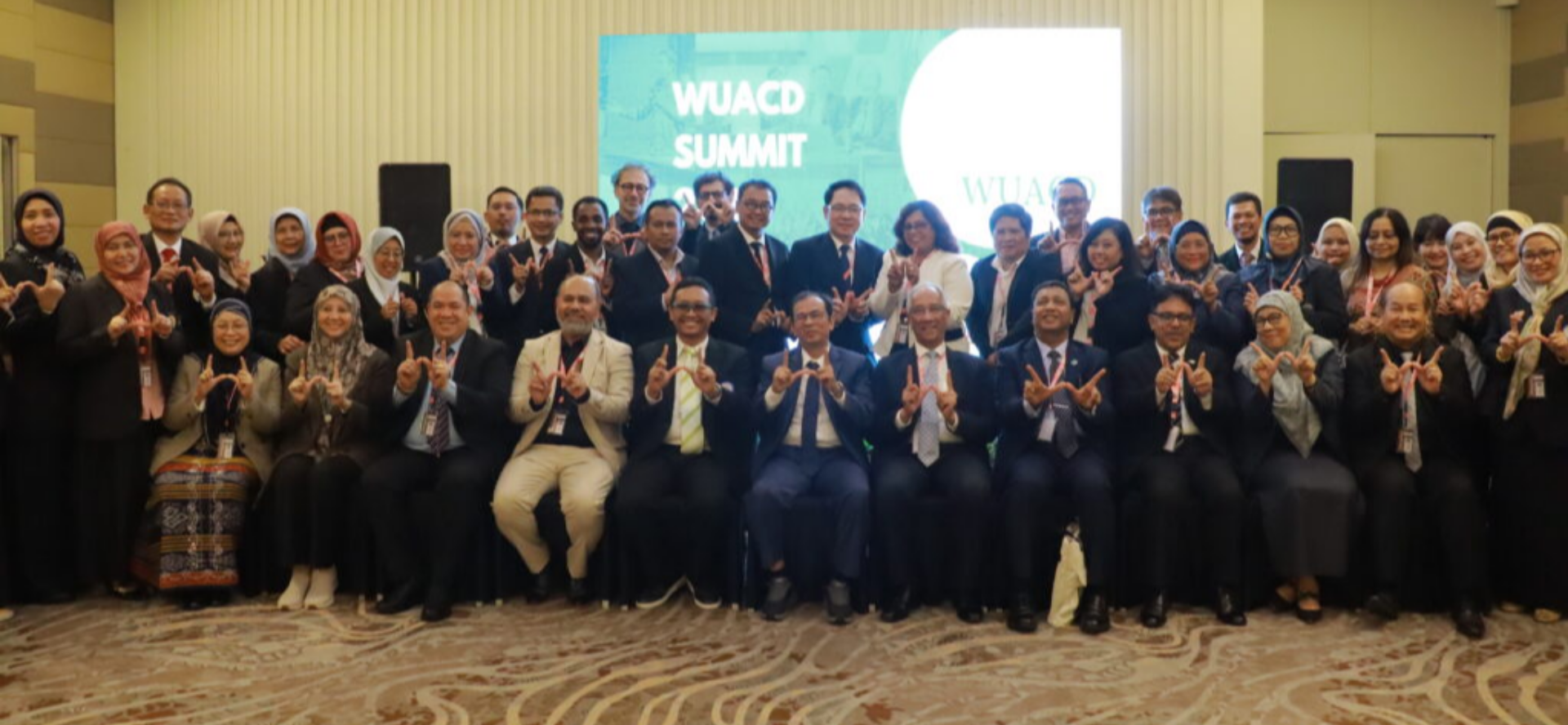
Universitas Airlangga (UNAIR) strengthens its global leadership through Rector Meeting at World University Association for Community Development (WUACD) Summit 2026. The forum results in international network expansion through signing of Letter of Commitment by Eastern Visayas State University, Mindanao State University from Philippines, and Bayero University Kano from Nigeria. These three institutions further expand WUACD collaboration from Southeast Asia to Africa. WUACD President and Rector of Universitas Airlangga, Prof Dr Muhammad Madyan SE MSi MFin expresses that addition of new members proves growing trust of world universities in WUACD. “Over the past year, WUACD continues to strengthen its role as a collaboration platform in education, research, community service, and international engagement. We also welcome three new institutions that we believe will open wider collaboration opportunities for all WUACD members,” Prof. Madyan said.

Prof Madyan added that Rector Meeting also serves as a forum to evaluate organization achievements in the first half of 2026 and map out future strategic direction of WUACD. Discussion results will be translated into collaborative programs within four main pillars: Innovative Education and Lifelong Learning, Social Development and Multiculture, Health and Environment, and Sustainable Economy. In addition to membership expansion, the meeting marks strengthening of strategic partnership between WUACD and COMSTECH. This collaboration will open wider opportunities for universities in development of education, research, and community empowerment.

COMSTECH Coordinator General, Prof. Choudhary assessed that international collaboration is key to facing constantly changing future of education. “This meeting is celebration of friendship. Friendship to develop science and empower community. Building future can only be done through collaboration, because education must remain relevant amidst uncertain future,” Prof. Choudhary said. Prof. Choudhary added that future universities need to adopt various global adjustments, including flexible, project-based learning supported by artificial intelligence, while still prioritizing human skills.

New members ready to expand community service impact

WUACD commitment has received positive response from new members. Representative of Bayero University Kano, Dr Aminu Muhammad, mentions that signing of Letter of Commitment holds great significance for his institution. “The commitment we receive from UNAIR through WUACD means a lot to us. We are ready to move forward together to realize various forms of collaboration,” Dr Muhammad said.

According to Dr. Muhammad, Bayero University is ready to develop cooperation through student mobility, student exchange, and community service programs. He also invited more universities to join WUACD. “The essence of education is returning to the community and presenting real impact. Therefore, I invite more universities to join WUACD. Let’s bring wider benefits to the community,” Dr. Muhammad concluded.

Through membership expansion, partnership strengthening with COMSTECH, and formulation of organization priority programs, WUACD under UNAIR leadership further confirms its role as a global university network that delivers impactful collaboration for the world community.

UNAIR and Khalifa Uni. expands partnership

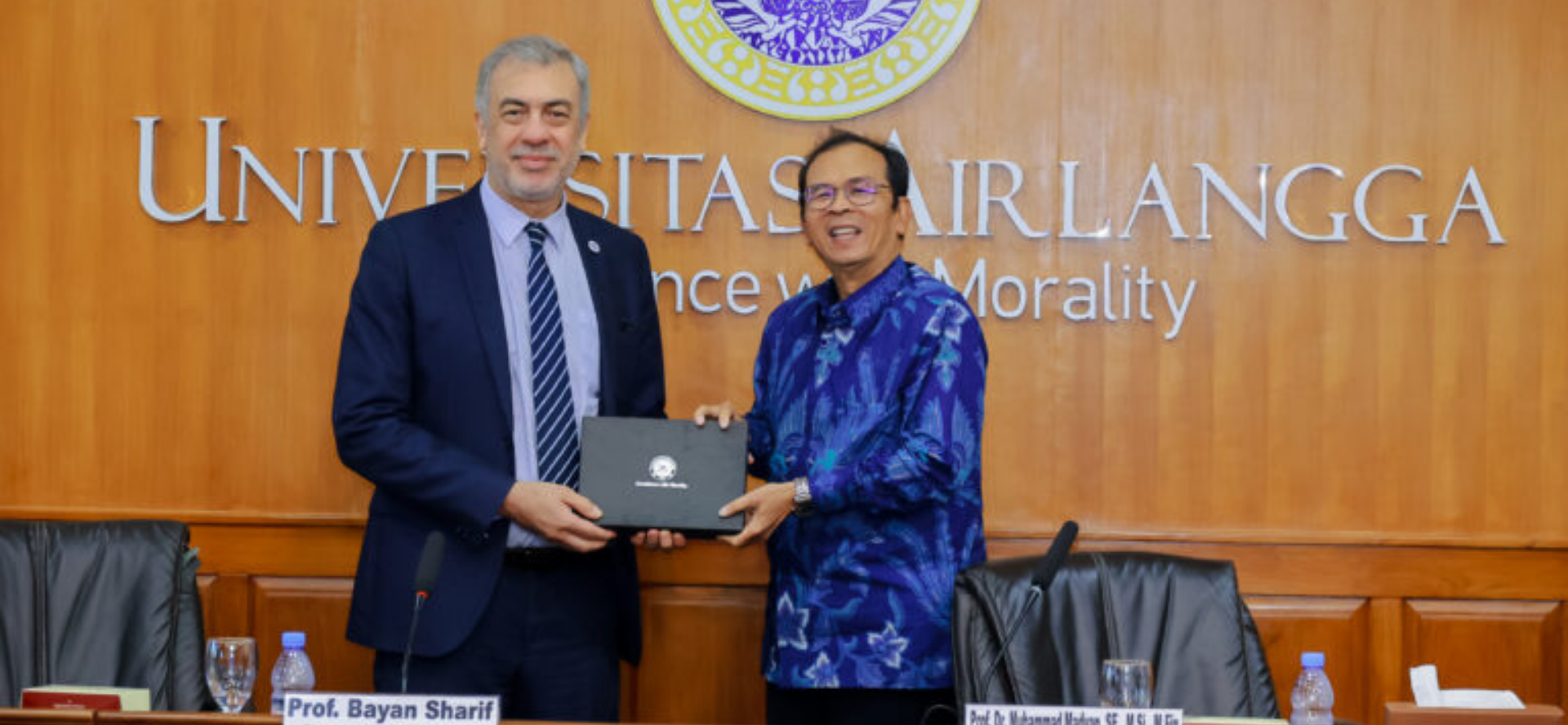
Universitas Airlangga (UNAIR) hosted an honorary delegation from the United Arab Emirates’ Khalifa University on Thursday, June 25, 2026. The meeting, held in the Balairua Plenary Room at Campus Management Office, focused on exploring potential academic collaborations and deepening bilateral ties on the global stage.

UNAIR Rector Prof. Dr. Muhammad Madyan, S.E., M.Si., M.Fin., led the university’s leadership team in welcoming the delegation. The Khalifa University delegation was led by Provost Prof. Bayan Sharif and Dr. Ashraf Najdawi (Acting Vice President, External Relations).

During his opening remarks, Prof. Madyan expressed immense pride in hosting representatives from one of the UAE’s leading higher education institutions. He noted that the timing of the visit was particularly auspicious, aligning with a major milestone for the Indonesian university.

“We are delighted and deeply honored by this visit, which comes at a momentous time as Universitas Airlangga celebrates a significant leap in the QS World University Rankings, climbing from 287th to 276th globally,” Prof. Madyan said.

Prof. Madyan emphasized that this milestone underscores UNAIR’s enduring commitment to elevating educational quality, research output, and global prestige. He expressed optimism that both institutions would translate these discussions into actionable programs that deliver meaningful outcomes for their respective academic communities.

Responding to the warm welcome, Prof. Sharif praised UNAIR’s hospitality and offered high commendations for the institution. He shared his impressions of the campus alongside a brief overview of Khalifa University’s own rapid institutional growth. “Thank you very much for hosting us. It is an immense honor and pleasure to visit Universitas Airlangga, and this marks my very first time traveling to Indonesia,” Prof. Sharif noted.

He expressed great admiration for the sheer scale of UNAIR, which was founded in 1954, contrasting it with his own institution’s trajectory. “Reviewing your university’s metrics is truly remarkable, especially considering we are a relatively young institution preparing to celebrate our 10th anniversary next year,” he added.

Closing the session, Prof. Sharif warmly embraced UNAIR’s proposed collaborative frameworks and affirmed his institution’s readiness to formalize the partnership. “We are thrilled to be here, and the proposed areas of cooperation align perfectly with our strategic goals. We share a deep commitment and look forward to working closely with UNAIR to advance these joint initiatives,” he concluded.

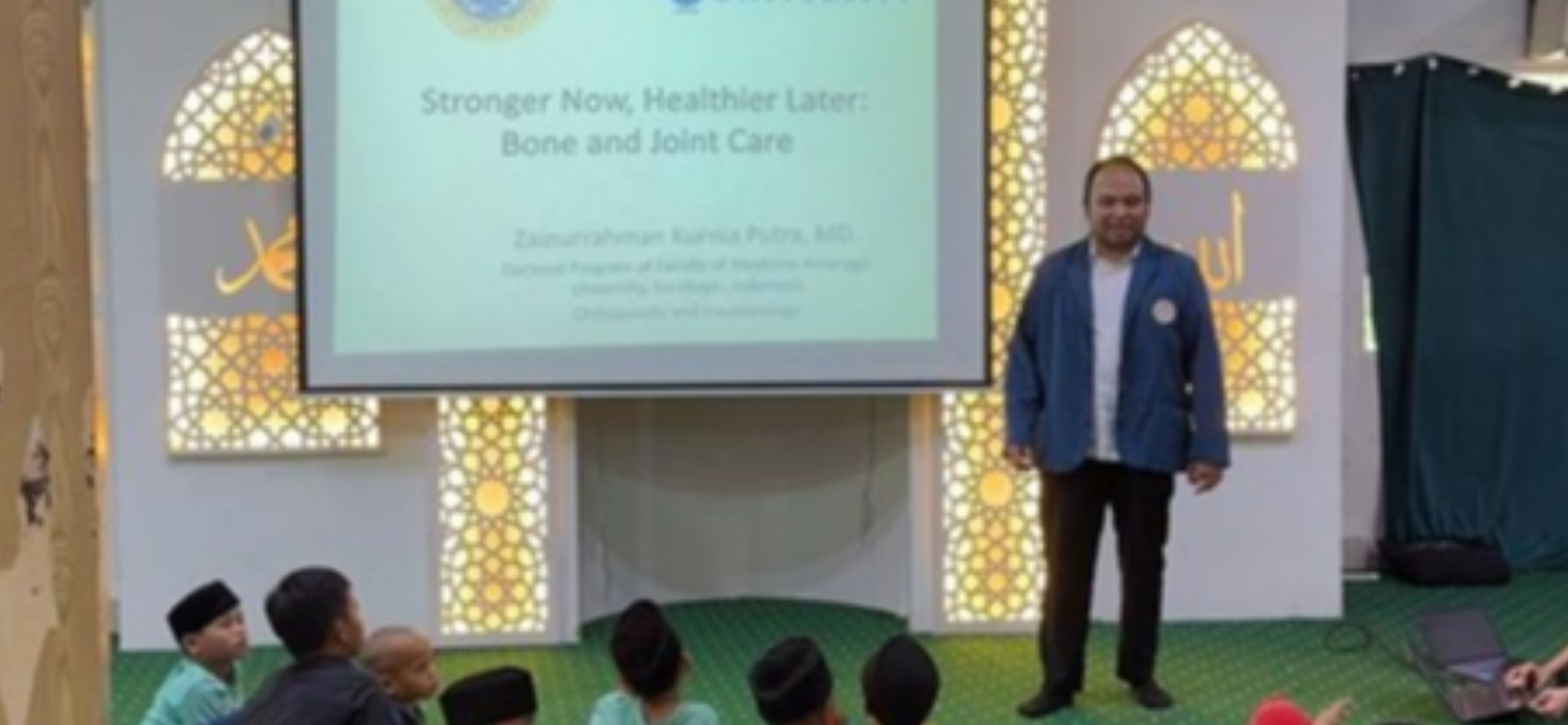
FK promotes bone health awareness in Malaysia

Musculoskeletal disorders linked to modern lifestyle changes became the focus of an international community service program organized by doctoral students from the Faculty of Medicine (FK) Universitas Airlangga (UNAIR). The interactive educational outreach and consultation services were held at the Pusat Komuniti Limpahan Kasih One Stop Centre Aman Bistari in Puchong, Kuala Lumpur, Malaysia, on Wednesday (May 20, 2026).

The session on the importance of maintaining bone density across all age groups, from children to older adults, was delivered by dr. Zainurrahman Kurnia Putra, SpOT, MKedKlin. He emphasized the growing number of musculoskeletal complaints caused by sedentary habits, including prolonged sitting.

“Every physical activity matters. Daily movement can serve as a long-term investment in bone density, helping prevent bone fragility later in life. Every move matters,” dr. Zainurrahman said.

In addition to the educational presentation, the student delegation also provided one-on-one consultation sessions. One senior participant, Rabaah, 55, used the opportunity to seek advice regarding physical discomfort and ways to maintain joint mobility in older age.

The lively and successful event was made possible through the strong collaboration of 18 doctoral students from FK UNAIR. The delegation reflected interdisciplinary teamwork involving physicians, midwives, nurses, medical laboratory technologists, researchers, lecturers, and public health specialists. Team members worked together to facilitate consultations, guide participants, and assist children during movement simulations.

The engaging format of the educational session generated enthusiasm among attendees. Fatin Nur Huda, 11, said she greatly enjoyed the program. “It was really exciting! Now I want to join more running competitions and activities so I can exercise more often,” she said.

Zahwa Arsy Azzahra, ST, MSi, a public relations representative for the International Community Service and Student Outbound Program of the Doctoral Program in Medical Science, said the team intentionally expanded information dissemination through media platforms to strengthen promotive and preventive health education efforts.

“We hope the message about maintaining physical health from childhood through old age can reach a broader community,” she said.

FKp UNAIR expands research partnership

The Faculty of Nursing (FKp) Universitas Airlangga (UNAIR) has further strengthened its international academic network through a Full-Time Staff Outbound program at the Faculty of Nursing, Prince of Songkla University (PSU) in Thailand, held from May 18–22, 2026. The initiative was part of an ongoing international research initiative titled “Decision-Making Support Model for ICU Nurses in Providing Culturally Based Palliative Care.”

Representing FKp UNAIR were Dr Yulis Setiya Dewi Skep Ns MNg and Dr Ninuk Dian Kurniawati SKep Ns MANP. During the five-day program, the delegation engaged in a series of academic activities with PSU faculty members, including joint research discussions, collaborative data analysis, research model development, and meetings aimed at exploring future strategic partnerships.

According to Dr. Yulis Setiya Dewi, the program was intended to enhance the quality of the ongoing study while creating broader opportunities for international collaboration in critical care and palliative nursing research. “Through intensive exchanges with PSU researchers, we gained valuable academic perspectives that will contribute to refining the Decision-Making Support Model for ICU nurses delivering cultural-based palliative care,” she said.

At a Joint Research Meeting on May 19, 2026, research teams from both universities reviewed findings from quantitative and qualitative studies and conducted collaborative data analysis to strengthen the reliability and rigor of the research. The discussions also produced a framework for developing two manuscripts that are expected to be submitted to internationally recognized academic journals.

Expanding double-degree initiatives

Beyond research collaboration, the UNAIR delegation met with PSU’s Deputy Dean for Postgraduate Studies and Deputy Dean for International Affairs. The discussions focused on opportunities to establish double-degree and joint-degree programs at the graduate level. The meetings also explored potential collaborative projects in cardiovascular critical and emergency care, as well as aesthetic nursing research, an area in which PSU has established significant academic expertise.

On May 21, 2026, the UNAIR delegation participated in a strategic meeting with the leadership of PSU’s Faculty of Nursing. The session resulted in a mutual commitment to expand cooperation in research, international publications, faculty and student exchanges, and the development of long-term global academic partnerships.

A notable outcome of the visit was the addition of two international scholars from PSU to FKp UNAIR’s Academic Peer List (APL): Prof. Dr. Waraporn Kongsuwan, a specialist in Critical Care Nursing, and Dr. Kanthima Meesoonthorn, an expert in Cardiovascular Nursing. Their participation is expected to further support the faculty’s internationalization efforts and strengthen the quality of its scholarly publications.

The program also reinforced existing international agreements, generated plans for future joint research initiatives, and opened discussions on postgraduate co-supervision, student exchange opportunities, scientific writing summer camps, and staff mobility programs.

Through the Full-Time Staff Outbound initiative, the Faculty of Nursing at UNAIR reaffirmed its commitment to advancing the internationalization of higher education and enhancing the university’s standing as a globally engaged institution through impactful academic and research collaborations.