CESAER’s event hosted at European Parliament

On 20 April 2026, a representative of the International Collaboration Department at Igor Sikorsky Kyiv Polytechnic Institute joined online CESAER’s high-level policy event, “R&I in the next EU budget: investing in Europe’s prosperity and competitiveness,” hosted at the European Parliament.


This event placed research and innovation at the centre of the discussion on Europe’s future priorities and investments. It moved beyond a narrow budgetary debate and instead addressed a strategic question: what must Europe invest if it is serious about delivering on its ambitions?


In this context, the event examined the case for approximately €220 billion for FP10 as a credible and politically coherent baseline for a European Union seeking to strengthen its competitiveness, prosperity and resilience, as reflected in the draft reports on FP10 by the European Parliament.


The discussion explored how research and innovation should be understood not as policy silos, but as a foundational capability underpinning progress across Europe’s key priorities.


Participants were also discussing cross-border excellence as a means to pull talent at the European level. They underlined the importance of FP10 capable of functioning as a magnet for talent, including through association with third countries, from a geopolitical perspective.


A strong FP10 would therefore be about far more than research policy alone. It would speak to Europe’s capacity to drive economic strength, industrial renewal, security, preparedness, sustainability, public health, digital leadership and societal well-being.


According to Manuel Heitor, Professor at Portugal’s Instituto Superior Técnico and Chair of European Commission expert group on the future of the Horizon Europe key funding programme for research and innovation, experts have clearly calculated €220 billion for FP10 to accelerate research and innovation. By comparison, the United States spends some €300 billion more annually for R&D than Europe.


“While we debate €175 versus €200 billion at EU level, the real comparison towards global leaders is measured in trillions,” Mattias Björnmalm, Secretary General of the CESAER association (Conference of European Schools for Advanced Engineering Education and Research), wrote on LinkedIn. “At times, it feels like we are arguing about how big or small our puddle should be, while a waterfall is roaring just around the corner.”


Bertrand Bouchet, CEA (Commissariat à l’énergie atomique) Representative in Brussels, acknowledged Europe’s relatively low capacity to transform research results into commercial innovation as the weakness.


Panellists highlighted a transfer to innovation through support for startups under Pillar Three – Innovative Europe. In essence, Europe needs competitiveness based on innovation, increasing productivity, and the high-quality products that could be sold worldwide. In addition, it was pointed out that really guaranteeing the green transition in the digital era can only be feasible with more research and innovation. A more ambitious, integrated approach would boost an increase of 2.6% of GDP by 2035.


René Repasi, Member of European Parliament, compared Horizon Europe to one of the shining stars in the world in terms of innovation, thanks to the European Research Council in particular.


In conclusion, MEP Hélder Sousa Silva emphasised the need to ensure predictable and sufficient resources for Horizon Europe in consideration of a long-term nature of financing projects.


https://www.linkedin.com/posts/mattiasbjornmalm_while-we-debate-175-versus-200-billion-ugcPost-7451995544849166336-Zf4B/?utm_source=social_share_send&utm_medium=android_app&rcm=ACoAAAT4658Bx0WxESHlPYprckRFB0DFXBXwuxg&utm_campaign=share_via


https://research-matters.eu/wp-content/uploads/2026/04/mheitor-FINAL-text-EP-20april2026.pdf

KPI expands cooperation in cybersecurity

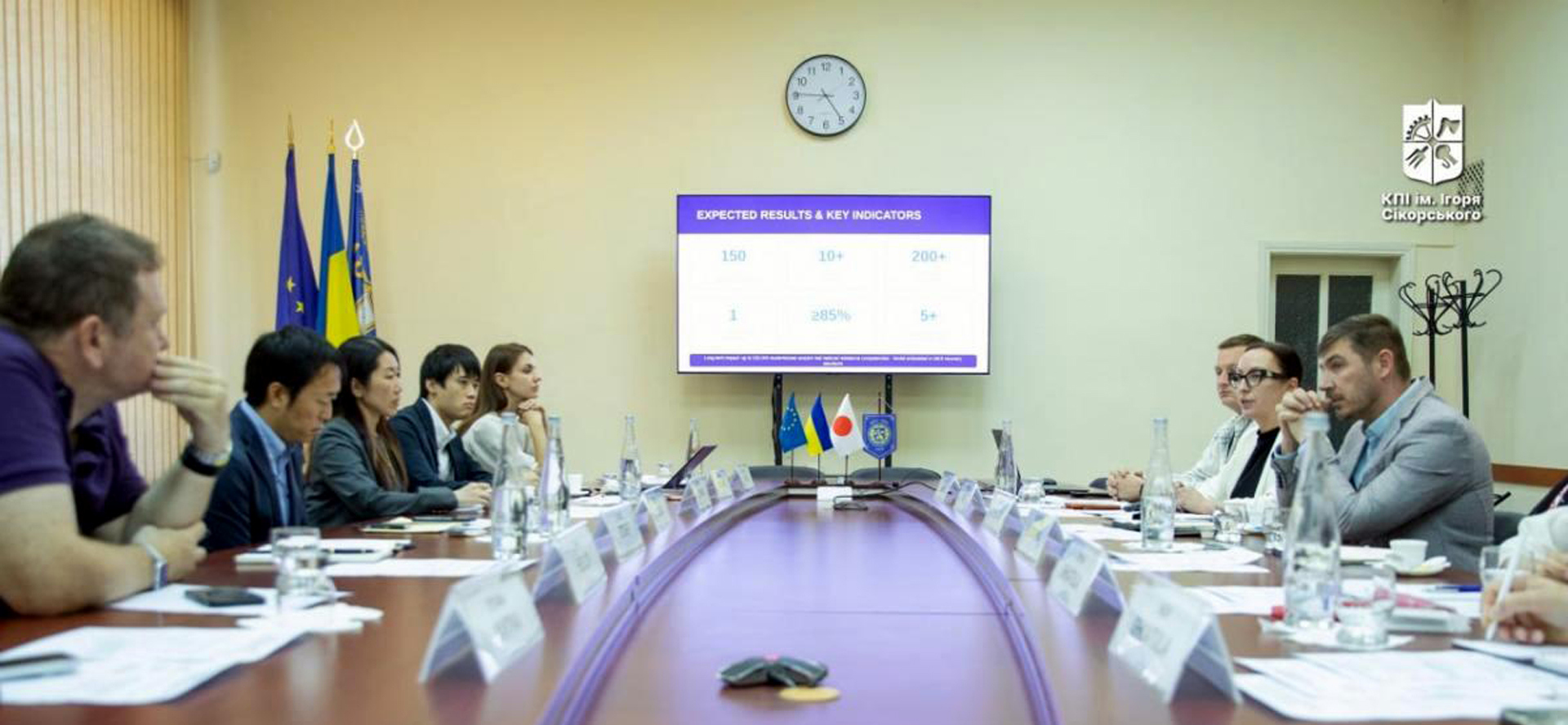
A delegation of the Nihon Cyber Defence company (NCD), led by CEO Cartan Joseph McLaughlin, visited the Igor Sikorsky Kyiv Polytechnic Institute (KPI). NCD takes a keen interest in collaborating with Kyiv Polytechnic, which flaunts its solid scientific schools in the domains of cyber security, artificial intelligence and IT in general, the more so as university’s student teams have achieved striking results in international Capture the Flag competitions.


The university administration and representatives of the Institute of Physics and Technology (https://t.me/dekanat_fti) participated in the meeting with the NCD delegation to discuss potential areas of cooperation. Among them were cybersecurity and the defence of critical infrastructure; support for projects on the recovery and reconstruction of critical infrastructure; and joint efforts to counter information threats including information manipulation and interference by foreign actors.


In addition, they considered other potential points for collaboration, including R&D projects with Japanese universities; as well as scholarship programmes for Ukrainian students.


The next step is to finalise the relevant agreements and to define the concrete formats of cooperation.


Headquartered in Tokyo, NCD is a global cyber security company protecting and supporting critical national infrastructure, governments, large organisations and small, medium enterprises from the increasing impact of debilitating cyber-attacks, which continue to increase in frequency and complexity.

KPI students attend workshop on AI in robotics

The Igor Sikorsky Kyiv Polytechnic Institute (KPI) held a workshop under the theme “AI in Robotic Systems for Defence Applications,” organised in collaboration with the International Committee of the Red Cross (ICRC).


In particular, 32 students from the Institute for Applied System Analysis, the Faculty of Informatics and Computer Engineering, and the Faculty of Sociology and Law (FSL), together with ICRC experts, worked on software solutions that comply with the rules of international humanitarian law (IHL).


Following introductory lectures, student teams developed concepts of robotic systems and presented them to the experts.


Among the key issues the participants explored were whether an algorithm may make decisions in place of a human, and when this becomes unacceptable; how to retain human control over AI systems; how cyber operations fall under the purview of IHL; and where the line should be drawn in relation to developer’s liability for the consequences of an algorithm’s operation.


To see how the students of Igor Sikorsky Kyiv Polytechnic Institute learned to harmonise cutting-edge technologies with the IHL rules, watch a two-minute video from the workshop here

https://www.youtube.com/watch?v=lQhVS2rrp68

Graduate’s voyage from KPI to Antarctica

The 31st Ukrainian Antarctic expedition (UAE) has recently begun its work at the Academician Vernadsky Station. This expedition team has replaced their colleagues from the 30th UAE and will remain there for 12 months. Among the expedition members is Oleksandr Matsibura, a graduate of the Igor Sikorsky Kyiv Polytechnic Institute (KPI), who holds a responsible job as a system administrator with the Antarctic research base. This will be his second Antarctic winter at Ukraine’s Vernadsky base.


“This year we have marked the anniversary of the presence of independent Ukraine in Antarctica. It has been 30 years since Britain transferred its Antarctic research station to us, and we are keeping our own chronicle of polar science,” said Yevhen Dykyi, Director of the National Antarctic Scientific Centre in Kyiv, seeing the UAE team off. “It is vital that we maintain the continuity of our research and develop new areas to explore, even in the midst of the terrible full-scale war.”


On the eve of his departure, Nadiia Libert, Senior Editor of the Kyiv Polytechnic Newspaper, spoke with Oleksandr, a 2017 graduate of the Faculty of Chemical Technology, about his work, daily routine, and his time at the university. The interview has been edited for brevity and clarity.


He was tired and busy, yet attentive and filled with very positive energy. According to the Kyiv Polytechnic graduate, the organisation of the teaching process at the then Department of Cybernetics of Chemical Technology Processes facilitated the practical application of the knowledge acquired by seniors. Thus, Oleksandr began working as a cable systems installer for a video surveillance company while still in the fifth year of his university studies, and as a connectivity engineer for an internet company later on.


“My voyage to Antarctica began as recently as 2019,” he says. “I applied for a job on a competitive basis, but unfortunately failed for lack of the necessary experience. My next try, in 2024, was successful, and I joined the 29th UAE team.”


The polar researcher speaks prosaically about his work at the base: “For nearly seven to eight months, the base and the team are completely isolated from the outside. You can only rely on your own skills and those of your colleagues.”


“In other words, you won’t be able to pop down to a shop or meet new people,” he explains with a smile. “At the base, a systems administrator has no days off – you work seven days a week, plus a lot of additional duties shared with the whole team.”


Asked why he went on an expedition again, given that working conditions are abnormally harsh there, Oleksandr said succinctly: “Antarctica has captivated me, especially by its nature. Also, it’s a chance to contribute to Ukrainian science.”


The conversation then returned to Igor Sikorsky Kyiv Polytechnic Institute. “I am grateful to Kyiv Poly for the experience, the knowledge, and the friends it gave me. The university helped me to learn how to find and glean the information I need, and how to discover new things,” says Oleksandr Matsibura. “I would advise students not to be afraid of difficult paths, but to develop all round – and, of course, to try to put the theoretical knowledge they’ve gained into practice.”


P.S. The British Antarctic Survey, a component of the Natural Environment Research Council, decided it no longer needed its Faraday base, on a rocky island on the Antarctic peninsula, 700 miles south of Tierra del Fuego. It was sold to Ukraine for a symbolic £1 in 1996 and renamed after the Ukrainian scientist, Volodymyr Vernadsky. The only condition attached to the Vernadsky base was that the Ukrainian polar researchers continued to monitor the weather, which has been recorded every three hours at the site since 1947.

In Lyon, KPI delegation tours think tanks

In March 2026, Yurii Yavorsky (pictured right), Associate Professor at the Department of Physical Materials Science and Heat Treatment, visited the French city of Lyon as a member of a delegation from the Igor Sikorsky Kyiv Polytechnic Institute (KPI), within the framework of the Erasmus+ project “Exploring Innovation Ecosystems: Technology Transfer and Deeptech Entrepreneurship in Lyon”.


During the visit, the delegation made a tour of Lyon-based leading research institutions, modern laboratories, newly established companies, and breakthrough start-ups, including the Institut Lumière Matière, NanoH company, Laboratory Ingénierie des Matériaux Polymères, Lyon Engineering Projects, Nanotechnology Institute of Lyon, and M&Wine start-up, among others.


The purpose of the visit was to gain insight into Lyon’s innovation ecosystem and best practices in technology transfer. As a result, professional contacts were established with representatives of Lyon’s academic and innovation communities, and certain agreements reached in terms of further cooperation, particularly the implementation of joint research and innovation projects, as well as the international mobility of students and postgraduates.


Henceforth, the students of Igor Sikorsky Kyiv Polytechnic Institute who specialise in software engineering and computer simulation in materials science have more destinations for academic mobility in Lyon.

KPI among winners of UK–UA Programme

The Igor Sikorsky Kyiv Polytechnic Institute (KPI) is among the 10 winning universities of the prestigious UK–UA Visiting Professors Programme, as determined by the Fund of the President of Ukraine for Education, Science, and Sports.


Under this programme, Kyiv Polytechnic has invited Professor Vania Sena, the Chair of Enterprise and Entrepreneurship and Director of the Centre for Regional Economic and Enterprise Development at the University of Sheffield. Her research focuses mainly on the econometric analysis of the determinants of productivity growth, both at the micro and macro level with an emphasis on new technologies, human capital and intellectual property. Professor Sena’s most recent research looks at the relationship among innovation activities, trade secrets and total factor productivity.


For Kyiv Polytechnic, this marks an important step forward in deepening direct academic cooperation with the British university sector. The programme offers new opportunities for lectures, workshops, seminars, joint projects and research during in-person visits. Such interaction increases visibility for the university world-wide, broadens and enriches the scope of knowledge exchange activities, builds up research and educational potential, as well as facilitates the application of modern methods both in teaching and in research projects.


The programme is implemented by the Fund of the President of Ukraine in partnership with the UK-UA Academic Diaspora Network, Ukrgazbank, and the MHP-Community Charitable Foundation. Special thanks are due to the Fund of the President of Ukraine for its trust and for selecting Igor Sikorsky Kyiv Polytechnic Institute as one of the leading universities shaping the future of Ukrainian education, research, and innovation.


https://presidentfund.gov.ua/en/programs/brytanski-profesory-v-ukrayinskyh-universytetah-uk-ua-visiting-professors-programme/

South Korea’s Ambassador delivers lecture

Recently, Park Kichang, Ambassador Extraordinary and Plenipotentiary of the Republic of Korea to Ukraine, delivered the lecture at Igor Sikorsky Kyiv Polytechnic Institute, which was entitled “Korea–Ukraine Partnership: Technology, Innovation, and a Future We Build Together.” In his address, he highlighted South Korea’s experience as one of the world’s most technologically advanced nations and outlined the practices that may prove a great boon to Ukraine.


Park Kichang spoke about scientific and technological transformation as the basis for national development; the role of engineers, innovators, technologies, innovations and reforms in postwar reconstruction and during periods of crises; the development of technical and research-intensive universities, along with STEM culture, as the bedrock of a high-tech country; the advancement of industrial technologies and cutting-edge sectors, ranging from memory microchips and artificial intelligence to electric vehicle batteries and biotechnologies.


The lecture was followed by a Q&A session that allowed students, the teaching staff and representatives of the university administration to engage in a spirited dialogue with the South Korea’s Ambassador.


In addition, Park Kichang and Kyiv Polytechnic’s administration held a working meeting to discuss strengthening cooperation with Korean universities and companies in IT, fundamental scientific research, and power engineering – especially in the field of small modular reactors.


Special attention was paid to cultural and institutional initiatives, including the establishment of the Ukrainian-Korean Centre at the Igor Sikorsky Kyiv Polytechnic Institute, which is expected to serve as a platform facilitating academic interaction and cultural exchange between the two countries.

KPI representative attends workshop at LUH

A representative of the Igor Sikorsky Kyiv Polytechnic Institute (KPI) participated in an intensive on-campus workshop hosted by Germany’s Leibniz University Hannover (LUH) from 22 to 28 March 2026 within the framework of the “Micro-Credentials as an Internationalisation Tool for Ukrainian Universities” (MInT-Ukraine) programme.


Iryna Prykhodko, Director of the Centre for International Education, represented Kyiv Polytechnic in the event, which brought together academics from 15 leading Ukrainian universities to jointly work out strategies for closer integration of Ukrainian education into the European Research Area.


The MInT-Ukraine programme focuses on the implementation of micro-credentials — short-term, high-impact modules that empower students and specialists to quickly acquire specific professional skills.


For Kyiv Polytechnic, the integration of micro-credentials is not merely a trend, but a strategic step toward alignment with the European Higher Education Area. Such tools make it possible to offer flexible, European-standard learning formats to both Ukrainian and international students.


The workshop was organised as a comprehensive intensive course covering guidelines for the development of a modern university. Participants began with a detailed examination of internationalisation strategies and services for international students, analysing the structure of the LUH International Office, Welcome Centre’s operations, and tools for digitising mobility through the MoveOn application system.


During the visit, the implementation of micro-credentials garnered special attention. At the Centre for Continuing Education (ZEW), the delegation, under the guidance of Professor Elke Katharina Wittich, learnt about methodology for organising and certifying these innovative micro-credentials, which are intended to become a flexible tool for modernising Ukrainian education. This theoretical basis was put into practice during project work and the Poster Session, where Iryna Prykhodko presented Kyiv Polytechnic’s strategic ideas and received feedback from LUH experts and Ukrainian colleagues on refining the vision for university’s international growth.


The workshop concluded with a session dedicated to grant support and fundraising, including strategies for engagement in the COST (European Cooperation in Science and Technology) networking tool supported by the Horizon Europe flagship research and innovation programme. This approach was elaborated at the EU Liaison Office, enabling the transformation of developed ideas into viable international projects.


In addition to the academic component, the visit included an introduction to the Hannover Science Initiative at the New Town Hall. This initiative demonstrates exemplary cooperation between universities, research centres and the municipal authorities aimed at developing the region as a global innovation hub.


Participation in the MInT-Ukraine project enables Kyiv Polytechnic to build up its institutional capacity. Drawing on the accumulated experience, the university plans to expand the range of English-taught micro-credentials to attract more international students, strengthen its partnership with Leibniz University Hannover within future educational and research projects, and offer the innovative learning formats that meet the dynamic demands of the modern labour market.


Special thanks are due to the project organisers, namely Nataliya Butych, for their high level of professionalism and for creating an environment conducive to effective collaboration.

KPI strengthens collaboration with ENSTA

Within the framework of the Erasmus+ KA171 project, three lecturers and four students from the Igor Sikorsky Kyiv Polytechnic Institute (KPI) visited École Nationale Supérieure de Techniques Avancées (ENSTA ParisTech) — a foremost French engineering institution that trains specialists for high-tech sectors ranging from transport and marine engineering to defence, applied mathematics, and computer science.


Their visit pursued a practical purpose: to agree on the next steps in making educational programmes more compatible, to discuss prospects for academic mobility and a further expansion of collaboration at PhD level, and to collate the training of Kyiv Polytechnic students in mathematics with ENSTA’s requirements.


Meetings with French colleagues, as well as with Kyiv Polytechnic students currently studying there, proved that Kyiv Polytechnic’s programmes fill the academic requirements of the partner institution.


Special thanks are due to Agence Erasmus+ France / Éducation Formation, the European Commission, and ENSTA colleagues for their openness, support and professional collaboration.

Bulgarian ex-PM visits Kyiv Polytechnic

Recently, the Igor Sikorsky Kyiv Polytechnic Institute welcomed a distinguished guest — Kiril Petkov (pictured second right), former Prime Minister of the Republic of Bulgaria, as well as a politician, economist and entrepreneur.


The meeting was devoted to strengthening cooperation between this university and Bulgarian partners in the areas of education, science and industry. After all, universities such as Kyiv Polytechnic shape the engineering elite of tomorrow, become hubs of innovation, and play a key role in the country’s economic recovery.


Among principal areas of cooperation under discussion were the joint organisation of engineering education and research programmes, and enhanced interaction with industry.


Special attention was paid to the concept of developing a cluster, which would bring together Ukrainian universities and international companies. Such initiatives could serve as an efficient mechanism for integrating Ukrainian technological solutions into the European Research Area, while technical universities, particularly Kyiv Polytechnic, may act as the nucleus of such clusters’ development.


The Bulgarian delegation also shared its experience in establishing educational centres and collaborating with world’s leading universities, such as Harvard. This dialogue offers ample opportunities for new partnerships, the advancement of engineering education, and the scaling up of Ukrainian innovations in science and technology on the international level.


Sincere words of gratitude were expressed to the Republic of Bulgaria for its staunch support of Ukraine from the very first days of the full-scale invasion, and for the consistent assistance the country continues to receive today. Such solidarity is of fundamental importance not only for Ukraine, but also for the stability of the entire European region.


In this context, political significance was attached to deepening cooperation in the Black Sea region. Security, technological development, and the resilience of Black Sea infrastructure pose a shared challenge and, at the same time, afford a widely shared opportunity for Ukraine, Bulgaria and their partners across Europe and within NATO.