Horizon Europe Cluster 5 info day held at LNTU

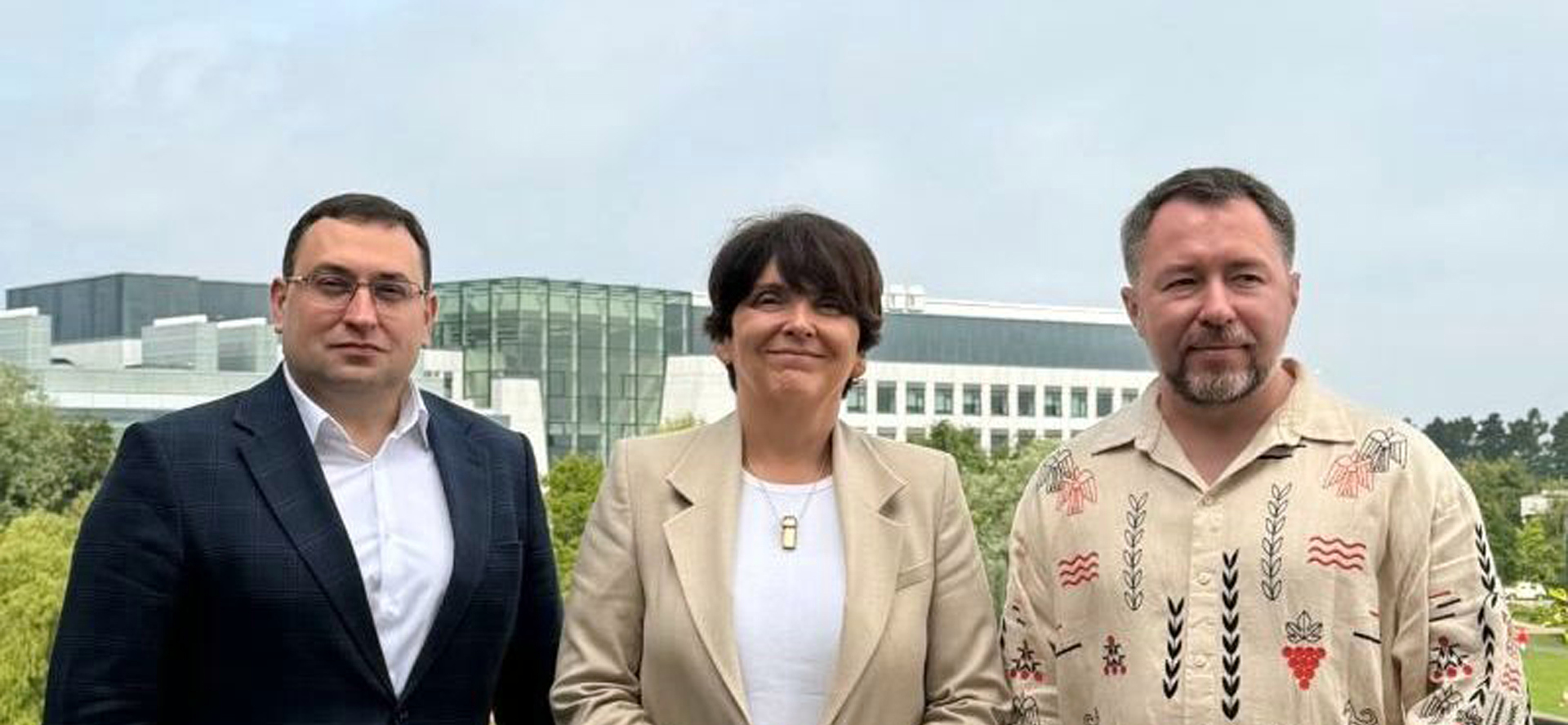
Recently, representatives of the National Contact Point (NCP) of Horizon Europe for Cluster 5 “Climate, Energy and Mobility,” based at the Igor Sikorsky Kyiv Polytechnic Institute – Dr Angela Piatova and Volodymyr Sytin – conducted information day meetings for the staff of Lutsk National Technical University (LNTU).

Prof Sergiy Shukayev, a research fellow of this NCP, joined the event online to give an insightful presentation on access by the academic community to grant funding within the framework of Horizon Europe, the EU’s flagship research and innovation programme.

During the meetings, LNTU researchers were introduced to the key requirements for and approaches to funding under Horizon Europe. In addition, participants in the information day had the opportunity to explore tools for navigating programme’s calls for proposals and the operational practices of effective teamwork. At the conclusion of the event, all interested researchers asked clarifying questions and received comprehensive answers.

In particular, Angela Piatova and Volodymyr Sytin advised academics at the LNTU Department of Civil Security on funding opportunities, giving tips for preparing high-quality proposals, to encourage their active participation in Horizon Europe.

Joint team makes advance in next-gen displays

Yury Gogotsi, a Member of the Supervisory Board of the Igor Sikorsky Kyiv Polytechnic Institute and a Professor at Drexel University, USA, has become a key figure in building the next generation stretchable OLED display. He is one of the discoverers of MXenes, the materials that have formed a basis for this breakthrough display technology, leading a team of researchers from Drexel University and Seoul National University.


The Seoul-based team of materials scientists has demonstrated that MXenes can successfully replace brittle indium tin oxide in OLED displays while maintaining high brightness, flexibility, and record efficiency. The next-gen displays maintain stable brightness as they stretch double the size.


According to Professor Gogotsi, this technology paves the way for the potential applications of displays in wearable and embedded electronics, particularly smart wearable health monitors woven into fabric, although further research is still required before commercialisation.


P.S. Prof. Yury Gogotsi, an alumnus of Kyiv Polytechnic, is on the Clarivate list of the most highly cited researchers in the world in 2025. Remarkably, he is listed in three categories – Chemistry, Engineering, and Materials Science.


At present, Yury Gogotsi remains a role model for his Kyiv Polytechnic colleagues. In 1984, he earned his master’s in metallurgy from the Kyiv Polytechnic’s Department of High-Temperature Materials and Powder Metallurgy. In 1986, he earned his PhD, or Candidate of Science, in Physical Chemistry (advisor – Prof. Volodymyr Lavrenko) from Kyiv Polytechnic, becoming at that time the youngest PhD in Chemistry in Ukraine. Recognising his outstanding achievements in science and great contribution to the development of successful collaboration with the A.J. Drexel Nanomaterials Institute as its founder and director, the Kyiv Polytechnic Academic Council awarded Yury Gogotsi an honorary doctorate on 14 May 2018.


https://www.techspot.com/news/110973-researchers-build-stretchable-oled-can-double-size-without.html

Partners discuss demining studies at KPI

On 16 December 2025, Andrii Shysholin, Vice-Rector for International Relations of the Igor Sikorsky Kyiv Polytechnic Institute (KPI), together with Oksana Vovk, Director of the Kyiv Polytechnic’s Institute of Energy Saving and Energy Management (IEE), and Kateryna Lugovska, Director of the Ukraine-Japan Centre affiliated to this university, met with Mykhailo Turianytsia, Communications Specialist at the United Nations Office for Project Services (UNOPS), and Narumi Tateda, a journalist representing Japan’s Kyodo News Agency.


After Andrii Shysholin provided a presentation on the university to the guests, the conversation was framed by the implementation of a learning programme in humanitarian demining at the IEE. Oksana Vovk described this programme in details, joined online by IEE students currently getting education in this field. The students spoke about their studies and their reasons for choosing this particular specialisation.


The dialogue with the students generated keen interest among the guests. They asked about students’ reasons for choosing this specialisation, how their parents responded to their decision, as well as how the students envision their career prospects in this field. There is no need to recount young participants’ answers at length, as the leitmotif running through their words was patriotic views and the acknowledgement of a need for this profession in Ukraine. It is worth noting too that the IEE students demonstrated a high level of proficiency in English throughout the conversation.


“They are truly motivated young people, a new generation of engineers who will have unique technical expertise that will empower them, first, to succeed in their future careers and, second, to cope with formidable yet vital tasks, both in terms of land decontamination and the application of environmental protection technologies,” commented Oksana Vovk. “And the fact that they all have a very good command of foreign languages is a boon for them, offering an opportunity to represent Ukrainian youth abroad, because young people always turn a keen ear to their contemporaries.”


The discussion also touched upon issues related to training aids and appliances for the new learning programme. According to the IEE director, the UNOPS has already supplied gratis Kyiv Polytechnic with some items of equipment. “We use it [equipment] to train our students in humanitarian demining, as well as to conduct research in the field of landmine safety,” Oksana Vovk explained.


“The function of our Office is to provide targeted assistance within clear-cut projects to key players in Ukraine in order to promote its socio-economic development, which is one of the missions of the UN. With funding from the European Union, we procure and deliver equipment that will be used for effective instruction of students, training, and the honing of their skills,” Mykhailo Turianytsia told Dmytro Stefanovych, Editor in Chief of the Kyiv Polytechnic Newspaper. “The price of the equipment we plan to deliver totals approximately 1.5 million hryvnias.”


He added that this programme could potentially be continued, the more so as Kyiv Polytechnic is seen by international partners as a leading educational and scientific institution, as well as a training centre in the field of mine action and humanitarian demining.


The participation of a representative from one of Japan’s leading news agencies in this meeting was also significant. Oksana Vovk noted this point: “It is very good that the Japanese side takes interest in this specific field at KPI. This is yet another opportunity to inform the world about what is really happening in Ukraine.”


At the same time, the country is facing serious challenges, as the amount of work to clear mine-affected regions in whole is huge, therefore it should be done as efficiently as possible, with the maximum use of the cutting-edge technological solutions. The specialists being trained at Kyiv Polytechnic of late are not so much field deminers, but primarily professionals who will ensure the effectiveness of demining, make this system more productive by developing innovative tools and techniques.


During their visit, the guests also toured the Ukraine-Japan Centre located in the university Scientific and Technical Library. Kateryna Lugovska detailed its activities, programmes, and events. Yet even without words, much spoke for itself: the well-thought-out design of space, the exhibition hall, the Ukrainian-Japanese library (undoubtedly the best of its kind in Ukraine), the Japanese contemplative garden characterised by the careful arrangement of natural stones, the room built for the chanoyu (tea ceremony), classrooms for learning Japanese language and the traditional logical games shogi and go.


The visit concluded with a tour of the IEE laboratories, which are used for training bachelor’s and master’s degree students in mine action and humanitarian demining, including a demonstration of the equipment received by the institute under the UNOPS assistance programme.


P.S.

UNOPS is a United Nations agency that provides partners with procurement, infrastructure and project management services. It has been operating in Ukraine since 2016. In particular, UNOPS helps this country to achieve tangible results in sectors such as energy, education, and mine action.


Kyodo News is one of Japan’s largest and most influential independent public news agencies with a focus on Japan and Asia, delivering important news to Japanese and international media. It provides wide coverage of events in Ukraine as well.


https://www.unops.org/ukraine


https://english.kyodonews.net/list/info/about

KPI scientists visit Université de Paris Cité

Prof Yuri Gordienko and Senior Lecturer Yuriy Kochura of the Faculty of Informatics and Computer Engineering at the Igor Sikorsky Kyiv Polytechnic Institute (KPI) paid a working visit to Université de Paris Cité and the Imagine Institute at Hôpital Necker-Enfants malades AP-HP (Paris, France) from 4 to 14 December 2025.


The trip was made at the invitation of Héloïse Marmouset de la Taille, Cooperation Attachée for Higher Education and Science at the French Embassy in Ukraine, and Dr Roman Khonsari, professor at the Université de Paris Cité. It was organised under the NADIYA short-term fellowship programme of the French Embassy and the French Institute in Ukraine, and in accordance with the Memorandum of Understanding between Université de Paris Cité and Kyiv Polytechnic.


During their visit to France, a series of working meetings were held with Professor Khonsari, his team, and scientific colleagues, to explore ways of applying artificial intelligence and data processing methods to reconstructive surgery, which is vital in the context of Russia’s current aggressive war against Ukraine.


Thanks to the invaluable help and kind invitation extended by Professor Roman Khonsari, the Kyiv Polytechnic delegation also participated in several scientific conferences.


The Ukrainian and French teams discussed and approved future plans for potential joint projects. These efforts are necessary to ensure the sustainability of the initiated collaboration through the proper funding of projects within the framework of current and forthcoming calls and competitions (Horizon Europe, Erasmus+, bilateral programmes, and others), as well as the appropriate allocation of resources, including the involvement of a teaching staff, and perhaps bachelor’s and master’s students, postgraduates and postdocs of Igor Sikorsky Kyiv Polytechnic Institute.

KPI in UK–Ukraine 100 Year Partnership Forum

Rector Аnatolii Melnychenko (pictured right) and Andrii Shysholin (pictured left), Vice-Rector for International Relations of the Igor Sikorsky Kyiv Polytechnic Institute (KPI), took part in the UK–Ukraine 100 Year Partnership Forum, which framed the long-term character of cooperation between Ukraine and the United Kingdom.


The discussions focused on what partnership sustained over decades truly means in practice. Security, economy, energy, science, culture, and innovation were not treated as separate tracks, but as interconnected pillars of long-term stability. A shared understanding emerged that Ukraine’s security is inseparable from European security, therefore it demands more than political declarations. It requires institutions prepared to work consistently and predictably.


Among the speakers were Oleksandr Korniienko, Chair of Kyiv Polytechnic’s Supervisory Board, and Oleksandr Kamyshin, a Member of the Supervisory Board. Their participation reflected the role of university governance in linking national priorities with international cooperation and in ensuring that strategic decisions would be translated into institutional development rather than remain abstract, hollow commitments.


Such forums matter a good deal to universities only if they deliver concrete outcomes. Much of the discussion pointed to the need to advance cooperation “on the ground” through joint education, research, and applied work in the fields of security, technology, reconstruction, and resilience. At the same time, the potential of UK–Ukraine academic cooperation still leaves much to be realised. Moving from goodwill to sustained joint effort needs a more proactive and structured engagement by academic institutions.


For Igor Sikorsky Kyiv Polytechnic Institute and Ukrainian technical universities at large, cooperation with British universities is not a token gesture. It is a practical instrument for long-term development in engineering, science, innovation, and defence-oriented research. Ukrainian universities are ready for this work and open to building partnerships that produce tangible results over time, rather than a mere semblance of cooperation.


Special thanks are due to the British Embassy in Ukraine for the invitation and for creating a space in which strategic, meaningful dialogue between governments, universities, and partners unfolded in a cooperative, proactive, and substantive manner. 

https://www.facebook.com/hashtag/100yearpartnership

Kyiv Polytechnic opens AI lab at FPM

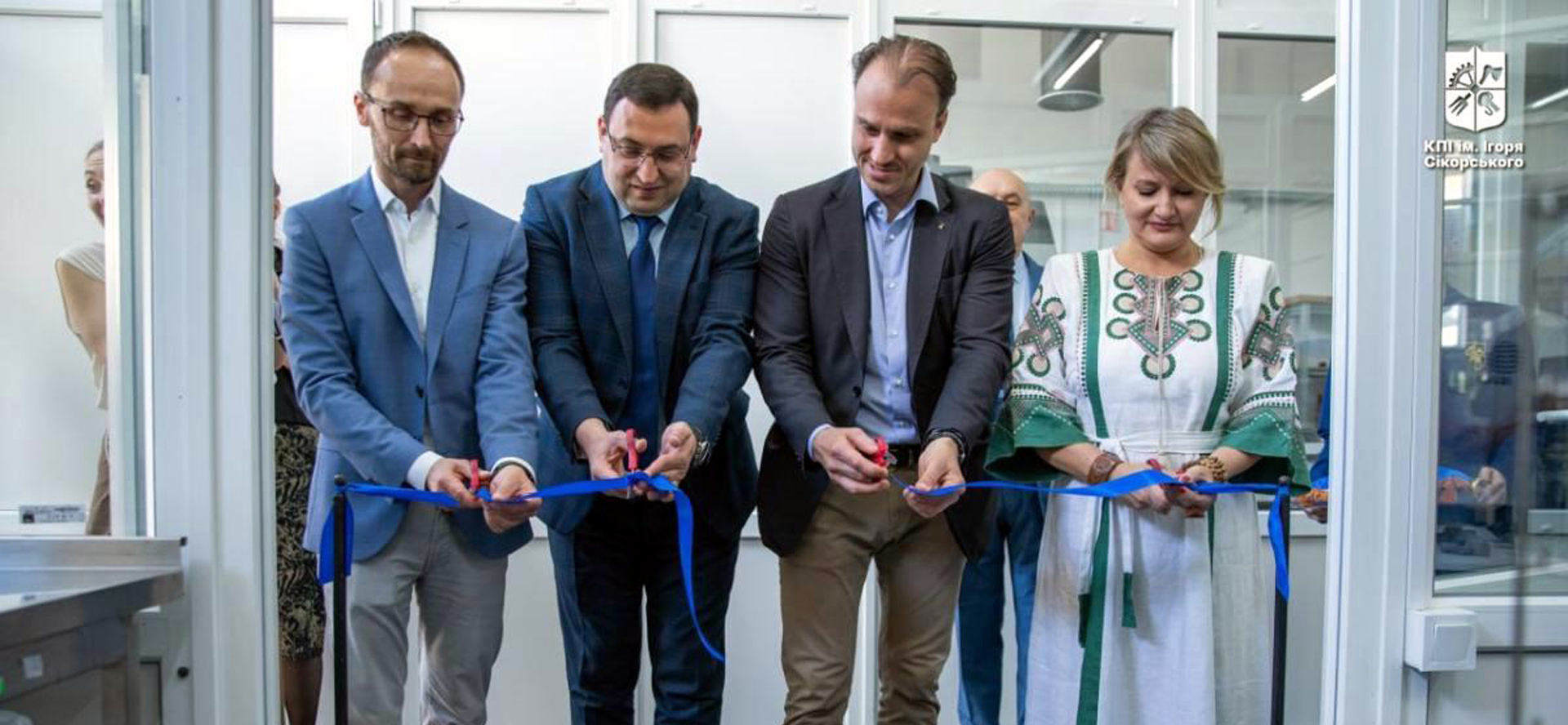
Recently, a modern laboratory, DRL AI Space, featuring 17 high-tech workstations has been put into operation at the Faculty of Physics and Mathematics (FPM) of the Igor Sikorsky Kyiv Polytechnic Institute. This lab will serve as a key facility for integrating innovative artificial intelligence techniques into the technical education sector, as well as into fundamental and applied research in physics and mathematics, providing a clear route to the creation of new technologies.


The new laboratory offers Kyiv Polytechnic students greater opportunities for data analysis, complex calculations, and sophisticated modelling of physical processes. New laboratory courses are already being designed for students, allowing them to gain real-world hands-on experience with AI tools.


The education and research space was developed with the support of:

·        DataRoot Labs, a full-cycle AI R&D Centre that has been developing and applying AI-based technologies in partnership with international start-ups, corporations, and scientific institutions since 2016;

·        UFTM (Ukraine Future Tech Minds), a non-profit organisation that empowers engineering education in Ukraine.


This is yet another new laboratory at Igor Sikorsky Kyiv Polytechnic Institute, which builds up the potential and capabilities of the university’s innovation ecosystem.


Watch a video for more information about the launch of DRL AI Space here

https://youtu.be/Vgvuv0w_hCo


https://www.linkedin.com/feed/update/urn:li:activity:7408894519494238208/


P.S. The Igor Sikorsky Kyiv Polytechnic Institute is a public, research-intensive university based in the capital city of Kyiv. It is one of the largest technical universities in Ukraine.


Established in 1898, Kyiv Polytechnic aims to pursue global cooperation, research and innovation to establish itself as Ukraine’s representative university of technology. Scaling up innovation, it coordinates a national innovation ecosystem of 18 startup schools and 15 innovation clusters. Specifically, its Sikorsky Challenge Innovation Ecosystem is dedicated to empowering groundbreaking projects and startups, fostering collaboration, and providing unparalleled growth opportunities.


For Kyiv Polytechnic, knowledge is power. It is the university of ideas and startups. Kyiv Polytechnic boasts more than 70 research labs and centres, alongside three science parks, serving as hubs for technology transfer and startup incubation.


The university has a history of turning out prominent figures. Among its top-flight alumni are Yevhen Paton, inventor of electric welding, Igor Sikorsky, Ukrainian-US pioneer in aircraft design, and Serhii Koroliov, designer of guided missiles, particularly the world’s first intercontinental ballistic missile (ICBM), rockets, and spacecraft. The Kyiv Polytechnic Institute was named after Igor Sikorsky on 17 August 2016.


Currently, Kyiv Polytechnic is organised into 100+ scientific schools. Its priority research areas include mechanical engineering, chemistry, materials science, ICT, energy efficiency, environmental monitoring, nuclear safety, aerospace technologies, prosthetics, robotics, humanitarian demining, and cybersecurity.


It is home to over 2,000 faculty members and more than 23,000 undergraduate and graduate students. The university campus is arranged over 135 acres within Kyiv, and features 21 student residences, as well as five gardens and green-space areas.


Studying in Igor Sikorsky Kyiv Polytechnic Institute offers a truly global-standard education, driven by research, collaboration and innovation.

Ambassador has dialogue with KPI students

During his third visit to the Igor Sikorsky Kyiv Polytechnic Institute (KPI), Michael Brodsky, Ambassador Extraordinary and Plenipotentiary of the State of Israel to Ukraine, delivered a lecture entitled “Israel and Ukraine – Lessons of War” to students. His lecture laser focused on international relations and the adaptation of Israel’s experience to the needs of Ukraine. The ambassador expressed firm support for Ukraine in its fight for sovereignty and territorial integrity.


The meeting with the diplomat took place in an engaging question-and-answer format, highlighting the following key issues:

• role of innovation and technology in modern warfare;

• principles of effective diplomacy in crises;

• Israel’s practical experience in responding to security challenges;

• potentialities for implementing relevant approaches in the context of today’s Ukraine.


In addition, a working meeting was held with the university administration to discuss cooperation with Israeli universities, particularly the Technion, one of the world’s leading universities of technology in the domain of digital education. Plans are afoot for the visit of a Kyiv Polytechnic delegation to Israel to explore the country’s educational and scientific ecosystem.


Special attention was also paid to joint cultural and institutional initiatives, including the establishment of the Ukrainian-Israeli Centre at Igor Sikorsky Kyiv Polytechnic Institute — a platform for consultations, cultural exchange and academic cooperation, with a view to enabling and supporting entrepreneurship and start-ups.

Zelenskyy awards KPI scientists Paton Prize

Ukrainian President Volodymyr Zelenskyy presented diplomas and honorary badges of the Borys Paton National Prize of Ukraine to three scientists from the Department of High-Temperature Materials and Powder Metallurgy at the Yevhen Paton Institute of Materials Science and Welding, affiliated to the Igor Sikorsky Kyiv Polytechnic Institute (KPI).


Specifically, among the 2025 Paton Prize laureates are Prof Yurii Bohomol (pictured left), Corresponding Member of the National Academy of Sciences of Ukraine and Head of the Department; Oleksandra Yurkova (pictured right), Professor at the Department; and Yevhen Solodkyi, Associate Professor at the Department.


This high government award recognises the staff’s significant contribution to the development of modern materials science and powder metallurgy.


“All of this is extremely valuable; all of this proves – and this is no secret either – that our Ukrainian science is alive,” Volodymyr Zelenskyy said. “However hard it may be for scientists. Science, alongside the army, alongside diplomacy, is just as effective a force in countering Russian evil. Our science is progressing well, growing, which is vital during the war; it creates, and it makes Ukraine stronger.”


The Borys Paton National Prize of Ukraine was established in May 2021. The President awards it to recognise scientific research that contributes to the development of the humanities, natural and technical sciences, medicine, education, and environmental protection.


P.S. The Igor Sikorsky Kyiv Polytechnic Institute is a public, research-intensive university based in the capital city of Kyiv. It is one of the largest technical universities in Ukraine.


Established in 1898, Kyiv Polytechnic aims to pursue global cooperation, research and innovation to establish itself as Ukraine’s representative university of technology. Scaling up innovation, it coordinates a national innovation ecosystem of 18 startup schools and 15 innovation clusters. Specifically, its Sikorsky Challenge Innovation Ecosystem is dedicated to empowering groundbreaking projects and startups, fostering collaboration, and providing unparalleled growth opportunities.


For Kyiv Polytechnic, knowledge is power. It is the university of ideas and startups. Kyiv Polytechnic boasts more than 70 research labs and centres, alongside three science parks, serving as hubs for technology transfer and startup incubation.


The university has a history of turning out prominent figures. Among its top-flight alumni are Yevhen Paton, inventor of electric welding, Igor Sikorsky, Ukrainian-US pioneer in aircraft design, and Serhii Koroliov, designer of guided missiles, particularly the world’s first intercontinental ballistic missile (ICBM), rockets, and spacecraft. The Kyiv Polytechnic Institute was named after Igor Sikorsky on 17 August 2016.


Currently, Kyiv Polytechnic is organised into 100+ scientific schools. Its priority research areas include mechanical engineering, chemistry, materials science, ICT, energy efficiency, environmental monitoring, nuclear safety, aerospace technologies, prosthetics, robotics, humanitarian demining, and cybersecurity.


It is home to over 2,000 faculty members and more than 23,000 undergraduate and graduate students. The university campus is arranged over 135 acres within Kyiv, and features 21 student residences, as well as five gardens and green-space areas.


Studying in Igor Sikorsky Kyiv Polytechnic Institute offers a truly global-standard education, driven by research, collaboration and innovation.

KPI leads Ukrainian universities in IP

Data from the Ukrainian National Office for Intellectual Property (IP) and Innovations show that the Igor Sikorsky Kyiv Polytechnic Institute (KPI) tops Ukrainian universities in intellectual property.


Kyiv Polytechnic demonstrated systematic and effective research in the first nine months of 2025. During this period, the university filed 112 applications for industrial property rights, including inventions, utility models, industrial designs, trademarks, and copyright. It also ranked first among higher education institutions under the jurisdiction of the Ministry of Education and Science of Ukraine for the highest inventive activity.


These indicators evidence the huge research capacity and innovative potential of scientists and inventors at Igor Sikorsky Kyiv Polytechnic Institute, as well as a sustainable and effective model of university science, in which research is transformed into viable solutions and innovations that contribute to the development of Ukraine.

https://nipo.gov.ua/wp-content/uploads/2026/01/Pokaznyky-diialnosti-u-sferi-IV-za-9-misiatsiv-2025.pdf

KPI team wins Global Greenchem Hackathon 2025

Following the wrap-up of the 14th International Festival of Innovation Projects Sikorsky Challenge, the Global Greenchem Hackathon 2025 took place from 31 October to 2 November 2025, in line with the format of the festival and within the framework of the Global GreenChem Innovation & Network Programme.


The purpose of hackathon’s tasks was to find opportunities to replace traditional petrochemical substances with alternative functional additives of natural origin for industrial use in the production of building materials.


More than ten teams of researchers and students from the cities of Kyiv, Kharkiv, Dnipro, Sumy, Lviv and Khmelnytskyi worked on innovative solutions commissioned by Dow, the US materials science company, and Elf Decor, the leading Ukrainian manufacturer of decorative materials. Over the course of three days, the teams not only developed their own concepts to fulfil the set tasks, but also attended the lecture “Fundamentals of Green Chemistry: How to Develop Safe Products” delivered by Oleksandr Khokhotva, a chemical management expert at the Resource Efficient and Cleaner Production (RECP) Centre. Team members also participated in the workshop “Theory of Solving Inventive Problems” conducted by Kateryna Vershynina and Andrii Salamatov, co-owners of the 4press creative agency and the Zelena Ka4ka (green duck) Telegram channel.


A team called “Synergy 404” from the Faculty of Biotechnology and Biotechnics (FBT) at the Igor Sikorsky Kyiv Polytechnic Institute (KPI) won the contest and received a cheque for $1,500. The winning team was made up of fourth-year students Yuliia Horbachova, Mariia Dolbeshchenkova and Oleksandra Sapitash from the FBT Department of Industrial Biotechnology and Biopharmacy. The team was led by Vitalii Klochko, associate professor at FBT. They proposed a technology for developing water-dispersible latex based on terpene monomers obtained through biosynthesis.


It is worth noting too that the FBT team participated in the Global Greenchem Hackathon for the second time. In addition to his teaching duties, Vitalii Klochko’s areas of responsibilities include the scientific work of the department and he serves as a senior researcher at the Department of Physiology and Systematics of Micromycetes of the D.K. Zabolotny Institute of Microbiology and Virology, affiliated to the National Academy of Sciences of Ukraine. Fruitful scientific cooperation between the FBT and this institute enabled the Synergy 404 team to offer well-founded and balanced solutions.


The programme was implemented within UNIDO’s major initiative on Green Chemistry, supported by the Global Environment Facility, in partnership with US-based Yale University and the Ukraine’s RECP Centre.


According to the members of Synergy 404, participation in such events is very useful, as it empowers students to use practically the theoretical knowledge they have gained at university to solve real-world problems or create prototypes of innovative solutions. They also have a unique opportunity to network with like-minded peers, lecturers, mentors, industry representatives, and potential employers. Looking ahead, young participants in hackathons will be able to add a notable achievement to their CVs. Thus, scientific hackathons are not merely contests, but a powerful educational platform that prepares students to work in the challenging environment of the modern technological world.