Sogang University
Published on 22 June 2026




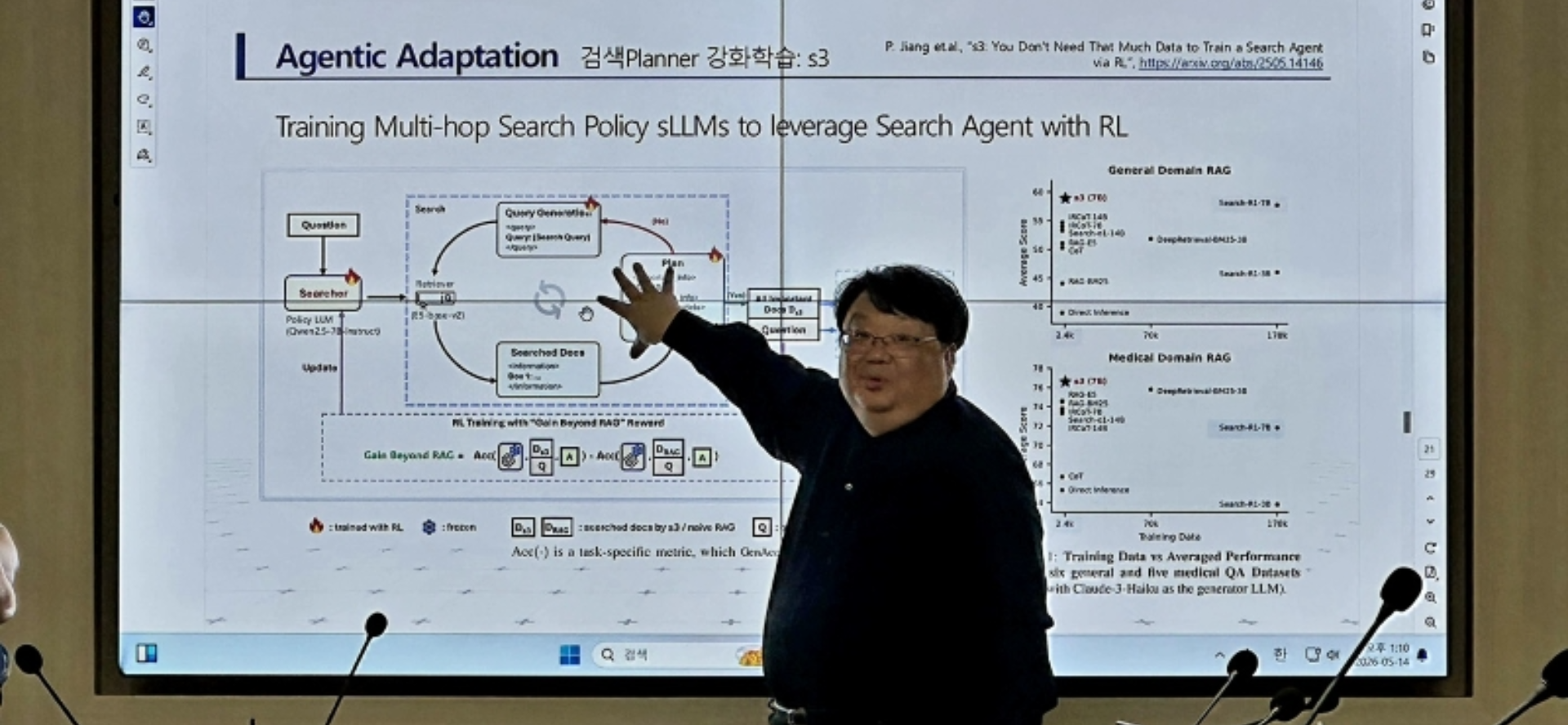
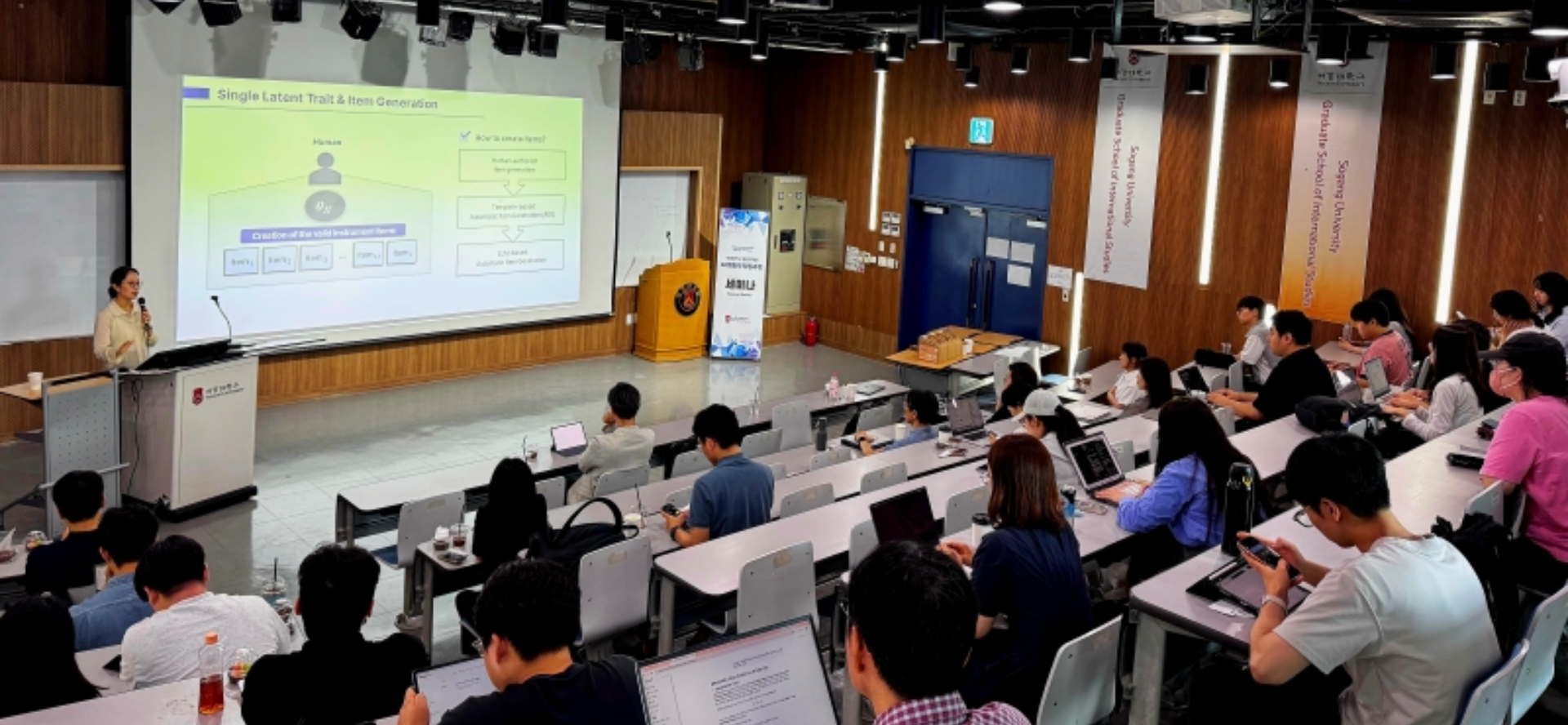
Sogang University held its May brown-bag seminar under SAIX Peers, focusing on the emerging landscape of vertical AI and its implications for industry transformation and national AI competitiveness. The session featured Professor Du-Seong Chang from the Department of Artificial Intelligence, who framed vertical AI not as a narrowly trained language model, but as a fundamentally different approach to redesigning how industries operate.
Professor Chang's central argument was that the competitive edge in AI no longer lies in the underlying model itself, but in how an organization restructures its core workflows around AI capabilities — what he described as Vertical AI Transformation. Across sectors including finance, healthcare, law, manufacturing, and energy, the meaningful question is not which model a company uses, but whether it has rebuilt its operational processes in a form that AI can actually execute.
Three elements, he argued, are essential to building effective vertical AI: a high-performance reasoning model, agent-based workflows that reflect real operational logic, and proprietary domain knowledge. A simple chatbot interface is insufficient; genuine industrial application requires AI systems capable of planning, retrieval, tool use, verification, and execution across complex, multi-step processes.
The legal AI company Harvey was presented as a leading example. Built on OpenAI's models, Harvey's competitive value derives not from the foundation model itself but from tens of thousands of custom workflows encoding the practical knowledge of working lawyers. The case illustrated a broader point: in the vertical AI era, platform value comes from how deeply a company has mapped and automated the knowledge structures of a specific industry.
The seminar also addressed recent developments in AI agent architecture. Professor Chang described growing interest in a separate policy LLM — trained through reinforcement learning to control tool use, planning, and retrieval independently of the response-generation model. Building simulation environments that replicate real operational contexts, and generating synthetic training data through repeated experimentation within those environments, was identified as an increasingly important direction for agent development.
A significant portion of the discussion turned to AI sovereignty. Professor Chang noted that leading global frontier models are becoming increasingly closed, concentrated among a small number of companies and treated as strategic assets. Over-reliance on foreign models carries long-term risks of technological dependency — a concern that is compounded for Korean-language services, where lower token efficiency relative to English means higher operational costs for equivalent tasks. He argued that developing a fully controllable, high-performance Korean foundation model is not merely a technical goal but a matter of national industrial competitiveness.
Participants broadly agreed that vertical AI-driven transformation across energy, manufacturing, healthcare, and law is likely to accelerate in the near term, and that closer collaboration between industry and academia will be essential to building a competitive domestic AI ecosystem.