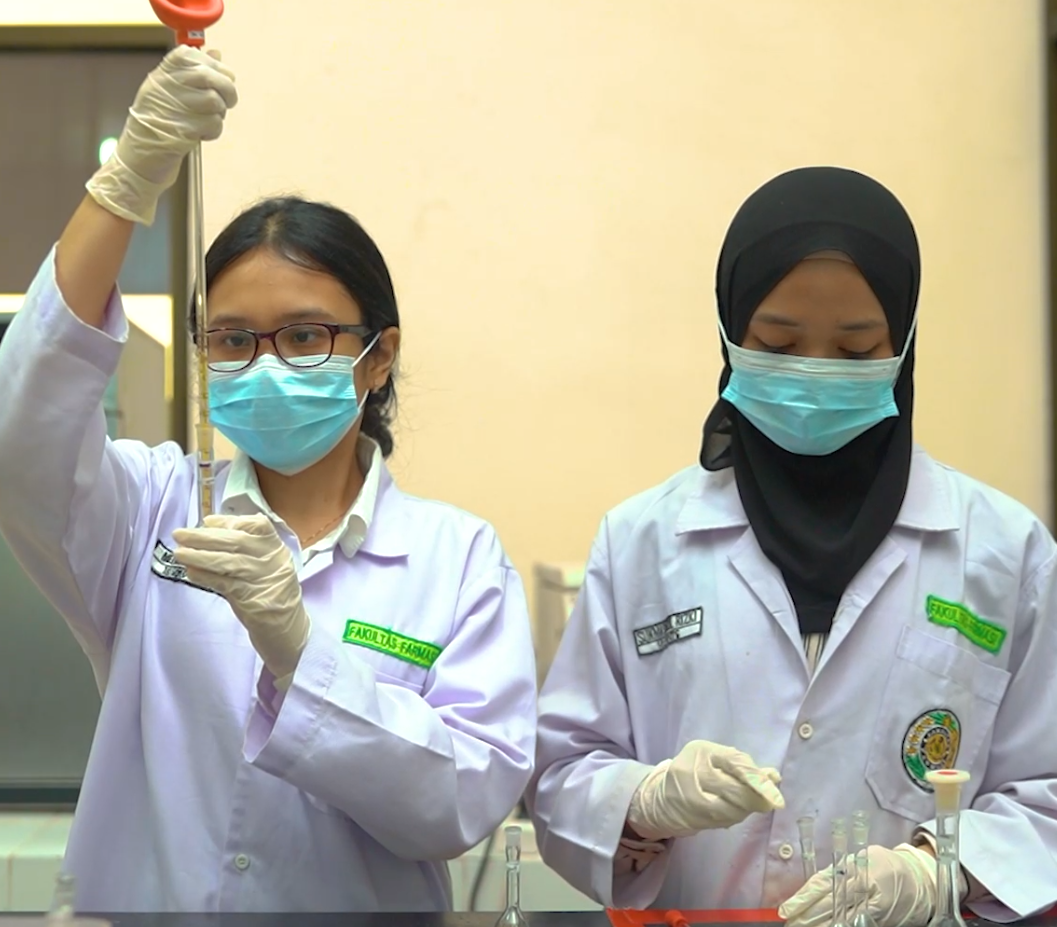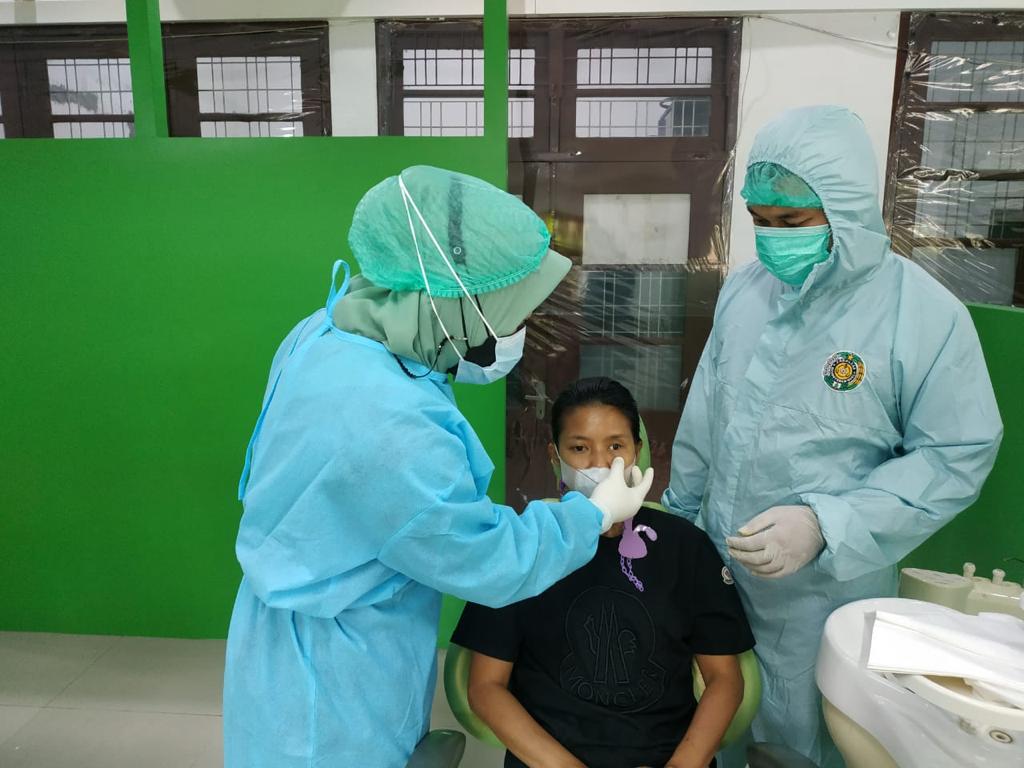
In accordance with its vision and mission, the Specialist Program in Prosthodontics, Faculty of Dentistry, one of the study programs at Universitas Sumatera Utara, participates in developing a knowledge-based economic culture to foster new entrepreneurs by organizing “Program Pengembangan Usaha Produk Intelektual Kampus” (PPUPIK), which is a recent innovation with substantial economic values. The Prosthodontic Specialist Program has developed the Ocular Prosthesis Consultation and Service Center. Producing ocular prosthesis is one of the competencies of a dentist specializing in prosthodontics because a prosthodontist deals not only with dental problems but also with maxillofacial rehabilitation, including the manufacture of ocular prosthesis, ear prosthesis, nose prosthesis, feeding plates, and obturators. The process of creating an ocular prosthesis is conceptually similar to that of making dentures.
Evisceration and enucleation are two possible eye surgery treatments. The surgical procedure, known as evisceration, removes the eyeball but leaves the sclera and connective tissue within the orbital cavity. Installing a stock ocular prosthesis is a recommended course of treatment for evisceration, while there are some circumstances where a custom ocular prosthesis can be fitted. A surgical operation, known as enucleation, removes the entire eyeball by removing and severing the tissue that holds it in the orbital cavity. In 2019, this program conducted a community service project for ocular prosthetic treatments in association with the Sumatra Eye Center. The project has served 78 patients (2017-2019) for surgery but has not got their prosthetic eyes fitted.
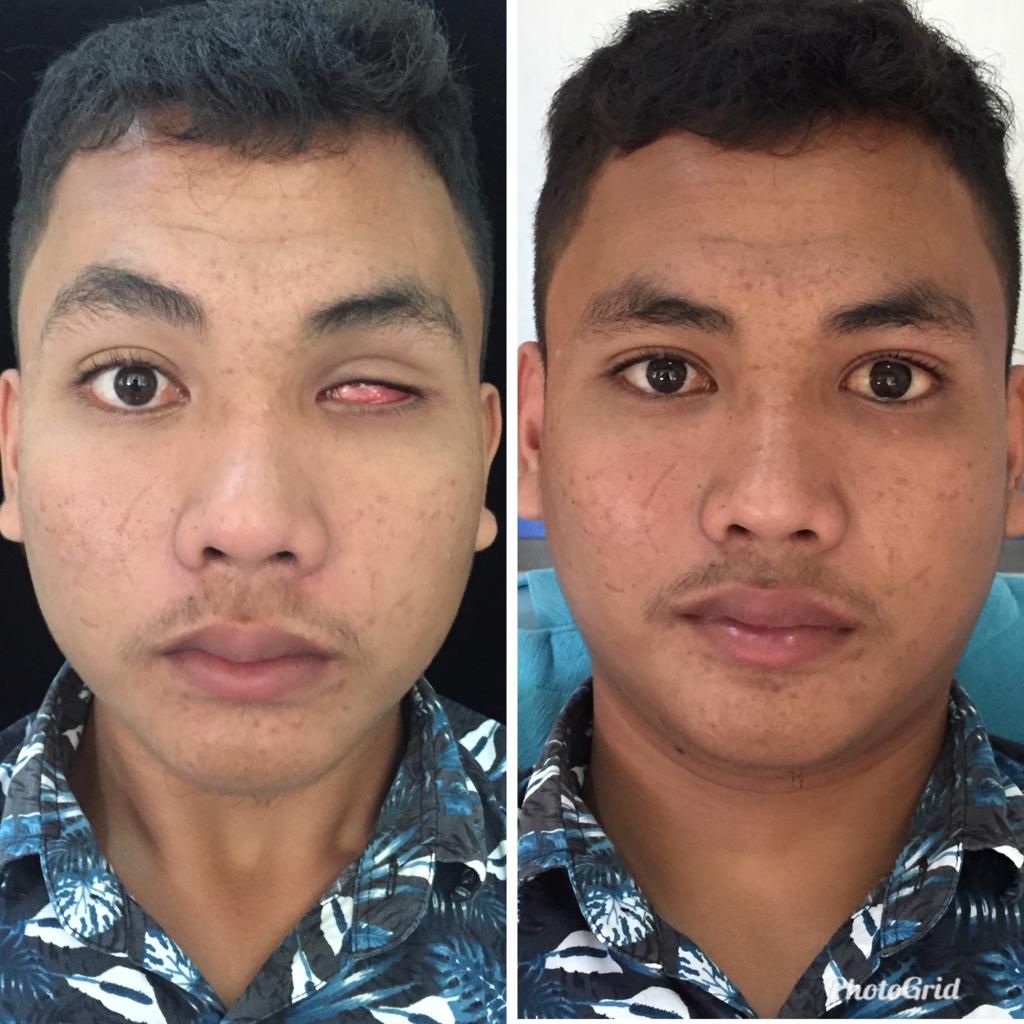
Figure 1. Before and after the insertion of the ocular prosthesis at The Ocular Prosthesis Consultation and Service Center
Sometimes, an ophthalmologist at an eye hospital or eye clinic suggests that the patients should find a dentist specializing in prosthodontics regarding their postoperative care with the creation of artificial eyes. This is not efficient in terms of time and money. The problem may arise if the eye surgery patients cannot find a service center facilitating synergy between ophthalmologists and prosthodontic specialists. It will undoubtedly be more straightforward for patients if they can find a place offering services ranging from consultation to producing artificial eyes. The Specialist Program in Prosthodontics considered “Program Pengembangan Usaha Produk Intelektual Kampus” (PPUPIK) as a medium to establish an ocular prosthesis consultation and service center, which has not been found in Indonesia. This consultation and service center was established in response to some of the abovementioned issues.
There are three product specifications available at the Ocular Prosthesis Consultation and Service Center, namely:
- The Ocular Prosthesis Consultation Center – Consultation Center – On their first appointment, patients who come to the artificial eye consultation and service facility will meet an ophthalmologist. The condition of the patient’s eye socket will determine whether they require different therapy before the artificial eye is manufactured, whether they can only receive a factory artificial eye, or whether they are prepared to move forward with the artificial eye service method.
- The Ocular Prosthesis Consultation Services – Production Center – Patients who have gone through the ophthalmologist’s screening process and have been given the all-clear to proceed with the ocular prosthesis service procedure will be transferred to a team of prosthodontists, who will then perform the ocular services. Anatomical impression, wax try-in, individual impression, scleral wax try-in, produced sclera, produced iris button, layered sclera acrylic with clear scleral, insertion of ocular prosthesis, and periodic control are the first steps in the imitation process.
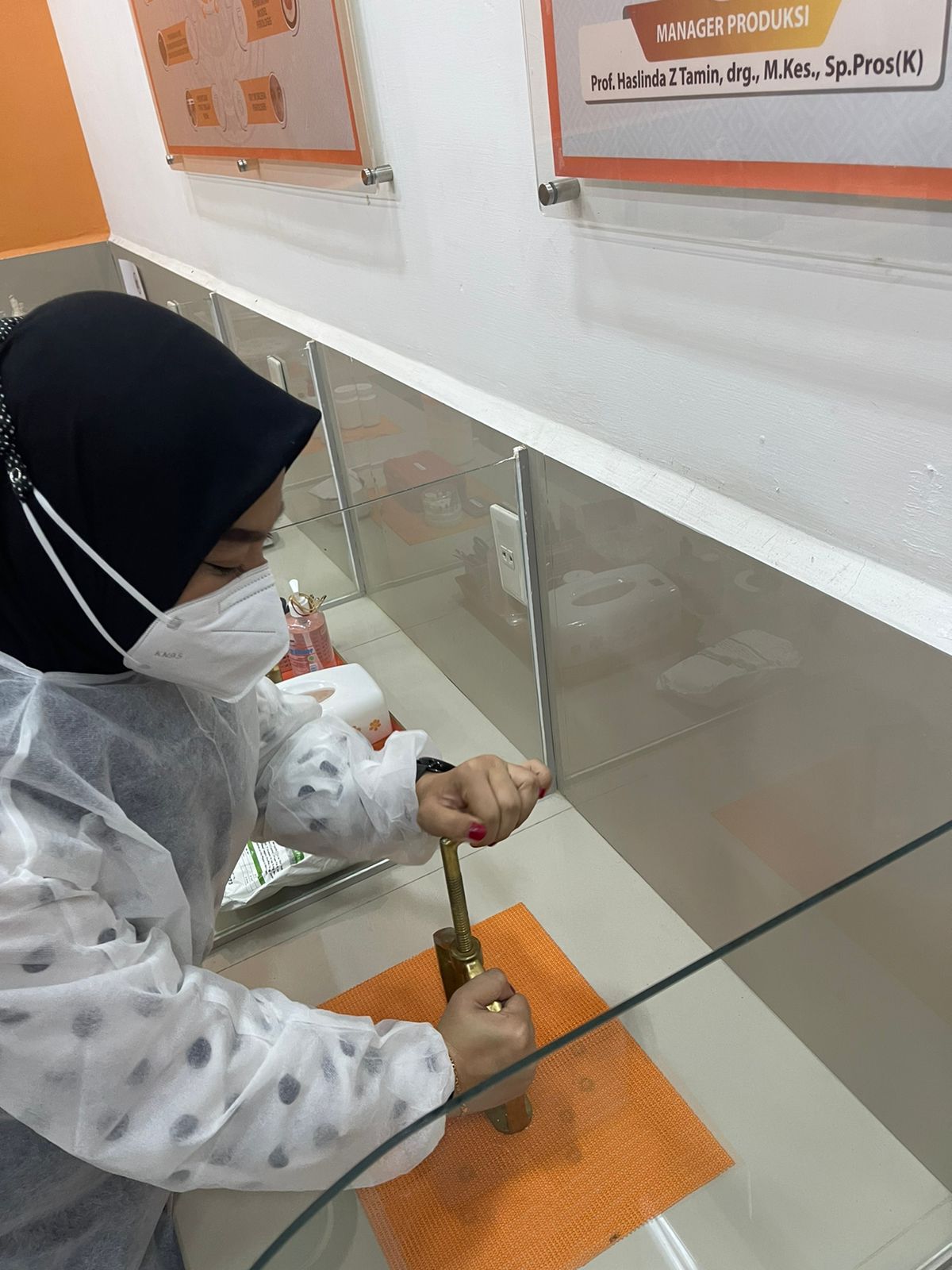
Figure 2. Ocular Prosthesis Services and Production Room
3. Ocular Prosthesis Training Center – Training Center – A team from the Specialist Program in Prosthodontics or a unit from another university that has worked with the Faculty of Dentistry of USU gives ocular prosthesis training. Hands-on instruction in the “Simple Laboratory Procedure in Fabricating Esthetic Ocular Prosthesis” has been provided by Rosli bin Bidin from the Faculty of Dentistry of the University of Malaya.
Program Pengembangan Usaha Produk lntelektual Kampus. The Ocular Prosthesis Consultation and Service Center aims to apply and commercialize ocular prosthesis services that have been carried out so far. In 2019, the Specialist Program in Prosthodontics utilized the most up-to-date technology and methodology, adopted from numerous international journals, resource people from universities in other countries who give training, and the experience when making ocular prosthesis in the community service program to provide ocular prosthesis training and services regarding consultation centers and ocular prosthesis services. This initiative has been implemented annually for three years: in 2020, 2021, and 2022. The Ocular Prosthesis Consultation and Service Center has obtained a copyright in the form of a video about making artificial eyes.
The students of the Specialist Program in Prosthodontics who have created ocular prosthesis at the consultation center and services successfully presented 20 case reports at the Maxillofacial Virtual Online Scientific Competition during The 12th Biennial Congress of the Asian Academy of Prosthodontics and took home the first and second place in IPROSI in the second year program.
The management team for this Ocular Prosthesis Consultation and Service Center includes the General Manager (Putri Welda Utami Ritonga, DDS., MDSc., Sp.Pros(K)), the Manager of Production (Prof. Haslinda Z. Tannin, DDS., M.Kes., Sp.Pros(K)), the Manager of Administration/Finance (Veronica Angelic, DDS., MDSc., Sp.Pros), and the Manager of Marketing (dr. Aryani Atiyatul Amra, M.Ked(Oph)., Sp.M(K)). Consultation activities, training, and artificial eye services are carried out at The Specialist Program in Prosthodontics, Faculty of Dentistry, located on Jalan Alumni, No. 02, Faculty of Dentistry, Universitas Sumatera Utara.