How Communication Science Study Program USU Responds to Artificial Intelligence (AI)

Technological development has brought significant changes to many aspects of human life, including education. In the era of the Fourth Industrial Revolution, technology is no longer merely a supporting tool, but has become an important part of learning, working, and communicating.

One form of technology that is increasingly used today is Artificial Intelligence, or AI. In academic life, AI is present through various platforms and applications, such as ChatGPT, Canva, Slidesgo, CapCut, Grammarly, paraphrasing tools, Google Meet, Zoom, and other digital applications supported by AI features.

This phenomenon is also felt in higher education, including in the Communication Science Study Program, Faculty of Social and Political Sciences, Universitas Sumatera Utara. The growing use of AI on campus has made students more familiar with this technology. However, not all students are able to use and apply AI properly and wisely in academic activities.

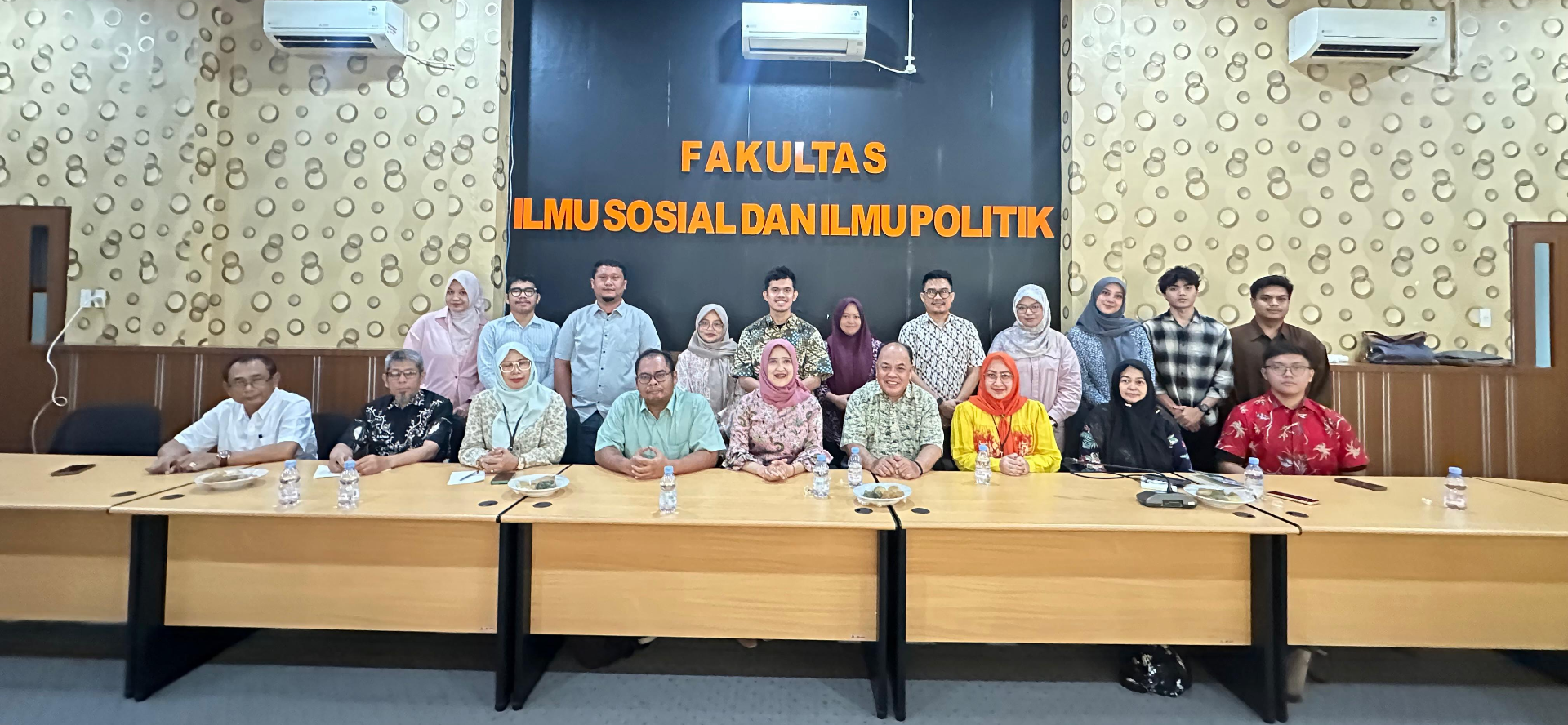
In response to this development, the Communication Science Study Program of USU held a Visiting Professor program with the theme of Artificial Intelligence. The event presented Prof. Anang Sujoko, an academic with expertise and concern in the development of AI, who also serves as the Dean of the Faculty of Social and Political Sciences at Universitas Brawijaya.

The Head of the Communication Science Study Program at USU, Dra. Mazdalifah, M.Si., Ph.D., explained that AI was chosen as the main theme because artificial intelligence has become one of the most widely discussed issues in recent years.

“I personally have not used AI extensively. Even in writing, I still do it manually and rely on literature that is analyzed one by one. I know that this can be done with AI, but I am not fully satisfied with the results because I feel they do not completely come from our own thinking. However, I also realize that AI can help, because AI is inevitable in the current era,” said Mazdalifah.

Meanwhile, Dr. Maulana Andinata Dalimunthe, S.I.Kom., M.A., one of the lecturers of Communication Science at USU who also served as the moderator of the event, shared that he had already started using AI, including in classroom learning activities.

“I have actually used AI. In fact, I am currently exploring which AI tools can help me in lectures and other activities,” said Maulana.

The Visiting Professor program was welcomed with great enthusiasm by the students. Maulana explained that the number of participants exceeded the seating capacity provided in the hall. Mazdalifah also shared a similar view, noting that the students’ enthusiasm could be seen from the large number of attendees and the active questions raised during the discussion session.

Through this activity, students are expected to gain a better understanding of how to use AI wisely. AI can be used as an alternative tool to support students in completing academic assignments, but it should not replace their own critical and creative thinking processes.

Mazdalifah emphasized that students should not become fully dependent on AI. Meanwhile, Maulana expressed his hope that lecturers would no longer view AI as something taboo.

“As Prof. Anang Sujoko explained, technology is an extension of human capability. Humans remain the ones in control. AI only works based on the instructions it receives. If we refuse to understand AI, then we are the ones who will be left behind. Therefore, AI should be seen as a partner that can help support various activities,” Maulana explained.

Ultimately, technology should remain under human control. AI can become a useful tool in supporting creative and academic processes, as long as it is used wisely, ethically, and in accordance with existing norms.

USU Advances Village Disaster Readiness

Universitas Sumatera Utara (USU), through its Institute for Research and Community Service, has initiated a community engagement programme to support disaster resilience planning in Sidoharjo I Pasar Miring Village, Deli Serdang, North Sumatra.

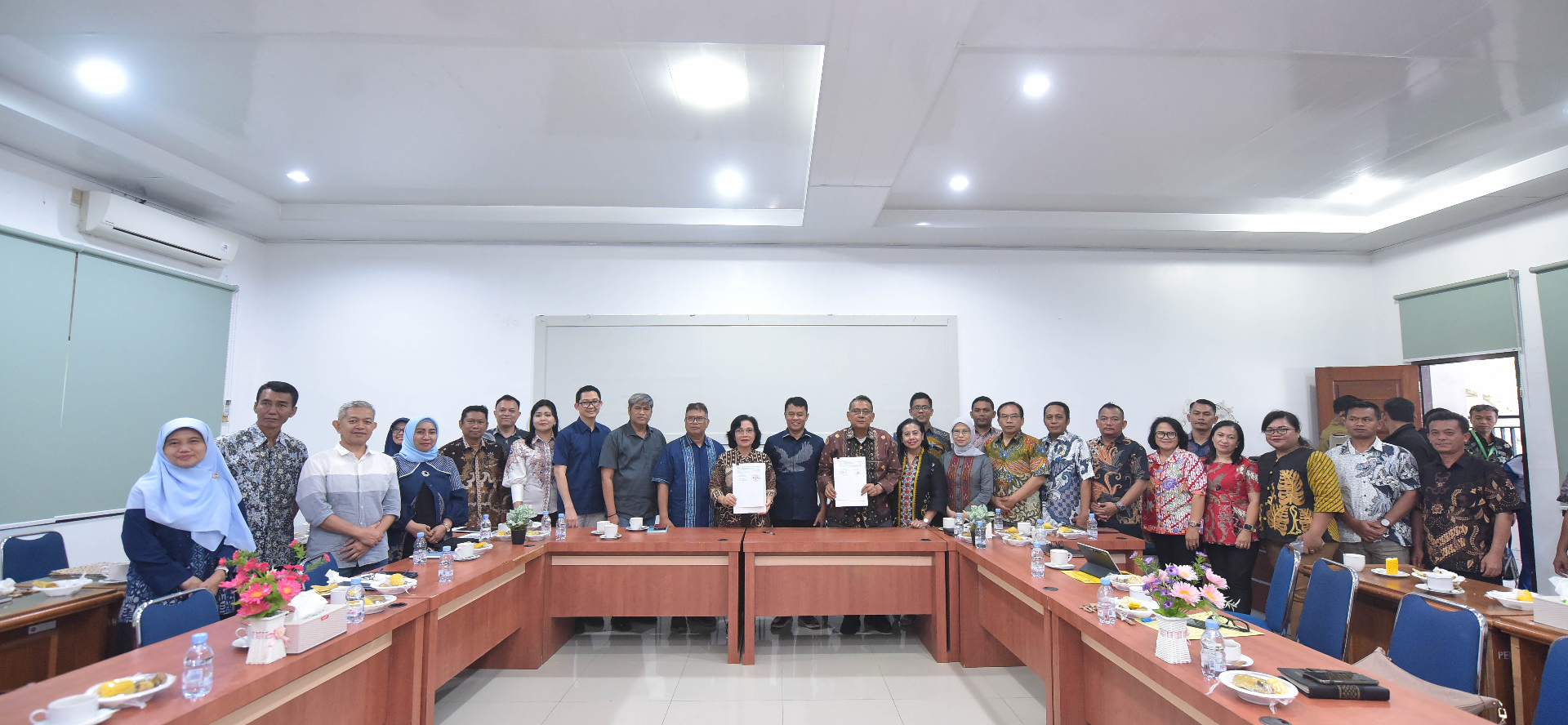
The first meeting was held on 25 June 2026 at the village head office and brought together the USU’s partner village and the village government. The discussion focused on the village’s environmental conditions and recurring disaster risks, particularly tornado-like strong winds and flooding.

Village Head Santoso, S.Sos., S.H., said the risks faced by the community were not merely potential threats, but recurring incidents that had affected residents directly.

“This year alone, there have been two strong wind disasters, around February and May 2026. Flooding also occurred when several areas in Sumatra were inundated, and we were affected as well, with hundreds of houses impacted,” he said.

The meeting highlighted the relevance of USU’s Desa Binaan programme, which aims to strengthen disaster governance, risk communication, community capacity, and resilience at the village level. Although Sidoharjo I Pasar Miring already has a DESTANA, or Disaster Resilient Village programme, the initiative has not yet operated effectively and requires further institutional and technical support.

The USU team was led by Dra. Februati Trimurni, M.Si., Ph.D., with members from the USU’s partner village. According to Dra. Februati, the next phase will involve a Focus Group Discussion with village officials, community representatives, DESTANA administrators, the Regional Disaster Management Agency, and the district education office.

“After this, we will hold an FGD involving Sidoharjo village officials, community representatives, DESTANA administrators, BPBD, and the district education office. One of the expected outputs is a Disaster Risk Assessment, which we hope can later be implemented in the village,” she said.

The planned FGD, scheduled for August 2026, will help identify local vulnerabilities, map community needs, and develop practical disaster risk reduction measures. The programme will later continue with monitoring and evaluation to ensure that the outcomes can be used sustainably by the village government and local community.

Through this initiative, USU aims to connect academic expertise with local knowledge and community experience. The collaboration is expected to help Sidoharjo I Pasar Miring move beyond having a disaster resilience programme in name, towards building a more active, participatory, and practical system for disaster preparedness.

USU Student Volunteer Teaching in Vietnam

A Political Science student from the Faculty of Social and Political Sciences, Universitas Sumatera Utara (FISIP USU), participated in the MBKM Global Volunteer program organized by AIESEC in USU in Vietnam. The program took place in Hai Phong City for 50 days, from December 21, 2025, to February 8, 2026. During the program, Chairunnisa joined the Happy Bus Project, which focuses on teaching students from preschool to senior high school.

Her interest in joining the program was driven by curiosity about Vietnam’s rapidly developing education system. “Since my second semester, I have been volunteering to teach underprivileged children in Medan. From that experience, I realized that education plays a huge role in shaping someone’s future,” she explained.

In the Happy Bus Project, she taught English using interactive and engaging learning methods adapted to different age groups. For younger students, activities such as games, storytelling, and singing were used to make learning more enjoyable. Meanwhile, older students practiced writing, discussions, and role play to improve their English communication skills.

Besides teaching, she also introduced Indonesian culture to the local community by performing the traditional Tor-Tor dance while wearing kebaya and ulos. The performance received an enthusiastic response, with several participants even joining her on stage to dance together.

During the program, she also had the opportunity to visit the Embassy of the Republic of Indonesia in Hanoi, where she met Minister Counsellor Made Santi Ratnasari. The experience gave her broader insight into the connection between education, culture, and international cooperation.

She believes the program not only enriched her academic experience but also helped her grow personally. “This program really pushed me to leave my comfort zone and learn how to adapt in a completely new environment,” she said.

Women and Grassroots in Climate Resilience

The role of women and grassroots communities continues to gain attention in efforts to strengthen climate resilience. This was reflected in a Focus Group Discussion (FGD) titled The Bloom Project: Safe and Climate Resilient Shelters in Medan 2026, coordinated by Yuli Efriani, founder of Seabolga and an alumna of the Environmental Engineering program at Universitas Sumatera Utara, bringing together interfaith communities to discuss climate change, disaster preparedness, and community-based resilience.

As part of the Harmony in Action initiative by the Wahid Foundation and Temasek Foundation, the Bloom Project focuses on strengthening the capacity of interfaith communities in disaster preparedness. The initiative also encourages houses of worship to function as centers for protection and social activities for surrounding communities.

Participants highlighted the importance of collaboration in building a society that is more resilient to various disaster risks. The discussion emphasized that resilience is not only built through infrastructure, but also through strong community engagement and shared responsibility.


According to Laila Sari, founder of the Ila Education Foundation and a family education coach, women play a crucial role in addressing a wide range of issues, particularly those related to disasters. She noted that women often take on leadership roles within families and communities, making them key agents in disaster mitigation and recovery efforts.


Women are capable of overcoming many obstacles, especially in times of emergency. They can play a significant role in disaster mitigation and post-disaster recovery by empowering themselves and guiding their families and communities,” she said.


She also emphasized that the true strength of a community lies at the grassroots level. When individuals at this level take initiative, coordination becomes more effective and solutions can be implemented more quickly.


“We see that the greatest strength lies within grassroots communities. Once they start moving, it becomes easier to organize efforts and improve people’s lives,” she added.


Laila further explained that women’s involvement is essential, as they often lead within family structures and influence broader community participation. Their initiative can help mobilize collective action more effectively.


“Women are like the heart. When the heart pumps blood, it sustains life and enables many functions. In the same way, women often become the driving force of family and community life,” she said.


Through initiatives like the Bloom Project, there is a growing emphasis on shifting from reactive disaster response to preventive measures. Environmental awareness, waste management, and social responsibility are encouraged to begin within families and be strengthened through community action.


By fostering interfaith collaboration and empowering women-led grassroots movements, such initiatives are expected to contribute to building more resilient and inclusive communities in Medan, better prepared to face the ongoing challenges of climate change.

Sesama Project Encourages Self-Love

The Faculty of Social and Political Sciences at Universitas Sumatera Utara (USU) advances its commitment to the Sustainable Development Goals through Sesama Project, a student initiative focused on strengthening mental health awareness among young people. The program supports SDG 3 on good health and well-being and SDG 4 on quality education by encouraging self-awareness, empathy, and personal development through experiential learning.

Mental health remains a pressing issue as data from the World Health Organization and Indonesia’s Basic Health Research (RISKESDAS) show a steady increase in depression and anxiety cases. In response, students from the Department of Communication Science, FISIP USU, created Sesama Project to inspire youth to practice self-love as a foundation for maintaining mental balance and spreading positivity within their communities.

The activities were conducted at Car Free Day Medan on September 21 and at the FISIP USU campus on September 29, supported by DiscoverMe and CIMSA Faculty of Medicine USU. The campaign featured interactive experiences such as free psychological consultations, a confession box for emotional expression, and reflective games promoting self-acceptance and social connection.

By transforming mental health discussions into accessible and engaging public activities, Sesama Project bridges academic knowledge with social impact. It emphasizes that self-love is not only a personal mindset but also a collective practice contributing to inclusive mental well-being.

The initiative cultivated a supportive environment that empowered participants to share openly, recognize their worth, and connect with others facing similar struggles. This engagement strengthened solidarity among young people while aligning with national and global efforts to promote mental resilience and reduce stigma surrounding psychological issues.

Through Sesama Project, students of FISIP USU reaffirm their role as changemakers who integrate communication science with social responsibility. The program exemplifies the university’s ongoing contribution to the SDGs by fostering healthier communities, empowering youth leadership, and embedding compassion and self-awareness into the broader pursuit of sustainable development.

Journalism at the Crossroads of Crisis

Inside a journalism classroom at the Faculty of Social and Political Sciences, Universitas Sumatera Utara (FISIP USU), only four seats are filled for the 2023 journalism cohort. In 2022 there were nine, and two years before that, eighteen. These steadily shrinking numbers seem to hold a bigger question: why are fewer young people choosing to study journalism, at a time when the world arguably needs credible information and professional journalists more than ever?

For many students, choosing journalism feels like choosing a lonely road. One journalism student shared that she often has to answer questions like, “Why bother becoming a journalist when everyone can make news on social media?” Most of her classmates opt for public relations or advertising—paths seen as more “secure” career-wise.

“I still believe journalism matters, but honestly, the idea of becoming a journalist scares me a bit. The pay is low, the risks are high, and even my parents asked me to reconsider,” she said.

This worry is not unique to Universitas Sumatera Utara (USU). Across campuses in Indonesia, the number of students majoring or concentrating in journalism continues to fall. Antara News (2023) reported that several major universities now have fewer than ten journalism students per cohort. The trend isn’t exclusive to Indonesia either: a Pew Research Center survey (2022) in the United States found that 72% of young people prefer jobs in digital creative industries over traditional newsrooms.

The Era of Disruption and a Shaken Media Industry

The media industry itself is in turmoil. Print advertising revenue keeps plummeting, while online outlets compete fiercely with social media algorithms. Many newsrooms have downsized; some have shut their doors entirely.

Meanwhile, the content creator profession appears far more promising: higher potential income, flexible hours, easier visibility. It’s no surprise that many young people are reconsidering their options.

A Paradox: Needed, Yet Abandoned

And yet, in this age of information overload, journalism’s role is more vital than ever. The World Press Freedom Index 2024 emphasizes that democracy cannot survive without free and high-quality journalism.

“Journalistic ethics are our foundation. They guide journalists in the field to produce accurate, balanced reporting that does not harm others,” said Adi Warsidi, a member of AJI Indonesia, as quoted by WASPADA during a journalist consolidation event in Bireuen.

Non-Journalism Students’ Perspectives

Views on journalism aren’t exclusive to communication students. Rezkina, a non-journalism student at USU, said she chose public relations over journalism.

“In my opinion, public relations has better career prospects. I also like that I can get involved directly in various field activities. Journalism feels narrower, like it’s only tied to media. But I know some journalism graduates who ended up working in PR because the skills are still related,” she explained.

Still, she added that both journalism and PR have potential—she simply sees PR as more promising.

Journalism Students: Holding On to Idealism

Zahra, a journalism student at USU, admits her choice wasn’t free of doubts. “From the start, I felt journalism suited my abilities. I already imagined how closely this major is tied to the world of reporting,” she said.

The challenge, she noted, is the intense competition—especially in a tech-driven era. “Now anyone can spread ‘news’, even without learning ethics. But that’s exactly where our value lies. We can tell which reports are real and which are just sensational. That’s why journalists are still needed.”

For Zahra, technology may enable “instant journalists,” but people will still seek information from credible sources. “Compared to people who just make things up, journalism graduates are far more trusted. So I believe journalism will keep its strategic place.”

Meanwhile, Haninah chose journalism because of her love for writing, a passion honed through student press activities.

“For me, journalism isn’t just a profession—it’s a moral responsibility. We have to be brave, sensitive, and committed to ethics. The challenge isn’t only technical; it’s about staying honest when so many interests are at play,” she said.

Her biggest realization came during her internship. “There were so many things I hadn’t understood before. Journalism taught me to appreciate life more, to be more inclusive. I hope I can become a bridge between people through the information I deliver.”

But Haninah also stressed that the sustainability of this profession can’t rely solely on student idealism. “The government must create safe spaces for journalists, and the public must stop normalizing bribery. Everyone has a role if we want journalism to survive.”

Relevance That Never Fades

Even as students turn away from it, journalism remains the backbone of communication studies. Without basic journalistic skills—accurate writing, research, critical interviewing, and data processing—communication would lose its depth. Even new professions like content strategists or social media managers rely on the same fundamentals.

In this post-truth era, professional journalists are increasingly essential. They are the ones who can verify facts, distinguish opinion from information, and maintain a healthy public sphere. As Bill Kovach and Tom Rosenstiel wrote in their classic book The Elements of Journalism: “Journalism’s first obligation is to the truth.”

The Future: Survive or Transform?

The question is: will journalism remain relevant? The answer depends on how well journalism education adapts. If universities continue to innovate—integrating technology, creating collaborative spaces with industry, and emphasizing critical thinking—journalism won’t just survive; it will become even more important.

But if journalism is only seen as “a pathway to an empty newsroom,” student interest will keep declining.

Inside that quiet classroom, a handful of students still sit, open their notebooks, and write down their dreams about the future of journalism. Their number may be small, but the role they choose is immense: safeguarding democracy, fighting disinformation, and witnessing history.

In an era where everyone can speak but not everyone can be trusted, journalism may be losing applicants—but it has never lost its relevance.

Gastrodiplomacy FISIP USU for Leadership

Students of Communication Science at Universitas Sumatera Utara organized a series of activities consisting of a Focus Group Discussion and Leadership Out Loud on 29th November 2025, highlighting gastrodiplomacy as a medium of cross cultural communication while strengthening student leadership capacity.

The activities explored gastrodiplomacy as a form of international communication that conveys national identity, values, and cultural narratives through food. This theme was considered relevant for Communication students as it demonstrates that messages are not only delivered through spoken or written language, but also through symbols, culture, and shared experiences.

The discussion session, which involved the Consulate General of India in Medan, provided students with direct insights into cross cultural communication from a diplomatic perspective. Through this forum, participants gained a broader understanding of how communication functions as a bridge between nations and cultures, fostering mutual understanding and long term relations.

Complementing the discussion, Leadership Out Loud served as a practical space for students to apply communication and leadership values. The activity encouraged participants to make decisions, collaborate in teams, manage group dynamics, and respond to challenges collectively. It emphasized leadership as a skill developed through experience rather than theory alone.

The head of the organizing committee, M Khalish, explained that the program was designed to connect theoretical understanding with real world practice, enabling students to grasp global communication concepts while strengthening leadership and teamwork skills.

The initiative aligns with the Sustainable Development Goals, particularly SDG 4 on quality education through competency based learning, and SDG 17 on partnerships for the goals by promoting cross institutional and cross cultural collaboration.

Through this program, Communication Science students at Universitas Sumatera Utara are expected to further develop their awareness that communication extends beyond speaking and listening, encompassing understanding, collaboration, and leadership in a global context.

Four Scopus Papers Before Graduation

Publishing in a Scopus-indexed journal is widely regarded as one of the highest academic milestones, often achieved only after years of postgraduate study, extensive research experience, and deep immersion in scientific inquiry. For Helen, a graduate of the Faculty of Pharmacy at Universitas Sumatera Utara (USU), this achievement came much earlier than expected. Before completing her bachelor’s degree, she had already authored and co-authored four scientific articles published in reputable Scopus-indexed journals, an accomplishment that sets her apart as a young scholar who entered the global research arena far ahead of her academic stage.

Helen’s journey into the world of international publication began not from an established research background, but from a simple spark of curiosity. In the middle of her undergraduate program, she joined a research project led by her faculty lecturers. The project focused on the exploration of Indonesia’s natural resources and the development of herbal-based pharmaceutical products, an area rich in scientific potential but demanding rigorous methodological precision. What started as a small contribution gradually transformed into a deeper involvement as she proved her dedication and reliability.

Entering a laboratory environment filled with complex procedures and advanced instruments was initially intimidating. Helen had to learn techniques that were entirely new to her, adapt to structured data collection routines, and develop a sharp eye for scientific detail. However, each challenge strengthened her confidence. As her skills grew, so did the responsibilities entrusted to her. She became involved in literature reviews, data processing, and eventually in drafting sections of manuscripts destined for international journals. Her supervisors recognized her commitment and began to place her in more significant roles within ongoing research projects.

The process behind each of her Scopus publications involved intensive collaboration. Academic publishing rarely follows a straight line, and Helen experienced firsthand the non-linear path that every research paper must navigate. Manuscripts underwent multiple cycles of revision, and reviewer comments often required extensive reanalysis or additional experiments. For many young researchers, these critiques may feel discouraging, but Helen approached them as opportunities for growth. Every revision deepened her understanding of academic writing, methodological rigor, and the expectations of international journals.

Throughout her journey, she repeatedly highlighted the importance of strong academic relationships. For Helen, mentorship and professional networks were not supplementary elements of research—they were central. Good communication with lecturers and peers opened doors to opportunities she might otherwise never have encountered. When faculty members trusted her work ethic, they involved her in more advanced studies, expanding both her technical expertise and her exposure to scientific publication. This trust did not develop overnight; it was built through consistency, initiative, and a willingness to contribute whenever needed.

Despite the intensity of her research commitments, Helen did not isolate herself from campus life. She continued to take part in student activities and community initiatives, a balance she believes is vital for maintaining well-being and perspective. Engaging in activities beyond the laboratory kept her grounded and enriched her university experience. Her ability to balance demanding schedules demonstrated that excellence in research does not require sacrificing personal growth, but rather managing time with purpose and intention.

Helen’s four Scopus-indexed publications reflect more than academic competence. They embody her resilience, her willingness to learn from critique, and her belief in collaborative scholarship. Each article draws from Indonesia’s vast natural potential, showcasing how local biodiversity can contribute to global pharmaceutical research. Her achievements also highlight the value of involving undergraduate students in scientific work. Early exposure to research not only strengthens academic skills, but also encourages young scholars to see themselves as contributors to the wider scientific community.

To students who aspire to follow a similar path, Helen offers straightforward advice: start early, seek opportunities, and do not wait for the perfect moment. Progress, she believes, begins with taking the first step, however small. Her journey serves as a reminder that international publication is not an unattainable peak reserved for senior academics. With initiative, mentorship, and consistent effort, undergraduate students can also play a meaningful role in advancing knowledge.

Helen’s accomplishments demonstrate that academic excellence is defined less by age or academic degree and more by determination, curiosity, and openness to learning. Her story illustrates how impactful research begins not with expertise, but with the courage to participate. Through her four Scopus-indexed publications, Helen has shown that young researchers can shape scientific discourse—and that the path to global recognition often begins with a simple willingness to try.

FISIP USU: Academic Diplomacy on Campus

The presence of Assoc. Prof. Dr. Gauri Kopardekar, ICCR Chair Professor from Savitribai Phule Pune University, at the Faculty of Social and Political Sciences, Universitas Sumatera Utara (FISIP USU), demonstrates how academic activities can function as effective forms of cultural diplomacy. Her involvement in academic and cultural initiatives has positions the faculty not only as a learning environment, but also as a space for the exchange of meanings, values and perspectives across cultures, strengthening the university’s role in non-state diplomacy grounded in education and culture.

Within Communication Studies, particularly film studies, the activities facilitated by Dr. Kopardekar highlight audiovisual media as a tool for intercultural communication. Film is understood as a social text that represents culture, social relations and universal values; therefore, it can be analyzed critically in line with communication scholarship that views film not merely as entertainment, but as a medium that shapes perception, identity, and social understanding.

Through programs such as the Indian Movie Club, students interpret films through a cultural-communication lens, explore their social contexts, and reflect on parallels with Indonesian society. Post-screening discussions create space for equal intercultural dialogue while supporting the development of media literacy and cross-cultural sensitivity. In this process, cultural diplomacy emerges organically through narrative and visual storytelling, rather than through prescriptive, one-way initiatives. The programme also contributes to broader cultural understanding by preparing students to engage responsibly with global media and cross-cultural dialogue beyond the campus environment.

Reflecting on this approach, Farida Hanim, S.Sos., M.I.Kom., a lecturer in Communication Studies, explains:

“In communication studies, film holds a strategic position as a medium of cultural communication that not only conveys messages, but also shapes how audiences view social reality. Analytical engagement with film is therefore essential for opening dialogue across perspectives and cultivating critical sensitivity to representation, identity and power relations, especially in the context of Indian cinema, which once dominated Indonesian television.”

As ICCR Chair Professor, Dr. Kopardekar brings a cultural mandate that is closely integrated with academic practice. Her dialogic approach positions students as active participants in cultural communication, making the campus a dynamic meeting point of ideas and meanings rather than merely a venue for displaying foreign culture.

These engagements support the internationalisation of FISIP USU by providing contextual and globally oriented learning experiences. Students gain insight into other cultures while also reflecting on their own through the lens of communication and media. Collectively, these initiatives illustrate how cultural diplomacy on campus can be substantive, relevant, and sustainable.

Academic Rally Empowers Leaders

The Faculty of Social and Political Sciences at Universitas Sumatera Utara (FISIP USU) held its Academic Rally to mark the faculty’s 45th anniversary, under the theme “Critical, Creative, Collaborative: Young Leaders for the Nation.” The program brought together students, alumni, and professionals from diverse sectors, encouraging participants to reflect on leadership, resilience, and the role of young people in shaping social change.

The event featured a motivational session with Meutia Yulanda, Mobile Marketing Communications Officer for the Sumatra Area at Telkomsel. She encouraged students to remain persistent and purposeful in their academic journey, stating:

“I hope this event fuels your spirit… never give up and always stay true to your goals and dreams. Study earnestly and meaningfully so you can achieve what you aspire to after graduating from USU.”

Andi Renreng, Marketing Director of Xiaomi Indonesia, shared five professional principles he considers essential for students entering the workforce: aligned communication, purposeful over-communication, sharing information with full context, avoiding assumptions, and acknowledging the contributions of others. He framed these principles as foundations for success in fast-paced, collaborative professional environments.

The programme also welcomed Usman Kansong, Special Staff to the Deputy Speaker of the People’s Consultative Assembly (MPR RI), and Mhd. Fadli, Founder of Satu Atap Communication, who attended on site. Alumni contributors joined virtually, including Doley Tobing, Fashion Stylist, and Iqbal Damanik, Climate & Energy Campaign Manager at Greenpeace Southeast Asia, enabling a dynamic exchange covering marketing, creative media, environmental communication, and public policy.

Throughout the event, students demonstrated strong engagement, actively asking questions and sharing perspectives on how critical thinking, creativity, and collaboration can be applied in real-world contexts. The discussions highlighted the synergy between universities, alumni networks, and professional communities in shaping young leaders who are adaptive, innovative, and socially responsible. This programme also had a tangible impact beyond the classroom, equipping students with skills, perspectives, and professional connections that they can apply in their future careers and wider societal contributions.

Through the Academic Rally, FISIP USU reaffirmed its commitment not only to academic excellence but also to fostering character development, creative capacity, and cross-sector collaboration. The program underscored that Indonesia’s young generation is ready to contribute actively to socio-political development and national transformation.