TU professor wins the 2021 National Outstanding Researcher in Chemical and Pharmaceutical Science

National Research Council of Thailand (NRCT), Ministry of Higher Education, Science, Research and Innovation (MHESI) organised the third National Outstanding Researcher Award of the year 2021” to honour Thai researchers with outstanding contributions to Thai education and Thailand.

NRCT announced the 7 winners of the 2021 National Outstanding Researcher Award in five fields. One of them is Professor Dr Kesara Na-Bangchang, Professor from Chulabhorn International College of Medicine, Thammasat University, as an outstanding researcher in Chemical and Pharmaceutical Science.

Dr Wiparat De-ong, Director of NRCT said, “Professor Dr Kesara Na-Bangchang was recognized with the national outstanding researcher award by NRCT because of her consistent initiatives and devotion to research. She is one of the key contributors in promoting research and pursuing studies in the area of the pharmacology of Malaria and Cholangiocarcinoma in Thailand to meet international standards and is recognized internationally.”

“Both Thai and international researchers expressed interest, followed and adopted her works for further studies, for example, pharmacokinetic studies, studies funded by public and private research organizations for Malaria infection and Cholangiocarcinoma, including international organizations such as UNDP World Bank Special Program for Research and Training in Tropical Diseases: WHO/TDR where she was responsible as the Director. She also provided academic services which include knowledge, training, as well as audit and assessment of research projects associated with research standards to Thai and international researchers,” Dr Wiparat added.

Prof. Dr Kesara is also ranked among the list of “Top 2% World’s Scientists” for the year of 2020 by Stanford University, USA, has been awarded for her studies and contribution to various publications and references of studies in academic journals.

The National Outstanding Researcher Award recognizes Thai researchers who are dedicated to a specific subject or multiple subjects in a group of academic disciplines or interdisciplinarity of research on a regular basis and have made contributions to outstanding research with initiatives for not less than 5 years.

The award emphasizes Thai researchers with professional ethics who are well recognized and accepted in each academic discipline for their research that benefit Thailand’s economics, community, society and policy which can be used as the prototype for other researchers in the future.

Those who are recognized as the National Outstanding Researcher will receive the award with the certificate and the prize money at Thailand Inventor’s Day 2021.

Chulalongkorn University researchers innovate a smartwatch that can measure blood glucose from sweat

The Metallurgy and Materials Science Research Institute, Chulalongkorn University will soon launch a cutting-edge, health innovation – a wristwatch that can check blood sugar levels from sweat in real-time.  It’s accurate, not painful, less expensive, and can replace imported equipment.  It is expected to be available on the market soon.

The research team introduced the ultimate wristwatch that can measure blood glucose and lactate levels from sweat, received a Good Invention Award for Science and Pharmacy, 2021, and a collaboration with the National Science and Technology Development Agency (NSTDA).

The Metallurgy and Materials Science Research Institute

According to Dr. Natnadda Rodthongkam, Deputy Director of the Metallurgy and Materials Science Research Institute, “Medical reports indicate that the level of glucose in sweat is directly related to blood sugar.  So, we used this finding to innovate a device that helps tell the patient’s glucose level in real-time. This is very important to the daily life of diabetic patients who must regularly monitor and control their blood sugar levels.”

“Moreover, it helps reduce the burden of healthcare workers.  Patients do not have to waste money and time travelling to the hospital and risk complications.”

Diabetes is a common disease among the elderly.  According to the Diabetes Association of Thailand’s report, in 2020, up to 5 million Thai people suffer from diabetes.  More importantly, diabetic patients also experience muscle weakness caused by the disorder of the immune and nervous systems.

Currently, the methods used to determine blood sugar levels are by drawing blood from the fingertips according to the fasting plasma glucose standards for diabetics, together with a lactate test to measure the concentration of lactate. Patients with muscle weakness need to fast for at least one hour before they can draw blood.

“Knowing real-time blood sugar and lactate levels will help patients take care of themselves, adjust their behaviour, or seek immediate medical attention before it becomes dangerous. We, therefore, devised a method that is faster, more accurate, and doesn’t need fasting or drawing blood, ”said Prof. Dr Natnadda.

This Chula-NSTDA joint project has researched and developed a special yarn material that is biochemically modified to absorb sweat and is sensitive to glucose and lactate enzymes in a single device.  Diabetics can monitor their blood glucose and lactate level anytime while wearing this smartwatch.

“This special yarn transmits the obtained data to a test sheet inserted inside the smartwatch case… to compare the measurement against a standard Calibration Curve.  If the blood glucose is low, the colour will be light, if high, the colour will be dark, while the lactate value will appear even darker in colour, “Prof. Dr Natnadda explained.

Currently, the research team is testing the effectiveness of the watch on diabetics and weak muscles, with cooperation from physicians specializing in diabetes treatment and the Comprehensive Geriatric Clinic, King Chulalongkorn Memorial Hospital. After successful testing to ensure its performance, this device will be further developed to be used by real diabetic patients soon.   The team also anticipates that this smartwatch will be popular among patients, and can help reduce the cost of importing high-priced medical devices from abroad.

Thammasat University students bag several research awards at AUCC2021

The students of the Faculty of Computer Science and the Faculty of Science and Technology from Thammasat University, Lampang Campus, participated and received eight research awards at the 9th Asia Undergraduate Conference on Computing (AUCC2021).

The event was hosted by the Rajamangala University of Technology Rattanakosin, Klai Kang Won Palace Campus. The academic conference took place via ZOOM.

The project “Intelligent Kale Farming with Automatic Watering System Based on Climate Predictions” won the Oral Presentation Research Awards (Category: Excellent). The project owner are Mr. Theerachai Mueangpan, Mr. Peerapat Yato, and Mr. Natthapon Tajai. Instructor Kritkom Srijiranon is the Advisory Professor for the project.

The Project “Classification of Dog Vocalization on an Edge-AI Device” won in the Oral Presentation Research Awards (Category: Very good). Mr Theerapat Kanchanakom, Mr Noppanat Nampan, and Mr Thaweesak Wangpo are the project owners while Associate Professor Wornwan Diaz Garbayo is the Advisory Professor.

The third award-winning project is “Thai Rice Price Prediction Simulation by LSTM”. It won the Oral Presentation Research Awards (Category: Very good). The project owners are Mr. Athibodi Mahawan and Mr Suthipong Jaithiang and they were supervised by Instructor Kritkom Srijiranon.

The project “Lampang Café Introduction Chatbot” by Ms Pornsawan Waisith, Ms Wiraporn Rosamod, Mr Prapanpong Pianchan, and Mr Thanapat Tanai also won the Oral Presentation Research Awards (Category: Very good). For this project, Dr Pokpong Songmueang is the advisory professor.

The fifth project to win the Oral Presentation Research Awards (Category: Very good) is “System for Recommending Northern Local Cuisine for Tourists” by Mr Yossakorn Lertrattanakam, Mr Apisith Wongson, and Mr Pachorn Meewongukot. Instructor Kritkom Srijiranon is the advisory professor for the project.

“MRak: Application for Recommendation Films by Filter with Privacy Considerations” by Ms Jintapa Kamonpitupong and Ms Natsuda Tidla also won the Oral Presentation Research Awards (Category: Very good). The advisory professor for the project is Associate Professor Wonwan Diaz Garbayo.

The seventh project to win the Oral Presentation Research Awards (Category: Good) is “Performance Measurement Based on the Bert Model on the Center of Computer Resources for Advanced Computation: Case Study Involving MNLI Data Sets” by Mr. Chanon Chanpeng and Mr Wacharapong Sukkapan. Associate Professor Wonwan Diaz Garbayo supervised the project.

Finally, the project “Web Application for Appointment (WUSY)” has won the Poster Presentation Research Award (Category-Good). The project owners are Mr Suppakiat Waipinit, Mr Kanokpon Saweang, Ms Wilasini Maithong, and Ms Waewta Saengsuwow.
Dr Pokpong is the advisory professor for the project.

Thammasat University offers Thailand’s first Master of Thai Traditional Medicine program

Thammasat University and three healthcare organizations have come together to offer the Master of Thai Traditional Medicine Clinic programme for the first time in Thailand for tertiary hospitals.

Associate Professor Gasinee Witoonchart, Rector of Thammasat University said that the Faculty of Medicine, Thammasat University has been offering the Bachelor of Applied Thai Traditional Medicine Program for 15 years and it was highly successful and nationally recognized.

Ministry of Public Health (MOPH) represented by the Department of Thai Traditional Medicine and Alternative Medicine, Public Health Office 5 and Ratchaburi Hospital in collaboration with the Faculty of Medicine, Thammasat University is offering the ‘Master of Thai Traditional Medicine Clinic Program’.

This program has been carried out under the MOU of the “Pilot of clinical education development for Thai traditional medical profession to support the operations in tertiary healthcare services” on March 18, 2021, between four organizations- Thammasat University, Department of Thai Traditional Medicine and Alternative Medicine, Public Health Office 5 and Ratchaburi Hospital.

Associate Professor Gasinee said, “Thailand’s first pilot project of ‘Master of Thai Traditional Medicine Clinic Program’ would help enable the public health personnel to apply the knowledge between Thai traditional and conventional medicine. Importantly, it would also focus on the advanced operational skill in large or tertiary hospitals.”

“We can say that this program will produce modernized Thai traditional doctors who will be able to collaborate interprofessionally in tertiary hospitals with skills for knowledge development and further evidence-based clinical research in Thai traditional medicine,” said Associate Professor Gasinee.

Associate Professor Arunporn Itharat from the Faculty of Medicine, Thammasat University, “2019 SEM AWARD” winner in the research and communal herb usage promotion category awarded by Dr. Sem Pringpuangkeo Foundation, as a promoter of the pilot program, said that Ratchaburi Hospital was a large hospital with a great advantage of fund for Thai traditional medicine.

“The hospital’s management always had a good vision focusing on Thai traditional medicine. Ratchaburi Hospital would be developed as Thailand’s center of excellence in Thai traditional medicine. The collaboration with Ratchaburi Hospital would therefore fulfil the pilot project in every aspect. Importantly, students would be able to share, learn and get on-the-job training,” Professor Arunporn added/

Dr Amphon Benchapolpitak, MD., Director-General of the Department of Thai Traditional and Alternative Medicine said that this collaboration will produce competent Thai traditional medical personnel who would be able to manage patients.

“The program would serve as a prototype for many universities in developing the educational system of Thai traditional medicine which will further strengthen the public health system of Thailand,” concluded Dr. Amphon Benchapolpita.


NSTDA collaborates with TU to drive Industry and Research towards international standards

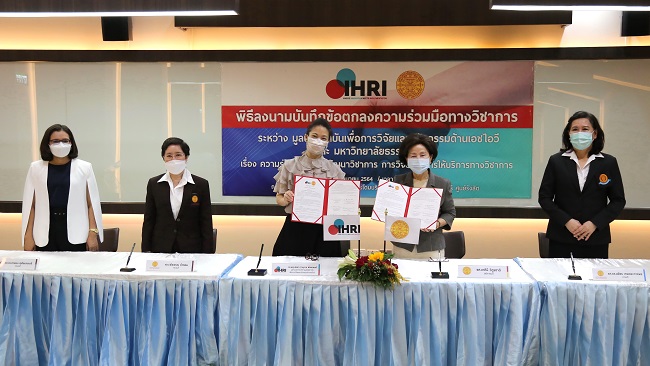
Ministry of Higher Education, Science, Research and Innovation (MHESI) represented by the NCTC: NSTDA Characterization and Testing Service Center, National Science and Technology Development Agency (NSTDA), held a press conference on MOU signing ceremony for scientific instrument analysis and testing between NSTDA and the Advanced Science and Technology, Thammasat University to enhance the bilateral approaches and services.

Dr. Ladawan Krasaechon, Deputy Director of NSTDA and Associate Professor Gasinee Witoonchart, Acting Rector of Thammasat University signed the MOU for scientific instrument testing to enhance the bilateral approaches and services .

Dr. Ladawan Krasaechon, Deputy Director of NSTDA, said, “NSTDA under MHESI is an organization that aims to enhance the practical research, development, design and engineering and promote the human resource development as well as the vital scientific and technological infrastructure with the National Quality Infrastructure (NQI) to allow Thai standard to be consistent with international standards through the NCTC, which is a provider of international standard characterization and testing.”

Dr Ladawan continued, “NCTC is the central laboratory of NSTDA that supports research and provide analysis, testing and development services with various techniques (share use-related) which mitigates the redundant burden of NSTDA and Thailand’s investment on equipment. It aims to provide the characterization and testing services according to the standards, support research and high-value product development as the operational center for the development and promotion of scientific and technological characterization and testing services with modern equipment, control of the laboratory quality system to meet the international standard ISO / IEC17025 for the organization’s efficiency and effectiveness.”

NSTDA and the private sectors in Thailand Science Park as well as related networks and partners currently focus on the analysis and testing of products for reliability. Thus, the characterization and testing service has been developed with modern scientific instruments providing the international standard accreditation for private and public agencies, including ISO standards, Thailand Industrial Standards (TIS) and other specific standards. NSTDA covers testing instruments for various industries providing support on the studies by researchers and modern scientific equipment and developing high-value products for the public and private sectors in many industries.

“It would be impossible to successfully promote NSTDA’s research, analysis, testing and services to meet international standards without cooperation and collaboration with educational institutions of advanced research centers. This will also increase opportunities to develop the laboratory standards, making Thailand’s research and analysis and testing development meet the international standards and encourage the integration of expertise from various fields which results in products that improve the quality of life and drive the national knowledge-based economy,” said Dr Ladawan Krasaechon, Deputy Director of NSTDA.

Associate Professor Gasinee Witoonchart, Acting Rector of Thammasat University, said,  “This MOU signing ceremony with the Advanced Science and Technology, Thammasat University which included for the Center of Scientific Equipment for Advanced Research, Drug Discovery and Development Center, Laboratory Animal Center, Centre of Intellectual Property and Business Incubator which was the central units of Thammasat University that provide services.”

“This cooperation would give opportunities for both organizations on analysis and testing and bilateral cooperation in the development of method and services with scientific instruments, interpersonal knowledge integration. The application of tools and resources could be efficient and flexible in management leading to innovation that will benefit the national development,” Associate Professor Gasinee Witoonchart concluded.

Chulalongkorn University trains sniffer dogs to detect people infected with COVID-19 in Thailand

The Faculty of Veterinary Science, Chulalongkorn University (CUVET) unveiled its latest effort in training a pack of sniffer dogs to detect people with COVID–19.  The project reached 95% accuracy, and the dogs are ready for duty at airports in support of the normal screening process.

Temperature screening only works in symptomatic COVID-19 cases, but sniffer dogs are trained to detect asymptomatic people.

The “Sniffer Dogs to Detect Asymptomatic COVID–19 Cases” project is the latest work by CUVET, in collaboration with Chula Faculties of Medicine and Science with funding support from Chevron Thailand Exploration and Production Co., Ltd.

“A dog’s sense of smell is 50 times better than humans, so we thought of tapping into this potential,  particularly in Labrador Retrievers with their long nasal cavity.  They are very sensitive to scents, friendly, and easy to train.  We picked six dogs to be initially trained in this project”, said Prof. Dr. Kewali Chatdarong, Deputy Dean for Research and Innovation, CUVET, and head of the research project.

Tests showed that this pack of dogs was 94.8% accurate in their detection of asymptomatic COVID-19 cases, comparable to other countries, such as Finland, Germany, France, and Australia, etc.

Prof. Dr. Kewali Chatdarong, Deputy Dean for Research and Innovation, CUVET
Prof. Dr. Kewali Chatdarong,

Deputy Dean for Research and Innovation, CUVET

“The research team collected sweat samples of infected persons.  These samples are confirmed secretion with no viral contamination.  We blotted the underarm sweat with cotton pads and socks and stored the samples in a biosafety laboratory. Then, these cotton pads and socks were put in cans for the dogs to sniff. After the dogs smelled these samples, they would immediately sit down identifying an infectious person though asymptomatic.”

“All testing procedures were safe for both the dogs and personnel involved.  The team used sweat samples from people infected with COVID-19 and let the dogs sniff from the distance. All tools were sterilized,” confirmed Assoc. Prof. Dr. Somporn Techangamsuwan, infectious disease veterinarian, one of the researchers.


Assoc. Prof. Dr. Somporn Techangamsuwan, infectious disease veterinarian

Assoc. Prof. Dr. Somporn Techangamsuwan,

Infectious disease veterinarian

This research was conducted over a period of six months and divided into three phases. The first phase of two months was spent testing the dogs’ ability and training them to distinguish the infected person’s odor with accuracy, speed, and certainty. The preparatory training received support from the Border Patrol Police 43rd Division and PQA Associate Co., Ltd.

Next, came practical trials at the airports, ports, and popular tourist destinations by letting the dogs sniff people’s feet. The third phase focused on new screening tools such as sensors to identify people fitting the infection profile, by the faculty members of the Faculty of Science, led by Assoc. Prof. Dr. Thammanoon Nuchak and Dr. Chadin Kulsing.

“This is Thailand’s prototype project of canine training for medical use. In the future, there will be training to detect other diseases such as diabetes, depression, malaria, and Alzheimer’s,” Prof. Dr. Kewali, the Project Leader concluded.

Thammasat University partners with TCG to offer Finance and Business Administration course

The Faculty of Economics, Thammasat University organized the MOU signing ceremony with the Thai Credit Guarantee Corporation (TCG), a state-owned specialized financial institution serving to assist small and medium enterprises (SMEs) through credit guarantees, represented by Assoc. Prof. Dr. Supachai Srisuchart, Dean of the Faculty of Economics and Dr.Rak Vorrakitpokatorn, Director and General Manager of TCG on Friday March 12, 2021 at the 5th Floor Meeting Room, Faculty of Economics, Thammasat University, Tha Prachan Campus.

The Memorandum of Understanding (MOU) aims to enhance the workforce by employing the strengths of both institutions. The Faculty of Economics, Thammasat University, is a leading educational institution with highly qualified faculty members.

They are devoted to educating and developing future assets of the national workforce. TCG will strengthen the confidence of financial institutions in providing credits and assisting potential SMEs entrepreneurs who have insufficient guarantee by ensuring that they receive sufficient credit

The objective of this collaboration is to strengthen the expertise of students and the public. Faculty of Economics, Thammasat and TCG, therefore, design the course together according to the expertise or experience of TCG and its partners by striving to produce academic outputs that meet the business needs.

In addition, internships and job visits at TCG and SMEs will provide business experiences to students and encourage students to undertake business promotion projects for their own future careers and sustainable growth. The course is expected to be open by May 2021.

Thammasat University inks MoU on climate change

Associate Professor Dr. Suppachai Srisuchat, Dean of the Faculty of Economics, Thammasat University, along with Associate Professor Chol Bunnag, Director of SDG Move, participated in the signing ceremony of the memorandum which outlines the understanding on the development of potential and promotion of knowledge on climate change held at True Digital Park.

It also marked the launching of the Gen C Climate Actions, a project in collaboration with the Thailand Greenhouse Gas Management Organization (Public Organization) or TGO and participating universities to the younger generation on the digital platform of their choice. The program aims to promote understanding and incorporating the knowledge gained into daily life as a way to battle climate change.

The Gen C Climate Actions project was initiated by TGO as part of the TGO – Climate Action Academy in collaboration with the Global Compact Network (GCNT), SDG Move, The Association of Siamese Architects under Royal Patronage, and four universities (Chulalongkorn University, Thammasat University, Burapha University, and Chiang Mai University).

The aim of the project is to educate the younger generation in order to prepare them for the combat of climate change through various fields of studies. This project will be implemented for three years (2021-2023).

In order to ensure the continuation and cooperation between all parties involved, the memorandum of understanding was signed between TGO and the four universities. The goal of this memorandum is focused on cooperation in the development of knowledge in climate change and promotion of the development of university personnel and student potential in interesting ways.

The enhancement of their capabilities in reducing greenhouse gas emissions and adjustments in response to climate change with appropriate practice. Success in reducing greenhouse gas emissions, including the organizing of e-learning workshops by the TGO Climate Action Academy for dissemination of climate change knowledge among the participating universities.

Towards the end of the event, the “C Generation Together Solving Global Warming” discussion was held with representatives from all four universities participating in exchanges about the roles and importance of the academic sector in raising awareness in society, especially the younger generation, such that they recognize the need to solve global warming.

Each university discussed teaching efforts and integration of environmental issues as part of the curriculum. They jointly agreed that environmental issues are important issues that have created a space for discussions and exchanges among all subject files in order to solve these problems.

From Thammasat University, Associate Professor Chol Bunnag participated in the exchanges and expressed the opinion that global warming is a major challenge to sustainable development goals (SDGs) and that raising the awareness of citizens is necessary but not only to promote initiatives and actions but to also echo the voice of society for policymakers to bring about efforts to solve global warming as part of policy agendas on every level and that these need to be implemented seriously.

As for future projects, activities will be organized to provide information about climate change in E-learning format on the platform of the TGO with participating universities, which includes active learning under the Gen C Climate Actions Program.

Chulalongkorn University successfully uses stem-cell transplantation to treat systemic sclerosis patients with pulmonary fibrosis

The Division of Rheumatology, Department of Medicine, Faculty of Medicine (CU Medi), Chulalongkorn University and King Chulalongkorn Memorial Hospital, the Thai Red Cross Society (Chulalongkorn Hospital), in collaboration with the Departments of Hematology, Pulmonary and Critical Care Medicine, and Infectious diseases, held a press conference on “Thailand’s first successful treatment of systemic sclerosis patients with pulmonary fibrosis by stem cell transplantation”.

Prof. Dr. Suttipong Wacharasindhu

Prof. Dr. Suttipong Wacharasindhu, Dean of CU Medi and Director of Chulalongkorn Hospital said that both CU Medi and Chulalongkorn Hospital have been developing the services, healthcare innovation, medical equipment, and application of modern technology to patient care to ready themselves for the current and future changes in the field of medicine. They have an extensive body of research and medical innovations on stem cells.

Most recently, the Rheumatology Division, in collaboration with Hematology, Pulmonary and Critical Care Medicine, and Infectious Diseases Departments were the first in Thailand to successfully treat two systemic sclerosis patients with pulmonary fibrosis by stem-cell transplantation.  Such success demonstrates the expertise, specialization, and dedication of the healthcare teams in applying knowledge, research and medical technology on stem cells to help improve patients’ quality of life.

Prof. Dr. Thiraphong Tanthawichien

Prof. Dr. Thiraphong Tanthawichien, Head of the Department of Medicine, CU Medi said that the success in treating systemic sclerosis patients with pulmonary fibrosis by stem cell transplantation is a source of great pride for CU Medi.  It is a modern treatment that is made possible because of the cooperation from specialists in various fields and will be optimized to benefit the whole country in the future.

Prof. Dr. Manathip Osiri

Prof. Dr. Manathip Osiri, Head of Rheumatology, Department of Medicine, CU Medi said that systemic sclerosis is an autoimmune disease that can cause malfunctions of many internal organs.  It is characterized by the formation of fibrosis on the skin and internal organs. It hardens the skin and causes fibrosis in the lungs, and cardiac muscles, and can lead to an enlarged heart and heart failure. Most patients suffer chronic symptoms, while some can suffer acute onsets and die.

Medications to treat this disease and control its progression include vasodilator drugs, immunosuppressants, used in combination with drugs that help slow down or reduce the fibrosis.  However, these drugs are only effective in patients with gradual symptoms.  In patients with acute and aggressive progression, treatment by regenerating the immune system to regulate its function will help slow down the disease progression, reduce damage to the organs, and prevent premature death.

Asst. Prof. Dr. Udomsak Bunworasate, Head of Hematology, CU Medi revealed that the way to effectively treat this type of autoimmune disease that causes inflammation and fibrosis in the organs is aiming to eliminate the malfunctioning immune cells and normalize the immune system.  Such treatment is usually not possible with a regular dose of immunosuppressants but should be done with a high dose together with antibody treatment, followed by stem-cell transplantation created from the patients’ stem cells harvested during the treatment.

The hematopoietic stem-cell transplantation will help patients recover faster, and regenerate new immune cells.  In other words, this is a rearrangement of the immune system by stem-cell transplantation.

The first step is to select the right patients for the treatment. The next step is to harvest the stem cells and freeze them. During this period, the patients are kept in a sterilized room and cared for by a team of doctors and nurses specializing in caring for people with low immunity. After the stem cells start to work, patients will have their immune systems restored to normal and can be discharged from the hospital. They will then be periodically monitored, to see the progress of stem-cell transplantation.

Assoc. Prof. Dr. Kamon Kaewkitinarong

Assoc. Prof. Dr. Kamon Kaewkitinarong, Head of the Pulmonary and Critical Care Medicine, CU Medi, observed that most systemic sclerosis patients with pulmonary fibrosis also suffer from noninfectious inflammation. Patients often show symptoms of dry coughs and shallow breaths which induce hyperventilation. They are easily fatigued after exertion and become less active.  Disease progression differs for each patient and is unpredictable.

Dr. Chakkapat Vanichanan

Dr. Chakkapat Vanichanan, Lecturer and Transplant Infectious Disease Specialist, Department of Medicine, Chulalongkorn Hospital, concluded that preparing the patients by assessing the risk of infection and screening for latent infection before stem-cell transplantation, as well as prescribing antibacterial drugs are very important preventive steps to reduce the likelihood of infections.

The top concern for systemic sclerosis patients with pulmonary abnormality who are candidates for stem-cell transplantation is pneumonitis which may be caused by bacteria, especially drug-resistant bacteria, or fungal infection.  This will worsen the already-troubled respiratory system and can cause early respiratory failure and deterioration of the lungs in the long run.  Therefore, intensive monitoring after stem-cell transplantation plus immediate prescription of antibacterial drugs once there is a sign of infection will reduce the death rate in the patients.

Thammasat University organizes 2021 Puey Ungphakorn Memorial Day

Thammasat University by Thammasat University Library, Faculty of Economics, and the Development Science College Puey Ungphakorn have organized the “2021 Puey Ungphakorn Memorial Day” on March 9, 2021, to honour Professor Dr Puey Ungphakorn. The opening ceremony of Thammasat University Archives was at 100-Year Puey Learning Park Building.

Associate Professor Gasinee Witoonchart, Acting Rector of Thammasat University, said Prof. Dr Puey Ungphakorn played an important role in laying the foundations of Thailand’s economic development.

“He always dedicated himself to the country with integrity and work ethics which UNESCO named him as one of the world’s most important people due to his remarkable achievements in education, social sciences and humanities. It is a great opportunity to open Thammasat University Archives which stand to preserve the historical records of the university,” said Associate Professor Gasinee.

Thammasat University Archives was established in 1991 as a place to store records and important memories and history of Thammasat University.  It is an important source of information service for research and development for students and the community.

For almost 30 years, TU Archives has performed its duties and became one of the departments of TU Library in 2017. This enabled the updates and development of innovative management of archives with the digital file format, international standard document management systems, and internet access to most of paper documents.

Thammasat University Archives is located at the 100-year Puey Learning Park Building which has established its office and service area with the new design for active learning. The key area of the archives is the exhibition “Puey The Commoner: Life, Ideology and Works”.  The exhibition is divided into two sections:  a permanent and a virtual exhibition to honor him as the person who laid the foundation and expanded the university to Rangsit Campus.

The library is now working on the conversion of documents concerning all of Thammasat University’s history onto PDF file for the ease of use and maintenance in research and future study.