The 45th anniversary of Yessenov University

One of the leading universities of the Caspian region, Caspian Technology and Engineering University named after Sh.Yessenov (Yessenov University) had a very spectacular and bright journey of 45 years across the time. Through progressive reforms on the development and modernization of education in the country, the University became the platform for major changes relating to both expanding the material and technical base, and improving the research and educational potential of the university.

Yessenov University is the hub for education and upbringing, science and culture in the region. The university trains specialists for the oil and gas industry, road transport, mechanical engineering, as well as pedagogy, law, economics, information systems, standardization, finance, geology, ecology, heat power engineering, and construction.

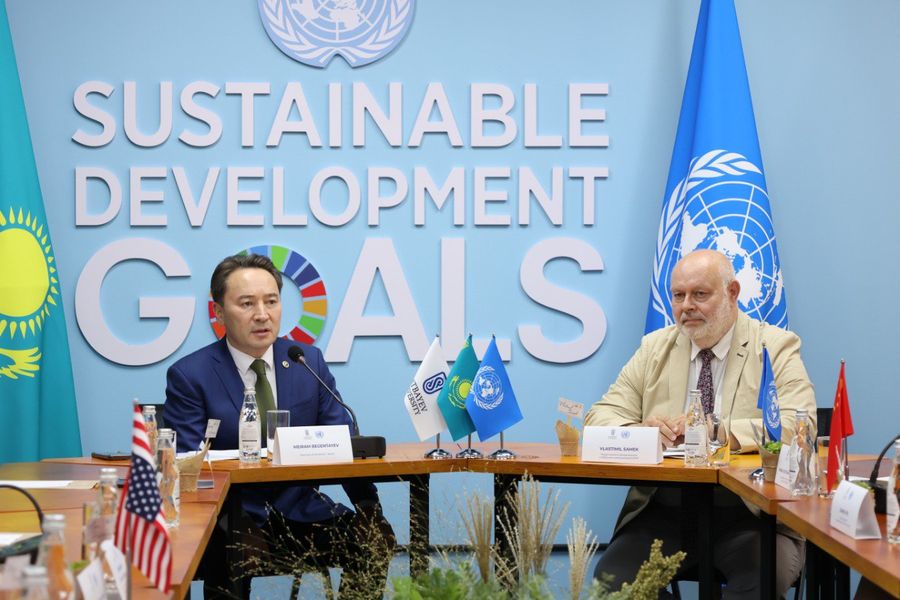
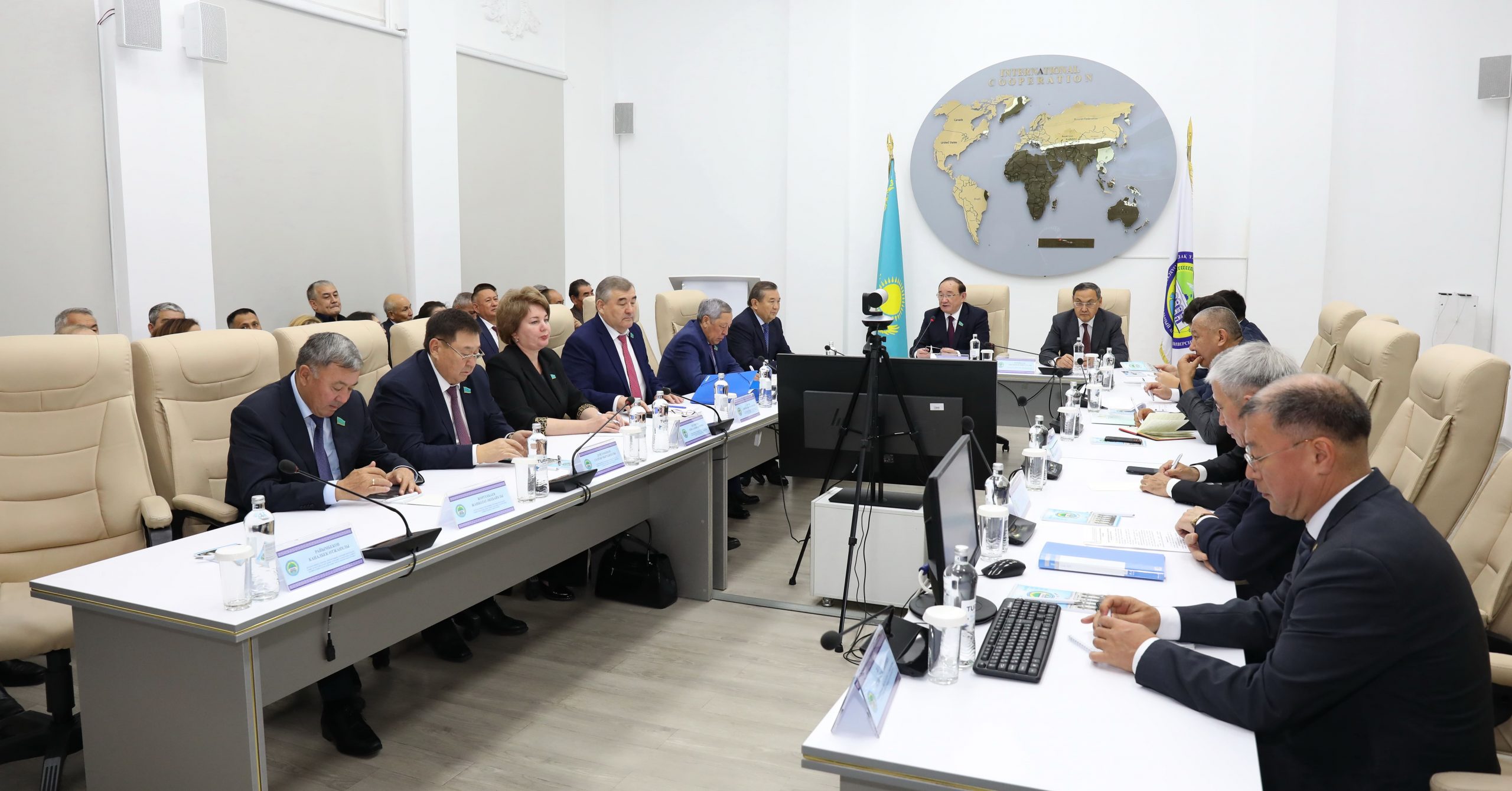
The 45th anniversary of Yessenov University was celebrated on December 2-3, 2021. The celebration consisted of a number of events that included Forum, concerts and General Assembly. On December 2, in honor of the 45th anniversary of Yessenov University, a Forum was attended by the Mayor of Mangistau region Nurlan Nogayev, Executive Director of the Association of universities and research centers of the Caspian states Yuri Pimenov, President of the Association of universities of the Republic of Kazakhstan Rakhman Alshanov, Managing Director of the Kazakh Institute of Oil and Gas Zhaksybek Kulekeyev, President of the Almaty University of Management Asylbek Kozhakhmetov, General Director of the Eurasian Center for Population Management, an expert in the field of social and labor relations and strategic communications Yerbol Ismailov, travel blogger, eco-activist, civil journalist Yakov Fedorov held the opening ceremony of Yessenov Forum: New Meanings, which last two days.

As a part of the occasion, the XXIII General Assembly of the Association of universities and research centers of the Caspian countries was held on these dates to summarize the achievements and widen the cooperation between the states. Rectors of universities of the Republic of Kazakhstan, rectors of the Association of the Caspian States, opinion leaders by industry, stakeholders, higher education experts, educational organizations and students of the Mangystau region took part in an important event that determines the prospects for the development of the university for the next 5 years. The Assembly was attended by the scientific representative of the Islamic Republic of Iran in Russia and the CIS Mohsen Najafi, representatives of the consulates of the region, rectors of the Association of the Caspian states and rectors of Kazakhstani universities. As a result, a series of memorandums of cooperation were signed between the Association of universities of the Republic of Kazakhstan and the Association of state universities and research centers of the Caspian countries.

New energy source for car is created in Al-Farabi Kazakh National University

Tolganay Temirgalieva, a doctoral student at Al-Farabi Kazakh National University, a researcher at the Institute of Combustion Problems, creates supercapacitors – new generation batteries. In the manufacture of lithium batteries, rare earth, reactive metals are used that are toxic during use and disposal.

The advantage of such batteries is a long life cycle: up to 1 million charge-discharges versus 3 thousand for lithium ones. In addition, supercapacitors are dozens of times lighter than traditional ones and release a charge very quickly: a mobile phone can be fully charged in just seconds.

Supercapacitors have less energy stored in 1 kg of the device than in a lithium battery. Energy capacity is increased due to nanotechnology. “Tolganai uses nanotubes instead of polymers used in lithium batteries. This is the uniqueness of her work, ”says Mukhtar Eleuov, a colleague of the inventor from the Institute of Combustion Problems.

The nanotubes were developed at Waseda University (Tokyo) under the guidance of Professor Suguru Noda. The Japanese have also created and are already selling carbon-based electrodes. But their material “Kurarai” has a capacity of 120 farads, and the materials of Tolganay – 180-200 farads per gram. Therefore, the Japanese professor began to cooperate with a scientist from Kazakhstan: from them – nanotubes, from us – coal from waste. “Using materials based on rice hulls and apricot kernels, it achieved good performance comparable to commercial activated carbon,” comments Professor Noda.

So far, the development of Tolganai can be used for electric vehicles. When the volumes of supercapacitors are “compressed” to the size of batteries for portable devices, the scope of their application will significantly expand.

Carbon-containing materials at the junction of interdisciplinary scientific programs of chemistry and biomedicine

In 2018, at the Faculty of Chemistry and Chemical Technology of Al-Farabi Kazakh National University (Al-Farabi KAZNU), an educational program for pharmaceutical production technology (TPP) was opened, the symbiosis of which is chemistry and pharmaceutics; under the program of nanotechnology and nanomaterials, the disciplines of the module of fundamentals of biotechnology, nanoengineering in biotechnology, computer modelling of nanostructures and the bionanosystems industry are taught.

Students learn to build physicochemical models of the studied phenomena in medicine,
select experimental methods and electronic equipment, assess the consistency of the use of nanotechnological developments in medicine. Interdisciplinarity allows students to apply modelling methods using modern software to solve basic problems in relation to the modelling of nanosystems.

One of the successful developments of students and staff of the Faculty of Chemistry and Chemical Technology is the synthesis of new sorbents for multifunctional biomedical use. Carbon-containing sorbents for biomedical purposes are obtained by thermal-oxidative modification of rice peels. This process ensures the formation of the necessary structural and physicochemical properties of the final products.

On the initiative of the staff of al-Farabi KazNU, together with medical organizations of Kazakhstan and foreign partners, special laboratories for the production of drugs that are urgently needed for the health care of the republic are prepared and tested, among them are a cartridge for blood purification with carbon hemosorbent, in the form of a multichannel monoblock of laminar flow UG-1, sorption-bactericidal bandage “Aibolit”
and capsules with enterosorbent Bio Life.

The novelty of the technology lies in the unique composition and structure of carbon-containing nanostructured sorbents. The synthesized sorbent has an optimal pore structure in the macro-, meso- and nanoscale regions. This determines the versatility and speed of action of the drugs and its high sorption capacity.

The fundamental difference between the products and existing analogues is that carbon-containing nanostructured sorbents are characterized by natural origin, high efficiency, the content of natural silicon dioxide, the presence of mesopores, the absence of genetically
modified objects and any artificial ingredients.

The products have a low cost and a high degree of commercialization within the republic and abroad.

Thus, in order to develop a technology for the synthesis of a modern innovative medical device, specialists in the related fields of chemistry and medicine, who participate in the treatment and diagnostic process and who are the developers of new drugs for medicine, are urgently needed.