UNAIR hosts U.S. Embassy delegation

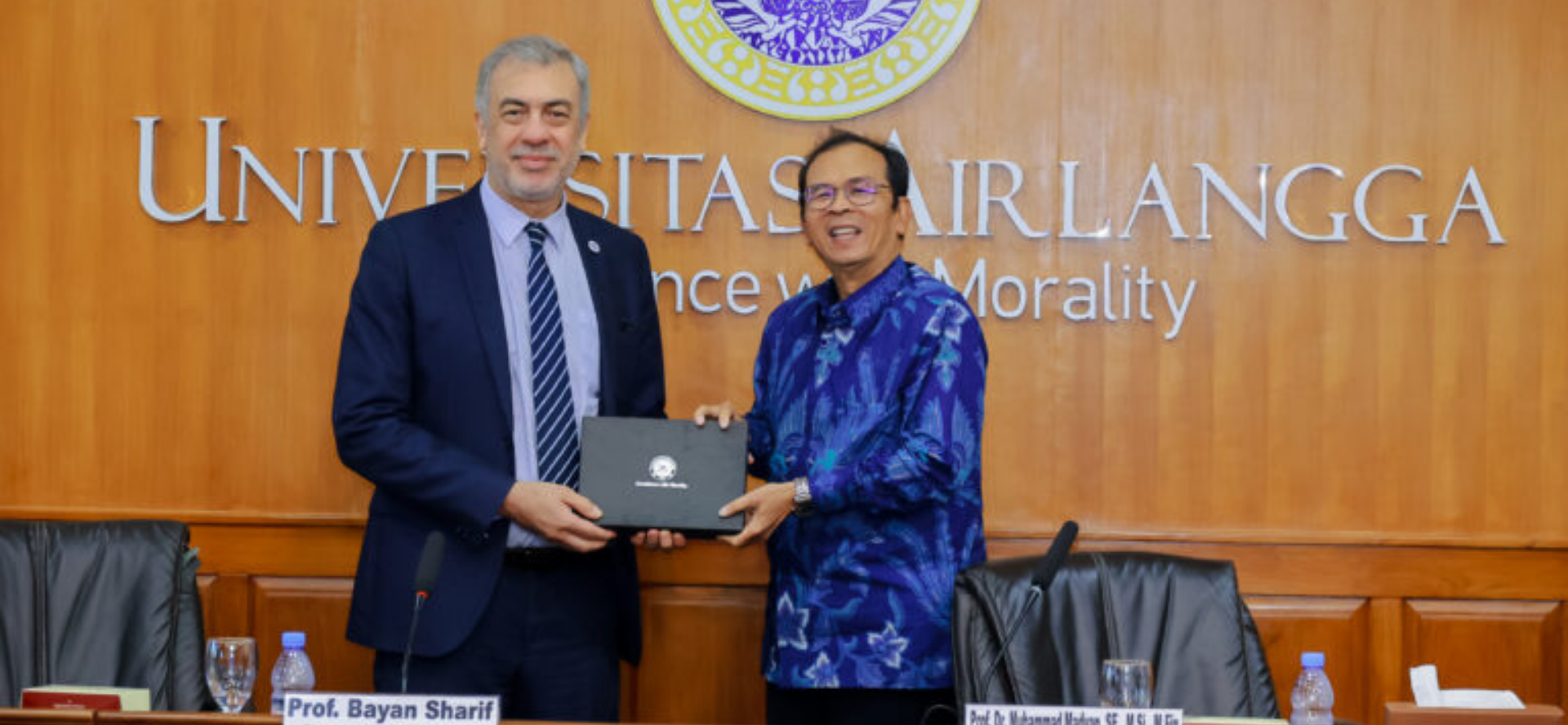
Universitas Airlangga (UNAIR) hosted a delegation from the U.S. Embassy in Jakarta and the U.S. Consulate General in Surabaya to reinforce strategic cooperation in education, research, and community engagement. The meeting took place in the Rector’s Meeting Room at UNAIR’s MERR-C Campus in Surabaya on Wednesday (January 21, 2025). UNAIR Rector Prof. Dr. Muhammad Madyan, SE, MSi, MFin, together with senior university leaders, welcomed the delegation led by Mr. Anup Mahajan, General Public Engagement Specialist at the U.S. Embassy in Jakarta. The visit provided a platform to explore long-term collaboration opportunities between UNAIR and U.S.-affiliated academic institutions and programs.

In his opening remarks, Rector Prof. Muhammad Madyan emphasized UNAIR’s strong commitment to international cooperation, particularly with the U.S. Embassy, which has supported various academic and capacity-building initiatives over the years. He said the partnership aligns closely with UNAIR’s aspiration to be recognized as a world-class university. “UNAIR is dedicated to broadening its global engagement. Collaboration with the U.S. Embassy not only facilitates academic mobility but also advances research and innovation that deliver meaningful benefits to society,” Prof. Madyan said.

He also highlighted the continued importance of initiatives such as the American Corner, which function as hubs for knowledge sharing, cultural exchange, and the promotion of global perspectives within the university community. Opportunities for Joint Programs Speaking on behalf of the U.S. Embassy in Jakarta, Mr. Anup Mahajan expressed appreciation for UNAIR’s hospitality and noted the embassy’s openness to expanding cooperation, particularly in STEM education and capacity-building programs for students and faculty.

“We regard UNAIR as a key strategic partner. There is significant potential for flexible collaboration through American Spaces, educational initiatives, and programs that engage both students and researchers,” Mr. Mahajan said.

Separately, UNAIR Vice Rector for Research, Innovation, and Community Development (RICD), Prof. Dr. Muhammad Miftahussurur, dr., Sp.PD-KGEH, PhD, underscored the importance of international partnerships in strengthening research quality and community outreach. “This collaboration is expected to be integrated into UNAIR’s curriculum and research priorities, ensuring tangible contributions to scientific advancement and public benefit,” he said.

The meeting concluded with both UNAIR and the U.S. Embassy expressing their shared commitment to developing concrete steps for future collaboration, while enhancing the role of higher education in responding to global challenges.

UNAIR sends medical team to Sumatra

The recent floods and landslides that have struck several regions across Sumatra over the past few days have caused widespread humanitarian impacts, ranging from fatalities and infrastructure damage to the displacement of thousands of residents. In response, the Faculty of Medicine (FK) Universitas Airlangga (UNAIR) mobilized its Disaster Response Unit to assist affected communities. The rapid deployment reflects UNAIR’s commitment to supporting residents facing emergency conditions at multiple evacuation sites.

“As part of this nation, FK UNAIR cannot stand by. We are sending our medical personnel to provide assistance to victims of the floods and landslides in Sumatra,” said Prof. Dr. Eighty Mardiyan K, dr SpOG SubSp Urogin RE, Dean of UNAIR’s Faculty of Medicine. UNAIR has depolyed a joint medical team comprising staff from FK UNAIR, UNAIR Hospital, and Dr. Soetomo Regional Hospital. The team includes Dr. M. Hardian Basuki, SpOT (K); Dr. Airi Mutiara, SpAn (K); Dr. Arya Wiradewa; Dr. Yehezkiel Edward; and Dr. Zulfikar Loka Wicaksana.

Prof. Mardiyan confirmed that the team departed by land on Friday (Dec. 6, 2025). They have since reached Aceh Tamiang after traveling through Medan. Early reports indicate that the situation in Aceh Tamiang is dire, with no functional healthcare facilities available. Dr. Mutiara stressed the importance of coordinating with local authorities. The team has held discussions with the Deputy Regent of Aceh Tamiang regarding the establishment of a temporary health post. “A clinic has been made available to us with the owner’s permission. We hope this will help address the urgent need for medical services following the disaster,” she said.

Healthcare workers and medical supplies have been prepared to support the emergency response.

UNAIR plans to expand its support for flood and landslide relief efforts in Sumatra, including sending additional medical teams, logistical aid, and other necessary resources. The university reaffirmed its commitment to serving communities in need.

UNAIR RSKKA sends aid to Sumatra

Universitas Airlangga (UNAIR) has once again demonstrated its dedication to the nation. The Ksatria Airlangga Hospital Ship (RSKKA) is currently en route to Aceh Tamiang to support communities affected by widespread flooding and landslides across parts of Sumatra.

Prof Hery Purnobasuki, MSi, PhD, Head of the Institute for Sustainable Community Service (LPMB), reported that the RSKKA Rapid Health Assessment team has coordinated closely with UNAIR Hospital. The team has secured a clinic to function as its operational base, offering both outpatient and inpatient care in Aceh Tamiang.

“Reports from our team in Aceh highlight urgent needs, including general physicians, nurses, midwives, nutrition staff, pharmacists, public health workers, university students, and logistical support. In response, we are deploying medical personnel equipped with essential supplies, generators, and additional fuel,” he said.

Preventing potential disease outbreaks

In distributing medical assistance, Prof Purnobasuki stated that UNAIR is working directly with the doctors assigned to RSKKA. The medical response will prioritize preventing illnesses that commonly emerge and spread following large-scale flooding, requiring early and proactive intervention.

“The diseases we are preparing for include diarrhea, typhoid, cholera, and hepatitis, which often arise from food contamination due to floodwater. We are also monitoring for leptospirosis transmitted through open wounds, mosquito-borne illnesses such as dengue and malaria, acute respiratory infections, and various forms of skin irritation,” he explained.

Prof Purnobasuki added that although RSKKA continues humanitarian missions in other regions, the team has accelerated its emergency response by sending doctors ahead of the vessel. These physicians traveled by air to immediately assist residents affected by the floods and landslides in Sumatra.

“We hope this advance medical team can assess the community’s needs, provide an accurate overview of on-the-ground conditions, and support trauma care for survivors. RSKKA will focus especially on helping restore the local healthcare system until meaningful recovery begins to take shape,” he said.

Sesama Project Encourages Self-Love

The Faculty of Social and Political Sciences at Universitas Sumatera Utara (USU) advances its commitment to the Sustainable Development Goals through Sesama Project, a student initiative focused on strengthening mental health awareness among young people. The program supports SDG 3 on good health and well-being and SDG 4 on quality education by encouraging self-awareness, empathy, and personal development through experiential learning.

Mental health remains a pressing issue as data from the World Health Organization and Indonesia’s Basic Health Research (RISKESDAS) show a steady increase in depression and anxiety cases. In response, students from the Department of Communication Science, FISIP USU, created Sesama Project to inspire youth to practice self-love as a foundation for maintaining mental balance and spreading positivity within their communities.

The activities were conducted at Car Free Day Medan on September 21 and at the FISIP USU campus on September 29, supported by DiscoverMe and CIMSA Faculty of Medicine USU. The campaign featured interactive experiences such as free psychological consultations, a confession box for emotional expression, and reflective games promoting self-acceptance and social connection.

By transforming mental health discussions into accessible and engaging public activities, Sesama Project bridges academic knowledge with social impact. It emphasizes that self-love is not only a personal mindset but also a collective practice contributing to inclusive mental well-being.

The initiative cultivated a supportive environment that empowered participants to share openly, recognize their worth, and connect with others facing similar struggles. This engagement strengthened solidarity among young people while aligning with national and global efforts to promote mental resilience and reduce stigma surrounding psychological issues.

Through Sesama Project, students of FISIP USU reaffirm their role as changemakers who integrate communication science with social responsibility. The program exemplifies the university’s ongoing contribution to the SDGs by fostering healthier communities, empowering youth leadership, and embedding compassion and self-awareness into the broader pursuit of sustainable development.

RSKKA Team advances post-disaster recovery

In the aftermath of flash floods and landslides that hit Sumatra, recovery operations remain underway, driven by volunteers from various institutions. Among those involved are volunteers from the Ksatria Airlangga Hospital Ship (RSKKA), working alongside a network of university-based volunteers under the Agam Regency Disaster Medical Team (DMT). Together, they have continued to hold discussions and coordinate closely to ensure that post-disaster recovery efforts in affected areas are carried out effectively and strategically.

These coordination activities coincided with a visit by the Director of Institutional Affairs at the Directorate General of Higher Education, Research, and Technology, Prof. Dr. Khairul Munadi, ST, MEng. The visit took place on Friday (12/12/2025) at the Agam DMT command post. At the same time, the team also worked with the Agam Regency Health Office, which operates a Health Emergency Operations Center (HEOC), to assess and map the medical needs of local communities.

Field Coordinator dr. Rizky Loviana Roza, SpAn, said the volunteers coordinated not only with the local health office but also with the most fundamental healthcare providers in the region, community health centers (puskesmas). “At the grassroots level, responsibility for healthcare services lies with the puskesmas. We also coordinated with other universities that deployed volunteers to the command post in Lubuk Basung,” she explained.

“We aligned our efforts to ensure that the medical personnel deployed matched the specific needs of each area. As a result of this coordination, we also established a post at the Puskesmas Malalak,” dr. Roza added.She noted that strengthening coordination among volunteer teams was essential in overcoming severe access challenges to isolated communities. “Access routes to villages and residential areas were cut off. Around three to four hamlets became inaccessible, leaving residents unable to reach puskesmas because roads were blocked by landslides,” she said.

As a result of these coordinated efforts, the team agreed to work closely with relevant government agencies, including the Regional Disaster Management Agency (BPBD), as well as participating universities in Agam Regency. This collaboration led to the establishment of a 24-hour command post and the provision of specialist medical services at the Malalak Community Health Center. In addition, the team carried out home visits for patients who were unable to access healthcare independently due to continued isolation.

Social Cartography Developed by USU Students

A group of Social Anthropology students from the University of Sumatera Utara (USU) has been carrying out a fieldwork program in Samosir Regency, North Sumatra, Indonesia, from September 15 to October 10, 2025. During this period, they are developing a social cartography technique to map waste disposal and accumulation points in public areas such as bridges, waterfronts, markets, and bus terminals.


According to one of the students, Andreadi Simanjuntak, the project aims not only to identify waste hotspots but also to explore the socio-cultural factors behind community behavior regarding waste. The resulting waste maps are expected to serve as a strategic reference for the District Environmental Agency in placing proper waste management facilities.


He further explained that the main mapping sites include areas frequently visited by residents and tourists, traditional markets, bus terminals, and several elementary schools. Through social cartography, the “social footprint” of waste is traced using ethnographic observation, providing insights into community habits, norms, and interactions related to waste disposal. The next step, he said, is to develop educational initiatives addressing these findings.

Head of the Social Anthropology Department, Dr. Irfan Simanjuntak, emphasized that this fieldwork program is designed not only for students to learn directly from the community but also to create impactful interventions—aligning with the current tagline of the Ministry of Research.

Let it Out: Breaking Mental Health Stigma

Medan, October 3, 2025 – Students in Medan, with the support of PTPN as the main sponsor, present “Let it Out Project”, an initiative aimed at reducing the stigma surrounding psychological consultations while providing a space for students and the community to openly share their personal issues.

The event was held on Friday, October 3, 2025, featuring Jeffry, S.Psi., M.Psi., CHt., a certified professional psychologist, who guided participants through personal consultation sessions. The activity was divided into two sessions, from 09:00–14:00 WIB, with the first session in the morning and the second session in the afternoon.

Collaboration with a Professional Psychologist

Jeffry, S.Psi., M.Psi., CHt., is a licensed psychologist who completed his Master’s degree in Professional Psychology at the University of Sumatera Utara (USU). He also holds a Hypnotherapy Certification from IMDHA-USA and is registered as a member of the Indonesian Psychology Association (HIMPSI). His legitimacy and professionalism are evidenced by his Psychologist Practice License (SIPP No: 20230415-2023-01-2665). With a strong educational background and certifications, Jeffry ensures the quality of psychological services provided at this event.

Let it Out Project is committed to providing accessible psychological services to students and the community, particularly for those who still feel hesitant or burdened to seek professional help. The event limited participation to only 10 individuals to ensure each person receives full attention in a more intimate and personal atmosphere.

Providing a Space to Talk

This activity was motivated by the fact that many students remain reluctant to seek psychological help due to negative stigma. Psychological consultation is often perceived as only necessary for those considered “unable to handle problems.” However, speaking with a professional can be extremely helpful in managing emotions and facing life’s challenges.

“Many people feel doubtful or even reluctant to seek psychological help, when in fact talking to a professional is very beneficial for organizing one’s feelings and facing life’s challenges. Psychological consultation is not only for those facing major problems, but also for anyone who wants to better understand themselves and find solutions to everyday issues,” said Jeffry, S.Psi., M.Psi., CHt., the psychologist facilitating this event.

The Chief Organizer, Ariq Ismail, stated that Let it Out Project aims to facilitate students’ access to psychological services without fear or shame. “We realize that many students feel anxious about asking for help or don’t know where to turn. Through this event, we hope they can have a space to talk while receiving guidance from a professional psychologist,” Ariq expressed.

Participant Testimonial

One participant who attended this session (name withheld upon request) shared positive feedback about their experience: “AMAZING! I became more capable of addressing my problems. Thank you so much!”

Let it Out Project not only focuses on personal consultations but also opens opportunities for students and the community to express their feelings without fear of judgment. With an exclusive concept that prioritizes quality over quantity, this program accommodated only 10 selected participants in one session.

This program serves as a concrete example of synergy between academia and the industrial sector in providing tangible solutions to mental health issues experienced by students and the wider community.

FIB UNAIR expands partnerships with UKM

The Faculty of Humanities (FIB) Universitas Airlangga (UNAIR) has further strengthened its international engagement by signing an Implementation Agreement with Universiti Kebangsaan Malaysia (UKM) on Monday (November 17, 2025). The signing ceremony was held at the Centre for Research in Language and Linguistics, Faculty of Social Sciences and Humanities, UKM, a regional hub widely regarded as a leader in linguistic and language studies in Southeast Asia.

The agreement represents a concrete follow-up to the shared commitment of both institutions to deepen cooperation in academic programs, research collaboration, and international mobility. Conducted in a collegial and productive setting, the meeting marked the start of a broader, long-term partnership between UNAIR and UKM.

Representing FIB UNAIR, Rizki Andini, S.Pd., M.Litt., PhD, and Nunuk Endah Srimulyani, SS, MA, PhD, were formally welcomed by senior representatives of UKM. The delegation was received by Prof. Dr. Nor Fariza Mohd Nor, Chairperson of the Centre for Research in Language and Linguistics, alongside Assoc. Prof. Dr. Mohd Suhaimi Mohamad, Vice Dean of the Faculty of Social Sciences and Humanities, and Assoc. Prof. Dr. Ashinida Aladdin, Head of the Foreign Languages and Translation Unit.

During the discussion, both universities outlined their institutional visions, flagship initiatives, and prospective areas of collaboration. UKM expressed strong interest in expanding cooperation with UNAIR, particularly in language studies, cross-border teaching initiatives, and multidisciplinary research projects.

The signing of the Implementation Agreement paves the way for a series of collaborative programs slated for near-term implementation. Several initiatives were formally introduced and agreed upon by both parties, including:

1. Virtual Teaching and Learning (Joint Classes)

This virtual joint-class initiative allows students from both universities to participate in courses co-taught by faculty members from FIB UNAIR and UKM. The program is designed to broaden students’ academic exposure to language studies, cultural perspectives, and international research methodologies.

2. Staff Outbound and Academic Mobility

Faculty collaboration will include teaching visits, academic workshops, and professional development activities. The program offers FIB UNAIR lecturers opportunities to strengthen international networks and gain first-hand experience within UKM’s academic environment.

3. Student Exchange Program

FIB UNAIR students will be eligible to take part in short-term or full-semester exchange programs at UKM. The initiative aims to enrich students’ learning experiences while enhancing their global awareness and intercultural competence.

4. Master’s Scholarship Opportunities through the Graduate on Time (GOT) Scheme

A key component of the agreement is the availability of master’s degree scholarships for FIB UNAIR students. Through UKM’s Graduate On Time (GOT) scheme, students are encouraged to complete their studies within the designated timeframe, supported by intensive academic supervision and strong research facilities. The program presents a valuable pathway for UNAIR graduates to pursue advanced studies in Malaysia with competitive funding.

5. Research Collaboration and Matching Fund

UKM also introduced opportunities for research matching funds, enabling joint financing for collaborative research between UNAIR and UKM scholars. The scheme supports regionally and internationally oriented research, particularly in applied linguistics, cultural studies, language education, and other interdisciplinary fields.

This partnership forms part of UNAIR’s broader strategy to accelerate academic internationalization. Collaboration between FIB UNAIR and UKM is expected not only to enhance the global standing of both institutions, but also to generate tangible benefits for their academic communities through research, teaching, and capacity-building initiatives. The agreement also opens avenues for international conferences, joint publications, curriculum development, and sustained scholarly exchange.

Journalism at the Crossroads of Crisis

Inside a journalism classroom at the Faculty of Social and Political Sciences, Universitas Sumatera Utara (FISIP USU), only four seats are filled for the 2023 journalism cohort. In 2022 there were nine, and two years before that, eighteen. These steadily shrinking numbers seem to hold a bigger question: why are fewer young people choosing to study journalism, at a time when the world arguably needs credible information and professional journalists more than ever?

For many students, choosing journalism feels like choosing a lonely road. One journalism student shared that she often has to answer questions like, “Why bother becoming a journalist when everyone can make news on social media?” Most of her classmates opt for public relations or advertising—paths seen as more “secure” career-wise.

“I still believe journalism matters, but honestly, the idea of becoming a journalist scares me a bit. The pay is low, the risks are high, and even my parents asked me to reconsider,” she said.

This worry is not unique to Universitas Sumatera Utara (USU). Across campuses in Indonesia, the number of students majoring or concentrating in journalism continues to fall. Antara News (2023) reported that several major universities now have fewer than ten journalism students per cohort. The trend isn’t exclusive to Indonesia either: a Pew Research Center survey (2022) in the United States found that 72% of young people prefer jobs in digital creative industries over traditional newsrooms.

The Era of Disruption and a Shaken Media Industry

The media industry itself is in turmoil. Print advertising revenue keeps plummeting, while online outlets compete fiercely with social media algorithms. Many newsrooms have downsized; some have shut their doors entirely.

Meanwhile, the content creator profession appears far more promising: higher potential income, flexible hours, easier visibility. It’s no surprise that many young people are reconsidering their options.

A Paradox: Needed, Yet Abandoned

And yet, in this age of information overload, journalism’s role is more vital than ever. The World Press Freedom Index 2024 emphasizes that democracy cannot survive without free and high-quality journalism.

“Journalistic ethics are our foundation. They guide journalists in the field to produce accurate, balanced reporting that does not harm others,” said Adi Warsidi, a member of AJI Indonesia, as quoted by WASPADA during a journalist consolidation event in Bireuen.

Non-Journalism Students’ Perspectives

Views on journalism aren’t exclusive to communication students. Rezkina, a non-journalism student at USU, said she chose public relations over journalism.

“In my opinion, public relations has better career prospects. I also like that I can get involved directly in various field activities. Journalism feels narrower, like it’s only tied to media. But I know some journalism graduates who ended up working in PR because the skills are still related,” she explained.

Still, she added that both journalism and PR have potential—she simply sees PR as more promising.

Journalism Students: Holding On to Idealism

Zahra, a journalism student at USU, admits her choice wasn’t free of doubts. “From the start, I felt journalism suited my abilities. I already imagined how closely this major is tied to the world of reporting,” she said.

The challenge, she noted, is the intense competition—especially in a tech-driven era. “Now anyone can spread ‘news’, even without learning ethics. But that’s exactly where our value lies. We can tell which reports are real and which are just sensational. That’s why journalists are still needed.”

For Zahra, technology may enable “instant journalists,” but people will still seek information from credible sources. “Compared to people who just make things up, journalism graduates are far more trusted. So I believe journalism will keep its strategic place.”

Meanwhile, Haninah chose journalism because of her love for writing, a passion honed through student press activities.

“For me, journalism isn’t just a profession—it’s a moral responsibility. We have to be brave, sensitive, and committed to ethics. The challenge isn’t only technical; it’s about staying honest when so many interests are at play,” she said.

Her biggest realization came during her internship. “There were so many things I hadn’t understood before. Journalism taught me to appreciate life more, to be more inclusive. I hope I can become a bridge between people through the information I deliver.”

But Haninah also stressed that the sustainability of this profession can’t rely solely on student idealism. “The government must create safe spaces for journalists, and the public must stop normalizing bribery. Everyone has a role if we want journalism to survive.”

Relevance That Never Fades

Even as students turn away from it, journalism remains the backbone of communication studies. Without basic journalistic skills—accurate writing, research, critical interviewing, and data processing—communication would lose its depth. Even new professions like content strategists or social media managers rely on the same fundamentals.

In this post-truth era, professional journalists are increasingly essential. They are the ones who can verify facts, distinguish opinion from information, and maintain a healthy public sphere. As Bill Kovach and Tom Rosenstiel wrote in their classic book The Elements of Journalism: “Journalism’s first obligation is to the truth.”

The Future: Survive or Transform?

The question is: will journalism remain relevant? The answer depends on how well journalism education adapts. If universities continue to innovate—integrating technology, creating collaborative spaces with industry, and emphasizing critical thinking—journalism won’t just survive; it will become even more important.

But if journalism is only seen as “a pathway to an empty newsroom,” student interest will keep declining.

Inside that quiet classroom, a handful of students still sit, open their notebooks, and write down their dreams about the future of journalism. Their number may be small, but the role they choose is immense: safeguarding democracy, fighting disinformation, and witnessing history.

In an era where everyone can speak but not everyone can be trusted, journalism may be losing applicants—but it has never lost its relevance.

RSKKA team gives medical care at Limo Badak

Deployed to areas hit by flash floods and landslides, the Ksatria Airlangga Hospital Ship (RSKKA) team from Universitas Airlangga (UNAIR) has continued to provide comprehensive medical assistance to affected residents. On Saturday (13/12/2025), the team delivered both general and specialist healthcare services to the community of Limo Badak, Malalak Subdistrict, Agam Regency.

Strengthening collaboration

RSKKA volunteer dr. Wildan Hartawan said the latest health outreach was conducted in partnership with Universitas Brawijaya (UB) and Universitas Muhammadiyah Malang (UMM). “Our team included one psychiatry resident (PPDS), one pediatric resident (PPDS), and two general practitioners. We also received support from an internal medicine resident (PPDS) and a consultant psychiatrist/mental health specialist, Sp.KJ(K), from UB,” he explained.

He added that the program was organized in response to post-disaster conditions, as many residents still face limited access to healthcare facilities. Through this initiative, a total of 123 patients received medical treatment, ranging from routine health checkups to care provided by specialist physicians.

“We carried out basic health screenings, including vital sign checks, general practitioner consultations at the general clinic, and specialist consultations based on each patient’s needs. Residents were also offered free blood sugar, cholesterol, and uric acid tests when indicated. After consultations, medications were provided at no cost,” he said.

“After completing services and discussions at the post, we also conducted home visits for patients with mental health conditions, children, and pregnant women,” he continued.

Listening to community needs

The medical outreach is part of broader efforts to support the recovery of the local health sector, particularly for communities that continue to struggle with access to medical care. Beyond clinical services, the team also held discussions with residents to better understand their needs outside the healthcare sphere.

“We also took time to discuss other pressing community needs. Residents told us that access to clean water remains limited because pipelines from mountain water sources were destroyed by landslides,” he noted.

Despite the difficult and still-isolated terrain, the strong enthusiasm and cooperation of local residents provided encouragement for the volunteer team. In closing, dr. Hartawan emphasized that active community involvement was critical to the smooth delivery of services, ensuring that all activities were carried out in an orderly and effective manner.