CICA Addresses 7th Asia Forward Series

The Institute of Asian Studies, Chulalongkorn University, in collaboration with the Program Management Unit on Area-Based Development (PMU A), organized a special lecture on future paradigms for Asia under the 7th Asia Forward Series, titled “From Corridors to Confidence: Central Asia, the Middle Corridor, and Asia’s New Connectivity Architecture” on Thursday, February 26, 2026, at Room 105, Maha Chulalongkorn Building, Chulalongkorn University.

Prof. Dr. Wilert Puriwat, President of Chulalongkorn University, delivered the welcoming remarks. The keynote lecture was presented by Ambassador Kairat Sarybay, Secretary General of the Conference on Interaction and Confidence Building Measures in Asia (CICA). The session was moderated by Associate Prof. Surat Horachaikul from the Institute of Asian Studies, Chulalongkorn University. This was followed by a panel discussion on “Peacebuilding and Cooperation in a Fragile World,” featuring distinguished experts. The event attracted strong interest from faculty members, diplomats, and members of the public.

Assoc. Prof. Pavika Sriratanaban, Director of the Institute of Asian Studies, Chulalongkorn University, noted that the Asia Forward Series has been held continuously for over a year. The initiative aims to serve as a bridge to society by raising awareness and encouraging open dialogue. Over the past year, the Institute has taken pride in successfully linking policy-level engagement to concrete area-based implementation.

She emphasized that the 7th Asia Forward Series is particularly significant amid shifting global geopolitics, which present new challenges and demand fresh approaches for positioning Thailand on the global stage. This edition highlighted Central Asia and the Middle Corridor—key strategic regions in the transformation of global geography. Although historically regarded as landlocked, Central Asia has now become a vital hub of air and land connectivity stretching from Russia and China to Europe, with notable strengths in energy, green technology, and infrastructure.

The event was honored by the presence of Ambassador Kairat Sarybay, Secretary General of CICA, who delivered the keynote address titled “From Connectivity to Confidence.” His participation reaffirmed the role of the Institute of Asian Studies, Chulalongkorn University, as a “think tank” entrusted by Thailand’s Ministry of Foreign Affairs to strengthen engagement with Central Asia. CICA is a multilateral intergovernmental forum comprising 28 member states, including Thailand, dedicated to building confidence for peace and security across Asia.

Read more at: https://www.chula.ac.th/en/news/290767/

Chula and Tsinghua University Sign MOU

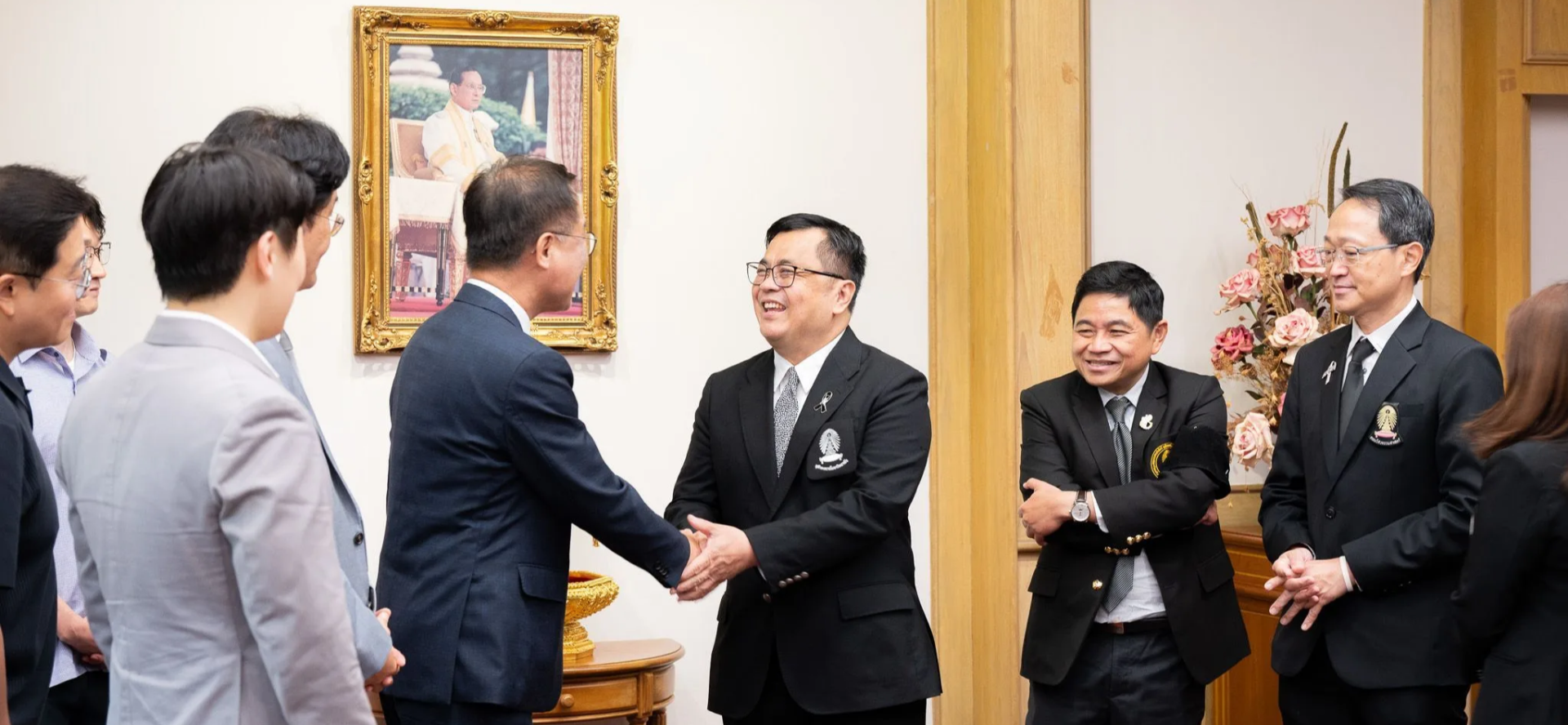
On February 27, 2026, at Meeting Room 702 of the Office of Academic Resources, Chulalongkorn University, and the reception room of the Chulalongkorn University Auditorium, Professor Dr. Wilert Puriwat, President of Chulalongkorn University, welcomed a delegation from Tsinghua University led by Prof. Guo Yong, Vice Chancellor of the Tsinghua University Council, along with Prof. Liu Jian of the Asian Universities Alliance (AUA) and colleagues. The delegation attended the signing ceremony of a Memorandum of Understanding (MOU) between the two universities.

The agreement aims to develop personnel capacity, strengthen knowledge infrastructure, and foster innovation in academic information systems—expanding beyond existing academic and research collaborations. It also seeks to promote the role of the “modern library” as a key university infrastructure supporting teaching, research, and innovation at the international level.

The MOU was formally signed by Associate Professor Dr. Amorn Petsom, Director of the Office of Academic Resources at Chulalongkorn University, and Prof. Jianbin Jin, Director of the Tsinghua University Library. The agreement establishes a results-oriented and action-driven framework focusing on human resource development, knowledge infrastructure enhancement, and joint innovation.

Professor Dr. Wilert Puriwat emphasized the importance of borderless education, stating that in an increasingly interconnected world, collaboration among leading higher education institutions extends beyond academic exchange to building a borderless knowledge ecosystem. While countries may have borders, education should not. This partnership reflects both universities’ commitment to sharing resources, strengthening academic excellence, and creating positive regional and global impact.

Prof. Guo Yong noted that this MOU lays a strong foundation for long-term cooperation between the two institutions, which have maintained close relations through ongoing exchanges of executives and staff. The collaboration will open opportunities for academic exchanges, digital resource integration, innovative research, and the responsible application of AI. He also invited Chulalongkorn representatives to visit Tsinghua University in the near future.

Prof. Jianbin Jin highlighted that this agreement marks an important milestone in library collaboration, which began in 2018 through the Asian Universities Alliance network. Both institutions bring complementary strengths and can share knowledge resources to enhance mutual capabilities. In the era of the Digital Revolution, libraries must serve both as guardians of knowledge and as drivers of digital transformation, leveraging AI to support management and research. A joint academic conference is also planned under the AUA Library Practice Dialogue in November.

Assoc. Prof. Dr. Amorn Petsom added that modern university libraries function as academic ecosystems supporting research and stewarding institutional knowledge. This MOU represents a shared mission to pursue practical collaboration through three main approaches: personnel capacity development, joint innovation initiatives, and knowledge resource exchange. It also promotes AI-driven services, open data management, and digital preservation within relevant legal frameworks.

This collaboration will advance joint efforts in key areas of modern library and academic infrastructure development, including:

  • Personnel development and knowledge exchange through study visits, staff exchanges, fellowship programs, seminars, training sessions, and knowledge-sharing activities.
  • Joint academic activities and innovation development, leading to shared scholarly outputs such as conferences, co-authored academic papers, collaborative research, and innovation projects—such as AI development to enhance service efficiency and complex support functions, research data management, and digital preservation for the long-term stewardship of digital information resources.
  • Information and resource sharing to support teaching and research, conducted in compliance with copyright laws and each institution’s data usage policies.

Read more at: https://www.chula.ac.th/en/news/290788/

Chula Collaborates with the CUHK

Prof. Dr. Wilert Puriwat, President of Chulalongkorn University, together with a university delegation, attended a meeting with Prof. Dennis Lo, Vice-Chancellor and President of The Chinese University of Hong Kong (CUHK), and the university’s executive team on February 25, 2026, at the CUHK Administration Building to discuss directions for collaboration between the two institutions.

Also participating in the discussions were Vice Presidents Prof. Dr. Parichart Sthapitanonda and Prof. Dr. Pornanong Aramwit; along with assistant presidents, deans, directors, and representatives from various academic disciplines. The meeting provided an opportunity to exchange views on teaching and learning management, research initiatives, and the development of long-term institutional partnerships.

On this occasion, parallel meetings were organized between representatives from faculties, colleges, offices, and institutes of Chulalongkorn University and their counterparts at CUHK. These discussions focused on faculty-level collaboration, aiming to promote academic engagement and interdisciplinary research.

Following the meeting, the Chulalongkorn University delegation visited the CUHK Medical Centre. They also toured the Sports Medicine and Rehabilitation Center, the Endoscopy Center, and the Multi-scale Medical Robotics Center to observe the university’s medical advancements and research infrastructure. These facilities represent significant foundations for expanding future academic and research collaboration between the two institutions.

Read more at: https://www.chula.ac.th/en/news/290785/

Chula’s Marine Waste Recycling Innovation

Chulalongkorn University has developed recycling technology to turn fishing nets into 3D-printing filament—reducing marine waste, contributing to a circular economy, and increasing income for fishing communities.  

Highlights

Every time he takes a walk along the beach, beyond the beauty of the sea and the salty breeze that brings a sense of freshness, one thing that Dr. Nuttapol Risangud, a lecturer at the Petroleum and Petrochemical College, Chulalongkorn University, cannot overlook is the plastic waste scattered along the shoreline—water bottles, fragments of plastic bags, scraps of fabric, and pieces of everyday household items. Most concerning of all are the discarded fishing nets that drift ashore, commonly known as “ghost nets,” a form of waste that silently inflicts severe damage on marine ecosystems. 

Dr. Nuttapol’s primary research focuses on developing materials for 3D printing in medical and other applications, ranging from hydrogel materials for tissue engineering to flexible materials for medical devices. However, his love for the ocean and concern for seafood safety would not allow him to ignore the ghost nets drifting freely at sea or scattered along beaches without taking action. As a polymer chemistry expert, he initiated the project titled “Development of a Prototype Innovation for Recycling Nylon from Fishing Nets in 3D Printing Technology.” The research is supported by the Center of Excellence on Petrochemical and Materials Technology (PETROMAT) and has received recycled nylon pellets sourced from fishing nets, as well as research collaboration from UBE Technical Center (Asia) Co., Ltd. The project aspires to be a small but meaningful step toward advancing the future of the 3D printing industry while contributing to sustainable solutions for marine waste. 

“In Thailand, some recycling of fishing nets already takes place, with local fishermen selling old nets to traders for recycling. However, nylon plastic from these nets has not yet been utilized in advanced technologies such as 3D printing,” Dr. Nuttapol explained, highlighting the opportunity for innovation. 

Ghost Nets: Deadly Threat to the Ocean  

Dr. Nuttapol stated that “Ghost nets” are abandoned fishing nets that drift aimlessly through the ocean like ghosts. Wherever they float, they create harm for marine life in that area. In reality, the impact of ghost nets on marine ecosystems is far more severe than many people realize. 

“When fishing nets are discarded or accidentally lost at sea, they continue trapping marine animals just as they did when they were in use. The difference is that this time, no fishermen come to retrieve the catch. As a result, the animals ensnared in the nets often cannot survive. We may be familiar with images in the media of sea turtles or fish tangled in nets, but in truth, those scenes represent only a small fraction of the problem occurring beneath the ocean’s surface.”  

Another major issue caused by ghost nets is “microplastics,” which pose risks to the health of marine organisms and humans, Dr. Nuttapol added.   

“When these nets are degraded over time by sunlight, waves, and the marine environment, the plastic fibers gradually break apart into microplastics, which can disperse and accumulate in seawater and be ingested by small organisms such as plankton or young aquatic animals. These microplastics are then passed along and progressively accumulate up the food chain to large marine animals, and may ultimately return to humans through the consumption of seafood.” 

Innovation for a Sustainable System Where Everyone Benefits​​​​​​​​​​​​​​​​  

The project “Development of a Prototype Innovation for Recycling Nylon from Fishing Nets in 3D Printing Technology” began operations in June 2025, supported by research funding from the Center of Excellence for Petrochemical and Materials Technology (PETROMAT), along with recycled nylon plastic pellets from fishing nets and research collaboration from Ube Technical Center (Asia) Co., Ltd. Dr. Nuttapol outlined three objectives of the research project: 

  • Academic: Developing new materials from recycled plastic for practical use in 3D printing technology is a challenge requiring deep knowledge in polymer chemistry, as recycled plastics often have properties that differ from virgin plastics. Researchers must therefore adjust formulations and add various additives to produce filaments of quality comparable to conventional products. 
  • Environmental: Opening new channels for the use of recycled plastic from fishing nets will increase the value and demand for old nets, thereby boosting recycling activity and helping reduce the volume of waste in the ocean.​​​​​​​​​​​​​​​​ 
  • Community: This project aims to help increase income-generating opportunities for fishing communities. Currently, old nets are typically sent to the recycling process, but if communities receive knowledge of basic processing, such as washing, drying, or preliminary grinding, fishermen will be able to add value to the materials they already have and sell them in a higher-quality form. 

“Although some recycling of fishing nets is currently in practice, their applications remain quite limited. Opening a new channel through 3D printing technology will create a larger market for recycled plastic from nets. When there is a reliable market, more old nets will be collected, purchase prices will improve, fishermen will benefit more, and, more importantly, our seas will become cleaner. This is the true goal of the project — not merely to create a new product, but to build a sustainable system where all parties benefit together: the environment, the community, and the industry,” said Dr. Nuttapol.​​​​​​​​​​​​​​​​ 

Processing: From Waste to Innovation 

Transforming discarded fishing nets into quality filament for 3D printers is not an instantaneous process. It requires multiple systematic processing stages, from retrieving ghost nets from the sea to producing ready-to-use filament. 

  • Step 1 – Sorting and Cleaning: Once the nets are collected, the first task is to remove unwanted components such as lead, buoys, foam, ropes, and debris, including soil, sand, rocks, and shells that cling to the nets. They are then thoroughly washed. This step is a critical “pain point” because it requires large amounts of water and considerable space. For real-world implementation at a community level, careful planning around water systems and washing facilities is essential. 
  • Step 2 – Shredding and Sizing: Once the nets are dry and clean, they are fed into a shredder or grinder to reduce them into smaller pieces, then sorted to obtain plastic flakes of the appropriate size for melting in the next stage. 
  • Step 3 – Melt Compounding: The finely ground nets are melted and blended with various additives to improve their properties, then formed into recycled plastic pellets. 
  • Step 4 – Filament Extrusion: The recycled pellets are melted again and extruded through a die into long strands, then drawn through a puller to produce filament with a consistent diameter of approximately 1.75 mm, which is the standard for Fused Deposition Modeling (FDM) 3D printers. 

Dr. Nuttapol explained why the nets aren’t extruded directly into filament from the start, but must first be converted into pellets: “Each batch of nets we receive has an unknown origin, so we can’t know the exact properties. Pelletizing first allows us to much better control the quality and consistency of the final product.” 

Filaments and 3D Printing: Opportunities for the Future 

Filament is a plastic strand used as raw material for FDM 3D printers. The machine melts the plastic filament and deposits it layer by layer according to a computer-aided designed (CAD) model, gradually forming a complete three-dimensional object.  

Dr. Nuttapol explained that the applications of 3D printing technology are highly diverse, ranging from producing toys and souvenirs to industrial applications. Today, many industries employ 3D printing to streamline production processes, reduce costs, and shorten product development time. For example, it is used to create prototype models for testing designs, produce molds for various manufacturing processes, or fabricate specialized components that previously required lengthy manufacturing..   

For this research project, Dr. Nuttapol plans to use recycled materials from discarded fishing nets to develop prototype components for the automotive sector, such as motorcycle parts, which is a niche market that requires materials with high strength and light weight. 

In addition, the resulting materials can be further developed into accessories or various other components for cars and motorcycles, tailored to the specific needs of each industry.   

Outstanding Features of Filament from Recycled Fishing Nets  

Dr. Nuttapol outlined two key advantages that distinguish filament made from recycled fishing nets from other types of filament:  

  • Environmental Advantage: This product is environmentally friendly because it is made from waste discarded in Thai seas. Expanding applications for recycled plastics increases demand for recycled raw materials, which in turn encourages greater collection and recycling of old fishing nets. Ultimately, this creates benefits that flow back to fishing communities, the original source of the raw materials.  
  • Technical Advantage: The research team can tailor the filament’s properties to suit specific applications. Although recycled plastics have different characteristics compared to virgin plastics, appropriate additives and formulation adjustments can bring their properties close to those of new-material filaments—particularly in terms of mechanical strength and printability in 3D printing processes. 

Overcoming Challenges  

Innovation is never a smooth or easy path. On the contrary, Dr. Nuttapol identified three major challenges that must be addressed:  

  • Quality Control: This is a key issue in the research. Dr. Nuttapol explained that fishing nets collected from different areas vary in age, degree of degradation, and contamination by dirt or heavy metals. As a result, the raw materials have inconsistent properties and are difficult to use directly for engineering applications. Converting the nets into recycled plastic pellets is therefore a crucial step, as it allows for better quality control and ensures that the material properties are sufficiently consistent for developing prototype components. 
  • Cleaning Process: Washing the nets requires a large amount of water and substantial space, which may conflict with environmental sustainability principles. In the future, the process must be improved to become more efficient and use fewer resources. 
  • Building Market Confidence: Even if the product meets high-quality standards, being made from recycled materials may make some customers feel uncertain. Addressing this issue requires real-world user testing and formal quality certification. 

Despite numerous challenges, the project has continued to move forward steadily. Dr. Nuttapol noted that part of its success stems from collaboration among multiple sectors. These include research funding from the Center of Excellence for Petrochemical and Materials Technology (PETROMAT), recycled nylon pellets from fishing nets, and technical knowledge in plastics technology provided by Ube Technical Center (Asia) Co., Ltd., as well as joint researchers from the National Science and Technology Development Agency (NSTDA) who have collaborated in developing and refining the production process. 

“The process of developing innovation requires multiple rounds of experimentation and refinement—from adjusting the parameters for producing filament to modifying additives so that the material can be successfully extruded into filament. It is also essential to carefully analyze the appropriate types and amounts of additives to use,” Dr. Nuttapol described the challenges in the research. “Creating sustainable innovation requires knowledge and skills from multiple disciplines, ranging from polymer chemistry and materials engineering to product design and marketing.” 

A New Future for Recycled Ghost Nets  

  • Phase 1 involves developing the production process and formulation, which will take approximately 6–10 months. The goal is to build know-how in producing plastic pellets and extruding them into functional filament suitable for real-world use, while also establishing collaborative networks with private sector partners and research institutions. 
  • Phase 2 focuses on scaling up production and market testing. A complete supply chain will be established, potentially with private companies supplying recycled plastic pellets. The research team will then blend additives based on the developed formulation and pass the material on to an OEM company specializing in filament extrusion. Finally, the product will be packaged and introduced for market testing. This phase is expected to take an additional 4–5 months, aiming to produce a prototype ready for customer trials and feedback for further improvement. 
  • Phase 3 focuses on returning value to communities and building a fully realized circular economy. Once the product receives a positive market response, the project will be extended directly to fishing communities by transferring knowledge and basic processing techniques to them. This will enable communities to add value to old fishing nets before selling them. 
  • Dr. Nuttapol stated that this innovation is a clear example of the Circular Economy concept, one that not only reduces waste and pollution but also creates added value at every stage of the cycle. 

“This project is an opportunity to create real impact that is not just in the laboratory, but reaches out to communities and the environment.” 

Dr. Nuttapol hopes the product will attract the interest of customers, deliver tangible benefits, and ultimately generate a positive impact on the environment. 

“In the initial phase, we plan to develop the domestic market first, as this presents an immediate opportunity for growth and helps build confidence in Thailand’s industry. If the product demonstrates strong potential and gains local acceptance, we will consider expanding into international markets. Exporting will require carbon footprint calculations and supporting documentation to provide concrete verification of the product’s environmental friendliness.” 

Beyond filament production, Dr. Nuttapol also envisions developing other products from recycled plastic pellets derived from discarded fishing nets. “Once we have high-quality raw materials and a well-established supply chain, we can expand into many other products—not limited to filament for 3D printing,” he explained. 

At present, filament made from ghost nets is at the early stages of its journey to market. However, if everything goes according to plan, we may see various products printed from this filament used all around us in the near future. Most importantly, Thailand’s seas could become cleaner, free from ghost nets that claim the lives of marine animals and contribute additional microplastics to the food chain we rely on. 

For those interested in the innovation of recycling nylon from fishing nets for 3D printing technology, please contact Dr. Nuttapol Risangud at the Petroleum and Petrochemical College, Chulalongkorn University, or reach out through the Center of Excellence on Petrochemical and Materials Technology (PETROMAT). 

Website: http://www.petromat.org/ 

 E-mail: [email protected] and [email protected]

Read more at: https://www.chula.ac.th/en/highlight/291271/

Chula Attends APAIE 2026 Conference in HK

A delegation from Chulalongkorn University, led by Prof. Dr. Wilert Puriwat, President of Chulalongkorn University, attended the “Asia-Pacific Association for International Education” APAIE) 2026 Conference and Exhibition at the Hong Kong Convention and Exhibition Centre in the Hong Kong Special Administrative Region of the People’s Republic of China on February 24, 2026. 

APAIE 2026 was held from February 23 to 27, 2026, under the theme “Asia-Pacific Partnerships for the Global Good.” The conference brought together leaders of higher education institutions, faculty members, administrators, policymakers, and industry representatives from across the Asia-Pacific region and around the world. Participants exchanged perspectives and best practices while strengthening international education cooperation, enhancing the quality of higher education, and promoting global citizenship.

On this occasion, Prof. Dr. Wilert Puriwat participated in the President’s Dialogue hosted by The Chinese University of Hong Kong, the host university of APAIE 2026. The closed-door session, attended by presidents, vice presidents, and senior executives from various universities, provided a platform for exchanging views, fostering collaboration, and jointly shaping the future direction of international higher education. 

In addition, APAIE 2026 offered the Chulalongkorn University delegation opportunities to meet and hold discussions with existing partner universities as well as new institutional partners to further expand international academic and research collaborations. 

Read more at: https://www.chula.ac.th/en/news/290056/

Chula–WEF Global Risks Report 2026

Professor Dr. Wilert Puriwat, President of Chulalongkorn University, presented key findings from The Global Risks Report 2026, for which Chulalongkorn University serves as the sole partner institution in Thailand collaborating with the World Economic Forum. He was joined by Associate Professor Dr. Kanyarat Sanoran, Assistant to the President for Research with International Organizations and Institutional Partnerships, as co-presenter, while Assistant Professor Dr. Nhabhat Chaimongkol, Assistant to the President for Administration and Deputy Spokesperson, served as the moderator.

The report presents assessments of various risks faced by countries worldwide, including Thailand, over the short, medium, and long term. The analysis is based on surveys of 1,300 experts from academia, business, government, the international community, and civil society, as well as 11,000 business leaders from 116 countries and 160 subject-matter experts across the World Economic Forum’s platforms and diverse global networks.

The report identifies critical threats that must be addressed to navigate global volatility and competition, spanning five dimensions of risk: economic, environmental, geopolitical, societal, and technological. It highlights clear differences in risk perceptions at the global, regional, and national (Thailand) levels. Globally, the findings point to concerns over geoeconomic confrontation, state-based armed conflict, extreme weather events, societal polarization, and misinformation and disinformation. In contrast, Thailand faces a distinct set of economic challenges that differ markedly from those of its Southeast Asian neighbors and the global context.

Key Research Findings for Thailand

Thailand’s top five risks in 2026 clearly underscore economic concerns. Ranked first is debt (encompassing public debt, corporate debt, and household debt), which stands at only 17th globally. This is followed by economic downturn, lack of economic opportunity or unemployment, adverse outcomes of artificial intelligence technologies, and inequality (encompassing wealth and income). These concerns differ significantly from global and Southeast Asian risk profiles, which do not prioritize debt and inequality to the same extent. The findings indicate that Thailand’s risks are deeply rooted in economic security, highlighting urgent issues that require focused attention and accelerated policy action.

Long-Term Risks

At the global level, the 10-year outlook (to 2036) shifts decisively toward environmental threats. Extreme weather events, biodiversity loss and ecosystem collapse, and critical change to Earth systems rank among the most severe long-term risks. Misinformation and disinformation (currently a major short-term concern) remain significant in the long run, alongside adverse outcomes of artificial intelligence technologies.

Risk Mitigation Approaches

The report outlines key strategies for addressing these risks, including national and local regulations, financial instruments, public awareness and education, research and development, corporate strategies, development assistance, multi-stakeholder engagement, minilateral treaties and agreements, and global treaties and agreements. For Thailand, adopting these approaches can enhance resilience to economic instability and emerging environmental threats, in alignment with global best practices.

Professor Dr. Wilert Puriwat emphasized that The Global Risks Report 2026 highlights Thailand’s unique position amid economic and environmental challenges, which differ from global and regional priorities. Thailand must strike a balance between immediate economic recovery and long-term sustainability to ensure a stable future. The report serves as a call to action for policymakers, businesses, and communities to respond with urgency.

Read more at: https://www.chula.ac.th/en/news/290089/

Chula Hosts ISA Cultural Fest 2026

The International Student Affairs (ISA) Division of the Chulalongkorn University Student Council recently organized the ISA Cultural Fest 2026 on January 27, 2026, at Sala Phra Kieo, Chulalongkorn University, to promote understanding of cultural diversity and create a shared learning space for students from various countries. Associate Professor Dr. Sukanya Sompiboon, Vice President of Chulalongkorn University, presided over the opening ceremony. 

For Assoc. Prof. Dr. Sukanya, Chulalongkorn University is not only an institution that fosters academic excellence but also one that strives to cultivate students with empathy, respect for differences, and the readiness to stand together in a multicultural society. 

“This event creates a space where everyone can be seen and feel that they belong here. Some may have crossed oceans to study here, while others may have simply crossed the street. But today, we have all stepped into the same space—a space where no one is ‘foreign’ anymore. At Chula, we do not divide between ‘them’ and ‘us’; we unite as one strong ‘we.’” 

The festival featured cultural booths from international students representing more than 15 countries, showcasing national cuisines, traditional attire, arts and culture, and stage performances. The event fostered a lively atmosphere of friendship and cross-cultural exchange. 

The university was also honored by the presence of representatives from several embassies, including the Embassy of the Islamic Republic of Pakistan, the Embassy of the Federal Republic of Nigeria, and the Embassy of the Republic of Indonesia. Their participation reflected the role of education in strengthening international cooperation and mutual understanding. 

ISA Cultural Fest 2026 is considered another significant activity supporting the Sustainable Development Goals (SDGs), particularly SDG 4 (Quality Education), promoting lifelong learning and the acceptance of cultural diversity; SDG 10 (Reduced Inequalities), fostering an inclusive society and reducing cultural gaps; and SDG 17 (Partnerships for the Goals), encouraging collaboration between educational institutions and embassies to build international understanding. The event reaffirmed Chulalongkorn University’s role as a leading university that is open and respectful of global diversity. 

In closing, the Vice President expressed her appreciation to the ISA team and all students who dedicated their hearts to organizing the event, proving that “diversity is not something to fear, but the strength of the Chula community.” 

Read more at: https://www.chula.ac.th/en/news/288250/

Sasin to Launch “Innovation Turbo” Program

The Sasin School of Management, Chulalongkorn University, is preparing to launch a short executive program titled “Sasin Innovation Turbo: Winning the Future – Leading with Innovation in the Age of Disruptions.” This new program combines online learning with intensive on-site workshops, aiming to equip participants to cope with major global changes and to build innovation-driven, sustainable strategies for Southeast Asia. 

In an era of rapid change, Sasin Innovation Turbo helps executives and organizational leaders understand and anticipate “signals of the future” across multiple dimensions—technology, demographics, the environment, and geopolitics—using knowledge and strategic thinking frameworks specifically designed for leadership in times of uncertainty. 

The program is taught by two leading innovation experts: Dr. Robert C. Wolcott, a faculty member at the Kellogg School of Management and Booth School of Business and an expert in innovation and future studies; and Associate Professor Dr. Piyachart Phiromswad, Associate Director for Learning Solutions and full-time faculty member at Sasin. Dr. Piyachart is the creator and instructor of the “Age of Disruptions” course and is one of the Southeast Asian speakers selected to represent the region at the TED Idea Search stage.  

Sasin Innovation Turbo integrates face-to-face and online learning, consisting of the following components: 

  • Pre-Turbo: Participants engage in self-paced online learning along with 2–3 live Zoom sessions (2 hours each), held on Saturday or Sunday evenings. 
  • Turbo Week: A full week of face-to-face classes at Sasin in the afternoons (with at least 80% attendance required). This intensive learning experience includes workshops, case study analyses, special Sasin Turbo Talk sessions featuring industry experts who share real-world experiences, and site visits to leading organizations. 
  • Post-Turbo: The program concludes with a group project and collective reflection, delivered through 1–2 live Zoom sessions (2 hours each). 

This program is designed for executives and organizational leaders who seek maximum value in a short time frame. Sasin Innovation Turbo offers deep, hands-on learning through practical application, case analysis, and future-oriented strategy design—strengthening leadership capabilities to both anticipate and shape organizational direction in an age of uncertainty. 

Program dates: March 2 – May 3, 2026 

Application deadline: February 16, 2026 

Apply at: https://tinyurl.com/ycx39ue4 

For more information: [email protected] 

Tel.: +66 94-671-5797 

About Sasin 

The Sasin School of Management, Chulalongkorn University, is Thailand’s first international business school. It was founded through a collaboration between Chulalongkorn University, the Kellogg School of Management, and The Wharton School. Sasin’s vision is to be a world-class management institution for the future, with a mission to inspire, connect, and transform in order to create a better, smarter, and more sustainable world. Sasin aims to develop leaders who make a positive global impact by leading for the future. 

Read more at: https://www.chula.ac.th/en/news/285691/

Chula Students Win at Accounting Challenge

Chulalongkorn University congratulates students from the Department of Accounting, Chulalongkorn Business School, on winning first prize and runner-up in the 12th Thailand Accounting Challenge 2026, organized by the Thailand Federation of Accounting Professions under the Royal Patronage of His Majesty the King (TFAC). The competition, held on January 24, 2026, at the Professor Kesree Narongdej seminar and training center, 6th floor, TFAC Building, aimed to provide a platform for students to demonstrate their knowledge, abilities, and experience in the accounting profession on a national stage. Universities from across the country took part in the competition. 

  • First prize winner: T082 from Chulalongkorn University 

Members include Jakkawan Booncharoen, Jirapat Rachtanabhandu, and Chindanai Soontornpaesat. 

Advisor: Dr. Siripan Kuenkaikaew 

  • First runner-up: T010 from Chulalongkorn University 

Members include Kalyanee Buakom, Nattanicha Panrat, and Yada Mano. 

Advisor: Dr. Nipat Puangjampa 

  • Second runner-up: T079 from Kasetsart University 
  • Third runner-up: T010 from Srinakharinwirot University 
  • Fourth runner-up: T021 from Thammasat University 

Read more at: https://www.chula.ac.th/en/news/285694/

“DeepGI” Shortlisted for THE Awards Asia 2026

The project “DeepGI: Real-Time AI-Assisted Endoscopy for Colorectal Cancer Prevention,” a medical artificial intelligence innovation developed through a collaboration between the Faculty of Engineering and the Faculty of Medicine, Chulalongkorn University, has been shortlisted for the international THE Awards Asia 2026 in the category Research Project of the Year: STEM. The shortlist was announced on January 20, 2026. 

The winner will be announced at the THE Asia Universities Summit 2026, scheduled to take place on April 22, 2026, at the Hong Kong University of Science and Technology, Hong Kong Special Administrative Region of the People’s Republic of China. 

DeepGI is an AI innovation designed to assist physicians during colonoscopy and gastrointestinal endoscopy procedures. It can detect and classify abnormal tissue in real time with an accuracy exceeding 90%, enhancing the efficiency of screening and prevention of colorectal cancer, which is one of the leading causes of death worldwide. 

Being shortlisted for this award attests to the strength of Chulalongkorn University’s integrated research between engineering and medical sciences. The project demonstrates the ability to translate academic knowledge into practical applications and to create positive impacts on public health systems and society at the international level. 

THE Awards Asia, organized by Times Higher Education (THE), recognize higher education institutions across Asia for excellence in academic achievement, management, and contributions to communities and society. Each year, awards are presented across 10 categories. 

More details about DeepGI and the shortlisted projects for THE Awards Asia 2026 can be found at: https://theawardsasia.com/2026/en/page/shortlist 

Read more at: https://www.chula.ac.th/en/news/284584/