Chulalongkorn University
Published on 27 July 2026




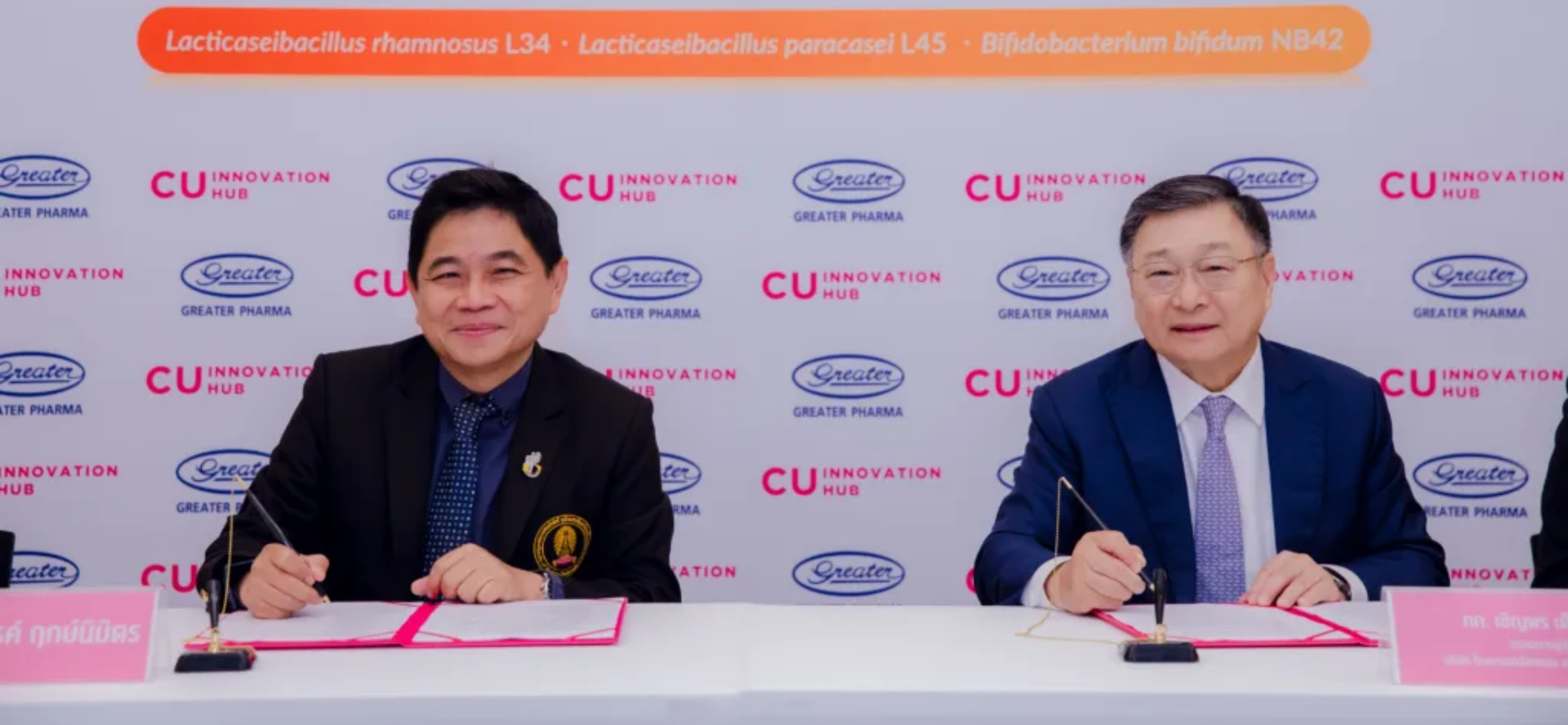
Chulalongkorn University, through the CU Innovation Hub, has signed a licensing agreement with Greater Pharma Manufacturing Co., Ltd. to transfer probiotic technology developed from indigenous Thai microbial strains. The technology will be commercialized as health products under the Prometa brand. This marks another significant step in bringing Thai research from the laboratory to the marketplace while strengthening Thailand’s health industry through innovations developed by Thai researchers.
The signing ceremony took place on July 16, 2026, at the Chamchuri Square Building, Chulalongkorn University. The agreement was signed in the presence of Prof. Dr. Rungsun Rerknimitr, Vice President of Chulalongkorn University; Prof. Dr. Somying Tumwasorn, Principal Investigator; and Mr. Chernporn Tengamnuay, Managing Director of Greater Pharma Manufacturing Co., Ltd.
The transferred technology is a multi-strain probiotic formulation consisting of Lacticaseibacillus rhamnosus L34, Lacticaseibacillus paracasei L45, and Bifidobacterium bifidum NB42. These indigenous Thai microbial strains were selected and developed through research at Chulalongkorn University. The formulation is designed to promote a healthy gut microbiome and has potential applications in supporting metabolic health, including chronic kidney disease, overweight and obesity, insulin resistance, hyperlipidemia, and fatty liver disease.
Preclinical studies have shown that probiotic formulation can reduce fat accumulation, lower blood glucose and lipid levels, and decrease inflammation associated with metabolic disorders in animal models.
Prof. Dr. Rungsun Rerknimitr, Vice President of Chulalongkorn University, stated, “Chulalongkorn University is committed to translating research into real-world applications through collaboration with the private sector. We focus on developing probiotic products supported by strong scientific evidence and clinically credible outcomes. This innovation has demonstrated anti-inflammatory properties, which are important because chronic inflammation contributes to many serious diseases. By helping reduce inflammation, these probiotics may improve patient health. This collaboration reflects the university’s role in creating research with practical value, while the private sector plays a vital role in bringing these innovations to consumers. Integrating scientific research with commercial expertise provides a model for systematically improving quality of life through evidence-based innovation.”
Prof. Dr. Somying Tumwasorn, the project’s principal investigator, explained, “This research utilizes three probiotic strains—Lactobacillus casei L34, Lactobacillus paracasei L45, and Bifidobacterium NB42. Genetic sequencing has confirmed that these are unique strains not found elsewhere in the world, and they meet Thai FDA safety standards. Because these microorganisms were isolated from Thai individuals, they are particularly well adapted to the physiology and diet of Thai people. For example, strain L34 shows greater tolerance to capsaicin (the active compound in chili peppers) than imported commercial strains. It also helps reduce inflammation, strengthens the intestinal barrier by preventing leaky gut, blocks toxins from entering the bloodstream, and supports the balance of the gut microbiota.”
Mr. Chernporn Tengamnuay, Managing Director of Greater Pharma Manufacturing Co., Ltd., commented: “This collaboration between academia and industry represents the successful translation of research into commercial products while reducing Thailand’s reliance on imported probiotic strains. Our focus is on developing Thai probiotic strains specifically suited to the health needs of Thai people. The primary goal of this innovation is to reduce inflammation in patients with kidney disease, establishing a new standard for treatment backed by credible scientific evidence. Beyond advancing Thailand’s biotechnology capabilities, this project will also provide the public with greater access to high-quality health supplements that address genuine medical needs in a sustainable way.”
This partnership highlights the power of collaboration between universities and the private sector in transforming research into commercial applications. By leveraging effective intellectual property management, the initiative creates added value from academic research and supports the development of innovative products that address societal needs, strengthen Thailand’s competitiveness, and promote the sustainable growth of the country’s innovation-driven economy.
Read more at: https://www.chula.ac.th/en/news/418413/