Asfendiyarov National Medical University
Published on 12 November 2026




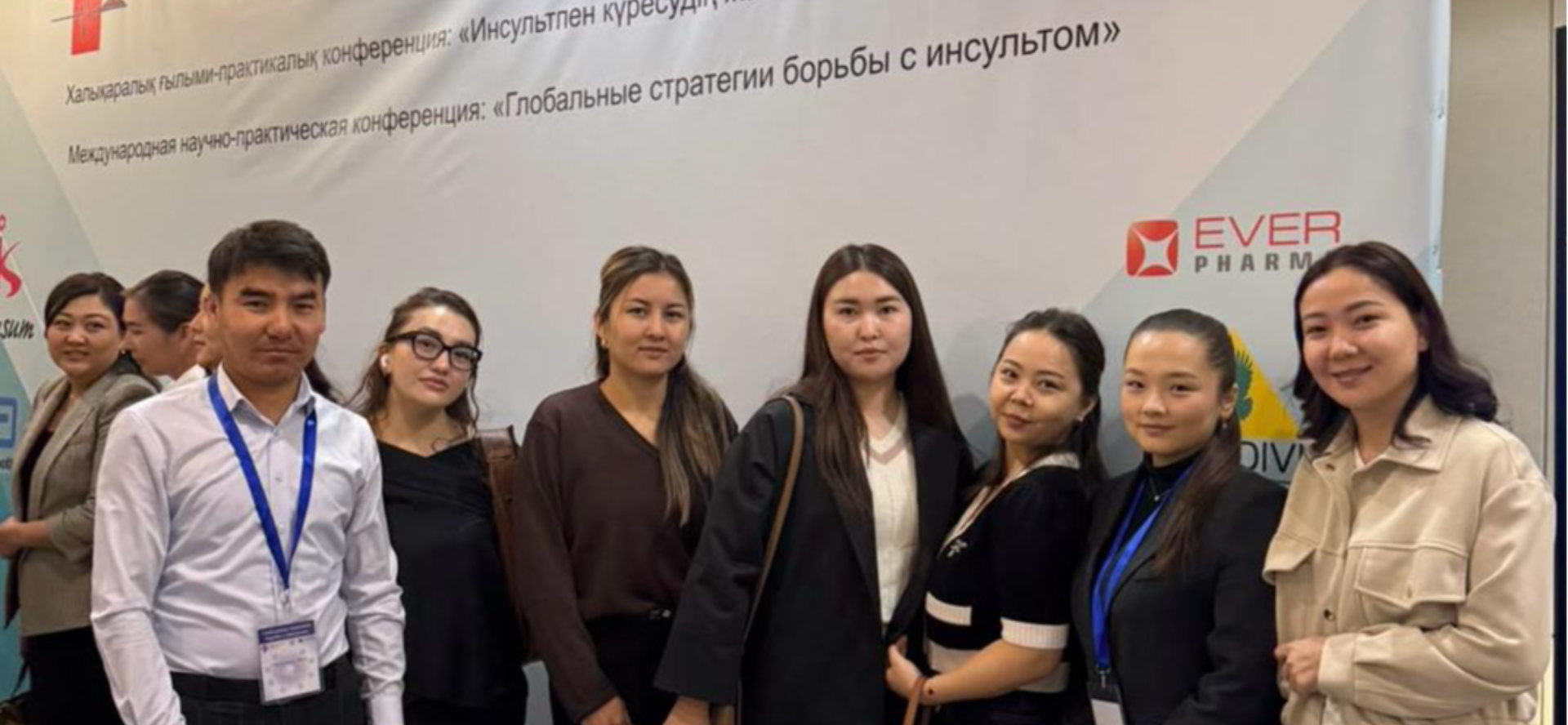
On October 29–30, 2026, the International Scientific and Practical Conference entitled “Global Strategies for Combating Stroke” was held to mark World Stroke Day.
The event brought together leading researchers, practicing neurologists, medical rehabilitation specialists, and healthcare administrators from Kazakhstan, the United States, China, Switzerland, Russia, and Ukraine. Their participation provided an opportunity to exchange scientific knowledge and discuss developments in stroke services across different healthcare systems. The programme focused on timely medical intervention, continuity of care, and the application of evidence-based practices at every stage of the patient journey.
The conference was organized with the participation of the National Coordinating Center for Emergency Medicine (Republican Coordinating Center for Stroke Care), the Almaty City Public Health Department, and the Asian Association “Heart and Brain,” chaired by its president. The involvement of these organizations highlighted the importance of cooperation between healthcare institutions, professional associations, and the academic community in addressing the consequences of stroke.
The scientific programme placed particular emphasis on contemporary strategies for post-stroke recovery, interdisciplinary collaboration, and approaches to improving the effectiveness of medical rehabilitation. Discussions addressed not only the immediate medical consequences of a stroke but also the longer-term functional and social challenges patients may face during recovery. The exchange of international experience provided a platform for examining how clinical recommendations can be adapted to everyday practice and how cooperation among specialists can support consistent patient care.
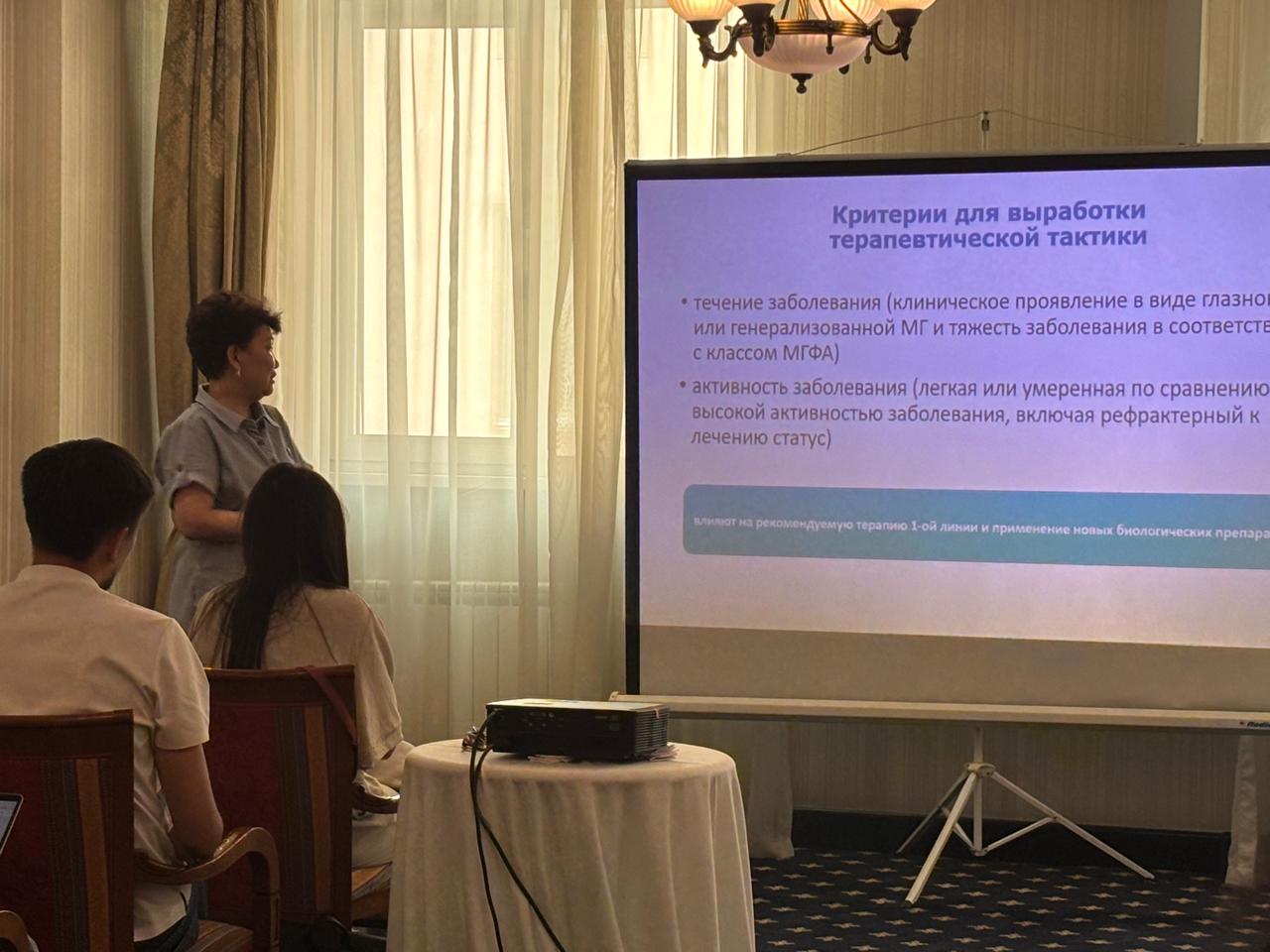
The Department of Nervous Diseases of NJSC Asfendiyarov Kazakh National Medical University actively participated in the conference. Its contribution formed part of the university’s ongoing engagement with professional dialogue on the development of modern neurology, the improvement of clinical practice, and the training of qualified healthcare specialists.
As part of the scientific programme, a senior academic representative of the Department of Nervous Diseases at KazNMU delivered a presentation entitled “Post-Stroke Rehabilitation: From International Guidelines to Clinical Practice. Pain as a Barrier to Recovery.” The presentation focused on key aspects of post-stroke rehabilitation services and the practical implementation of international clinical guidelines. Particular attention was given to the timely identification and management of pain, which can limit patients’ functional recovery and affect their participation in rehabilitation.
The topic highlighted the importance of assessing pain as an integral part of post-stroke care rather than treating it as a secondary concern. Recognizing and addressing pain in a timely manner can help healthcare professionals identify factors that interfere with rehabilitation and make informed decisions about patient care.
The participation of residents from the Department of Nervous Diseases of KazNMU was also of particular significance. Attendance at an international scientific event gave future neurologists an opportunity to engage with current professional discussions, learn about approaches used by specialists from different countries, and become familiar with recent scientific evidence. Such exposure supports the development of clinical thinking, encourages interest in research, and highlights the importance of continuous professional development.
Direct interaction with experienced researchers and practicing specialists also contributes to the development of communication and collaboration skills. For residents, participation in conferences is an important part of professional training, allowing them to connect theoretical knowledge with practical challenges in neurology and rehabilitation. It also provides insight into the role of multidisciplinary teams, in which neurologists and rehabilitation specialists work together to address the needs of people recovering from a stroke.
International events of this kind play an important role in strengthening professional collaboration, facilitating the exchange of scientific and clinical experience, and supporting the integration of effective international practices into the national healthcare system. They also help identify shared priorities and encourage dialogue on ways to improve the quality, accessibility, and continuity of care for patients with cerebrovascular diseases.
The participation of the Department of Nervous Diseases of KazNMU in the international scientific agenda reaffirms its commitment to advancing modern neurology, supporting the professional development of future specialists, and promoting evidence-based approaches in clinical practice. By contributing to professional discussions and engaging residents in international academic activities, the department continues to support the development of stroke care and medical rehabilitation.