Asfendiyarov National Medical University
Published on 20 October 2026




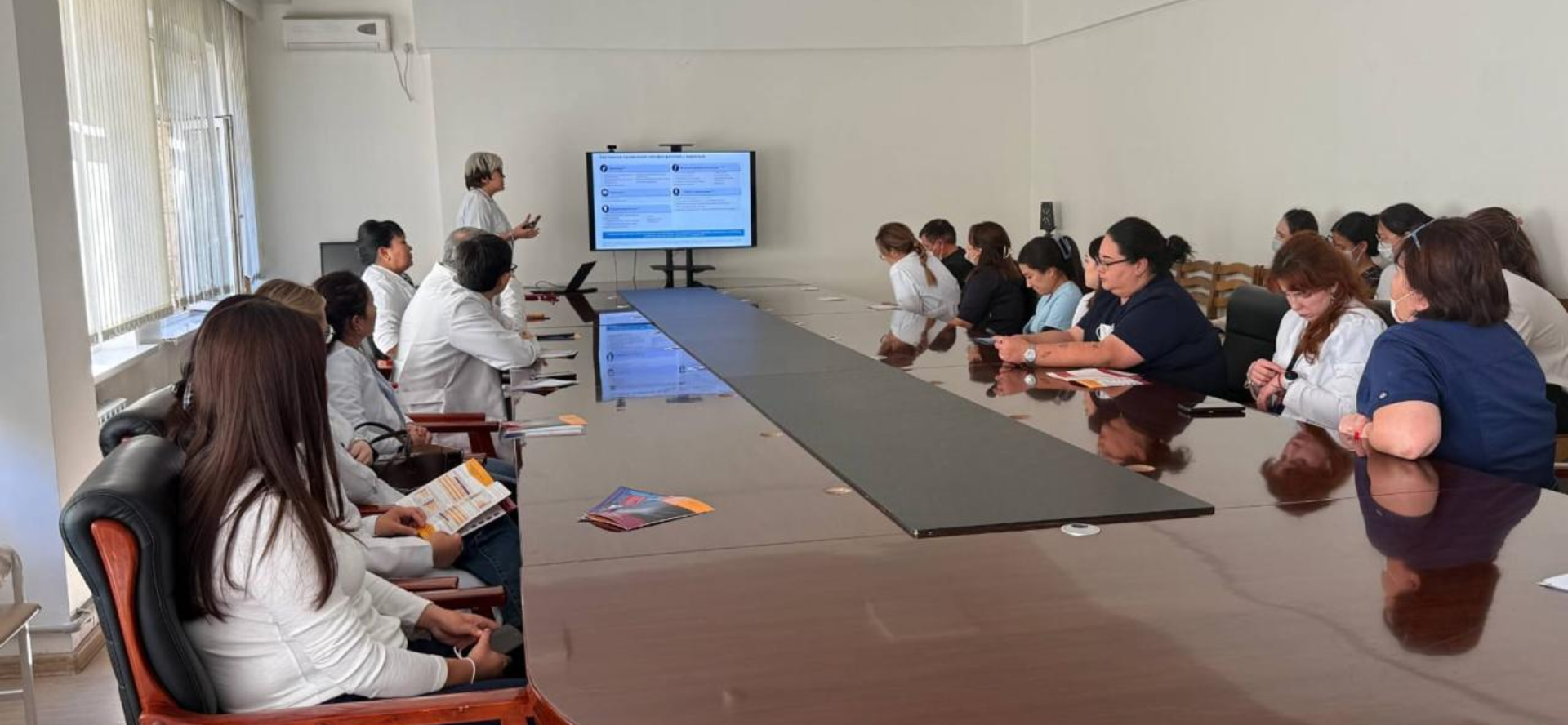
The Department of Nervous Diseases at Asfendiyarov Kazakh National Medical University, with the support of City Clinical Hospital No. 1 in Almaty, continues its systematic efforts to strengthen physicians, professional competencies and improve the quality of neurological care for the adult population of the Republic of Kazakhstan. Particular attention is given to continuing medical education, the early recognition of complex clinical conditions, and the integration of current scientific knowledge into everyday medical practice.
On October 16, 2026, an educational roundtable entitled was held at City Clinical Hospital No. 1 in Almaty. The event brought together hospital physicians and medical residents to discuss the clinical presentation, diagnostic challenges, and interdisciplinary management of adult hypophosphatasia. The meeting was led by the Head of the Department of Nervous Diseases at Asfendiyarov Kazakh National Medical University and Chief Freelance Neurologist of the Ministry of Healthcare of the Republic of Kazakhstan.
The roundtable was organized as part of the implementation of the "Roadmap for Improving Neurological Care for the Adult Population of the Republic of Kazakhstan for 2025–2027". The initiative aims to strengthen healthcare professionals, diagnostic awareness, develop clinical reasoning skills, and encourage the application of modern approaches to identifying rare and frequently underdiagnosed diseases. Such educational activities also support the exchange of professional experience between university specialists and practicing physicians.
Hypophosphatasia is a rare inherited metabolic disorder characterized by impaired mineralization of bones and teeth. Its clinical manifestations, however, can extend beyond the skeletal system. Adults may experience persistent musculoskeletal pain, muscle weakness, fatigue, recurrent fractures, dental abnormalities, and limitations in daily activities. The diversity of symptoms and their resemblance to more common conditions can make the disease difficult to recognize, sometimes resulting in delayed diagnosis and prolonged investigations.
During the meeting, participants examined the principal clinical manifestations of adult hypophosphatasia and discussed the importance of laboratory findings in the diagnostic process. Particular attention was given to persistently low serum alkaline phosphatase activity, an important biochemical indicator that may prompt further investigation when interpreted alongside the patient’s medical history, clinical symptoms, and other laboratory results. Participants also considered the importance of distinguishing hypophosphatasia from other metabolic bone diseases and conditions associated with musculoskeletal complaints.
The discussion highlighted the need to recognize atypical combinations of symptoms and consider rare disorders when the clinical presentation cannot be adequately explained by a more common diagnosis. A comprehensive assessment of the patient’s condition, appropriate laboratory testing, and timely referral for specialized evaluation are essential components of the diagnostic pathway. Increasing awareness of these indicators among physicians can help reduce missed diagnostic opportunities and support more informed clinical decisions.
An important focus of the roundtable was the interdisciplinary nature of patient care. Because hypophosphatasia may affect several body systems, effective assessment and management can require collaboration among neurologists, endocrinologists, rheumatologists, trauma and orthopedic specialists, dentists, clinical geneticists, and other healthcare professionals. Coordinated communication between specialists helps ensure that relevant symptoms are considered together rather than treated as unrelated clinical problems.
The practical value of the educational meeting lies in its contribution to the professional development of physicians and medical residents. By expanding their knowledge of rare metabolic disorders, participants can improve their ability to identify warning signs, formulate appropriate differential diagnoses, and determine when additional diagnostic assessment is necessary. These competencies are particularly important in clinical settings where nonspecific symptoms may obscure an underlying disease.
The roundtable also demonstrated the importance of cooperation between medical universities and healthcare institutions in strengthening clinical education. Combining academic expertise with the practical experience of hospital-based specialists creates opportunities to discuss real-world diagnostic challenges and promote the responsible application of scientific evidence in medical practice.
The Department of Nervous Diseases at Asfendiyarov Kazakh National Medical University will continue to support educational initiatives aimed at improving clinical knowledge, encouraging interdisciplinary cooperation, and strengthening the healthcare system’s capacity to identify complex conditions. Greater awareness of rare diseases such as adult hypophosphatasia represents an important step toward timely diagnosis, appropriate patient management, and improved quality of life for patients across Kazakhstan.
An educational roundtable at KazNMU focused on the diagnosis of adult hypophosphatasia, highlighting clinical manifestations, interdisciplinary collaboration, and the importance of early detection of rare diseases.