Asfendiyarov National Medical University
Published on 22 October 2026




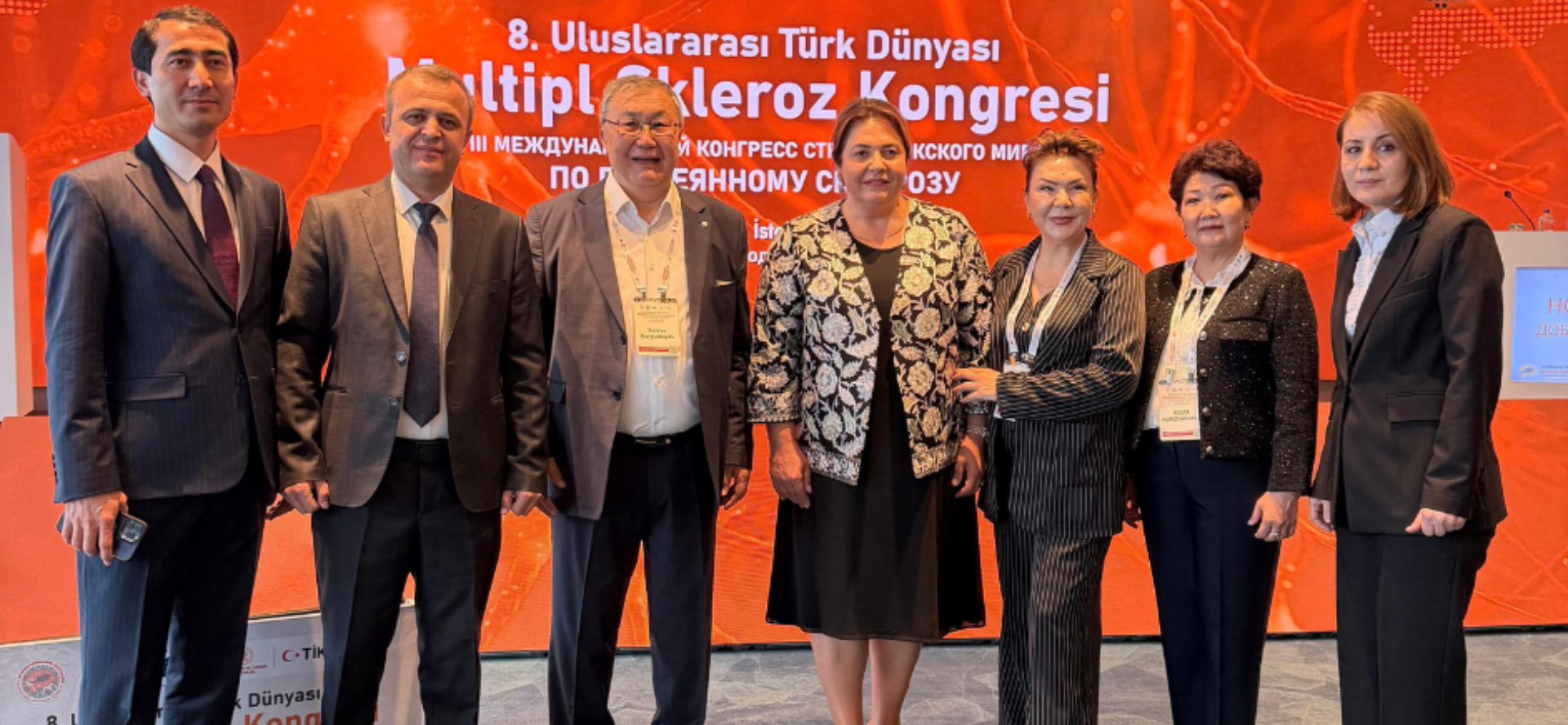
Istanbul became the centre of international medical dialogue as it hosted the VIII International Congress of the Turkic World on Multiple Sclerosis, bringing together leading neurologists, scientists, professors, and healthcare professionals from across the Turkic world. The major scientific forum provided an important platform for exchanging knowledge, discussing current advances in multiple sclerosis research, and strengthening cooperation in the diagnosis and treatment of complex demyelinating diseases of the nervous system.
The Congress was organized under the auspices of the Turkish Multiple Sclerosis Research and Support Association (TURKTRIMS), headed by internationally recognized medical leaders and Congress Co-Chairs, Professor Şeref Demirkaya and Professor Hüsnü Efendi. Their leadership contributed to a strong scientific programme that brought together academic research, clinical expertise, and practical experience from different healthcare systems.
A significant role in the organization and coordination of the international event was played by the Congress Secretary-General, Doctor of Neuropsychological Sciences Aynur Feyzioğlu. Her contribution helped establish an effective platform for professional communication and scientific exchange among specialists representing different countries and medical institutions.
The Congress brought together experts from Türkiye, Kazakhstan, Azerbaijan, Uzbekistan, Kyrgyzstan, Tajikistan, and Northern Cyprus. Representatives of the Turkic republics gathered on a common platform to exchange clinical experience, discuss current scientific evidence, and identify opportunities for closer cooperation in neurological research and healthcare. Particular attention was given to developing common approaches and international protocols for addressing multiple sclerosis and other severe demyelinating disorders.
Kazakhstan was represented by a distinguished delegation that demonstrated the strength of the country’s academic medical school. Experts from S.D. Asfendiyarov Kazakh National Medical University, one of Kazakhstan’s leading institutions of medical education and research, made a valuable contribution to the scientific programme.
Professor E.S. Nurguzhaev, a renowned figure in Kazakhstani neurology, presented important preclinical and epidemiological data on multiple sclerosis in Kazakhstan. His contribution highlighted the significance of evidence-based research and reflected the continuity of the fundamental scientific traditions of the Department of Nervous Diseases.
Associate Professor R.B. Nurzhanova, representing the academic community of S.D. Asfendiyarov KazNMU, contributed to the exchange of professional knowledge and experience. Her work reflects the university’s commitment to implementing progressive approaches in medical education and patient care, while maintaining strong links with international academic and clinical communities.
The Kazakhstani delegation also included N.A. Efstavyeva, Head of the Karaganda Autoimmune Center. Her practical experience in organizing specialized regional medical care attracted considerable interest from international colleagues and demonstrated the importance of connecting academic knowledge with effective models of patient-centered healthcare.
The participation of Kazakhstani specialists provided an opportunity to discuss common challenges in neurological care and explore new possibilities for research collaboration. The integration of the experience of Kazakhstan’s medical experts with the expertise of their Turkish and other international counterparts created a solid foundation for future multicenter research initiatives within the Turkic medical community.
Beyond its scientific agenda, the Congress demonstrated the growing importance of international academic cooperation. Such platforms allow universities, researchers, and clinicians to establish professional networks, share best practices, and develop joint approaches to healthcare challenges that extend beyond national borders. For institutions such as Asfendiyarov Kazakh National Medical University, participation in international scientific forums also strengthens academic visibility and creates opportunities for new research and educational partnerships.
The Istanbul Congress therefore became more than a meeting of specialists. It represented a significant step toward building a stronger and more interconnected medical research community across the Turkic world, where shared knowledge and collaborative research can contribute to improving patient outcomes and advancing modern neurological care.
As the Congress concluded, its participants carried forward new scientific insights, professional connections, and a shared commitment to continued cooperation. The Congress Presidium officially announced that the IX International Congress of the Turkic World will take place in hospitable Kyrgyzstan.
The next Congress will continue this important tradition of scientific dialogue, bringing together specialists from across the region to advance neurological research, strengthen academic partnerships, and work collectively toward better healthcare and improved quality of life for patients affected by multiple sclerosis.