Asfendiyarov National Medical University
Published on 22 June 2026




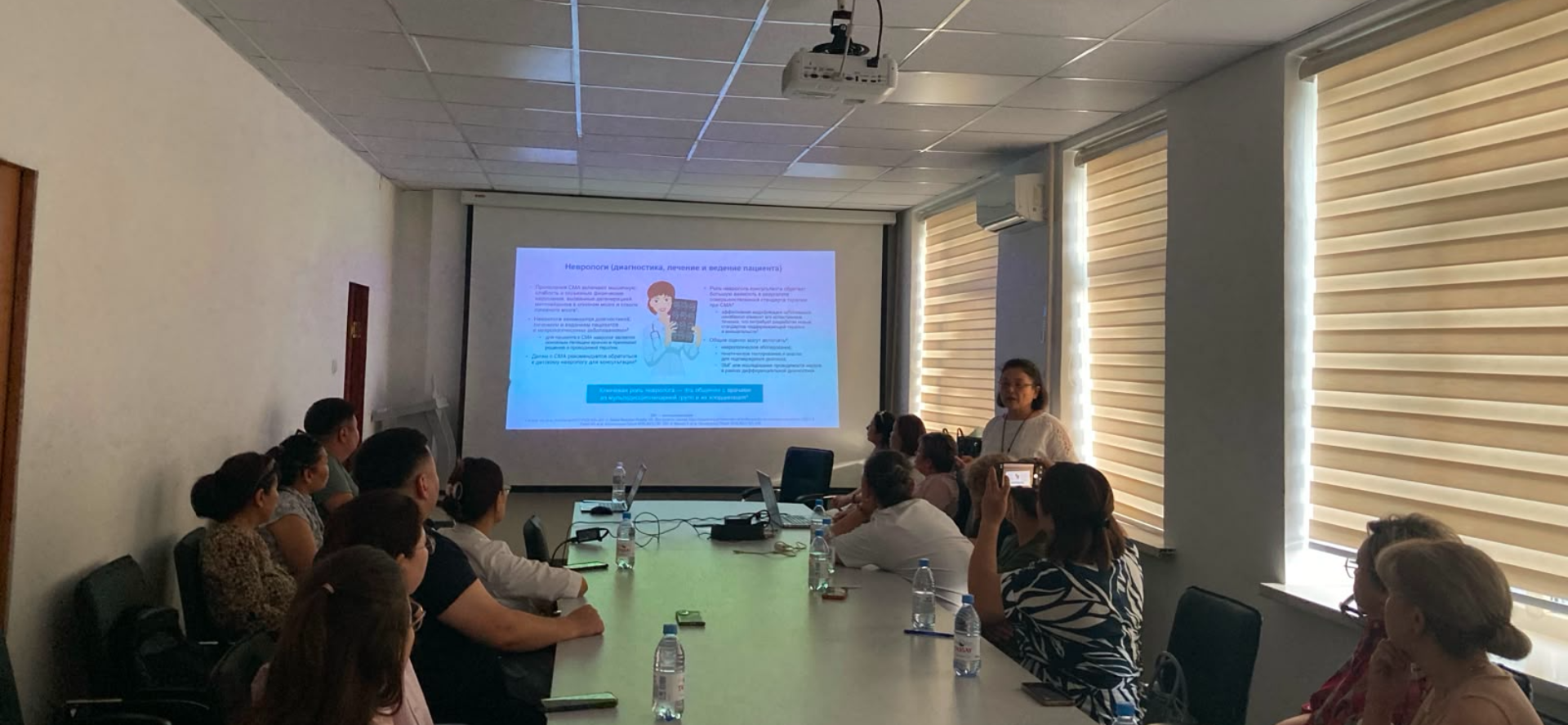
On June 12, 2026, a scientific and practical educational seminar entitled “Modern Principles of Diagnosis and Treatment of Selected Rare Neurological Diseases” was held in Taldykorgan. The event was organized as part of the implementation of the cascade training model for healthcare specialists under the Roadmap for Improving Neurological Care for the Adult Population of the Republic of Kazakhstan for 2025–2027. The seminar continued a series of educational initiatives conducted by the Department of Nervous Diseases of Asfendiyarov Kazakh National Medical University aimed at strengthening professional competencies and promoting evidence-based approaches in neurology.
Rare neurological diseases remain an important medical and social challenge because of their low prevalence, severe clinical manifestations, and considerable impact on patients’ quality of life. Many of these disorders are hereditary, neurometabolic, neurodegenerative, neuromuscular, or autoimmune in origin and often result in disability if diagnosis and treatment are delayed. Advances in molecular genetics, neuroimaging, biomarker research, and targeted therapies have significantly improved opportunities for early diagnosis and personalized treatment, emphasizing the importance of continuing medical education.
The seminar was organized with the support of the Public Association “Association of Neurologists” of the Republic of Kazakhstan, the Institute of Continuing Professional Development of Asfendiyarov Kazakh National Medical University, and regional neurological specialists. Hosted at the Regional Hospital of Taldykorgan, the event brought together more than 47 physicians from healthcare institutions across the city and region. The meeting provided a platform for professional communication, knowledge exchange, and discussion of current approaches to diagnosing and managing rare neurological disorders.
Leading experts from Asfendiyarov KazNMU delivered presentations based on current scientific evidence and international clinical recommendations. Particular attention was given to practical aspects of early diagnosis, treatment, rehabilitation, and long-term monitoring of patients with rare neurological diseases. Participants had the opportunity to discuss complex clinical cases and review modern diagnostic algorithms and therapeutic approaches.
The scientific program focused on several important topics. One of the key areas was myasthenia gravis, including its clinical manifestations, diagnostic methods, and modern treatment strategies. Special attention was devoted to juvenile myasthenia gravis and the specific features of the disease in pediatric patients. Experts emphasized the importance of timely diagnosis and individualized treatment aimed at improving patient outcomes and quality of life.
Another major topic was spinal muscular atrophy (SMA), one of the most significant hereditary neuromuscular disorders. Participants reviewed diagnostic criteria and discussed current possibilities for comprehensive treatment and rehabilitation. Modern approaches to patient management and long-term monitoring were presented in accordance with internationally recognized standards.
Special attention was devoted to the assessment of adult patients with spinal muscular atrophy using internationally accepted clinical scales, including the Revised Upper Limb Module (RULM), the Hammersmith Functional Motor Scale Expanded (HFMSE), and the Six-Minute Walk Test (6MWT). Practical aspects of applying these assessment tools in everyday clinical practice were discussed, contributing to the development of professional skills among healthcare specialists.
The seminar highlighted the importance of early diagnosis and timely initiation of treatment for rare neurological diseases. Experts noted that advances in gene therapy, enzyme replacement therapy, and personalized medicine have significantly improved the prognosis of many disorders previously associated with severe disability. Early detection and access to modern treatment strategies remain essential factors for improving life expectancy and quality of life.
The event generated considerable interest among physicians and demonstrated the importance of continuous professional education in modern neurology. The discussions contributed to increasing awareness of rare genetic diseases, strengthening interdisciplinary cooperation, and promoting the implementation of evidence-based practices in healthcare. Participants also exchanged professional experience and discussed challenges encountered in routine clinical practice.
The organizers expressed gratitude to all speakers, experts, and participants for their active engagement and commitment to professional development. Upon completion of the seminar, participants received certificates confirming their participation in continuing medical education.
By promoting knowledge exchange and supporting the dissemination of modern diagnostic and therapeutic approaches, the seminar made an important contribution to the development of neurological care and the improvement of healthcare services for patients with rare neurological diseases in Kazakhstan.