Thammasat University signs MOU with Beihai Asia International Arbitration Centre

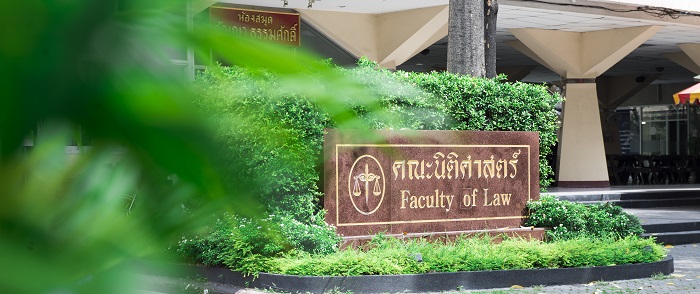
Beihai Asia International Arbitration Centre( BAIAC) and the Faculty of Law, Thammasat University (TU Law), Bangkok, have entered into a cooperation Memorandum of Understanding (MoU) on 1 May 2021.

Faculty of Law, Thammasat University is the oldest law school in Thailand and is highly regarded for producing the country’s eminent leaders and figures since its inception in 1934. Beihai Asia International Arbitration Centre (BAIAC) is a Singapore based arbitration centre established by the Beihai Arbitration Commission focusing on international commercial disputes arising from ASEAN, China and the BRI countries.

With the signing of the MoU, the parties hope to develop mutually beneficial cooperation in the area of arbitration training, education and research involving the ASEAN region with a focus on Thailand, Singapore, and Guangxi. In addition, the parties would also be working on a pilot program to train faculty members of TU Law as international arbitrators and experts.

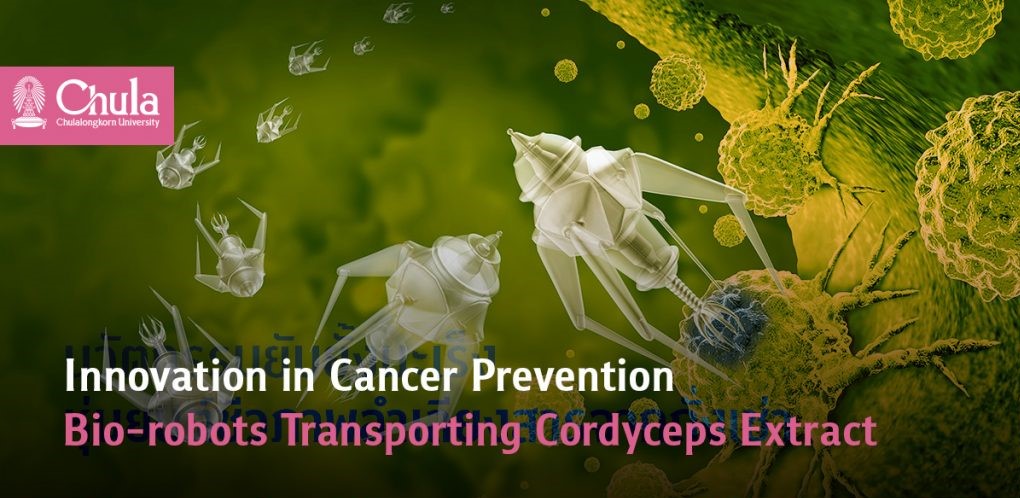
Innovation in Cancer Prevention: Bio-robots transporting cordyceps extract

Researchers from Chulalongkorn University celebrate the success of Active Targeting, a revolutionary innovation in the medical industry using bio–robots to deliver targeted cordyceps extract to halt cancer with reduced side effects.

Dr. Teerapong Yata, Lecturer of the Biochemistry Unit, Department of Physiology, Faculty of Veterinary Science, and Dr.  Waranyu Pooncharoen, Department of Pharmacognosy and Pharmaceutical Botany, Faculty of Pharmaceutical Sciences, Chulalongkorn University have collaborated with the National Nanotechnology Center (NANOTEC) to conduct a research to address this question through a delivery system aided by bio-robots to carry the “Cordycepin” to targeted cancer cells more precisely.

Dr. Teerapong explained that taking cordyceps or cordyceps extracts, as they are sold and consumed today, may have benefits in terms of general health maintenance, but almost no effect in terms of inhibiting cancer cells.

“We have to extract the substance. “Cordycepin” and see how it can be brought to the cancerous tissue in the body, as the intestine can absorb very little of it.  Therefore, NANOTEC has developed bio-robots called the “Nanoparticle Delivery System” to distribute the extract to the targeted location where we want the extract to be active.”

The nanotechnology delivery system is one answer to the cancer treatment problem. By bringing the active substance to its target and helping the body absorb Cordycepin better, the delivery system also reduces the chance of drug residue and toxicity in the body.

“There is no definite conclusion which substance in cordyceps causes side effects or is toxic to the body, such as stomach, liver, kidneys, so if we have a conductor to encapsulate only important substances and target the delivery to destroy only the cancer cells, it will help reduce the side effects, especially the toxic effects on the liver.”

Dr. Teerapong explained further that the “controlled release” of the nanoparticles can reduce potential toxicity affecting the liver or kidney.

The research on “bio-robots” does not stop here. According to Dr. Teerapong, “currently, the process of “active targeting” is being studied.  It is the use of targeted molecules to deliver important substances to the desired organs as precisely as possible. This is because this innovative robot of the future is not created to cure cancer alone, but can also serve to encapsulate substance and deliver it to the area that needs treatment.”

Recently, researchers have started to use bio-robots to transport important substances, both medicines, and vaccines.  Different types of substances need different designs which should be done under the guidance of the doctors.  Moreover, at present, bio-robots are being used to treat animals as well, Dr. Teerapong concluded.

Thammasat University students compete in John Molson Undergraduate case competition

Thammasat Business School was invited to be a part of John Molson Undergraduate case competition  2021 along with other 28 undergraduate business schools from over the world.

John Molson Undergraduate case competition is the largest international undergraduate case competition organized by the John Molson School of Business at Concordia University. The competition is a weeklong event and consists of multiple levels of challenges in both short and long cases.

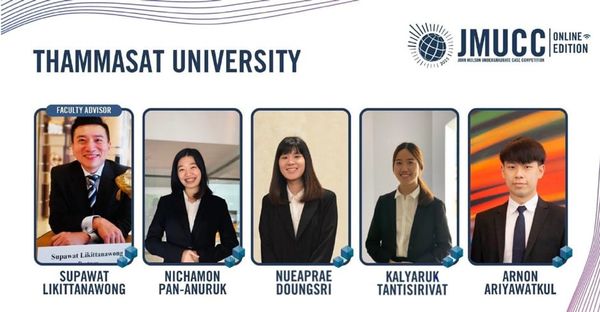
The team comprised of four BBA students: Kanlyaruk Tantisirivat, Nichamon Pananurak, Nueaprae Doungsri ), Arnon Ariyawatkul. Even though the entire competition was conducted virtually, that did not make the competition less challenge since our team was requested to solve 3 cases: 3-hrs, 5-hrs, 24-hrs long, throughout the week without physical meeting due to the competition’s policy.

The team finished with second place in the division. The team emphasises that apart of the success, they value the  the new skills they learned during the competition.

The team appreciates the guidance and support of their advisors, Prof. Supawat Likittanawong and Dr Worapong Janyanyuen.

Thammasat University wins the regional round of ASCM Case Competition 2021

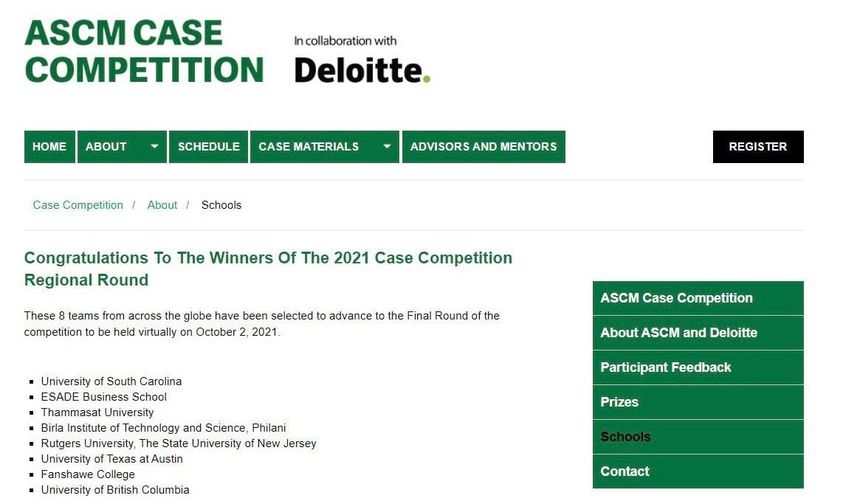
A team of students from BBA, Thammasat University have won the regional round of 2021 ASCM Case Competition.

The team comprised of students, Tantisuwankul, Phasinee Saengthong, Nutrara Suangthonglang, and Nithid Pongcharoen. They competed with 331 other teams who participated in the competition.

There were only 64 teams in the regional round. In this round, the team solved an 8-hour case about supply chain management and emerged as the winner of the region which consisted of 6 countries: Australia, China, Malaysia, Singapore, Thailand, and Vietnam.

The 2021 ASCM Case Competition is organized by ASCM in collaboration with Deloitte Consulting LLP. Participating teams had to present solutions to an exciting end-to-end supply chain management problem, as they competed for prize money and recognition.

ASCM is proud of a rich tradition of student team case competitions. The program began as a grassroots-level event, with many APICS chapters, colleges and universities taking part.

The program challenged students to test the supply chain knowledge with real consulting cases curated by Deloitte. Deloitte is a world leading provider of audit and assurance, consulting, financial advisory, risk advisory, tax and related services.

Over the years, the Case Competition has evolved into a flagship event touching students at universities across Africa, Asia, Europe, and both North and South America.


Thammasat University students among the top 10 semi finalists at ASEAN Inter-Varsity Retail Challenge 2021

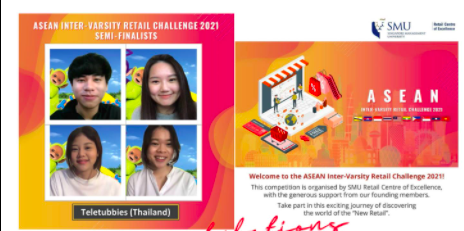
A team of Thammasat University students from the B.E. Faculty became one of the top 10 semi-finalists ASEAN Inter-Varsity Retail Challenge 2021 competition held online hosted by the Singapore Management University (SMU).

The “Teletubbies” team representing Thailand comprised of Athicha Korkiertsatean, Pitchaporn Inthisorn, Praewnapa Chaisaengjan, and Thanachote Phokakul.

The team mentioned that participation in the competition significantly improved their hard skills and soft skills, including analytical thinking. data analysis, data structure, communication, and teamwork.

The team also stressed that the competition was a good platform to apply the skills learned in class to real-life situations.

Chula professor successfully converts carbon dioxide to methanol

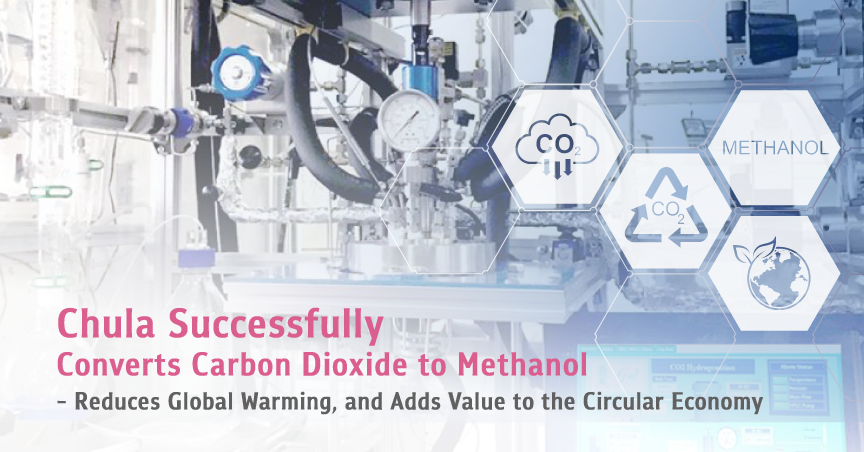
An Engineering professor, Chulalongkorn University has successfully converted carbon dioxide to methanol via a thermochemical method that consumes less energy and provides more yield, providing an alternative solution to reduce greenhouse gas emissions and stimulate the circular economy.

“Most of today’s methanol is synthesized from natural gas, which normally releases carbon dioxide during the production process. We, therefore, studied the production of methanol directly from carbon dioxide, which means that this helps to reduce carbon dioxide and also brings the gas back to some use and increases its economic value as well,” Asst. Dr. Pattaraporn says.

Dr Pattaraporn revealed the concept of a sub-research project under the Carbon Dioxide (CO2) Conversion to Higher-Valued Products with support from the “Research Cess Fund” (RCF) from the Malaysia-Thai Joint Authority (MTJA) for the research team from the Faculty of Engineering, Faculty of Science, the Metal and Materials Research Institute Chulalongkorn University, and other institutions to study different technologies and methods to recover carbon dioxide.

“In general, methanol is synthesized from natural gas by thermochemical method, which produces one ton of methanol and emits about 0.5-1.5 tons of carbon dioxide.” Asst. Prof. Dr. Pattaraporn explained.

“Therefore, we studied how methanol is produced directly from carbon dioxide, which is a promising alternative to the environment and also enhances its economic value.”

Asst. Prof. Dr. Pattaraporn elaborated that methanol can be expanded into a wide range of environmentally friendly green chemical products, such as Dimethyl Ether (DME), used as heating fuel, and Dimethyl Carbonate (DMC), which is used in many industries such as the paint industry, and adhesive industry.  Dimethyl carbonate is used as a binder and is classified as a type of plastic material. It is also mainly used as an electrolyte in lithium-ion batteries used in electric vehicles, which are becoming increasingly in demand.

“Nowadays, the production of dimethyl carbonate mainly uses phosgene, a highly toxic chemical that can cause death or serious health problems even with low concentrations. Therefore, dimethyl carbonate production from methanol and urea, or even from carbon dioxide directly is an interesting production pathway.”

Asst. Prof. Dr. Pattaraporn elaborated more on the fact that the carbon dioxide management approach that amine solutions are generally used to capture carbon dioxide and then separate it by heat until pure carbon dioxide is obtained. After that, the captured carbon dioxide can be further managed in two ways.

For this research, Asst. Dr. Pattaraporn chose the process of thermochemical conversion to convert carbon dioxide in which she used a reactor to generate heat and pressure, then induce a chemical reaction by adding hydrogen to carbon dioxide (CO2 hydrogenation) until it becomes methanol.

However, the thermochemical method demands intensive energy for the reaction and the methanol yield is low. Asst. Prof. Dr. Pattaraporn then finds a way to eliminate this drawback with the use of some alcohol as a catalytic solvent with copper-zinc oxide base catalyst (Cu/ZnO) to increase the methanol yield, and reduce energy consumption in the carbon dioxide conversion process.

Despite the research success, there are still many obstacles, such as the relatively high cost of CO2 capture, energy used in the CO2 conversion process, production costs and sources of hydrogen, market size constraints, and lack of investment incentives. So, if it receives support from the government in terms of policy, cost incentives, taxes, etc, this technology will become more competitive in the future.

“We have a plan to work with the industry sector to push forward the research to provide Thailand with new environmentally friendly products, create economic value for waste, and stimulate a circular economy. This is an important issue to which people today need to pay attention. We must try to save the environmental capital as best as possible to pass it on to the next generation so as to assure them of a better life.” Asst. Prof. Dr. Pattaraporn concluded.


 

Thammasat University wins global championship at OpsSimCom 2021

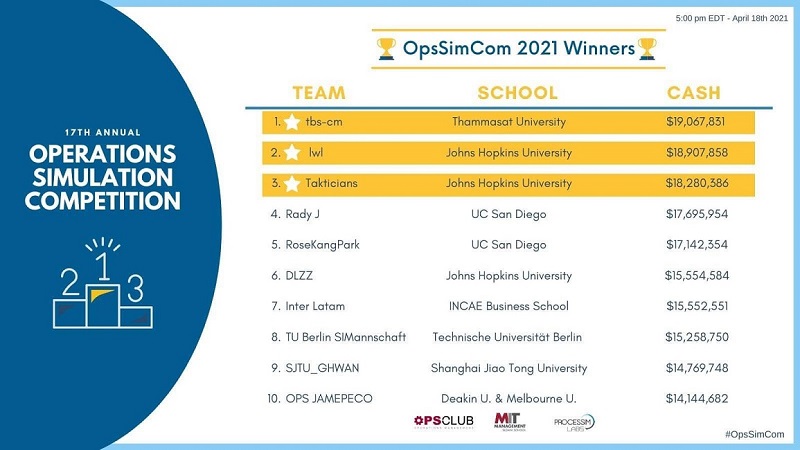
MBA students from the Faculty of Commerce and Accountancy, Thammasat University, on behalf of “tbs-cml” team, beat 61 contestants from the world’s top universities and won 1st prize at the Operations Simulation Competition 2021 (OpsSimCom 2021), a global competition organized by MIT Sloan School of Management, the business school of the Massachusetts Institute of Technology (MIT).

In this competition, the contestants ran a virtual factory through the Medica Scientific game for 2 days. The duration equated to 388 days, divided into 3 phases: 50 days for data in the start period, 288 days that the contestants are allowed to manage, 50 days for supervision according to their planning but they are not allowed to manage. The results were based on the amount of cash that remained. MBA Thammasat has joined the competition every year since 2009 and won the world championship for the first time in 2016.

Mr. Issara Rungwittayakul, a “tbs-cm1” team member from Thammasat University, explained that the challenging part of this competition was that there were two production lines and market price fluctuation.

“The most important thing that made us win this competition is that we analyzed market conditions, costs and selling prices with high-profit margins. Our team used strategies that focused on short-term loans for investment in the first period then we managed to boost production capacity and cost reduction as much as possible.”

Mr. Puripat Petchdee, a “tbs-cm1” team member from Thammasat University, said, “Knowledge is very crucial in this game. Thanks to Thammasat University, we gained the business knowledge which we have to know what we want our business to be, which direction to go, and what we need to do, for example, Investment Management course will focus on return on investment and risk management as well as computational skills that allowed us to choose the strategy for the most profitability.”


Thammasat University launched “The Circular Innovation Challenge”

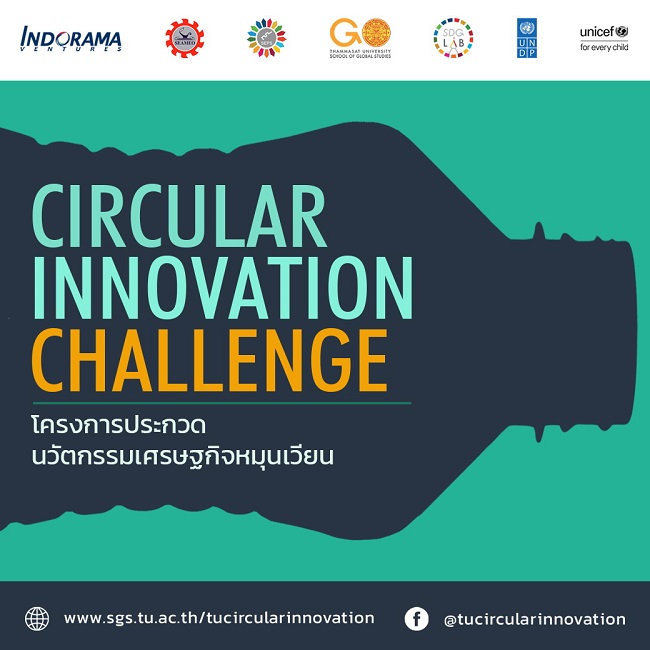
SDG Lab: School of Global Studies, Thammasat University in collaboration with Indorama Ventures Public Company Limited, a world-class chemicals company with a global leader in PET partners including the SEAMEO Regional Centre for Sufficiency Economy Philosophy for Sustainability, the United Nations Development Program (UNDP), and the United Nations Children’s Fund (UNICEF) launched “The Circular Innovation Challenge” on April 26, 2021, to persuade young people between the ages of 16-30 to present their innovative ideas for general practice and development in order to create a circular economy, improve plastic waste management and solve hygiene problems.

This challenge offered a prize valued at over 200,000 baht together with learning session and workshop by experts from leading international organizations

Prof. Dr. Prapaporn Tivayanond Mongkhonvanit, Dean of the School of Global Studies, Thammasat University as the initiator of the Circular Innovation Challenge held by SDG Lab: School of Global Studies, said that the objective of the Circular Innovation Challenge is to raise awareness of circular economy issues.

In addition, it helps young innovators to enhance new skills to propose solutions concerning our society and the environment. The contest will be held as a hackathon, which is a design sprint-like event in which participants brainstorm to solve waste management issues.

Mr. Yash Lohia, Chief Recycling Officer of Indorama Ventures, said, “We are proud to support ‘The Circular Innovation Challenge’ and hope to provide tools and spaces for new generations to create a circular economy for the future. Moreover, they can learn from various experts directly. We hope this project will provide a better understanding of the circular economy in Thailand and promote the benefits of using recycled products because good innovation makes a comprehensive circular economy like our PET bottles, which still circulate in the economy loop.”

“For example, we are the first Thai company with the success of high-quality PET bottle recycling for the production of medical PPE which can be washed and used repeatedly replacing the single-use one.”, Mr Lohia added.

Recycling is the core element of a circular economy and a clear practice to reduce waste problems. Therefore, the company cooperates with both domestic and international organizations to support a universal declaration to increase the use of recycled products aiming at increasing the PET bottle recycling capacity to 50 billion bottles/year by 2025.

Mr. Renaud Meyer, UNDP Representative in Thailand said, “The poor waste management problem has a very negative impact on the environment and human life, especially the impact on marine resources, onshore biodiversity and public health. During the COVID-19 crisis, we saw the vulnerabilities of the waste management system, infrastructure as well as changes in waste management.”

“However, this crisis allowed us to initiate a more sustainable model of innovation, define green spaces, build resilience to life and develop modern innovations. The United Nations Development Program believes that innovation plays a key role in solving waste management problems. Thailand supports young entrepreneurs and communities by transferring knowledge of the waste management approach through circular economy principles,” Mr Meyer continued.

“The concept of circular economy is not only a guide to more sustainable resource management, but it also helps to achieve other sustainable development goals. One of them is Goal 12: Ensure sustainable consumption and production patterns.”

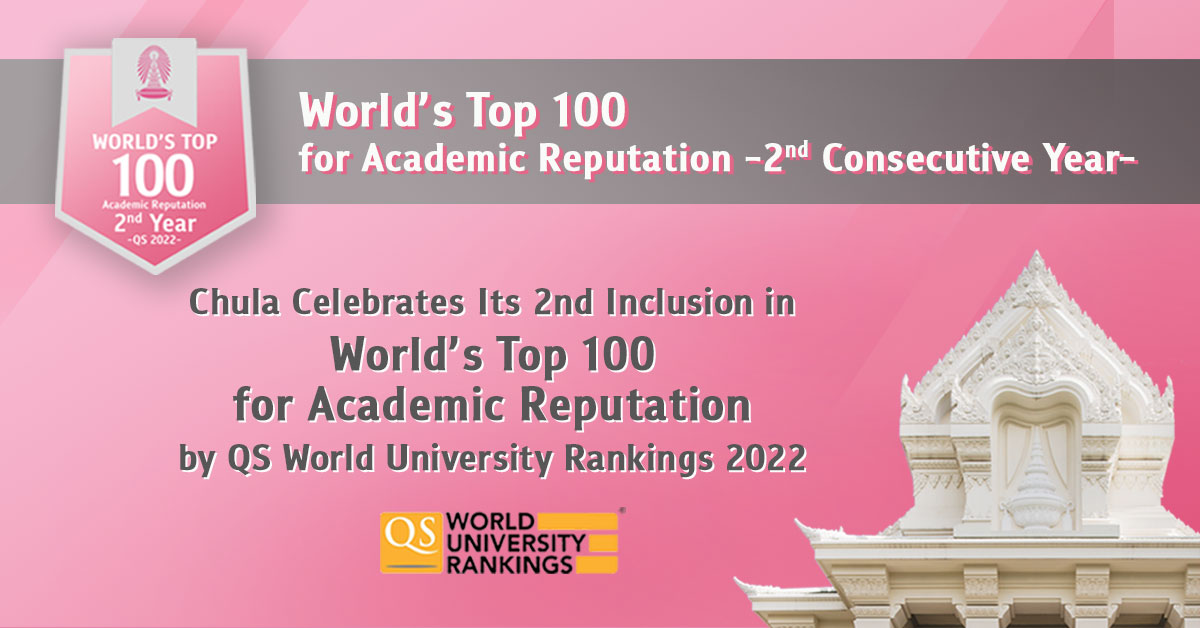
For the second straight year, Chula makes it to top 100 for Academic Reputation by QS WUR 2022

The results for this year’s QS World University Rankings 2022 have Chulalongkorn University holding the prestigious ranking as one of the one hundred best universities in the world in terms of Academic Reputation. This is the second straight year that Chula has occupied number 96 and once again it is placed as the best university in Thailand.

The university also takes pride in being recognized as the top university in Thailand for the 13th consecutive year (since 2009) and for placing among the 215 best universities in the world.

This year’s rankings show that Chula still retains its prime position as first in Thailand for academic reputation which serves as the indicator with the highest-ranking value. It is a reflection of the level of confidence that Chulalongkorn University enjoys from the perspective of more than 100,000 representative academics, entrepreneurs and academic institutions around the world.

Apart from that, Chula ranks 101st in the world in terms of Employer Reputation, an improvement from last year where it was at 125 in this category. The same goes for the Faculty-Student ratio and International Student ratio where Chula also sees an improvement from last year as well.

The latest rankings are a reflection of the success in the developments implemented by the University known as “Innovations for Society” which have brought about significant recognition in both academic and industrial circles at the international level.

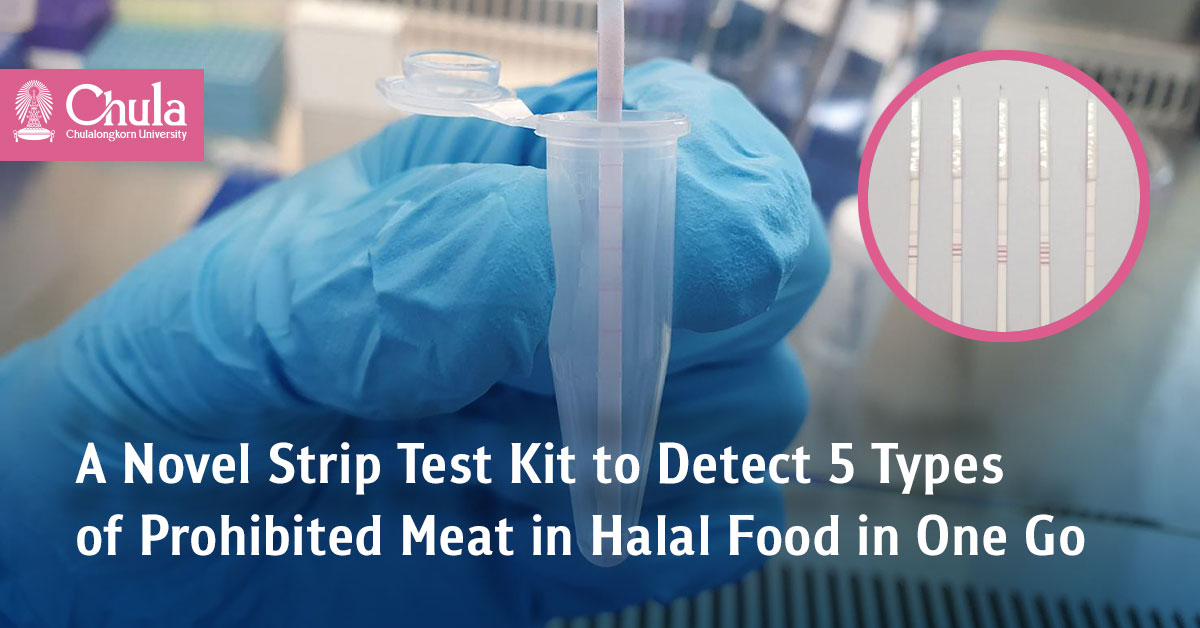
A novel strip test kit to detect 5 Types of prohibited meat in halal food in one go

An all-in-one Strip Test — a fast, easy and accurate test kit to detect the DNA of 5 meat in a single test is the latest innovation from the Chulalongkorn University‘s Halal Science Center.

Food with certain types of meat is forbidden by Islamic dietary law and is a major concern for Muslims around the world.  Chula Halal Science Center’s strip test can detect such foreign meat contamination which consumers and food manufacturers can perform by themselves.

“This innovation certainly addresses the concerns that Muslim consumers and the general public have.  The Strip Test detects targeted DNAs, so it can yield a 100%-accurate result within 3 hours, which is much faster than sending the samples to the lab that normally takes 1-5 business days.  Moreover, it is also easy to use, cheap and convenient,” said Anat Denyingyote, Assistant Director and Head of Science and Technology Services Group, Chula Halal Science Center.

Anat Denyingyote, Assistant Director and Head of Science and Technology Services Group, Chula Halal Science Center
Anat Denyingyote, Assistant Director and Head of Science and Technology Services Group,
Chula Halal Science Center

Apart from cutting processing time and cost, the Strip Test also detects traces of the 5 prohibited meat in food (pork, dog, cat, rodent and monkey) in one single test. The test kit can be used with raw and cooked food, as well as other ingredients.

“We want Muslim consumers, the public, and food business operators to be able to perform the test on their own at a reduced cost for safety and their peace of mind,” Anat said while detailing the rationale behind the development of the Strip Test based on the HRMA (High-Resolution Melting Analysis) technology.   HRMA is used in halal forensic laboratory to detect contamination of the 9 banned meat (pork, dog, cat, rodent, monkey, donkey, snake, crocodile, and frog). The Center also offers other services to the public such as gelatin contamination test, fatty acid profile test, and ethyl alcohol test, etc.

Currently, Strip Test users are limited to business operators, halal inspection agencies, and a few consumers with a science background.  In the future, with the support of funding from the Agricultural Research Development Agency (Public Organization) or ARDA in collaboration with Tallenome DNA Professional Co., Ltd., the Halal Science Center, led by Assoc. Prof. Dr. Winai Lahlan, and Prof. Dr. Suwimol Kiratipibul hopes to make this innovation widely accessible.  The plan is to make the Strip Test kit available at 300-500 baht, which is 10 times cheaper than a forensic lab test.

“Next, we will further develop Strip Test into a comprehensive test kit capable of yielding faster results and can be used for on-site detection.  It’s also easy for consumers to use. They can just follow the manual and perform the test,” Anat said.