Satbayev University
Published on 21 October 2026




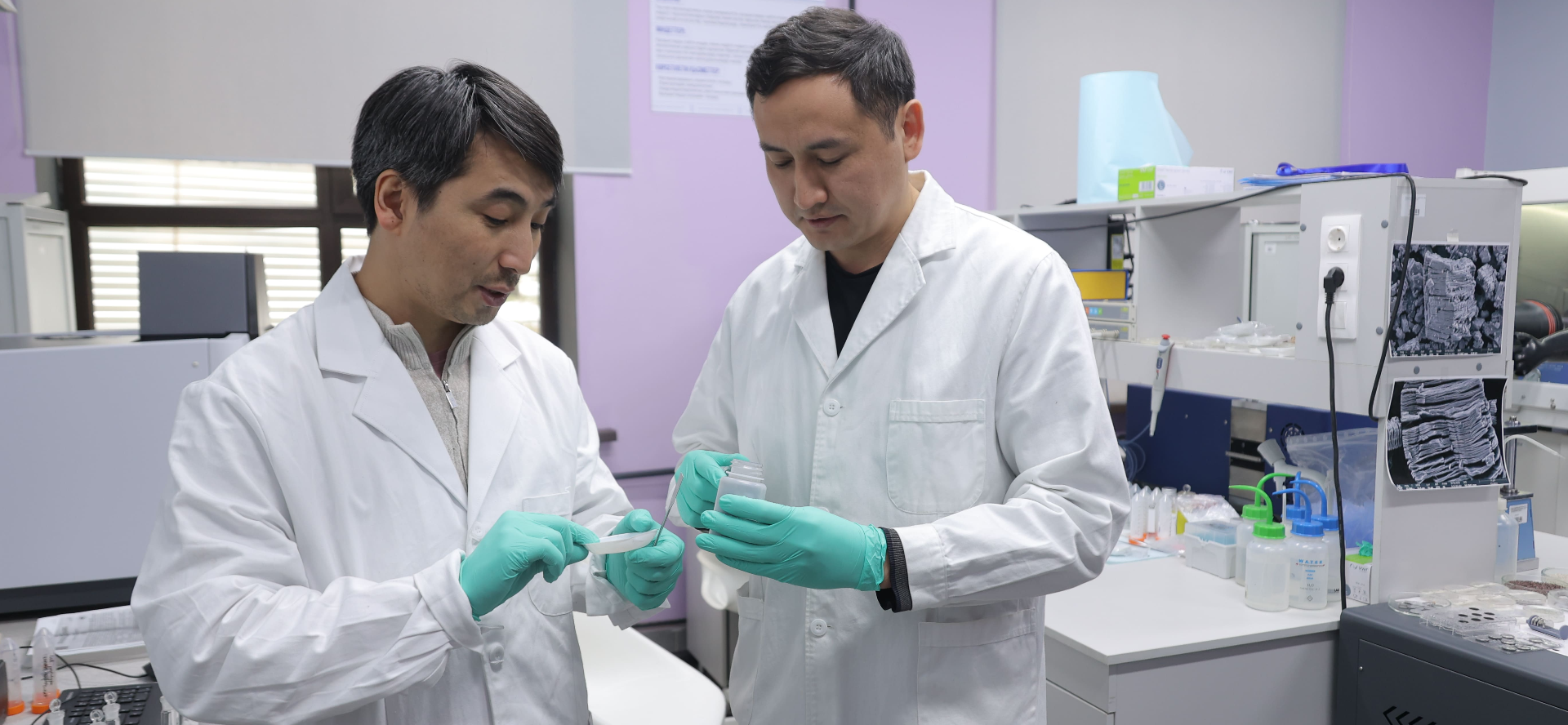
Scientists at SU have developed a comprehensive technology for treating water and soil contaminated with heavy metals, radioactive elements and organic pollutants. Laboratory tests demonstrated removal efficiencies of up to 99% for certain types of contaminants. The technologies have also been tested at industrial facilities in Kazakhstan.
The approach is based on materials capable of absorbing and retaining pollutants. Produced from natural raw materials and plant waste, these materials offer a way to transform agricultural by-products into useful resources for water and soil remediation.
One area of research focuses on removing radioactive elements from water. The filter material developed by the scientists removed up to 99% of strontium-90, while the systems designed to remove cesium-137 also demonstrated high efficiency.
To address contaminants that are difficult to remove through conventional filtration, the researchers applied cold plasma technology. An electrical discharge helps break down complex organic substances into simpler compounds. Laboratory tests showed that the treatment removed more than 99% of a model organic pollutant in approximately 30 minutes. The technology can also be used for water disinfection and additional treatment of industrial wastewater.
The research team tested its developments on industrial wastewater from enterprises in Kazakhstan. Based on the results, the scientists proposed a multi-stage treatment system that removes impurities and salts, provides additional filtration and prepares water for reuse. Separate experiments were also conducted using uranium-containing solutions. The findings are being used to further develop a multi-stage purification system.
Another area of the research program focuses on restoring contaminated soils. The scientists found that adding biochar helps retain copper, zinc, cadmium and lead in the soil, reducing the mobility of these heavy metals. At the same time, biochar improves certain biological properties of the soil.
“An important feature of the project is that we assess not only treatment efficiency, but also environmental and economic feasibility,” said Professor Toktarbai Zheksenbek, PhD, the project manager. “We have calculated the life cycle of the new materials, taking their carbon footprint into account. The use of plant-based raw materials, the reuse of sorbents and technologies that require fewer chemical reagents can help reduce environmental impacts and potentially lower treatment costs.”
The research is being conducted under the scientific and technical program BR27199301, “Development of Climate-Neutral New Materials, Advanced Technologies and Methods to Protect the Environment from Anthropogenic Pollution and Climate Change.”
The program has already produced a range of scientific and practical results. Researchers have published 17 scientific articles in journals indexed by Scopus and Web of Science and eight articles in journals recommended by the Committee for Quality Assurance in Science and Higher Education (CQASHE). Four utility model patents have been granted, while two additional patent applications are under review.
International cooperation is another important outcome of the research. The scientists secured a Polish grant to support collaborative research and received an invitation to undertake a scientific internship at the Japan Atomic Energy Agency (JAEA), creating further opportunities to advance their work and exchange expertise with international partners.