Marfiah Ab Wahid
Published on 13 July 2026




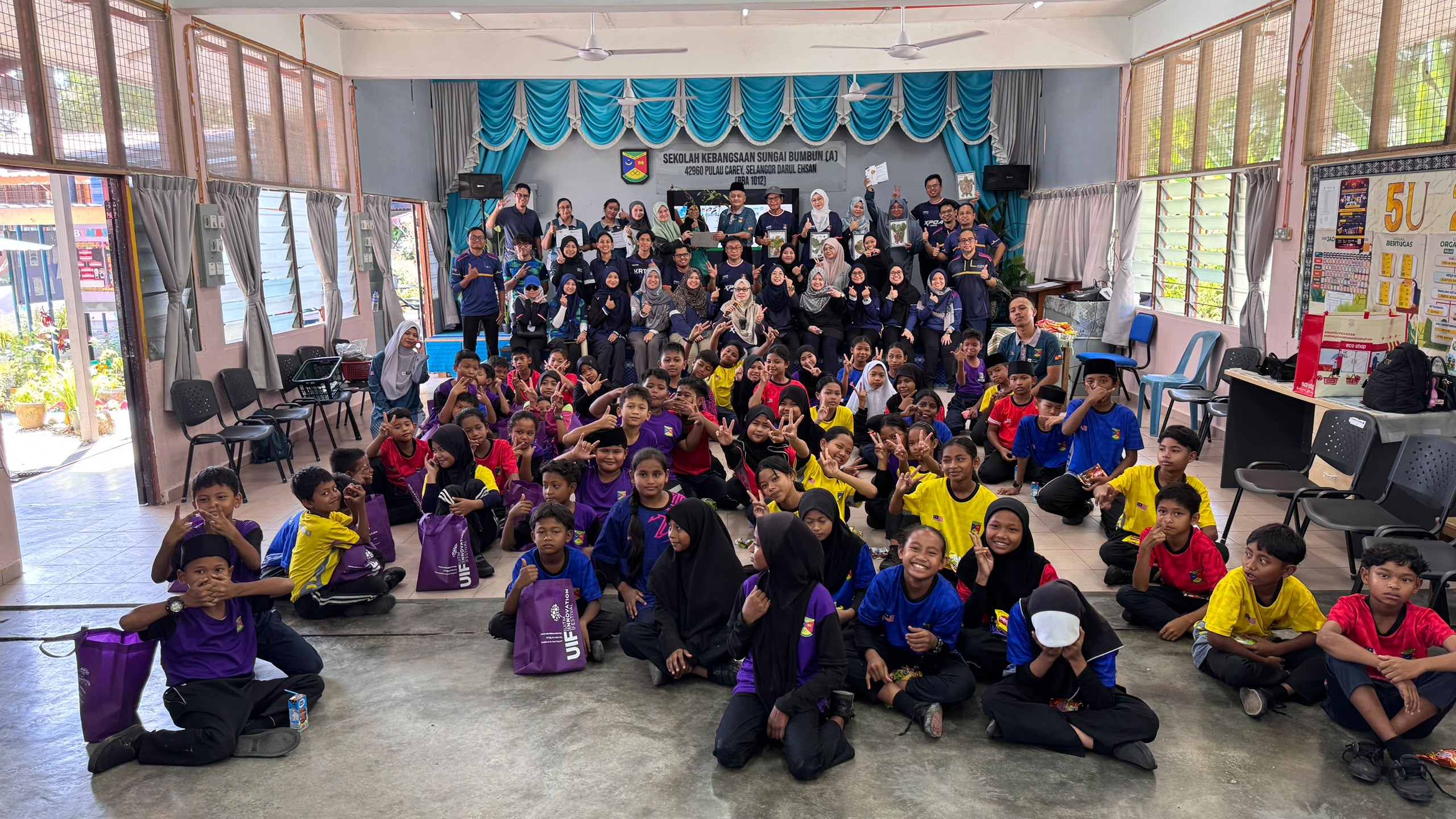
9 July 2026 – Shah Alam, Malaysia – Universiti Teknologi MARA (UiTM), through the Institute for Biodiversity and Sustainable Development (IBSD), has successfully implemented a STEAM and robotics knowledge transfer program aimed at nurturing digital literacy, computational thinking, and environmental awareness among primary school students in Selangor.
The program introduced Sphero BOLT, an interactive educational robot, as a platform for learning coding, robotics, and the applications of Information and Communication Technology (ICT) and the Internet of Things (IoT). By integrating hands-on learning with real-world problem-solving, the initiative demonstrated how emerging technologies can support environmental sustainability and contribute to the development of future smart communities. The program was made possible through a research collaboration between IBSD, led by Associate Professor Dr. Marfiah Ab. Wahid, and the Faculty of Education, University of Toyama, Japan, led by Professor Yoshinori Naruse, as part of the ongoing activities under the Memorandum of Understanding (MOU) between the two universities. A total of 50 students and five teachers from SK Bukit Kemuning 2, SK Taman Gembira, and SK Sungai Bumbun actively participated in the program from April to July 2026.
Sphero BOLT is a programmable spherical robot equipped with multiple sensors, an LED matrix display, infrared communication, a compass, and a gyroscope. Designed as a STEAM (Science, Technology, Engineering, Arts, and Mathematics) educational tool, it enables students to learn coding and engineering concepts through engaging, practical activities. Throughout the program, participants developed fundamental knowledge and practical skills in coding, programming logic, flowchart design, sensor technology, navigation systems, infrared communication, digital compass applications, and gyroscope functions. Students also explored key physics concepts, including speed and acceleration, while strengthening computational thinking, creativity, collaboration, and problem-solving skills. The program further demonstrated how robotics and IoT technologies are transforming everyday life through applications such as environmental monitoring, flood early warning systems, smart transportation, autonomous vehicles, precision agriculture for efficient fertilizer management, and even space exploration.
To ensure sustainable implementation, the program adopted a phased training approach. Teachers first participated in academic workshops before transferring their knowledge and skills to students in their respective schools. This train-the-trainer model strengthens schools' capacity to sustain STEAM and robotics education beyond the project's duration. The program received overwhelmingly positive feedback from both teachers and students, reflecting its success in making STEAM education more engaging, relevant, and accessible. Building on this achievement, IBSD is committed to expanding similar knowledge transfer initiatives to empower more young learners with digital competencies and an innovative mindset.