National Taiwan University
Published on 24 August 2026




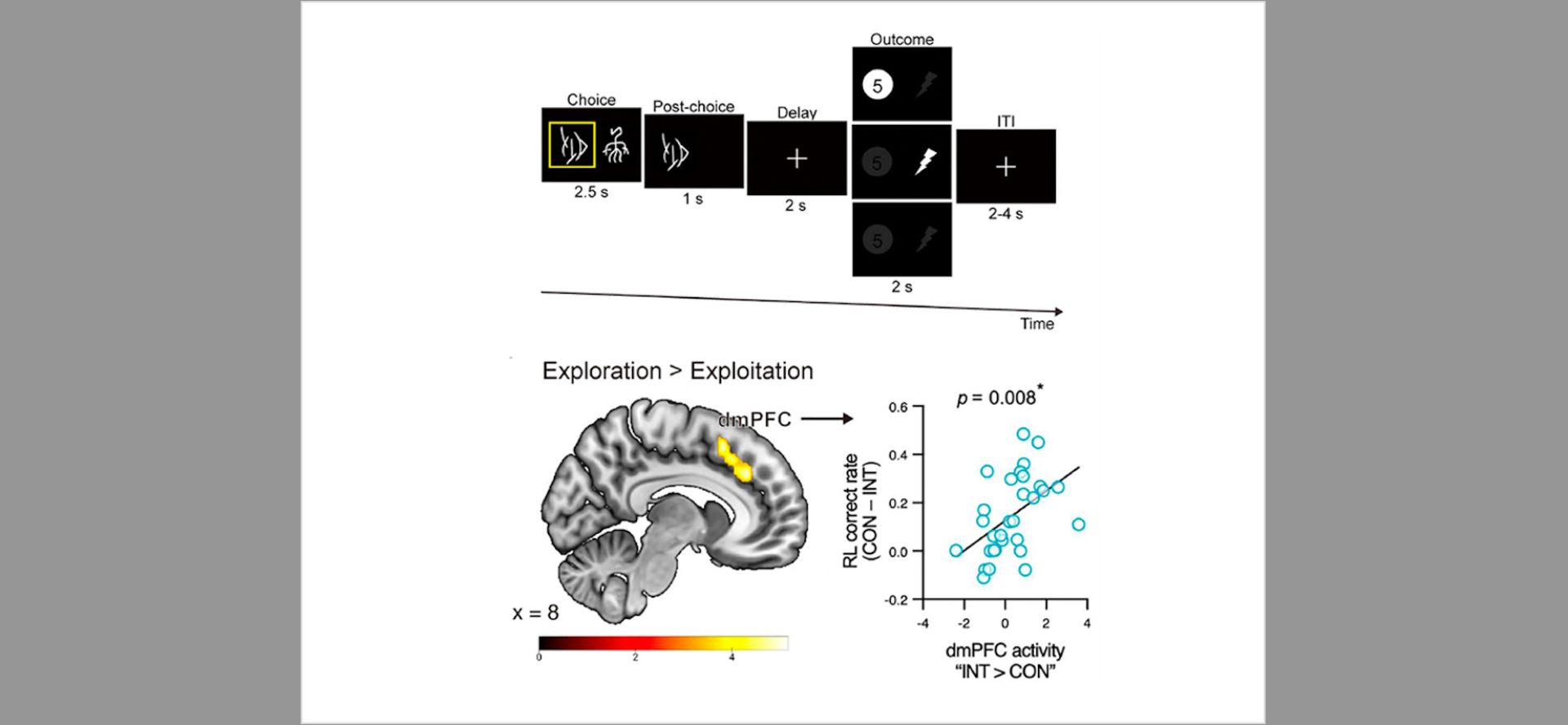
As individuals make daily decisions, past experiences significantly influence their future choices. However, when the same action yields both positive and negative outcomes across different contexts, how does the brain integrate these conflicting signals? A research team led by Associate Professor Ming-Tsung Tseng at National Taiwan University’s Graduate Institute of Brain and Mind Sciences has recently uncovered the answer. Published in the prestigious journal PLOS Biology, their study reveals that past negative experiences tied to a specific choice increase exploratory behaviors, a mechanism directly regulated by the brain's dopamine system.
While previous neuroscience research has typically examined reward and punishment learning independently, real-world decisions often involve accumulating mixed results. To address this, the NTU team designed a specialized learning task and combined it with functional magnetic resonance imaging (fMRI), computational modeling, and pharmacological validation. They discovered that previous punishment experiences prompt individuals to deviate from optimal, high-reward options in favor of exploring alternatives. Interestingly, this interaction is asymmetric; past reward experiences do not disrupt punishment learning in the same way. Further neuroimaging tests confirmed that blocking dopamine receptors eliminates this punishment-induced exploration, highlighting dopamine’s critical role in evaluating competing value signals within the prefrontal cortex.
This breakthrough not only maps the neural mechanisms behind complex human decision-making but also paves the way for clinical advancements. By decoding how the brain processes loss sensitivity under conflicting information, the findings provide a foundational framework for understanding learning and decision-making deficits in dopamine-related conditions, such as Parkinson's disease, depression, and addiction. Supported by the National Science and Technology Council, NTU continues to leverage interdisciplinary research to unravel the complexities of the human brain, offering scalable insights for global health and medicine.