National Taiwan University
Published on 21 September 2026




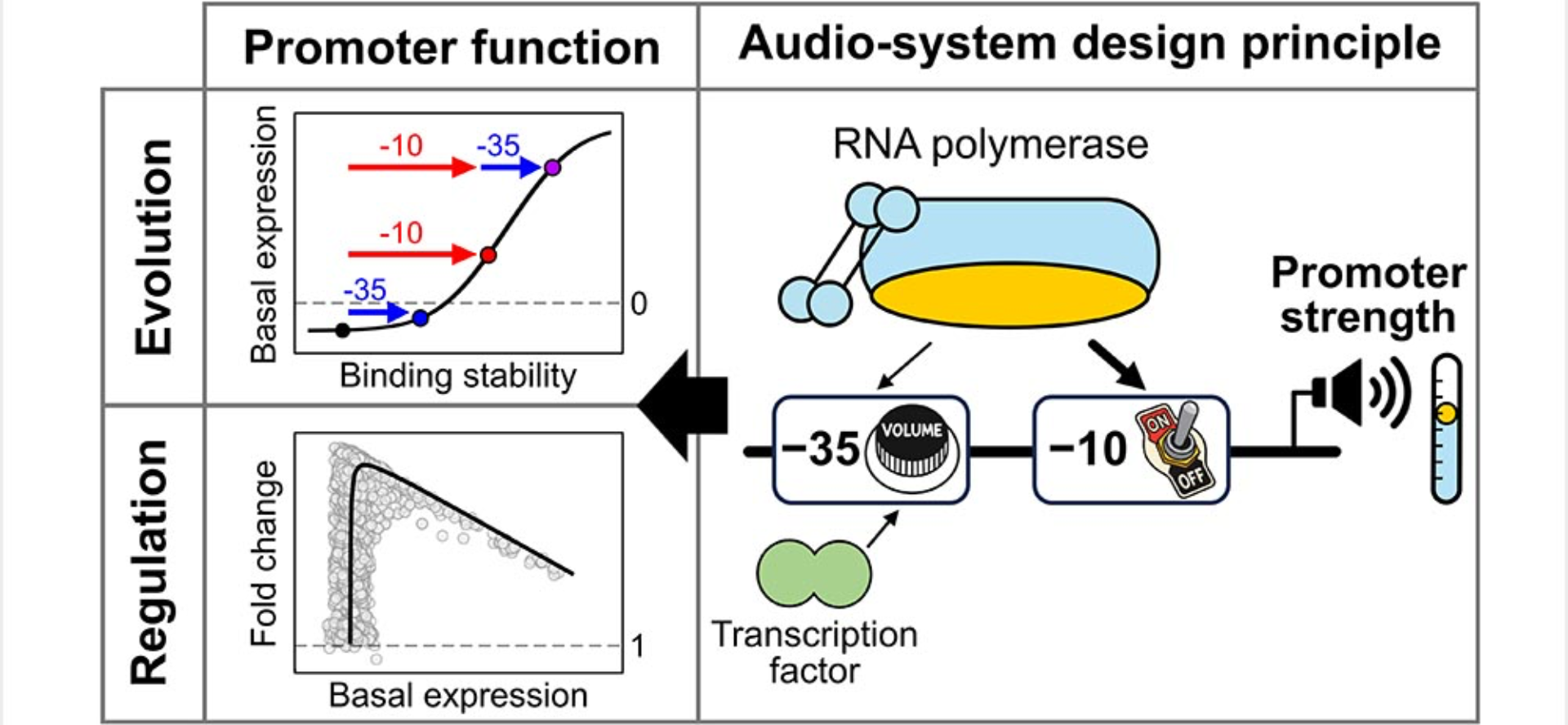
In molecular biology, the prevailing paradigm of gene regulation has long placed transcription factors at the helm, treating promoters on DNA sequences as passive docking sites. Challenging this conventional view, an interdisciplinary research team led by Associate Professor Hsin-Hung David Chou from the Department of Life Science at National Taiwan University (NTU)—in collaboration with Distinguished Professor Nei-Li Chan (NTU College of Medicine) and Associate Professor I-Ren Lee (National Taiwan Normal University)—has published landmark findings in Nature Communications. Their study establishes that bacterial promoters intrinsically dictate the dynamic range and evolutionary trajectory of gene transcription, operating with the precision of an integrated audio system.
Utilizing Escherichia coli as a model organism, the team systematically synthesized and evaluated a comprehensive library of 16.8 million promoter sequence variants, integrating massive empirical datasets with biophysical modeling and single-molecule kinetics. The analysis uncovered a distinct operational dichotomy: the “–10 element” acts as an ON/OFF power switch essential for basal activation, while the “–35 element” functions as a fine-tuning volume knob that scales expression magnitude. Crucially, transcription factors dynamically modulate this volume knob’s engagement with RNA polymerase. The researchers also identified a vital trade-off rule—only promoters with intermediate basal expression attain maximal fold-change regulation—resolving an ongoing academic controversy stemming from prior conflicting hypotheses in Science.
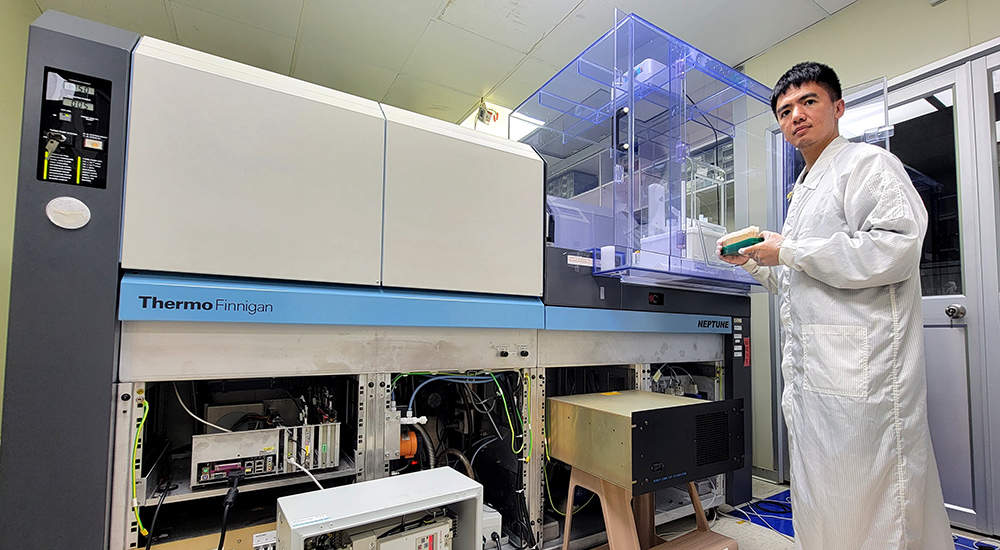
By reaffirming the promoter's active, autonomous role at the center of transcriptional control, the NTU-led breakthrough provides foundational design principles for synthetic biology and metabolic engineering. The discovery underscores the indispensable value of holistic, high-throughput empirical data in systems biology, avoiding fragmented conclusions. Supported by NTU’s advanced core instrumentation, this research exemplifies how high-impact basic science translates into precise genetic blueprints, driving forward next-generation biotechnology and sustainable biomanufacturing solutions.