Anastasya Hasugian
Published on 29 June 2026





Technological development has brought significant changes to many aspects of human life, including education. In the era of the Fourth Industrial Revolution, technology is no longer merely a supporting tool, but has become an important part of learning, working, and communicating.
One form of technology that is increasingly used today is Artificial Intelligence, or AI. In academic life, AI is present through various platforms and applications, such as ChatGPT, Canva, Slidesgo, CapCut, Grammarly, paraphrasing tools, Google Meet, Zoom, and other digital applications supported by AI features.
This phenomenon is also felt in higher education, including in the Communication Science Study Program, Faculty of Social and Political Sciences, Universitas Sumatera Utara. The growing use of AI on campus has made students more familiar with this technology. However, not all students are able to use and apply AI properly and wisely in academic activities.
In response to this development, the Communication Science Study Program of USU held a Visiting Professor program with the theme of Artificial Intelligence. The event presented Prof. Anang Sujoko, an academic with expertise and concern in the development of AI, who also serves as the Dean of the Faculty of Social and Political Sciences at Universitas Brawijaya.
The Head of the Communication Science Study Program at USU, Dra. Mazdalifah, M.Si., Ph.D., explained that AI was chosen as the main theme because artificial intelligence has become one of the most widely discussed issues in recent years.
“I personally have not used AI extensively. Even in writing, I still do it manually and rely on literature that is analyzed one by one. I know that this can be done with AI, but I am not fully satisfied with the results because I feel they do not completely come from our own thinking. However, I also realize that AI can help, because AI is inevitable in the current era,” said Mazdalifah.
Meanwhile, Dr. Maulana Andinata Dalimunthe, S.I.Kom., M.A., one of the lecturers of Communication Science at USU who also served as the moderator of the event, shared that he had already started using AI, including in classroom learning activities.
“I have actually used AI. In fact, I am currently exploring which AI tools can help me in lectures and other activities,” said Maulana.
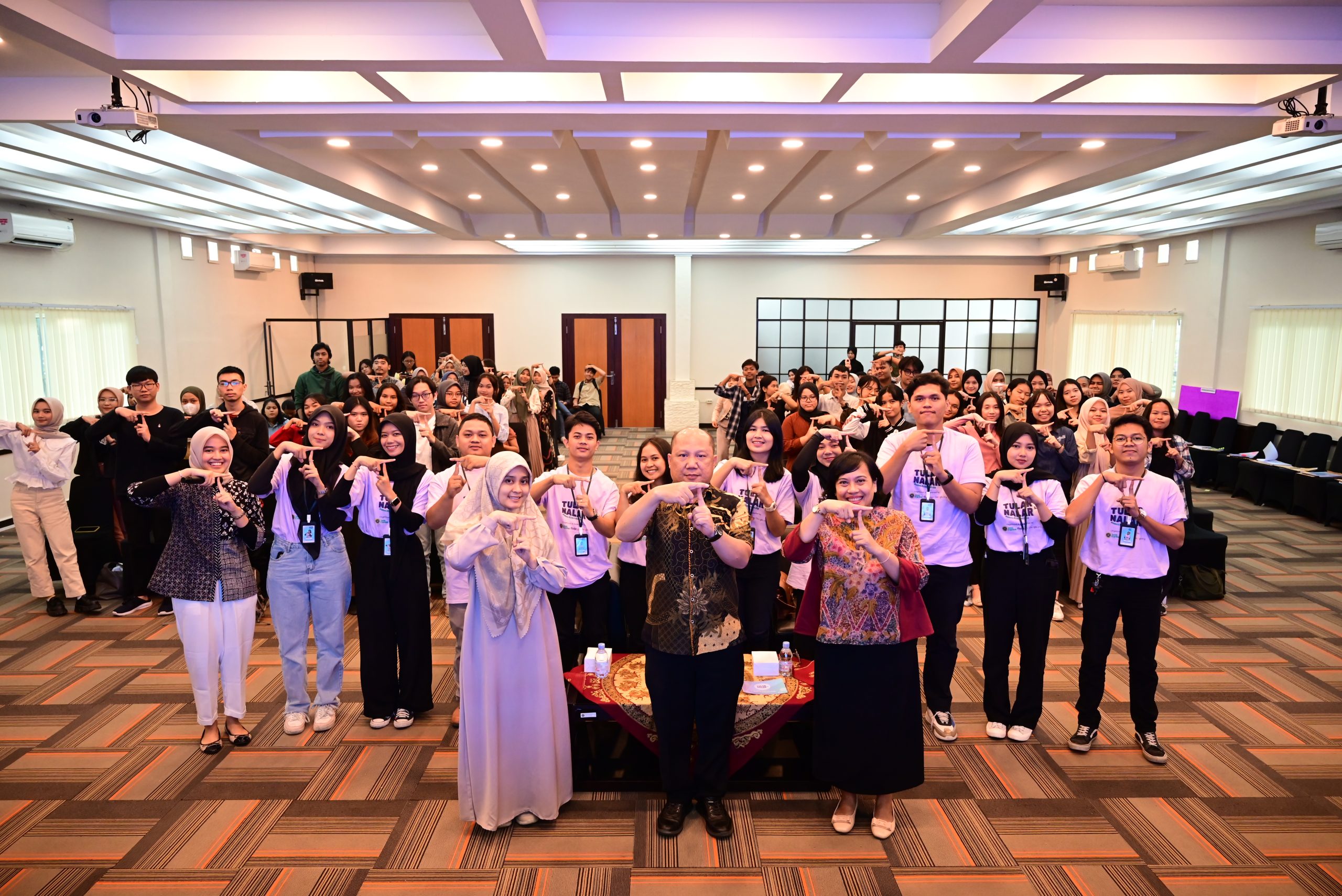
The Visiting Professor program was welcomed with great enthusiasm by the students. Maulana explained that the number of participants exceeded the seating capacity provided in the hall. Mazdalifah also shared a similar view, noting that the students’ enthusiasm could be seen from the large number of attendees and the active questions raised during the discussion session.
Through this activity, students are expected to gain a better understanding of how to use AI wisely. AI can be used as an alternative tool to support students in completing academic assignments, but it should not replace their own critical and creative thinking processes.
Mazdalifah emphasized that students should not become fully dependent on AI. Meanwhile, Maulana expressed his hope that lecturers would no longer view AI as something taboo.
“As Prof. Anang Sujoko explained, technology is an extension of human capability. Humans remain the ones in control. AI only works based on the instructions it receives. If we refuse to understand AI, then we are the ones who will be left behind. Therefore, AI should be seen as a partner that can help support various activities,” Maulana explained.
Ultimately, technology should remain under human control. AI can become a useful tool in supporting creative and academic processes, as long as it is used wisely, ethically, and in accordance with existing norms.