NCUSEC
Published on 27 July 2026




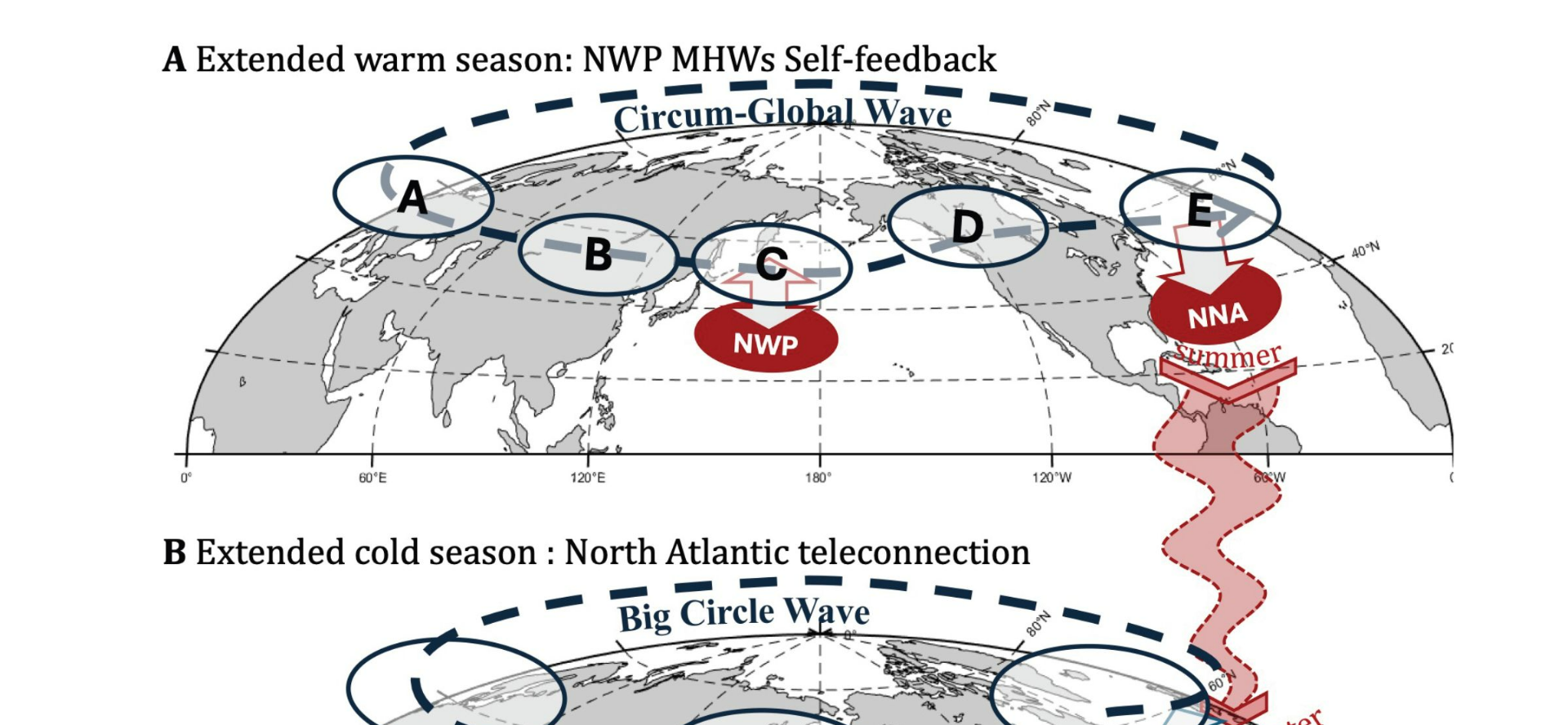
Marine heatwaves in the northwestern Pacific can persist for four to five years, making them among the world's longest-lasting ocean warming events. A new study led by researchers at National Central University (NCU) identifies the atmospheric mechanism that sustains these prolonged extremes, challenging the long-held view that they are driven mainly by local ocean and weather conditions.
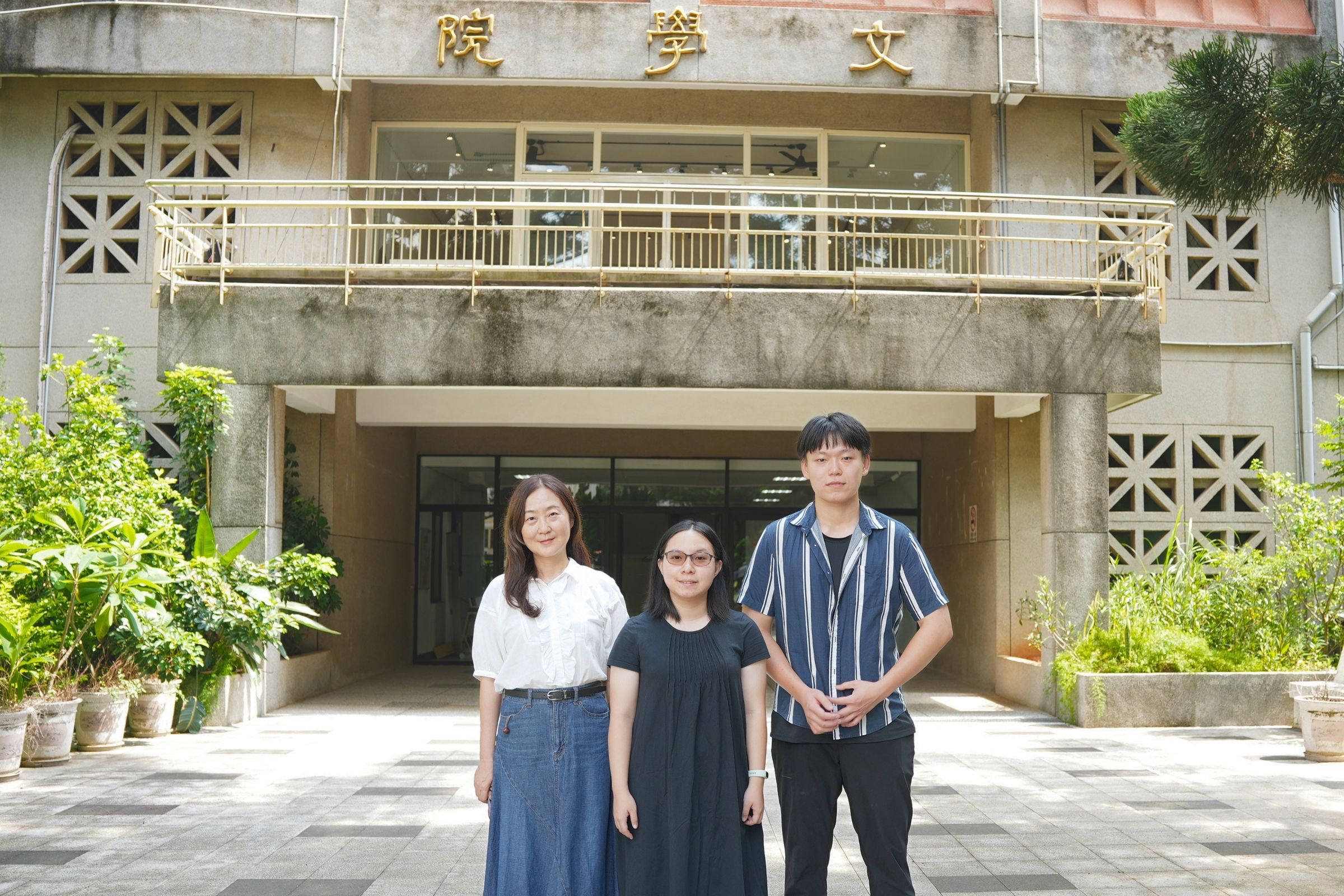
The study, led by Jin-Yi Yu, Chair Professor in NCU's Department of Atmospheric Sciences, and Yu Zhao, a doctoral researcher at the University of California, Irvine, appears in Science Advances.
The researchers found that these long-lived marine heatwaves are closely linked to the Circumglobal Wave (CGW), a large-scale atmospheric wave pattern that circles the Northern Hemisphere through Europe, Asia, the North Pacific and the North Atlantic. Rather than isolated regional events, the study suggests that northwestern Pacific marine heatwaves are part of a cross-basin climate phenomenon connected by atmospheric teleconnections.
Drawing on more than 150 years of observations, simulations from 43 climate models and atmospheric model experiments, the team also identified a self-reinforcing feedback that helps marine heatwaves persist. Since the 1970s, stronger summertime Circumglobal Wave activity has intensified interactions between ocean basins, extending the duration of these warming events.
The findings provide a new framework for understanding persistent marine heatwaves and could improve seasonal climate predictions by enabling scientists to better forecast how long these events will last. Better prediction of prolonged ocean warming could support fisheries management, marine ecosystem conservation and climate adaptation in a warming world.