NCUSEC
Published on 20 October 2026




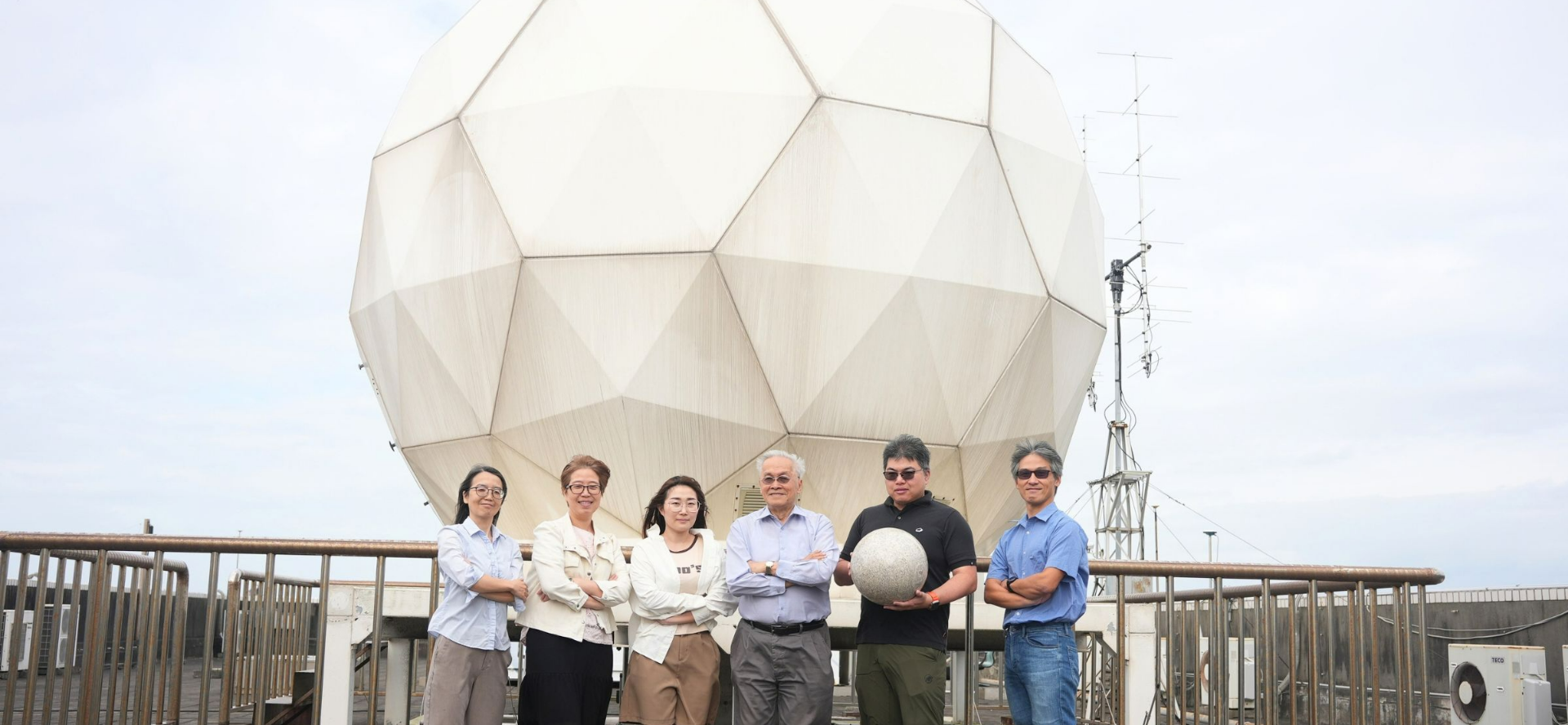
National Central University (NCU) has joined the international partnership network of NASA’s Solar System Exploration Research Virtual Institute (SSERVI) through the Taiwan Universities Lunar Investigation Project (TULIP), led by Academician Wing-Huen Ip of NCU’s Graduate Institute of Astronomy.
This new partnership marks an important step in strengthening Taiwan’s lunar science research capabilities and establishing long-term international collaborations to support future exploration of the Moon and Mars.
Building on Taiwan’s existing expertise in lunar science, the collaboration will promote closer scientific exchanges between Taiwanese researchers, NASA researchers, and the international lunar exploration community. TULIP aims to advance internationally competitive lunar research, develop sustainable research partnerships, and strengthen the scientific and technological capabilities needed for future lunar and Martian exploration missions. The project builds upon years of lunar research conducted by Taiwanese scientists and their established international collaborations.
TULIP brings together four complementary research areas spanning fundamental lunar science and technologies relevant to future exploration: lunar impact flash monitoring, volatile transport and lunar exosphere modeling, imaging observations of the Moon’s extended sodium atmosphere, and in-situ resource utilization (ISRU). Together, these research activities will expand Taiwan’s engagement with the global lunar science community while helping train the next generation of scientists and engineers involved in lunar exploration.
By integrating ground-based observations, theoretical modeling, and technological development, the project will investigate the Moon’s present-day impact environment, the transport and retention of volatile materials, and the interactions between the lunar surface and exosphere. The ISRU component will further connect fundamental scientific research with future exploration applications by examining the potential use of lunar regolith as a source of materials for construction and other purposes.
The partnership is also expected to create new opportunities for Taiwan to contribute to international lunar science. Observations conducted at Taiwan’s Lulin Observatory can complement lunar impact flash monitoring programs in the United States and Europe. Planned observations and theoretical studies of the lunar exosphere will provide additional opportunities for collaboration between Taiwanese researchers and the international SSERVI research community.
Through its participation in the SSERVI international partnership network, TULIP seeks to strengthen Taiwan’s role in global lunar research, foster long-term scientific cooperation, and contribute to the knowledge and capabilities required for future exploration of the Moon and beyond.