Satbayev University
Published on 7 July 2026




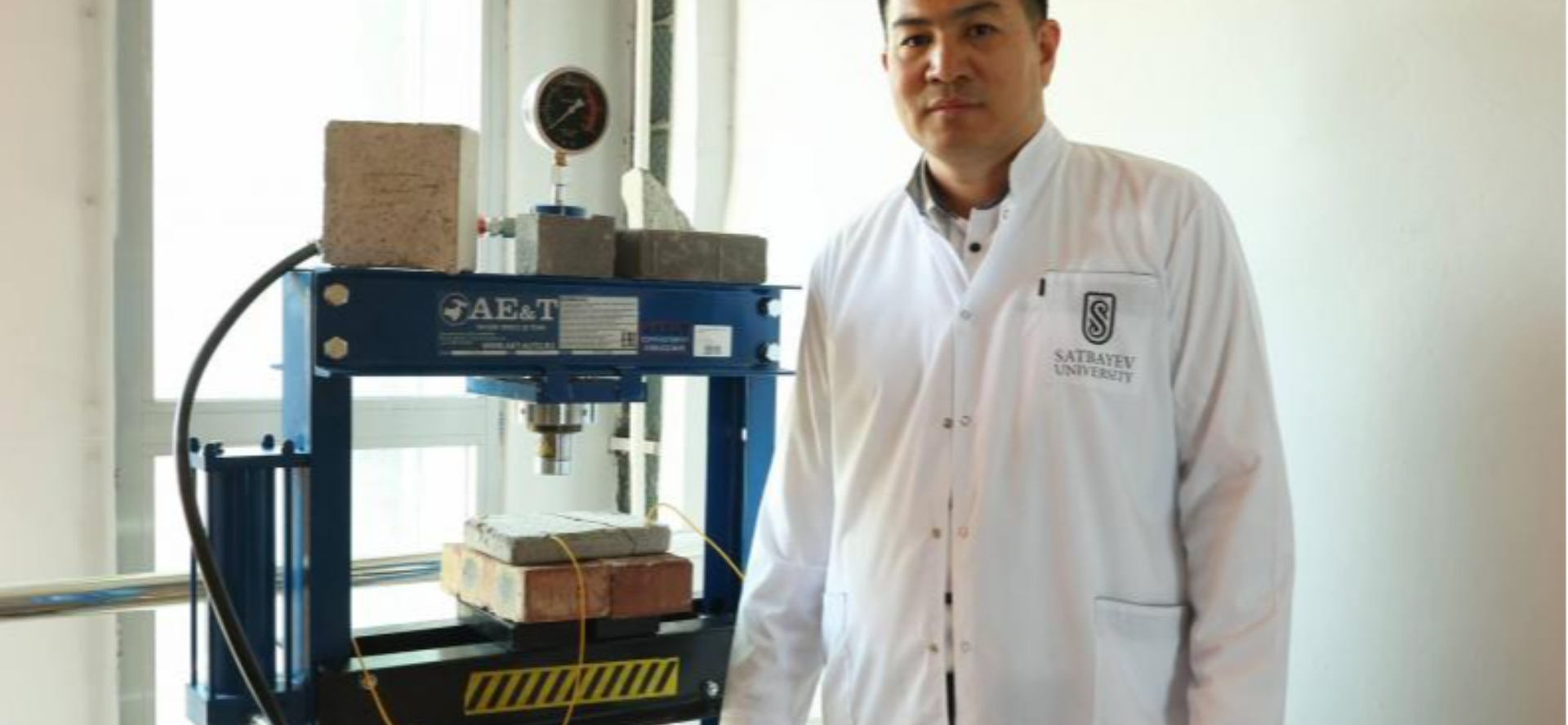
Satbayev University scientists successfully tested modern fiber-optic sensors that continuously monitor the technical condition of metal and concrete structures. As part of the scientific project, the effectiveness of an innovative monitoring system based on fiber Bragg gratings (FBG), designed to improve the engineering structures safety, was investigated and confirmed.
Research was carried out with the support of Science Committee at Ministry of Science and Higher Education of the Republic of Kazakhstan.
Project’s principal goal is to elaborate domestic technological solutions that allow real-time monitoring of the stress-strain state of metal and concrete structures. The created system makes it possible to detect changes in the condition of construction sites at an early stage and prevent possible defects and emergencies.
During the research, fiber-optic sensors were installed on metal and concrete samples and underwent comprehensive tests on the specially designed experimental stand. Scientists conducted a comparative analysis with traditional electric-strain-measuring methods and found that the new technology is highly accurate and reliable.
Test results showed that fiber-optic sensors are resistant to electromagnetic interference, corrosion and aggressive environments. This opens up wide opportunities for their use on bridges, tunnels, industrial facilities, residential complexes and transport infrastructure.
In line with the project manager, PhD, professor Nurzhigit Smaylov, fiber-optic monitoring systems make it possible to monitor the construction sites safety throughout their entire life.
"The given technology provides continuous monitoring of the structures condition, helps to identify defects in a timely manner and prevent emergencies. As a result, the reliability of facilities increases and operating costs decrease," said Nurzhigit Smaylov.
One of the important results of the project was the formation of scientific and technical base for evolving the intelligent structural monitoring systems in Kazakhstan. Launch of such technologies not only increases the security of infrastructure facilities, but also provides economic benefits by reducing repair and maintenance costs.
In addition, the development of the given area contributes to creating the high-tech industries, training of engineering personnel and increasing the competitiveness of domestic scientific elaborations on the international market.
University undergraduates and doctoral students, who gained practical experience working with present-day measuring systems, actively participated in the project execution. Research results have been presented at international scientific conferences and published in scientific publications.
Scientific work was performed jointly with foreign partners. International cooperation has made it possible to use world best practices and improve the research quality.
Project opens up new opportunities for ensuring safety in the construction and industrial sectors of Kazakhstan and once again confirms the national science’s high potential in engineering infrastructure digitalization sphere.