Chulalongkorn University
Published on 18 June 2026





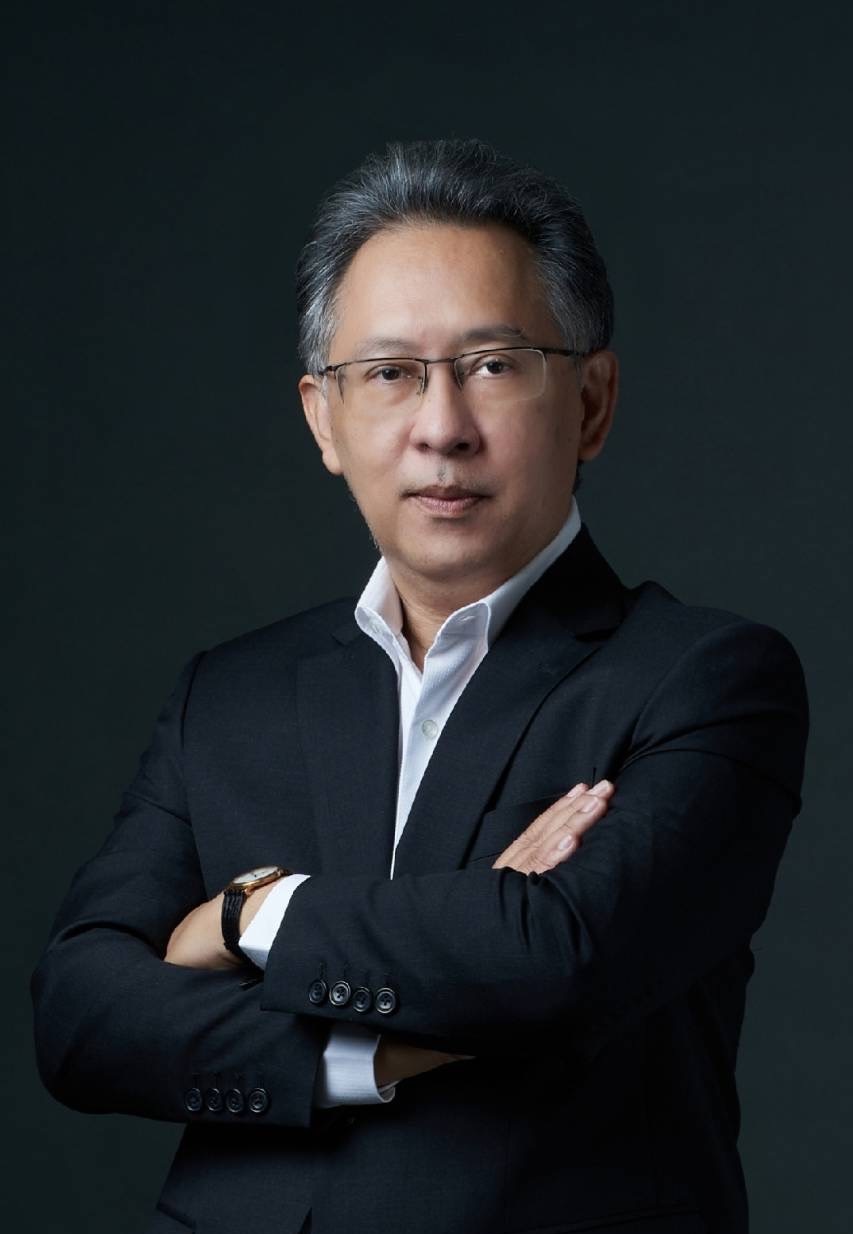
Prof. Dr. Surakiart Sathirathai, Chairman of the Chulalongkorn University Council, delivered a special keynote titled “Five Decades of the Thai Economy: Thailand Next,” reflecting on Thailand’s economic journey and projecting its future. The speech was given at the “Dinner Talk” and “PRACHACHAT BUSINESS AWARDS 2026,” organized by Prachachat Business on its 50th anniversary, on May 28, 2026, at Paragon Hall, Siam Paragon.
He emphasized that Thailand is simultaneously confronting eight major challenges, with crises becoming the “new normal” that no sector can deny. These eight disruptions are already unfolding and generating unavoidable ripple effects:
1. Technology Disruption
The rapid expansion of artificial intelligence (AI), particularly the transition into the Next Generation of AI, is reshaping work structures, human resource development, and organizational management.
A key global question today is identifying capabilities that humans still perform better than AI—especially wisdom, experience, and critical thinking. These remain advanced capacities that AI cannot yet replicate.
Thailand’s major challenge is crafting strategies to manage technological disruption affecting business, education, and work models. Without effective measures, Thailand risks losing competitiveness. The crucial task is upgrading the population’s capabilities from the pre-4.0 era to becoming highly effective AI users.
2. Demographic Disruption
Thailand has become a fully aged society. Although life expectancy may rise to 90–100 years, the period of healthy, self-sufficient living has not increased proportionally.
This creates a wide gap—approximately 30 years—between healthy elderly individuals and those requiring dependency support. This demographic crisis poses serious implications for business operations, welfare systems, and national human resource policies.
3. Pandemic Disruption
Although the world has passed the COVID-19 crisis, the risk of new outbreaks remains. Reports of emerging virus strains worldwide highlight renewed vulnerabilities in healthcare access.
Government policy must shift focus from mere “health equality” to “health equity.” Vulnerable groups—low-income populations and remote communities—face greater barriers to healthcare access. Equal allocation of resources is insufficient; targeted support is required to ensure genuine equity.
4. Environmental Disruption
Environmental crises are deeply affecting the government and private sectors, agriculture, and our daily lives. The PM2.5 air pollution crisis in northern provinces such as Chiang Mai has severely impacted tourism and hospitality businesses.
Western tourists are increasingly shifting travel from winter/dry seasons to the rainy season due to dangerously high pollution levels during dry months.
Current environmental risk management policy revolves around three pillars:
1. Mitigation: Using advanced technology to reduce pollution (already feasible).
2. Offset: Promoting carbon credit trading systems (where Thailand has made tangible progress).
3. Adaptation: Structural adjustments to cope with climate change (the most challenging dimension).
5. Education Disruption
Thailand’s education system faces misalignment between human capital investment and real-world needs. Graduates often face unemployment or skill mismatches.
Higher education institutions must pivot toward lifelong learning, upskilling, and reskilling despite budget constraints. Universities also operate in disciplinary silos, whereas modern global problems are interdisciplinary. Educational institutions must break structural barriers and emphasize experiential learning in partnership with the private sector.
Developing a “new breed of professors” who better understand real business mechanisms, sustainability, climate change, and local governance structures will be key to designing relevant curricula.
6. Energy Disruption
Energy policy is highly volatile. While global trends promote transition from fossil fuels to renewables, major powers frequently reverse policies based on short-term political or economic interests. Examples include renewed support for oil and gas drilling in the U.S. and European countries temporarily returning to coal amid energy shortages. Such global policy fluctuations create cost pressures and demand flexibility in Thailand’s energy planning and cost structures.
7. Geo-economic Disruption
Global economic geopolitics has shifted dramatically due to unilateral tariff measures, weakening the multilateral free trade system of over 190 nations. Trade has increasingly moved toward bilateral agreements and unilateral protectionism. In global finance, some countries are reducing reliance on the U.S. dollar, seeking alternative currencies and shifting reserves toward gold, silver, and platinum—causing commodity price volatility.
At forums like the World Economic Forum (Davos), discussions have emerged around using digital assets such as stablecoins as alternative financial systems. The global financial system is in transition, compounded by supply chain decoupling between the U.S. and China and intensifying technology wars.
8. Geopolitical Disruption
Intensifying rivalry among major powers is pressuring medium and small countries to choose sides. Economic measures are increasingly tied to security and military concerns.
Many conflicts are temporarily suppressed through tariff and trade measures rather than resolved at their roots. Policy divergence between the U.S. and European allies has become more visible. Meanwhile, sanctioned nations such as Venezuela have shifted to using China’s yuan for major transactions.
In Southeast Asia, instability in Myanmar and regional tensions may become future focal points of major power competition. Thailand must assess scenarios where influence zones may be divided, potentially placing Asia under China’s strategic framework.
Warning: Middle East Conflict Directly Hits Thailand
Dr. Surakiart analyzed why Middle Eastern (West Asian) conflicts directly impact Thailand. Geographically, the Middle East is part of Asia. Conflict involving the U.S., Israel, Iran, the Houthis in Yemen, and Hezbollah in Lebanon directly affects Thailand due to its heavy oil import dependency.
Ripple effects include higher logistics costs, rising consumer goods prices, increased fertilizer and agricultural input costs, and weakened foreign purchasing power. There are also risks to undersea internet cables in the Red Sea and Strait of Hormuz, which carry 30–40% of Asia’s internet connectivity.
Two Critical Months: SMEs at Risk
Rising living costs and input prices are severely affecting SMEs. Dr. Surakiart urged fiscal and monetary authorities to act swiftly. Without intervention within two months, many small businesses risk collapse despite fiscal and monetary constraints.
Thailand’s Way Forward: Move Beyond “Neutrality”
Dr. Surakiart advised Thailand to avoid framing foreign policy as “neutrality,” which may be misinterpreted internationally. Instead, Thailand should emphasize being “not a party to the conflict.”
Thailand should leverage multilateral platforms such as ASEAN, ASEAN+3, the IMF, and the World Bank and use its “convening power” as a mid-sized nation to help shape new energy architecture and a new global order. He concluded with two major questions for Thailand:
Can Thailand accept that the new global order will involve prolonged crises? Assuming everything will return to normal after the war’s end is dangerous thinking.
If we accept this reality, do we already have a strategy to handle the new world order—across ministries, the private sector, media, and human resource development?
Read more at: https://www.chula.ac.th/en/news/411905/