Asfendiyarov National Medical University
Published on 10 June 2026




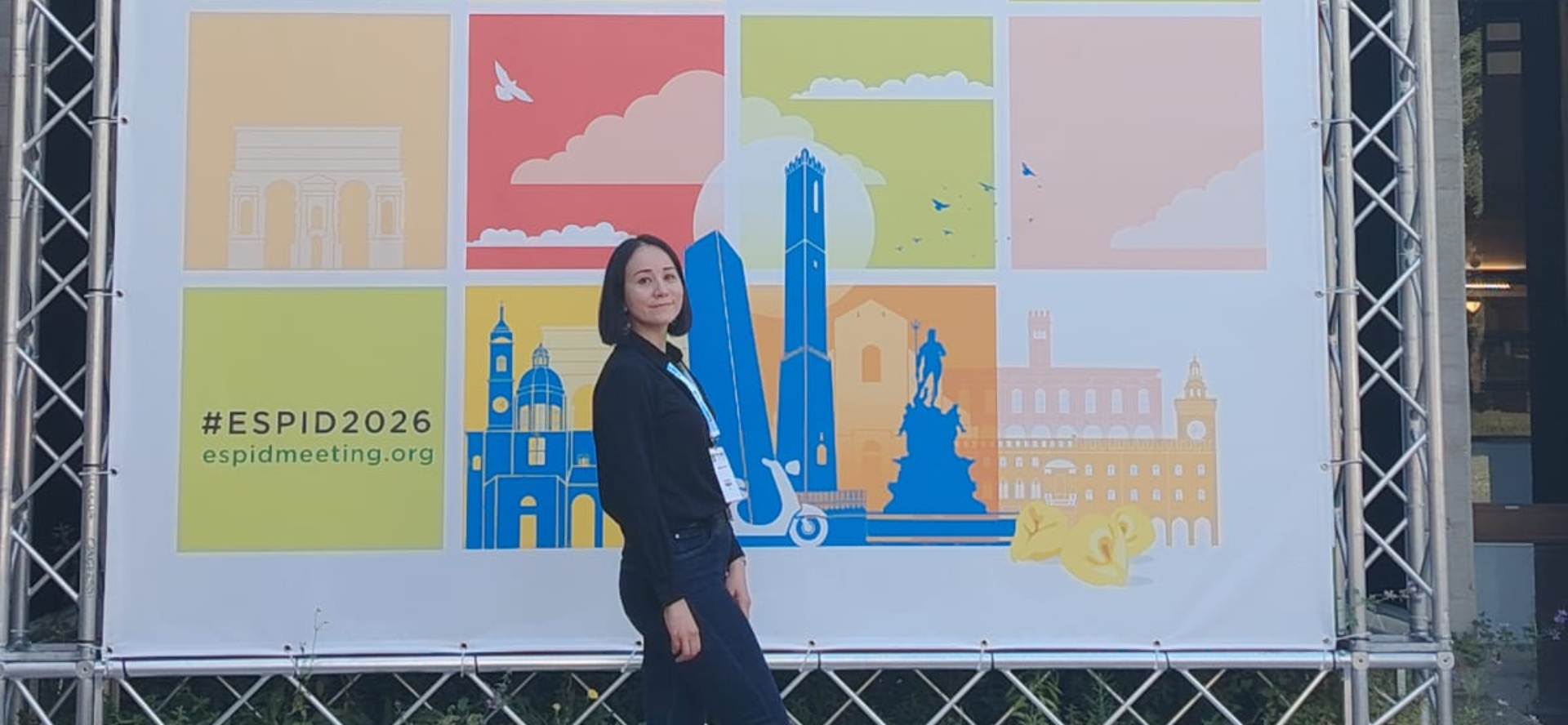
A representative of Asfendiyarov Kazakh National Medical University participated in the 44th Annual Meeting of the European Society for Paediatric Infectious Diseases (ESPID 2026), held from 1–5 June 2026 in Bologna, Italy, with additional opportunities for online participation. The congress brought together leading scientists, clinicians, researchers, and healthcare professionals from around the world to discuss the latest developments in infectious diseases, vaccination, epidemiology, and preventive medicine.
Following participation in the congress, the researcher received an official Continuing Medical Education/Continuing Professional Development (CME/CPD) Certificate, confirming the successful completion of the educational program and the acquisition of 20 European CME credits (ECMEC®s). The certificate recognizes a commitment to continuous professional development and lifelong learning.
ESPID is one of the world’s leading professional organizations in the field of pediatric infectious diseases. Its annual congress serves as an international platform for presenting scientific discoveries, exchanging professional experience, and discussing evidence-based approaches to disease prevention and treatment. The event attracts experts from universities, research institutions, hospitals, and public health organizations across the globe.
The scientific program of ESPID 2026 addressed a wide range of topics, including respiratory infections, antimicrobial resistance, vaccine development, epidemiological surveillance, emerging infectious diseases, and innovative approaches to patient care. Through plenary sessions, scientific symposia, workshops, and research presentations, participants were able to learn about the latest advances in medical science and their practical applications in healthcare.
One of the highlights of the congress was a lecture delivered by Professor Ron Dagan (Israel), an internationally recognized expert in pediatric infectious diseases and vaccinology. During his presentation, Professor Dagan discussed recent evidence on the interaction between respiratory syncytial virus (RSV) and Streptococcus pneumoniae. The lecture demonstrated how RSV infection may facilitate pneumococcal colonization of the respiratory tract and increase the risk of severe bacterial complications.
These findings highlighted the complex relationship between viral and bacterial infections and emphasized the importance of comprehensive prevention strategies. The presentation underscored the role of pneumococcal vaccination and emerging RSV prevention measures in reducing the burden of respiratory diseases and improving public health outcomes.
Participation in ESPID 2026 provided an excellent opportunity to engage with international experts, exchange professional knowledge, and gain insights into the latest scientific discoveries and clinical recommendations. The knowledge acquired during the congress will contribute to the advancement of evidence-based healthcare practices, medical education, and scientific research in Kazakhstan.
International scientific meetings play a crucial role in promoting global collaboration and facilitating the dissemination of best practices in healthcare. They create opportunities for researchers and clinicians to discuss common challenges, evaluate new evidence, and explore innovative solutions to improve patient care and disease prevention.
The representative is actively involved in research and educational activities related to cognitive impairment, dementia, digital health, and healthy aging. This work focuses on the development of innovative and interdisciplinary approaches aimed at improving the quality of life and health outcomes of older adults and contributes to projects that promote evidence-based and patient-centered healthcare.
As a delegate of Asfendiyarov Kazakh National Medical University, participation in global scientific forums supports the integration of international scientific achievements into medical education and clinical practice. Such activities enable healthcare professionals to remain informed about rapidly evolving medical knowledge and apply contemporary recommendations in patient care.
The CME/CPD certificate awarded following ESPID 2026 reflects a commitment to professional excellence, continuous education, and the implementation of international best practices in medicine. It also demonstrates dedication to strengthening international scientific cooperation and promoting evidence-based approaches in healthcare.
Participation in major international scientific events contributes not only to professional development but also to the broader advancement of healthcare systems through knowledge exchange, research collaboration, and the adoption of innovative medical practices. The experience gained at ESPID 2026 will support future educational, clinical, and research activities, further strengthening Kazakhstan’s contribution to international medical science and healthcare development.