


Universitas Airlangga News
Published on 14 January 2026




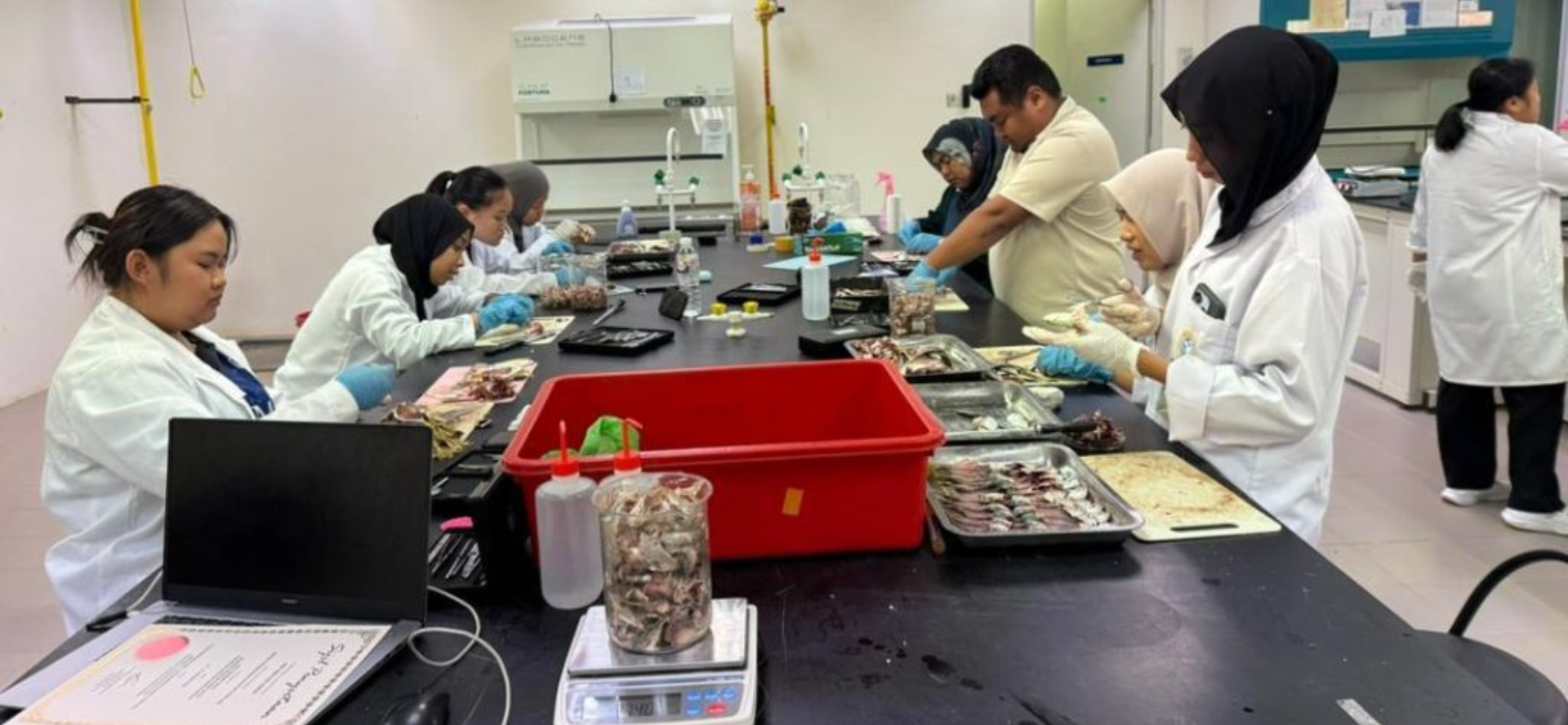
Strengthening its commitment to sustainable research and international collaboration, the Faculty of Fisheries and Marine Sciences (FPK) Universitas Airlangga (UNAIR) has sent its students to Universiti Teknologi MARA (UiTM) Sarawak, Mukah Campus. The academic exchange was conducted over two months, from October 18 to December 18, 2025.
The full-time student mobility program involved Fidela Rachmadania Azra and Andini Putri Carolina. Azra explained that the initiative centered on research aimed at transforming local fisheries resources into products with greater commercial value for the community.
“Our study focused on fisheries commodities native to the Mukah region, specifically pelata and puput fish. These species are plentiful in local waters but are often discarded by fishermen because they are seen as having little market value. Through collaboration with UiTM, our team sought to innovate by developing value-added products from these fish,” she said.
According to Azra, the key innovation developed by the UNAIR–UiTM research team was gelatin produced from pelata and puput fish. The use of these species was intended not only to raise their economic value but also to offer a halal and safe alternative to conventional gelatin products.
“This research posed significant challenges. We had to carefully define the research direction, determine suitable methodologies, and work with limited academic references, as these fish had not previously been studied for gelatin production. The findings will contribute to our undergraduate theses and are planned for publication in a Scopus-indexed journal,” she explained.
Beyond research activities, Azra noted that the team also took part in team-building sessions and academic visits to other universities during their stay at UiTM. They additionally had the opportunity to engage in collaborative testing with Universiti Teknologi Sarawak (UTS).
“Looking ahead, we hope this research will provide a halal and safe gelatin option for consumers. At the same time, it is expected to enhance the economic value of pelata and puput fish, which were previously discarded, and help stimulate the local economy,” she said.
.jpg)
.jpg)

