Universitas Airlangga News
Published on 6 February 2026




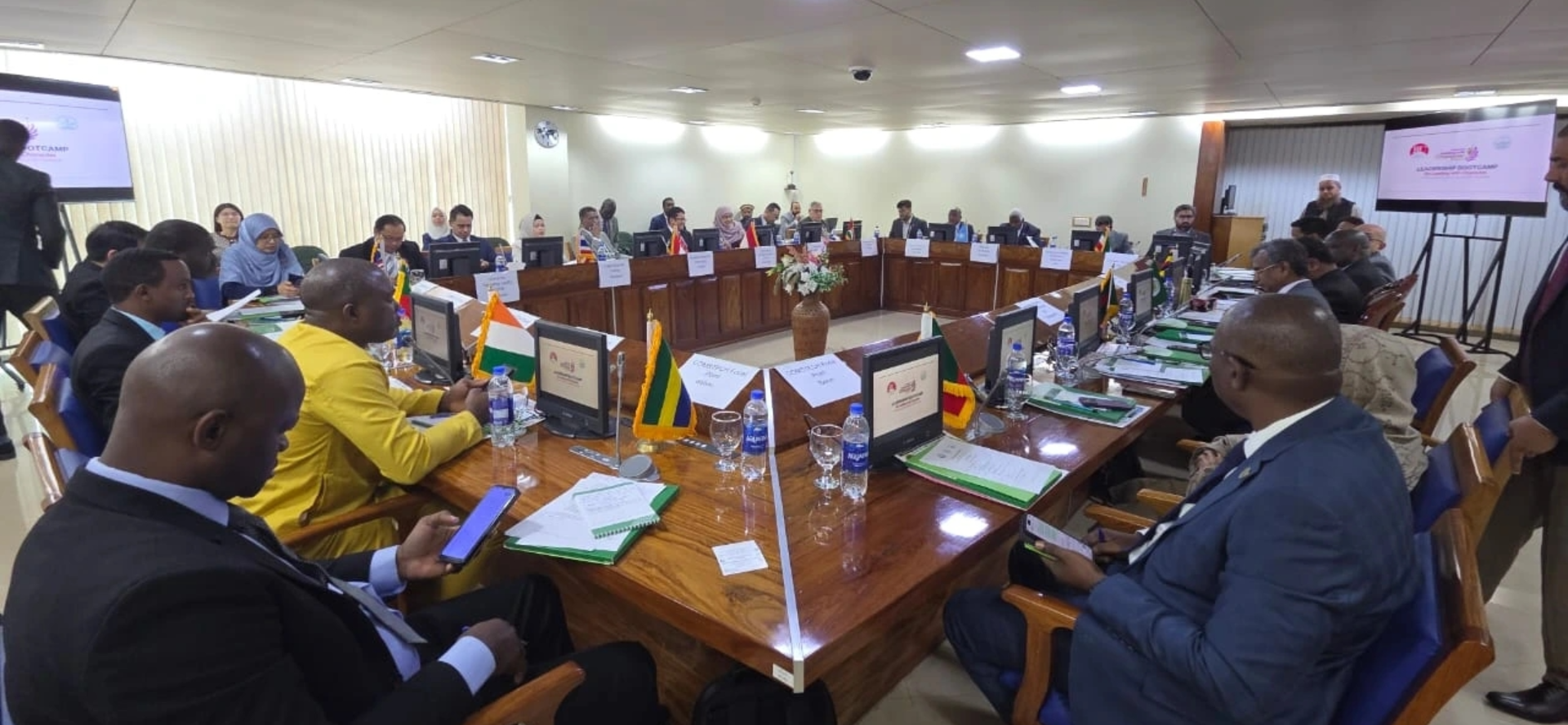
The 2025 Rector’s Conference at the OIC-COMSTECH Secretariat in Islamabad on Wednesday (Dec 3, 2025) served as a key opportunity for Universitas Airlangga (UNAIR) to reinforce its strategic role within the global higher education landscape. Across discussion panels, university forums, and the COMSTECH Consortium of Excellence (CCoE) meeting, UNAIR positioned itself as a drive for solving global issues, particularly through collaborative research, technological innovation, international talent management, and community-engagement networks. The UNAIR delegation was led by Vice Rector for Research, Innovation, and Community Development (RICD) Prof Dr Muhammad Miftahussurur SpPD-KGEH PhD; Executive Secretary of the World University Association for Community Development (WUACD), Prof Dr Ni Nyoman Tri Puspaningsih MSi; and Head of UNAIR’s LPJPHKI, Prof Ferry Efendi SKep Ns MSc PhD. Their presence also marked Indonesia’s representation in global academic diplomacy.
The conference opened with a welcome address from COMSTECH HE Coordinator General Prof Dr M Iqbal Choudhary, who underscored the importance of strengthening cross-border partnerships in science and technology. The event provided a strategic venue for cultivating a global innovation ecosystem responsive to technological change, interdisciplinary research demands, and the development of highly skilled talent.
During the Introduction of International Universities session, UNAIR outlined its achievements and strategic priorities. These included research transformation, enhanced scientific publication quality, innovation downstreaming, and expanded international partnerships. Representing UNAIR, Prof Miftahussurur reaffirmed the university’s contributions to the global academic ecosystem. “UNAIR views COMSTECH as a crucial platform for widening research collaboration, academic mobility, and science-based innovation. These efforts support talent capacity-building and strengthen Indonesia’s visibility in international higher education networks,” he stated.
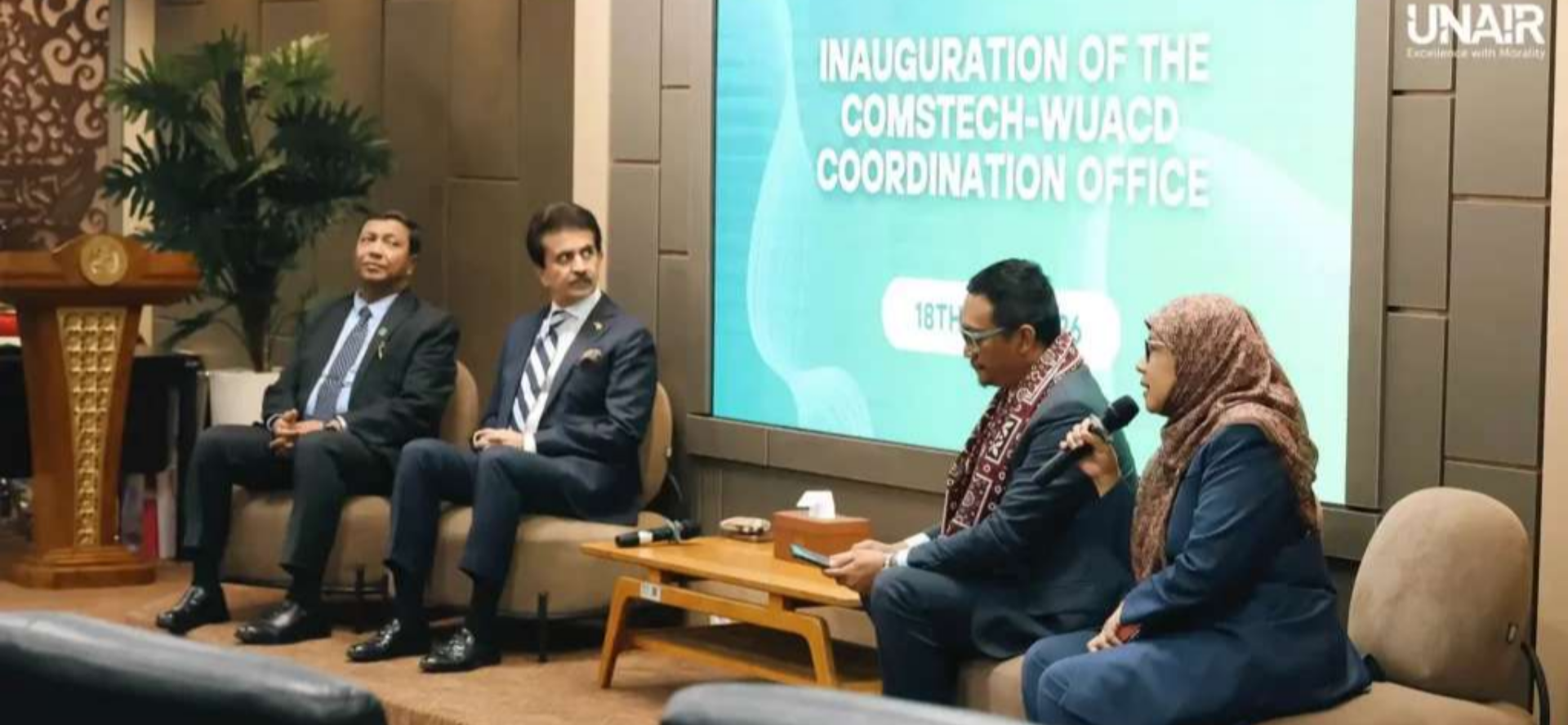
As Executive Secretary of WUACD, Prof Ni Nyoman Tri Puspaningsih highlighted the organization’s progress, achievements, and potential areas for collaboration with COMSTECH. She explained that WUACD focuses on community development, social transformation, and using research to improve societal well-being. Collaboration with COMSTECH opens opportunities in several areas, including research-based community development programs, cross-border capacity-building initiatives, technology-driven community empowerment, and multidisciplinary projects that involve member universities from both networks.
Prof Puspaningsih emphasized that integrating WUACD and COMSTECH strengths can amplify the social impact of university research. The partnership would also reinforce UNAIR’s standing as a global leader in community-based education and social innovation. “This collaboration strengthens international community-development networks and ensures research delivers real benefits rather than ending solely in publications,” she said.
The international gathering also featured two key discussion sessions. The first, Character-Based Leadership and Academic Ethics Foundation, explored a Prophetic Character-Based Leadership model centered on integrity, empathy, discipline, and responsibility. These principles are considered vital for strengthening academic leadership and fostering an ethical research culture, including in cross-border talent management.
The second session, Future Universities – Society, Economy, and Industry Nexus, examined how universities must evolve amid digital transformation, innovation-driven economic shifts, and global industrial demands. The discussion addressed adaptation to the digital and AI revolutions, stronger industry partnerships, accelerated innovation commercialization, transdisciplinary learning models, and aligning research with global social and economic needs. UNAIR’s innovation ecosystem, comprised of AGE, DRI, LPJPHKI, LIHTR, PASINBIS, LPMB, and various leading research centers, was highlighted as a model that partner universities could emulate.
During the annual meeting, discussions centered on the need for a comprehensive, collaborative, and flexible system for managing global research and innovation talent. UNAIR stressed the importance of a strategic framework involving talent identification, competency development, academic mobility, and diaspora engagement to strengthen global research cooperation. This framework aligns with international trends emphasizing talent mobility, collaborative research networks, and cross-border innovation ecosystems.