Aidil Ibrahim
Published on 23 September 2026




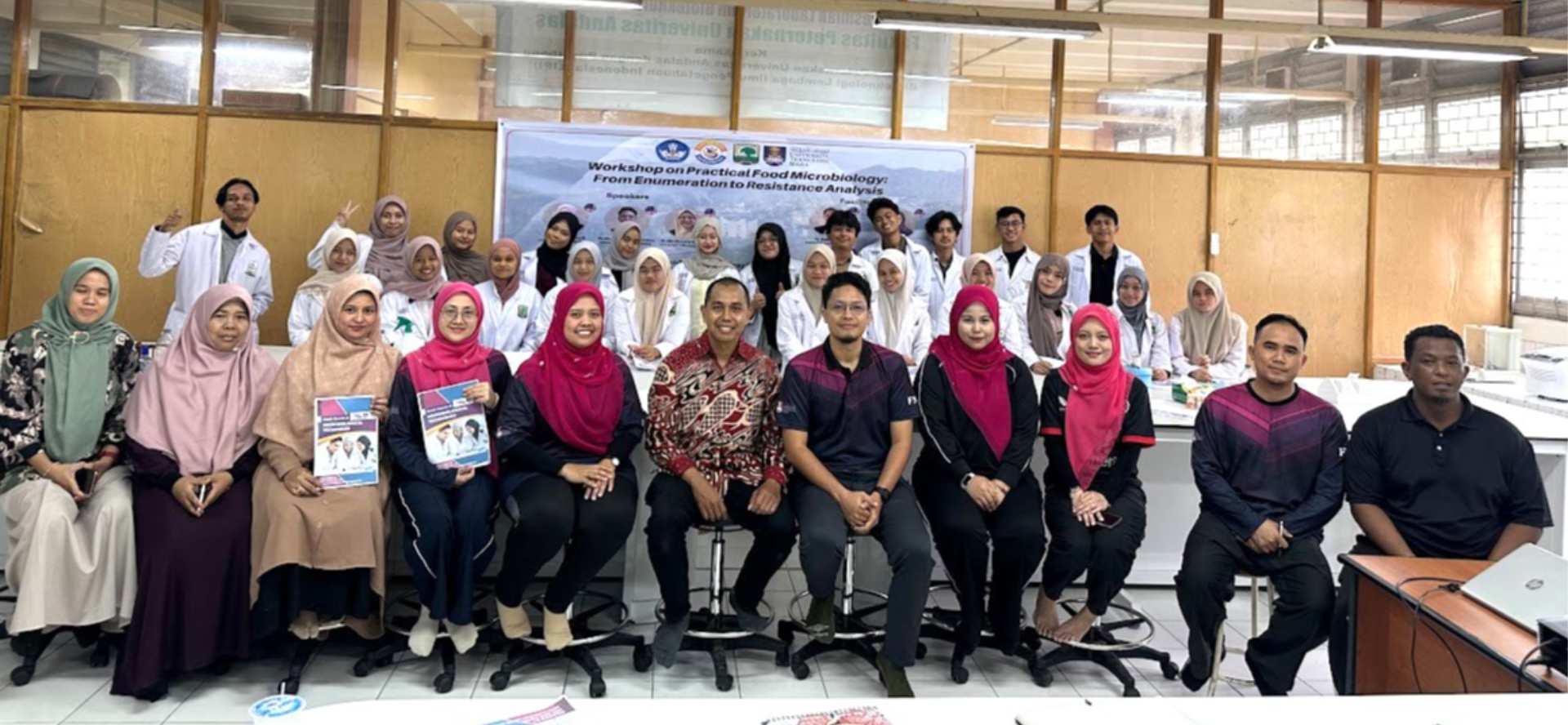
Students from Universiti Teknologi MARA (UiTM) Cawangan Negeri Sembilan, Malaysia, and Universitas Andalas (UNAND), Indonesia, recently engaged in a meaningful cross-border academic collaboration centred on Food Microbiology. The initiative provided students with an opportunity to exchange knowledge, share academic perspectives, and learn from one another beyond the boundaries of their respective classrooms.
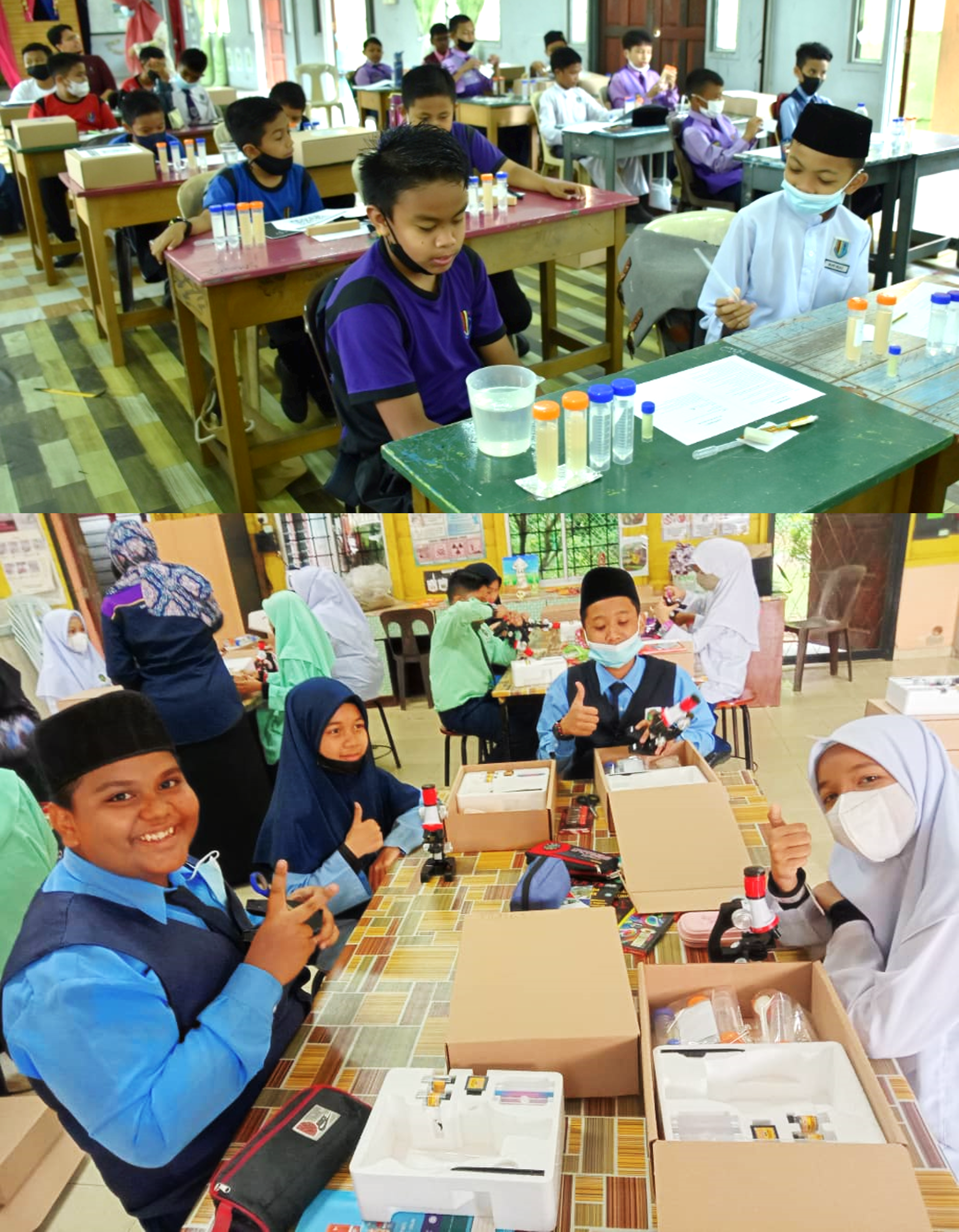
The knowledge exchange programme started with a hands-on workshop on practical food microbiology involving undergraduate students from the Faculty of Animal Husbandry, Universitas Andalas. The session was led by UiTM lecturers as invited speakers, while the UiTM laboratory personnel served as facilitators, guiding students through applied techniques in microbial handling, food safety testing, and laboratory workflow practices. The workshop emphasised not only technical skills, but also the importance of proper documentation, biosafety awareness, and quality assurance in microbiological analysis, which are competencies essential for future researchers and industry practitioners.
As part of the activity, students undertaking the Food Microbiology course at UiTM Cawangan Negeri Sembilan shared their knowledge and learning experiences with the participating students from UNAND. In return, the UNAND students contributed their own perspectives, experiences, and knowledge related to their field of study. This reciprocal approach transformed the session into an active learning environment where students were not merely recipients of information, but also contributors to the learning process.
The cross-border collaboration supported experiential and collaborative learning by encouraging students to communicate, discuss ideas, compare perspectives, and apply their academic knowledge in a practical context. Through interactions with peers from another country and academic discipline, students were also exposed to different approaches to food safety, microbiological issues, and related challenges within the food production chain.
Beyond academic knowledge, the activity fostered important transferable skills, including communication, teamwork, critical thinking, confidence, and intercultural awareness. Students were encouraged to consider how food-related challenges can be viewed from multiple perspectives and how knowledge from different disciplines can complement one another in addressing real-world issues.
The collaboration also provided an opportunity for students to develop a broader global outlook. By engaging directly with international peers, students gained greater awareness of similarities and differences in educational experiences, professional practices, and food safety concerns across countries.
Overall, the UiTM–UNAND cross-border learning activity demonstrates the value of international academic collaboration in enriching student learning. Such initiatives can complement conventional classroom teaching by creating authentic opportunities for knowledge construction, cultural exchange, and global engagement. The experience is expected to serve as a foundation for future cross-border educational activities that further strengthen student competencies and prepare graduates to participate confidently in an increasingly interconnected academic and professional environment.