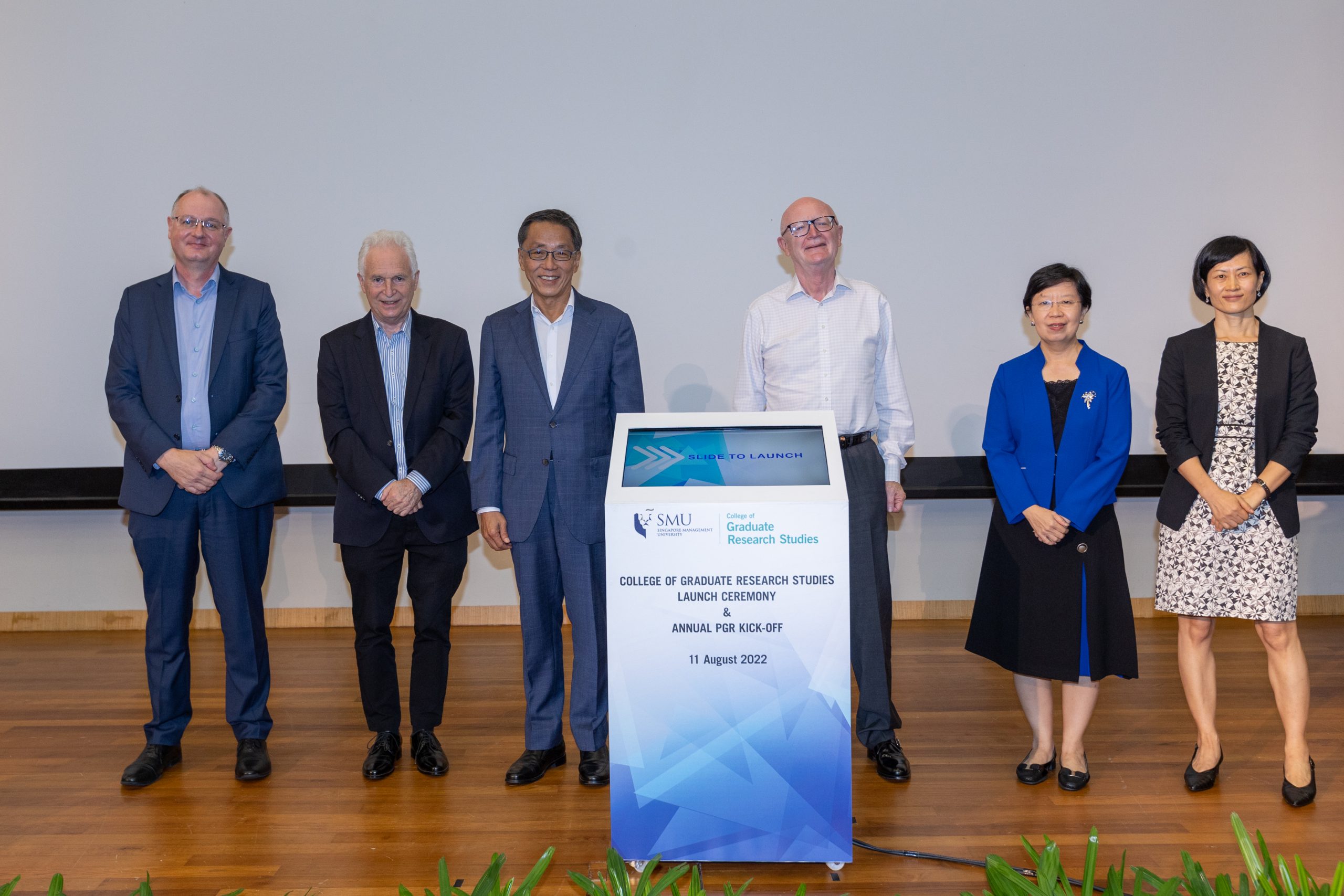
SMU advances interdisciplinary education with new College of Graduate Research Studies

SMU College of Graduate Research Studies will build strong intellectual content through credit-bearing interdisciplinary courses focused on advanced methods and interdisciplinary research, and a professional development programme focused on skill-based trainings.

It will enhance ‘co-learning’ experiences and academic exchanges across SMU Schools for postgraduate research students and graduates, facilitate the collaboration of faculty members from different Schools and disciplines, as well as strengthen the development of research which is more applied.

Additionally, it will strengthen networking, cohort building and collaborative opportunities for postgraduate research students across the various programmes, facilitated through the student and alumni groups.

With interdisciplinary training, graduates of the new College will be more well-rounded, more relevant, and better able to provide applied contributions to Singapore’s development needs.

The Singapore Management University (SMU) has established its eighth school – the College of Graduate Research Studies (CGRS). The new College aims to develop world-class thought leaders who are trained to undertake cutting-edge research across disciplines, bringing about significant impact to businesses, societies and public institutions worldwide.

To this end, the College will equip SMU postgraduate research students with knowledge and competencies to develop novel solutions that are relevant to some of today’s most challenging issues through the integration of disciplines, culture and industry. It will enhance integration and interdisciplinarity across the various SMU postgraduate research programmes that will enable our students to gain a holistic learning experience and well-grounded approach to their research. This will be achieved through interdisciplinary programmes, shared courses and professional training workshops. Furthermore, the College will strengthen networking, cohort building and collaborative opportunities for postgraduate research students across the various programmes, facilitated through the student and alumni groups.

Mr Ho Kwon Ping, Chairman, SMU said “The establishment of CGRS is in line with the national strategy of building a robust base of research capabilities and peaks of international excellence, as well as nurturing a strong research and innovation talent pipeline. Our community of learners will benefit from the diversity of expertise, disciplinary and interdisciplinary knowledge and perspectives that will be shared within the College. This enhances the learning experience of postgraduate research students as they become better equipped to understand complex issues and challenges affecting the world across boundaries, and create significant, long-term impact. It will also make them more sought after by academic institutions and industry organisations that have interdisciplinary opportunities. Besides providing a holistic education, the College will also enhance the community-based experience.

“In addition to benefitting our students, the interdisciplinary approach also enables our faculty members to address societal challenges through their thought leadership and research. They increasingly collaborate with colleagues in other Schools, academics in other universities as well as with industry to enhance and accelerate the generation of knowledge.”

Sir Nigel Thrift, Chairman, Academic Affairs Committee, SMU said “The College of Graduate Research Studies is another step towards providing a superlative student experience at SMU, this time for graduate research students. Not only will it establish interdisciplinary programmes and the opportunity to access more interdisciplinary topics and workshops but it will, as a result, allow graduate researchers to gain access to broader research horizons and to discuss these new horizons with many more of their peers.”

Since 2006, SMU has trained over 400 postgraduate research graduates, and is currently training over 580 such students. About 65% of its graduates in academic research PhD programmes are working as faculty members or postdoctoral fellows in prestigious academic universities or institutions in Singapore and internationally, whilst about 35% work on R&D in industries locally and abroad.

Key Elements of CGRS

1. Building strong intellectual interdisciplinary content

(i) CGRS provides postgraduate research students with two categories of courses: Graduate Research Interdisciplinary Topics (GRIT) and Graduate Research Professional Development (GRPD) programme.

GRIT is a series of interdisciplinary courses in curated topics which are either ‘required’ or ‘electives’ depending on the academic research PhD programme. The inaugural interdisciplinary course on ‘Machine Learning for Social Science’ was held in Academic Year (AY) 2021, Term 1. This was followed by the course on ‘Applied Econometrics in Social Science’ in AY2021, Term 2. The course on ‘Introduction to Interdisciplinary Research’ will run in AY2022, Term 1.

GRPD will include two sub-components, comprising Foundation courses (e.g., graduate teaching) and Elective courses (e.g., scientific writing and presentation). This new format, which is credit bearing, will take effect for incoming academic research PhD students from the non-STEM disciplines from AY2022 onwards.

(ii) CGRS will also play an important role in the development of interdisciplinary programmes.

· PhD in Law, Commerce and Technology

CGRS has, together with the Yong Pung How School of Law (YPHSL), launched a new interdisciplinary programme – PhD in Law, Commerce and Technology which will welcome its first students in August 2022.

The first of its kind in Asia-Pacific and among a handful of interdisciplinary research doctoral programmes offered by law schools around the world, the programme is built on YPHSL’s research strengths, particularly in the areas of commercial law, and law and technology.

The programme adopts an industry-focused and policy-oriented approach with the purpose of producing cutting-edge research that can help regulators, companies and society as a whole face the challenges of today’s changing world.

It aims to train future thought leaders in academia, judiciary, regulatory agencies and international organisations, as well as prepare students for a career at leading research-oriented institutions.

· Master’s and PhD programmes in Asian Urbanisms

CGRS has also worked closely with the SMU’s new College of Integrative Studies to launch a Master of Philosophy in Asian Urbanisms and Doctor of Philosophy in Asian Urbanisms, upcoming in AY2023.

The programmes aim to provide an opportunity for Singaporean students, and for students from the Asia region and (eventually) beyond, to access postgraduate-level degrees in urban studies in Singapore that will be theoretically and empirically focused on Asia. With interdisciplinarity at the heart, the programmes integrate courses and supervision from various SMU Schools, especially those with particular urban expertise. Students will develop deep knowledge of the theory and practice in at least one area of urban Asia, and one related area in sustainability, culture or technology. They will also attain the ability to critically analyse problems using either quantitative and/or qualitative research methodologies commonly used in advanced-level scholarly and applied research to address problems of interest to industry partners that can be translated for practical business scenarios.

Professor Wang Heli, Dean of CGRS, said “The launch of the PhD in Law, Commerce and Technology, as well as Master of Philosophy and PhD in Asian Urbanisms, will be our first steps in 2022 and 2023 respectively, to strengthen SMU’s interdisciplinarity in research. The programmes are both academic- and industry-oriented, and our postgraduate research students in these programmes will be expected to bear both intellectual depth and material industrial relevance in their dissertations.”

2. Enhancing ‘co-learning’ experiences and academic exchanges across SMU Schools for postgraduate research students and graduates

CGRS will strengthen the ‘co-learning’ experiences for postgraduate research students via sharing and interdisciplinary learning across Schools through the development and delivery of intellectual content. This intellectual content includes the introduction and facilitation of shared interdisciplinary courses, interdisciplinary programmes (e.g., PhD in Law, Commerce & Technology), as well as interdisciplinary events (like seminars and brown-bag sessions). The College will explore both internal and external resources (e.g., Visiting Fellows) to ensure quality offering of the above-mentioned intellectual content.

3. Strengthening networking, cohort building and collaborative opportunities

The College will ensure that there is enhanced academic and social engagements through the planned Graduate Research Student Society (GRSS). The main objective of the GRSS is to deepen interactions amongst the students through academic events/activities (e.g., brown-bag seminars, poster competitions, and possibly over time an annual Doctoral Conference), and social activities (e.g., get-together or sports sessions). The GRSS will also build strong ties with the planned Graduate Research Alumni Chapter (GRAC), so as to enhance collaborations and source for placements. The GRAC will enhance engagement amongst SMU’s postgraduate research graduates.

Training helps entrepreneurs achieve 72% increase in revenue growth, new research finds

New research by academics from leading business schools Singapore Management University (SMU), INSEAD and HEC Paris demonstrate how growth training helps entrepreneurs achieve increased revenues for their ventures. This research project, developed by Prof Reddi Kotha (SMU), Prof Bala Vissa (INSEAD), Yimin Lin (SMU) and Prof Anne Valerie Corboz (HEC Paris), was funded by the Singapore government’s Ministry of Education research grant.

According to the research paper, titled “Do Ambitious Entrepreneurs Benefit More from Training?”, training in growth-catalyst tools helped entrepreneurs achieve a 72% increase in their ventures’ revenues; which is about 40% more than entrepreneurs who did not receive such training. Additionally, the paper also showed that ventures led by entrepreneurs with more ambitious growth expectations experienced revenue growth of about 100% compared to 10% for those who had not received training.

Research findings are based on an extensive field experiment involving interactive training sessions, workshops and personalised coaching which was delivered to 103 Singapore-based entrepreneurs, out of the 181 entrepreneurs participating in the study (the remaining 78 made up the study’s control group). The entrepreneurs, who were running new ventures, received training in three specific areas, or growth-catalyst tools, relevant for formulating and executing innovation-led growth: business-model design, leveraging external networks, and building internal teams.

The paper, which is forthcoming in Strategic Management Journal, also looked at other success measures like a venture’s “survival rate,” in other words, the likelihood that a start-up will survive. According to the study’s findings, ventures whose founders attended had a survival rate of 50 percent against the 36 percent survival rate of ventures led by entrepreneurs who had not been trained in growth-catalyst tools.

Surprisingly, previous research on the impact of training on entrepreneurs and their ventures had provided mixed results – a few studies did find a positive impact of training whilst many others failed to do so. The authors of this study suggested that the prior mixed findings are a reflection of at least two factors: (i) many prior studies were conducted in emerging economies where entrepreneurship is often necessity-based; (ii) entrepreneurs with diverse growth ambitions may have been lumped into the same training intervention with narrower content.

Prof Vissa comments, “our research suggests that perhaps training interventions for entrepreneurship in mature market economies need to be tailored differently for entrepreneurs who value growth versus those who value autonomy or control”.

The authors of the study argue that their findings can support policymakers when designing initiatives to support entrepreneurs. “Fast-growing new ventures founded by opportunity-seeking entrepreneurs benefit society because they are key sources of jobs and innovation that boost economic prosperity,” says Prof. Corboz, citing business and management experts.

“We hope our work encourages new research on entrepreneur training and inform policymakers to draw new plans to help entrepreneurs, as they are key drivers of economic growth,” adds Prof Kotha.

8 in 10 people associate suicide with stigma, shows Singapore survey

More than 8 in 10 Singaporeans associate suicide with stigma and only one in every three Singaporeans “will do something to help” someone who shares personal thoughts of suicide.

Less than 1 in 10 think the effectiveness of support in Singapore for a person facing a crisis and thinking about or affected by suicide, is high.

A study conducted by the Singapore Management University (SMU) revealed these perceptions of suicide in a city known for its cosmopolitan vibrancy, high quality of life and educated workforce.

With the Samaritans of Singapore (S.O.S.) as supporting partner, SMU Principal Lecturer of Statistics, Rosie Ching, created and carried out the nation-wide study, named “Save.Me.” with her 62 students in January and February this year, interviewing 2,960 people across Singapore, on the topic of suicide. Ms. Ching and her students conducted the surveys through face-to-face interviews, telephone calls and Zoom.

The survey results are available at www.screeningstatistics.com/saveme.

Save.Me. delved into knowledge levels of signs of suicide, beliefs propagated about suicide, their preferred platforms for reaching out for help, the level of support available to people in crisis, and the efficacy of such support channels. It adhered closely to the demographics of Singapore with regard to gender, race, age and found that more than 8 in 10 (83%) in Singapore believe in the existence of stigma associated with suicide. Those with no connection to suicide have a significantly more negative attitude towards suicide than those with immediate family who attempted or took their lives and those with friends who did the same.

Overall, more than 3 in 4 Singaporeans (77%) rate their level of knowledge about suicide as below average. People with more intimate connections to suicide (from immediate family to relatives to friends) cite “No outreach or education” as the top reason for their low knowledge levels. For everyone who would avoid someone suicidal or in a crisis, more than 70% say it is their fear of making the affected person worse, their lack of ability to do anything, and their lack of knowledge.

The most outstanding myth believed by Singaporeans is that that talking about suicide may give someone the idea. People with immediate family connected to suicide form the highest proportion who believe this, at 70%.

Less than 1 in 10 think highly of the effectiveness of support in Singapore for a person facing a crisis and thinking about or affected by suicide, with the overall effectiveness of such support in Singapore rated as significantly lower than average by all profiles of respondents.

Commented Mr Gasper Tan, Chief Executive, Samaritans of Singapore (SOS), “The results from the survey confirms what many of our mental health experts are saying: there is an unprecedented Page 2 of 6 mental health crisis in our country, accentuated by the pandemic. Over the last two years, SOS has seen an increase of 89% in at-risk individuals seeking support. As a community, we must continue to galvanise our resources to strengthen and transform our health care ecosystem to address mental health and suicide holistically and accessibly.”

According to Professor Lieven Demeester, Associate Provost (Teaching and Learning Innovation) at SMU, “It is great that SMU’s collaboration with SOS, has yielded such valuable insights that may be usefully applied towards more effective prevention of suicide.”

The older a person, the more he believes in the unpredictability of suicides. Yet overall, more than 9 in 10 (92%) believe that suicide can be prevented. The younger a person, the higher the percentage who believe suicide can be prevented: Gen Z (93.3%) to Millennials (93%) to Gen X (90%) to Baby-Boomers (84%). The more years of education, the greater the percentage who believe suicide can be predicted and prevented as well, with the highest at 96% of those with postgraduate education.

Said Ms. Ching, “The memory of three special individuals lost to suicide drew me to this realm of suicide. As I learnt from SOS, each of them only wanted the pain, not their life, to stop, but they saw no way out. It is to each of their memories I dedicate every tear shed in Save.Me. I know those whom I have lost would want anyone in crisis to be pulled from the brink, that their pain be addressed, that everyone may know where, how to seek help and support. So that healing may begin.”

Key Findings:

a) More than 8 in 10 (82.87%) believe in existence of stigma associated with suicide in Singapore. All profiles show strong majorities who believe in the stigma of suicide in Singapore.

b) Only one in every three Singaporeans ”will do something to help“ someone who shares personal thoughts of suicide. “Offering presence and continual support” is the top most immediate and effective action, followed by a fairly distant second-placed “Encourage professional support, e.g. mental health counsellors”. Together they form almost 3 in 4 of Singaporeans’ responses to someone in a crisis. Only about a third (33%) would encourage professional support.

c) For every two in three persons who would not support and save someone who is in a crisis or suicidal, more than 70% say it is their fear of making the suicidal person worse, their lack of ability to do anything, and their lack of knowledge.

d) More than 9 in 10 (92%) believe that suicide can be prevented. The younger a person, the higher the percentage who believe suicide can be prevented: Gen Z (93.3%) to Millennials (93%) to Gen X (90%) to Baby-Boomers (84%). The more years of education, the greater the percentage who believe suicide can be prevented, with the highest at almost 10 in 10 (96%) of those with postgraduate education.

e) Preferred sharing platforms: Overall, 6 in every 10 choose “Physical, F2F” as their most comfortable platform to talk to someone about their problems. Second place of text messaging goes for Gen Z and Millennials, but not so for Gen X and Baby-boomers, who prefer the telephone or a hotline. Statistically, text messaging to Gen Z and Millennials is what the telephone or a hotline is to Baby-boomers.

Across all age bands, “a friend” is the person they will most likely turn to about problems. Amongst all age groups, only 6.35% choose a trained counsellor, with Gen X the most open to them at 9.47%. 67.43% would be more willing to talk to someone about their problems if their identity were anonymous, a common thread across genders, ages, races, religions, professions, educational qualifications.

f) Effectiveness of support: Less than 1 in 10 think the effectiveness of support in Singapore for a person facing a crisis and thinking about or affected by suicide, is high. In fact, 74% overall rate the effectiveness of such support in Singapore as significantly lower than average. This low rating stretches across all profiles connected to suicide.

Background Information on Save.Me

In January 2022, SMU students in a unique Statistics module called STATISTICS-X created by Rosie Ching, Principal Lecturer of Statistics at SMU, collaborated with Samaritans of Singapore to conduct Save.Me., an original nationwide study.

With the support of SOS, Ms. Ching spent 13 months in total crafting this project from the outset at the request of SOS CEO Mr. Gasper Tan in December 2020.

At both the kick-off and mid-term of the project, Ms. Ching invited the Samaritans of Singapore to SMU, who warmly and enthusiastically supported and guided her and students about managing persons in distress, and learn about the meaningful work and outreach efforts of the SOS through the many years in Singapore.

Ms Ching and her students collectively invested more than 3.5 months of intense work in the study, survey and analysis, gathering data from more than 2,960 interviews in 5 weeks.

SMU’s Accountancy Professor Seow Poh Sun receives EAA Accounting Education Excellence Award

SMU‘s Seow Poh Sun, Associate Professor of Accounting (Education) and Associate Dean (Teaching and Curriculum) has been chosen as the first recipient of the European Accounting Association (EAA) Accounting Education Excellence Award.

The EAA Accounting Education Excellence Award seeks to highlight excellent practices in Accounting Education which address thought leadership in the field, innovation and cutting-edge practices in pedagogy, technology, and content.

“I believe that teaching is not just about knowledge transfer. It is about motivating and inspiring students to be curious and excited about learning. To inspire my students, I strive to ignite their interest by demonstrating its relevance in the real world. I believe that learning becomes a joy if I can ignite their interest to pursue knowledge,” says Assoc Prof Seow.

Assoc Prof Seow has done inspiring work in accounting education pedagogy. He is a passionate and creative educator who has contributed significantly to transforming accounting courses through technology-enabled learning and experiential-learning pedagogy. He was the co-creator of world’s first mobile-gaming app in Accounting (Accounting Challenge app, now known as SMU Challenge App), which has 40,006 downloads across 90 countries (as at 31st December 2021).

He also co-created a second gaming app known as the Red Flags Accounting Fraud in year 2019 to help students learn how to identify accounting fraud. To date, Red Flags has logged over 2,700 downloads, and students have reacted positively to the game.

In addition, he has created three online e-Learning tutorials; Resource-Event-Agent (REA) Data Modelling Business Process (Revenue Cycle) and Business Process (Expenditure Cycle) to teach Accounting Information System (AIS) courses. The REA online tutorial received the 2018 Outstanding Instructional Contribution Award from the American Accounting Association Teaching, Learning and Curriculum Section, in recognition of his development of original instructional materials.

Besides technology-enabled learning, Assoc Prof Seow has also designed a student-generated video project (“Using student-generated videos to learn internal controls”) to motivate students to use self-directed active learning. His work positively impacts student learning, and other faculty have rapidly adopted his practice innovations across the world. His work has been recognised extensively by the broader accounting education community, and he has a sustained track record of excellence along with international awards and scholarship outputs.

Anastasia Kopita, Chair of the EAA Education Committee, the Award Committee members made these remarks to Assoc Prof Seow, “We were “impressed by your inspiring work towards the improvement of accounting education pedagogy, your significant contribution to technology-enabled learning and your sustained track record of excellence along with international awards, scholarship outputs and recognition from the accounting education community.”

Professor Cheng Qiang, Dean of SOA, said, “Assoc Professor Seow has inspired many professors and students with his innovative teaching methods. Indeed, we are very proud that he has received yet another international award and we will continue to implement innovative pedagogical practices in our curriculum.”

Assoc Prof Seow, when accepting the award said, “This award would not have been possible without the support of many colleagues. I would like to give special thanks to Professor Stewart Leech and Professor Steve Sutton for writing the support letters. I am also grateful to my Dean, Professor Cheng Qiang, and SMU Centre for Teaching Excellence for supporting and funding my various teaching pedagogy projects. I will continue to explore ways to maximise engagement with my students and create a nurturing learning environment for them.”

SMU launches book “Building Excellence in Higher Education: Singapore’s Experience”

In 2018, Emeritus Professor Arnoud De Meyer, then President of the Singapore Management University (SMU), reflected on the fact that Singapore had built an excellent and diverse system of higher education in less than 30 years in a conversation with the Ministry of Education (MOE)’s Permanent Secretary Lai Chung Han, Minister Ong Ye Kung and some colleagues.

Shortly after, he received an invitation from MOE to document the system of university education in Singapore. He accepted the challenge and went on to collect primary research from more than 30 interviews and conversations with the decision-makers and leaders in higher education in Singapore and in-depth desk research, together with the support of Dr Jovina Ang, who is his co-author of the book, “Building Excellence in Higher Education: Singapore’s Experience”.

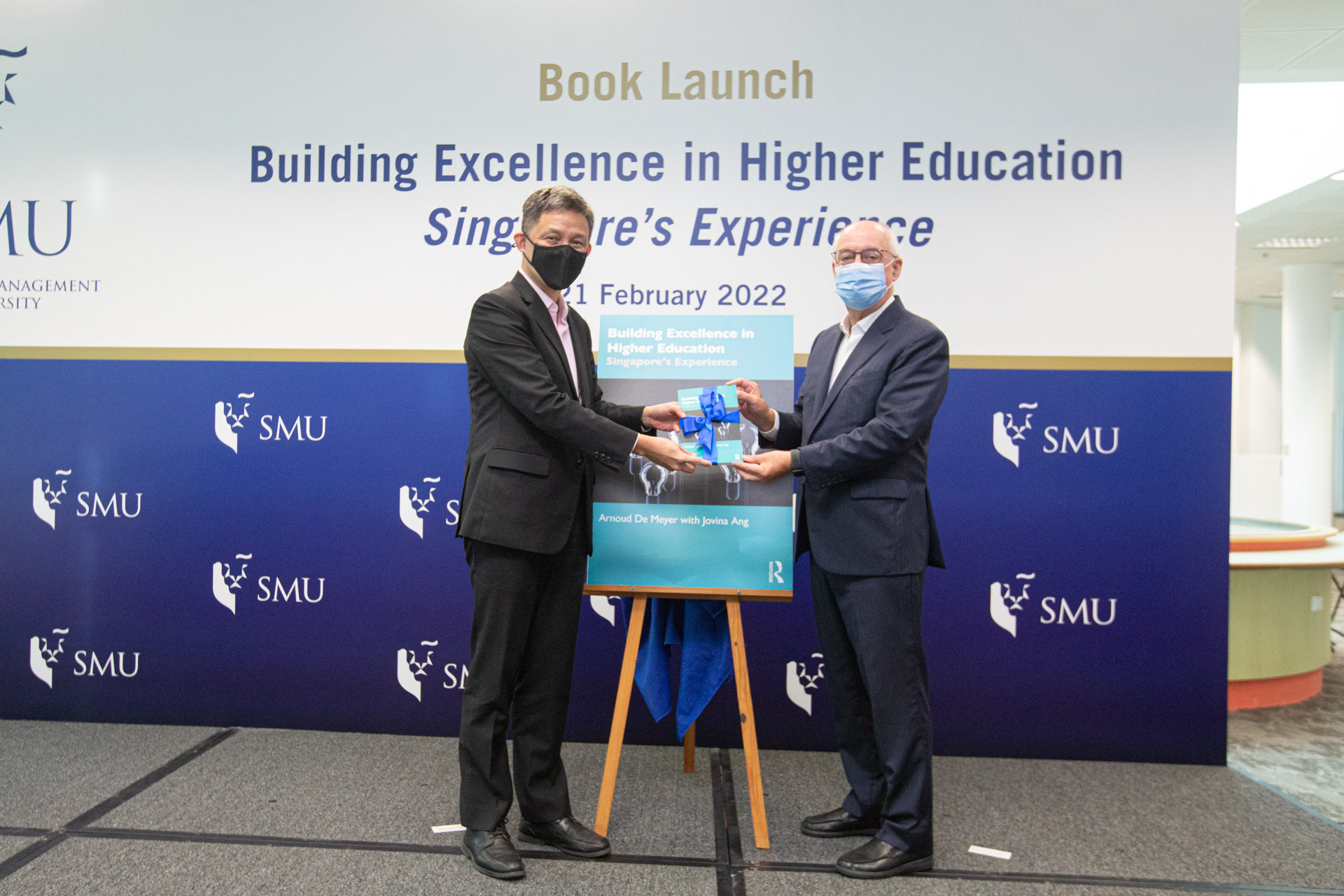
The book which proposes five major drivers behind Singapore’s success and provides recommendations for the future in Singapore’s higher education landscape was officially launched on 21 February 2022 at the SMU Li Ka Shing Library. The hybrid event which saw 50 guests at the venue was graced by Minister of Education, Mr Chan Chun Sing. SMU Provost, Professor Timothy Clark gave the Welcome Address, and capping the event with an insightful Q&A session with Prof De Meyer, was moderator Annie Koh, Professor Emeritus of Finance.

In his remarks, Prof De Meyer highlighted the five key drivers. The first driver is that the system was designed to be fit for purpose. The creation of the six autonomous universities is aligned with the socio-economic development of Singapore. The universities are quite different from each other, and they offer full time programmes, programmes where work and study are combined, as well as part-time programmes for students who already work, like at the Singapore University of Social Sciences (SUSS).

The second driver is the very significant investment in R&D, and the shift of research funding towards the universities. These resources combined with a very open environment to attract some of the best researchers in the world helped the universities us to jumpstart and rapidly develop their research capabilities.

A successful model of the autonomous university as a governance model was cited as the third driver. First experimented with in SMU, it was generalised in the mid-2000s to the National University of Singapore (NUS) and Nanyang Technological University (NTU) and then later adopted at the creation of Singapore Institute of Technology (SIT), Singapore University of Technology and Design (SUTD) and SUSS. There are many positive consequences of this model, among others that universities have developed in different ways, thus offering diversity to the Singapore students. The boards had a real governance role with strong fiduciary responsibilities, which also stimulated healthy competition.

The fourth driver was Singapore’s willingness to learn from others. All universities, including the oldest one, have had significant and performing partnerships with overseas institutions. SMU with Wharton, SUTD with MIT and Zhejiang University, NUS with Duke, Peabody and Yale, NYU with Imperial College, and SIT with a whole portfolio of institutions.

Lastly, success came from the flexibility in implementation and the continuity in the leadership. Dr Tony Tan, who as Minister for Education, DPM, Chair of the NSF and in many other roles promoted higher learning and research had said, “we had a rough terrain road map. But along the way the map was adjusted and evolved”.

Drawing from a phrase from the book – “fit for purpose”, Minister Chan offered some insights on how universities must be positioned for the future:

1. Governance of the higher education sector and the development of leadership teams must be fit for the times. Our universities’ governance systems and leadership teams must keep up with the complex task of leading and managing large numbers of staff and students, wide-ranging disciplines, and sizeable budgets.

2. Our Institutions of Higher Learning must evolve into Institutes for Continual Learning, to keep pace with the world. This calls for a more agile education and training system – one that allows Singaporeans to have multiple points of re-entry into the education system, to continually acquire and master the skills needed to meet changing needs.

3. The third thrust to prepare students for a fast-evolving workplace, is closing the Research, Innovation and Enterprise (RIE) cycle. This means a closed cycle where research informs industry solutions, and where leading industry skills and knowledge also reach the labs and classrooms. The cycle must be compressed, for Singapore to remain at the cutting edge.

Concluding his speech, Minister Chan said, “For Singapore to succeed, Singaporeans must adopt the mindset of learning for the rest of our lives and learning throughout life. Our universities will support this bigger societal shift.”

Prof De Meyer echoed similar sentiments, “We have attained an excellent level of higher education in Singapore. But the world is dynamic, and what is today’s top performance may not be so in the coming years. We need to keep learning from other experiences and overseas institutions. I hope that we can keep the openness that we have had over the last thirty years, that we can keep organising collaboration with other institutions, and that we can keep bringing back successful Singapore academics and bring in top quality foreign scientists to fuel the development of our system of higher education.”

SMU School of Accountancy ranked first in the world by BYU Accounting Research Rankings 2021

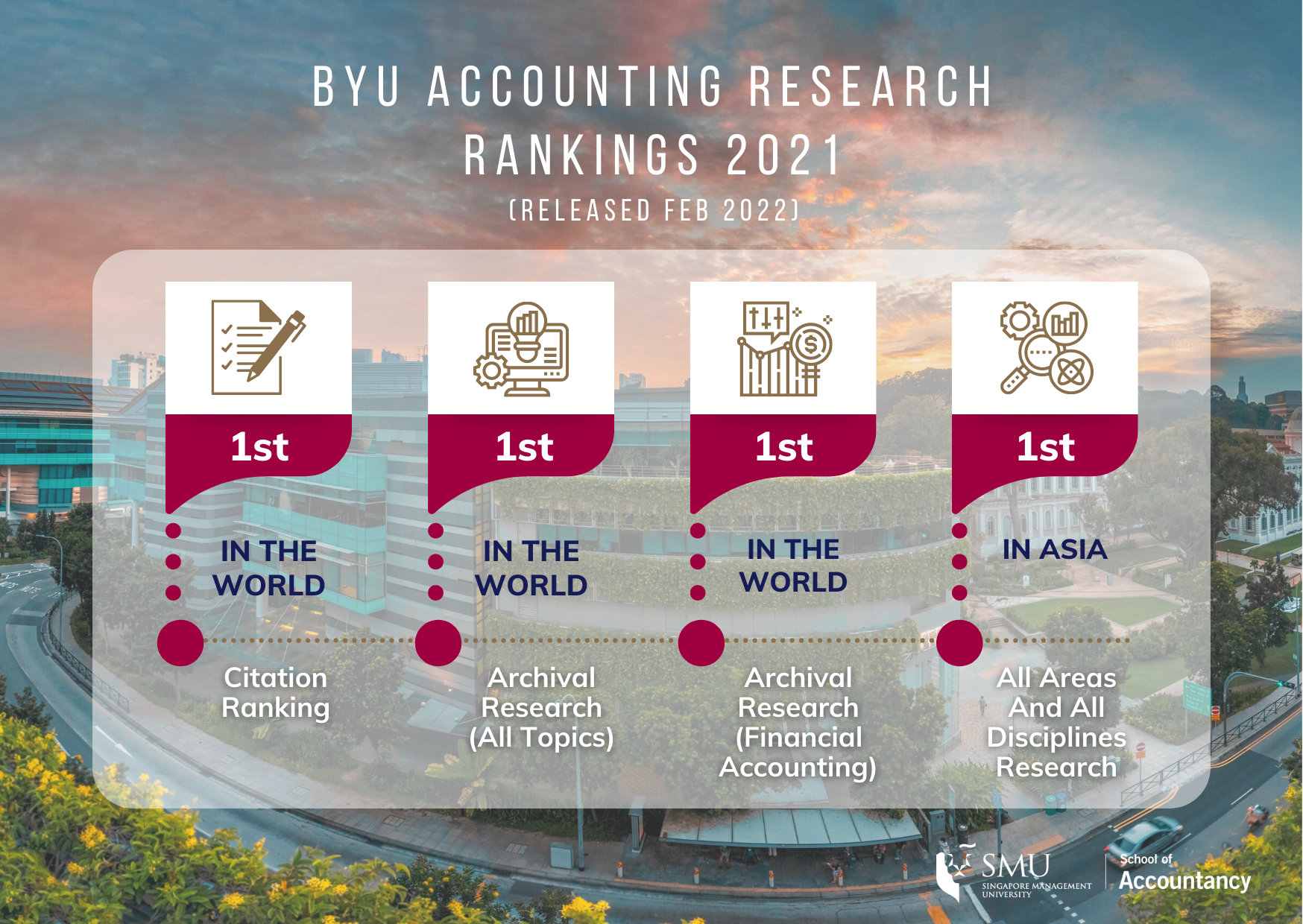
SMU’s School of Accountancy (SoA) has achieved excellent and unprecedented ratings according to the latest Brigham Young University (BYU) Accounting Research Rankings 2021 (released in February 2022). The School is now ranked first in the world for Citation Rankings, Archival Research (All Topics) and Archival Research (Financial Accounting). In addition, it is also first in Asia for All Areas and All Discipline Research, climbing to 7th in the world in the overall main rankings.

The rankings place the School of Accountancy in the league of top universities in the world, and ahead of University of Pennsylvania, University of Toronto and University of Washington.

Acclaimed as an objective and key ranking to watch for in accounting research, the BYU Accounting Research Rankings are based on award winning research and rankings are based on classifications of peer reviewed articles in 12 accounting journals since 1990, which in turn determines university ranking based on authors’ affiliation. Researchers at BYU measure the intellectual contribution of accounting faculty members at all institutions in the world. They go through publications in the top peer-reviewed accounting journals and rank departments or schools in the recent years based on the number of publications.

A high ranking signals that SMU has the highest research productivity in the top peer-reviewed journals as compared to other peer schools worldwide, particularly in the fields that SMU’s SoA emphasises – archival accounting research. In particular, emerging world number one in the Citation Rankings for a second consecutive year represents the strong influence of SoA’s academic research in the field of accounting. As a citation represents a form of acknowledgment that one research paper gives to another existing piece of published research, citation analysis has widely been viewed as a means to assess the research impact generated by that original body of work.

Associate Dean (Research) of School of Accountancy, Lee Kong Chian Professor Zhang Liandong says, “Accounting research plays an important role in connecting educators, industry practitioners, and regulators to shape the future of the accounting profession. At SMU School of Accountancy, we are committed to taking the lead in accounting research and translating this knowledge into innovative approaches to teaching and practice. Our strong performance at this year’s BYU Rankings signals that we are moving closer to achieving this mission.”

Under the leadership of Lee Kong Chian Chair Professor Cheng Qiang, who has been Dean of the School since July 2015, the SoA’s reputation for its high quality research has grown and it has achieved robust rankings. He says, “Once again, we have achieved the number one position in Citation Rankings in the world. In addition, we have taken top spot in two other categories – Archival Research (All Topics) and Archival Research (Financial Accounting) – and this has helped us climb to seventh spot in the world in the overall rankings. I am extremely proud of the dedication and commitment of all our faculty members, and this is a testament to the high standards of accounting research and education of SMU’s School of Accountancy.”

SMU strongly encourages the research faculty to publish in the best academic journals to demonstrate the expertise and findings of our academics. In 2021 alone, the SoA faculty published 12 articles in the top five journals[1], a rare feat for any accounting department or school.

SMU Professor David Chan becomes first Singaporean and Asian to receive Raymond Katzell Award

The Society for Industrial and Organizational Psychology (SIOP) has conferred the prestigious Raymond Katzell Award to Professor David Chan, Director of the Behavioural Sciences Initiative and Professor of Psychology of the Singapore Management University (SMU) for his outstanding contributions in using scientific research to address social issues and make a difference to people and society.

Professor Chan, who makes history for being both the first Singaporean and the first Asian to receive this top award, will receive the award and deliver his keynote address at the Annual SIOP conference to be held this April in the United States.

In addition to recognising the wide-ranging impact of Professor Chan’s lifetime scientific and practical contributions, the awards committee highlighted his societal contributions on managing the COVID-19 pandemic in various ways and in particular his bestseller book, Combating a crisis, which explains the psychology of Singapore’s response to COVID-19. The book, published by World Scientific in 2020, is a clear example of using science to address social issues and solve practical problems for policymakers, organisations, and the general public.

SMU’s MBA rises to 51st spot in Financial Times global ranking

Singapore Management University’s (SMU) Master of Business Administration (MBA) programme, offered by the University’s Lee Kong Chian School of Business (LKCSB), advanced seven spots to be ranked 51st in the Financial Times’ (FT) 2022 Global Ranking. Significantly, SMU’s MBA programme excelled in indicators such as ‘Environmental, social and governance (ESG)[1]’, leaping to 20th spot, as well as in the area of being ‘value-for-money’[2].

The ranking also places LKCSB firmly in the top 50 for its world-leading research.

The newly released FT Global MBA Ranking reflects the efforts made by the programme to sustain the long-term career success of its students, by ensuring that they are fully attuned to the changing needs of today’s world. With a burgeoning demand worldwide for ESG investing, the MBA programme’s efforts to curate and integrate ESG-related topics and project hours into its curriculum, received a nod of recognition. The MBA programme advanced 75 spots to rank 20th in the surveyed field of ‘ESG’ this year.

The MBA programme’s commitment to sustainability in its teaching underscores SMU’s strategic priority area of ‘Sustainable Living’. Through this area of focus, the University seeks to drive solutions in managing climate change and sustainable city living, enhancing quality of life, as well as to shape legal, regulatory and financing frameworks to build healthier and happier societies.

In tandem with using compelling teaching materials for a robust curriculum, LKCSB was also recognised for its world-leading research, measured by research articles published in leading academic journals. These efforts allowed the MBA programme to jump 14 spots to rank 43rd in the surveyed field of ‘FT research rank’[3].

Since its inception in 2009, the SMU MBA programme has consistently delivered value to its students. In the surveyed field of ‘value-for-money’, which measured the average alumni salary three years after graduation as a fraction of their MBA’s total cost, the programme was rated 25th in the world, up from 31st spot last year. Alumni of the programme reported a weighted salary[4] of US$121,907.

“We are glad to see our efforts recognised by the FT. This ranking reinforces the global stature of our MBA programme, where our world-leading faculty engage our students with an engaging and relevant curriculum, ensuring that they are equipped to become future leaders in an ever-changing world. We will continue to work closely with the business sector and to deliver a rigorous programmme that arms graduates with the resilience, resourcefulness and creativity to further advance their careers,” said Professor Bert De Reyck, Dean of SMU’s Lee Kong Chian School of Business.

SMU LKCSB was one of the youngest business schools in the world and the only Singaporean business school, in 2018, to achieve ‘Triple Crown’ accreditation. This distinction of being triple accredited by the Association to Advance Collegiate Schools of Business (AACSB), AMBA and European Quality Improvement System (EQUIS), is held by a very select group of business schools around the world.

About the SMU MBA programme

Started in 2009, the SMU MBA is well recognised as a programme that offers a purposefully planned curriculum with an Asian perspective, delivered by a strong faculty panel with extensive teaching and industry track record. To cater to the changing needs of busy professionals, SMU offers flexibility in allowing for its full-time MBA programme to be completed in 10 months or in 15 months, while the part-time MBA programme can be completed between 15 months or 18 months.

The programme comprises real-world learning from a blend of award-winning case studies on Asian and best practices of Western companies, interactive seminar-style pedagogy and exposure to an internationally diverse faculty. The curriculum is constantly updated to ensure that the programme keeps pace with the changes in its environment. The SMU MBA programme prepares our students to be digitally ready, analytics savvy and ESG conscious as well as responsible economic citizens.

Students also benefit from the opportunities to engage with outstanding leaders from the business community, and an immersive and international learning experience comprising overseas exchanges and Overseas Immersion Programme (OIP). Post graduation, MBA students are offered the option of enrolling in complimentary MBA elective classes at SMU, to keep up with industry trends and take advantage of learning opportunities.

About the FT Global MBA Ranking 2022

FT’s closely watched annual ranking, now in its 24th year, ranks a total of 100 full-time MBA programmes from countries around the globe, according to multiple criteria such as career progression and salary of alumni, and the diversity of students and faculty. The ranking considers the features of the institutions and their programmes and is based on surveys of the business schools and their graduates.

[1] ESG: proportion of teaching hours from core courses dedicated to ethics, social and environmental issues.

[2] Value for money: calculated using salary today, course length, tuition and other costs, including lost income during the MBA.

[3] FT research rank: calculated according to the number of articles published by current full-time faculty members in 50 selected academic and practitioner journals between January 2019 and July 2021. The FT50 rank combines the absolute number of publications with the number weighted relative to the faculty’s size.

[4] Weighted salary US$: average alumnus salary three years after completion, US$ PPP equivalent, with adjustment for variations between sectors.

Nearly 1 in 3 older adults in Singapore not prepared for living with endemic COVID-19

A new study by SMU’s Centre for Research on Successful Ageing (ROSA) revealed that nearly 1 in 3 of Singapore’s older adults surveyed in October 2021 did not feel mentally prepared for living with an endemic COVID-19.

Older adults who did not trust the government’s response to the COVID-19 situation in Singapore were four times more likely to feel unprepared.

Findings from the study suggest that the level of trust that older adults have in the government significantly shapes the level of perceived infection and mortality risk from COVID-19. With the emergence of the transmissible Omicron strain and predicted surge in the number of cases in Singapore in the coming weeks, researchers suggest for authorities to keep in mind that maintaining trust in the government is an important means to reducing the perceived risk of infection and mortality, a likely source of stress for older adults.

“As Singapore transits from pandemic to endemic COVID-19, we must ensure that all social groups are well-prepared and supported. ROSA has found that among older adults, maintaining trust in the government is an important factor in ensuring preparedness. This emphasises how important it is for all Singaporeans to work together in transitioning to the endemic phase – we must remain a cohesive society so that nobody is left behind in this transition,” said Professor Paulin Straughan, Director, ROSA.

ROSA’s report, titled, “Older Adult Preparedness for Living with Endemic Covid-19” uses data from the Singapore Life Panel®, a population representative monthly survey of Singaporeans aged 56-75 (inclusive) in 2021 that has been conducted since 2015. The SLP has an average response rate of about 7,200 respondents per month and is web-based, allowing respondents to participate even during periods of full or partial social lockdown.

Full details of the report can be accessed here.

Key findings and recommendations:


1. Mental Preparedness for living with an endemic COVID-19

· About 30% of older adults felt ‘Not at all prepared’ or ‘Not too well prepared’ mentally for living with an endemic COVID-19.

· Older adults who did not trust the government’s response to the COVID-19 situation in Singapore at all were four times more likely to feel ‘Not at all’ or ‘Not too well’ prepared mentally for living with an endemic COVID-19 as compared to respondents who trusted the government’s response completely.

· Due to the central role the government plays as a primary source of authoritative information on the pandemic, older adults with less trust in the government may be more inclined to mistrust pandemic information put forth by the government. With a lack of reliable sources to inform themselves with, these older adults may feel more uncertain and less prepared for the endemic. (Refer to Pages 5-7 of the report for details)


2. Willingness to get booster shot

· Only 2.92% of respondents stated that they did not intend to get a booster shot.

· The top 3 reasons for not wanting to get a booster shot have to do with concerns about the safety and efficacy of the booster shot.

· Respondents who had already gotten their booster shot in November 2021 were twice as likely to trust the government’s response to the COVID-19 situation as compared to respondents who did not intend to receive the booster shot. (Refer to Pages 7-10 of the report for details)


3. Opinions on Vaccinated Travel Lanes (VTLs)

· 86.7% reported some level of concern about the possible spread of COVID-19 from incoming tourists via VTLs.

· Respondents who were less trusting of the government were more concerned about an increase in COVID-19 transmission via VTLs – respondents who did not trust the government’s response to the COVID-19 situation at all were almost twice as likely to be moderately or very concerned about COVID-19 transmission via VTLs, as compared to respondents who trusted the government’s response completely. (Refer to Pages 16-18 of the report for details)

Based on the findings listed above, ROSA makes two general policy recommendations for consideration (Refer to Pages 20-22 of the report for details):

1. The findings highlight the importance of maintaining older adults’ trust in the government’s response to COVID-19 in preparing and helping them to live with an endemic COVID-19. Authorities can adopt several strategies in order to do this, including providing clear and consistent messaging with regards to issues relating to COVID-19, as well as transparency in and accountability for COVID-19 policies that are enacted.

2. More can be done in, firstly, further educating older adults on what living with an endemic COVID-19 would mean for them, and secondly, providing older adults with the necessary resources to cope with living with an endemic COVID-19, such as organising and developing social activities for older adults that can still be run in spite of restrictions.

SMU’s teaching case wins at the Financial Times’ Responsible Business Education Awards

The Singapore Management University’s (SMU) teaching case on sustainability scored a win at the Financial Times (FT) Responsible Business Education Awards 2022. SMU is the only Singaporean university to be acknowledged at this category of the Awards, which recognises the best teaching cases published in the past three years with sustainability and climate change as key learning objectives.

SMU’s winning case, titled “Growing a Global Forest: Ant Financial, Alipay, and the Ant Forest”, which explores sustainability and climate change through a pragmatic analysis of Alipay’s green initiatives, won in the award category of “Teaching Cases on Sustainability”.

Penned by faculty members and a student from SMU Lee Kong Chian School of Business (LKCSB), Ryan Merrill, Hannah H. Chang, Liang Hao, and Lan Yang, in collaboration with case writer Adina Wong from SMU Centre for Management Practice, the case promoted interdisciplinary learning and flexibility in discussions that students enjoyed.

Another team from SMU, comprising Professor Emeritus of Finance (Practice) Annie Koh, Flocy Joseph, Head of Commercial at SMU Executive Development and Cheah Sin Mei, Senior Case Writer of the SMU Centre for Management Practice, was awarded runner-up in the same award category for their entry, “Bold and Responsible Leadership in Uncharted Waters: The Future of BW Tankers”.

“We are delighted that we have two SMU case studies featured in this prestigious award. It speaks to the dedication and hard work that our faculty and CMP writers put into developing teaching cases for educators worldwide. It also recognises SMU’s commitment to sustainability in our teaching,” said Dr Havovi Joshi, Director, SMU Centre for Management Practice.

“We are also heartened that our efforts to focus on uncovering Asia-centric cases are paying off. It tells us that the educators are looking for compelling teaching materials that can speak about the need to understand the unique contexts in which businesses and organisations grapple with pressing issues, such as nurturing sustainability and resolving eco-dilemmas.”

SMU’s runner-up case on BW Tankers delved into the diverse complexities faced by the maritime sector, with issues such as stringent regulatory standards, an evolving business environment, and the rise of disruptive technologies. Like the winning case on Alipay, both underscore SMU’s strategic priority area of Sustainable Living. Through this area of focus, the University seeks to drive solutions in managing climate change and sustainable city living, enhancing quality of life.

Dr Flocy Joseph commented, “Our LKCSB undergraduates in the Maritime track, as well as maritime officials from across the world in our Executive Development Programmes, leveraged on this case to discuss the strategy of BW’s growth and the vision of the BW leader. On a few occasions, we had the protagonist of the case join us during the discussions, which brought the case alive and gave our learners a better idea of the kind of bold and responsible leadership that led to BW’s ongoing success.”

The FT’s Responsible Business Education Awards 2022 recognises the outstanding work by researchers, teachers and alumni of business schools in making an impact around sustainability and social purpose. The Awards comprise three categories with a common theme of identifying strong examples of work by business schools, seeking to focus on people and planet alongside profit.