Ajman University Earns 5+ QS Stars

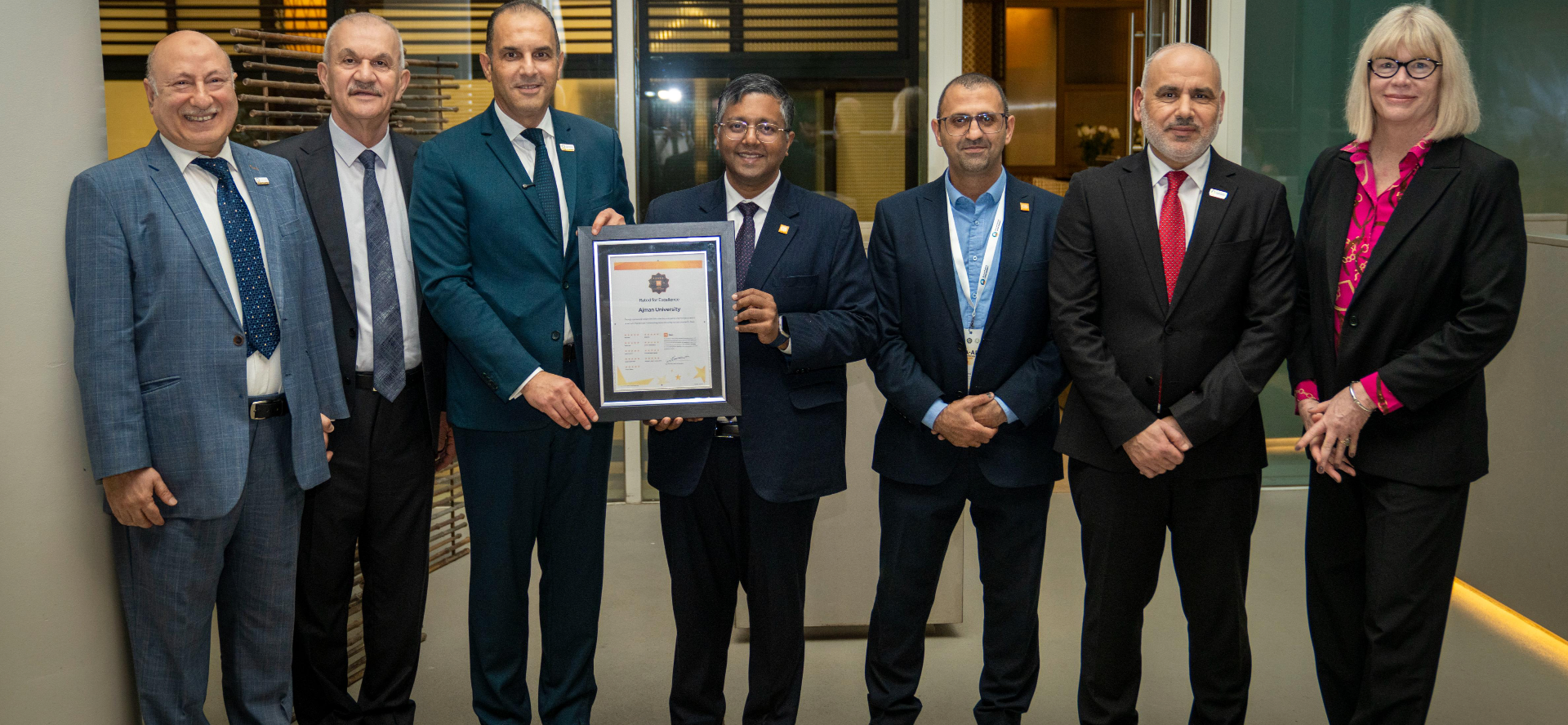
Ajman University has been awarded a 5+ QS Stars Overall Rating, the highest distinction granted through the QS Stars University Rating System. The result places Ajman University among a select group of universities worldwide and as one of only two institutions in the UAE currently to achieve this level.

In addition to the overall 5+ rating, the University earned 5 Stars across nine core dimensions of institutional performance: Teaching, Employability, Good Governance, Global Engagement, Research, Facilities, Social Impact, Diversity, Equity, and Inclusion, and Program Strength. Collectively, these outcomes reflect an institution operating with consistency across academic standards, research capability, graduate preparedness, governance, and international engagement.

The result affirms Ajman University’s long-term academic direction as a non-profit institution committed to reinvesting in faculty excellence, research infrastructure, student development, and global partnerships. Over recent years, the University has strengthened its research ecosystem, aligned academic programs with evolving professional fields, enhanced institutional governance, and expanded international collaboration. The QS Stars evaluation confirms that these efforts meet rigorous international benchmarks and reflect sustained institutional discipline.

Dr. Karim Seghir, Chancellor of Ajman University, said: “Achieving a 5+ QS Stars rating confirms that Ajman University, as a non-profit institution, has invested deliberately in the foundations that define academic credibility: outstanding faculty, robust research capacity, principled governance, and meaningful global engagement. We have aligned our academic portfolio with emerging disciplines and professional standards, strengthened collaboration with employers and research partners, and cultivated an environment where knowledge is applied with rigor and professionalism. This recognition affirms that our institutional trajectory is aligned with the expectations placed on leading universities worldwide.”

He added: “A 5+ rating is not an endpoint. It represents a standard we are committed to sustaining and advancing. Our responsibility is to build an institution whose contribution endures through scholarship, partnership, and measurable societal impact.”

The QS Stars system evaluates universities against internationally recognized criteria spanning teaching effectiveness, research performance, employability, facilities, governance, and global engagement. Achieving a 5+ rating signals sustained excellence across these dimensions and positions Ajman University among institutions demonstrating performance at the highest international level.

This distinction reinforces Ajman University’s role as a globally engaged, mission-driven institution advancing knowledge, opportunity, and institutional progress with clarity of purpose and disciplined execution.

India–Arab University Presidents at AU

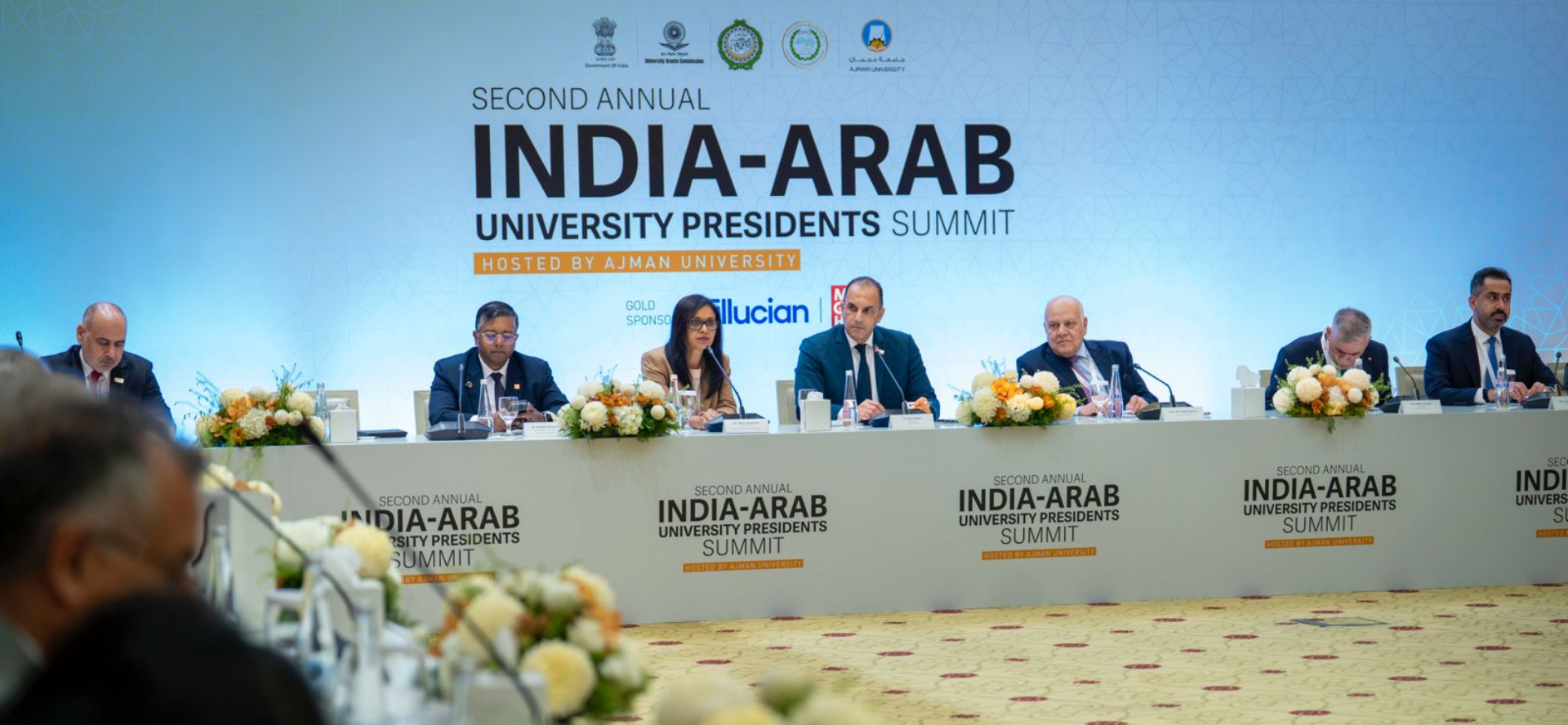
Under the patronage of H.H. Sheikh Ammar bin Humaid Al Nuaimi, Crown Prince of Ajman, Chairman of the Executive Council, and Chairman of Ajman University’s Board of Trustees, Ajman University inaugurated the second Annual India–Arab University Presidents’ Summit, marking the first time the gathering has been hosted in the Arab region.

Hend under the theme “Impact Beyond Borders: Research, Innovation, and Mobility,” the Summit opened with a powerful call to transform cross-regional collaboration, led by a renewed focus on public value, academic excellence, and societal impact. Marking its trailblazing debut in the Middle East, the Summit set an ambitious tone for advancing international cooperation in higher education, research and workforce development.

The Summit is organized in partnership with the Association of Arab Universities, the General Secretariat of the League of Arab States, the Ministry of External Affairs of India, the University Grants Commission (UGC), and the Association of Indian Universities (AIU). The initiative is further supported by industry partners Ellucian and McGraw Hill, underscoring the alignment between policy, academia, and the private sector in advancing a forward-looking higher education agenda.

A Timely Response to Global Shifts in Education and Employment

The Summit comes at a time when the demand for skills‑first education is at an all-time high,  According to the insights from the ‘World Economic Forum’, Broadening digital access is expected to be the most transformative trend—both across technology‑related domains and overall—with 60% of employers anticipating reshaping their business by 2030. Technological Advancements, particularly AI and information processing (86%), robotics and automation (58%), and energy generation, storage and distribution (41%), are projected to drive both the fastest-growing and fastest-declining job roles.

These shifts are fueling a surge in demand for technology-related skills, with AI and big data, networks and cybersecurity, and technological literacy identified as the top three fastest-growing skill areas. At the same time, analytical thinking remains the most sought-after core skill, with seven in ten employers considering it essential as of 2025. This is closely followed by resilience, flexibility, agility, leadership, and social influence—highlighting the need for universities to nurture both technical and human-centric competencies.

The event commenced with a welcome address by Dr. Karim Seghir, Chancellor of Ajman University, exploring how the future of learning can be reimagined by strengthening India–Arab partnerships.

He stated: “Our regions stand at the threshold of one of the most consequential transformations of our time—technological, economic, and societal.  Universities must lead this change by embracing a skills-first mindset, expanding mobility, and building research ecosystems that will empower our youth for a rapidly evolving world of work. At Ajman University, we remain committed to ensuring that this transformation is inclusive, skills-driven, and anchored in public value.”

Building on the Chancellor’s call to reimagine the future of learning through stronger India–Arab collaboration, the Summit brought forward a distinguished group of regional and diplomatic leaders to deepen the dialogue.

Prof. Amr Ezzat Salama, Secretary-General of the Association of Arab Universities, underscored the urgency of coordinated academic reform and greater institutional alignment across the Arab higher education landscape. Dr. Farraj Al-Ajami, Minister Plenipotentiary and Director of the Education and Scientific Research Department at the League of Arab States, addressed the policy architecture required to strengthen research ecosystems and formalize cross-regional cooperation. Dr. Seepak Mittal, Ambassador of India to the UAE, added an international dimension, highlighting the expanding educational partnership between India and the Arab world and the role universities play in translating diplomacy into sustained academic and economic collaboration.

The plenary session ‘Reimagining India–Arab Academic Partnerships’ featured a keynote address by Dr Dipak Jain, President (European) at the China Europe International Business School. He unveiled unique pathways for joint research, innovation and dual‑degree programs, aligning with regional ambitions to position skill‑based education, AI and digital transformation as cornerstones of national development agendas.

This was followed by a fireside chat featuring Professor (Dr.) C. Raj Kumar, Vice Chancellor of OP Jindal Global University and Dr Ashwin Fernandes, Executive Director (AMESA), QS Quacquarelli Symonds QS. The discussion focused on innovating practical mechanisms to transform strategic intent into impactful collaborations, governance frameworks, joint research clusters and industry‑integrated learning. 

The Summit also set the stage for its first-ever Presidential Roundtable, co‑chaired by Dr Karim Seghir and Dr Vidya Yeravdekar, Pro Chancellor of Symbiosis International University. It facilitated critical discourses on transforming vision into action, with a focus on how institutions can jointly design programs that address the evolving needs of students, faculty and employers across both regions.

Other esteemed speakers including senior representatives from the League of Arab States, the UAE Ministry of Higher Education and Scientific Research, and the Government of India (UGC), delivered impactful addresses, emphasizing the strategic importance of bilateral academic partnerships in strengthening the global education system. 

Amplifying the Summit’s impact, speakers from Khalifa University, Aligarh Muslim University, Goa Institute of Management, The University of Birmingham Dubai and Alserkal Group examined how universities can bridge the education-employability gap by embedding future-ready skills in academic curricula. This seamlessly aligns with the ongoing regional technological transformation, particularly across AI and automation, fuelling the demand for advanced technical skills.

Fostering Mobility and Research Collaboration

The final panel session of the day aimed to strengthen student and faculty mobility between Indian and Arab universities. Moderated by Prof. Anas Alsoud, Executive Director, of the Association of AFostering Mobility and Research Collaborationrab Universities, it brought together leaders from Lovely Professional University, German Jordan University, Symbiosis International University and Applied Science University Bahrain, facilitating impactful discussions on sustainable mobility frameworks, experiential learning pathways and the role of faculty exchange in strengthening research collaboration.


AU Launches Executive Education Center

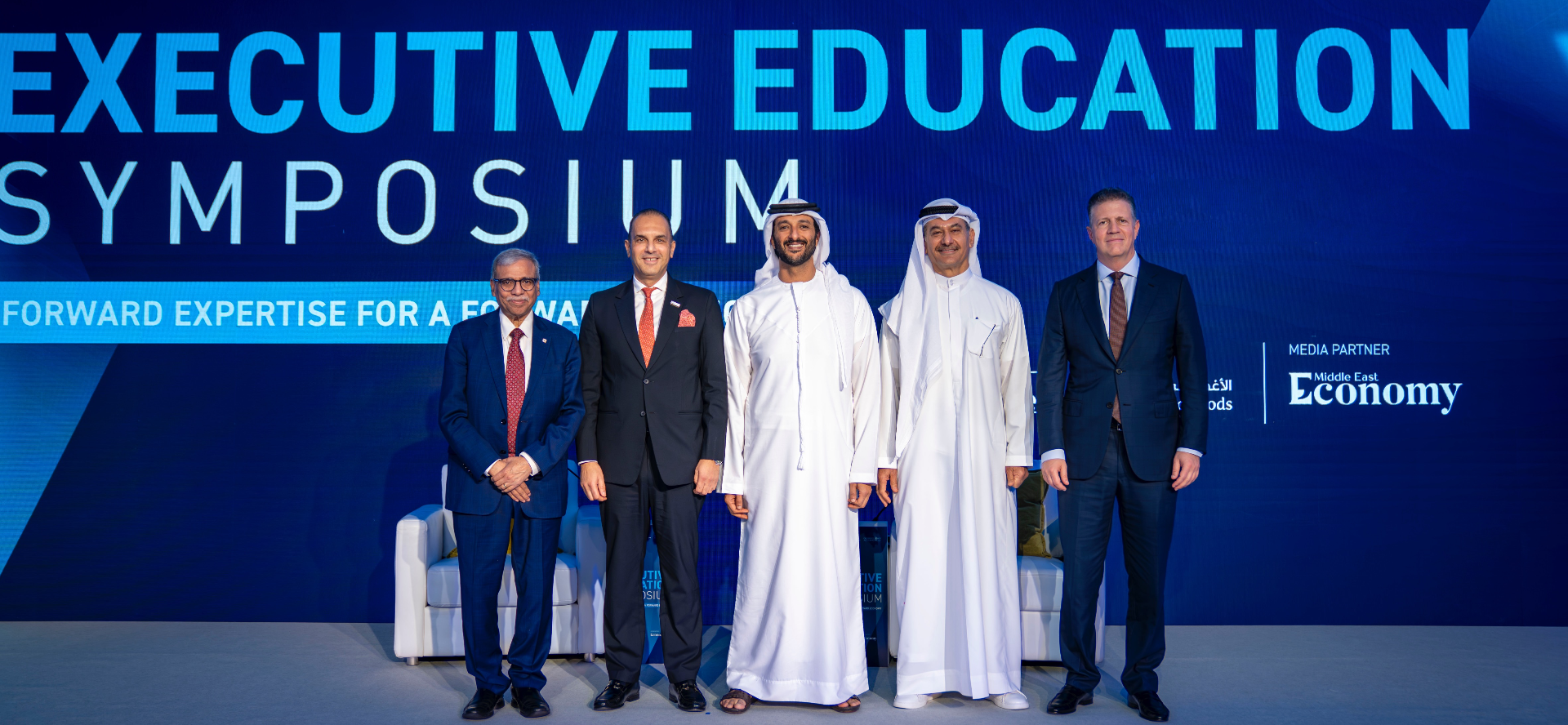
Ajman University, in partnership with Al Tamimi & Company, convened a high-level Executive Education Symposium that brought together more than 200 CEOs, board members, and senior decision-makers from across banking, investment, multinational enterprises, and government-linked institutions.

The closed-door forum examined how executive capability must evolve as organizations confront accelerating economic transformation, heightened uncertainty, and decision environments that increasingly demand judgment beyond precedent. Discussions centered on adaptability, decision-making under pressure, and the growing need for continuous leadership development.

The symposium featured an address by H.E. Abdulla Bin Touq Al Marri, Minister of Economy and Tourism, who spoke about the evolving demands placed on leaders as the UAE advances its future economy agenda. H.E. emphasized adaptability, forward thinking, and decisiveness as essential leadership qualities in an environment shaped by rapid change, technological disruption, and global interconnectedness. H.E. highlighted that economic competitiveness increasingly depends on leaders who can make informed decisions with confidence and translate long-term national ambitions into practical, institution-level execution.

Held under the theme “Forward Expertise for a Forward Economy,” the symposium aligned with We the UAE 2031, which places leadership readiness and institutional agility at the center of sustainable economic growth.

Global thought leader Dr. Dipak C. Jain, former Dean of INSEAD and Northwestern University’s Kellogg School of Management, delivered the keynote address, examining the global evolution of executive education. He highlighted that executive education today is synonymous with lifelong learning, shaped by continuous adaptation rather than episodic credentialing. Dr. Jain outlined emerging trends in executive education, including modular learning, decision-centric program design, and the growing emphasis on helping leaders navigate unfamiliar and rapidly changing environments.

The symposium also marked the official launch of Ajman University Executive Education, a new platform designed to engage senior leaders through rigorous, practice-driven learning experiences grounded in real organizational challenges and informed by global insight. The platform is structured to support CEOs, board members, and C-suite leaders through targeted executive coaching, peer-level engagement, and bespoke programs aligned with institutional priorities and national transformation agendas.

Commenting on the launch, Karim Seghir, Chancellor of Ajman University, said: “At the highest levels of leadership, learning cannot be episodic. It must be continuous, disciplined, and directly connected to the decisions leaders make every day. Executive education today is about sharpening judgment, strengthening adaptability, and learning how to think when certainty is limited. Ajman University Executive Education is built on the conviction that lifelong learning, informed by global insight and anchored in local relevance, is essential to building resilient institutions and sustaining long-term economic progress.”

Furthermore, a fireside discussion moderated by Mr. Essam Al Tamimi, Chairman of Al Tamimi & Company, with Mr. Majid Jafar, CEO of Crescent Petroleum, examined how leadership expectations are shifting in practice, particularly in relation to judgment and decision-making under pressure.

Mr. Al Tamimi stated: “In today’s environment, effective leadership is defined less by authority or tenure and more by the discipline of thought behind every decision. The pace of economic and technological change requires leaders to constantly re-examine their assumptions, challenge their own frameworks, and refine how they think, not just what they know.

Executive education plays a critical role when it creates space for that reflection, when it equips leaders with the intellectual rigor and strategic clarity to respond to uncertainty with composure rather than reaction. The real value lies in strengthening judgment, so that decisions are deliberate, resilient, and aligned with long-term institutional purpose.”

Mr. Jafar said: “In volatile operating environments, leadership is rarely tested by what leaders know. It is tested by how they think when conditions change and clarity is incomplete. Today, adaptability, disciplined judgment, and the ability to recalibrate without losing strategic direction matter more than static capability. Executive education has real value when it helps leaders develop that mindset continuously, not episodically.”

The symposium concluded with reflections on the evolving role of universities as active partners to industry and government in strengthening leadership capability. Through the Executive Education Symposium and the launch of Ajman University Executive Education, Ajman University reaffirmed its role as a convener of strategic dialogue and a contributor to shaping the future of executive learning in the UAE and the wider region.

AU Researcher Advances PCOS Diagnosis

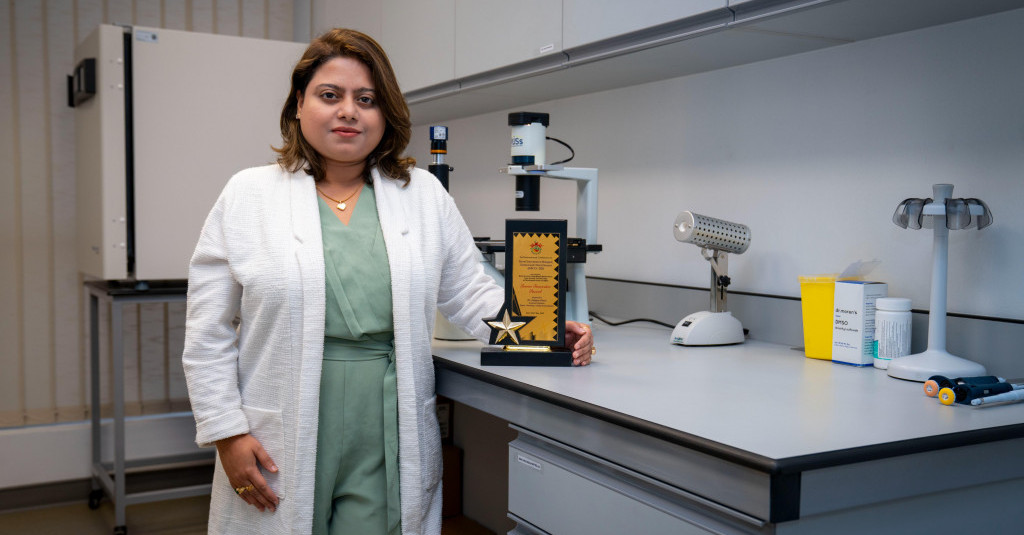
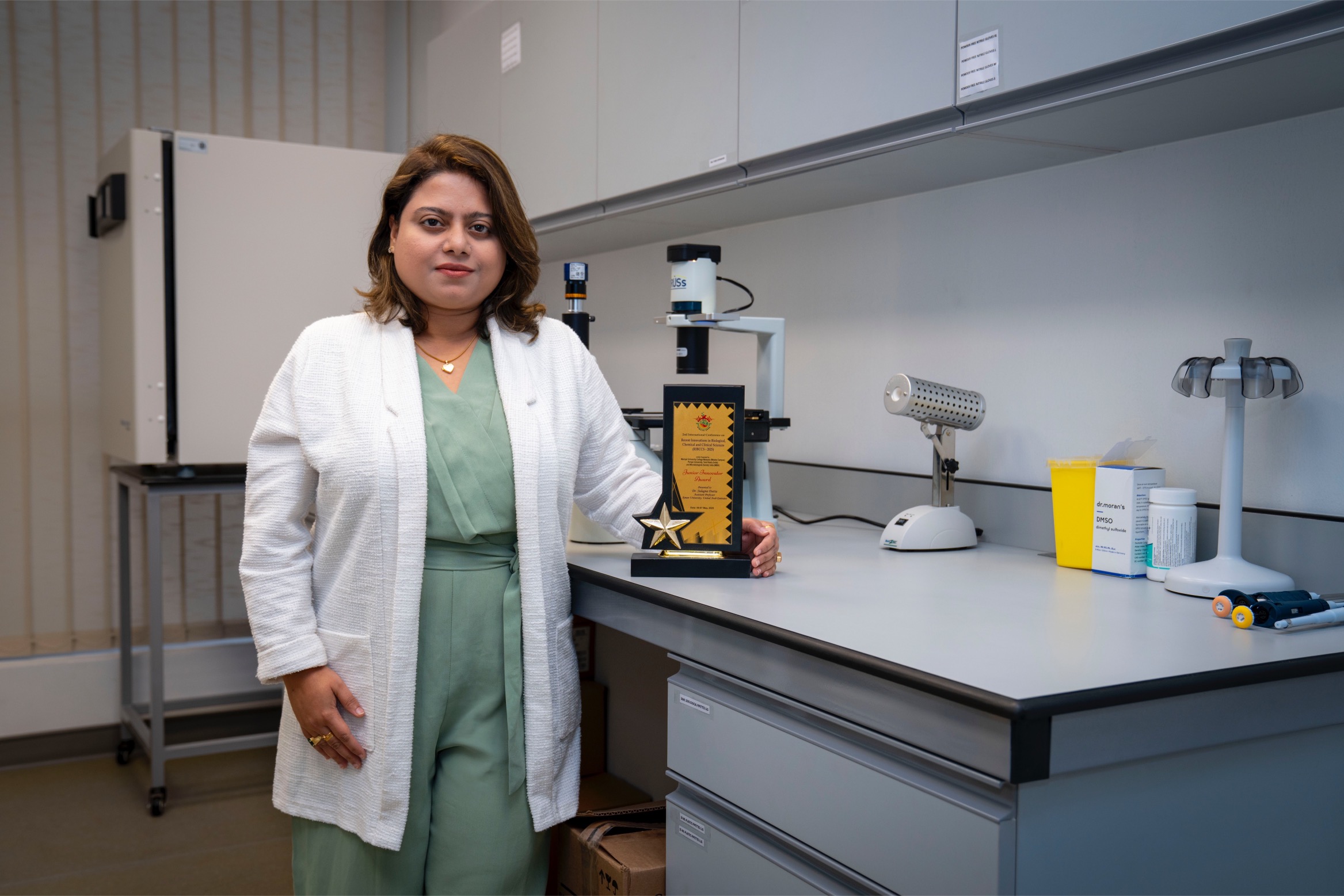
Dr. Sulagna Dutta, Chair of Research and Assistant Professor in Physiology at the College of Medicine, Ajman University, has been honored with the prestigious Junior Innovator Award at the 2nd International Conference on Recent Innovations in Biological, Chemical & Clinical Sciences (RIBCCS 2025), held in Malaysia.

Jointly presented by Manipal University College Malaysia, Periyar University (India), and the Microbiologists Society India (MSI), the award recognizes young scientists for their impactful contributions to biomedical research. Dr. Dutta was recognized for her pioneering work in infertility research, particularly in the early diagnosis and risk stratification of Polycystic Ovary Syndrome (PCOS). Her research integrates anthropometric, hormonal, and metabolic markers to develop predictive models that support earlier intervention and improved clinical outcomes in women’s health.

Dr. Dutta presented this body of work as an Invited Speaker at the RIBCCS 2025 conference, delivering a talk titled: “Predictive Risk Assessment Model for Polycystic Ovary Syndrome (PCOS) Using Anthropometric, Hormonal, and Metabolic Parameters.”The presentation highlighted her AU-funded research aimed at developing diagnostic tools that could transform clinical practice in reproductive medicine.

“Receiving the Junior Innovator Award is both an honor and a responsibility,” said Dr. Dutta. “It affirms the significance of our work in addressing one of the most underdiagnosed conditions in women’s health. This recognition strengthens our commitment to advancing research that can lead to earlier diagnoses, more effective interventions, and ultimately, a better quality of life for women affected by infertility and PCOS.

PCOS affects 1 in 10 women globally, yet many remain undiagnosed for years. Dr. Dutta’s predictive models offer a promising pathway for earlier, more accurate screening, potentially improving fertility outcomes and long-term health interventions across the region.

Dr. Dutta’s international recognition builds on her impressive academic profile, which includes a #2 Expertscape ranking in Malaysia in reproductive health and her inclusion in the Top 2% of Scientists worldwide by Stanford University’s Global Ranking since 2020.

This achievement further reinforces Ajman University College of Medicine’s mission to advance evidence-based, community-centered healthcare education and research. Dr. Dutta’s ongoing work exemplifies the college’s commitment to addressing real-world healthcare challenges and enhancing the quality of life through scientific innovation.

AU Researcher Advances PCOS Diagnosis

Dr. Sulagna Dutta, Chair of Research and Assistant Professor in Physiology at the College of Medicine, Ajman University, has been honored with the prestigious Junior Innovator Award at the 2nd International Conference on Recent Innovations in Biological, Chemical & Clinical Sciences (RIBCCS 2025), held in Malaysia.

Jointly presented by Manipal University College Malaysia, Periyar University (India), and the Microbiologists Society India (MSI), the award recognizes young scientists for their impactful contributions to biomedical research. Dr. Dutta was recognized for her pioneering work in infertility research, particularly in the early diagnosis and risk stratification of Polycystic Ovary Syndrome (PCOS). Her research integrates anthropometric, hormonal, and metabolic markers to develop predictive models that support earlier intervention and improved clinical outcomes in women’s health.

Dr. Dutta presented this body of work as an Invited Speaker at the RIBCCS 2025 conference, delivering a talk titled: “Predictive Risk Assessment Model for Polycystic Ovary Syndrome (PCOS) Using Anthropometric, Hormonal, and Metabolic Parameters.”The presentation highlighted her AU-funded research aimed at developing diagnostic tools that could transform clinical practice in reproductive medicine.

“Receiving the Junior Innovator Award is both an honor and a responsibility,” said Dr. Dutta. “It affirms the significance of our work in addressing one of the most underdiagnosed conditions in women’s health. This recognition strengthens our commitment to advancing research that can lead to earlier diagnoses, more effective interventions, and ultimately, a better quality of life for women affected by infertility and PCOS.

PCOS affects 1 in 10 women globally, yet many remain undiagnosed for years. Dr. Dutta’s predictive models offer a promising pathway for earlier, more accurate screening, potentially improving fertility outcomes and long-term health interventions across the region.

Dr. Dutta’s international recognition builds on her impressive academic profile, which includes a #2 Expertscape ranking in Malaysia in reproductive health and her inclusion in the Top 2% of Scientists worldwide by Stanford University’s Global Ranking since 2020.

This achievement further reinforces Ajman University College of Medicine’s mission to advance evidence-based, community-centered healthcare education and research. Dr. Dutta’s ongoing work exemplifies the college’s commitment to addressing real-world healthcare challenges and enhancing the quality of life through scientific innovation.

AU to Lead Global DNS Security Project

Ajman University has secured a prestigious international grant from the Internet Corporation for Assigned Names and Numbers (ICANN) worth USD 410,300.00, in the inaugural cycle of the ICANN Grant Program. This competitive international award, secured through the dedicated efforts of Prof. Rao Naveed Bin Rais from the College of Engineering and Information Technology, will support the development of a groundbreaking system to archive and analyze global data related to the Domain Name System Security Extensions (DNSSEC) — a vital cybersecurity protocol that safeguards the integrity of Internet infrastructure.

The project aims to build a 24/7 operational platform that analyzes historical DNSSEC data, identifies vulnerabilities, and highlights gaps in its global implementation. This first-of-its-kind system will offer diagnostic tools with visual analysis, helping enhance DNSSEC adoption worldwide.

Ajman University is the only institution in the Middle East to receive this grant, and one of just 23 selected entities out of 247 global applicants. Out of 23 entities, only 3 are selected from Asia including Ajman University. Moreover, AU is also among the only five universities worldwide to receive the award — including three from Europe, one from Latin America, and Ajman University as the sole representative from Asia.

This milestone reinforces Ajman University’s global standing, particularly as it enabled the University to obtain U.S.-equivalent charitable organization status — a prerequisite for applying to this grant. This designation aligns with AU’s identity as a non-profit academic institution and paves the way for securing additional international funding opportunities that support its academic and community missions. Being the only awardee from both the Middle East and the only university from the Asia highlights the University’s ability to compete at the highest levels in fields such as cybersecurity and Internet governance.

The grant-funded project represents a significant addition to the University’s research and technological infrastructure. It involves the development of a passive, integrated system to collect and analyze DNSSEC data — the first of its kind globally — and is expected to boost AU’s international visibility as global Internet community begins using the platform. The project will also include the establishment of a high-tech hardware lab on campus, further strengthening AU’s capacity for applied research and innovation in digital infrastructure.

The initiative promises to create research and training opportunities for AU graduates, while providing current students and researchers access to valuable datasets for research and development purposes — supporting their growth in analytical and technical skills.

The project addresses a major global challenge related to the implementation of DNSSEC, a protocol strongly advocated by global Internet bodies like ICANN and IETF for securing the DNS ecosystem. In the adoption of DNSSEC protocol, one of the main obstacles has been the lack of visibility into global adoption and implementation gaps. Through the newly developed system, Ajman University seeks to bridge that gap by monitoring and analyzing DNSSEC adoption across Internet domain names worldwide.

This project reflects Ajman University’s strong commitment to leveraging scientific research in service of global challenges and underscores its active role in building secure and sustainable digital infrastructure that benefits academic and technical communities both locally and globally.

CXO Connect: AU Bridges Academia and Industry

As part of its strategic commitment to enhancing graduate employability, Ajman University (AU) launched its flagship CXO Connect initiative—a platform designed to bridge the gap between higher education and industry. Through curated engagements with top executives, the initiative equips students with real-world insights, leadership perspectives, and the skills needed to thrive in an increasingly competitive job market.

In a recent session titled “Leading with Creativity: How Executive Leadership Drives Innovation and Impact,” AU convened a distinguished panel of industry leaders: Mr. Sajith Ansar, Founder and CEO of Idea Spice; Mr. Jatin Kalra, Vice President of Apparel Group; and Mr. Christoph Koster, CEO of ruya. The session was moderated by Dr. Abeer Al Ghananeem, Dean of the College of Pharmacy and Health Sciences.

The panelists shared insights on the role of creativity in executive leadership, the importance of long-term strategic thinking, and how today’s graduates can position themselves for sustained success. A recurring theme was the growing demand for soft skills, including empathy, adaptability, and communication—essential qualities that complement technical expertise in the modern workplace.

Reflecting on the strategic significance of the initiative, Dr. Karim Seghir, Chancellor of Ajman University, stated: “AU has launched the CXO Connect program to cultivate a robust ecosystem of industry partnerships. This initiative is designed to develop highly-skilled talent, promote industry-relevant research, and champion continuous learning. By doing so, AU aims to contribute to the UAE’s national vision of becoming a prominent leader in the global knowledge economy.”

Panelists also underscored the UAE’s growing role as a global innovation and entrepreneurship hub, highlighting the rise of homegrown ventures, fintech expansion, and the country’s long-term commitment to economic diversification.

Through initiatives like CXO Connect, Ajman University reinforces its position as a catalyst for career readiness and innovation—ensuring that its graduates are not only academically equipped, but also industry-aware, globally competitive, and future-focused.

AU Recognized for Sustainability Education

Ajman University is proud to announce that it has won the prestigious QS Reimagine Education Award 2024 for “Sustainability Education Action.” This accolade was awarded in recognition of the University’s groundbreaking initiative, the ‘Greening Communities: Mangrove Planting Project.’ This honor underscores the University’s commitment to environmental sustainability and its dedication to empowering youth and communities with the necessary skills and knowledge to drive the UAE’s ambitious sustainability goals.

The project’s objectives align with the UAE’s national plan to plant 100 million mangrove trees by 2030. Spearheaded by Ajman University’s Office of Sustainability, in partnership with Al Zorah Development Private Company and Quest for Adventure, the initiative engages students and local communities in the preservation and rejuvenation of mangrove ecosystems, highlighting Ajman University’s pivotal role in advancing a sustainable future.

Reflecting on this significant achievement, Dr. Karim Seghir, Chancellor of Ajman University, said, “Receiving the QS Reimagine Education Award for Sustainability Education Action is a powerful validation of our commitment to sustainability. It invigorates our efforts to engage youth and communities in impactful environmental action, driving meaningful change in alignment with the UAE’s sustainability objectives.”

The project incorporates a variety of educational programs and workshops designed to heighten awareness about critical environmental issues. These initiatives equip participants with the skills and knowledge needed to tackle environmental challenges, empowering them to become advocates for positive change within their communities.

Moreover, the initiative supports several United Nations Sustainable Development Goals, including Quality Education, Climate Action, Life on Land, and Partnerships for the Goals.

The QS Reimagine Education Award is a highly esteemed honor within the education sector, recognizing innovative approaches that enhance learning outcomes, improve employability, and advance sustainability education. Now in its 11th year, the award features 17 categories, celebrating transformative educational practices globally. Each year, the competition attracts over 1,200 submissions from around the world, evaluated by a distinguished panel of more than 900 international expert judges.

AU Leads Stem Cell Healing Breakthrough

Chronic wounds—resulting from diabetes, burns, and vascular conditions—represent a growing global health crisis, affecting millions and straining healthcare systems worldwide. The urgent need for effective, accessible, and less invasive treatments has placed regenerative medicine at the forefront of medical innovation.

In response to this challenge, Dr. Ibrahim El Serafi, Associate Professor and Head of the Basic Medical Sciences Department at the College of Medicine, Ajman University, has been awarded the Thumbay International Research Grant 2025 to lead a groundbreaking project on skin regeneration and wound healing.

His research explores the potential of epigenetic compounds—Vorinostat and CID1067700—to stimulate the differentiation of stem cells into keratinocytes, the key cells responsible for skin formation. The aim: to develop a topical, non-surgical therapy and personalized skin grafts for patients suffering from chronic, non-healing wounds.

The project has far-reaching implications for personalized and regenerative medicine, offering a viable alternative to traditional skin grafting procedures, which often involve donor sites, risk of infection, and limited availability.

Through rigorous in vitro and in vivo studies, the project will assess therapeutic efficacy, genotoxic safety, and clinical applicability. If successful, it could lay the foundation for next-generation treatments for wounds caused by diabetes, trauma, and vascular diseases.

In partnership with Gulf Medical University (UAE) and Linköping University (Sweden), this project exemplifies Ajman University’s strategic focus on translational research and global collaboration. It reinforces the University’s growing reputation as a regional leader in advancing health sciences and biomedical innovation.

This milestone reflects Ajman University’s commitment as a non-profit institution to advancing impactful research that addresses real-world challenges. By nurturing scientific inquiry and fostering strategic partnerships, AU continues to align with national and global priorities—contributing to a more sustainable, healthier future.

Together, We Can: AU’s Bold Non-Profit Future

Ajman University hosted its 2025 Reunion Gala under the patronage of His Highness Sheikh Ammar bin Humaid Al Nuaimi, Crown Prince of Ajman, Chairman of Ajman Executive Council, and Chairman of Ajman University’s Board of Trustees. The event, held in the presence of His Excellency Dr. Sheikh Majid Bin Saeed Al Nuaimi, Chairman of the Ajman Ruler’s Court, brought together distinguished alumni, strategic partners, and friends of the University to celebrate shared achievements and reaffirm the institution’s mission-driven future as a private, non-profit university.

Themed “Together, We Can,” the gala reflected the University’s commitment to inclusiveness, excellence, innovation, sustainability, and social responsibility—values that mirror the broader aspirations of the UAE. One of the evening’s visual highlights was a mesmerizing laser show, which unveiled the pillars of the campaign and the University’s future-focused vision in a truly dazzling display of light, music, and meaning.

In his welcoming address, Dr. Karim Seghir, Chancellor of Ajman University, stated:“This evening celebrates not only what we’ve achieved together, but what we are determined to accomplish moving forward. As a non-profit university, every contribution is reinvested directly into students, faculty, and society. We are building not just a university, but a movement for access, excellence, and a better tomorrow.”

Dr. Seghir further emphasized: “Together, we can expand opportunity. Together, we can light the path for those who will, in turn, light the way for others. And I am confident that together, we will.”

The University recently achieved major international recognition, ranking among the top 500 universities worldwide and securing the #1 position in the UAE for employer reputation according to the 2025 QS World University Rankings. Ajman University also earned:

#1 in the UAE in Data Science & Artificial Intelligence,
#1 in Pharmacy & Pharmaceutical Sciences, and
#2 in Computer Science, Information Systems, and Mathematics.

These results mark AU’s rapid ascent in areas that define the future of work and knowledge economies.

A central moment of the gala was the Recognition Ceremony, in which the University honored a select group of partners and donors for their steadfast support and meaningful contributions. The awards were presented by H.E. Dr. Sheikh Majid Bin Saeed Al Nuaimi and Dr. Karim Seghir to the following entities, listed in alphabetical order: H.E. Ali AlAssi, Al Rostamani Group, AWRostamani Group, Dar Al Ber Society, Easa Saleh Al Gurg Group, Fast Building Contracting, IFFCO, International Charity Organization, and Tiger Group.

This recognition reflects the critical role of partnership in shaping AU’s journey and expanding its academic and community impact.

The evening concluded with captivating performances, followed by a dinner reception and a raffle draw featuring exceptional prizes sponsored by generous partners.

As Ajman University looks ahead, its roadmap is firmly anchored in accessibility, innovation, and societal impact. The University will continue to expand financial aid, invest in frontier research, and strengthen global partnerships, aligned with UAE Vision 2030 and the nation’s pursuit of sustainable, inclusive development.