Naqiyyaazzuhra
Published on 23 January 2026





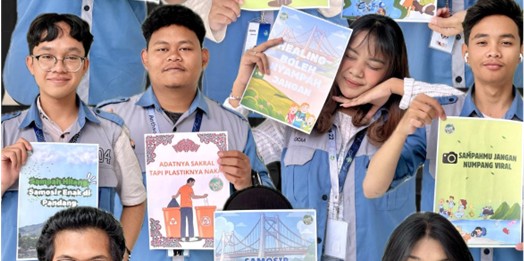
A group of Social Anthropology students from the University of Sumatera Utara (USU) has been carrying out a fieldwork program in Samosir Regency, North Sumatra, Indonesia, from September 15 to October 10, 2025. During this period, they are developing a social cartography technique to map waste disposal and accumulation points in public areas such as bridges, waterfronts, markets, and bus terminals.
According to one of the students, Andreadi Simanjuntak, the project aims not only to identify waste hotspots but also to explore the socio-cultural factors behind community behavior regarding waste. The resulting waste maps are expected to serve as a strategic reference for the District Environmental Agency in placing proper waste management facilities.
He further explained that the main mapping sites include areas frequently visited by residents and tourists, traditional markets, bus terminals, and several elementary schools. Through social cartography, the “social footprint” of waste is traced using ethnographic observation, providing insights into community habits, norms, and interactions related to waste disposal. The next step, he said, is to develop educational initiatives addressing these findings.
Head of the Social Anthropology Department, Dr. Irfan Simanjuntak, emphasized that this fieldwork program is designed not only for students to learn directly from the community but also to create impactful interventions—aligning with the current tagline of the Ministry of Research.