Asfendiyarov National Medical University
Published on 4 February 2026





Modern pharmaceutical education faces the task of not only transferring theoretical knowledge but also equipping students with practical tools relevant to the demands of the professional environment. At the core of this transformation is the increasing importance of risk management — a principle essential for ensuring pharmaceutical product quality and compliance with international GxP standards. Recognizing this, the School of Pharmacy at the Asfendiyarov Kazakh National Medical University (KazNMU) has introduced a risk-oriented approach into the educational process of its “Technology of Pharmaceutical Production” program.
The adoption of a risk-based approach in pharmaceutical training represents a strategic shift toward proactive problem-solving and quality assurance. This educational model emphasizes the systematic identification, assessment, and mitigation of potential risks at each stage of pharmaceutical production and management. By training students in this way, the program aims to develop future professionals who are capable of making informed decisions even in uncertain and complex situations. The integration of risk thinking helps foster a quality culture among students and builds a strong foundation for long-term professional success.
One of the central innovations introduced in the program is the transformation of key disciplines to reflect a risk-oriented philosophy. In the course titled “Concept of Quality Assurance of Medicinal Products in the Framework of GxP,” students work with real-life case studies involving deviations identified during GMP (Good Manufacturing Practice) and GDP (Good Distribution Practice) inspections. By investigating the root causes of these deviations, evaluating the impact on product quality, and designing corrective and preventive actions (CAPA), students not only learn regulatory requirements but also gain practical skills in risk evaluation. This process is guided by the principles outlined in the ICH Q9 guideline on Quality Risk Management.
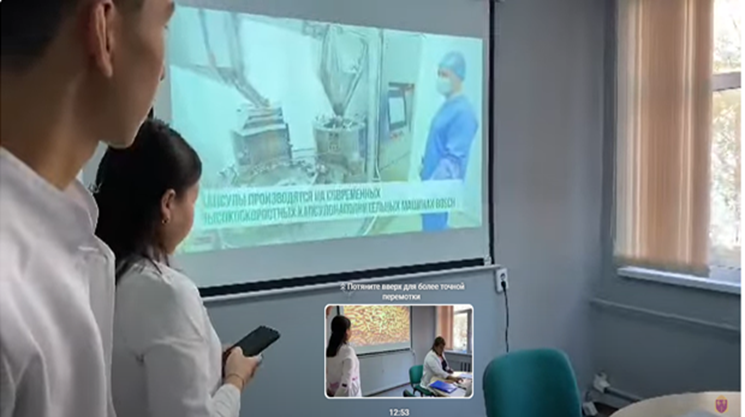
In another core subject, “Process Validation,” students are introduced to the practical aspects of validating manufacturing processes, with risk assessment at the forefront. For example, they may be assigned the task of developing a validation plan for capsule production. This involves identifying critical process parameters (CPP), defining critical quality attributes (CQA), and assessing the risks associated with potential deviations. During these assignments, students use industry-standard tools such as Failure Mode and Effects Analysis (FMEA) and the Ishikawa diagram to explore cause-effect relationships and improve process understanding. These exercises prepare students to manage real-world validation tasks with a systematic and analytical mindset.
The risk-oriented training is further enriched by the involvement of industry partners who provide real production data for analysis. In one such task, students validate equipment cleaning procedures and assess risks of cross-contamination — a crucial aspect in pharmaceutical manufacturing. These practical tasks offer insight into the technical and safety implications of pharmaceutical operations, and emphasize the importance of protecting patient health through meticulous risk control.
A cornerstone of the program is the dedicated course “Risk Management in the Pharmaceutical Industry,” which provides students with a thorough understanding of how risks are managed throughout the lifecycle of a pharmaceutical product. Here, theoretical instruction is complemented by hands-on exercises. In one such assignment, students simulate the launch of a new production line, identify potential critical deviations, estimate their probability and impact, and develop a risk matrix with defined intervention priorities. These scenarios help students build competencies in strategic planning and decision-making under time and resource constraints.
The effectiveness of the risk-oriented model is amplified through simulation training and project-based learning. During these simulations, students are exposed to hypothetical production incidents that demand immediate analysis and resolution. This immersive format helps develop students’ ability to respond rapidly, assess situations critically, and implement effective solutions under pressure — skills that are essential in high-stakes pharmaceutical environments.
The integration of a risk-oriented approach at KazNMU demonstrates how educational institutions can align academic content with real-world industry expectations. This method not only equips students with technical knowledge but also develops the soft skills necessary for leadership and accountability in the workplace. It fosters a generation of professionals who are not only competent in pharmaceutical science but also deeply committed to quality and safety.
Looking ahead, KazNMU plans to further enhance this educational model through the use of digital platforms for interactive risk assessment and expanded collaboration with pharmaceutical companies. Joint case studies, guest lectures, and structured internships will allow students to deepen their understanding of risk management in actual industrial contexts. By continuously evolving and modernizing its approach, the university aims to remain at the forefront of pharmaceutical education in the region.
In conclusion, the implementation of a risk-oriented approach in the educational process at KazNMU is a forward-looking initiative that prepares students to meet the complex challenges of the pharmaceutical industry. It empowers them to think critically, act responsibly, and uphold the highest standards of quality and patient safety — ensuring their readiness for professional success in a rapidly evolving global landscape.