National Taiwan University
Published on 26 November 2026




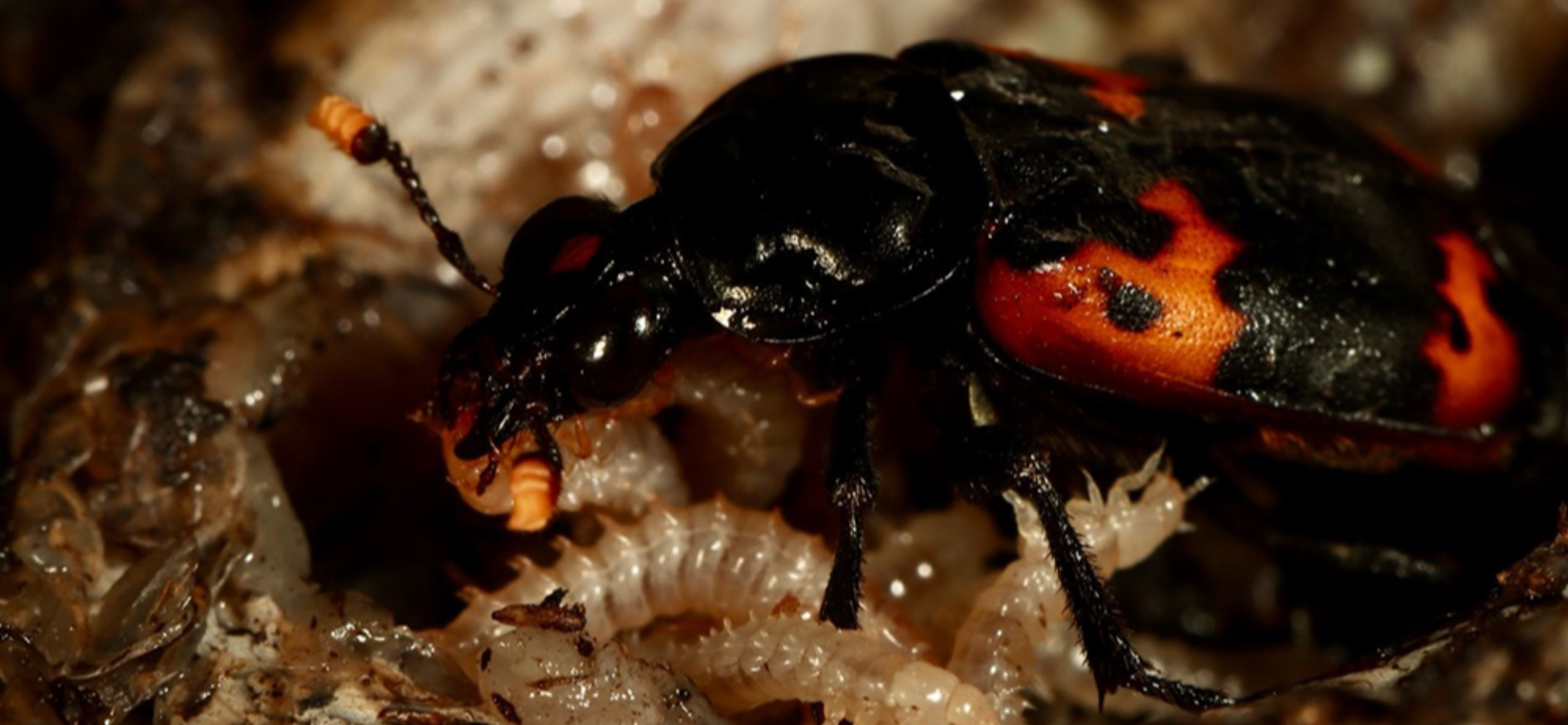
As global warming intensifies, many animals adjust their behavior to cope with extreme temperatures, such as shifting breeding times or nesting deeper. Whether these adjustments actually protect offspring, and what they cost the parents, has rarely been measured precisely within a single system. A research team at National Taiwan University (NTU) has now addressed this question using a common Taiwanese insect.
Led by Associate Professor Syuan-Jyun Sun of the International Degree Program in Climate Change and Sustainable Development, the team studied the burying beetle Nicrophorus nepalensis, which lives in low and mid elevation mountains. These beetles bury small vertebrate carcasses underground to serve as both nursery and food for their young. Using heat lamps to mimic the difference between sun exposure and forest shade, the researchers compared how burial depth affected larval survival and the condition of female beetles.
Deeper soil proved cooler and more stable, offering a useful thermal refuge. Yet heated females buried carcasses about 4.3 centimeters shallower than females in the control group, suggesting that heat limits their ability to use this cooling effect. Females that did manage to bury deeper raised more and heavier larvae, but they also lost significantly more body weight.
The findings identify burial as a key heat buffering mechanism and show that behavioral flexibility can shield offspring from climate stress, but at a high physiological price for parents. The study was published in npj Biodiversity on 26 October 2026.