National Taiwan University
Published on 25 November 2026




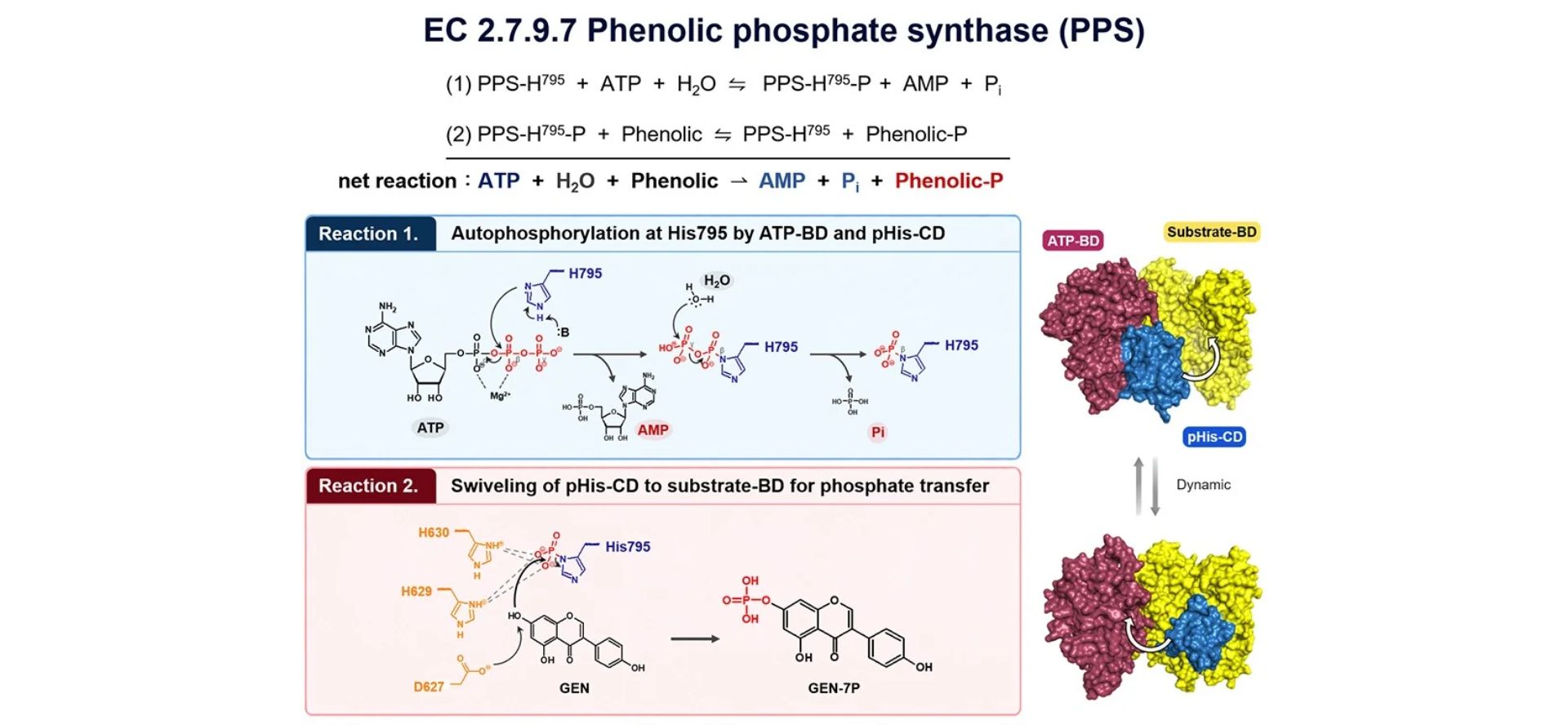
Natural polyphenols are common in fruits, vegetables, tea and legumes, and are known for their potential health benefits. However, they dissolve poorly in water and are not easily absorbed by the body, which has restricted their use. Researchers at National Taiwan University (NTU) have identified an enzyme that may help solve this problem, and it has now been formally added to the international enzyme classification system.
Professor Nan-Wei Su of the Department of Agricultural Chemistry and colleagues found that the bacterium Bacillus subtilis can turn many polyphenols into phosphate derivatives. They reported the responsible enzyme, named phenolic phosphate synthase (PPS), in Food Chemistry in 2023. A later study in ACS Catalysis, published in 2025, described PPS as a new ATP dependent dikinase able to act on several polyphenol families, including flavonoids, stilbenes, curcuminoids, chalcones and coumarins.
The team applied for classification in October 2025. After public review, the enzyme committee of the European Society of Applied Biocatalysis gave PPS the number EC 2.7.9.7, and it joined the Enzyme List on 1 July 2026. Looking ahead, the researchers plan to pair enzyme engineering with microbial fermentation to produce polyphenol phosphates efficiently, for use in functional foods, health ingredients and biomedicine.