INHA University
Published on 17 March 2026





The College of Medicine at Inha University is accelerating ‘Community-Based Medical Education,’ which expands the educational scope beyond the confines of classrooms and university hospitals into the community.
The College of Medicine is conducting specialized training for 3-week clinical clerkships this month and in coming June at a hospital ship (Geongang Ongjin-ho) and Baekryeong Hospital for 4th-year medical students.
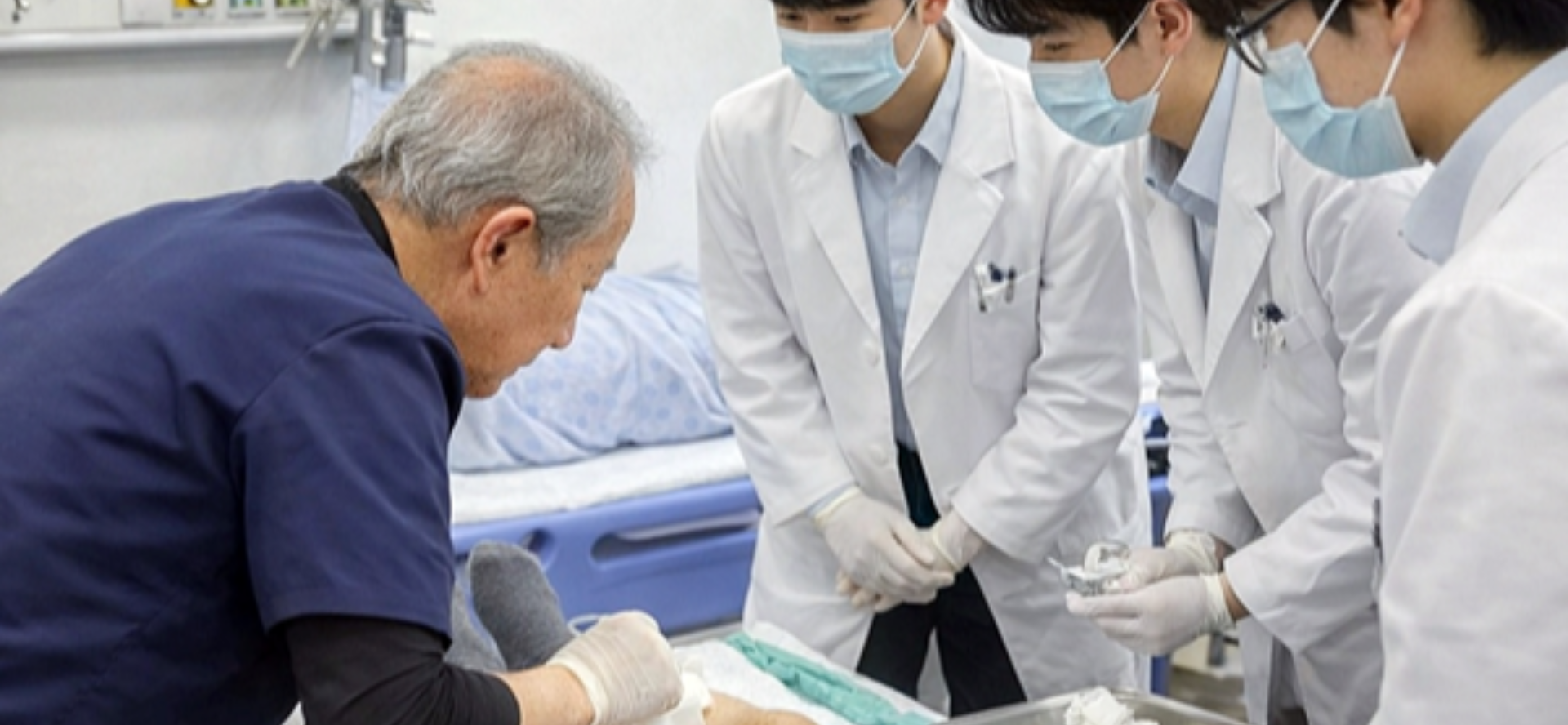
From March 4 to 6, students boarded the Ongjin-gun hospital ship to conduct their first clinical clerkship under the guidance of public health doctors and personnel, and a second clinical clerkship is also scheduled for June. Additionally, they are conducting a clinical clerkship at Baekryeong Hospital on Baekryeong Island for nine days from March 9 to 17.
Students will experience the specificity and importance of public healthcare through regional status lectures and seminars, participation in island tour medical treatments, and involvement in Doctor-Heli patient evacuations.
The College of Medicine has been preparing community-based medical education since 2022 to cultivate medical personnel suited for the local community. Since last year, as the Ministry of Education implemented the ‘Regional Innovation Strategy and Education (RISE)’ project, which considers the regional characteristics and strengths/specializations of local universities in 17 cities and provinces nationwide, this program was adopted as specialized education, leading the innovation of medical education.
To this end, the College of Medicine signed agreements with Ongjin-gun, Baekryeong Hospital, and Incheon Medical Center, and plans to sign agreements with a total of 100 community public and private medical institutions within the year.
Seo Han Yong, a 4th-year medical student who participated in the Baekryeong Hospital clinical clerkship, said, “It taught me much more than university hospital training and made me properly realize the reality of community patients we must look after,” and added, “It was a precious opportunity to think about what to aim for through the dedication shown by our senior doctors on the island.”
The College of Medicine plans to establish a practical community-centered medical education system. In particular, project-based classes will be conducted to analyze the epidemiology of major diseases among residents of specific regions and propose health policies or health promotion programs suitable for those regions. Furthermore, the college plans to significantly expand education on social responsibility to protect the health of the community by strengthening the ability to analyze and solve regional health problems and learning deeply about the roles and responsibilities of public hospitals.
Inha University Hospital, an affiliated university hospital under the university’s medical center, is also positioning itself as a community-based medical institution that meets the specificities of the Incheon region, which is expected to serve as a turning point for regional medical development as a hospital-academia cooperation model.
Inha University Hospital has continued medical support for island areas for 28 years, starting with Baekryeong Island in 1998. It has evolved from simple medical volunteering in the early days to medical service agreements for Ongjin-gun residents, installation of remote consultation systems, and expansion of prevention-oriented public health, gradually developing into a systematic and effective medical system. Notably, through the '1 Island 1 Primary Care Hospital' project, it has been designated in charge of Daecheong-myeon and Baekryeong-myeon, and has achieved results such as specialists participating in real-time intensive care through the establishment of a smart remote video consultation system with Baekryeong Hospital.
Lee Taek, President of Inha University Medical Center, stated, “We plan to further expand our role as a responsible medical and educational institution so that customized talent can be cultivated through regional specialized education from the educational stage to work for the region.”

▲Director Lee Du Ik of Baekryeong Hospital providing emergency room patient education to 4th-year medical students from Inha University College of Medicine.

▲The Dean of the College of Medicine at Inha University, students, and medical staff of Baekryeong Hospital taking a commemorative photo.